
King Charles Says Slave Trade ‘Fills My Heart With Horror’ in Landmark CHOGM Speech — But Stops Short of an Apology

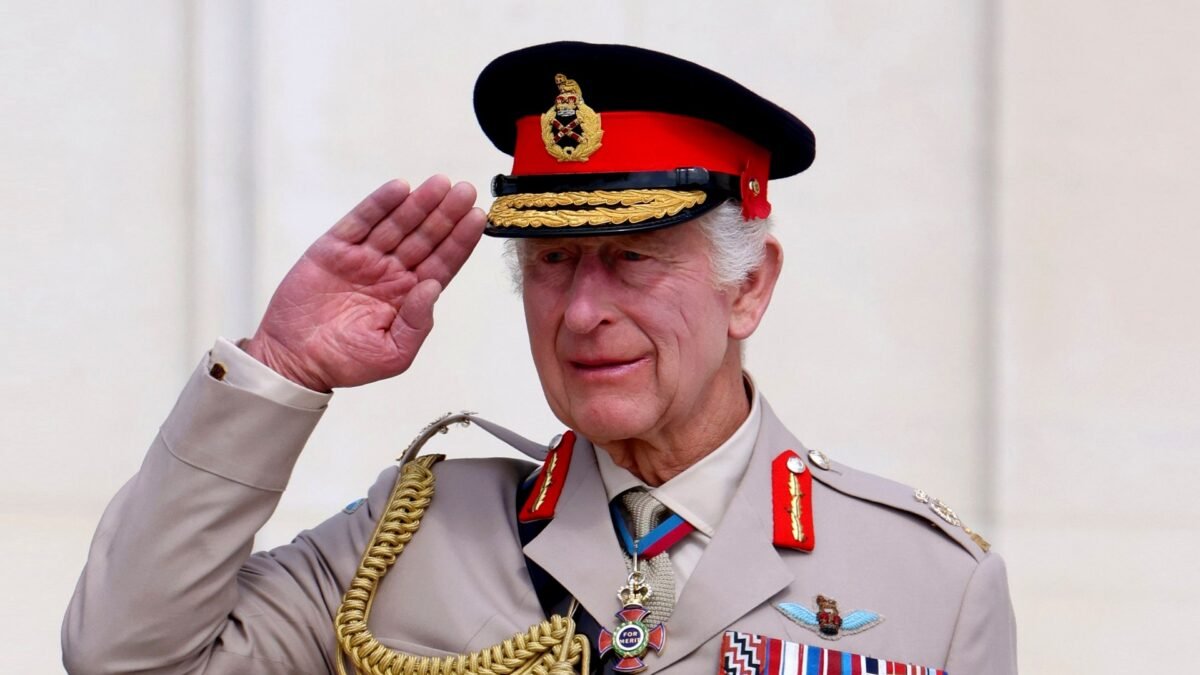
King Charles III has told Commonwealth leaders that the transatlantic slave trade “fills my heart with horror and my soul with the most profound personal sorrow”, in the most closely watched speech of his nine-day Caribbean tour — but he stopped short of the formal apology that Caribbean nations have demanded from Britain.
Addressing presidents and prime ministers at the opening ceremony of the Commonwealth Heads of Government Meeting (CHOGM) in Antigua and Barbuda on Tuesday, the King confronted the legacy of slavery directly, calling it a “shameful chapter of history” that still casts a shadow over the islands and other members of the Commonwealth. Yet, as Buckingham Palace had signalled in advance, he offered sorrow rather than sorry: no apology, no pledge of reparations and no change in British government policy.
“Our history inspires us, can appal us, yet it can always teach us. We cannot change the actions of those who came before us. We can, however, learn from the past,” the King told the leaders of the Commonwealth’s 56 member states, according to the Press Association.
“The transatlantic trade in enslaved persons still casts a shadow over these islands and other Members of our Commonwealth. As I have said before, that shameful chapter of history is one that fills my heart with horror and my soul with the most profound personal sorrow.”
The speech, which lasted around 15 minutes, was delivered against the background of a historic shift in British government policy. Prime Minister Andy Burnham announced last week that he was open to the United Kingdom formally apologising for its role in slavery, while ruling out financial reparations — the first time a British prime minister has gone that far. The King’s task in Antigua was to acknowledge the past with the strongest language a monarch has yet used, without crossing the constitutional line into an apology that only a government can give.
He closed the passage on slavery with a promise of a different kind. “The more I have furthered my own understanding of the issues, through listening, learning and looking, the more committed I have become to finding ways for us to work in modern partnership to address the wrongs of the past with action for the future,” he said.
That phrase — “action for the future” — is now the centre of the argument. The King offered practical partnership: education, jobs, trade and climate resilience. Caribbean leaders, who have spent years demanding apology and repair, will now test whether those words carry any weight beyond the ceremony.
A speech the King wrote himself
The address was delivered at the National Performing Arts Centre of Antigua and Barbuda in St John’s, where the opening ceremony had been locked down for security, with surrounding roads closed to traffic, according to the Press Association. Queen Camilla watched from the front row, wearing a sapphire blue embroidered tunic top and white palazzo trousers by Anna Valentine, according to Hello Magazine.
The King is reported to have drafted the speech himself, working with his advisers, according to The Royal Observer — a departure from the usual practice on royal tours, where speeches are written in collaboration with the Foreign Office and the British high commission in the country being visited. The government was aware of the text, the report said. That detail matters, because it means the words were the King’s own choice within the limits set by his constitutional role.
He used the freedom he had to go further than any reigning British monarch has gone in describing the slave trade. He also reached for the Royal Navy’s role in ending it, a passage that drew on his own five years of naval service in the 1970s. “And yet history also teaches us that evil need not have the last word; that character and courage can combine to overcome the most monstrous injustice, as they did with the determination to end international trade in enslaved people, in which the Royal Navy played such a leading role,” he said.
Britain outlawed the transatlantic slave trade in 1807, and the Royal Navy’s West Africa Squadron spent decades intercepting slave ships. Slavery itself was abolished across most of the British Empire in 1833 — though the British state paid £20 million in compensation to slave owners, not to the enslaved, a debt that was only finally paid off in 2015. According to the Trans-Atlantic Slave Trade Database, Britain transported an estimated 3.2 million enslaved Africans across the Atlantic.
The King’s address was not only about the past. He warned that “trust between nations is under critical strain, as international norms and systems are tested to their limits”, and that “brutal conflict stalks our world, destroying lives and casting long shadows across the globe”. He described climate change as “no longer just a terrifying prospect, but a catastrophic reality which threatens our very way of life”, adding that “nature is under constant attack and critical natural systems are collapsing”.
He told the leaders that the Commonwealth “cannot provide all of the solutions”, but offered “an unparalleled opportunity to work together – across our societies and our economies, through our businesses, our institutions and our communities”, drawing on “the collective ingenuity of a third of humanity”. The Commonwealth’s 56 nations are home to around 2.7 billion people, according to the BBC.
There were lighter moments. Praising the host nation, the King told delegates: “For one of the smallest nations on Earth, your impact in the world is tremendous. There is great truth in the saying: ‘Small Island, Big Vibes’!” The line drew laughter, according to Hello Magazine, which reported no audible reaction from delegates as he delivered the passage on slavery itself. He also noted that he had attended his first Commonwealth summit almost 30 years ago, and closed with a sailor’s image: “For, as any sailor navigating the seas knows, we cannot command the winds, least of all where the winds of yesterday have delivered us, but we can choose how we set our sails.”
As he returned to his seat, Antigua and Barbuda’s Prime Minister Gaston Browne — a vocal advocate for slavery reparations — smiled and shook the King’s hand, according to Hello Magazine. The King then watched a cultural performance telling the story of Antigua and Barbuda, with references to slavery. “What happened in the darkness must come to the light,” one of the singing dancers shouted, according to Hello Magazine. The King tapped his feet and clapped his fingers in time to the music, before posing with Commonwealth leaders for the traditional family photograph on stage.
No apology — and why the King could not give one
The central fact of the speech is what it did not contain. The King did not apologise for Britain’s role in the slave trade, did not promise reparations and did not announce any change in British government policy. That was expected, and it was the point of the careful choreography around the visit.
Buckingham Palace had said in advance that the King would not shy away from confronting the most shameful aspects of the past, and that he would address them “with unflinching honesty, sincere sorrow, and respect for the wider discussions that will be taking place between relevant governments on this issue at Chogm and beyond”. But the Palace also stressed that he was speaking in his capacity as Head of the Commonwealth, and that it would not be appropriate for him to address matters of policy relating to the UK Government’s position.
The constitutional position is straightforward, and it is why the distinction between sorrow and apology matters. The monarch acts on the advice of ministers. A formal apology for slavery would be an act of the British state, carrying legal and political consequences, and it is for the government — not the Palace — to decide whether to give one. As People magazine noted, the King is bound by constitutional rules and cannot make such promises or statements without clearance from the British government.
Royal commentators have made the same point in plainer terms. As royal commentator Afua Hagan told Reuters, according to one analysis of the speech, “you can express sorrow about something, but an apology goes much further”. That is the line the King has walked since he first began speaking publicly about slavery, and Antigua was its most public test.
Outside the perimeter of the locked-down ceremony, a small protest made the demand the King could not meet. Demonstrators held placards reading “You say you regret so apologise”, “Crimes against humanity could never be legal. Apologise now”, and “Apologise for the greatest crime against humanity and let’s have reparatory justice”, according to Hello Magazine and the Press Association.
Burnham’s shift changed the stakes
The King’s speech cannot be understood without the change of position announced by the Prime Minister days earlier. Writing in The Guardian on 30 October, Andy Burnham called the slave trade a “brutal and barbaric violation” and said Britain “must face up to the past”. He said he was open to a formal apology for Britain’s role in slavery, and offered a structured dialogue with those affected by the transatlantic slave trade — a historic break with the position held by every previous British government, which had refused even to discuss an apology.
At the same time, Burnham ruled out financial reparations. “I do not think that British people today can be held liable for historical wrongs, however heinous, that happened in a different age under different laws and in which they played no personal part,” he wrote, according to People magazine. Reparations, he said, were “not the right answer”.
That two-part position — apology yes, possibly; money no, definitely — set the terms of the summit. St Lucia’s Prime Minister Philip J Pierre, chairman of the 15-member Caribbean Community (CARICOM), has said the bloc is ready to engage in the structured dialogue Burnham offered, according to Hello Magazine. CARICOM has welcomed the apology offer as an essential first step, while insisting that an apology without repair is incomplete.
The offer has also drawn criticism from those who say it does not go far enough, and from those who say it goes too far. The summit’s closed sessions will show which of those pressures weighs more heavily on Caribbean leaders, who must decide whether to bank the Prime Minister’s opening and press for a timetable, or to hold out for more.
A reckoning years in the making
The argument in Antigua did not begin with this tour. It has been building for years, and the King has been part of it since before he came to the throne.
In Barbados in 2021, on the night the island became a republic, the then Prince of Wales called slavery “an appalling atrocity that forever stains our history”. At the Commonwealth summit in Kigali, Rwanda, in 2022, he spoke of “the depths of my personal sorrow” at the suffering caused by the slave trade. In Kenya in 2023, by then on the throne, the King expressed his “greatest sorrow and deepest regret” for colonial-era violence, and again stopped short of an apology. The same year, Buckingham Palace said the King supported independent research into the monarchy’s historic links to slavery and would give researchers access to the royal archives.
The language has grown stronger with each outing, but the boundary has never moved. Antigua repeated the pattern at the highest volume yet: the most emotive words a reigning monarch has used about slavery, delivered to the largest audience of Commonwealth leaders, with the same line held on apology and reparations.
The Caribbean’s organised demand is older still. The CARICOM Reparations Commission was set up in 2013, and works from a Ten-Point Plan covering a formal apology, health, education, cultural restitution, debt cancellation and monetary compensation. Its Secretary-General, Carla Barnett, has said reparations are “fundamentally about justice”, adding: “It is about recognition, accountability and transformation, and about building a just and equitable future for the descendants of those who, as the chattel of colonial owners, endured untold suffering, loss of life and freedom,” according to the BBC.
Campaigners point to a 2023 study by the Brattle Group, led by former International Court of Justice judge Patrick Robinson, which estimated the sum owed to 14 Caribbean countries at US$24 trillion. The figure is contested and the British government rejects it, but it has become a reference point in the debate, and a measure of how far apart the two sides remain.
At the last Commonwealth summit, in Samoa in 2024, all 56 nations signed a communiqué backing talks on reparatory justice, even as Downing Street insisted that compensation was not on the agenda. The Commonwealth’s Secretary-General, Shirley Botchwey, has said the time has come for discussions about reparations, whether financial or in some other form such as the return of artefacts, and has said of an apology: “It wouldn’t hurt to have that,” according to Sky News.
The run-up to Antigua was itself contentious. St Vincent and the Grenadines’ Prime Minister Ralph Gonsalves told The Guardian that British officials had initially insisted slavery reparations should not be on the CHOGM agenda, and had warned that Mr Burnham would not attend if the subject were formally included. The Foreign Office denied the claim, saying it was untrue and that the UK had never instructed any member on what to exclude. Whether or not the claim was accurate, it set the tone for a summit in which the agenda itself was part of the argument.
The scene in St John’s
The King arrived in Antigua and Barbuda on 30 October, after state visits to the Bahamas and Guyana, and reunited with Queen Camilla, who had not joined him on the first two legs of the tour, according to Hello Magazine. The nine-day Caribbean tour, which runs from 27 October to 4 November and includes around 36 engagements, according to the BBC, ends with the Commonwealth summit — the 28th meeting of the organisation, the first under Secretary-General Botchwey, held under the theme “Accelerating Partnerships and Investment for a Prosperous Commonwealth”.
The reception across the tour has been mixed. In the Bahamas, the King was greeted by a cheering crowd, despite a handful of protesters chanting “pay us what you owe”, according to The Guardian. The Bahamas remains one of the Caribbean realms where the King is head of state, as he is in Antigua and Barbuda; Guyana replaced the British monarch with a president when it gained independence from Britain in 1966.
On Tuesday, while the King delivered his address, Queen Camilla visited Princess Margaret School with Marie Van Heel, the Prime Minister’s wife, according to Hello Magazine. The King had already addressed the issue of slavery in his first speech on arriving in the Bahamas last week, telling a youth rally that some of what is best about Bahamian culture today “was born out of darkness”, according to People magazine.
The summit runs until 4 November. Its formal sessions, and the leaders’ retreat that follows the opening ceremony, will determine whether the words spoken on the stage in St John’s become anything more than words.
Analysis: Why It Matters
Sorrow, not sorry — a line four years in the making
The most important thing to understand about the King’s speech is that it was not a new position. It was the fullest expression of a position he has held since 2022: personal sorrow, expressed in increasingly powerful language, stopping exactly at the point where sorrow would become apology. In Kigali he spoke of “the depths of my personal sorrow”. In Antigua he spoke of horror and “the most profound personal sorrow”. The vocabulary has escalated; the boundary has not moved a millimetre.
That consistency is deliberate, and it is the key to reading the speech. The King has found a form of words that allows him to acknowledge the moral enormity of the slave trade in terms no previous monarch has used, while leaving the legal and political question of apology entirely to the government. The words “horror” and “profound personal sorrow” are, in human terms, about as far as language can go without saying sorry. In constitutional terms, they are on the safe side of a line that matters enormously.
Whether that distinction survives contact with the people it is addressed to is another question. For Caribbean leaders and campaigners, the difference between sorrow and apology is not a technicality. An apology is a public act by the state, with a subject, an object and a verb: Britain apologises to the descendants of the enslaved. Sorrow is a feeling, and feelings, however sincerely expressed, do not change the record. The King’s speech will be judged in the Caribbean not by the strength of its adjectives but by whether it moves the British government any closer to the word itself.
The constitution in the room
The second thing the speech reveals is how tightly the constitution constrains a modern monarch — and how much room for manoeuvre remains within those constraints. The King cannot apologise for the state without ministerial advice, and no minister has advised him to do so. The Palace’s insistence that he spoke as Head of the Commonwealth, and that it would not be appropriate to address UK Government policy, was not evasive language. It was a description of the only role in which he was free to speak at all.
Within that role, he used the one freedom available to him: he wrote the speech himself. Royal tour speeches are normally drafted with the Foreign Office and the local high commission, which means they are, in effect, government texts delivered by a royal voice. By drafting this address with his own advisers, the King took personal ownership of its words — and personal responsibility for how far they went. That is why the speech matters as a statement of the man, even though it changes nothing as a statement of the state.
The distinction will be lost on no one in the Caribbean, where the monarchy’s history is lived rather than studied. But it also sets a trap for the government. If the King can express horror and profound personal sorrow in his own voice, the question Burnham will face on his return is why the state cannot say the word the King so plainly danced around. The speech raises the pressure on the Prime Minister’s structured dialogue to produce something real, because the monarch has now supplied the moral language and left the political act undone.
Burnham’s calculated opening
The Prime Minister’s Guardian article was, in its way, as carefully calibrated as the King’s speech. Offering a structured dialogue on an apology, while ruling out reparations in the same breath, is an attempt to split a question that Caribbean leaders have always treated as one. The logic is political: an apology costs the Treasury nothing and can be presented at home as a moral reckoning; reparations would cost a sum no British government could contemplate paying, and would be presented by its opponents as a bill handed to people who played no part in the crime.
Burnham’s own words show he understands the objection. His insistence that British people today cannot be held liable for historical wrongs “that happened in a different age under different laws” is an argument aimed squarely at a domestic audience, and it will be read in the Caribbean as the limit of what London is prepared to concede. The structured dialogue is, in that sense, both an opening and a ceiling: it concedes that a conversation about apology can happen, and it declares in advance that the conversation about money will not.
The risk for Burnham is that he has raised expectations he cannot satisfy. Caribbean leaders have welcomed the offer, but they have been explicit that an apology without repair is incomplete. If the dialogue produces a carefully worded apology in a year or two, and nothing else, the Prime Minister will be able to claim a historic first. Whether the Caribbean will accept it as one is a different matter, and the answer will shape Britain’s standing in the region for a generation.
“Action for the future” — the practical offer
The King’s alternative to apology and reparations was a programme: education, jobs, intra-Commonwealth trade and climate resilience. It is worth taking that list seriously, because it is the only concrete offer on the table, and because for small island states facing rising seas, it is not trivial.
Education and jobs, delivered through scholarships, training and investment, would address the disadvantages the King described — the opportunity that “for too many people” lies “far beyond their reach”. Intra-Commonwealth trade, if it meant easier access to British markets for Caribbean goods and services, would be worth real money. Climate resilience — sea defences, early-warning systems, help to rebuild after hurricanes — is, for countries that contributed almost nothing to climate change and suffer some of its worst effects, a matter of survival rather than generosity.
But there is a gap between this programme and the demand it is meant to answer, and the King’s speech did not close it. The reparations movement is not, at its core, a request for development aid. It is a claim about justice: that a wrong was done, that its consequences are still visible in the wealth gap between Britain and the Caribbean, and that the wrongdoer should acknowledge and repair it. Development assistance, however generous, answers a different question. It says: we will help you build a better future. Reparations say: we owe you for the past. The King’s phrase “address the wrongs of the past with action for the future” tries to bridge those two statements. Whether it succeeds depends on whether the “action” is ever specified, funded and delivered — and on whether Caribbean leaders accept a future-oriented programme as a substitute for a backward-looking reckoning.
A Commonwealth at a crossroads
Finally, the speech matters because of where it was given. The Commonwealth is an organisation that has spent the last decade being asked what it is for. Its members range from some of the world’s largest economies to some of its smallest and most vulnerable states. Its summits produce communiqués that few people read. Its head is a hereditary monarch in London. In that context, a summit that cannot talk honestly about the history that created it is a summit that has nothing to say.
Antigua was a test of whether the Commonwealth can hold a hard conversation without breaking. The King’s speech, the Prime Minister’s offer of dialogue, the presence of the reparations question on and around the agenda, and the small protest outside the locked-down venue are all part of the same picture: an institution trying to face its own past in public. The alternative — the position held for decades, in which slavery was something to be acknowledged in passing and never discussed — has collapsed, and no one in St John’s was pretending otherwise.
There is also a personal stake for the King. He remains head of state of several Caribbean realms, including Antigua and Barbuda and the Bahamas, and republican movements in the region have made clear that the monarchy’s future there depends on how it handles this question. Barbados became a republic in 2021. Others may follow. The King’s speech was, among other things, an argument that the Crown can be part of the reckoning rather than an obstacle to it. Whether Caribbean publics accept that argument will be decided not in St John’s, but in the years that follow, and not by speeches.
What to Watch Next
- The summit communiqué: whether the leaders’ retreat produces language on reparatory justice that goes further than the Samoa communiqué of 2024, and whether Britain signs it.
- Burnham’s structured dialogue: who is invited, when it meets, and whether it produces a timetable for an apology — or becomes a process designed to absorb pressure without producing one.
- Caribbean reactions: what Prime Ministers Browne, Pierre and Gonsalves say in the days after the summit, and whether CARICOM treats the King’s words and the Prime Minister’s offer as a basis for negotiation or as a disappointment.
- The rest of the tour: the King’s remaining engagements before the tour ends on 4 November, and whether he returns to the subject of slavery before leaving the Caribbean.
- The reaction at home: how Parliament, the press and the public in Britain respond to the speech and to the apology question — and whether the issue, raised at a Commonwealth summit, now forces a debate the government has spent years avoiding.
Sources
- Hello Magazine — King Charles ‘filled with horror’ in landmark speech about slavery on Caribbean tour
- Press Association via The Oldham Times — King stops short of offering formal apology over transatlantic slave trade
- People — King Charles Describes Slave Trade as ‘Shameful Chapter’ That ‘Fills My Heart with Horror’ in Key Moment of Caribbean Tour
- The Royal Observer — LIVE: King Presides Over Commonwealth Summit as Pressure Mounts Over Slavery Apology
- The Scottish Sun — King blasts ‘slavery as shameful chapter’ that ‘fills my heart with horror’

About the Author — Abdul Mannan
Related Articles
UK and EU Agree Draft Deal to Scrap Post-Brexit Food Checks in Biggest Reset Step Yet
Britain and the European Union have agreed a draft deal to remove most post-Brexit checks on food and…
Equalities Watchdog Writes to Reform UK Over Racist and Misogynistic Remarks in ITV Undercover Film
The Equality and Human Rights Commission has written to Reform UK asking what action the party is taking…
Mahmood Scraps 15-Year Settlement Wait for Care Workers in Major Climbdown on Earned Settlement
Home Secretary Shabana Mahmood has scrapped the plan to make migrant care workers wait up to 15 years…