
Equalities Watchdog Writes to Reform UK Over Racist and Misogynistic Remarks in ITV Undercover Film

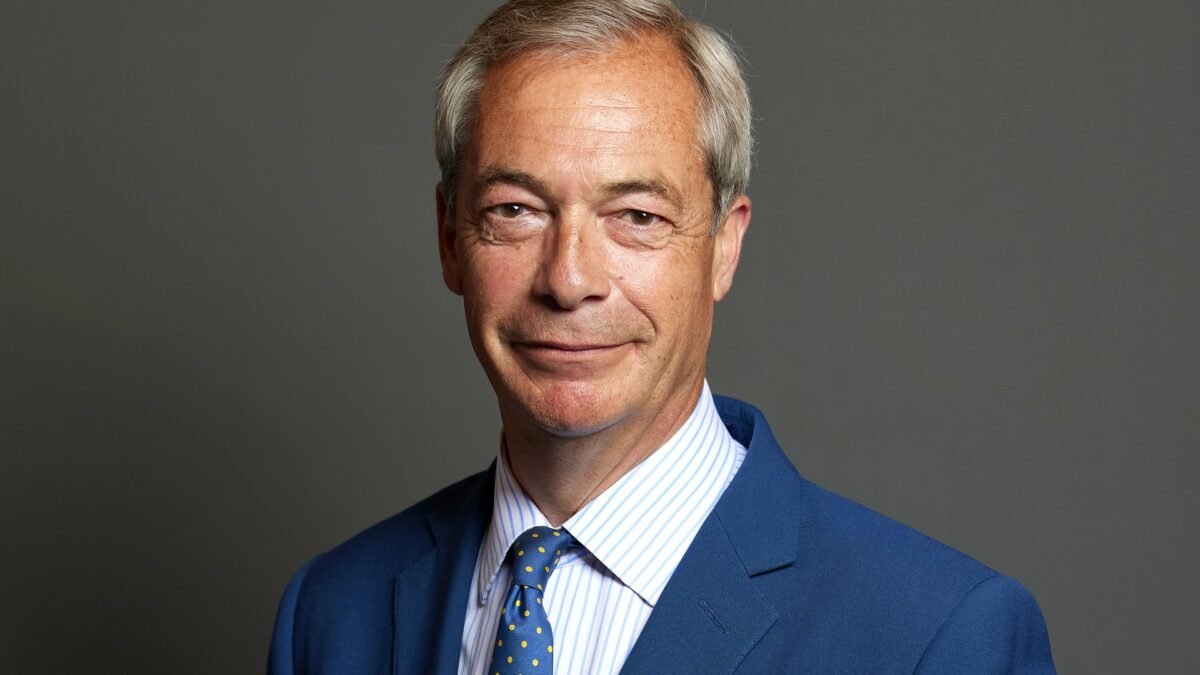
Britain’s equalities watchdog has written to Reform UK to demand an explanation of what the party is doing to comply with equality law, after an undercover television investigation filmed its councillors and candidates making racist, Islamophobic, violent and deeply misogynistic remarks.
The Equality and Human Rights Commission (EHRC) confirmed on Monday 2 November that it had written to Nigel Farage’s party following complaints alleging unlawful activity under the Equality Act 2010. The complaints centre on the racial and sexual remarks captured in ITV’s Undercover: A Year in Reform, which was broadcast in October after reporters spent more than a year inside the party.
The commission’s letter asks Reform to provide information, “including what action the party is taking to comply with the Equality Act”, according to a statement quoted by the Press Association. The EHRC added: “As with every complaint we receive, we will assess the information provided carefully and, following that consideration, take action where appropriate.”
Reform UK insisted it had done nothing wrong. A party spokesperson said: “We are confident we have fully complied with our obligations under the Equality Act. There is no room for racism in Reform UK.”
The intervention lands at an awkward moment for a party that presents itself as ready for government. Reform sits second or third in national opinion polls, within touching distance of Labour, and has spent the past two years insisting that it has professionalised its operation and rooted out extremists. The watchdog’s letter — the first formal step the commission can take towards a statutory investigation — puts that claim under official scrutiny, and it comes with a precedent the party will not welcome: the last time the EHRC turned its attention to a major political party, the outcome was a finding of unlawful acts that dominated British politics for months.
It is important to be precise about what has happened so far. The EHRC has not opened a formal investigation into Reform UK, and it has not found the party guilty of anything. It has written a letter, prompted by complaints, asking the party to explain itself. That is a preliminary step, but it is not a routine one: the commission does not write to political parties lightly, and its next move — which could range from closing the matter to launching a full statutory investigation with powers to compel evidence — will be watched closely across Westminster.
What the undercover film showed
The ITV Exposure investigation, titled Undercover: A Year in Reform, placed undercover reporters inside the party for more than a year, following candidates and councillors across England and Wales through the May local elections and four by-election campaigns. The full documentary was broadcast on ITV1 and ITVX on Sunday 18 October, and ITV has indicated that further revelations from the year-long investigation are still to come, including footage recorded inside Reform’s London headquarters involving senior party figures.
The most prominent figure caught on film was Alan Feeney, a Reform councillor and the deputy mayor of Solihull. According to ITV’s reporting, Feeney was recorded describing an area as “infested” with Asian families and calling them “absolute parasites”. He also said that “no more than one per cent of [the] British population can be non-white” and suggested that Asian people should be “dragged out of their homes, stuck on planes and f***ed off to Pakistan”. He was further recorded complaining about Muslims working in the judiciary, in schools and in healthcare.
Feeney was filmed alongside two other Solihull candidates, Jamie Campbell and Chris Whelan. Campbell was recorded discussing burying pork chops in the ground to prevent a mosque from being built. Whelan made explicit sexual comments about a female Reform candidate, saying: “I’d have been sniffing that seat as soon as she got up.”
In a separate clip, Dean Miller, a Reform councillor in Bromley, south London, claimed that King Charles is secretly a Muslim and said the King’s head should be cut off. He also described Black children as “animals” and said that migrants crossing the Channel had “come to rape and pillage and f***ing kill us”. Raymond Dunning, a councillor in Tameside, described himself as “so far-right, it’s unbelievable” and said political rivals “should be shot against the wall”.
The film also turned its camera on the party’s own internal culture. Reform MP Sarah Pochin was shown complaining that the party was “chauvinistic” and riven with “alpha male shit”. Her remarks, recorded by the undercover reporters, echoed a wider complaint within the footage: that women in the party felt sidelined by a male-dominated culture at the top.
The fallout was swift. Feeney “mutually agreed” to resign from the party, citing “personal reasons”, and now sits as an independent councillor. Whelan also resigned, while Miller resigned from the party whip. The Ministry of Justice confirmed that Feeney, who worked as a custodial manager at HMP Birmingham, had been suspended from his prison service job pending an investigation into his comments.
Reform’s response: suspensions, resignations — and a counter-attack on ITV
Reform UK has said it is investigating the individuals involved. A party spokesman stated: “Where members, activists and councillors have clearly behaved inappropriately, investigations have commenced. In some cases, there have been suspensions and due process must be followed.”
But the party has also pushed back aggressively against the broadcaster. In a statement, Reform accused ITV and the production company behind the film, Hardcash Productions, of using “extreme methods of deception”, including providing an undercover journalist with “altered identification documents, a false address, and false credentials” to infiltrate Reform’s headquarters and computer systems. Reform has said it reported ITV and the reporters concerned to the police, and has threatened civil legal action against the broadcaster and its board.
Deputy leader Richard Tice claimed that one of the figures caught on film was a “Tory plant” who was “deliberately saying some things to make us look bad”. ITV has stood by its journalism, saying the programme was produced in compliance with the Ofcom Broadcasting Code and the law, and that its broadcast was in the public interest.
Farage himself has defended the party’s vetting procedures, telling BBC Look East that Reform vets “to a much higher standard than other parties” but that “you can’t vet for future comments”. He argued that the most egregious case involved someone who had been a Conservative councillor for more than a decade before joining Reform. “I can’t predict what they’re going to say after a drink, when they’re being provoked by somebody or egged on to say something,” he said. Pressed on whether the party had a vetting problem, he replied: “No, not at all.” He insisted that “appropriate action” would be taken, adding: “I’m promising you, however heavily you vet, you cannot stop what people say in the future.”
Farage also suggested that the investigation was politically motivated, telling reporters: “The establishment frankly want us out of the picture.”
The revelations have drawn condemnation from across the political spectrum. Labour chair Bridget Phillipson described the investigation as “truly sickening” and said: “Nigel Farage can’t shrug these latest revelations off as being a few bad apples. Every Reform councillor, council candidate or party member found to have made such despicable comments must be thrown out of Reform UK immediately.”
Prime Minister Andy Burnham said: “We’ve allowed a poison into our politics in recent years, and it’s time to draw a line under it. There is no place for any form of racism, antisemitism, or discrimination in British politics.” Liberal Democrat leader Sir Ed Davey called the footage “chilling”, adding: “I feel for anyone watching this tonight who is frightened to see such racism and hatred festering in their community.” A Conservative Party spokesman said: “Nigel Farage promised to make Reform ready for government. These sorry individuals are proof he has failed.”
The pressure on the EHRC to act had been building before Monday’s letter. On 30 October, a group of MPs led by Afzal Khan, with the backing of Clive Lewis, wrote to the commission calling on it to investigate Reform UK and determine whether it had breached the Equality Act. Their letter argued that the ITV revelations exposed “multiple examples of racist, misogynistic and Islamophobic conduct” across the party.
What the EHRC can — and cannot — do
The Equality and Human Rights Commission is Britain’s equality regulator. It was created under the Equality Act 2006, began work in 2007, and is a non-departmental public body with the power to enforce legislation covering protected characteristics such as age, disability, race, religion and sex. Its job is to protect and promote equality, and to enforce the Equality Act 2010.
Under the law, the commission has a statutory power to carry out an investigation when it suspects that an organisation may have committed an unlawful act under the Equality Act. After an investigation it must publish a report of its findings, and it can include recommendations — which can be directed at anyone, not just the organisation under investigation. Where it finds unlawful acts, it can serve an unlawful act notice, effectively a formal finding that an organisation has broken the law, and it can require the organisation to draw up an action plan to put things right.
Political parties are not exempt. The Equality Act treats them as associations, and they are bound by its provisions in the same way as any other membership organisation: they must not discriminate against, harass or victimise people because of a protected characteristic, and they are legally responsible for the conduct of their agents — people acting on their behalf.
The commission has used these powers against a political party only rarely, and the precedent is a sobering one for Reform. In May 2019, the EHRC launched a formal investigation into the Labour Party after complaints, submitted between 2016 and 2018 by the Jewish Labour Movement and Campaign Against Antisemitism, about the party’s handling of antisemitism. The investigation, which could compel Labour to hand over internal communications including text messages and emails, reported in October 2020.
Its findings were damning. The commission found that Labour was responsible for three breaches of the Equality Act: unlawful harassment, political interference in antisemitism complaints, and a failure to provide adequate training for those handling complaints. It found that the party had committed harassment against its members in relation to Jewish ethnicity in the cases of two individuals, and that the then leader’s office had inappropriately involved itself in a third of the 70 case files reviewed. Labour was legally obliged to produce an action plan implementing the commission’s recommendations. The then leader, Jeremy Corbyn, was suspended from the party after he described the scale of the problem as “dramatically overstated”.
That history matters for two reasons. First, it shows that the EHRC’s powers are real: a statutory investigation can compel a party to disclose its internal workings, and its findings carry legal weight. Second, it shows how long and how damaging such a process can be. The Labour investigation lasted seventeen months from launch to report, and its political consequences lasted far longer. Reform will be acutely aware that the commission’s letter, however preliminary, opens a door the party would rather keep shut.
At the same time, the comparison has limits. The Labour investigation was about the party’s central handling of complaints — its systems, its leadership’s conduct, its training. The complaints against Reform, as so far described, concern remarks made by individual councillors and candidates, not a central failure to handle complaints. For the EHRC to move from a letter to a formal investigation, it would need to be satisfied that there is evidence of an unlawful act by the party itself — for example, a systemic failure in how it selects, vets or disciplines its representatives — rather than merely offensive remarks by individuals. That is a higher bar, and Reform’s insistence that it has investigated, suspended and expelled those involved is precisely the argument it will make to keep the commission at arm’s length.
There is also a political context the commission cannot ignore. Reform is not a fringe party. Recent polls put Labour on roughly 28 to 32 per cent, with Reform on 20 to 25 per cent — second in some polls, third in others — and the Conservatives on about 21 to 24 per cent. Poll-of-polls trackers put the three parties within a few points of each other, and a general election is due by 2029. Any step the EHRC takes will be read through a partisan lens: Reform’s supporters will call it establishment stitch-up, as Farage already has, while its critics will call inaction a failure of nerve. The commission’s insistence that it treats every complaint the same way — “as with every complaint we receive” — is designed to pre-empt exactly that argument.
The ITV investigation is also not Reform’s first brush with this kind of trouble. In September 2026, two senior party officials stepped down after a Channel 4 News undercover report alleged they had discussed ways to circumvent electoral law to secure a £500,000 foreign donation. And Farage has repeatedly pledged to root out “extremists” and “bigots” from the party, vowing two years ago to be “absolutely ruthless” about it. Critics argue that the latest revelations demonstrate a persistent failure to deliver on those promises — and that the pattern, rather than any single remark, is the real story.
Analysis: Why It Matters
The “bad apples” defence is wearing thin
Every party caught in a scandal reaches for the same defence: a few individuals, not representative, dealt with swiftly. Reform has used it before, and Farage used it again on Monday — “you can’t vet for future comments”. There is something to it: no vetting process can predict what a person will say after a drink, or what they will say when they believe they are speaking privately. But the defence weakens with repetition. When the individuals keep appearing — in Solihull, in Bromley, in Tameside, across England and Wales, over the course of a year of filming — the question stops being about individual character and starts being about the culture that selected, welcomed and promoted them. A party that has now faced an ITV undercover investigation, a Channel 4 undercover report and an EHRC letter within the space of two months cannot keep describing each episode as an isolated aberration. At some point, the pattern is the story.
This is a test of whether Reform is a party or a protest
Reform’s rise has been built on a simple proposition: that it is not like the other parties. It is more honest, more direct, less captured by what Farage calls the establishment. That proposition depends on the party being able to present itself as a credible government-in-waiting, and credibility in government is not only about policy. It is about whether an organisation can run itself properly — vet its candidates, discipline its representatives, handle complaints, and comply with the law. The EHRC letter strikes directly at that question. A party that cannot satisfy Britain’s equality regulator that it complies with the Equality Act will struggle to convince voters that it can run the country. The Conservatives’ attack — “Farage promised to make Reform ready for government. These sorry individuals are proof he has failed” — is designed to land exactly there.
The watchdog’s dilemma is real
The EHRC is in a difficult position, and its cautious wording shows it knows it. A letter is a long way from a finding, and the commission has deliberately kept its options open. Move too fast towards a formal investigation, and it will be accused — as Farage has already accused it in advance — of doing the establishment’s bidding against a party that leads or nearly leads the polls. Move too slowly, and it will be accused of timidity, of treating a party with a fifth of the vote differently from the way it treated Labour. The commission’s authority rests on being seen as even-handed, and that is hard to maintain when every decision is read politically. The most likely path is a slow one: Reform replies, the commission assesses, and a decision comes in weeks or months rather than days. That is frustrating for those who want swift action, but it is also how a regulator protects the legitimacy of whatever it eventually decides.
The sexism charge may hurt more than the racism charge
Much of the attention has rightly focused on the racist remarks — the “parasites” slur, the talk of dragging families onto planes, the description of Black children as “animals”. But the misogyny in the footage may prove more damaging politically, because it came from inside the party’s own ranks. Sarah Pochin is not an opponent or an activist; she is a Reform MP, and she was recorded describing her own party as “chauvinistic” and riven with “alpha male shit”. That is a sitting parliamentarian telling undercover reporters that her party excludes women. It corroborates the pattern in the footage — Whelan’s sexual comments about a female candidate, the casual contempt for women in private conversation — and it gives the EHRC’s reference to “sexual remarks” a specificity that is hard to dismiss. Racism from a councillor can be framed, however implausibly, as an individual’s prejudice. Sexism described by the party’s own MP is a description of its culture.
Reform’s war with the media is a strategy, not a reflex
It is striking how quickly Reform turned its fire on ITV. Within days of the documentary, the party had reported the broadcaster to the police, threatened legal action against its board, and accused its production company of “extreme methods of deception”. The same pattern followed the Channel 4 report in September. This is not merely defensiveness; it is a strategy. By framing every investigation as an establishment attack, Reform converts a story about its own members’ conduct into a story about media bias — and gives its supporters a reason to dismiss the evidence without engaging with it. It is a tactic that has worked for populist parties elsewhere, and it may work here too, at least with the party’s core supporters. But it has a cost. A party that responds to every uncomfortable revelation by attacking the messenger gradually loses the ability to distinguish between a hostile press and a legitimate question. And the EHRC is not a broadcaster. It is a statutory regulator, and it cannot be dismissed as part of a media conspiracy. That is what makes Monday’s letter different from the rows that preceded it.
What to Watch Next
- Reform’s reply to the EHRC. The party’s response to the commission’s letter will be the first real test of its position. A detailed account of investigations, suspensions and new vetting procedures would suggest it is taking the matter seriously; a defiant dismissal would invite escalation.
- The EHRC’s decision. After assessing Reform’s reply and the complaints, the commission must decide whether to close the matter, seek further information, or open a formal statutory investigation. Any decision to investigate would be a major escalation with the power to compel evidence.
- Further ITV revelations. ITV has indicated that more material from the year-long investigation is to come, including footage from inside Reform’s London headquarters involving senior figures. Fresh revelations would intensify the pressure on both the party and the watchdog.
- Police and legal action. Reform has reported ITV to the police and threatened civil proceedings. Whether the police take any action, and whether Reform follows through on its legal threats, will shape how the row develops — and whether the party’s counter-attack has any substance.
- The polls. Reform’s standing — roughly a fifth of the vote, second or third depending on the pollster — has so far survived a series of controversies. The question is whether a formal regulatory process, unlike a television documentary, begins to move voters who have so far been willing to look past the scandals.
Sources
- The Guardian — EHRC raises concern with Reform about ‘racial and sexual remarks’ in documentary
- Press Association via BritBrief — EHRC writes to Reform UK over racist and misogynistic remarks
- BBN Times — Reform UK investigates officials filmed making racist and sexist remarks in undercover ITV documentary
- Equality and Human Rights Commission — Investigation into antisemitism in the Labour Party (October 2020, full report)
- UK Fact Check — Voting intention tracker (poll of polls, latest fieldwork 30 October 2026)

About the Author — Abdul Mannan
Related Articles
Mahmood Scraps 15-Year Settlement Wait for Care Workers in Major Climbdown on Earned Settlement
Home Secretary Shabana Mahmood has scrapped the plan to make migrant care workers wait up to 15 years…
Shabana Mahmood Unveils ‘Earned Settlement’: Most Migrants to Wait 10 Years for ILR as Care Workers Keep Five-Year Route
Home Secretary Shabana Mahmood has unveiled the government's 'earned settlement' reforms, doubling the standard wait for permanent settlement…
Burnham Unveils £700m Fund to Unlock Ten Industrial Sites in Reindustrialisation Drive
Prime Minister Andy Burnham has launched a £700 million Strategic Sites Accelerator to unlock up to ten major…