
UK and EU Agree Draft Deal to Scrap Post-Brexit Food Checks in Biggest Reset Step Yet

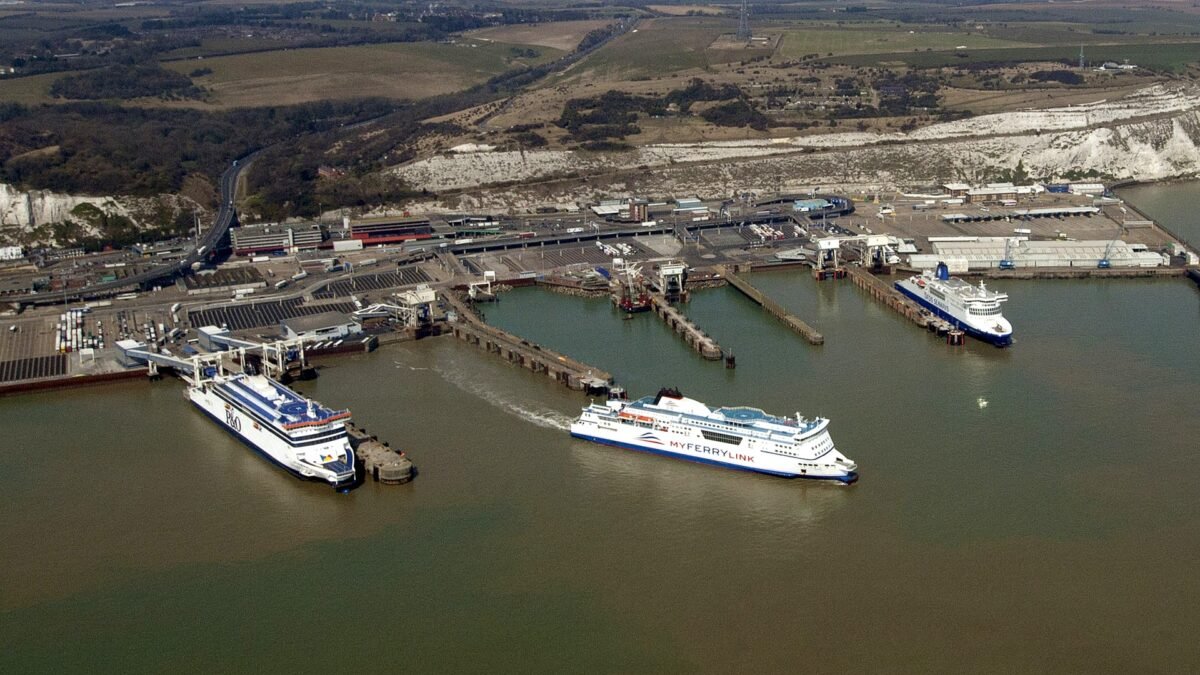
Britain and the European Union have agreed a draft deal to remove most of the border checks imposed on food and farm goods since Brexit, in what is being presented as the centrepiece of the wider reset in relations between London and Brussels.
The roughly 200-page draft text covers sanitary and phytosanitary rules — the health and safety standards that govern trade in animals, plants and food products — and is now circulating among EU governments ahead of a summit later this month at which leaders are expected to discuss the next stage of the relationship, according to the BBC.
The agreement would sweep away the paperwork regime that has governed cross-Channel food trade since Britain left the EU single market: export health certificates costing around £200, phytosanitary certificates priced at about £25, and a range of related charges including inspector fees, organic certification costs, some port fees and sampling fees. Other checks that have slowed shipments since the new border regime took effect would also fall away, for trade in both directions.
The government estimates that the economy will eventually gain about £5.1 billion a year from the deal, reflecting lower costs for businesses moving goods across the Channel, faster border crossings for perishable products, and the reopening of product lines that have been blocked since Brexit.
Among the goods that would be able to move again are fresh sausages and burgers, shellfish caught in domestic waters, and seed potatoes — three categories hit hard by the post-Brexit paperwork regime, with some producers giving up on European customers altogether rather than absorbing the cost and delay of certification for every consignment.
The deal would also bring back pet passports for animals travelling from Britain into the EU, ending a system that has required owners to obtain fresh veterinary documentation for each trip. For families and travellers who cross the Channel regularly with dogs and cats, that change alone removes one of the most visible everyday frictions of the new border.
The draft agreement has been sent to member states for consideration at a meeting of EU ambassadors, known as Coreper, on Wednesday, alongside separate draft texts on linking emissions trading systems and on a youth travel and work scheme, and a 15-page draft joint statement for the two sides’ leaders. The food deal is expected to feature prominently at the UK-EU summit in Brussels on 20 November, where Prime Minister Andy Burnham will meet European Council President António Costa and European Commission President Ursula von der Leyen.
What the draft deal would change
For exporters, the practical change would be sweeping. Since Britain left the single market at the start of 2021, every consignment of animal or plant products crossing the Channel has needed documentation, veterinary sign-off and, in many cases, physical inspection. Small businesses have been hit hardest: a single export health certificate can cost around £200, and the paperwork costs on some shipments have reached £1,400, according to figures cited by the prime minister in the Commons.
Scottish salmon, Britain’s largest food export, illustrates the burden. Mr Burnham told MPs on 12 October that every consignment goes through a document check at the border today, at a cost of around £100 million in lost exports. Under the draft deal, routine export health certificates and border checks on animal and plant products would be removed for most consignments, allowing fresh and chilled produce to move as it did before the new regime — quickly, and without a vet’s signature on every load.
The agreement would also end the “not for EU” labelling that has appeared on British food products since 2023, when it was introduced as part of the Windsor Framework. The labels have caused outrage among food industry bosses: Stuart Machin, the chief executive of Marks & Spencer, called them “bureaucratic madness” and pointed out that Britain has some of the highest food standards in the world. A source told The Times that the deal was “as good as done” and would result in food standards aligning with the EU for the first time since the UK formally left in 2020, adding: “It is a big step forward in doing business and labelling has been part of the conversation. UK products would be considered as EU ones because they’d be following the same standards.”
Some products will need to be reformulated to meet EU food standards, and British farmers may lose access to some pesticides under the alignment. Other products will face new labelling requirements: marmalade products will need to be labelled more specifically as “citrus marmalade”, and some produce including nuts, fruit, vegetables and blended honey will need more detailed labelling including country of origin, according to the British Bulletin’s account of the deal.
The scope of the agreement extends beyond traditional food safety. According to trade publication reporting, it covers food additives, nutrition and health claims, food supplements, fortified foods, labelling, and regulations for novel foods. That breadth matters, because some of the sharpest divergences between the British and European rulebooks sit in exactly those areas: titanium dioxide is no longer authorised as a food additive in the EU, permitted levels of nitrites and nitrates have been reduced in EU authorisations, and the use of Bisphenol A has been restricted.
Business groups have been pressing for the deal for months. Alex Freudmann, managing director of food at Marks & Spencer, said in October: “Our ask is simple: to get the SPS deal over the line.” He added: “The sooner this agreement is signed, the better. 20th November is the moment finally to get the deal done.” The retailer has felt the paperwork burden directly: a shipment of M&S Food to Northern Ireland used to need one document, and now needs more than 200.
The farming minister told the poultry industry at its annual conference on 2 November that negotiations on a new sanitary and phytosanitary agreement would continue ahead of the 20 November summit, and that the EU remained the UK’s largest trading partner. The agreement, he said, aimed to reduce barriers to agrifood trade while maintaining standards on animal health, biosecurity and public health.
Dynamic alignment — the price of smoother trade
In return for the removal of checks, Britain would commit to observing and adapting to existing EU regulations on plant, animal and food trade standards, a process known as dynamic alignment. British rules remain broadly in line with the European rulebook, but there are areas where England in particular has moved in a different direction, including the precision breeding of plants, previously described as gene editing.
Negotiators have in recent weeks settled transition arrangements covering those areas while the EU’s own new regulations come into force. The government has already announced a European Partnerships Bill, included in the King’s Speech on 13 May 2026, which will provide the legal mechanism for applying new EU rules in Britain. The Bill would also allow the linking of the British and EU emissions trading schemes, sparing British exporters from paying the EU’s new carbon border tax.
Dynamic alignment is the most politically sensitive part of the package. The post-Brexit trade deal signed by Boris Johnson’s government deliberately prioritised regulatory freedom over avoiding new checks and delays, and some campaigners who supported Brexit have criticised the reapplication of EU rules. The government, however, argues that the economic prize justifies the trade-off — and that the alternative, the thicket of paperwork exporters have endured for nearly six years, is itself a drag on growth that voters can feel in supermarket prices.
A government spokeswoman said: “We are building an ambitious, close relationship with the EU that will strengthen our economy and create more opportunities for young people and communities across the whole UK. A food and drink deal could deliver up to £5.1 billion a year for the UK economy, slashing the costly red tape that only helps drive up supermarket prices and stifle trade.”
The British Chambers of Commerce published fresh analysis of its members’ views on Monday, describing firms as struggling with a thicket of red tape nearly six years after Britain’s exit from the bloc. In its survey, 56 per cent of exporting businesses said they wanted customs paperwork and delays removed so they could grow, rising to 58 per cent among manufacturers. The lobby group said the current trade relationship was “failing to deliver” and called on the government to examine and publish a full set of options for the future relationship, including a customs union, a Swiss-style single market arrangement, and a Canada-style associate membership, and to involve business in the decision from the start.
“The evidence from businesses suggests that the prime minister is right to have initiated a conversation on our future relationship with Europe, and he deserves real credit for having done so,” said Shevaun Havilland, director general of the BCC. “Government needs to examine all of the options, remain clear-headed about the trade-offs each involves, and involve business in the decision-making process from the start.”
What is still to be settled
The food deal is the most advanced part of the package, but it is not the only one. The drafts circulating in Brussels also cover the linking of the British and EU carbon markets, in which power stations and factories buy permits for the carbon they emit. Negotiators have also been working since December 2025 on bringing Britain back into the EU electricity market. A House of Commons committee report expects the food and carbon deals to be running by mid-2027, and a House of Commons Library briefing records that negotiators had agreed the outline of the scheme, together with the food and carbon deals, by late September.
The planned numbers for a youth experience scheme, which would let young people travel and work across the Channel, are expected to be settled at a political level in the coming days. A discount on full tuition fees for EU students is likely to be deferred until next year, alongside a plan to reconnect electricity markets. A source familiar with the talks told The Guardian: “We are willing to give the Europeans what they want on fees, but we will have to get something significant in return. The biggest prize we are pushing for right now is access to Made in Europe, so there is a deal to be done there.”
The drafts also touch on subjects beyond trade. According to the BBC, they include references to British involvement in defence cooperation schemes, access to law enforcement databases, and reassurances about the EU’s plans to favour European manufacturing. Those items underline how the summit is intended to cover security and industrial policy as well as the movement of goods.
The 20 November meeting will be the second EU-UK summit since Brexit, and it follows the first, in London on 19 May 2025, at which the two sides agreed a strategic partnership and launched the reset. The November summit was originally planned for July but was postponed following the change in UK prime ministers this summer, with Mr Burnham replacing Sir Keir Starmer. According to the European Council, the leaders will build on the May 2025 partnership, taking stock of progress on defence and security, energy, agrifood rules, climate, people-to-people contacts, migration and law enforcement, and are expected to issue a joint declaration at the end of the meeting.
Mr Burnham has said he wants to use this month’s summit to open a longer-term conversation about the future of the UK’s relationship with the EU, including the possibility of going all the way and rejoining the bloc — a prospect that would mark a decisive break with the settlement reached after the referendum. His push for closer ties has already drawn fire from the Conservatives: the prime minister and Conservative leader Kemi Badenoch have clashed over the bid, and opposition critics argue that dynamic alignment surrenders the regulatory freedom Brexit was meant to deliver.
There are also questions about timing and ratification. The draft text must still be considered by EU ambassadors on Wednesday, and the agreement is expected to be announced at the summit rather than signed into law on the day. The European Partnerships Bill must pass through Parliament before the new rules can be applied in Britain, and the transition arrangements for areas where the two rulebooks have diverged will need careful handling. None of that is a formality, but the fact that a 200-page text is circulating among member states — rather than still being haggled over by negotiators — suggests the hard bargaining is largely done.
Analysis: Why It Matters
1. The reset finally has a deliverable
Since the first UK-EU summit in May 2025, the “reset” has been more a direction of travel than a destination: warm words, a strategic partnership, and a series of workstreams that moved at the speed of diplomacy. The draft food deal changes that. It is a concrete, measurable, 200-page text that removes real costs from real businesses, and it gives the prime minister something tangible to show for 18 months of rebuilding the relationship. For a government that has staked political capital on closer ties with Europe, the timing — a fortnight before the summit — is no accident. The deal is designed to be the headline of 20 November, and the summit is designed to be the moment the reset stops being a process and starts being a record.
2. £5.1 billion is a forecast, not a fact
The government’s headline figure — £5.1 billion a year in eventual economic benefits — deserves scrutiny. It is an estimate of the gains from lower costs, faster crossings and reopened product lines, not money already in the economy. Such forecasts depend on assumptions about how much trade returns, how quickly, and at what volumes, and they are easy to inflate and hard to verify. What is not in doubt is the cost of the status quo: £200 certificates, £1,400 shipments, salmon consignments checked document by document, and a retailer needing 200 documents where one once sufficed. Even if the £5.1 billion proves optimistic, the direction of travel is clear — the current regime taxes trade at the border, and removing it will make British food cheaper to sell and European food cheaper to buy. The honest way to judge the deal is not against a forecast but against the paperwork it abolishes.
3. Dynamic alignment is the real argument
The food deal’s economics are broadly popular; its politics are not. Dynamic alignment means Britain will follow EU rules on food, plant and animal standards as they change, without a vote on them. Supporters call that a small price for frictionless trade. Critics call it rule-taking by another name, and they have a point that deserves an answer rather than a dismissal: the Johnson trade deal chose regulatory freedom precisely so Britain could diverge, and this agreement spends some of that freedom. The government’s answer is that the freedom was worth less than advertised — that divergence produced paperwork, not prosperity — and that alignment in food standards is the price of selling food into the world’s largest single market. That argument will be fought in Parliament over the European Partnerships Bill, and it is the argument that will decide whether this deal is a one-off fix or the first step in a much closer relationship.
4. The summit is about more than sausages
It would be a mistake to read the draft deal as only a trade story. The same package touches emissions trading, youth mobility, defence cooperation, law enforcement databases and the EU’s “Made in Europe” industrial plans, and the prime minister has openly linked the summit to a longer-term conversation about the UK’s place in Europe — including, in his own words, “going all the way”. The food deal is the deliverable that makes the summit a success; the joint declaration is where the direction of travel gets written down. Watch what the 15-page draft joint statement says about the future relationship, because that language — not the certificates — will shape the argument in Britain for the next decade.
5. Business has moved faster than politics
Perhaps the most striking feature of this story is how far business opinion has travelled. The British Chambers of Commerce is now openly calling for the government to analyse options including a customs union and a Swiss-style single market relationship, and its director general is publicly crediting the prime minister for starting the conversation. Supermarkets and farming representatives back the food deal. That consensus did not exist a few years ago, and it reflects a simple reality: the firms that actually move goods across the Channel have concluded that the current arrangement is not working. Politicians can argue about sovereignty; exporters argue about £200 certificates. The deal exists because the second argument is winning.
What to Watch Next
- Coreper on Wednesday: EU ambassadors meet to consider the draft texts. Any objections from member states — particularly on the youth scheme numbers or the “Made in Europe” reassurances — will surface here first.
- The 20 November summit: Mr Burnham meets Mr Costa and Ms von der Leyen in Brussels. Expect the food deal to be announced, alongside progress on emissions trading and youth mobility, and a joint declaration on the future relationship.
- The European Partnerships Bill: The legislation that gives ministers the power to apply new EU rules in Britain will be the parliamentary battleground. Watch for amendments, and for how the Conservatives and Reform UK frame their opposition.
- The youth scheme numbers: The planned caps for the youth experience scheme are to be settled at a political level in the coming days. The figures will reveal how far both sides are willing to go on people-to-people movement — the most sensitive part of the package.
- The joint declaration’s language: The 15-page draft joint statement will show whether the summit opens a formal conversation about a closer long-term relationship — and whether the prime minister’s “going all the way” remark becomes policy or remains rhetoric.
Sources
- BBC News: UK and EU agree draft deal to scrap Brexit red tape over food exports (full text via World Right Now)
- British Bulletin: British food standards realigned with EU for first time since exit as pivotal summit approaches (reporting The Times and The Guardian)
- Sovereign Magazine: EU-UK Summit on 20th November — what Britain wants
- Poultry News: Minister praises poultry sector and promises new SPS agreement
- Ingredients Network: Pressure grows on UK-EU SPS deal that promises price drops

About the Author — Abdul Mannan
Related Articles
Equalities Watchdog Writes to Reform UK Over Racist and Misogynistic Remarks in ITV Undercover Film
The Equality and Human Rights Commission has written to Reform UK asking what action the party is taking…

Mahmood Scraps 15-Year Settlement Wait for Care Workers in Major Climbdown on Earned Settlement
Home Secretary Shabana Mahmood has scrapped the plan to make migrant care workers wait up to 15 years…
Shabana Mahmood Unveils ‘Earned Settlement’: Most Migrants to Wait 10 Years for ILR as Care Workers Keep Five-Year Route
Home Secretary Shabana Mahmood has unveiled the government's 'earned settlement' reforms, doubling the standard wait for permanent settlement…