
New York Records First Measles Death in 30 Years as Child Dies in Lewis County Outbreak

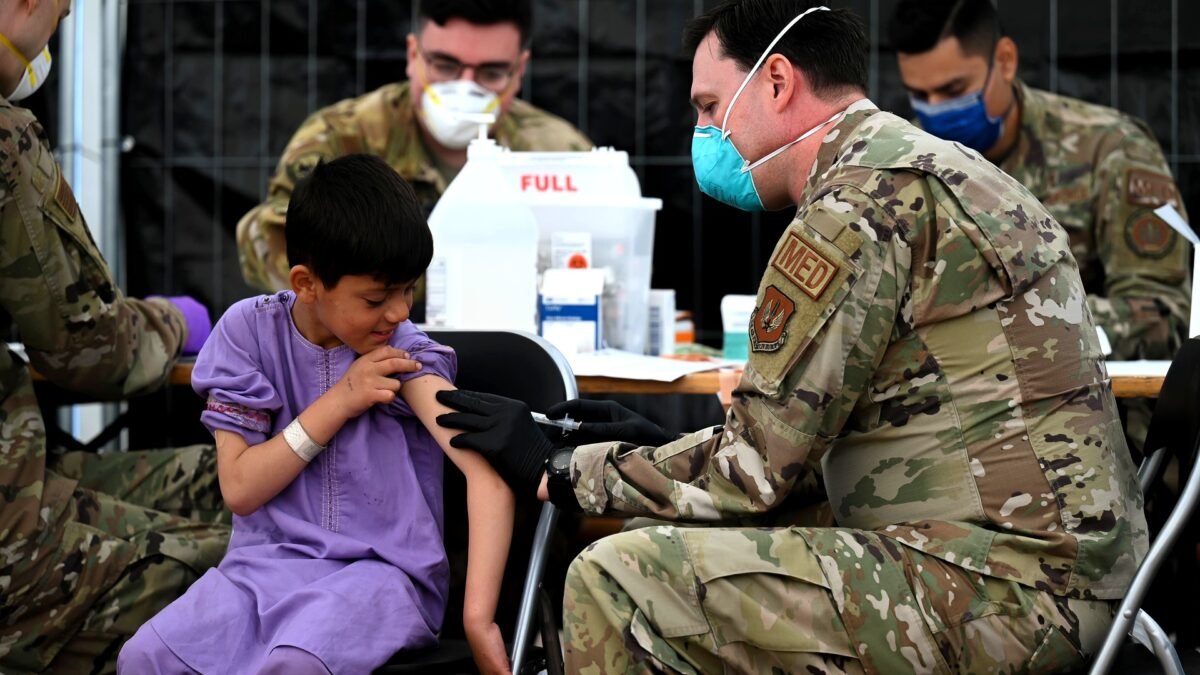
A child in Lewis County, New York, has died after contracting measles, state health officials announced on Monday, in the first measles-related death in New York in more than 30 years. The death, confirmed in a joint statement by the New York State Department of Health and Lewis County Public Health, turns the state’s worst measles outbreak in a generation from a warning into a bereavement — and lands at a moment when the United States is recording its highest annual measles caseload since 1991.
The child was not publicly identified, and officials released neither the child’s age nor sex, asking that the family’s privacy be respected. The death was announced on 2 November, just two days before the statewide disaster emergency declared by Governor Kathy Hochul over the outbreak is due to expire.
“We are deeply saddened by the death of a child in Lewis County associated with the ongoing measles outbreak,” the two health departments said in their joint statement, according to CNN. “We extend our heartfelt condolences to the child’s family and loved ones and ask that their privacy be respected during this difficult time. Measles is a highly contagious disease that can cause serious complications and death. Vaccination is the best protection against measles.”
Hochul said she was heartbroken by the news. “As a mother and grandmother, I cannot imagine what this family is going through. My heart goes out to everyone who knew and loved this child,” the governor said in a statement. “Measles is highly contagious, and vaccination remains our best protection against this dangerous disease.”
But Hochul also used the moment to aim a sharp criticism at Washington. “This is New York’s first measles-related death in 30 years, a devastating reminder of what’s at stake when Washington deliberately erodes decades of progress in protecting Americans from preventable illnesses,” she said.
An outbreak concentrated in the unvaccinated
New York had recorded 178 measles cases in 2026 as of 24 October, according to the state and county health departments — 170 outside New York City and eight within the city. Lewis County, a rural county in the state’s North Country region north-east of Syracuse, had reported 15 cases as of 14 October, and every one of them was in a person who had not received the measles, mumps and rubella (MMR) vaccine, according to CNN.
Lewis County’s case count ranks fourth among New York’s 62 counties, according to the state’s measles dashboard, behind Seneca County, which has the highest count with 30 cases, followed by Otsego and Steuben counties, North Country Public Radio reported. The New York Post reported that the child who died was unvaccinated, although the joint statement itself gave no details about the child’s vaccination status.
The pattern in Lewis County mirrors the national picture. Across the United States, about 96 per cent of measles cases reported in 2026 have been in people who were unvaccinated or whose vaccination status was unknown, according to the Centers for Disease Control and Prevention (CDC). In Lewis County, the figure is 100 per cent of confirmed cases.
The state health department said it had offered resources to Lewis County to assist with community outreach and to support local vaccination efforts, “both in response to this case, and as part of our ongoing efforts to support counties that are facing this ongoing measles outbreak,” according to Reuters.
Emergency powers expire as the outbreak continues
The death comes as the emergency machinery Hochul built to fight the outbreak reaches its limit. The governor declared a statewide disaster emergency last month, with Executive Order 65 taking effect on 5 October and running through 4 November — today. The order allows paramedics, advanced emergency medical service providers, midwives and pharmacists to administer the MMR vaccine, including to children aged two and older, and lets registered nurses order measles testing, steps designed to speed protection in rural areas with few clinics.
Whether the order will be extended was not announced as the death was confirmed. Hochul told Reuters in October that the state would seek federal assistance to help contain the outbreak, but did not confirm whether it had submitted a formal request for a CDC Epidemic Intelligence Service, or Epi-Aid, response.
On Monday, the US Department of Health and Human Services (HHS) told CNN that the CDC had deployed epidemiologists and other experts at the state’s request to work alongside state health officials, “providing surveillance, data analysis, strategic planning, and other outbreak response support.”
HHS added: “Our hearts go out to the family mourning this tragic loss. Secretary Kennedy and CDC Director Dr. Erica Schwartz continue to make clear that the MMR vaccine is the most effective way to prevent measles.”
The worst measles year in America since 1991
New York’s tragedy is one thread in a national resurgence that has now produced more measles cases than any year since 1991. The CDC has confirmed 4,852 measles cases across the United States as of 29 October, according to data updated on 30 October — more than double the 2,289 cases recorded in all of 2025, which was itself the worst year in three decades. In 2024, the CDC counted just 285 cases nationwide.
The cases have been reported by 47 jurisdictions, and 96 per cent of them are linked to outbreaks — defined as three or more related cases — with 43 new outbreaks designated in 2026. More than a quarter of all American cases this year have been in Pennsylvania, which has reported 1,426 cases across 44 counties as of 30 October, according to the state health department, with 268 hospitalisations and five measles-associated deaths.
The CDC’s own national death count stands at three for 2026, a figure it says is subject to change. The gap between the federal tally and Pennsylvania’s five reflects a policy shift under Health Secretary Robert F. Kennedy Jr., under which the CDC now counts a measles death only when the National Center for Health Statistics lists the disease as the underlying cause on the death record, replacing its earlier reliance on state health departments’ figures. Pennsylvania counts deaths under its own state definition, and the two tallies should not simply be added together. The CDC did not name the states where its three counted deaths occurred.
Hospitalisation has been reported for about 10 per cent of cases nationally — 479 of 4,588 cases in the CDC’s data as of 22 October — including 16 per cent of children younger than five. Children and teenagers make up the majority of cases: 17 per cent have been in children under five and 42 per cent in those aged five to 19, according to the CDC.
A disease that was beaten — and is back
Measles was declared eliminated in the United States in 2000, meaning there had been no continuous domestic transmission for at least 12 months. That status is now in jeopardy. The Pan American Health Organization, an arm of the World Health Organization, is set to hold a measles elimination commission meeting next week, when the United States is widely expected to lose the elimination status it has held for 26 years.
The last time a New Yorker died of measles was during a large outbreak in New York City that ran from March 1990 to the summer of 1991, according to the New York Post. Nationally, the last great resurgence ran from 1989 to 1991, with more than 55,000 infections and 123 deaths, according to Reuters. The 1991 total of 9,643 cases remains the benchmark the current outbreak has not yet reached — but with two months of the year still to run when the CDC’s 29 October count was published, and weekly increases running in triple digits for 12 straight weeks, the gap is narrowing. The CDC confirmed 264 new cases in the week to 29 October alone, roughly what the United States once recorded in a full year.
Measles is among the most contagious diseases known. The CDC says nine in 10 unvaccinated people exposed to an infected person will catch the virus, and the World Health Organization estimates one case can infect up to 18 people. The virus can linger in the air for up to two hours after an infected person leaves a room.
For most people it brings fever, cough and a characteristic rash. But the complications are what kill. About one in five people who are not vaccinated and contract measles ends up in hospital, according to the CDC. As many as one out of every 20 children with measles gets pneumonia, the most common cause of death from measles in young children. One in every 1,000 children with measles develops encephalitis, or swelling of the brain, which can cause deafness or permanent brain damage. Measles can also wipe out immune memory, leaving children vulnerable to other infections for months or years afterwards.
The protection against all of this is settled science and has been for decades. Two doses of the MMR vaccine, recommended in childhood, provide 97 per cent protection against measles infection, according to the CDC. One dose provides about 93 per cent protection.
Vaccination rates slipped below the line that stops outbreaks
Public health experts have largely attributed the rise in measles cases to falling vaccination rates. Measles needs about 95 per cent of a community to be immune to stop spreading — a higher threshold than almost any other vaccine-preventable disease, because the virus is so contagious. In 2024, 93 per cent of American three-year-olds had received at least one MMR dose, according to data from the CDC’s National Immunization Surveys — below that 95 per cent threshold. In 2025, a year marked by the nation’s first measles deaths in decades, the level rose to 97 per cent among three-year-olds, according to CNN, suggesting the outbreaks themselves drove a surge of immunisations in some places.
The national average, however, hides deep local gaps. Measles outbreaks cluster in communities where vaccination rates are far lower than the national figure — often in close-knit religious or philosophical communities, or in rural areas with limited access to clinics. Once the virus is introduced into such a community, it spreads fast, and the cases that follow are overwhelmingly in the unvaccinated.
Kennedy has drawn broad criticism for his response to the outbreaks, including downplaying the immunity provided by the MMR vaccine, according to CNN. In Pennsylvania, the measles-related deaths have also sparked a war of words between Kennedy and state officials. President Donald Trump has also repeated misinformation about vaccines, including linking them with autism and saying that children have “a tremendous amount of vaccines” put in their bodies — claims that decades of large-scale research have found no evidence to support.
Analysis: Why It Matters
A thirty-year line has been crossed
Thirty years is a long time in public health. It is long enough for a generation of parents to grow up without ever seeing measles kill a child in their state, long enough for the disease to feel like history rather than a threat. That is precisely why this death matters beyond the grief of one family in Lewis County. A milestone like “first in 30 years” is not a statistic; it is a signal that the margin of safety built up over decades has been spent. New York’s last measles death came in an era when the disease was still a living memory. This one comes in an era when the vaccine that prevents it is free, widely available, and 97 per cent effective after two doses. The distance between those two facts — a preventable death and a proven prevention — is the story.
The arithmetic of herd immunity does not negotiate
Measles is the ultimate test of a community’s vaccination coverage, because its threshold for herd immunity is the highest of any common disease. At 95 per cent, the maths is unforgiving: a community at 93 per cent, the national figure for three-year-olds in 2024, is not “nearly protected” — it is unprotected, because the virus finds the gaps. Lewis County’s 15 cases, all in unvaccinated people, are the arithmetic made visible. Every outbreak in 2026 has followed the same pattern: the virus enters a pocket of low coverage and burns through it, while the vaccinated majority around it stays safe. The lesson is not that vaccines fail; it is that they only work as a collective shield, and the shield has holes. The encouraging rise in coverage among three-year-olds in 2025 shows that fear can drive uptake — but fear that arrives after a child’s death is the most expensive possible way to learn.
The death-count dispute obscures the real toll
The gap between the CDC’s three counted deaths and Pennsylvania’s five is a technical dispute about definitions, but it has become a political one — and it risks obscuring the human reality. Under the new federal method, a death counts only when the National Center for Health Statistics records measles as the underlying cause; under the old method, state health departments’ own determinations were used. Neither method changes how many families have buried someone. What the dispute does reveal is a federal health apparatus whose credibility is being tested from two directions at once: state officials who believe their own counts, and a health secretary whose past statements on vaccines have made even routine data decisions look political. When the counting method itself becomes contested, the public loses the one thing it needs most in an outbreak — a number it can trust. The Lewis County death, announced by the state rather than the CDC, will now sit inside that same argument, and that is a failure of communication as much as of counting.
The politics of prevention have become the story
Governor Hochul’s statement was unusually blunt for a governor announcing a child’s death: she blamed Washington directly for “deliberately” eroding decades of progress. HHS responded with condolences and a restatement that the MMR vaccine is the most effective prevention — a position its own secretary has at times undermined by downplaying the vaccine’s immunity. This is the tension at the heart of the American measles resurgence: the federal government simultaneously runs the agency that tracks the outbreak and is led by officials who have spent years questioning the vaccines that stop it. The CDC did deploy epidemiologists to New York at the state’s request, and that operational cooperation matters. But cooperation on the ground does not resolve the contradiction at the top, and it is that contradiction — not any single outbreak — that will determine whether 2026 is a bad year or the start of a new normal.
Losing elimination status would be a verdict, not just a label
Next week’s Pan American Health Organization meeting is likely to strip the United States of a status it has held since 2000. That would be more than a symbolic embarrassment. Elimination status is a measure of a country’s public health infrastructure: its surveillance, its vaccination coverage, its ability to stop an imported case from becoming an outbreak. Losing it tells the world that the richest country on earth can no longer reliably do something it did routinely for a quarter of a century. It would also put the United States in the company of countries whose health systems it once helped to build. The question for the months ahead is whether that verdict shocks the system back into action — as the death of a child in Lewis County should — or whether it is absorbed as one more piece of bad news in a year full of it. History suggests that measles only retreats when the response is boring, sustained and universal: vaccination clinics, school checks, and clear public messaging, repeated until the numbers turn. There is no shortcut, and there is no substitute.
What to Watch Next
- Whether Hochul extends the disaster emergency: Executive Order 65 expires today, 4 November. An extension would keep expanded vaccination powers in place; letting it lapse would test whether the outbreak is genuinely receding or merely pausing.
- The PAHO elimination decision: The Pan American Health Organization’s measles elimination commission meets next week. A formal loss of the status the United States has held since 2000 would be a landmark verdict on the resurgence.
- The weekly CDC count: The CDC’s next update will show whether the 264 cases added in the week to 29 October were a peak or a plateau — and whether the national total is closing on the 1991 figure of 9,643.
- Pennsylvania’s outbreak: With 1,426 cases and five deaths, Pennsylvania remains the epicentre. Any sign of the outbreak spreading into neighbouring states would widen the crisis.
- Vaccination uptake in the affected counties: The most important number in the coming weeks is not the case count but the vaccination rate in Lewis, Seneca, Otsego and Steuben counties — and whether the death drives families to clinics, as the 2025 national rise suggests it might.
Sources
- Centers for Disease Control and Prevention — Measles Cases and Outbreaks
- CNN — Child in New York dies after contracting measles, the state’s first such death in 30 years
- Reuters — New York state reports first measles-linked child death in over 30 years amid outbreak
- New York Post — NY child dies of measles, marking state’s first death from the disease in 30 years
- WAMC Northeast Public Radio — North Country child first New Yorker to die after contracting measles in more than 30 years

About the Author — Abdul Mannan
Related Articles
Courts Rebuff Trump’s Bid to Set Aside California Ballots as Americans Vote in the Midterms
The Supreme Court rejected the Trump administration's last-minute bid to set aside more than 20,000 California mail ballots,…
Supreme Court Rejects Trump’s Last-Minute Bid to Set Aside 20,000 California Ballots on Eve of Midterms
The Supreme Court has rejected the Trump administration's last-minute attempt to force California to set aside about 20,000…
America Votes in the 2026 Midterms as Control of Congress — and Trump’s Final Two Years — Hang in the Balance
Americans vote on Tuesday in midterm elections that will decide control of Congress for the final two years…