
Trump Says US Has ‘No Immediate Plan’ to Strike Iran as Tehran Hails Midterm Vote as a Rejection of War

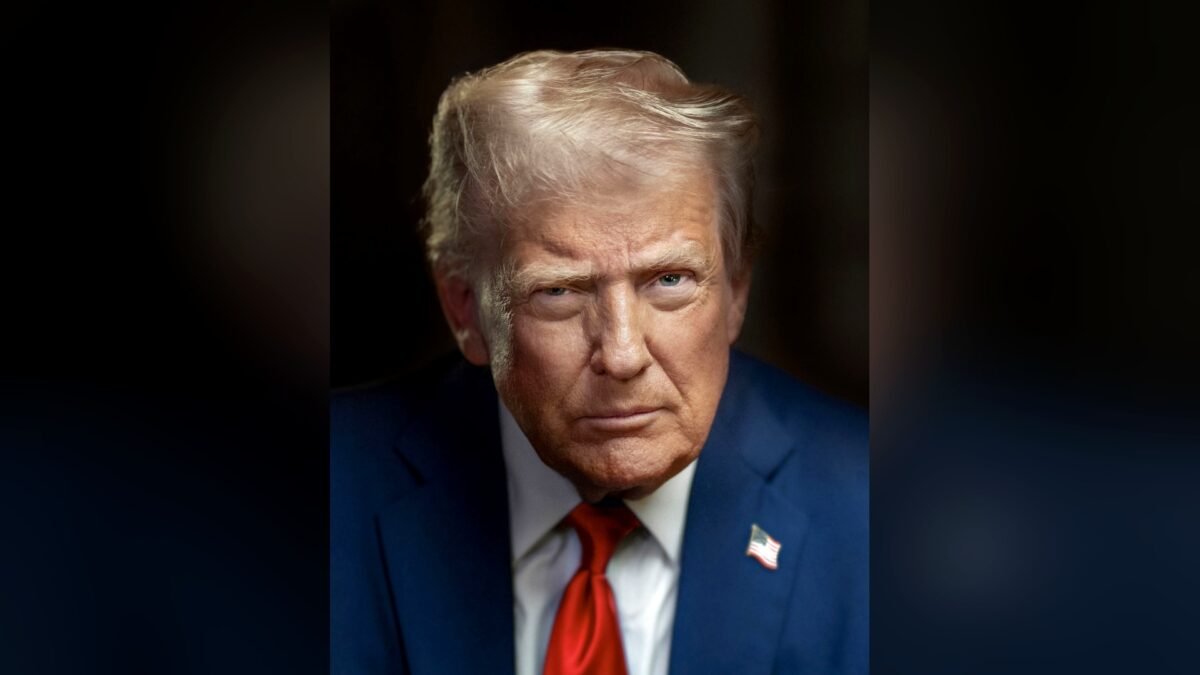
President Donald Trump has said the United States has no immediate plan to strike Iran, telling the Financial Times that Washington is getting everything it wants from the current stand-off, even as he warned that American forces remain ready to act if negotiations fail. The remarks, made in a six-minute telephone interview on Tuesday, landed hours before the polls closed in the United States midterm elections and days after American jets struck Iranian targets on Qeshm Island — and they were swiftly seized upon in Tehran, where the speaker of the Iranian parliament declared that American voters had said no to war.
“We seem to be getting everything we want,” Mr Trump said, according to Reuters, which reported the interview on Tuesday. He added that the United States was “locked and loaded” should it decide to act, but suggested there might be no reason to do so. The president also confirmed that talks with Iran were continuing. “We’re having discussions, and we’ll see how that all works out,” he said, according to the Times of Israel’s account of the interview.
The statement is the clearest public signal yet from the White House about the next phase of the eight-month war with Iran, and it cuts directly against the expectation — reported by the New York Times on Tuesday and carried in this site’s earlier reporting — that the American military was preparing for a possible fresh strike as early as Wednesday, once the midterm voting was over. It also sits uneasily with the position of the Israeli prime minister, Benjamin Netanyahu, who has been signalling that another attack could come later this week. Asked about Mr Netanyahu’s hints, Mr Trump replied: “I’m ready, we’re ready. We’re locked and loaded if we need to go, but there may be no reason for it.”
Within hours of the interview becoming public, Tehran offered its own reading of the moment. Mohammad Bagher Ghalibaf, the speaker of the Iranian parliament and Tehran’s chief negotiator in the talks with Washington, posted on X on Wednesday that the results of the American midterm elections showed the public had rejected the war. “Conscience or the cost of living, Americans said NO TO WAR, and we endorse this message,” he wrote, according to AzerNews and several other outlets that carried the post. He warned that if the American government betrayed the will of its people “to serve international paymasters and blackmailers, it will learn our NO comes with a Nightmare.”
Mr Trump himself has acknowledged that the war played a part in his party’s defeat. The Democrats swept to control of both chambers of Congress in Tuesday’s elections, and the president conceded, in comments carried by The Business Standard’s live results coverage, that the conflict had weighed on Republican candidates. “I think a part of it was Iran, but at the same time, people understood the importance of what I’ve done with Iran,” he said. On his Truth Social platform he added that Republicans would have won had he been on the ballot. Exit polling conducted for American media outlets found that half of voters nationwide saw the midterms as an opportunity to rebuke the president, and that the cost of living — sharpened by fuel prices that rose as the war dragged on — was the dominant issue.
For now, at least, the guns are quieter than they have been for days. No agreement has been announced, Tehran says it is still studying Washington’s latest proposal, and the American military buildup in the Gulf continues. But the combination of the president’s words, the election result and the pause in a naval operation designed to force open the Strait of Hormuz has produced the first real opening for diplomacy since the war began in February.
What Mr Trump actually said
The Financial Times interview was brief — six minutes by telephone — but its timing gave it outsized weight. Mr Trump spoke on Tuesday as Americans were voting, and the newspaper’s account was relayed within minutes by Israeli outlets, then by Reuters and others. The central point, on which all the accounts agree, is that no immediate American attack on Iran is planned, and that the president is satisfied with how the stand-off is going.
“We seem to be getting everything we want,” he said. He described the current posture as a “brilliant situation,” according to the Israeli news site Ynet, which carried the headline line, and he argued that the United States was not, in any meaningful sense, at war at all. “We’re not really in a war,” he said, pointing to Operation Midnight Hammer, the June operation against Iran’s nuclear sites, which he said had “wiped out their nuclear potential,” and to the later Operation Epic Fury. “We then hit them again, Epic Fury, etc… But if you think about it, we haven’t really had a war with them in a long time, six months, maybe more,” he said, according to Bytes Europe’s account of the interview.
That framing — that the war is, in effect, already won and that further strikes may be unnecessary — is a marked change of tone from the days before the vote, when American officials were warning Gulf allies to prepare for a short, intense resumption of fighting after the midterms, and when the New York Times reported that the military was preparing a possible strike as early as Wednesday. It is also a change from the language of the defence secretary, Pete Hegseth, who has described American forces as “locked and loaded” against Iranian power plants and energy infrastructure, and from General Dan Caine, the chairman of the Joint Chiefs of Staff, who has said the military is ready “at literally a moment’s notice.”
The interview also carried a direct message for Mr Netanyahu. The Israeli prime minister has been pressing for new strikes after the midterms, according to the Associated Press, which cited two regional officials and a person familiar with the matter. Mr Trump’s answer — ready, but perhaps with no reason to go — neither endorses nor rules out the Israeli position. It leaves the decision with Washington while keeping the threat alive, a balance the president has struck repeatedly through the war: reassurance that no attack is imminent, paired with an unmistakable warning that one remains possible.
There is, however, a competing account of American intentions in circulation. Ynet reported on Wednesday that the United States was preparing for a possible strike on Iran as soon as the same day, a claim that sits uneasily with Mr Trump’s statement to the Financial Times. The Israeli site did not say where its report of preparations came from, and no American official has been quoted confirming it. The two reports therefore diverge, and the divergence itself is part of the story: the president’s own words play down any imminent action, while reports of military preparation describe active readiness for one. Both can be true at once — a military can be ready without being ordered to act — but the gap between them is wide enough that neither side of the argument in Washington or Tehran can claim the other has been settled.
Mr Trump also confirmed that negotiations are continuing, and neither he nor Vice President JD Vance has set a deadline for a deal, according to US News Pulse’s account of the interview. That matters, because deadlines have repeatedly driven the tempo of this war: an earlier ten-day ultimatum from the president was extended to 8pm Eastern Time on Tuesday, and the expectation of a strike after the midterms had itself become a kind of deadline. Removing the deadline, even temporarily, changes the arithmetic for everyone.
Tehran reads the vote as a verdict
Mr Ghalibaf’s response on Wednesday was the most pointed Iranian reaction to the American election result, and it was framed as a reading of the American public’s mind. The parliament speaker, who also serves as Tehran’s chief negotiator, wrote that the midterm results demonstrated growing opposition among Americans to war and to its economic consequences. The election, he argued, had shown that voters rejected military conflict either out of conscience or because of the rising cost of living — and Iran, he said, endorsed that message.
The warning attached to it was equally deliberate. “If the US govt betrays their public will to serve international paymasters and blackmailers, it will learn our NO comes with a Nightmare,” he wrote. The language echoes the threats Tehran issued on Tuesday, when Mr Ghalibaf told parliament that any American “strategic error” would open “a new battlefield,” and when other Iranian officials warned that American bases in Europe could be targeted if the war resumed. The message is consistent: Iran claims the American electorate as an ally in its argument, and warns that ignoring the electorate would carry a price.
It is worth being careful about what the election result actually proves. The midterms were not a referendum on the Iran war alone. Voters were driven above all by the cost of living — by grocery prices, rents and fuel — and by a broader judgement on the president’s second term. The war mattered, and Mr Trump himself has said so, but it was one factor among several, and the result does not by itself demonstrate that a majority of Americans oppose the war on its merits. Tehran’s reading of the vote is a political argument, not a measurement, and it should be reported as such.
Even so, the political effect in Washington is real. The Democrats’ victory gives them control of both the House and the Senate from January, and with it the power to investigate the administration, to demand concessions on major legislation and to press for a war-powers debate. The new Congress will be seated as the war enters its ninth month, and the president will be governing with a legislature controlled by the opposition for the first time in his second term. That does not by itself prevent military action — the president retains broad authority as commander-in-chief — but it changes the political cost of ordering it, and it gives Tehran a new audience in Washington to appeal to.
The Iranian foreign ministry, meanwhile, has been more measured than the parliament speaker. Its spokesman, Esmaeil Baghaei, said on Wednesday that the American proposal delivered through Pakistan remained “under review” and that Tehran would communicate its response once it had finalised its views, according to the semi-official ISNA news agency, as reported by WE News English. The phrasing is cautious and bureaucratic, and it contrasts with the triumphalism of Mr Ghalibaf’s post. Taken together, the two statements suggest a familiar Iranian pattern: a hard public line from the political leadership, and a slower, more procedural track from the diplomats who would actually have to negotiate a deal.
The diplomacy: proposals, mediators and a paused naval mission
The diplomatic track has been running in parallel with the military one for weeks, through mediators in Qatar, Turkey and Pakistan. On Wednesday, reports circulated that the two sides were nearing a framework agreement to end the conflict, but no deal has been announced, and Tehran’s own account is that it is still reviewing what Washington has put on the table. Washington is said by Axios, as reported by WE News English, to be expecting Tehran’s response on several key points within the next 48 hours.
One concrete step has already been taken. Mr Trump announced on Tuesday that the United States had suspended “Project Freedom,” the naval initiative to escort commercial shipping through the Strait of Hormuz, following requests from Pakistan and several other countries. The operation had been announced only the day before, on Monday, as a mission to help stranded ships navigate a strait that remains under a de facto Iranian blockade. Iran’s military had responded on Monday that any foreign armed force, especially the American army, would be attacked if it attempted to approach and enter the strait.
The pause was welcomed in Islamabad. Pakistan’s prime minister, Shehbaz Sharif, thanked Mr Trump for what he called “courageous leadership” and a timely decision, saying in a statement shared on X that the move came at a critical juncture and reflected a constructive response to the request made by Pakistan alongside several allied nations. Mr Sharif, who has been a key mediator between Iran, the United States and Israel, said he was hopeful the current momentum of negotiations would lead to peace in the region, according to Al Jazeera’s live coverage.
The suspension is not a withdrawal. The operation was paused, not cancelled, and the American naval presence in the Gulf remains formidable: two carrier strike groups are deployed, and a third, led by the USS Theodore Roosevelt, has been reported to be heading towards the region. The pause is best read as a signal — a gesture of good faith intended to give the talks room — rather than as a change in the underlying military balance. If the negotiations collapse, American officials have said the blockade can be restored and military action resumed.
The substance of what is being negotiated is well known, because the two sides have been circling the same points for months. Iran has set out seven conditions for reopening the Strait of Hormuz, including an end to the fighting, the lifting of sanctions and the release of frozen assets, reparations and recognition of Iranian authority over the strait. Tehran has also said the strait could be reopened within two days if its conditions were met — a faster timetable than the week it originally proposed. Washington, for its part, has demanded a moratorium on uranium enrichment, an end to Iran’s nuclear weapons programme and the reopening of the strait, and has offered the gradual lifting of sanctions and the release of frozen Iranian funds in return. A senior Iranian official told Reuters on Tuesday that the two sides were still far from an agreement, and Qatar’s foreign ministry spokesman, Majed al-Ansari, said the same day that both countries were reviewing proposals from mediators but that their differences remained unresolved.
The gap between the two positions is the gap between a ceasefire and a settlement. A ceasefire requires only that both sides stop shooting; a settlement requires agreement on enrichment, on sanctions, on the strait and on the future of Iran’s missile programme and its support for allied militias — questions that have defeated negotiators for decades. The reports of a one-page memorandum of understanding, which would declare an end to the war and open a thirty-day window for detailed negotiations, reflect that distinction: the memorandum would be a framework, not a peace treaty, and most of its terms would be conditional on a final agreement being reached. That is why the language from both capitals remains so guarded, and why the next forty-eight hours — the window in which Washington expects Tehran’s response — will be watched so closely.
The military picture: strikes, mines and a carrier buildup
The diplomacy is unfolding against a military backdrop that has not gone away. On Monday, American jets struck Iranian targets on Qeshm Island, the largest island near the Strait of Hormuz, after an Iranian missile launcher fired at American aircraft, according to American officials. The United States described the strikes as defensive. On Tuesday, the United States said it had destroyed sixteen Iranian mine-laying vessels, according to the Associated Press, and Mr Trump said there were no reports of mines having been planted.
On Wednesday, Iran’s Revolutionary Guards said four oil tankers had been destroyed after striking naval mines while attempting to navigate a route south of the Strait of Hormuz that the Guards described as prohibited, according to The Insight International, which reported the claim, and AnewZ, which also carried it. The claim has not been independently verified, and it sits in tension with Mr Trump’s statement that no mines had been reported planted. It is possible that both accounts are incomplete — that mines were laid and struck vessels without American forces being aware of it, or that the Guards’ claim is exaggerated or false. What is certain is that the waters around the strait remain dangerous, and that the risk of an incident at sea — a mine strike, a collision, a misread radar return — is the most likely trigger for a sudden escalation.
The wider war has already taken a heavy toll. More than 1,700 civilians have been killed in Iran, including 254 children, according to the Human Rights Activists in Iran group, as reported by Al Jazeera. Fourteen merchant ships have been struck since the war began. The Houthis, Iran’s allies in Yemen, have escalated their attacks on Saudi Arabia, and the Saudi-led coalition has stepped up its strikes on Houthi positions. In Lebanon, Israeli forces have carried out daily air strikes deeper into the country despite a ceasefire, and Hezbollah says its fighters have carried out seventeen targeted strikes against Israeli forces inside Lebanese territory. The war that began with American and Israeli strikes on Iran on 28 February has become a regional conflict, and the Strait of Hormuz — through which about a fifth of the world’s oil and liquefied natural gas passes — is its chokepoint.
The American military buildup reflects that reality. A third carrier strike group is reported to be on its way to the region, joining two already deployed. The deployment gives the president the ability to strike at short notice, and it also gives him something to trade away in negotiations. A carrier that is already in place is a threat; a carrier that is withdrawn is a concession. The question for the coming days is whether the buildup is read in Tehran as preparation for an attack or as leverage for a deal — and whether the answer changes if the talks stall.
Oil, markets and the cost of living
The markets have responded to the president’s words with cautious relief. West Texas Intermediate crude rose to near 96 dollars a barrel during Asian trading on Wednesday, according to FXStreet, as traders weighed the uncertainty over peace negotiations. The rise, rather than a fall, reflects the market’s judgement that a deal is not yet done: oil had eased earlier in the week on hopes of a diplomatic breakthrough, and the absence of an agreement has left prices elevated. Brent crude, the international benchmark, had fallen more than seven per cent on Monday to about 105 dollars a barrel on hopes of talks, after weeks of war-driven volatility.
The connection between the war and the American cost of living is the thread that runs through the whole story. Fuel prices rose sharply as the war dragged on, and they became a central issue in the midterm campaign. The Democrats’ victory was driven above all by affordability — by voters who said they were worse off than they had been two years ago — and the war’s contribution to that feeling was something Mr Trump himself acknowledged. If the war ends, or even pauses for long enough for oil prices to fall, the political pressure on the administration eases. If it resumes, and fuel prices rise again, the new Democratic Congress will have a powerful argument that the president ignored the message voters sent on Tuesday.
The same logic applies in Tehran, though the pressures are different. Iran’s economy has been strangled by sanctions and by the naval blockade of its ports, and the release of frozen funds and the lifting of sanctions would be a significant prize. But the Iranian leadership also faces a domestic audience that has endured eight months of war, and a hardline constituency that regards any concession on enrichment or on the missile programme as surrender. Mr Ghalibaf’s warning of a “nightmare” is aimed as much at his own domestic audience as at Washington: it tells the hardliners that Tehran is not capitulating, even as the diplomats in his own government study Washington’s proposal.
Analysis: Why It Matters
The election has changed the war’s politics, not just its coverage
The most important consequence of Tuesday’s vote is not that the Democrats won, but that the war now has a domestic political price that the president has publicly acknowledged. For eight months, the war was conducted by a president whose party controlled both chambers of Congress and rarely exercised its power to restrain him. From January, the president will face a Congress controlled by the opposition, with the power to investigate, to hold hearings and to demand concessions on legislation. That does not make military action impossible, but it makes it more expensive, and it gives the diplomats in both capitals a new argument: that the American people, having spoken, expect their government to find a way out.
Mr Trump’s words are a pause, not a promise
It would be a mistake to read the Financial Times interview as a commitment not to strike. The president said there was “no immediate plan,” not that there would never be one, and he coupled the reassurance with a warning that American forces were “locked and loaded.” He has said similar things before, and then ordered strikes. The interview is best understood as a statement of current intent, not as a change of policy: the military option remains on the table, the buildup continues, and the president has kept the freedom to change his mind. What has changed is the timing. A strike that was expected this week is now, on the president’s own account, not imminent — and that gives the diplomats forty-eight hours they did not have yesterday.
Tehran’s reading of the vote is a strategy, not just a reaction
Mr Ghalibaf’s claim that Americans said no to war is, as noted above, an overreading of an election that turned on the cost of living. But it is also a deliberate strategy. By framing the election as a popular verdict against the war, Tehran is doing two things at once: it is telling Washington that further strikes would defy the expressed will of the American people, and it is telling its own domestic audience that Iran’s position has been vindicated by the American electorate itself. The warning of a “nightmare” is the other half of the strategy: it tells Washington that Tehran’s patience is not unlimited, and that a return to war would be met with a response that is not confined to the region. Both messages are aimed at shaping the negotiations, not at describing them.
The Strait of Hormuz is where diplomacy and danger meet
The strait is the hinge of the whole conflict. About a fifth of the world’s oil passes through it, and its closure — or even the threat of its closure — moves global prices within hours. The pause in Project Freedom, the reports of mines and tankers, and the Iranian conditions for reopening the strait all point to the same conclusion: whoever controls the strait controls the tempo of the war. A deal that reopens it would be a tangible, measurable achievement for both sides, and it is the most likely first step in any agreement. But the strait is also where an accident is most likely to happen, and where a single incident — a mine, a missile, a misjudgement — could undo weeks of diplomacy in minutes. The next few days will be judged above all by what happens in those waters.
The next Congress will be the war’s new audience
From January, the war will be debated in a Congress controlled by the party that won the midterms in part by campaigning against it. The Democrats are expected to use their power to investigate the administration and to demand concessions on major legislation, and the war will be at the centre of that debate. That creates an incentive for the administration to reach a deal before the new Congress is seated — a deal it can present as a success — and an incentive for Tehran to wait, in the hope that a Democratic Congress will be more sympathetic to its position. The tension between those two incentives is the central dynamic of the next two months, and it will shape the negotiations more than any single statement from either side.
What to Watch Next
- Tehran’s response within 48 hours. Washington is said to expect Iran’s answer on the key points of its proposal within the next two days. Whether Tehran accepts, rejects or seeks to amend the proposal will determine whether the current pause becomes a negotiation or merely a delay.
- Whether Project Freedom resumes. The naval mission to escort shipping through the Strait of Hormuz was paused, not cancelled. Its resumption would signal that the talks have stalled; its continued suspension would signal that diplomacy is still alive.
- The waters around the strait. The Revolutionary Guards’ claim that four tankers hit mines, set against the president’s statement that no mines were reported planted, needs to be resolved. Any confirmed incident at sea — a mine strike, a seizure, a collision — could change the picture overnight.
- Mr Netanyahu’s next move. The Israeli prime minister has been pressing for new strikes after the midterms, and his hints of an attack later this week have not been withdrawn. Whether Israel acts independently, or presses Washington to act, will be a key test of the president’s “no immediate plan” position.
- The new Congress. The Democrats take control of both chambers in January. Watch for early signals — hearings, war-powers resolutions, statements from the incoming leadership — about how the new majority intends to handle a war it campaigned against.
Sources
- Reuters — “US has no immediate plan to strike Iran, Trump tells FT”
- AzerNews — “Iran’s parliament speaker says US voters rejected war in midterm elections”
- WE News English — “Iran Says US Proposal ‘Under Review’, Response To Be Conveyed Via Pakistan”
- The Business Standard — US midterm elections 2026 live results
- FXStreet — “WTI rises to near $96.00 amid US-Iran peace uncertainty”
- The Insight International — “Revolutionary Guards say four tankers hit mines near Hormuz as Ghalibaf says Americans voted against war”

About the Author — Abdul Mannan
Related Articles
Iran Warns of ‘New Battlefield’ and Threatens US Bases in Europe as Washington Prepares Possible Post-Midterm Strikes
Tehran says any renewed American attack will be met with a response 'without geographical limits' — and names…

Houthis Advance to Within 80km of Aden in Closest Threat to Yemen’s Seat of Government Since 2015
Yemen's Houthis have advanced to within 80 kilometres of Aden, the closest they have come to the seat…
Iran Says Talks to End Eight-Month War Continue as Draft Deal Circulates and Mediators Head to Tehran
Iran says contacts with the United States to end their eight-month war are continuing after days of Qatari-mediated…