
Iran Warns of ‘New Battlefield’ and Threatens US Bases in Europe as Washington Prepares Possible Post-Midterm Strikes

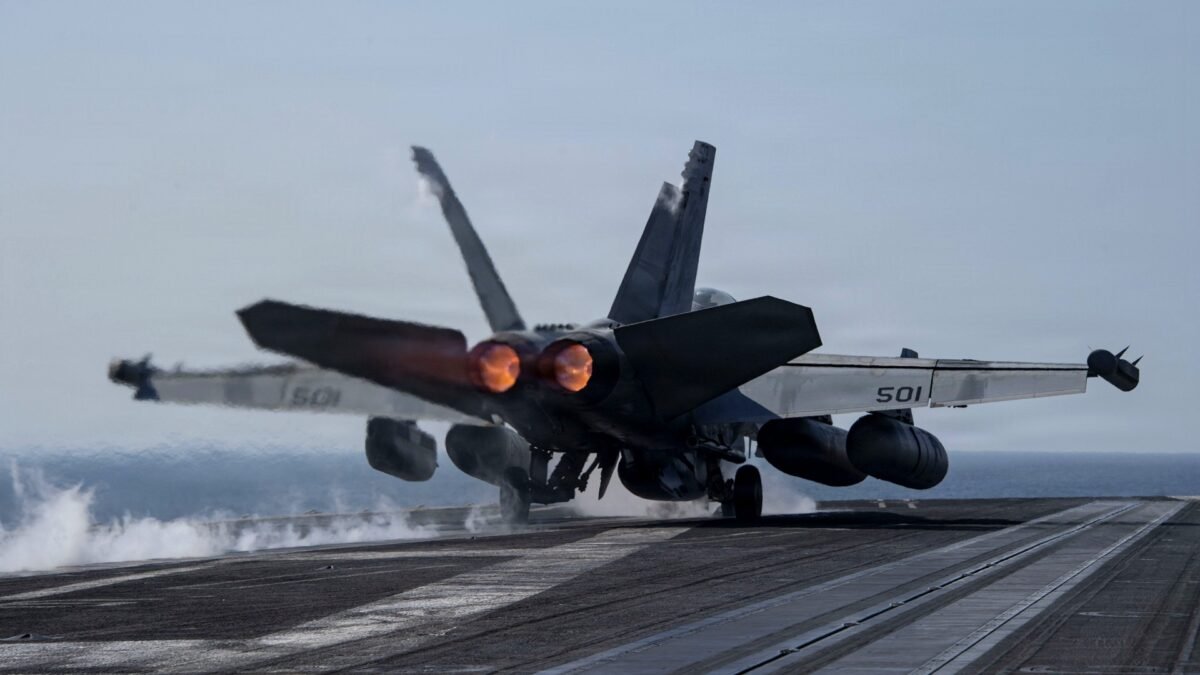
Iran has warned the United States that any renewed American attack will open “a new battlefield” and be met with a response “without geographical limits”, with senior Iranian officials and state-linked media openly naming American military bases in Europe as possible targets. The warning, delivered in Tehran on Tuesday, comes as Washington prepares for strikes on Iran that could begin as early as Wednesday, the day after the American midterm elections.
The escalation in rhetoric on both sides has turned the days after the United States midterm vote into the most dangerous moment in the eight-month war between the United States, Israel and Iran since the fighting began in late February. According to Reuters, citing four sources, the United States has already deployed sufficient military forces to the Middle East to strike Iran at short notice, potentially as early as this week, with Iranian nuclear facilities among the possible targets. The New York Times reported, citing American sources, that the military is preparing for a possible strike as early as Wednesday 4 November, with any action depending on President Donald Trump’s approval.
Iran’s parliament speaker, Mohammad Bagher Ghalibaf, delivered the sharpest warning in a speech to parliament on Tuesday, hours after an American fighter jet reportedly struck an Iranian missile system on Qeshm Island in the Strait of Hormuz. “The ball is in America’s court to prevent war,” Ghalibaf said, according to the European Pulse news outlet, adding that Iran was at its highest level of defensive readiness and that any American “strategic error” would open “a new battlefield in the war”.
The threat to take the conflict beyond the Middle East is not new in outline, but its detail and its official character are. On Saturday, Iran’s new supreme leader, Mojtaba Khamenei, wrote on X: “Any level or type of threat must be met with an immediate, impactful and geographically unrestricted response.” The Times reported that former foreign minister Manouchehr Mottaki, now a member of parliament, said on Sunday that the formulation meant American bases in European countries — singling out Britain, Germany, Italy and Portugal — could be drawn into any conflict. “If our war is to break out, it will no longer be a regional war, it will be extraregional,” Mottaki said, according to the European Pulse.
Iran’s state news agency ISNA quoted Mottaki in even blunter terms: “Outside the region means locations used against us. At present, the geographical area — and there is evidence of this — is Europe… Therefore, with no geographical restrictions, yes, this means our missiles can reach Europe,” he said, according to Azernews.
A Warning Delivered in Parliament
Ghalibaf’s speech was the most authoritative statement of Iran’s position since the American strike on Qeshm Island on Monday, an attack that was itself the latest turn in a war that has repeatedly defied predictions of a settlement. The parliament speaker said the late Ayatollah Ali Khamenei, as commander-in-chief, had defined Iran’s military strategy for confronting a possible attack, and that senior military commanders and Mojtaba Khamenei — the new supreme leader, in direct control of the Islamic Revolutionary Guard Corps (IRGC) — had met last week and decided on “a response without geographical limits” and Tehran’s right to determine when any conflict ends, according to the European Pulse.
Ghalibaf also said Tehran had delivered a “firm and rational response” to Washington in the diplomatic channel, and that responsibility for preventing renewed fighting now rested with the United States. Foreign Minister Abbas Araghchi struck a different note on X, expressing support for Gulf state mediation and writing: “We have no hostility with the Gulf Cooperation Council countries, we value the positive role played by Qatar and Oman, and we continue dialogue with Saudi Arabia.”
The dual message — defiance in parliament, openness to mediation from the foreign ministry — captures the tension at the heart of Tehran’s position. Iran is simultaneously threatening its widest retaliation yet and insisting, through its diplomats, that it wants the war to end on terms it can accept. The question now is whether either message reaches Washington in time.
The “Without Geographical Limits” Doctrine
What makes this week’s warnings different from earlier Iranian threats is the specificity with which Iranian officials and newspapers have mapped the geography of a possible response. The hardline daily Kayhan argued that American and NATO facilities “in the heart of Europe” could be targeted if American and Israeli attacks on Iran resume, and named military facilities in Cyprus, Greece, Romania, Albania, Italy and Britain, as well as the joint US-British base on Diego Garcia in the Indian Ocean, according to EuropeSays.
A separate report in the newspaper Hamshahri raised the possibility of targeting American military infrastructure in Europe, including air bases, logistics centres and support facilities. The newspaper reported on Tuesday that Iran had updated its “target bank”, examining a scenario in which American support bases and infrastructure in Europe would be targeted under the “response without geographical limits” strategy, according to the European Pulse. Hamshahri also cited speculation that Iranian missiles could reach targets 4,000 to 5,000 kilometres away — significantly beyond the roughly 2,000-kilometre range Iran previously described as a self-imposed limit — although those longer-range estimates remain disputed, EuropeSays reported.
Iran’s military spokesmen have reinforced the message. Army spokesman Mohammad Akraminia said renewed fighting could spread beyond the countries and territories involved in previous rounds of the war. “In the recent war, the conflict extended from the occupied territories to US bases in regional countries, but if another attack takes place, the geography of the war could expand beyond West Asia,” he said, according to EuropeSays. A senior Basij commander, Ghassem Ghorayshi, said Iran’s armed forces would no longer be bound by previous limits on missile range, target selection or the scale of operations. “From now on, the armed forces will have no restrictions on striking targets, determining missile range or the scale of missile operations,” he said.
Hassan Ghashghavi, spokesperson for parliament’s National Security and Foreign Policy Committee, went further still, warning that renewed fighting could spread far beyond the countries already affected by the war. “I don’t want to use the term World War III, but the geography of the war would be almost on the scale of World War III,” he told Iranian media, according to EuropeSays. He said another conflict would be considerably wider than the previous 12-day and 40-day rounds of fighting, and suggested that Iranian retaliation could affect civilian infrastructure and everyday life in countries involved in attacks on Iran. “If they leave your people in darkness, you should leave their people in darkness too,” he said.
Tehran lawmaker Kamran Ghazanfari said Iran could retaliate against American assets in Europe and potentially on American territory if Washington used military bases in Arab states to attack Iran, according to EuropeSays. Ghazanfari also speculated, without providing evidence, that Iran might already possess nuclear weapons. Tehran has not officially announced that it possesses a nuclear weapon.
How Credible Is the Threat to Europe?
Western defence experts have offered more cautious assessments of Iran’s ability to strike targets in Europe directly, and the gap between Tehran’s rhetoric and its demonstrated capabilities is central to understanding how seriously the threat should be taken. The Washington-based Center for Strategic and International Studies lists Iran’s principal ballistic missiles with ranges generally around 2,000 kilometres, with some variants potentially reaching 3,000 kilometres, according to EuropeSays. Britain’s Royal United Services Institute has said strikes as far as the UK may be theoretically possible, but would involve smaller, less accurate warheads travelling through defended airspace.
A western security official told The Times that while Iranian missiles could not realistically reach many European bases and would be easily intercepted, Iran has ambitions to use proxy groups or criminal gangs in Europe to target American assets. The Times, citing Western intelligence sources, reported that Iran is preparing possible asymmetric responses, and that potential targets include American military facilities in the United Kingdom, Germany, Italy and Portugal. Iranian officials have also threatened to cut underwater cables that connect countries in the region to the internet, according to The Times.
“All options seem to be on the table: from cyberattacks to acts of terrorism, from targeting infrastructure in the Gulf to attacking Nato territory,” Ali Vaez, a Middle East specialist at the International Crisis Group, told The Times. “Iran would escalate both vertically and horizontally. In their view, that’s the only way they can halt the cyclical attacks on their territory and restore a degree of deterrence,” he said.
The United States has itself warned that Iran is planning attacks on American diplomats in the Middle East and Europe, according to The Times, and the threat probably includes Israeli diplomats. Iran could also potentially attack “soft targets” such as Jewish community centres, using proxies, Farzan Sabet, an Iran expert at the Geneva Graduate Institute, told The Times. Last week, Britain charged two men under the National Security Act over an alleged plot to target American military planes at RAF Fairford, which has acted as a launch pad for some American strikes, The Times reported.
The distinction matters. A direct Iranian missile strike on a base in Britain or Germany remains, on the available evidence, a distant prospect. But the asymmetric options — cyberattacks, sabotage, proxy violence, attacks on undersea cables — are harder to defend against and harder to attribute, and they are precisely the tools Iran has used before. The warnings should therefore be read less as a literal missile threat and more as a signal that Tehran intends to make any renewed war costlier and wider than the last round.
Washington’s Clock Is Ticking
On the American side, the preparations for a possible new round of strikes are now public and detailed. Reuters, citing four sources, reported that the United States has already deployed sufficient military forces to the Middle East to strike Iran at short notice, potentially as early as this week, and that any new American attack could target Iranian nuclear facilities, including research centres, according to Azernews. The New York Times reported that the military is preparing for a possible strike as early as Wednesday 4 November, the day after the midterm elections, with the decision resting on President Trump’s approval, according to Clash Report.
President Trump himself has kept the threat visible. Speaking to reporters at his Mar-a-Lago estate in Florida on Saturday, he said Washington could strike Iran’s remaining suspected nuclear facilities in “10 minutes”, and named Pickaxe Mountain, a suspected fortified nuclear facility, as a target that could be dealt with “all very quickly”. “We still have to take care of, I would say, one or two sites, but we can do that in 10 minutes. So, we have that plan,” Trump said, according to the Daily Meezan. He added that Iran’s leaders “want to make a deal badly”, but said he was not in a hurry, claiming American operations had destroyed much of Iran’s navy, air force, air defences and nuclear infrastructure.
Asked whether he would order renewed military strikes against Iran, Trump declined to give a direct answer. “Why would you ask such a stupid question?” he said, before adding: “I can’t tell you.” He had threatened at the weekend to strike Iran with a “hammer”, according to The Times, and the United States has moved more missile defence systems to the Middle East, including to Israel, in recent weeks, while a third aircraft carrier makes its way to the region.
Defence Secretary Pete Hegseth has been equally blunt. The Pentagon chief said American forces were “locked and loaded” to strike Iran’s power plants and energy industry if ordered, and General Dan Caine, chairman of the Joint Chiefs of Staff, said American forces were “ready to resume major combat operations at literally a moment’s notice”, according to Reuters. The Wall Street Journal reported that the United States has warned its Gulf allies to prepare for a “short, intense military” resumption of the Iran war after the midterm elections, according to The Times.
Israel, too, is pressing for action. Prime Minister Benjamin Netanyahu is urging the Trump administration to carry out another wave of strikes on Iran, according to two regional officials and a third person familiar with the matter who spoke to The Associated Press. Netanyahu pressed for strikes during a call over the weekend with Trump, who would not commit to taking military action, according to a person briefed on the call, the AP reported. Trump said on 8 October that the United States would not attack Iran before the midterms, according to The Times — a self-imposed deadline that expires with the election.
The Qeshm Strike That Lit the Fuse
The immediate trigger for this week’s exchange was an American strike on Qeshm Island in the Strait of Hormuz on Monday. Residents of Qeshm Island, Hengam and Bandar Abbas reported successive explosions and tremors overnight, according to Iranian news agencies IRNA and Fars. American media outlets reported that a United States Air Force jet had struck an IRGC surface-to-air missile launch system on the island after a missile had been fired from Qeshm at an American aircraft in the Strait of Hormuz, according to the European Pulse. The operation was described as limited and aimed at protecting commercial shipping. The United States Central Command issued no formal statement confirming or denying the accounts, and no Iranian military or government official formally confirmed a direct attack on the island.
President Trump confirmed the strike on Tuesday, telling Fox & Friends: “They built an anti-aircraft facility… As soon as it was completed, we hit it last night very nicely,” and describing it as a “minor attack”, according to The Times. He went on to insist that the United States had “total control” of the strait, despite claims overnight by Iran to have shot down two American drones.
The IRGC said separately that its electronic warfare systems had downed two American MQM-170 reconnaissance drones south of Qeshm Island and destroyed an American MQ-9 drone east of the Strait of Hormuz, according to the European Pulse. The Wall Street Journal, citing American officials, said Washington had been conducting smaller-scale strikes on Iran for several weeks, intended to hinder Iran’s ability to target commercial shipping in the strait, according to The Times.
On Tuesday, the American military said it had destroyed 16 Iranian mine-laying vessels near the strait, although President Trump said in social media posts that there were no reports of Iran planting explosives in the Strait of Hormuz, according to the Associated Press. The American military released the figure, along with unclassified footage of some of the vessels, after Trump earlier warned Iran against laying mines in the strait. Both sides sharpened their rhetoric as the war entered its 11th day, with Trump threatening to hit Iran at “a level never seen before” if the country failed to immediately remove any mines it might have deployed in the channel, the AP reported.
The strait is the hinge of the whole conflict. Roughly a fifth of the world’s oil and gas exports ordinarily transits the narrow waterway, and Iran has repeatedly threatened to disrupt traffic if its interests are threatened. Iran has said it will not let ships through the strait until American-Israeli attacks cease, and it will not negotiate, according to the AP. Three more merchant ships were struck in the Gulf by unknown projectiles, according to agencies that monitor maritime security, raising the number of ships reportedly hit since the war began to 14, the AP reported.
Diplomacy on a Knife’s Edge
Alongside the threats, a diplomatic track continues — but the two sides remain far apart. Mediators, including Qatar, Turkey and Pakistan, have sought to renew a ceasefire agreed in June, with intensive diplomacy over the past few days, according to The Times. Iran’s foreign minister, Abbas Araghchi, said on X on Tuesday that talks between Iran and Saudi Arabia are ongoing, as Tehran aims to reach new regional security arrangements for countries in the region without foreign military involvement, according to Reuters. Last week, top officials from Saudi Arabia, Turkey and Pakistan met Iranian officials in Tehran, the first high-level contact between Iran and the three nations since August, Reuters reported.
Iran said on Monday it had a two-day plan to reopen the Strait of Hormuz and resume nuclear talks with the United States, according to the AP. Iran previously said the plan could be implemented within a week if the United States met seven conditions, including lifting its blockade of Iranian ports. Iran now says ships passing through the reopened strait would have to follow a route agreed upon by Iran and Oman. Separately, Iranian officials have said the United States must lift sanctions on Iranian oil sales and agree to a ceasefire that would include Lebanon.
Iran’s armed forces chief, Ali Abdollahi, separately outlined five conditions for lasting regional security: an end to fighting on all fronts, particularly in Lebanon and Gaza; the lifting of sanctions and release of frozen assets; war reparations; recognition of Iranian authority over the Strait of Hormuz; and guarantees against renewed attacks under a new regional security framework, according to EuropeSays. Foreign Ministry spokesperson Esmail Baghaei said on Monday that “everything depends” on the United States capitulating to Iran’s terms, according to The Times.
A senior Iranian official told Reuters on Tuesday that Tehran and Washington remained far from an agreement, according to EuropeSays. The gap is not only about terms but about trust: Trump has said Iran’s leaders “want to make a deal badly” but are “not very reliable”, adding: “They make a deal, and then they back out.”
The war has also spread beyond Iran’s borders in ways that complicate any settlement. In Lebanon, multiple Israeli strikes killed seven people across the south of the country, the Lebanese Health Ministry said early on Wednesday, according to the AP. A Red Cross member also died early on Wednesday after an Israeli strike targeted his team on Monday while they were rescuing people following an earlier attack, the health ministry said. In Iraq, drones targeted military bases inside Baghdad International Airport late on Tuesday, according to two security officials who spoke to the AP. In the United Arab Emirates, Iranian attacks have killed six people and wounded 122 others, according to the AP.
Iran has also escalated its confrontation with Britain. On Sunday, Iran designated Britain’s Royal Navy and Royal Air Force as “terrorist” organisations and its foreign intelligence agency MI6 as a “hostile group”, according to the Iranian Foreign Ministry, as reported by the Daily Meezan. The move followed Britain’s charging of two men under the National Security Act over the alleged plot against American aircraft at RAF Fairford.
The human cost of the war continues to mount. The United States-based Human Rights Activists in Iran news agency says at least 1,701 civilians have been killed in the war, including 254 children, according to Al Jazeera. Defence Secretary Hegseth told senators the Pentagon has “every resource necessary” to limit harm to civilians, after lawmakers pressed him over a strike early in the war that killed about 170 people at a primary school in Iran, according to Al Jazeera.
Analysis: Why It Matters
1. The midterm clock has been the real deadline all along
Every actor in this crisis has been watching the same calendar. Trump said on 8 October that the United States would not attack Iran before the midterms, and Netanyahu has been pressing for strikes after Tuesday’s vote, according to the AP. The Qeshm strike on Monday — described by Trump as “minor” — was carefully calibrated to fall just before the election without looking like the start of a new war. The question now is whether the restraint was electoral or strategic. If the strikes resume within days, as the New York Times and Reuters reporting suggests they could, it will confirm that the midterm pause was a political timetable, not a diplomatic one — and that the window for a deal is measured in days, not weeks.
2. Iran’s threat to Europe is a deterrent, not a battle plan
Tehran’s warnings about European bases should be read as deterrence signalling rather than a literal operational plan. The missile ranges Iran is credibly assessed to possess — around 2,000 kilometres, with some variants reaching 3,000, according to the Center for Strategic and International Studies — do not comfortably reach most of the bases named. But deterrence does not require certainty; it requires the adversary to price in the possibility. By naming specific countries and facilities, and by having the threat echoed by the supreme leader, the parliament speaker, military commanders and state newspapers in the same week, Iran is trying to raise the political cost of a new American attack in European capitals, where governments would have to explain to their publics why American bases on their soil might be targeted. The asymmetric options — cyberattacks, proxy action, sabotage — are the more realistic danger, and they are also the hardest to deter, because they are deniable.
3. The Strait of Hormuz is now the war’s centre of gravity
The fighting has migrated from Iran’s nuclear facilities and missile sites to the waterway through which a fifth of the world’s oil flows. The American strikes on mine-laying vessels, the Qeshm attack on an anti-aircraft system, the reported strikes on merchant shipping and Iran’s insistence on controlling the strait’s routes all point to the same conclusion: both sides now see Hormuz as the lever that decides the war. Iran’s seven conditions for reopening the strait, including the lifting of the American blockade and sanctions relief, show that Tehran regards the waterway as its strongest bargaining chip. Washington’s determination to keep it open by force shows it regards the same waterway as a red line. When both sides treat the same narrow channel as decisive, the risk of miscalculation — a mine, a missile fired at an aircraft, a ship hit by an unknown projectile — rises sharply.
4. The mediation track is running out of road
Qatar, Turkey, Pakistan and now Saudi Arabia have all invested diplomatic capital in preventing a new round of fighting, and Araghchi’s statement that talks with Riyadh are ongoing is a genuine signal. But the substance of the two sides’ positions has barely moved. Iran demands sanctions relief, the lifting of the blockade, reparations and guarantees against renewed attack — conditions that amount, in Washington’s view, to capitulation in reverse. The United States demands the reopening of the strait and an end to Iran’s nuclear programme, without offering the guarantees Tehran wants. A senior Iranian official told Reuters the two sides remain far from an agreement, and Baghaei’s remark that “everything depends” on American capitulation suggests Tehran is negotiating from a position of public defiance rather than private flexibility. Mediation works when both sides want an off-ramp; it fails when both sides are using talks to buy time for the next round.
5. The war is already regional — Europe is the next frontier
The most important fact about this war is how far it has already spread. Israeli strikes in Lebanon, drone attacks on Baghdad airport, Iranian missile attacks on the United Arab Emirates, Houthi attacks on Saudi Arabia, a naval blockade, a threatened closure of the world’s most important oil waterway — the conflict that began as an American-Israeli campaign against Iran’s nuclear programme now touches every corner of the region. Iran’s warning that the next round would be “almost on the scale of World War III” in its geography is hyperbole, but it captures a real dynamic: each round of fighting has been wider than the last. If European bases, cables or cities are drawn in, even by proxy, the war crosses a threshold that changes its character entirely — from a regional conflict with global economic consequences into a direct confrontation between Iran and the NATO alliance. That is the outcome every European government will now be working to prevent, and it is the leverage Tehran is trying to use.
What to Watch Next
- Wednesday’s decision in Washington: Whether American strikes resume within hours of the midterm polls closing, as the New York Times reporting suggests they could, or whether Trump uses the post-election period to give diplomacy one more chance.
- Iran’s response to any new strike: Whether Tehran’s “response without geographical limits” materialises as missile fire, proxy attacks, cyber operations or attacks on shipping — and whether any of it reaches beyond the Middle East.
- The Strait of Hormuz: Whether shipping resumes, whether more vessels are hit, and whether Iran follows through on its threat to keep the strait closed until attacks cease.
- European government reactions: How Britain, Germany, Italy and Portugal — the countries named in Iran’s warnings — respond publicly, and whether they increase security around American bases and critical infrastructure.
- The mediation track: Whether the talks involving Qatar, Turkey, Pakistan and Saudi Arabia produce a concrete proposal before the fighting resumes, and whether Iran’s seven conditions for reopening the strait become the basis of a deal.
Sources
- The Times — Iran threatens US bases in Europe if Trump orders new strikes
- Reuters — Iran’s foreign minister says talks with Saudi Arabia are ongoing; Yemen fighting intensifies
- European Pulse — Iran warns of ‘new battlefield’ after reported US strike on Qeshm
- Azernews — Tehran warns missiles could reach Europe if US resumes attacks
- Clash Report (citing The New York Times) — US preparing for possible Iran strike as early as Wednesday, NYT says

About the Author — Abdul Mannan
Related Articles

Houthis Advance to Within 80km of Aden in Closest Threat to Yemen’s Seat of Government Since 2015
Yemen's Houthis have advanced to within 80 kilometres of Aden, the closest they have come to the seat…
Iran Says Talks to End Eight-Month War Continue as Draft Deal Circulates and Mediators Head to Tehran
Iran says contacts with the United States to end their eight-month war are continuing after days of Qatari-mediated…
Iran Offers Two-Day Plan to Reopen Strait of Hormuz as Oil Slides and Washington Weighs Its Answer
Iran says the world's most important oil chokepoint could reopen within two days if the United States meets…