
Maryam Nawaz Serves Rs5 Billion Defamation Notice on Salik Hussain Over Punjab Corruption Claims

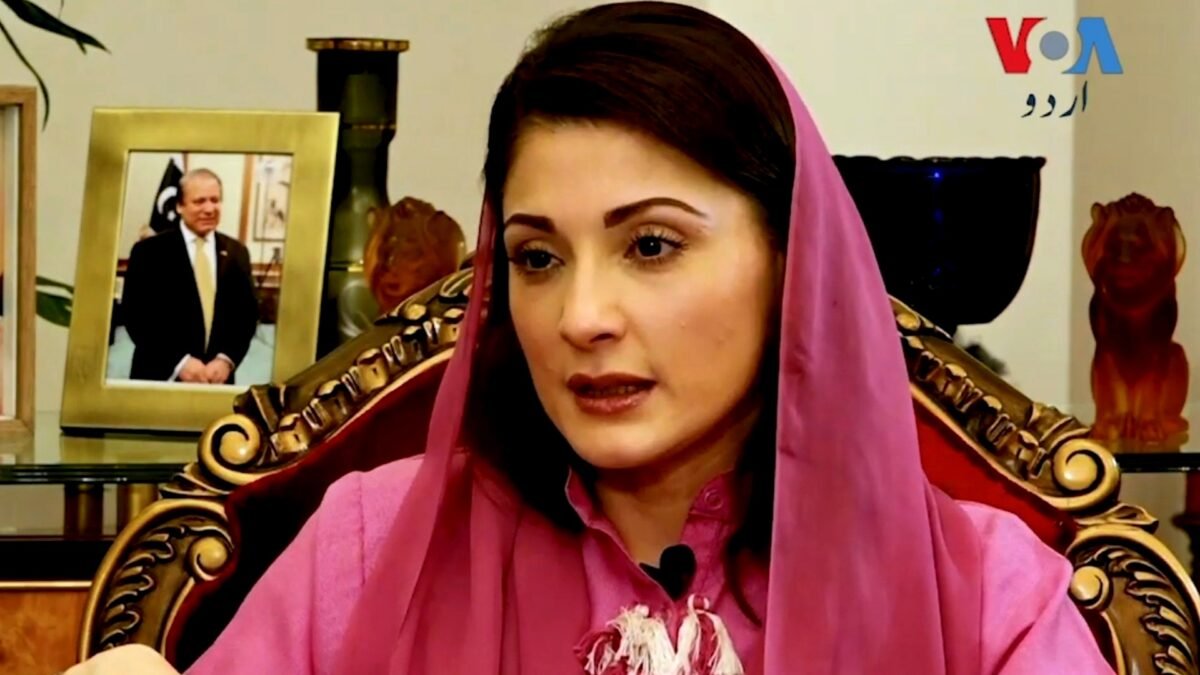
Punjab Chief Minister Maryam Nawaz has served a Rs5 billion defamation notice on federal minister Chaudhry Salik Hussain, turning a televised row over corruption in Punjab into a legal confrontation between two partners in the ruling coalition. The notice, sent on Tuesday, also names the ARY News anchor who conducted the interview in which the allegations were made and the channel’s chairman, and gives all three recipients seven days to apologise, retract the remarks and remove the disputed broadcast — or face court proceedings.
According to The Express Tribune, whose reporting of the notice was picked up by multiple outlets, the notice describes Salik Hussain’s claims of widespread corruption in Punjab as baseless, unverified and defamatory, and says they damaged the reputation of the chief minister and the provincial administration. It demands an unconditional apology, a retraction of the statements, the correction or removal of the relevant parts of the interview, and Rs5 billion in damages.
The dispute began on Monday, when Salik Hussain, the federal minister for overseas Pakistanis and human resource development and a senior leader of the Pakistan Muslim League-Quaid (PML-Q), appeared on a talk show on ARY News. In the interview, he said complaints about corruption in Punjab were commonplace, claimed that a disproportionate share of the province’s development budget was being spent in Lahore, and said districts such as Gujrat were being overlooked because government-backed candidates had lost elections there. He also praised his paternal uncle, Chaudhry Pervez Elahi — the former Punjab chief minister who now heads the Pakistan Tehreek-e-Insaf (PTI) — calling him the best chief executive Punjab has ever had and crediting his 2002–2007 administration with carrying out development work across the province without political discrimination.
Maryam Nawaz responded at a laptop distribution ceremony in Attock on Tuesday, challenging the federal minister to produce evidence for his allegations. “If you have proof, bring it forward; if not, I will drag you to court,” she said, according to reports of the ceremony. Her party, the Pakistan Muslim League-Nawaz (PML-N), later posted on X confirming that the legal notice had been sent to Salik Hussain, the programme’s host Naeem Ashraf Butt and the channel’s chairman, Muhammad Iqbal.
What makes the episode striking is not only the size of the claim — Rs5 billion is among the largest defamation demands made by a sitting chief minister in Pakistan — but the admission at its centre. Salik Hussain, in the same interview, acknowledged that he did not personally possess evidence to support the corruption allegations. “I have no evidence, but I hear stories about corruption in Punjab every day,” he said, according to the Tribune’s account. He has nevertheless stood by his remarks, refusing to withdraw them, and rejected the suggestion that they were prompted by a personal grievance.
What the notice demands
The legal notice sets out a series of specific demands. It asks Salik Hussain to withdraw his allegations and issue an unconditional and unequivocal apology. It asks for the removal or correction of the disputed parts of the interview. And it seeks Rs5 billion in damages for what it calls harm to the reputation of the chief minister and her administration. The recipients have seven days to comply; if they do not, the notice warns, legal proceedings will follow.
Central to the notice is a challenge that runs through the whole dispute: the demand for specifics. The notice asks which departments, offices, officials, projects or transactions Salik Hussain was referring to when he spoke of corruption, and points out that he named no single document, inquiry, audit observation or complaint to support the claim. It also accuses the programme’s host of broadcasting the allegations without first establishing whether they were true.
That emphasis on evidence is, in effect, the chief minister’s whole case in miniature. A defamation claim in Pakistan, as in most common-law systems, turns on whether a statement that lowers a person’s reputation in the eyes of right-thinking people was published without lawful justification. Truth is a defence — but the burden of proving it rests on the person who made the claim. By putting the absence of evidence at the heart of her notice, Maryam Nawaz is framing the dispute not as a political argument about governance, but as a legal question about proof.
The notice also reaches beyond the minister himself. By naming the anchor and the channel’s chairman, it puts the broadcaster in the frame as well, on the basis that airing an unverified allegation is itself a publication for which the channel bears responsibility. That is a familiar feature of defamation law, but it is also a politically charged one in a country where relations between governments and private broadcasters are rarely calm for long.
The interview that started it
The row’s origins lie in a single television appearance on Monday, 2 November. Salik Hussain used the interview to make two distinct arguments that have since become entangled. The first was about corruption: that complaints of wrongdoing in Punjab were widespread and that the provincial government was not clean. The second was about the geography of development spending: that Lahore receives a disproportionate share of the province’s development budget while districts such as Gujrat, his family’s home district, are neglected — and, in his telling, neglected precisely because candidates backed by the government lost elections there.
Both claims were wrapped in praise for Pervez Elahi, whose tenure as chief minister from 2002 to 2007 Salik Hussain held up as a model of even-handed development. “Chaudhry Pervez Elahi is the best chief executive Punjab has ever had,” he said, according to the Tribune’s account of the interview. That praise matters because of who Pervez Elahi is now: not a PML-Q elder but the president of the PTI, the party of jailed former prime minister Imran Khan, and one of the sharpest critics of the Sharif family. For a federal minister from an allied party to praise the PTI’s provincial standard-bearer while accusing the PML-N’s chief minister of presiding over corruption is, whatever its intent, a political statement as much as a factual one.
Salik Hussain has since insisted that the interview was recorded three weeks before it aired, a detail that, if correct, would mean his remarks were not a reaction to any immediate event. He has also rejected the Punjab government’s account of his motives. Punjab Information Minister Azma Bokhari said a day earlier that the minister’s outburst was linked to personal displeasure after a request for a preferred deputy commissioner in Gujrat was rejected. Salik Hussain acknowledged that he had asked the government to appoint a deputy commissioner better suited to executing mega projects, but denied that the refusal prompted his remarks.
A family, a party and a coalition
To understand why this dispute has cut so deep, it helps to know the family at its centre. The Chaudhrys of Gujrat are one of Punjab’s most durable political dynasties, and their story in recent years is one of a family split down the middle. Salik Hussain is the son of Chaudhry Shujaat Hussain, the president of the PML-Q and a former prime minister. His brother, Chaudhry Shafay Hussain, sits in Maryam Nawaz’s own provincial cabinet as Punjab’s minister for industries, commerce and investment. His paternal uncle is Pervez Elahi — the man he praised on television — who broke with Shujaat in 2022, sided with the PTI, and now leads it in Punjab.
The split dates to the political crisis of 2022, when the Chaudhrys divided over whether to back the PML-N and Pakistan Peoples Party (PPP) combine or to stay with Imran Khan’s PTI. Shujaat Hussain chose the former; Pervez Elahi chose the latter. The division ran through the family and the party: Shujaat’s sons, Salik and Shafay, backed the Sharifs, while Pervez Elahi’s son Moonis Elahi stayed with his father and the PTI. In January 2023, the Election Commission of Pakistan declared Shujaat Hussain the legitimate president of the PML-Q, and weeks later Pervez Elahi formally joined the PTI along with ten former PML-Q members of the provincial assembly.
That history makes the present row unusually awkward for everyone involved. Salik Hussain is a federal minister in a government led by Prime Minister Shehbaz Sharif, Maryam Nawaz’s uncle, while his own brother serves in Maryam Nawaz’s cabinet. His praise for Pervez Elahi — the uncle who now leads the opposition’s main party in Punjab — sits uneasily with his position in the governing coalition, and the PML-N will have noticed that the compliment was paid at the same time as an attack on its own chief minister.
It also explains why the PML-N’s response has been so forceful. A corruption allegation from an opposition leader is routine; the same allegation from a minister in the ruling coalition, broadcast on national television, is a different matter. It lends the charge a credibility it would not otherwise have, and it opens a crack inside the coalition itself. The Rs5 billion notice is, in that sense, as much a message to allies as it is to the minister: that public attacks on the Punjab government, even from within the coalition, will be met with legal force.
The Lahore question
Strip away the personalities, and Salik Hussain’s second claim — that Lahore gets too much and the rest of Punjab too little — touches one of the oldest arguments in the province’s politics. Lahore, as the provincial capital and the Sharif family’s political base, has long been accused by critics of absorbing a disproportionate share of development spending: its metro bus and Orange Line train, its ring roads and underpasses, its parks and hospitals are cited by opponents as evidence of a capital-centric model of governance. The Sharifs have always answered that Lahore is Pakistan’s second city and its economic engine, and that investment there benefits the whole province.
The argument has been made by opposition politicians for decades, but it has rarely been made from inside the government. That is what gives Salik Hussain’s intervention its sting, even though he offered no figures to support it. The notice’s demand — name the projects, the transactions, the officials — is a direct challenge to that style of argument: broad, impressionistic claims about corruption and spending, made on television, without the documents that would allow them to be tested.
Whether the claim about Lahore’s share of spending stands up is a question that can, in principle, be answered from the province’s budget documents, which break down development allocations by district and scheme. Neither side in this dispute has so far produced those figures in public. Until one does, the argument will remain where it started: a clash of assertions, now dressed in the language of the law.
A chief minister who has used the law before
Maryam Nawaz’s resort to a defamation notice is not without precedent in her own record. Her government in Punjab pushed through the Punjab Defamation Act in 2024, a law that created special tribunals to decide defamation cases within six months and allowed fines of up to Rs3 million. The law was passed by the Punjab Assembly on 20 May 2024 amid noisy protests from the opposition and fierce criticism from journalists’ bodies, the Human Rights Commission of Pakistan and international press-freedom groups, who called it a curb on free expression. It was signed into law on 8 June 2024 and immediately challenged in the Lahore High Court, which suspended key sections of the Act — including the provisions on tribunals and fines — on 11 June 2024. The petitions remain pending, and the province’s advocate general has assured the court that the Act is not being enforced.
The notice served on Salik Hussain is a different instrument: a private legal notice that precedes a civil suit under the ordinary law of defamation, rather than a case under the suspended 2024 Act. But the connection is hard to miss, and her critics will certainly make it. A chief minister whose government wrote one of the country’s most controversial defamation laws is now using defamation law against a fellow politician. Her supporters will say the two things are unrelated — that the Act was aimed at fake news and that this notice is a straightforward response to an unproven allegation. Her critics will say the pattern is the point: that defamation has become the government’s preferred answer to criticism.
The distinction matters legally, but politically the two will be read together. The 2024 Act was opposed by the PPP, the PML-N’s own coalition partner at the centre, whose Punjab legislators complained they had not been consulted. Journalists’ bodies, including the Pakistan Federal Union of Journalists and the Council of Pakistan Newspaper Editors, rejected it outright. For a government that has already spent political capital defending a defamation law, a Rs5 billion notice against a minister and a television channel is a conspicuous way to spend more.
Analysis: Why It Matters
1. A coalition row, fought in public
The most immediate significance of this dispute is that it is happening inside the ruling coalition, not across the government-opposition divide. The PML-Q is a small ally, but it is an ally all the same, and its ministers sit in the federal cabinet and in the Punjab cabinet. When a coalition partner accuses the Punjab government of corruption on television, and the chief minister answers with a Rs5 billion legal notice, the coalition’s internal discipline is on public display — and it does not look disciplined. The episode will be watched closely by other small allies, who will draw their own conclusions about how much room they have to criticise the government from within. It also hands the opposition an easy line of attack: that the government’s own partners do not believe its claims about clean governance.
2. Evidence, or the absence of it, is the story
Salik Hussain’s own words — “I have no evidence, but I hear stories about corruption in Punjab every day” — are the most consequential sentence in this whole affair, and they may also be the most damaging to his own position. In a defamation case, that admission would be close to fatal to a defence of truth, since truth must be proved, not merely believed. But the admission also raises a wider question about how political debate in Pakistan is conducted. Allegations of corruption are made constantly on television, often in sweeping terms and rarely with documents attached. The notice is an attempt to impose a discipline on that practice: say it with proof, or do not say it at all. Whether that discipline is applied even-handedly — and whether it is applied to the government’s own supporters as readily as to its critics — will determine whether the public sees the notice as a defence of reputation or as a weapon.
3. The Chaudhry family split, still unresolved
Four years after the Chaudhrys divided, the family has still not found a stable settlement. Shujaat Hussain’s wing stayed with the PML-N; Pervez Elahi’s wing joined the PTI. The two wings have coexisted uneasily ever since, with Salik and Shafay Hussain serving in governments led by the Sharifs while their uncle leads the opposition in Punjab. This row shows how fragile that arrangement is. A single television interview has forced the family split back into the open, and it has put Salik Hussain in the uncomfortable position of praising the uncle who opposes the government while serving in that government. The episode is a reminder that in Punjab’s politics, family and party are not separate things, and that the Chaudhry split is not a settled fact of history but a live fault line.
4. Defamation as a political instrument
The notice also raises a question that goes beyond the two men involved: how far defamation law should be used to settle political arguments. Pakistan’s defamation law is a civil remedy, and public figures are entitled to use it. But when the sums involved run into billions of rupees and the defendants include a television channel, the effect can be to chill debate even before a court has heard a word of evidence. The Punjab Defamation Act of 2024 was criticised on exactly these grounds — that it would deter journalists and politicians from making legitimate criticisms of those in power. A Rs5 billion notice, whatever its legal merits, will be read by many in the media as a warning. The test of the government’s good faith will be whether it is equally ready to answer criticism with evidence of its own, rather than with the threat of a lawsuit.
5. The seven-day clock
Finally, the notice creates a deadline that will shape the next week of Punjab politics. The recipients have seven days to apologise, retract and remove the broadcast. If they comply, the matter may end quietly — though the political damage to both sides will linger. If they refuse, Maryam Nawaz will have to decide whether to follow through with a suit, with all the disclosure and cross-examination that entails. A trial would put the Punjab government’s own spending record under a microscope, and it would give Salik Hussain a platform to repeat his claims in court, where they would be reported as proceedings rather than as allegations. Both sides, in other words, have something to lose from going to court, and something to gain from settling the matter before it gets there. The week ahead will show which of those calculations wins.
What to Watch Next
- The seven-day deadline: whether Salik Hussain, the ARY News anchor and the channel’s chairman apologise and retract, or refuse and force the chief minister to file suit.
- Salik Hussain’s next move: whether he produces any evidence for his corruption claims, softens his position, or repeats the allegations in a new forum.
- The coalition’s response: whether the PML-Q’s leadership, including Chaudhry Shujaat Hussain, publicly backs its minister or distances the party from the row.
- The Punjab government’s evidence: whether Maryam Nawaz’s administration publishes district-wise development spending figures to rebut the claim that Lahore is favoured over districts such as Gujrat.
- The courts: whether a suit is filed, and how the Lahore High Court — which is still seized of the challenge to the Punjab Defamation Act 2024 — treats a high-profile defamation claim by the province’s chief minister.
Sources
- Pakistan Today — “The war of words between Maryam Nawaz and Chaudhry Salik enters the legal phase” (3 November 2026)
- The Scoop — “Salik Hussain Versus Maryam Nawaz: Can A Rs5 Billion Defamation Notice Settle Punjab’s Accountability Questions?” (4 November 2026)
- Khabr.pk — “Maryam Nawaz serves Rs5 billion defamation notice on Salik Hussain”, reporting The Express Tribune (4 November 2026)
- WION — “Notice Seeks Apology And Withdrawal Of Remarks” (video report, 4 November 2026)
- Pakistan Press Foundation — “LHC Issues Notices on Challenge to Punjab Defamation Act 2024” (background on the 2024 Act and the Lahore High Court proceedings)

About the Author — Abdul Mannan
Related Articles
Shehbaz Reviews Rs160 Billion Khyber Pakhtunkhwa Package as Government Widens Intelligence Operations
Prime Minister Shehbaz Sharif chaired a high-level review of Khyber Pakhtunkhwa's security and the Rs160 billion federal development…
Imran Khan Did Not Welcome End of KP Government, PTI Chief Gohar Insists After First Jail Meeting in 380 Days
PTI Chairman Barrister Gohar Ali Khan has rejected reports that Imran Khan welcomed the end of his party's…
Lahore High Court Summons Deputy Commissioner Over Imran Khan’s Sisters’ Detention, Orders Family Meeting
The Lahore High Court has summoned the Lahore deputy commissioner in person for 4 November over the extended…