
Imran Khan Did Not Welcome End of KP Government, PTI Chief Gohar Insists After First Jail Meeting in 380 Days

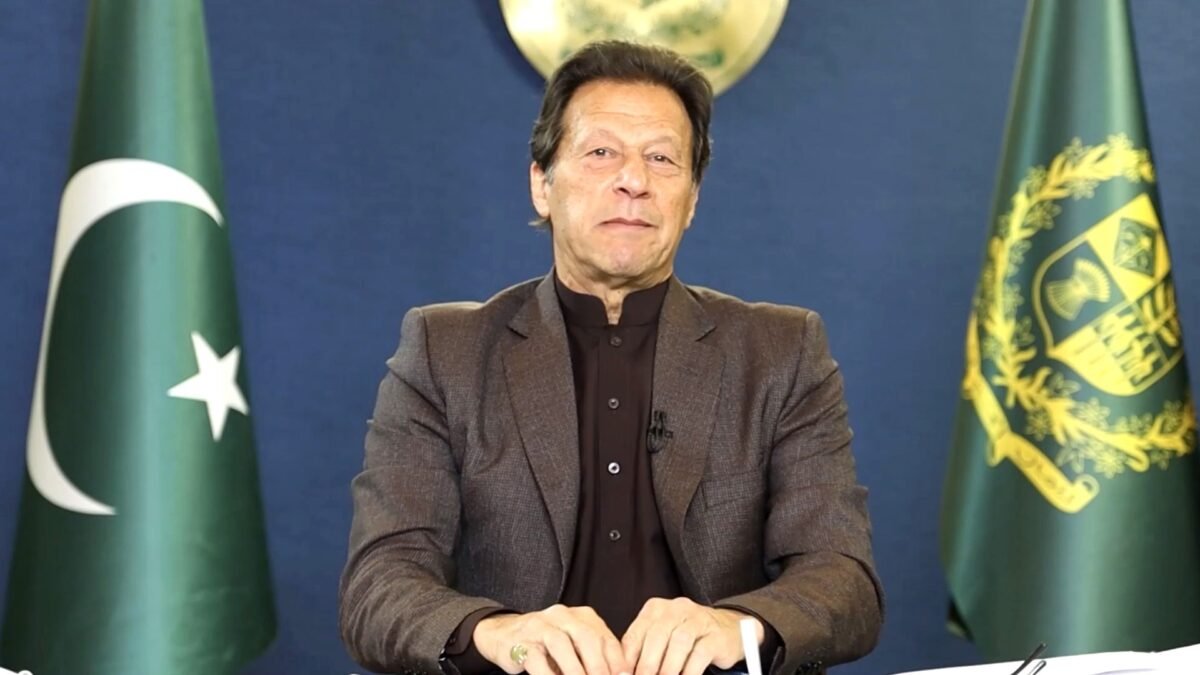
Pakistan Tehreek-e-Insaf (PTI) Chairman Barrister Gohar Ali Khan on Tuesday rejected reports suggesting that the party’s founder, Imran Khan, welcomed the end of his party’s government in Khyber Pakhtunkhwa, insisting that the incarcerated former prime minister never made any such remark. The denial, delivered to reporters in Rawalpindi, came a day after a lawyer was allowed to meet Mr Khan at Adiala jail for the first time in nearly thirteen months — a meeting that has itself become the centre of a new political dispute.
“One thing I must strongly refute — which some TV channel ran, claiming Khan Sahib said it was very good that his government ended in KP — that is completely false,” Mr Gohar said, according to The News. “Khan sahib never used any such words,” he added.
The report Mr Gohar was rebutting had circulated on Monday evening, carried by a private television channel and attributed to unnamed PTI sources. According to that account, details had emerged from a meeting between Mr Khan and his lawyer, Barrister Salman Safdar, in which the former prime minister was said to have expressed no regret over the fall of the Khyber Pakhtunkhwa government, describing it as a burden and saying that whoever had brought it down had done him a favour rather than a wrong. The same account claimed that two more meetings with Mr Khan were expected in the coming days and that discussions on a proposed 28th Constitutional Amendment had been continuing with him.
Mr Gohar’s response was unequivocal. He said Mr Safdar had told him that Mr Khan was fully aware of the emergency and governor’s rule imposed in the province, but that little political discussion had taken place during the meeting, and that Mr Safdar had returned with no major political message from the PTI founder. Geo News, whose reporting on the remarks was carried by other outlets on Tuesday evening, reported the same account, and the denial was also carried by The News and other Pakistani news organisations.
A meeting after 380 days
The backdrop to the dispute is the meeting itself. Mr Safdar met Mr Khan and his wife, Bushra Bibi, at Adiala jail on Monday after repeated requests for access, according to Geo News. The meeting lasted around 40 minutes and covered their health, living conditions and pending legal matters. It was the first such interaction since 8 April, after a prolonged period during which access to Mr Khan remained restricted. Express News quoted Mr Gohar as calling it the first in 380 days.
Mr Gohar welcomed the meeting, but said the restrictions on access to the former premier had contributed to heightened political tensions. He said the political situation could have improved had meetings been allowed, and that matters might not have reached the point of emergency and governor’s rule in Khyber Pakhtunkhwa. He said the party had made repeated attempts to arrange political meetings for himself and for Senate Opposition Leader Allama Raja Nasir Abbas, and that when political access could not be secured, efforts were made for Mr Safdar to meet the former prime minister instead.
The long gap in access has become one of the most politically charged facts in Pakistan’s current crisis. Mr Khan, 74, has been in jail since August 2023 and faces more than 100 cases. For months, his party has complained that even his lawyers and family members have been denied regular meetings, while the government has insisted that jail rules and security considerations govern access. The fact that a lawyer’s meeting — rather than a political meeting with his own party chairman — was the first to be permitted in more than a year underlines how tightly controlled contact with the former prime minister has become, and why every word attributed to him from inside Adiala now carries such weight.
That weight explains the ferocity of Tuesday’s dispute. In a political environment in which Mr Khan cannot speak for himself in public, second-hand accounts of his views — whether from unnamed sources or from lawyers relaying his words — become political facts in themselves, shaping perceptions of the party’s direction. A claim that he welcomed the fall of his own party’s provincial government would, if believed, signal a dramatic shift in PTI’s posture. A denial from the party chairman, delivered on the record, is designed to kill that signal before it takes hold.
No forward bloc, says Gohar
Mr Gohar also used Tuesday’s appearance to address speculation about divisions inside PTI following the suspension of its provincial government. He said all PTI lawmakers in Khyber Pakhtunkhwa remained with Mr Khan and that there was no forward bloc — the term used in Pakistani politics for a group of legislators who break away from their party while remaining in the assembly. He said any decision on a chief minister, if such a situation arose, would be taken by the PTI founder.
He described the disappearance of Khyber Pakhtunkhwa Chief Minister Sohail Afridi and the provincial assembly speaker as “beyond comprehension”, saying the case concerning their recovery had been referred to a larger bench of the Peshawar High Court. Mr Afridi has not been seen in public since the imposition of governor’s rule on 11 October, and the authorities maintain that he is in protective custody.
Turning to the broader political situation, Mr Gohar called for a reduction in tensions, saying political forces needed to de-escalate matters for the sake of the country and democracy. He reiterated the party’s demand for Mr Khan to receive medical treatment and for his personal doctors to be given access to him. He also said there had been no discussion about shifting the PTI founder either to Bani Gala or to a prison in Islamabad.
According to reports of his remarks, Mr Gohar said he had asked that detained PTI member Noreen Niazi be kept in hospital for one extra day. Ms Niazi, 70, is one of Mr Khan’s three sisters detained under the Maintenance of Public Order Ordinance; she was shifted to the Punjab Institute of Cardiology on 28 October after heart-related discomfort and later returned to jail on doctors’ advice. Mr Gohar also said the party was working towards an all-parties conference, and that PTI did not support anti-state narratives on social media.
The other dispute: Barrister Saif’s claims
Tuesday’s denial was not the only claim Mr Gohar has rejected this week. On Monday, he rejected claims made by party leader Barrister Muhammad Ali Saif, who had said in an interview on Geo News’s programme Jirga that Allama Raja Nasir Abbas was in direct contact with important establishment figures. Mr Gohar said all of Mr Saif’s claims were false.
“We made every possible effort to meet the PTI founder through the courts and negotiations, but despite all our efforts, we were not allowed even a single meeting,” Mr Gohar said on Monday, according to reports of his remarks. He added that access to Mr Khan was one of the party’s conditions during negotiations.
The contradiction between the two accounts — Mr Saif describing back-channel contacts, Mr Gohar insisting no meetings were allowed at all — points to a deeper tension inside PTI over how the party should engage with the state while its founder is in jail. PTI Secretary General Salman Akram Raja has linked any party decision on the proposed 28th Constitutional Amendment to a meeting with Mr Khan, a position that makes access to the founder a precondition for the party’s participation in constitutional politics.
After a meeting of its political committee on Monday, PTI issued a statement dismissing reports of internal divisions. The committee discussed the political situation, inflation and law and order, and set out a list of demands: the immediate release of the Khyber Pakhtunkhwa chief minister, the provincial assembly speaker and other detained parliamentarians; the release of Mr Khan’s sisters and permission for them to meet him; and concern over the arrests of MNA Adil Bazai and other leaders and workers held under the Maintenance of Public Order Ordinance. The party also condemned raids at the homes of Omar Ayub, Sher Ali Arbab and Shah Ahad, and said action against terrorism should not be used for political retaliation.
How Khyber Pakhtunkhwa reached this point
The emergency in Khyber Pakhtunkhwa was imposed on 11 October, when President Asif Ali Zardari approved recommendations made by the federal cabinet, which had met under Prime Minister Shehbaz Sharif earlier that day. The state of emergency was invoked under Articles 232 and 234 of the Constitution, which deal with security, and it effectively suspended the provincial government run by PTI. A statement issued by the prime minister’s office said cabinet members had reviewed the situation and taken note of what it called the provincial government’s “deliberate disengagement from the fight against terrorism”.
Law Minister Azam Nazeer Tarar told a news conference in Islamabad that the provincial governor would take charge with an advisory council, and that the arrangement would initially be in place for six months. Khyber Pakhtunkhwa Governor Faisal Karim Kundi, who assumed administrative control of the province, has said his priority is restoring law and order, and that the people of the province have the first right to its natural resources. He has also spoken of Rs160 billion pledged by the federal government for development projects in the province.
Shortly after the announcement, PTI lawmaker Junaid Akbar said Mr Afridi had been arrested along with the party’s president in the province. PTI spokesperson and Khan aide Zulfikar Bukhari described the government’s move as “more of a coup disguised as emergency” and warned it would cause further bloodshed, instability and collateral damage. A joint sitting of Parliament later approved the federal government’s decision amid strong opposition protests.
Prime Minister Sharif has defended the intervention repeatedly. Addressing the PML-N parliamentary party from Khyber Pakhtunkhwa on 31 October, he said his government had been compelled to act, that committees representing the PPP and PML-N had held talks for 48 hours, and that a draft had been ready under which PTI was to call off its long march. He said the government had waited for approval of the draft, but it did not come. He also blamed decisions taken in 2019 and 2020, when he said terrorists had been brought back from Afghanistan and resettled in Pakistan, and he questioned where Rs800 billion given to the province under the National Finance Commission award had been spent.
Jamiat Ulema-i-Islam–Fazl chief Maulana Fazlur Rehman has accused the federal government of misusing the Constitution in imposing the emergency and governor’s rule, a criticism he made during a National Assembly session. Mr Fazl has also questioned whether the intervention was linked to control of the province’s mineral resources, an allegation the governor has rejected.
The legal challenge to the emergency is now moving through the courts. The Peshawar High Court has sought replies on petitions challenging governor’s rule, with responses due by 7 November, and a substantive hearing is expected on 10 November. The petitioners, who include Mr Gohar, argue that the situation in the province was not beyond the control of the provincial government — the test that justifies federal intervention — and they also challenge the invocation of Article 245 on the deployment of the armed forces. The provincial assembly stands dissolved, and the administration has said it is gathering evidence of alleged financial corruption against Mr Afridi, without naming an agency or publishing a charge.
Geo News reported on Tuesday that the prime minister had summoned a high-level meeting in Islamabad to review the overall situation in the province, with federal ministers, senior military officials and Governor Kundi expected to attend. The meeting was expected to review decisions concerning the province and their implementation.
The sisters’ detention
The political crisis is also playing out in the courts in Lahore, where Mr Khan’s sisters are fighting their detention. Aleema Khan, Uzma Khan and Noreen Niazi were detained under the Punjab Maintenance of Public Order Ordinance 1960 — Aleema on 20 September and Uzma and Noreen on 21 September — and held at Kot Lakhpat jail, ahead of a PTI protest planned for 27 September demanding Mr Khan’s release. The initial 30-day detention orders were due to expire on 19 and 20 October, but the Punjab government told the Lahore High Court in late October that the detention had been extended for another 30 days on the deputy commissioner’s recommendation, with the extension approved on 7 October.
At a hearing on Monday, Justice Abher Gul Khan of the Lahore High Court summoned the Lahore deputy commissioner in person on 4 November over the detention extensions, and ordered that Noreen Niazi’s two daughters be allowed to meet her in jail on Tuesday at 10am for one hour. The petitions were filed by Shahrez Khan, Aleema’s son, and Sakeena Bibi, Noreen’s daughter. The petitioners argue that the initial detention period had expired before the 7 October notification, and ask the court to declare it illegal and set it aside.
The Islamabad High Court has separately fixed 5 November for a hearing on a plea by a National Dialogue Committee seeking permission to meet Mr Khan at Adiala jail. The plea, to be heard by Justice Umair Majid Malik, invokes Articles 9 and 14 of the Constitution, the Prison Rules 1978 and the Mandela Rules, and names Fawad Chaudhry, Imran Ismail, Mahmood Maulvi and Barrister Saif among those seeking access.
Analysis: Why It Matters
The information vacuum around Adiala
The most important fact in Tuesday’s story is not what Mr Khan is supposed to have said, but that nobody outside Adiala jail can verify it. For more than a year, access to Pakistan’s most popular politician has been so restricted that even his own party chairman could not meet him, and the first contact permitted was a lawyer’s meeting about health and legal matters. In that vacuum, every unattributed claim about Mr Khan’s views becomes a political weapon, and every denial becomes a political event.
This is not a new problem in Pakistani politics — imprisoned leaders have always been spoken for by others — but the scale of the restriction is striking. Mr Khan is not merely a former prime minister; he is the founder of a party that governed a province for thirteen years and that still commands a large popular following. When his words can only reach the public through lawyers, unnamed sources and television channels, the question of who speaks for him becomes as important as what he actually thinks. Tuesday’s exchange, in which a television report attributed one view to him and his party chairman flatly denied it within hours, shows how unstable that arrangement is.
The dispute also reveals something about the state’s own dilemma. Restricting access may contain Mr Khan’s ability to direct his party, but it also creates a permanent credibility problem: any statement attributed to him can be challenged as fabrication, and any denial can be dismissed as the party protecting its line. Neither side can prove its version, because the one person who could settle the question is not allowed to speak publicly. Until regular, verifiable access is restored, this pattern — claim, denial, counter-claim — is likely to repeat with every meeting.
The 380-day gap as a political fact
Mr Gohar’s decision to put a number on the gap — 380 days since the last such meeting — was deliberate. It turns an administrative fact into a political argument: that the restrictions themselves, rather than any single decision by the government, are what drove the country into its current crisis. His claim that regular meetings could have prevented the emergency and governor’s rule in Khyber Pakhtunkhwa is, in effect, an argument that the breakdown in communication between the state and PTI was not inevitable but manufactured.
Whether that argument is fair is a matter of judgement, and the government would dispute it. The federal government’s position is that the emergency was imposed because the provincial government had disengaged from counterterrorism, not because anyone was denied a meeting. But Mr Gohar’s framing matters because it reframes the emergency as the consequence of a political failure — the failure to keep a channel open to the opposition — rather than as a purely security-driven decision. That framing is aimed as much at the courts and at public opinion as at the government, and it will be tested when the Peshawar High Court hears the constitutional challenge on 10 November.
There is also a practical dimension. A party whose founder cannot be consulted cannot take decisions. The 28th Constitutional Amendment, whatever its final contents, will require PTI to decide whether to engage with it, oppose it or ignore it — and Mr Raja has said that decision is linked to a meeting with Mr Khan. As long as access remains sporadic, PTI’s ability to function as a parliamentary opposition is impaired, and the government’s ability to claim that constitutional changes carry broad legitimacy is weakened. The meeting on Monday, limited as it was, at least reopened a channel. Whether it stays open will be one of the clearest indicators of where Pakistani politics is heading.
Unity, and the fear of a forward bloc
Mr Gohar’s insistence that there is no forward bloc in Khyber Pakhtunkhwa, and that all of the province’s PTI lawmakers remain with Mr Khan, addresses the fear that has haunted the party since the emergency was imposed: that the suspension of its government, the arrest of its chief minister and the disappearance of its assembly speaker would create the conditions for defections. In Pakistani politics, a forward bloc is rarely announced; it emerges, legislator by legislator, when the cost of loyalty rises and the rewards of switching sides grow. Denying it on the record is a way of raising the cost of defection, by making any breakaway look like a betrayal of a leader who has explicitly claimed his lawmakers’ loyalty.
The claim that any future chief minister would be decided by Mr Khan serves a similar purpose. It asserts that the party’s authority still flows from its founder, even though he is in jail and even though the province he once governed is now run by a governor and an advisory council. It also serves as a warning to anyone in the province who might be tempted to accept office under the new arrangement: the party will not recognise a chief minister it did not choose. How that warning holds up will depend on what the Peshawar High Court decides, and on whether the governor’s administration can deliver the development spending and security improvements it has promised.
The courts are now the arena
With the political channel narrowed to occasional lawyers’ meetings, the courts have become the main arena in which Pakistan’s crisis is being fought. Three separate court processes are now running in parallel: the Peshawar High Court’s examination of the emergency and governor’s rule, with replies due by 7 November and a hearing on 10 November; the Lahore High Court’s scrutiny of the detention of Mr Khan’s sisters, with the deputy commissioner summoned on 4 November; and the Islamabad High Court’s hearing on 5 November on whether a National Dialogue Committee may meet Mr Khan.
Each of these cases turns on a different legal question — the constitutional threshold for emergency rule, the legality of detention orders under the Maintenance of Public Order Ordinance, and the right of access to a prisoner — but together they amount to a judicial audit of the state’s handling of the PTI crisis. The outcomes will not settle the political dispute, which is ultimately about power and legitimacy, but they will set the boundaries within which it is fought. A ruling that the emergency was unlawful would transform the politics of Khyber Pakhtunkhwa overnight; a ruling that it was lawful would entrench the governor’s rule for its full six months. Either way, the courts, not the negotiating table, are where the decisive arguments are now being made.
What the denial does not settle
It is worth being clear about what Tuesday’s denial does and does not establish. It establishes that PTI’s chairman, speaking on the record, says Mr Khan never welcomed the end of his party’s government in Khyber Pakhtunkhwa, and that the lawyer who met Mr Khan reported little political discussion and no political message. It does not establish what Mr Khan actually thinks about the fall of the KP government, because the only account of his views comes second-hand, and the two second-hand accounts conflict.
The original report, attributed to unnamed PTI sources, claimed Mr Khan regarded the provincial government as a burden and felt relief at its fall. That is a plausible account of a man who has watched his party’s provincial administration struggle under intense pressure, and who may have been frustrated by complaints about its performance. It is also, as Mr Gohar insists, entirely unverified, and the channel that carried it has not been named. The responsible course for readers is to treat the claim as contested, not as fact, and to note that the only person who could confirm or deny it on the record has done so — through his chairman — in the negative.
The deeper question is whether the government and PTI can find a way back to talking to each other. Mr Gohar’s call for de-escalation, and his mention of an all-parties conference, suggest that at least some in PTI are looking for a way out of the current impasse. The high-level meeting summoned by the prime minister on Tuesday suggests the government is also reviewing its approach. Whether those two impulses meet will depend, in large part, on whether the channel that opened on Monday — a lawyer, a 40-minute meeting, a first in 380 days — stays open, and whether it widens into the political access that PTI has been demanding.
What to Watch Next
- The Lahore High Court on Wednesday: the Lahore deputy commissioner is due to appear in person on 4 November to answer for the extension of the detention of Mr Khan’s sisters, and the court will also consider whether the initial detention period had expired before the extension was notified.
- The Islamabad High Court on Thursday: Justice Umair Majid Malik hears the National Dialogue Committee’s plea to meet Mr Khan at Adiala jail on 5 November, a case that could determine whether political access to the former prime minister is restored.
- The Peshawar High Court’s deadline: replies to the petitions challenging governor’s rule are due by 7 November, with a substantive hearing expected on 10 November. The court’s view of whether the emergency met the constitutional threshold will shape the future of the province.
- Further meetings at Adiala: the disputed report claimed two more meetings with Mr Khan were expected in the coming days. Whether those meetings take place, who is allowed to attend them, and what is said afterwards will be closely watched.
- The 28th Amendment: PTI has linked any decision on the proposed constitutional amendment to a meeting with Mr Khan. How the government proceeds with the amendment, and whether it engages PTI, will be a key test of whether the current standoff is easing or hardening.
Sources
- The News — PTI rejects reports Imran Khan welcomed governor’s rule in KP
- Shafaqna Pakistan (source: Geo News) — PTI calls reports of Imran Khan welcoming KP government suspension baseless
- khabr.pk — Gohar: Imran Khan did not welcome end of PTI government in KP
- Pakistan Point — Imran Khan Shows No Regret Over End Of Khyber Pakhtunkhwa Government
- The Pakistan Daily — Peshawar High Court Seeks Governor’s Rule Replies

About the Author — Abdul Mannan
Related Articles
Lahore High Court Summons Deputy Commissioner Over Imran Khan’s Sisters’ Detention, Orders Family Meeting
The Lahore High Court has summoned the Lahore deputy commissioner in person for 4 November over the extended…
Pakistan Welcomes US Offer to Facilitate Talks With the Taliban — but Sets a Hard Condition
Pakistan says it would welcome US help in facilitating talks with Afghanistan — but only if Kabul first…
Shehbaz Defends Governor’s Rule in Khyber Pakhtunkhwa, Orders Quick Relief and Halts Long-Term Projects
Prime Minister Shehbaz Sharif has defended the emergency and governor's rule in Khyber Pakhtunkhwa as unavoidable, ordered his…