
Shehbaz Reviews Rs160 Billion Khyber Pakhtunkhwa Package as Government Widens Intelligence Operations

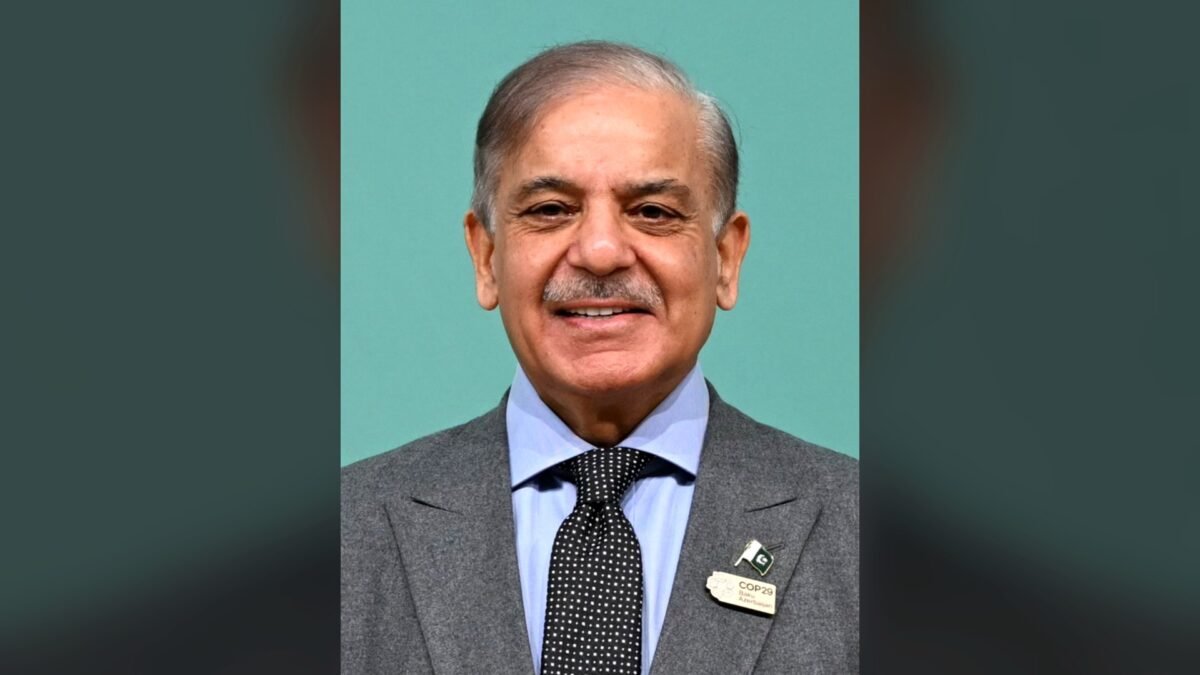
Prime Minister Shehbaz Sharif chaired a high-level meeting in Islamabad on Tuesday to review the security situation in Khyber Pakhtunkhwa and the implementation of a Rs160 billion federal development package for the province, as the government decided to widen the scope of intelligence-based counter-terrorism operations, according to The News and other Pakistani media outlets.
The meeting, attended by senior civil and military officials, federal ministers and Khyber Pakhtunkhwa Governor Faisal Karim Kundi, came three weeks after the federal government imposed a state of emergency in the province and placed it under governor’s rule, and a day after two policemen guarding a polio vaccination team were shot dead in the province’s Mohmand district.
According to The News, the prime minister told the meeting that the federal government was committed to providing all possible cooperation to the people of Khyber Pakhtunkhwa, and that establishing durable peace in the province and protecting citizens’ lives and property were national priorities. Governor Kundi gave the meeting a detailed briefing on the measures taken so far by various government departments in the province, the newspaper reported.
Sources cited by The News said the meeting decided to expand the scope of intelligence-based operations and to improve coordination among all relevant institutions, including the federal and provincial governments and law enforcement agencies. The meeting also reviewed the performance of the Area Representative and Development Council, a body of tribal elders set up to represent districts facing serious security challenges, and the progress of the Rs160 billion package announced by the federal government for the province.
Geo News had reported earlier on Tuesday that the prime minister had summoned the high-level meeting to review the overall situation, with federal ministers, senior military officials and Governor Kundi expected to attend. The meeting was attended by Deputy Prime Minister Ishaq Dar, Interior Minister Mohsin Naqvi, Finance Minister Muhammad Aurangzeb, Planning Minister Ahsan Iqbal, Economic Affairs Minister Ahad Cheema, Governor Kundi and the provincial chief secretary, according to The News.
Reporting by the Daily Jang, cited by the news outlet khabr.pk, said security in 12 districts of the province was reviewed at the meeting, and that the prime minister directed better coordination between federal, provincial and law enforcement agencies, with efforts to involve local communities and strengthen coordination among institutions. Lasting peace, protection of lives and property, better governance and socio-economic development were identified as national priorities, and the meeting focused on development in education, health, employment, investment and infrastructure, according to the same reporting.
What the Rs160 billion package covers
The package at the centre of Tuesday’s review is the “Badalta, Nikharta, Mazboot Khyber Pakhtunkhwa” programme, under which the prime minister announced Rs160 billion in federal funding during a visit to Peshawar in late October. According to WE News English, Mr Sharif made the announcement while chairing a meeting of the Federal Apex Committee in Peshawar and separately interacting with members of the Area Representative and Development Council, pledging a decisive push against terrorism and renewed efforts to improve governance and accelerate development in the province.
The council, known as the ARDC, comprises 48 tribal elders and prominent personalities and has been established to ensure local representation in 12 districts facing serious security challenges, according to The Frontier Post. The districts it covers are Dera Ismail Khan, Tank, Lakki Marwat, Bannu, Bajaur, Mohmand, Khyber, Kurram, Orakzai, North Waziristan, South Waziristan Upper and South Waziristan Lower.
At the Peshawar meetings, the prime minister said lasting peace in the province, particularly in the merged districts, remained a shared national responsibility, and that the sacrifices of the people of Khyber Pakhtunkhwa would not go in vain, according to WE News English. The Frontier Post reported that he also assured the province of sufficient wheat supplies from the stocks of the Pakistan Agricultural Storage and Services Corporation and additional resources to strengthen counter-terrorism operations, and said instructions had been issued to strengthen the Counter Terrorism Department and complete Safe City projects to improve the security situation.
The federal apex committee undertook a comprehensive review of the situation in Khyber Pakhtunkhwa following the imposition of the emergency and governor’s rule, and was briefed on provincial affairs with particular emphasis on governance reforms, institutional accountability, transparency and improved service delivery in departments directly affecting public welfare, according to a report of the proceedings. The committee stressed the importance of collective national ownership, community engagement and coordinated action by all relevant institutions to create an enabling environment for education, healthcare, employment, investment and infrastructure development, particularly in the merged districts and other underserved areas.
Tuesday’s meeting in Islamabad was, in effect, the first formal review of how that package is being delivered. According to The News, the measures under the package and the progress made on them came under consideration, alongside matters related to national and internal security and steps to make administrative measures, law and order and developmental and financial steps in the province more effective.
The security backdrop: a deadly week for polio teams
The review took place against a grim security backdrop. On Tuesday, two policemen were killed and a third was wounded when gunmen on a motorcycle opened fire on officers travelling to guard polio vaccination teams in Mohmand district, according to police accounts reported by Dawn, Geo News and the Associated Press.
The attack took place in the Tamanzai area of Pindiali tehsil, near the Hashim Kor police checkpost, as the officers were on their way to join a vaccination team, according to Dawn, cited by the news agency IANS. The Associated Press, citing police officer Ayaz Khan, reported that the officers were on their way to a nearby village to protect vaccination teams when they came under fire. One of the policemen killed was named in reports as Constable Zahoor, and the wounded officer as Constable Sabir. The attackers were unidentified, no group claimed responsibility, and police launched a search operation in the area.
The Mohmand shooting was the latest in a series of attacks on polio workers and their escorts in the province within 48 hours. On Monday, four polio workers were kidnapped by unidentified gunmen in Tank district and taken to an undisclosed location, according to police. In a separate incident, two polio workers were abducted by gunmen in the Azam Warsak area of Lower South Waziristan district and subsequently released, according to reports; the gunmen in that incident were allegedly linked to the proscribed Tehreek-e-Taliban Pakistan, according to The Express Tribune.
Governor Kundi strongly condemned the abduction of the four workers in Tank, describing it as an extremely regrettable and condemnable incident, and called for urgent action to secure their release, according to the Daily The Destination. The attacks coincided with a subnational polio vaccination campaign that began on 2 November and is due to continue until 8 November, aimed at reaching around 24 million children in 97 districts, according to the National Emergency Operations Centre for Polio Eradication, cited by Geo News.
The campaign also recorded the country’s eighth polio case of 2026 on Sunday, when the National Emergency Operations Centre confirmed a case in a 13-month-old girl from Bara tehsil in Khyber district, according to IANS. It was the second case from Khyber district and the sixth from Khyber Pakhtunkhwa province this year. In September, two policemen guarding a polio team were killed by armed men in Noshki district of Balochistan.
How Khyber Pakhtunkhwa reached this point
Tuesday’s meeting was the latest chapter in a political and security crisis that has dominated Pakistan’s politics for the past month. On 11 October, President Asif Ali Zardari approved a cabinet decision to impose a state of emergency in Khyber Pakhtunkhwa under Articles 232 and 234 of the Constitution, effectively suspending the provincial government run by the Pakistan Tehreek-e-Insaf, the party of jailed former prime minister Imran Khan. The prime minister’s office said the move followed what it called the provincial government’s “deliberate disengagement from the fight against terrorism”.
Governor Faisal Karim Kundi, of the Pakistan Peoples Party, took charge of the province with an 11-member advisory council, and the arrangement was initially put in place for six months, according to Law Minister Azam Nazeer Tarar. A joint sitting of Parliament subsequently approved the emergency. The then chief minister, Sohail Afridi, was arrested along with the party’s provincial president, according to PTI lawmaker Junaid Akbar. PTI spokesperson Zulfikar Bukhari described the move as “more of a coup disguised as emergency” and warned it would cause further bloodshed and instability.
Addressing the PML-N’s Khyber Pakhtunkhwa parliamentary party in Islamabad on 31 October, Mr Sharif defended the emergency and governor’s rule as unavoidable, saying, “We had no other option but to save the country, the economy, society and KP.” He directed the party’s provincial team to prioritise short-term welfare measures and suspend long-term projects, telling them that if they took small steps to improve law and order, build schools and ensure medicines reached hospitals, people who had been deprived for 13 years would pray for them, according to The News.
The prime minister used the same address to attack PTI’s 13-year rule in the province, questioning what projects had been completed and how funds had been spent. He pointed to the extra one per cent share Khyber Pakhtunkhwa received under the 2010 National Finance Commission Award, worth around Rs800 billion over the years, and asked how much of it had gone to the Counter Terrorism Department and the police, noting that around 8,000 police posts in the province were vacant, according to The News. He also cited the human and economic cost of militancy, saying 80,000 lives had been lost and economic losses ran to between $150 billion and $200 billion, according to the same report.
Mr Sharif said terrorism had been eliminated from the province in 2017–18 under the government of Nawaz Sharif, and alleged that terrorists had been brought back from Afghanistan and resettled in 2019–2020. He also disclosed that a 48-hour round of talks between committees of the PML-N and the PPP on one side and PTI on the other had produced a draft under which PTI was to call off its long march, but that approval for the draft never came, particularly from then chief minister Afridi.
The emergency has also drawn criticism from other quarters. Jamiat Ulema-e-Islam chief Maulana Fazlur Rehman, who had tried to mediate between the government and PTI, accused the government of misusing the Constitution, according to Dawn. The Peshawar High Court has sought replies from the parties by 7 November and fixed a hearing for 10 November on petitions challenging the emergency, while an adviser to the governor has said evidence of corruption in the previous provincial administration is being compiled.
The Imran Khan question, and the long march
The political temperature around the province rose further this week when PTI chairman Barrister Gohar Ali Khan, speaking to reporters in Rawalpindi on Tuesday, rejected reports that Imran Khan had welcomed the end of his party’s government in Khyber Pakhtunkhwa. “One thing I must strongly refute — which some TV channel ran, claiming Khan Sahib said it was very good that his government ended in KP — that is completely false,” Mr Gohar said, adding that Mr Khan had never used any such words, according to Geo News.
The disputed report, aired by a private television channel and attributed to unnamed PTI sources, claimed Mr Khan had told his lawyer, Salman Safdar, that the provincial government had become a burden and that whoever had brought it down had done him a favour. Mr Safdar met Mr Khan and his wife, Bushra Bibi, at Adiala jail in Rawalpindi on Monday in a meeting lasting around 40 minutes, the first such meeting since 8 April, a gap of 380 days, according to Express News. Mr Gohar said the meeting had covered health, living conditions and legal matters, with little political discussion and no major political message from the jailed former prime minister.
Mr Gohar also denied reports of a forward bloc inside PTI, saying all of the party’s lawmakers in Khyber Pakhtunkhwa remained with Mr Khan and that any decision on a future chief minister would be taken by him. PTI’s political committee has demanded the release of Mr Afridi, the provincial assembly speaker and detained parliamentarians, as well as Mr Khan’s sisters, and has linked any party decision on a proposed 28th constitutional amendment to a meeting with Mr Khan.
Meanwhile, PTI’s long march on Islamabad, originally scheduled for 27 September and postponed until 4 October to allow talks between the government and the party leadership, remains unresolved. Convoys from different parts of Khyber Pakhtunkhwa are expected to converge in Swabi, where Mr Afridi was to announce the next phase of the campaign, and the authorities have placed shipping containers and other barriers along key roads leading to Islamabad. PTI says its campaign is intended to secure Mr Khan’s release, protect his rights and press the authorities to implement court decisions.
The courts are also in play this week. The Lahore High Court summoned the Lahore deputy commissioner to appear on Wednesday, 4 November, in the case over the continued detention of Mr Khan’s three sisters, Aleema Khan, Uzma Khan and Noreen Niazi, and ordered that Noreen Niazi’s two daughters be allowed to meet her on Tuesday morning for one hour, according to court reporting. The Islamabad High Court has fixed a hearing for 5 November on a plea seeking a meeting with Mr Khan by a National Dialogue Committee.
Analysis: Why It Matters
A governing test, not just a security operation
Tuesday’s meeting matters because it shows the federal government treating Khyber Pakhtunkhwa as a governing problem, not only a security problem. The language coming out of the meeting — durable peace, protection of lives and property, better governance, socio-economic development — is the language of a state trying to win consent, not simply to impose order. That is the right instinct, and it is also the harder task. Emergency rule can suspend a government; it cannot by itself repair the schools, hospitals, police stations and courts that make a province governable. The Rs160 billion package is the government’s answer to that gap, and the review meeting was its first audit of whether the answer is being delivered. The test now is whether the money reaches the districts it is meant for, and whether the people of the province can see the difference in their daily lives.
Intelligence operations are the tool that fits the threat — and its limits
The decision to widen intelligence-based operations is the most concrete security outcome of the meeting, and it reflects a realistic reading of the threat. The attacks of the past week — a motorcycle shooting in Mohmand, kidnappings in Tank and South Waziristan — are the work of small, mobile groups that conventional sweeps struggle to catch. Intelligence-led raids, built on local information and precise targeting, are better suited to that kind of enemy, and they carry a lower risk of the civilian harm that fuels resentment. But the tool has limits of its own. Intelligence operations depend on trust: on people willing to pass information to the state. In districts where the state’s presence has thinned and where the previous provincial government’s removal is itself contested, that trust cannot be assumed. Expanding operations without expanding the state’s credibility in the merged districts would risk repeating the cycle in which security gains are real but short-lived.
Money is the message — but delivery is the verdict
The Rs160 billion figure has now been repeated so often that it risks becoming a slogan rather than a programme. Its value lies in what it buys: classrooms, clinics, jobs, roads and a police force that is properly staffed and equipped. The prime minister’s own figures underline the scale of the gap — around 8,000 vacant police posts, according to The News, and a province that has endured some of the worst violence in the country’s history. The review meeting’s focus on the Area Representative and Development Council is significant here, because the council is the mechanism through which the province’s own elders are supposed to have a say in where the money goes. If the council becomes a genuine channel for local priorities, the package could build the legitimacy the emergency cannot. If it becomes a rubber stamp, the money will be spent and the resentment will remain. The next few months, and the first visible projects, will tell which it is.
The politics will not stay in the background
No amount of administrative competence can separate the security question from the political one, because the emergency that created the current arrangements is itself the central political dispute in the country. PTI calls it a disguised coup; the government calls it an unavoidable response to a provincial administration it says had disengaged from the fight against terrorism. Both sides are now using the courts — the Peshawar High Court on 10 November, the Islamabad High Court on 5 November, the Lahore High Court on the detention of Mr Khan’s sisters — as the arena in which the dispute will be argued. That is, on balance, a healthy development: a constitutional question argued before judges is better than one argued on the streets. But it also means the government’s room for manoeuvre is narrower than it looks. Every decision taken under governor’s rule will be read politically, and every delay in delivering the package will be read as proof of bad faith by its critics. The government needs the courts to uphold the emergency, PTI to accept the verdict, and the people of the province to feel the benefit — three conditions that rarely arrive together.
Polio workers are the front line the state cannot afford to lose
The most urgent story inside Tuesday’s meeting is the one about the polio teams. Two policemen dead in Mohmand, four vaccinators kidnapped in Tank, two more abducted in South Waziristan, and an eighth polio case of the year in a 13-month-old girl: these are not side incidents but a direct assault on one of the state’s most basic functions, protecting children from a preventable disease. Pakistan is one of the last countries in the world where polio remains endemic, and every attack on a vaccination team does double damage — it kills the people doing the work and it frightens the families who must open their doors to the next team. The subnational campaign now under way aims to reach around 24 million children, and its success depends entirely on whether the state can protect the people carrying the vaccine. If the widened intelligence operations achieve nothing else, they must achieve that.
What to Watch Next
- Whether the intelligence operations produce visible results. The first test will be whether attacks on polio teams and security personnel fall in the 12 districts reviewed on Tuesday, and whether the operations are accompanied by arrests and prosecutions rather than only by announcements.
- The first disbursements from the Rs160 billion package. Watch for the first completed projects under the “Badalta, Nikharta, Mazboot Khyber Pakhtunkhwa” programme, and for whether the Area Representative and Development Council is seen to shape spending in the merged districts.
- The Islamabad High Court hearing on 5 November. The plea by a National Dialogue Committee seeking a meeting with Imran Khan will test whether the courts can open a channel between the jailed former prime minister and the political process.
- The Lahore High Court hearing on Wednesday. The deputy commissioner of Lahore is due before the court in the case over the detention of Mr Khan’s three sisters, a case that has become a second front in the dispute over access to the former prime minister.
- PTI’s long march and the Peshawar High Court. The party’s next move from Swabi, and the high court’s hearing on 10 November on petitions challenging the emergency, will together determine whether the confrontation moves towards the courts and negotiations or back onto the streets.
Sources
- The News — “Govt to widen scope of intelligence-based operations in KP”
- khabr.pk — “PM Shehbaz reviews Rs160bn Khyber Pakhtunkhwa package at security meeting”
- WE News English — “No Room For Failure: PM Sharif Pledges Rs160bn For Khyber Pakhtunkhwa’s Peace And Development”
- IANS — “Pakistan: Two police personnel on polio team duty killed, another injured”
- khabr.pk — “Gohar: Imran Khan did not welcome end of PTI government in KP”

About the Author — Abdul Mannan
Related Articles
Imran Khan Did Not Welcome End of KP Government, PTI Chief Gohar Insists After First Jail Meeting in 380 Days
PTI Chairman Barrister Gohar Ali Khan has rejected reports that Imran Khan welcomed the end of his party's…
Lahore High Court Summons Deputy Commissioner Over Imran Khan’s Sisters’ Detention, Orders Family Meeting
The Lahore High Court has summoned the Lahore deputy commissioner in person for 4 November over the extended…

Pakistan Welcomes US Offer to Facilitate Talks With the Taliban — but Sets a Hard Condition
Pakistan says it would welcome US help in facilitating talks with Afghanistan — but only if Kabul first…