
Trump Says US Will End $4 Billion in Annual Military Aid to Israel by Year’s End in Deal With Netanyahu

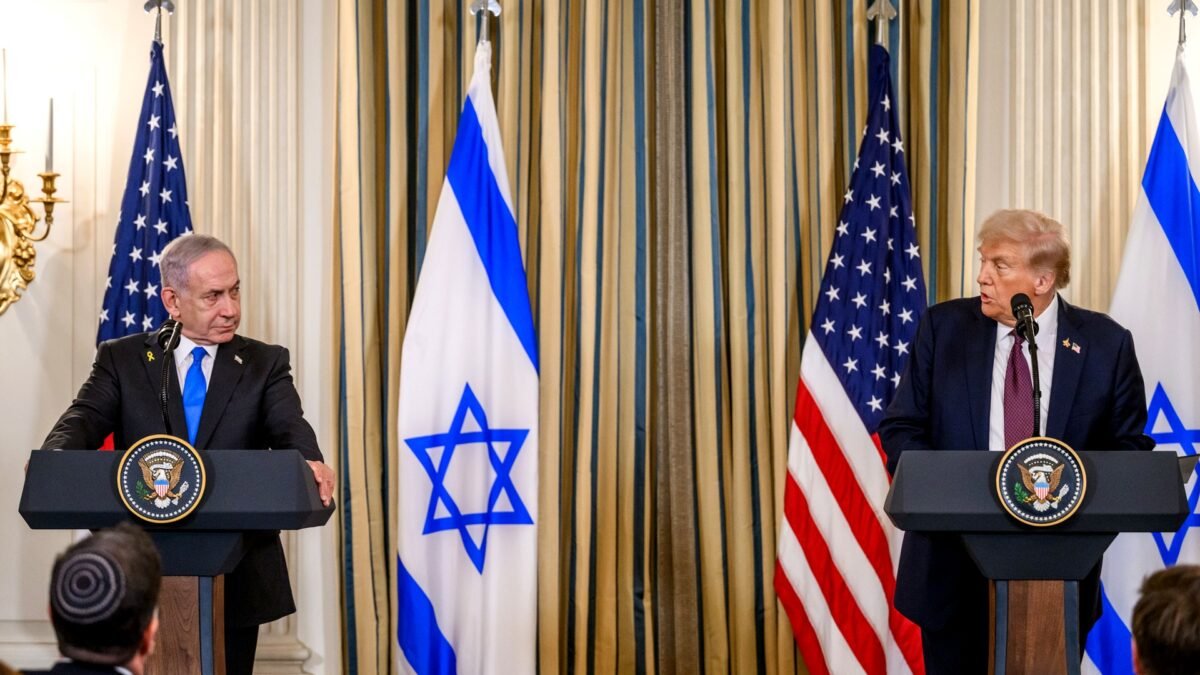
President Donald Trump has announced that the United States will end nearly $4 billion in annual military aid to Israel by the end of this year, in what would be the most consequential break in the American-Israeli security relationship in decades. The announcement, made in a telephone interview with Fox News on the morning of the midterm elections on Tuesday, 3 November, caught Israel’s own government off guard, left the details of the supposed agreement unpublished, and arrived on the same day American voters handed control of both chambers of Congress to Democrats who had campaigned in part against military assistance to Israel and the war in Iran.
“Bibi Netanyahu and I have made a deal that we give Israel $4 billion a year, and we made a deal months ago that we’re stopping,” Mr Trump said on Fox & Friends, according to Reuters. “We’ve already agreed that by the end of this year we won’t be paying Israel. Now we’ll help Israel if they need it.”
The president said Israel, which he described as “a very thriving country”, no longer needed the money. “Israel’s our number one (recipient), we give them more than anybody else. And they no longer need it,” he said, according to USA Today. “We’ve been doing it for years. Israel is a very thriving country. They don’t need it.”
Mr Trump said the idea had come from Mr Netanyahu himself. “He brought it up. He brought it up,” the president said, according to the New York Post. “He said, ‘I think it would be appropriate if we do not receive aid,’ because he understands that this is one of their points of contention.”
The announcement was, by any measure, stunning. Mr Trump is widely regarded as the most pro-Israel president of modern times, and the $3.8 billion a year the United States sends Israel under a ten-year memorandum of understanding has been the bedrock of the alliance since the deal was signed under President Barack Obama in 2016. That arrangement, which runs through September 2028, provides $3.3 billion a year in Foreign Military Financing and about $500 million a year for cooperative missile defence programmes. Most of the money is spent on weapons and equipment bought from American manufacturers, so the deal also sustains jobs and production lines in the United States.
Yet as is often the case with Mr Trump, the announcement was short on detail and difficult to pin down. No written agreement has been published. The White House has released no specifics. Mr Netanyahu’s office has not publicly confirmed the year-end timetable. And, as Reuters reported, it was not immediately clear that the president even had the legal authority to stop the money, since the funding is appropriated by Congress under the memorandum, which does not expire until 2028.
Mr Trump also made clear that the end of grant aid would not mean the end of the arms relationship. The United States will still sell weapons to Israel, Reuters reported, and the president said Washington would help Israel if it needed assistance. What he described was the end of the annual payment, not the end of the alliance. The question now is whether that distinction survives contact with the politics of both countries.
Israel caught off guard
If Mr Netanyahu had indeed agreed to the change months ago, as Mr Trump claimed, nobody appears to have told the Israeli government. Within hours of the broadcast, Israeli officials were telling reporters they had been blindsided.
Officials at Israel’s Finance Ministry were the first to comment, telling reporters they had been caught off guard by the announcement, according to the Times of Israel. “No official document has been sent by the Prime Minister’s Office regarding the termination of the aid,” a Finance Ministry official told the Israeli news outlet Walla. “The ministry was aware of the intention to end it, but was surprised by the plan to do so immediately.”
The defence establishment was equally unprepared. “We didn’t expect this announcement, certainly not today,” a senior defence official said, according to Israeli media reports. The official noted that contacts with American counterparts had continued and that the announcement had not yet reached the professional echelons of the defence establishment. Just two weeks earlier, a Defence Ministry delegation had met representatives of the US Army Security Assistance Command to present plans for future purchases covering tanks and munitions, communications systems and other military equipment.
The French newspaper Le Monde reported that neither the Israeli military nor the Treasury had been aware of the decision, and that the absence of a joint announcement on such a sensitive issue had prompted observers to treat Mr Trump’s remarks with caution.
The political opposition in Israel was quick to attack. Gadi Eisenkot, one of the opposition leaders who had been expected to be tapped within days to form a new government, said: “The fact that Israel’s defence establishment is learning about a change in the framework of our strategic relationship through the media, at the same time as Israeli citizens, demonstrates just how much Benjamin Netanyahu’s conduct poses a real danger.” Yair Golan, leader of the Democrats party, called the announcement a “massive failure” at a time when Israel is replenishing weapons and air defences after a long war. Avigdor Liberman said it was the price of Mr Trump’s support for Mr Netanyahu.
The confusion was all the more striking because Mr Netanyahu has spent much of this year talking openly about ending the aid, just never on anything like this timetable. In January, he told The Economist that he wanted to “taper off” American military aid within ten years and that the shift was “in the works”. In May, he told the American network CBS: “I want to draw down to zero the American financial support, the financial component of the military cooperation that we have. Because we receive $3.8 billion a year. And I think that it’s time that we weaned ourselves from the remaining military support.” Asked about timing, he suggested a gradual implementation: “Let’s start now and do it over the next decade, over the next ten years, but I don’t want to wait for the next Congress.”
Days before Israel’s election on 27 October, he went further, telling Israel’s Channel 10 that the aid “won’t keep coming because America has changed, not because Israel has. It’s over and it will be over; it’s just a question of time.” In a closed-door meeting of the Knesset’s Foreign Affairs and Defence Committee several months ago, he had told lawmakers, according to the newspaper Maariv: “I think we will need to wean ourselves off American military aid.”
The gap between Mr Netanyahu’s decade-long timetable and Mr Trump’s two-month deadline is, as the Israeli publication Israel Defense put it, vast. As of the evening of 3 November, details of the understanding Mr Trump claimed to have reached had not been published, and the Prime Minister’s Office had not publicly clarified how the statement squared with the Israeli timetable.
A link to tariffs
One explanation for the timing may lie in a different negotiation altogether. The Israeli business newspaper Globes reported that government sources acknowledged a link between the military aid issue and the tariffs imposed by the Trump administration, and that Israel is in the final stages of negotiations on tariff relief.
Last April, at a press conference at the White House, Mr Netanyahu sat alongside Mr Trump and waited to hear whether Israel would be granted relaxations of the president’s tariffs policy. Mr Trump’s answer was short and non-committal. Nine months later, the circle had closed: what Mr Trump had hinted at in April, namely a connection between the aid and relief from tariffs, had become declared Israeli policy.
“The Americans ask: ‘What do you want? You receive billions every year,'” Globes quoted government sources as saying. “If we offer to reduce our dependence on American money, that improves our bargaining position.”
The rationale, according to the report, was to become aligned with Mr Trump’s goals. The president is cutting foreign aid on all fronts, and Mr Netanyahu acted out of the understanding that it was better for Israel to propose the cut itself.
But the same report exposed a rift inside the Israeli government. The declaration on reducing the aid comes just as Mr Netanyahu is talking about increasing the defence budget, with plans presented for Israel to invest an additional 250 billion shekels in strengthening itself militarily over the coming decade. The Finance Ministry’s calculation is simple: giving up about 120 billion shekels of American aid over the same period means Israeli citizens will pay the difference. The Prime Minister’s Office, by contrast, assumes the Israeli economy is growing rapidly enough to fund defence from taxation without raising tax rates or imposing significant spending cuts.
Globes also reported that the Finance Ministry was at a very preliminary stage of preparation, that no substantial staff work had taken place before the prime minister’s declaration, and that it was not even clear whether Finance Minister Bezalel Smotrich himself had known it was coming.
The midterm earthquake
The announcement cannot be understood without the election that was under way as Mr Trump made it. On Tuesday, American voters handed Democrats control of both the Senate and the House of Representatives, a sweeping rebuke of the president at the midpoint of his second term. Many of the winning Democratic candidates were progressives who had campaigned against military aid to Israel and the American-Israeli war on Iran, according to Reuters.
The scale of the defeat, and the role Israel played in it, was acknowledged by the administration itself within hours. Vice President JD Vance said on Wednesday that “the reason we lost is the war”, referring to the conflict in Iran. He said one pollster had identified four actions that would bring disgruntled Trump voters back: “1) End the war 2) Focus on cost of living/inflation 3) Put America First 4) Change our relationship to Israel.”
Mr Trump himself had tied the aid announcement directly to the politics. He said the $4 billion was “the best talking point that these lunatics on the left have”, and he singled out Abdul El-Sayed, the Democratic Senate nominee in Michigan, who went on to win and become the first Muslim American elected to the Senate. “Why should we suffer the slings from lunatics like an El-Sayed when they (Israel) don’t need it?” Mr Trump told Fox & Friends. “It’s a bad talking point because when you say, ‘Why don’t we give everybody $4 billion?’ Israel’s our number one; we give them more than anybody else, and they no longer need it.”
Mr El-Sayed, an epidemiologist who had argued that Americans were paying more for groceries because of a war the United States was fighting at the behest of Israel, responded with a shrug. “Even a broken clock can be right twice a day,” he said on Tuesday, according to the Wall Street Journal.
The shift in American public opinion behind all of this has been building for years. In a Quinnipiac University poll published in June, 48 per cent of respondents said the United States was too supportive of Israel, 38 per cent said support was about right, and only 7 per cent said Washington was not supportive enough. It was the highest percentage of voters thinking Washington was too supportive of Israel since Quinnipiac first started asking the question in January 2017.
Congressional sentiment had already been moving. In July, 103 House Democrats backed an amendment to strip $3.3 billion in Foreign Military Financing from a spending bill, although the measure was decisively defeated. In September, 46 of the 47 members of the Senate Democratic caucus voted for a resolution to force the Trump administration to report to Congress on increasing violence against Palestinians by Israeli settlers in the West Bank. Republicans blocked the measure, but the near-unanimous Democratic vote was a sharp departure from decades of reliable bipartisan backing for Israel.
Democratic Senator Chris Van Hollen of Maryland, who has led attempts to put human rights conditions on Israel aid, told Reuters: “We need to make sure that we apply our laws and international law and our policies uniformly across the board when it comes to the actions of countries. There should not be an Israel exception.”
Reuters, in an analysis published on 4 November, said the Democrats’ takeover of Congress and growing Republican unease over Israel could trigger the biggest reassessment of American support for its closest Middle East ally in decades, after an election shaped in part by anger over the Iran war.
What the money actually is
To grasp what is at stake, it helps to be precise about what the $3.8 billion is and what it is not. The money flows under the 2016 memorandum of understanding signed in the final months of the Obama administration, covering fiscal years 2019 through 2028. It is not a gift of cash to be spent freely. The $3.3 billion in Foreign Military Financing must be spent on American weapons and equipment, and the roughly $500 million for missile defence funds joint programmes, including the Iron Dome aerial defence system.
That structure matters for three reasons. First, the money sustains American defence manufacturing jobs, which is why the announcement has implications for American businesses and employment as well as for Israel. Second, it means the aid has always been as much an industrial arrangement as a diplomatic one. Third, it means the end of the grants would not by itself sever the military relationship: Israel would still buy American weapons, and the two militaries have recently worked together more closely than ever, including during the massive American air and naval defensive operations that repelled Iranian cruise missile and drone attacks in 2024.
Brett McGurk, a former senior White House and State Department official who served under four administrations, cautioned against overstating the significance of Mr Trump’s remarks. “I wouldn’t overstate the significance,” he told CNN. “Whether he’s talking about, we’re going to end the MOU when it ends in 2028, or we’re going to stop it right now, I don’t know.”
That ambiguity is the heart of the story. Mr Trump may have been announcing an immediate halt, a decision to let the memorandum lapse in 2028, or something in between. The 2027 National Defence Authorisation Act, whose Section 219 envisions a much deeper defence cooperation between the two countries, suggests the institutional relationship is moving in the opposite direction to the rhetoric. And in May, the United States and Israel began formal talks on a new agreement to replace the memorandum, although it is not clear whether any framework is in place.
What is clear is that the announcement, whatever its legal status, has changed the political facts. A president who once prided himself on being Israel’s greatest friend in the White House has now said, on the record, on election day, that Israel does not need American money. That sentence cannot be unsaid, and it will be quoted back to both governments for years.
Analysis: Why It Matters
The end of a bipartisan era
For decades, support for Israel was one of the few issues in Washington that cut across party lines. That consensus has been eroding for years, strained by Israel’s campaign in Gaza, by Mr Netanyahu’s embrace of Mr Trump and other Republicans, and by a generational divide in American politics in which younger voters, including some Republicans, feel the country has been too supportive of Israel and insufficiently supportive of residents of the Palestinian territories.
The midterm results and the aid announcement together mark the moment that erosion became a rupture. Michael Oren, a former Israeli ambassador to the United States, told CNN: “The only bipartisan issue right now is criticism of Israel. It’s an organizing principle for the Democratic Party. And it’s becoming an organizing principle for much of the Republican Party.” He added: “We are at the end of an era.”
Mr Oren warned that the end of aid was only the beginning of a process that has only started to play out. He said it was conceivable that the United States could end intelligence sharing with Israel and the joint development of critical military systems such as Iron Dome. He also pointed to the United Nations Security Council, where Republican and Democratic presidents alike have protected Israel with the American veto.
Yaakov Katz, a former editor-in-chief of the Jerusalem Post, warned there was more to come. “What Trump announced about the military aid yesterday is just the tip of the iceberg of what can change – arms sales could be blocked, sanctions will be proposed and joint economic programs” could be affected, he told CNN.
The point is not that any of those things will happen tomorrow. It is that they are now imaginable in a way they were not a week ago, and that the political incentives in both parties now run in that direction. Democrats will have new tools to challenge Mr Trump, including hearings and the power to summon administration officials, even if the president’s veto limits their ability to force major policy changes. As William Wechsler of the Atlantic Council told Reuters: “What Congress can do is they can make a lot of noise. They can threaten to hold up nominees. They can create lots of questions about various assistance deals and force the president to do waivers.”
And on the Republican side, the “America First” wing that has grown sceptical of foreign aid may find common cause with the Democratic left. Price Floyd, a former American official and senior adviser with the London-based strategic communications firm Argyll Strategy, told Reuters the election result could see “weird bedfellows of left and right come together in condemnation of Israel”.
A deal with no paper
The second thing that matters is how the announcement was made: on a morning television show, with no document, no joint statement, no briefing from either government, and no confirmation from the supposed other party to the deal. The Israeli Finance Ministry learned of it from the media. The defence establishment learned of it from the media. The opposition learned of it from the media.
That is not how alliances are normally managed, and it raises a question that will shadow the story until it is answered: was there a deal at all? Mr Trump says one was struck months ago. Mr Netanyahu has said for months that he wants aid to end, but on a ten-year timetable and through a negotiated replacement framework. Those two accounts are not the same, and the gap between them is the difference between a managed transition and a rupture.
The most likely reading, on the evidence available, is that Mr Trump took a real, long-running Israeli discussion about weaning itself off American grants and compressed it into an election-day headline. That is consistent with everything we know: the December 2025 meeting, the January Economist interview, the May CBS interview, the formal talks that began in May, the Channel 10 remarks before the Israeli election. It is also consistent with Mr Trump’s political needs on the day: a “bad talking point” neutralised, a concession to voters angry about the Iran war, and a gesture to the “America First” wing of his own party.
But that reading also means the announcement is, for now, largely symbolic. Le Monde called the decision “largely symbolic” for precisely this reason: the aid is governed by a memorandum that runs to 2028, the money is appropriated by Congress, and no mechanism for stopping it early has been explained. Symbolism, however, is not nothing in diplomacy. A president’s words on television are a fact in themselves, and they change what other actors believe is possible.
Israel and the Palestinians are now a domestic American issue
The third thing that matters is the transformation the announcement reveals: the American relationship with Israel has become a domestic political issue in the United States in a way it never was before. Mr Trump did not announce the end of aid in a foreign policy speech or at a summit. He announced it on a domestic morning show, on election day, explicitly as a response to a Democratic candidate in Michigan and to the argument that American voters were paying more for groceries because of a war fought at Israel’s behest.
That is a remarkable admission, and it cuts both ways. On one hand, it means the issue will now be fought over in American domestic politics, where it is subject to the rhythms of elections, polls and primary challenges. On the other hand, it means Israel can no longer count on the issue being insulated from those rhythms. The old model, in which American support for Israel was a matter of foreign policy consensus above the fray, is gone.
Former Obama White House chief of staff Rahm Emanuel, who may run for president in 2028, has argued against unconditional American military aid to Israel and called for a new relationship with the country in a speech in Tel Aviv earlier this year. As he put it in an interview with CNN’s Fareed Zakaria in July, Israel could pay a price because of its own actions. “That’s not a Democratic Party problem. That’s an America problem,” he said.
The irony is that Mr Netanyahu himself has long argued that Israel should separate its military decisions from polarising American domestic politics. Ending the grants would, in principle, free Israel to make its own choices about what to buy. In practice, as CNN noted, it is unlikely to turn to European manufacturers, given the huge public anger there over Gaza, and purchasing Russian or Chinese equipment seems a long shot given certain American opposition. The freedom Mr Netanyahu describes is real in theory and narrow in practice.
What Israel actually loses, and what it does not
The fourth question is practical: how much does $3.8 billion a year actually matter to Israel? The answer is more complicated than the headline suggests. Israel’s economy is, as Mr Trump said, thriving, and its defence budget is large. Analysts who have served in both Republican and Democratic administrations have argued that Israel is now such a powerful economy that it does not need American aid to buy military equipment.
But the loss would still be felt. The Finance Ministry’s arithmetic is that giving up the aid while increasing defence spending by 250 billion shekels over the decade means Israeli citizens will pay the difference, through taxes or spending cuts elsewhere. And the timing is awkward: Israel is replenishing weapons and air defences after a long war, and the defence establishment was, until Tuesday, planning future purchases on the assumption that the grants would continue.
What Israel does not lose, at least for now, is the arms relationship itself. The United States will still sell weapons, the militaries will still cooperate, and the joint development of systems like Iron Dome continues. The 2027 National Defence Authorisation Act points towards deeper cooperation, not less. The risk, as Mr Oren and Mr Katz warned, is that the political momentum unleashed by the announcement eventually reaches those things too: arms sales blocked by a hostile Congress, intelligence sharing curtailed, the Security Council veto used less readily.
There is also a subtler cost. For decades, the aid has been a symbol of the American commitment to Israel’s security, a signal to Israel’s adversaries that the United States stands behind it. Ending the grants, even if the practical effect is manageable, removes that signal. Adversaries will notice. So will allies. And so, most importantly, will the Israeli public, which is being asked to pay more for defence at the same time as its prime minister tells it the country no longer needs American help.
The Iran shadow and the January test
Finally, the announcement must be read against the war in Iran, which has shaped everything in this story. The United States and Israel have been at war with Iran since late February 2026, and the war was, by the administration’s own admission, a major factor in the midterm defeat. Opinion polls showed the Iran war was a top election issue, with many Americans blaming higher prices, especially for petrol, on the conflict Mr Trump began in February.
Iran is celebrating Mr Trump’s midterm setback, but it is bracing for what comes next: a possible new American strike or a fresh push for a deal. The Democrats’ victory does not settle that question. Mr Trump retains considerable freedom to act abroad, and his overseas actions have largely taken place by executive order. Congress could restrict funding and block appointments, but it would struggle to prevent his every sudden move, according to foreign policy analysts quoted by USA Today.
The real test comes in January, when the new Congress takes its seats. Jonathan Schanzer of the Foundation for Defense of Democracies told Reuters: “Nothing is going to change in the United States until January when Congress takes their seats and by then, there may be a new Israeli government that would also have an impact on this.” Mr Netanyahu lost his governing majority in the 27 October Israeli election but denied his opponents a clear path to unseat him, and negotiations to form a new government are expected to be protracted. A new Israeli government, particularly one less closely tied to Republicans, could engage in a more cooperative way with Democrats, Mr Schanzer said.
By January, then, both governments may look different, and the question of the aid will be decided by different people in a different political landscape. That is the deepest uncertainty in this story: the announcement was made by a president who had just lost Congress, about a prime minister who had just lost his majority, concerning a deal whose terms have never been published. Whether it survives January depends on people who have not yet taken office.
What to Watch Next
- Any written agreement: whether the White House or Mr Netanyahu’s office publishes the deal Mr Trump says was struck months ago, and whether it specifies an end date, a replacement framework, or nothing at all.
- Israel’s budget: how the Finance Ministry and the Defence Ministry resolve their dispute over the cost of replacing $3.8 billion a year, and whether Mr Netanyahu’s planned 250 billion shekel defence increase survives contact with the loss of the grants.
- Coalition talks in Jerusalem: whether Mr Netanyahu succeeds in forming a new government after losing his majority on 27 October, and whether a new Israeli government takes a different line with Washington.
- The new Congress in January: whether Democratic majorities use hearings, appropriations and the power to summon officials to press the administration on aid, arms sales and West Bank violence, and whether the “America First” wing of the Republican Party joins them.
- Iran: whether the midterm defeat pushes Mr Trump towards a deal with Tehran or towards another strike, and whether the end of aid to Israel changes the calculations of any of the parties to that war.
Sources
- Reuters — “Democratic Congress could test decades of US support for Israel” (4 November 2026)
- CNN — “Trump’s Election Day bombshell on Israel points to historic shift in US politics” (3 November 2026)
- USA Today — “Trump says US is cutting off aid to Israel by end of the year” (3 November 2026)
- Le Monde — “Trump says US military aid to Israel will be ‘cut off at the end of the year'” (3 November 2026)
- CNN — “What Trump’s midterms setback could mean for Iran, Israel and Ukraine” (4 November 2026)
- Globes — “Israel concedes link between US aid and tariffs relief” (4 November 2026)

About the Author — Abdul Mannan
Related Articles
Trump Says US Has ‘No Immediate Plan’ to Strike Iran as Tehran Hails Midterm Vote as a Rejection of War
President Donald Trump has said the United States has no immediate plan to strike Iran, telling the Financial…
Iran Warns of ‘New Battlefield’ and Threatens US Bases in Europe as Washington Prepares Possible Post-Midterm Strikes
Tehran says any renewed American attack will be met with a response 'without geographical limits' — and names…

Houthis Advance to Within 80km of Aden in Closest Threat to Yemen’s Seat of Government Since 2015
Yemen's Houthis have advanced to within 80 kilometres of Aden, the closest they have come to the seat…