
WHO Backs Trials for Two New Ebola Vaccines as Bundibugyo Outbreak Passes 10,000 Cases in DR Congo

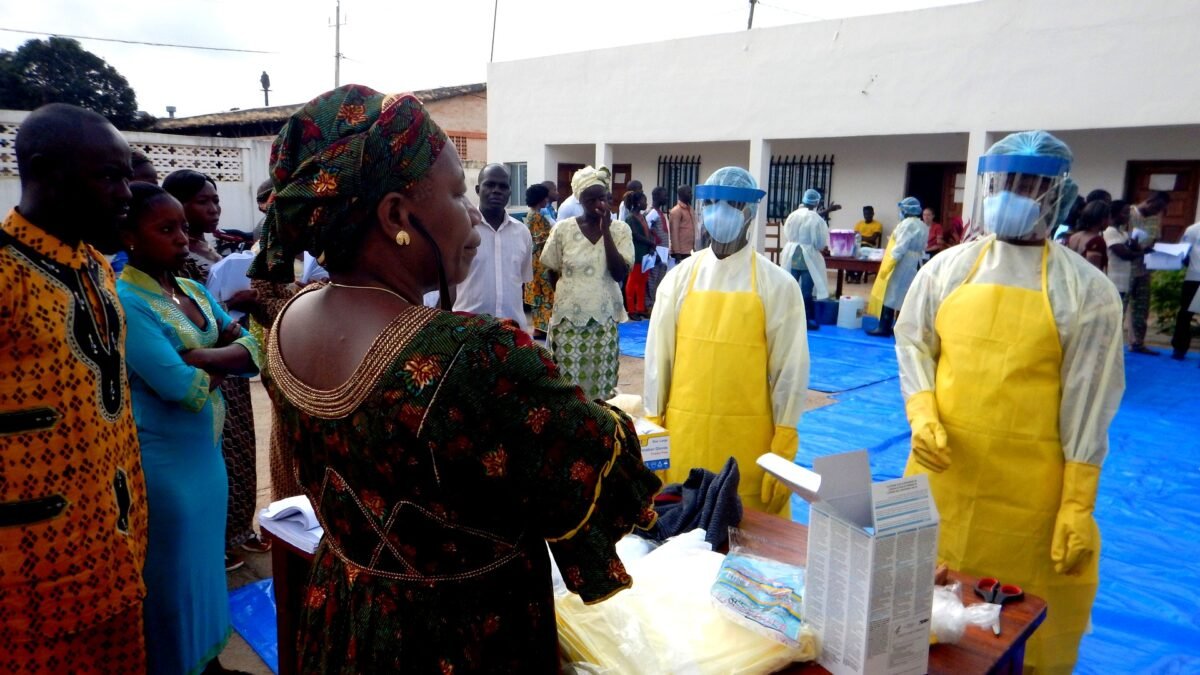
The World Health Organization has backed clinical trials for two new Ebola vaccines designed specifically for the strain behind the largest outbreak in the history of the Democratic Republic of the Congo, a development that could finally give doctors a weapon matched to the virus they are fighting.
WHO Director-General Tedros Adhanom Ghebreyesus announced on Wednesday that the organisation’s expert groups had recommended adding two vaccine candidates to an ongoing trial in the DRC. The candidates, developed by the University of Oxford with the Serum Institute of India and by the American pharmaceutical company Moderna, are designed to protect against the Bundibugyo virus, the rare Ebola variant driving an outbreak that has killed more than 5,300 people since May.
“Today WHO expert groups are recommending adding two vaccine candidates to the trial that had been developed specifically for the Bundibugyo virus,” Tedros told reporters at a press conference in Geneva on Wednesday, according to Euronews.
The announcement, reported by Al Jazeera and Euronews, comes as the outbreak passes a grim milestone. The African Centres for Disease Control and Prevention said 10,444 cases of the Bundibugyo virus have been confirmed, making it the fastest-growing outbreak in the DRC’s history, with a fatality rate above 50 percent, according to the country’s latest data from 31 October.
The two new candidates are ChAdOx1 BDBV, developed by the University of Oxford in partnership with the Serum Institute of India, and mRNA-1469, developed by Moderna. They will be added to the TUMAINI trial, a pivotal Phase 2/3 study that began on 23 October, with the first participants enrolled in Bunia, in the DRC’s eastern Ituri province. The trial is being led by the DRC’s National Institute for Biomedical Research, with support from the WHO and other international partners, and results are expected in early 2027, according to the WHO. The trial uses a ring-vaccination approach, immunising contacts deemed to be at high risk of infection, and it will include pregnant women and children aged 12 years and older, groups that are often excluded from clinical trials, according to Al Jazeera. Both of the new candidates have received funding from the Coalition for Epidemic Preparedness Innovations, CEPI said.
The news matters because, until now, no vaccine or treatment approved anywhere in the world has been designed for the Bundibugyo strain. A trial that began last month has been testing Ervebo, an existing Ebola vaccine, but as Tedros explained, Ervebo was approved for the Zaire strain of the Ebola virus and is not designed for Bundibugyo. Whether it offers any cross-protection against the new strain is one of the questions the TUMAINI trial is designed to answer, and the two new candidates are the first to be built for Bundibugyo from the outset.
Tedros was careful to temper expectations. “Vaccines are powerful tools, but they are not substitutes for the proven measures that can save lives now: early care, contact tracing, isolation, safe and dignified burials and trusted engagement with communities,” he said.
An outbreak still growing
The Bundibugyo outbreak was declared in the DRC on 15 May 2026. Six months later, it has become the largest Ebola outbreak ever recorded in the country, regardless of which Ebola species caused it, according to the WHO. It is the second documented outbreak of Bundibugyo virus disease in the DRC, after one in 2012, and it is already far larger than both previous Bundibugyo outbreaks combined.
The WHO’s latest Disease Outbreak News, published on 23 October, recorded 9,704 confirmed cases and 4,687 deaths in the DRC as of 20 October, a crude case fatality ratio of 48.3 percent. Since then the toll has continued to climb: the Africa CDC’s figures, cited by Al Jazeera, put confirmed cases at 10,444 and deaths at more than 5,300, with the DRC’s own data from 31 October showing a fatality rate above 50 percent.
The geography of the outbreak explains why it has proved so hard to contain. Cases have now been identified in 66 health zones across eight provinces, according to the WHO. Ituri province remains the epicentre, with 7,040 cumulative confirmed cases and 3,271 deaths as of 20 October. Nord Kivu follows with 2,146 confirmed cases and 1,199 deaths, and continues to record the highest provincial fatality rate, at 55.9 percent. Haut-Uélé has reported 421 cases and 183 deaths, while Tshopo has recorded 76 cases and 27 deaths.
Fifty of the 66 affected zones reported at least one new case during the 21 days before 20 October, the WHO said, and in the most recent 24-hour period covered by its update, 67 new confirmed cases were reported, 37 of them in Ituri, 29 in Nord Kivu and one in Tshopo. The towns of Mandima, Beni and Bunia have reported the highest numbers of cases and deaths in recent weeks.
One statistic in the WHO’s update captures the central difficulty of the response. Of the 482 deaths reported since the previous update on 8 October, 307 occurred in communities rather than in treatment centres, a pattern the WHO said “continues to highlight challenges in early case detection and timely access to appropriate care”. People are still falling ill and dying at home, beyond the reach of the care that can cut the death rate, and beyond the isolation that can stop the virus spreading to their families.
Contact tracing, the painstaking work of finding everyone an infected person may have exposed, is also running below the level the WHO says is needed. Out of 30,130 contacts under follow-up across six provinces, 24,017 were seen in the last 24 hours covered by the update, a follow-up rate of 79.7 percent, up from 77.8 percent the previous day but still below the required threshold of 95 percent. Only two provinces, Bas-Uélé and Sud-Ubangi, were at or above the target. In Nord Kivu, the second-hardest-hit province, the follow-up rate was just 73.3 percent. “Strengthened contact follow-up is required, particularly in provinces below the target, to achieve the minimum threshold of 95%,” the WHO said.
Beyond Congo’s borders
The outbreak has now been detected in five countries. Alongside the DRC, cases have been reported in Uganda, France, Kenya and Nigeria, according to the WHO, which says the spread “underscores the need for sustained readiness in the region, including cross-border surveillance, points of entry monitoring, timely case detection and coordinated preparedness and response measures”.
Kenya reported its first laboratory-confirmed imported case on 6 October, in a man who had travelled from the DRC via Uganda by road and arrived in Nairobi by air on 3 October. He had been ill for about a month and had received care at several hospitals in the DRC. He was isolated on arrival at a hospital in Nairobi, tested positive for Bundibugyo virus at two national laboratories, and died on 5 October despite supportive care. As of 20 October, Kenya had reported nine cases, including one death, according to the WHO; Al Jazeera, reporting on 4 November, put the Kenyan death toll at two. All eight secondary cases were contacts of the first imported case, four of them family members and four of them health and care workers, and all were under quarantine when symptoms began. There is currently no evidence of wider community transmission in Kenya, the WHO said, and all 135 contacts had been traced and quarantined.
Nigeria confirmed its first imported case on 20 October, in the Federal Capital Territory of Abuja, in a patient who had travelled from Uganda. The patient developed symptoms on 7 October, four days after arriving in Nigeria, sought care in Abuja on 11 October and tested positive on 20 October. The patient is in isolation and receiving medical care, and 44 contacts had been identified and were being monitored as of 20 October, according to the WHO. Nigeria is the fifth country to detect the virus since the outbreak was declared.
The WHO has been supporting all countries neighbouring the DRC to prepare for cases to spread across borders, Al Jazeera reported. In August, the organisation reassessed the risk of the outbreak: very high inside the DRC, high for countries sharing land borders with it, and low for the rest of the African region and globally. That assessment is currently being revised in light of the evolving situation, the WHO said.
The travel-restriction row
The vaccine announcement was accompanied by a sharp warning from Tedros about the way some governments have responded to the outbreak. Some countries, including Ghana and the United States, have introduced travel restrictions on travellers arriving from the DRC, according to Euronews. The WHO chief condemned the measures and urged the countries concerned to lift them.
“We call on countries that have imposed travel restrictions to lift them. Such restrictions punish countries for doing the right thing, create disincentives for transparency and harm the response,” Tedros said. Al Jazeera reported that he warned the restrictions could discourage transparent reporting of outbreaks by other countries.
The WHO has consistently advised against any restriction of travel to, or trade with, affected countries, a position it restated in its 23 October update. The Africa CDC shares that position and has said since the beginning of the outbreak that travel restrictions should not be used as a primary public health tool during outbreaks, according to Euronews. The argument, as Tedros framed it, is that punishing a country for reporting an outbreak quickly and honestly makes the next country less likely to do the same, and that the world then learns about the next outbreak later, when it is harder to stop.
A British patient flown home
Separately, Al Jazeera reported that a British healthcare worker infected with Ebola is being evacuated from the DRC to the United Kingdom for specialist treatment. A UK government spokesperson said the patient is in a stable condition and is expected to arrive in the UK by Thursday, before being transferred to a high-consequence infectious disease unit. The risk to the UK public from Ebola remains low, the government said.
The evacuation is a reminder that the outbreak’s toll is not only measured in Congolese case counts. International health workers have been at the centre of the response since May, working in treatment centres in some of the most insecure parts of eastern DRC, and the same eastern provinces now reporting the highest case numbers have long been among the most difficult places in the world to deliver healthcare.
Why there is still no approved vaccine
To understand why Wednesday’s announcement matters, it helps to understand what the Bundibugyo virus is, and why the world’s existing Ebola defences do not cover it. Bundibugyo virus disease is a severe Ebola disease caused by the Bundibugyo virus, one of the species of the Orthoebolavirus genus, according to the WHO. It is a zoonotic disease, with fruit bats suspected to be the natural reservoir. Human infection is thought to begin through close contact with the blood or secretions of infected wildlife, such as bats or non-human primates, and it then spreads from person to person through direct contact with the blood, secretions, organs or other bodily fluids of infected people, or with contaminated surfaces and materials.
Transmission is particularly amplified in healthcare settings when infection prevention and control measures are inadequate, and during unsafe burial practices involving direct contact with the deceased, the WHO says. The incubation period ranges from two to 21 days, and infected people are not infectious until symptoms begin. Early symptoms such as fever, fatigue, muscle pain, headache and sore throat are non-specific, which complicates diagnosis and can delay detection, especially where the same symptoms could be malaria. The illness then progresses to gastrointestinal symptoms, organ dysfunction and, in some cases, haemorrhagic manifestations.
There have been only two previous Bundibugyo outbreaks. One in Uganda in 2007 had a case fatality ratio of 30 percent; one in the DRC in 2012 had a fatality ratio of 50 percent, according to the WHO. Because the strain is rare, it has attracted far less research and development than its better-known relative, the Zaire strain, which caused the devastating 2014-2016 epidemic in West Africa that killed more than 11,000 people, and the 2018-2020 outbreak in eastern DRC that killed more than 2,200. Those outbreaks, for all their horror, produced the vaccines and treatments that exist today, and all of them were built for Zaire.
Ervebo, the vaccine now being tested in the TUMAINI trial for possible cross-protection, was approved for the Zaire strain and became the first licensed Ebola vaccine. It was deployed extensively in the DRC’s 2018-2020 outbreak under a ring-vaccination strategy, immunising the contacts of confirmed cases and the contacts of those contacts. The monoclonal antibody treatments that now exist for Ebola, such as Inmazeb and Ebanga, were likewise developed and licensed against the Zaire strain. For Bundibugyo, the WHO’s own outbreak update states plainly: “no approved vaccines or specific treatments currently exist”.
That gap is what the two new candidates are meant to close. ChAdOx1 BDBV uses the same chimpanzee adenovirus vector platform that the University of Oxford used for its Covid-19 vaccine, adapted to carry a Bundibugyo virus protein. The mRNA-1469 candidate from Moderna uses the messenger-RNA platform that the company deployed at scale during the Covid-19 pandemic. Both approaches are designed to teach the immune system to recognise the Bundibugyo virus specifically, rather than relying on whatever partial protection a Zaire-strain vaccine might offer.
The market noticed. Shares in Moderna climbed 13.1 percent to close at 258.38 dollars on 4 November, after the WHO’s technical advisory group recommended adding the company’s Ebola vaccine candidate to the TUMAINI trial, according to WiseVoter, citing TokenPost. Moderna is scheduled to report third-quarter results on Friday 6 November.
The response on the ground
While the trial moves forward, the response in the DRC continues on the older, harder terms that Tedros described: finding cases early, isolating them, tracing their contacts, burying the dead safely and persuading frightened communities to trust the health workers who come to help. Health authorities in the DRC, working with the WHO and partners, are carrying out disease surveillance, laboratory testing, infection prevention and control, clinical care, community engagement, research and logistics, the WHO said, alongside support for essential health services and the country’s concurrent humanitarian crisis.
The scale of the task is visible in the numbers. More than 30,000 contacts are under follow-up. Over 700,000 travellers have been screened in Kenya alone since the outbreak began. In the DRC, 2,595 people had recovered as of 20 October, according to the WHO, a reminder that survival is possible with early, supportive care, even without a specific treatment. Rapid recognition of cases, testing and optimised supportive care can reduce mortality and improve community perceptions and acceptance of healthcare within the response, the WHO said.
Funding remains a pressure point. The WHO and its partners have been engaging donors and mobilising resources to address what the organisation calls critical funding gaps, to sustain response operations across affected and at-risk areas. A substantial scale-up is ongoing across all response pillars, the WHO said, “to get ahead of the outbreak”.
Analysis: Why It Matters
A vaccine built for the right virus, at last
The most important thing about Wednesday’s announcement is also the simplest: for the first time, scientists are testing vaccines designed for the virus that is actually killing people. Until now, the response to the Bundibugyo outbreak has relied on tools built for a different strain, on the hope that a Zaire vaccine might offer some protection, and on the unglamorous public health measures that have stopped Ebola outbreaks since the disease was first identified in 1976. The two new candidates change the logic of the response. If either proves effective, the DRC and its neighbours will have, for the first time, a vaccine that can be offered to health workers and contacts with confidence that it targets the virus in front of them, rather than its cousin. That is a scientific milestone, but it is also a moral one: the world spent decades building Ebola defences for the strain that threatened it most often, and left the rarer strain undefended until it produced the largest outbreak in Congolese history.
The numbers explain the urgency
Ten thousand cases and more than 5,300 deaths in under six months make this the fastest-growing Ebola outbreak the DRC has ever seen, and the largest the country has ever recorded. The fatality rate, above 50 percent, is higher than the 48.3 percent recorded in the WHO’s 20 October update, which suggests that as the outbreak has spread into harder-to-reach areas, a larger share of patients are dying before they reach care. The fact that 307 of the 482 deaths reported in the WHO’s most recent update occurred in communities, not in treatment centres, is the single most damning number in the whole outbreak: it means that for every ten people who died, more than six died at home, uncounted by the health system until it was too late, and potentially exposing everyone who cared for them or buried them. A vaccine cannot fix that on its own. It can only help if the rest of the response, the finding, the isolating, the tracing, reaches people first.
TUMAINI is a test of whether science can move at outbreak speed
The trial itself is a remarkable piece of organisation. The outbreak was declared on 15 May. Within five months, a Phase 2/3 trial was launched, the first participants were enrolled in Bunia on 23 October, and within a fortnight the WHO’s expert groups had recommended adding two further candidates built for the specific strain. That speed reflects the infrastructure built during the Covid-19 pandemic: the Oxford adenovirus platform, Moderna’s mRNA platform, and the Coalition for Epidemic Preparedness Innovations, which is coordinating the trial, all existed before this outbreak began. But speed in launching a trial is not the same as speed in delivering a result. Results are not expected until early 2027, and by then the outbreak will be at least eight months old. The question the trial must answer is not only whether the vaccines work, but whether the world can generate evidence fast enough for it to matter while an outbreak is still raging, rather than only in time for the next one.
Travel bans punish honesty, and honesty is the early warning system
Tedros’s attack on travel restrictions is the most politically charged part of the announcement, and it deserves to be taken seriously. The WHO’s position is not that travel restrictions never work, but that they backfire when they are imposed on a country that has done exactly what the global health system asks of it: detect an outbreak quickly, report it transparently, and invite international help. The DRC declared this outbreak on 15 May and has shared its data continuously since. If the reward for that transparency is to be cut off from the world, the next country to spot an unusual cluster of deaths will think twice before speaking up. That is not an abstract worry. The whole architecture of global health security, the Disease Outbreak News bulletins, the rapid risk assessments, the deployment of experts and supplies, depends on countries reporting bad news early. Tedros’s warning that restrictions “punish countries for doing the right thing” is a defence of that architecture, and the fact that he felt the need to make it in the same breath as a vaccine announcement shows how fragile the bargain has become.
The regional spread is the real test of containment
Five countries have now detected the virus, and while the cases outside the DRC remain imported and linked, the pattern is familiar from every Ebola outbreak that has escaped its origin. Kenya’s cluster, nine cases including two deaths, all linked to a single traveller, shows both the strength and the fragility of preparedness: Kenya screened more than 700,000 travellers and tested 461 samples across five laboratories, yet a man who had been ill for a month still crossed two borders before being isolated. Nigeria’s single imported case was caught and isolated, with 44 contacts monitored. So far the system has held. But every imported case is a roll of the dice, and the more cases there are in the DRC, the more often the dice are rolled. The WHO’s support to neighbouring countries, and the revised risk assessment now under way, will determine whether the next imported case is caught as quickly as the last one was.
What to Watch Next
- The TUMAINI trial’s first results, expected in early 2027. The key questions are whether either candidate produces a strong immune response against Bundibugyo, whether Ervebo offers any cross-protection, and how quickly a positive result can be turned into doses in arms in Ituri and Nord Kivu.
- Whether the case count keeps climbing. The Africa CDC’s figure of 10,444 cases has already passed the WHO’s 20 October total of 9,704. The next Disease Outbreak News will show whether transmission is slowing in Ituri and Nord Kivu, or whether new provinces are being drawn in.
- Contact tracing performance. The follow-up rate of 79.7 percent remains well below the 95 percent target, and Nord Kivu’s 73.3 percent is the weakest link. If that figure does not rise, chains of transmission will keep escaping detection.
- Whether travel restrictions are lifted. Tedros has called publicly on the countries that imposed them, including Ghana and the United States, to reverse course. Their response will be a measure of whether the WHO’s authority still carries weight when governments are under domestic pressure to be seen to act.
- The British patient and the UK response. The healthcare worker evacuated to the UK is expected to arrive on Thursday and be transferred to a high-consequence infectious disease unit. The case will test the UK’s preparedness and, if the patient recovers, will add to the small but growing body of evidence about treating Bundibugyo infections with intensive supportive care.
Sources
- World Health Organization — Ebola disease caused by Bundibugyo virus, Democratic Republic of the Congo, Kenya and Nigeria (Disease Outbreak News, 23 October 2026)
- Al Jazeera — WHO approves trials for two new Ebola vaccines (4 November 2026)
- Euronews — WHO backs trials for two new vaccines against Ebola outbreak (4 November 2026)
- News Central TV — WHO Begins Ebola Vaccine Trial in DR Congo (24 October 2026)
- WiseVoter — Moderna Shares Surge 13% on Ebola Vaccine News (5 November 2026)

About the Author — Abdul Mannan
Related Articles
NHS Launches World-First Trial of Multi-Cancer Blood Tests at 200 GP Surgeries
More than 20,000 patients at 200 GP surgeries in England will be offered a blood test that can…
Early Valve Replacement Cuts Death and Heart Failure in ‘Moderate’ Aortic Stenosis, Landmark Trial Finds
Replacing the aortic valve before the disease turns severe cut deaths and heart-failure events by a third in…
No Signature, No Boarding: CDC Ebola Declaration Takes Effect for Every US-Bound Flight From Tuesday
From late on Tuesday night, every person boarding an international flight to the United States must sign a…