
NHS Launches World-First Trial of Multi-Cancer Blood Tests at 200 GP Surgeries

More than 20,000 patients in England will be offered a blood test that can look for signs of 13 different cancers at once, under a world-first trial launched by the NHS on Wednesday 4 November 2026. The study, known as STRIDE-RCT, will run in at least 200 GP practices and is designed to answer a question that has frustrated doctors for years: can a simple blood sample help a GP tell which patients with vague abdominal symptoms need urgent investigation, and which do not?
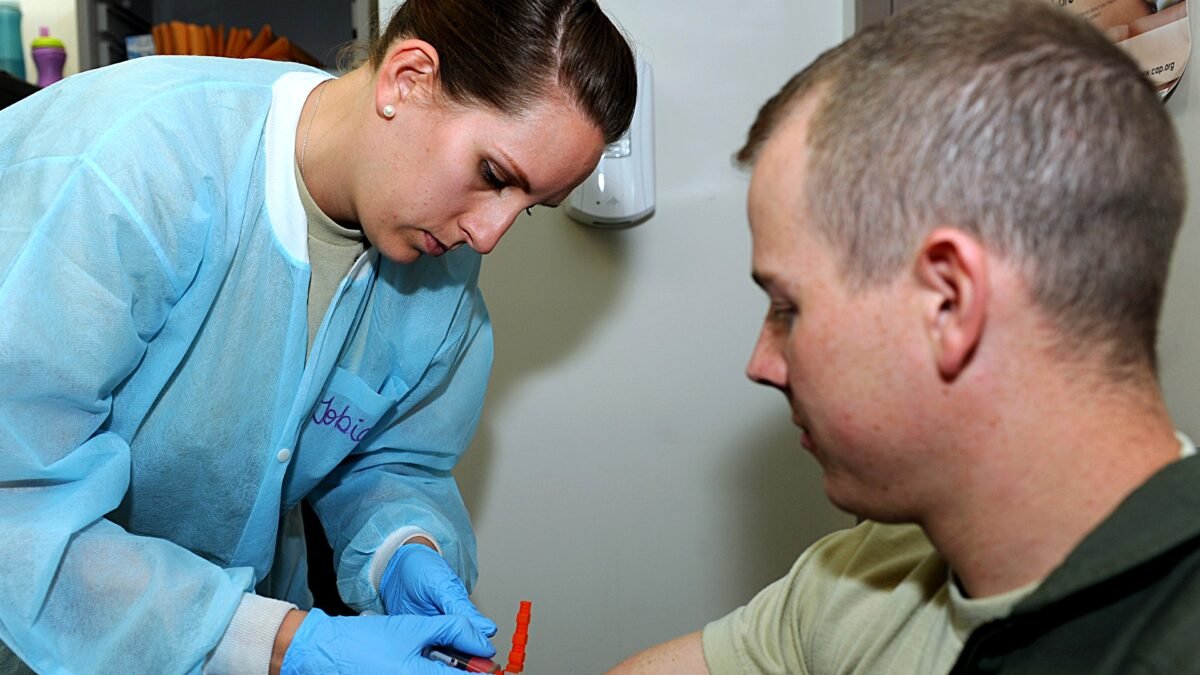
The trial is led by the University of Birmingham and funded by the government, with up to £8.49 million provided through the Office for Life Sciences and the National Institute for Health and Care Research (NIHR), according to the Department of Health and Social Care. Patients aged 45 and over who visit their GP with abdominal symptoms, such as persistent bloating or discomfort, will be invited to take part. Most will need only one or two tubes of blood, taken at their GP practice alongside routine blood tests.
The tests being evaluated look for early markers of cancer in the blood, including fragments of DNA shed by tumours and proteins that may signal the disease, and they use artificial intelligence and other new technology to analyse the samples. Crucially, the tests are designed not only to raise a possible warning but also to suggest where in the body a tumour might be, helping doctors decide what to investigate next.
A positive result will not, on its own, amount to a cancer diagnosis. Instead, according to the government announcement, it will help the GP and the patient decide together whether an urgent referral is needed. A negative result, equally, will not be a guaranteed all-clear. The trial will measure how well the tests perform alongside a GP’s own clinical judgement before any decision is made about rolling them out across the NHS.
Health and Social Care Secretary Yvette Cooper said the earlier cancers are diagnosed, the greater the chance they can be treated successfully and lives saved, and described the trial as world-first research that would establish whether simple blood tests could help GPs identify much sooner the patients who need urgent support. She added that innovations of this kind were a key part of the government’s National Cancer Plan, which aims to provide faster diagnosis, more effective treatment and better care for every patient.
How the trial will work
STRIDE-RCT is a randomised controlled trial, the most rigorous way of testing whether a new approach genuinely works. According to GP Online, the practices taking part will be randomly allocated, with half offering eligible patients a blood test alongside their usual care and the other half providing usual care alone. GPs in the trial will also record how strongly they suspect cancer in each patient, so researchers can compare the tests against clinical judgement rather than treating the technology in isolation.
The study will initially evaluate three different blood tests, with more tests potentially added later, the Department of Health and Social Care said. Two of the tests have been named in reporting of the launch. One, called Enlighten and developed by the UK biotechnology company Proteotype Diagnostics, looks for proteins in the blood that indicate the immune system may be responding to the first signs of cancer. Another, called Signatera, is already used within the NHS to monitor whether certain cancers have returned after treatment. The trial will assess all three on the same question: are they accurate enough, in ordinary GP surgeries, to justify wider use?
The trial has been designed to reach the communities where late diagnosis is most common. The government said it will cover a broad range of inner-city, rural, seaside and deprived communities, and one of the trial’s co-chief investigators, Associate Professor Dmitri Nepogodiev of the University of Birmingham, said the design was deliberate, because people in the most deprived communities are more likely to be diagnosed in an emergency, when treatment options are narrowest.
Professor Aneel Bhangu, a consultant colorectal surgeon and the trial’s other co-chief investigator, said too many patients with cancer reach him after months of vague symptoms that were hard to pin down, while at the same time most people referred urgently do not have cancer, causing unnecessary worry and expense. The blood tests, he said, might help GPs tell the two groups apart, but the evidence has to be gathered first, and the trial is designed to deliver that answer quickly.
The cancers in focus
The trial concentrates on abdominal cancers, a group of diseases that are among the hardest to catch early. The 13 cancers covered are bowel, small bowel, stomach, oesophageal, pancreatic, liver, bile duct and gallbladder, ovarian, endometrial, kidney, bladder and prostate cancer.
The scale of the problem is stark. Around 71,000 people are diagnosed with pancreatic, stomach, liver, ovarian or bowel cancer in England each year, and there are almost 35,000 deaths from these cancers, according to the government and the BBC. Many of these cancers produce no clear early warning. Their symptoms, persistent bloating, stomach pain, indigestion, changes in bowel habit, can easily be mistaken for everyday digestive trouble, irritable bowel syndrome or the effects of diet and stress.
That ambiguity is precisely why the trial targets patients who already have symptoms, rather than screening healthy people. Professor Peter Johnson, the NHS National Clinical Director for Cancer, said detecting abdominal cancer early is notoriously difficult because the symptoms can easily be mistaken for other, less serious conditions, but the NHS is determined to find a solution. He described the trial as the start of a revolution in cancer diagnosis.
The prize for earlier detection is measured in survival. Around nine in ten people diagnosed with bowel cancer at stage 1 survive at least five years, compared with around one in ten at stage 4, according to the government announcement. Pancreatic cancer illustrates the other end of the scale: half of people with the disease die within just three months of diagnosis, according to Pancreatic Cancer UK, because it is so often found only after it has spread. Alfie Bailey Bearfield, the charity’s head of policy and influencing, said the NHS desperately needs new tools to detect pancreatic cancer in time to save lives, and welcomed the trial as a rigorous test of promising blood-test technologies at scale.
Why GPs need a better tool
For a GP, the daily problem is not a lack of concern but a lack of discrimination. Abdominal symptoms are among the most common reasons people visit their doctor, and the overwhelming majority turn out to have nothing to do with cancer. Currently, just 2 to 6 per cent of urgent referrals for suspected cancer actually result in a diagnosis, according to the government. That means more than nineteen in twenty people sent urgently to hospital for tests do not have cancer, enduring weeks of anxiety and consuming appointments and scanning capacity that could have gone to someone who did.
At the same time, the minority who do have cancer can be missed, or found late, because their symptoms look exactly like everyone else’s. Dr Anisha Patel, an NHS GP, author and bowel cancer survivor who was diagnosed with stage 3 bowel cancer at a young age, said the challenge in general practice is that cancer symptoms can be vague and overlap with many other conditions. She said earlier diagnosis matters enormously from personal experience, and that the trial offers real hope that blood tests could help identify sooner who needs further investigation, while listening to patients, taking their concerns seriously and following up persistent symptoms must remain at the heart of care.
Michelle Mitchell, chief executive of Cancer Research UK, made the same point from the charity’s perspective, saying GPs have long needed better tools to help them navigate the uncertainty of vague symptoms by identifying which patients require further testing, and calling the trial an important step towards addressing that need. Jodie Moffat of Bowel Cancer UK said diagnosing bowel cancer can be tricky precisely because the symptoms could be caused by a range of different diseases, and welcomed any innovation that helps health professionals work out who needs to be urgently referred.
The hope, then, is not that a blood test replaces a GP’s judgement, but that it sharpens it. If the tests can reliably separate the small number of patients who need urgent scans and scopes from the large number who can safely be monitored in primary care, the NHS could cut waiting lists, reduce the anxiety of false alarms and, most importantly, catch the cancers that are currently slipping through until it is too late.
What the tests actually look for
The science behind the trial belongs to a field known as multi-cancer early detection. Tumours shed tiny fragments of DNA into the bloodstream as their cells grow and die, and the immune system and other tissues produce proteins whose patterns can shift in the presence of cancer. Modern laboratory techniques can now read those signals from a single blood sample, and machine-learning software can compare the pattern against the signatures of different cancers to suggest where a tumour may be located.
The three tests in STRIDE-RCT use a variety of these approaches, including artificial intelligence and the measurement of proteins in the blood, according to the government announcement. The University of Birmingham developed most of the tests being evaluated. Because the trial is taking place in real GP surgeries rather than specialist research centres, it will also test the practical side of the idea: whether samples can be taken, transported and analysed reliably as part of routine care, and whether the results arrive quickly enough, and clearly enough, for a busy GP to act on them.
That practical question matters as much as the laboratory accuracy. A test that works beautifully in a research hospital but confuses or delays a GP is of little use. By running the trial inside ordinary practices, and by measuring the tests against GPs’ own recorded suspicions, the researchers intend to produce evidence that reflects the messy reality of primary care rather than ideal conditions.
Business Secretary Jonathan Reynolds, whose department co-funds the research through the Office for Life Sciences, said cancer affects everyone at some point, and that finding cases early is key to giving patients a clear path to treatment and helping save lives. He said the trial showed the importance of the UK’s leadership in medical science in bringing forward breakthroughs that make a real difference to people.
The Galleri lesson: why this trial is different
The STRIDE-RCT launch comes only weeks after a sobering result for the same field. In September 2026, the largest randomised trial ever run on a multi-cancer blood test reported its main findings. The NHS-Galleri trial, which enrolled more than 142,000 people aged 50 to 77 across England, tested GRAIL’s Galleri blood test in people with no symptoms, offering annual testing on top of usual NHS screening. Its primary goal was a statistically significant reduction in cancers diagnosed at a late stage, stages III and IV combined, across 12 serious cancer types. That goal was not met: the combined rate of late-stage cancers did not differ significantly between the tested group and the control group, according to results published in the New England Journal of Medicine on 22 September 2026 and presented at the American Society of Clinical Oncology meeting.
Yet the Galleri result was not a simple failure. Secondary analyses showed stage IV diagnoses fell by about 14 per cent overall across the three screening rounds, early-stage diagnoses rose by 16 per cent, and cancers first discovered through emergency presentation dropped by 25 per cent, according to reporting of the trial data. The test was also highly specific, with false-positive rates below 1 per cent, although it missed roughly 70 per cent of cancers diagnosed within a year of a blood draw, and no study has yet shown that it reduces deaths from cancer. A panel convened by the US Food and Drug Administration on 23 September 2026 voted unanimously that the test was safe, split 6 to 4 on whether its effectiveness was reasonably assured, and voted 7 to 2 that its benefits outweighed its risks as an addition to recommended screening, though the agency is not bound by the vote and has not yet granted approval.
The BBC’s report on the STRIDE-RCT launch noted the Galleri result directly, observing that the idea of a blood test that can identify multiple cancers is not new, and that the earlier trial had failed to meet its main goal, although researchers are still assessing its potential benefits.
The distinction between the two trials is the key to understanding why the NHS is pressing ahead. Galleri asked whether a blood test could find cancer in healthy people before symptoms appeared, a screening question with a very high bar, because most healthy people do not have cancer and any test must avoid flooding hospitals with false alarms. STRIDE-RCT asks a narrower, more practical question: when a patient already has symptoms that could be cancer, can a blood test help the GP decide who needs urgent investigation? The patients in STRIDE-RCT are far more likely to have cancer than the general population, which changes the mathematics of the test entirely, and the comparison is not against doing nothing but against a GP’s judgement alone.
That difference is also why the trial’s leaders are cautious about overpromising. Professor Lucy Chappell, chief executive of the NIHR and chief scientific adviser at the Department of Health and Social Care, said abdominal cancers are frequently aggressive and difficult to detect, and that the trial will assess whether placing multi-cancer detection blood tests directly into routine GP consultations can provide earlier diagnosis. She called the approach potentially game-changing, while stressing that the evidence must be gathered first.
Analysis: Why It Matters
1. It attacks the deadliest gap in cancer care, not the easiest one
Cancer survival in England has improved for decades, but the improvement has been uneven. Cancers with organised screening programmes, breast, bowel and cervical, are increasingly caught early. The abdominal cancers targeted by STRIDE-RCT mostly have no screening programme at all, and they include some of the deadliest diseases in medicine. Pancreatic cancer, with half of patients dying within three months of diagnosis, is the starkest example, but ovarian, liver and stomach cancers share the same pattern: vague beginnings, late discovery, limited options. A test that works in this territory would matter far more than another incremental gain in a cancer that is already well screened. The trial’s choice of battlefield is its most important decision.
2. It treats the GP surgery as the front line, where the decision actually happens
Most cancer diagnosis research is conducted in hospitals, yet most cancer diagnoses begin in a GP’s consulting room, with a patient describing symptoms that could mean almost anything. By running the trial in 200 ordinary practices, and by measuring the tests against what GPs themselves suspected, the researchers are testing the technology where it would actually be used. If STRIDE-RCT succeeds, its results will be immediately credible to the doctors who would have to trust the tests. If it fails, the failure will be honest, measured under real-world conditions rather than discovered years later after a rollout. Either way, the design respects the reality that the hardest diagnostic decisions in the NHS are made in ten-minute appointments, not in research laboratories.
3. The Galleri experience makes this trial smarter, not redundant
It would be easy to read the Galleri result as a reason to abandon multi-cancer blood tests. That would be the wrong lesson. Galleri showed that the technology can shift cancers towards earlier stages and cut emergency presentations, but could not prove, in healthy people, that it reduces late-stage disease overall. STRIDE-RCT is built on precisely that lesson: it tests the same kind of technology in a different population, symptomatic patients, where the balance of benefit and harm is different and the clinical question is sharper. Science advances by narrowing the question after a broad one proves too hard, and this trial is an example of that discipline. The NHS is not repeating the Galleri experiment; it is asking the next question the Galleri result made possible.
4. The economics of referrals make even a modest success valuable
Only 2 to 6 per cent of urgent cancer referrals lead to a diagnosis, which means the NHS is spending enormous effort investigating people who do not have cancer, while the people who do can wait in the same queues. A blood test that even modestly improved that ratio would free up scanning and endoscopy capacity, shorten waits for everyone and reduce the psychological harm of urgent referrals that turn out to be false alarms. The £8.49 million cost of the trial is small against the cost of the diagnostic capacity it could save, and against the cost of treating cancers that are found too late, when surgery is no longer possible and treatment is longer, more expensive and less effective. Early diagnosis is usually discussed as a matter of survival; it is also, quietly, a matter of money the NHS cannot afford to waste.
5. It tests whether Britain can turn scientific leadership into patient benefit
The government framed the announcement as part of a wider industrial strategy, pointing to £1 billion in public-private life sciences investment, more than £4 billion secured since the Life Sciences Sector Plan launched in July 2025, and a target, now met, to set up at least 95 per cent of commercial clinical trials within 150 days. Those are impressive figures, but they are inputs, not outcomes. STRIDE-RCT is the kind of project that converts them into something a patient can feel: a test developed by a British university, evaluated in British GP surgeries, with the results intended to change what happens in an ordinary appointment. If it works, it will be evidence that the UK’s life sciences strategy is not just about attracting investment, but about answering questions the NHS itself needs answered. If it does not work, the trial will still have done its job, by giving a definitive answer before public money is spent on a national rollout.
What to Watch Next
- Recruitment and the first results: watch how quickly the 200 practices recruit 20,000 patients, and whether the trial reports interim findings on test accuracy before its full results. Slow recruitment would signal practical problems; early accuracy data would shape expectations.
- How the three tests compare: the trial evaluates three different blood tests side by side. Watch for any sign that one approach, DNA-based, protein-based or AI-driven, clearly outperforms the others, since that will decide which technology the NHS might eventually adopt.
- The false-positive and false-negative rates: the crucial numbers will be how often the tests raise alarms that turn out to be nothing, and how often they miss cancers that are present. Both errors have real consequences for patients and for hospital capacity.
- Whether the results change referral behaviour: the trial’s real test is not the laboratory accuracy but whether GPs, armed with a result, refer differently and better. Watch for evidence on whether urgent referrals become more targeted and whether waiting times fall.
- The National Cancer Plan: the trial is described as part of the government’s National Cancer Plan. Watch for the plan’s publication and for whether STRIDE-RCT’s findings are built into its targets for earlier diagnosis, and for any decision on a national rollout if the results are positive.
Sources
- Department of Health and Social Care / GOV.UK — “New NHS blood test trial to help spot cancers earlier”, 4 November 2026
- BBC News — “‘Multi-cancer’ blood tests coming to some GP surgeries soon”, by Michelle Roberts, 4 November 2026
- The Times — “GP patients to be offered new blood test for 13 types of cancer”, 4 November 2026
- GP Online — “NHS launches ‘world-first’ cancer blood test trial in 200 GP practices”, 4 November 2026
- Medscape — “Inside the Major Findings From the NHS-Galleri Trial”, 2026

About the Author — Abdul Mannan
Related Articles
Early Valve Replacement Cuts Death and Heart Failure in ‘Moderate’ Aortic Stenosis, Landmark Trial Finds
Replacing the aortic valve before the disease turns severe cut deaths and heart-failure events by a third in…
No Signature, No Boarding: CDC Ebola Declaration Takes Effect for Every US-Bound Flight From Tuesday
From late on Tuesday night, every person boarding an international flight to the United States must sign a…
US Doctors Issue First Menopause Treatment Update in 12 Years as Hormone Therapy Returns to First-Line Care
America's leading obstetricians and gynaecologists have issued their first major menopause treatment update in twelve years, restoring hormone…