
Russell Brand Found Guilty of Rape and Three Sexual Assaults as Jury Convicts After Three-Week Trial

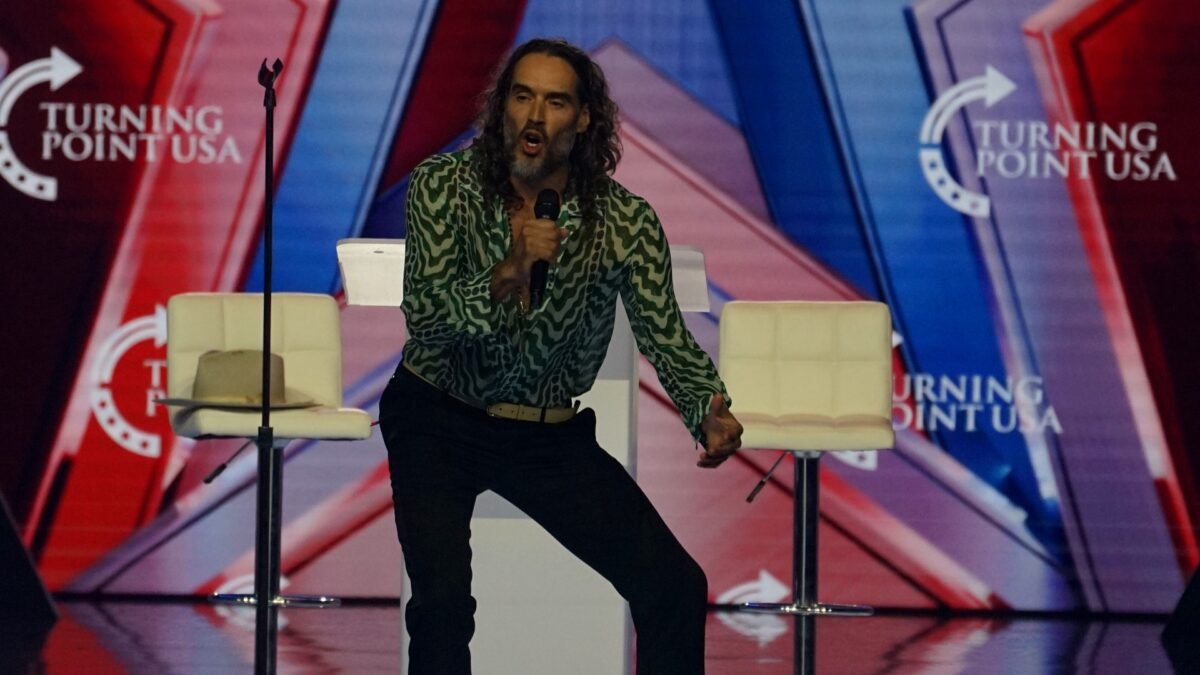
Russell Brand has been found guilty of rape and three counts of sexual assault by a jury at Southwark Crown Court in London, bringing an end to a three-week trial that examined allegations spanning a decade of the comedian’s rise to fame. The 51-year-old was told by the judge that he faces a significant prison sentence and was remanded in custody until he is sentenced on Monday.
The verdicts were delivered on Thursday afternoon after the jury spent three days considering the evidence. Brand, who had denied all seven charges against him, was convicted on four counts and acquitted on three. As the verdicts were read out, Mr Justice Bennathan told him: “You’ve been convicted of a number of offences including rape. The consequence of that is inevitably a significant custodial term,” according to reporting of the hearing. The judge added that his current view was that he therefore had to remand Brand into custody.
The case is one of the most high-profile criminal trials of a British celebrity in recent years. Brand was once one of the country’s best-known broadcasters, a BBC Radio 2 presenter and a Channel 4 star who went on to act in Hollywood films, before reinventing himself as an online commentator with a large global following. The charges against him dated from 1999 to 2009, a period in which, as the prosecution told the court, his public profile was taking off. Six women gave evidence against him, and the jury heard that they did not know each other and had come forward independently.
Brand will be sentenced on Monday 9 November. Until then he remains in custody, and the judge’s remarks in court on Thursday left no doubt about the seriousness with which the court views the convictions. Rape carries a maximum sentence of life imprisonment in England and Wales, and the judge’s description of the coming sentence as a “significant custodial term” signals that the punishment will be substantial.
The verdicts, count by count
The jury convicted Brand of one count of rape and three counts of sexual assault. The rape conviction related to a 21-year-old woman who had met Brand after one of his stand-up shows at the Hammersmith Apollo in 2009, according to reports of the trial. The jury found that he raped her at his home in Hampstead, north London, later that evening. She had described him during her evidence as a “wild-eyed maniac” during the assault, according to The Sun’s reporting of the trial.
The three sexual assault convictions concerned three different women and three separate incidents. The first related to a woman working for MTV, whom Brand was found to have groped at a party in a Soho bar in 2004 while they were talking about Big Brother. The second concerned a woman who worked at Capital Radio, who was sexually assaulted by Brand in a corridor at the station in 2005. The third related to a woman who worked at Channel 4, who was sexually assaulted during a forced massage in 2009. Each of the three women gave evidence at the trial, and each conviction was returned by the jury after three days of deliberation.
The jury acquitted Brand on the remaining three counts. He was found not guilty of raping a woman in a hotel room during the Labour Party conference in Bournemouth in 1999, the earliest of the allegations. He was also acquitted of a further rape charge relating to the same Soho bar incident in 2004, where the prosecution had alleged a second, more serious assault in a toilet at the venue after the groping. And he was acquitted of attempted indecent assault on another MTV worker in 2001, an allegation that he had tried to drag the woman into a toilet.
That last count had already been reduced during the trial itself. Midway through proceedings, on 27 October, Mr Justice Bennathan ruled that there was insufficient evidence to sustain the original charge of indecent assault and directed the jury to return a not guilty verdict on it, replacing it with the lesser charge of attempted indecent assault. “In respect of count two, I have reached the decision that there is insufficient evidence of indecent assault,” the judge said at the time, according to reports. “That is my decision, not yours. You will be directed to return a not guilty verdict in count two.” The jury then considered the reduced charge and acquitted Brand of it as well.
The split verdict — four convictions and three acquittals — matters. It shows a jury that weighed each count on its own evidence rather than treating the case as a single judgement on Brand’s character. The prosecution had presented the seven counts as a pattern, but the jury accepted some of the evidence and rejected other parts of it. That distinction is likely to shape both the sentencing hearing on Monday and any appeal that follows.
Three weeks in court
The trial opened at Southwark Crown Court on 12 October, when jury selection began, and the jury was formally sworn in the following day. Mr Justice Bennathan, a High Court judge who has previously presided over high-profile criminal cases, oversaw proceedings that had been expected to last up to ten weeks but in the event ran for three weeks of evidence. The jury began its deliberations on Tuesday 3 November and returned its verdicts on Thursday 5 November.
The prosecution case was led by Riel Karmy-Jones KC, who told the court that the six women “did not know each other” and had come forward “independently of each other” with their allegations against Brand. Prosecutors described the 51-year-old as a ruthless sexual predator, according to Reuters, and argued that he had used his growing fame to target women in a range of settings — at work, at parties, and after his comedy shows. In her closing submissions, Karmy-Jones told the jury that Brand was “childlike in his expectation that his every desire should be met” and that he cared only about his “birth right to orgasm”, according to The Sun’s reporting of the trial.
Brand’s defence was that the incidents had either been consensual, or had been reinvented or re-imagined, according to Reuters. He denied all seven charges and maintained throughout that he had never engaged in non-consensual sexual activity. His legal team acknowledged in the closing stages of the trial that acting like a “crazy idiot” towards women was not a crime, according to LADbible’s reporting — a line that captured the defence’s central argument, that Brand’s behaviour, however unattractive, did not amount to the criminal offences charged.
Brand was supported in court throughout the trial by his wife, Laura Gallacher, who walked into court holding his hand each day and who herself gave evidence in his defence. She told the jury that he was an “amazingly attentive husband” and a “kind and a wonderful father”, according to The Sun. The couple have been married since 2017 and have children together. Gallacher is the sister of the sports presenter Kirsty Gallacher.
The court also heard the contents of four police interviews with Brand, conducted between November 2023 and July 2025, in which he denied the allegations. The jury heard evidence over three weeks before being sent out to deliberate, and the judge praised the preparation of the case, describing it as “very well prepared” when he addressed the court after the verdicts.
How the case reached court
The road to Southwark Crown Court began in September 2023, when The Sunday Times, The Times and Channel 4’s Dispatches programme published a joint investigation into Brand. The investigation, broadcast as a Dispatches episode titled “Russell Brand: In Plain Sight”, featured accounts from five women who accused him of rape, sexual assault and emotional abuse in incidents said to have taken place between 2006 and 2013. One woman told the programme that Brand had entered a relationship with her when he was 31 and she was 16, which she described as emotionally abusive and controlling. Another said Brand had raped her in 2012 at his home in Los Angeles.
Brand responded to the investigation before it was broadcast with a video in which he denied the allegations, calling them “very, very hurtful” and saying that his relationships had always been consensual. He has continued to deny all of the allegations since, and has promoted conspiracy theories about the reporting, according to his Wikipedia biography.
The Metropolitan Police launched a criminal investigation within days of the broadcast. Officers encouraged anyone who believed they had been a victim of sexual assault to come forward, and in the weeks that followed the force said it had received a number of reports of sexual offences from women in London and elsewhere in the country. Brand was interviewed under caution by police on three separate occasions, and in November 2024 detectives sent a file of evidence to the Crown Prosecution Service for consideration. Detective Superintendent Andy Furphy, whose team led the investigation, said at the time: “We have a team of dedicated officers providing specialist support to the women who have come forward. We are committed to investigating sexual offences, no matter how long ago they are alleged to have taken place.”
The Crown Prosecution Service authorised the first charges in April 2025. Brand was charged with five counts relating to four women and alleged offences between 1999 and 2005: one count of rape, one count of indecent assault, one count of oral rape and two counts of sexual assault. He pleaded not guilty to those charges in May 2025. Further charges followed in December 2025, when the CPS authorised two more counts — one of rape and one of sexual assault — relating to two additional complainants and alleged incidents in London in 2009. Brand denied those counts in February 2026, and all seven charges were consolidated into a single trial. The trial had originally been scheduled to begin in June 2026 but was postponed until October after the additional charges were brought.
It is important to note that the charges tried at Southwark Crown Court were not identical to the allegations in the 2023 media investigation. The investigation covered alleged incidents between 2006 and 2013, while the charges concerned alleged incidents between 1999 and 2009. The jury was required to consider only the specific offences on the indictment, and the verdicts relate to those counts alone. The police have also interviewed Brand about two further rape accusations, according to reporting, but those did not form part of this trial.
Who Russell Brand is
Brand, 51, was for years one of Britain’s most recognisable entertainers. He first came to prominence as a presenter on MTV and as the host of Big Brother’s Big Mouth, the Channel 4 spin-off show, before moving to BBC Radio 2, where he presented a Saturday night show that drew large audiences. His flamboyant presenting style, rapid-fire delivery and willingness to court controversy made him a fixture of British popular culture in the 2000s, and he moved from television into stand-up comedy and then into Hollywood, starring in films including Forgetting Sarah Marshall, Get Him to the Greek and a remake of Arthur.
He was briefly married to the American singer Katy Perry, and his private life was for years a staple of tabloid coverage. His BBC career ended in 2008 after the so-called Sachsgate affair, in which he and the presenter Jonathan Ross left lewd messages on the answerphone of the actor Andrew Sachs during a pre-recorded radio show. Brand resigned from the BBC, and Ross was suspended. He later rebuilt his career as a stand-up comedian, an author and, increasingly, as an online figure, presenting podcasts and videos on spirituality, politics and conspiracy theories to a large global audience.
In recent years he had moved to the United States, where he has lived with his family in Florida, and had become a prominent voice in online alternative-media circles. He was baptised in 2024 and has spoken publicly about his Christian faith. The trial, however, was concerned not with his later career but with the years in which he was at the height of his fame in Britain — the years when, according to the prosecution, the offences took place.
Analysis: Why It Matters
A verdict three years after the investigation — and decades after the offences
The first thing this verdict demonstrates is how long the path from allegation to conviction can be in historic sexual offence cases. The media investigation that set the process in motion was published in September 2023. The police investigation took more than a year to reach the Crown Prosecution Service. The first charges were not brought until April 2025, and the trial did not begin until October 2026 — more than three years after the first public allegations. The offences themselves date back as far as 1999, more than a quarter of a century ago.
That timescale is not unusual in cases of this kind, but it is worth understanding why. Historic sexual offence cases depend heavily on the testimony of complainants, because there is rarely forensic evidence decades after the event. Prosecutors must apply the Code for Crown Prosecutors, which requires both a realistic prospect of conviction and a public interest in prosecuting. The police must build a case that can survive the scrutiny of a jury that will be told to judge each count on the evidence alone. All of that takes time, and the delay is one reason so few historic cases ever reach a courtroom. The fact that this one did — and ended in convictions on four counts — will be noted by every complainant in a historic case who is still waiting for a decision, and by every police force deciding how much resource to put into such investigations.
The split verdict is the story within the story
It would be a mistake to read this verdict as a simple story of guilt or innocence. The jury convicted Brand on four counts and acquitted him on three, and that split is itself significant. It shows a jury that did what the law asks of it: it assessed each allegation separately, accepted the evidence of some complainants and was not satisfied beyond reasonable doubt on others. The acquittal on the 1999 allegation, the earliest of the charges, and on the more serious of the two alleged assaults in the 2004 Soho bar incident, suggests that the jury was not swayed by a general view of Brand’s character or by the volume of allegations, but by the strength of the evidence on each individual count.
That matters for two reasons. First, it strengthens the legitimacy of the convictions. A jury that acquits on some counts is harder to portray as having been swept along by publicity or by a generalised hostility to the defendant. Second, it matters for the sentencing hearing. The judge will sentence Brand only for the offences of which he was convicted, and the acquittals will form part of the context in which the sentence is set. The split verdict is also the most likely foundation for any appeal, since Brand’s lawyers will examine whether the jury’s reasoning on the acquitted counts undermines the convictions — although an appeal requires permission, and the bar for overturning a jury’s verdict is high.
From newsroom to courtroom
This case also raises enduring questions about the relationship between investigative journalism and criminal justice. The 2023 investigation by The Sunday Times, The Times and Channel 4’s Dispatches was the trigger for everything that followed: without it, there would very likely have been no police investigation, no charges and no trial. That is a powerful illustration of what investigative journalism can achieve, and the journalists involved will regard the verdict as a vindication of their reporting.
But the gap between the investigation and the trial is equally instructive. The media investigation covered alleged incidents between 2006 and 2013. The charges concerned alleged incidents between 1999 and 2009. The two sets of allegations overlap only partly, and the jury heard only the charged counts. Journalism and criminal justice operate under different rules: a newspaper can publish allegations that meet its own standards of verification, while a prosecutor must be satisfied that there is a realistic prospect of conviction on evidence that will be tested in court. The verdict does not validate every allegation ever made against Brand, and it does not invalidate the ones that were not charged. It is a judgement on seven specific counts, and it should be reported as such.
Fame, power and the workplaces of the 2000s
Look at where the convicted offences took place and a pattern emerges. One happened at a party in a Soho bar. One happened in a corridor at a radio station. One happened during a massage at a television company. One happened after a comedy show. These were not private encounters in the ordinary sense: they were incidents in and around workplaces, in an industry where a young woman’s career could depend on the goodwill of a famous man.
That is the context in which the prosecution’s case was built, and it is the context that gives the verdict its wider resonance. The entertainment industry in the 2000s operated with a tolerance for behaviour that would be unthinkable in most workplaces today, and the women who gave evidence described a world in which a presenter’s fame functioned as a form of power. The prosecution’s argument was that Brand understood that power and used it. The jury’s acceptance of that argument on four counts will be read by broadcasters and production companies as a reminder that the duty of care they owe to staff and freelancers is not an abstract policy question but a legal and moral one — and that the consequences of failing in it can arrive decades later, in a courtroom, long after the shows themselves have been forgotten.
What Monday’s sentence will signal
The immediate focus now turns to Monday’s sentencing hearing, and the judge’s remarks on Thursday have already set expectations. When a judge tells a defendant in open court that the consequence of his convictions is “inevitably a significant custodial term”, and remands him into custody on the spot, the message is unmistakable: the sentence will be measured in years, not months. The judge will have the benefit of pre-sentence reports and will hear submissions from both sides before passing sentence, but the direction of travel is clear.
The sentence will also be watched as a signal to other complainants in historic cases. Sentencing in rape cases in England and Wales is guided by the Sentencing Council, which sets starting points based on the harm caused and the culpability of the offender, with aggravating factors — such as the abuse of a position of trust or power, or the targeting of a vulnerable victim — pushing the sentence upwards. Multiple convictions are typically sentenced consecutively or with the overall sentence reflecting the totality of the offending. Whatever the precise figure on Monday, the sentence will be read as a statement about how seriously the courts treat sexual offences committed by people in positions of fame and influence, and about whether the passage of time diminishes the gravity of those offences. The judge’s remarks suggest it does not.
What to Watch Next
- Sentencing on Monday 9 November: Mr Justice Bennathan will pass sentence at Southwark Crown Court. Watch for the length of the custodial term, whether the sentences run consecutively, and the judge’s sentencing remarks, which will explain how he weighed the harm, the abuse of power, and the passage of time.
- Any appeal: Brand’s legal team will consider whether to seek permission to appeal the convictions. Watch for any statement from his lawyers, and for whether an application focuses on the split verdict, the judge’s mid-trial ruling on count two, or the admissibility of any of the evidence.
- Reaction from broadcasters: The BBC, Channel 4 and other employers from the period covered by the charges may face renewed questions about what was known at the time and what has changed in their safeguarding and complaints procedures since. Watch for statements from the broadcasters and from the media regulator.
- The wider reckoning in British entertainment: This verdict arrives in a landscape already shaped by the convictions of other high-profile figures. Watch for whether it prompts further complaints to the police, further investigations by broadcasters, or further reporting on the culture of the industry in the 2000s.
- Brand’s own response: Brand has denied all of the allegations since 2023 and has built a large online following around his commentary. Watch for whether he issues a statement after sentencing, and for how his platform and his audience respond to the verdict.
Sources
- Reuters — Comedian Russell Brand found guilty by UK court of rape and sexual assaults (5 November 2026)
- The Times — Russell Brand trial latest: comedian found guilty of rape (5 November 2026)
- Consequence — Russell Brand Found Guilty of Rape and Sexual Assault in British Court (5 November 2026)
- LADbible — Russell Brand has been found guilty of one count of rape and three counts of sexual assault (5 November 2026)
- Parliament News — Russell Brand Trial Begins at Southwark Crown Court (13 October 2026)

About the Author — Abdul Mannan
Related Articles

Poundland on the Brink: 12,000 Jobs at Risk as Ministers Press Owner Gordon Brothers for a Rescue Before Christmas
Poundland's owner is in talks with the government as the discount chain's 12,000 jobs hang in the balance…
Two Prisoners Mistakenly Freed From Wandsworth in a Week as Manhunt Under Way and Lammy Faces PMQs Storm
Two men, including a convicted sex offender, were mistakenly released from HMP Wandsworth within days of each other,…
Andrew Mountbatten-Windsor Summoned to Give Evidence in High Court Fraud Trial in First Royal Witness Order Since 1891
Andrew Mountbatten-Windsor has been served with a witness summons to give evidence in a High Court fraud trial…