
Poundland on the Brink: 12,000 Jobs at Risk as Ministers Press Owner Gordon Brothers for a Rescue Before Christmas

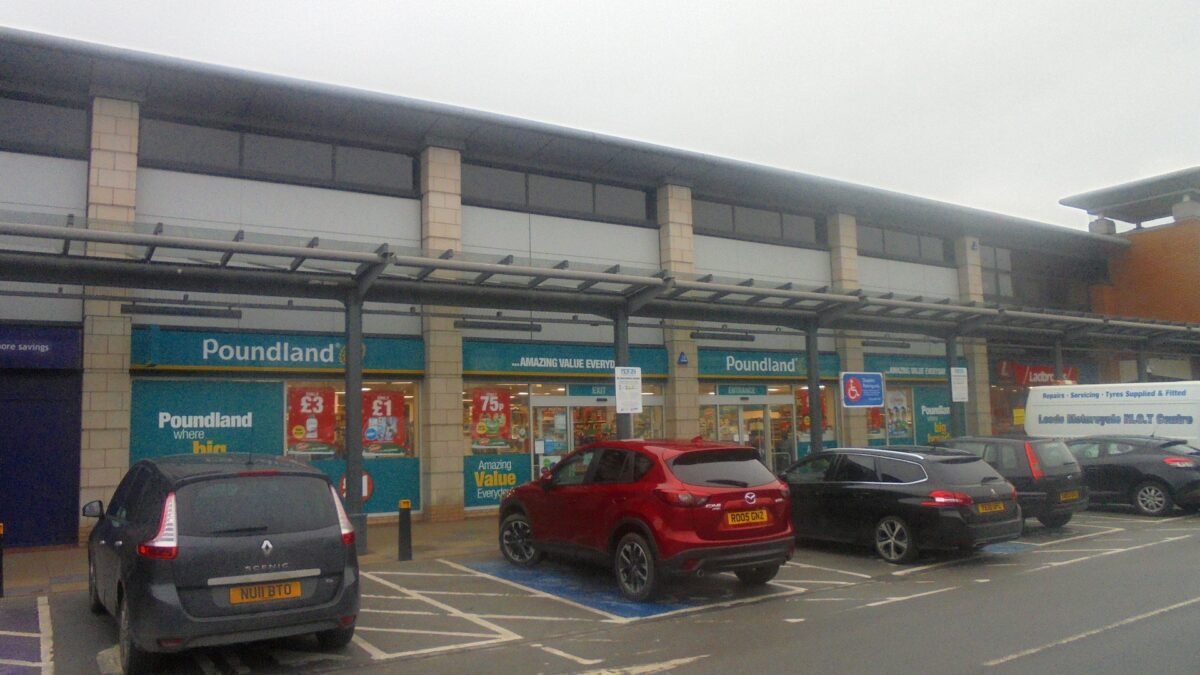
Poundland, the discount chain that built its name on selling almost everything for a pound, is fighting for its life. Its American owner is in talks with the British government, its suppliers are warning that a collapse would ruin them, and a court deadline of 12 November now stands between 12,000 workers and unemployment just weeks before Christmas.
The chain filed a notice of intention to appoint administrators at the High Court on Thursday 29 October, according to the Guardian, a legal step that shields it from its creditors for ten working days while a rescue, a sale or a restructuring is sought. The advisory firm AlixPartners is lined up to run the process if no solution is found. Poundland has stressed that its shops remain open and trading normally, but the filing has set off a political storm, a scramble among rival retailers for its stores, and deep anxiety among the more than 2,000 suppliers who depend on it.
At the centre of the row is a single disputed sum: a £30 million shareholder loan. Gordon Brothers, the United States restructuring specialist that bought Poundland for £1 in June 2025, has rejected a takeover bid from the Northern Irish property group Martin Property Group, a bid backed by Poundland’s own management and by the chain’s founder. Gordon Brothers says the offer was worth less than the £30 million it is owed. Its critics say a solvent business is being pushed towards break-up so its owner can recover its money first.
Business Secretary Jonathan Reynolds met Gordon Brothers on Wednesday 4 November, according to the BBC, and Prime Minister Andy Burnham has publicly urged the owners to “focus on the people in your employment” and find “a practical solution that saves jobs and saves those stores”. The government insists it does not want to interfere in commercial negotiations, but ministers have made clear they expect Gordon Brothers to explain why a deal that would keep the chain whole has not been done.
For the 12,000 people who work in Poundland’s roughly 600 shops across Britain and Ireland, including its Dealz stores, the uncertainty is already real. “It is not just 12,000 jobs,” the chain’s founder, Steve Smith, told the Guardian. “Poundland has more than 2,000 suppliers, some only deal with Poundland and some employ hundreds of people.” Smith, who opened the first Poundland in Burton upon Trent in 1990, warned that staff could be out of work for “years” if the chain collapses, and suggested that as many as 30,000 jobs could be at risk once the wider supply chain and neighbouring high street businesses are counted.
What Has Happened
Poundland’s troubles have been building for years, but the decisive moment came on 29 October, when the chain filed its notice of intention to appoint administrators. The filing does not itself put the company into administration. It is a holding position: for ten working days, creditors cannot take action against the business while its advisers look for a buyer, new funding or a restructuring. By most counts, that protection runs out on or around 12 November, and it can end earlier if a deal is struck or if the process moves faster.
The chain employs around 12,000 people, according to the Guardian and the BBC, across about 600 stores and two distribution centres. Some reports put the workforce at between 10,500 and 12,000. Whatever the precise figure, it is one of the largest employers on the British high street, and its shops are often anchors of smaller town centres and shopping parades where few other retailers remain.
Gordon Brothers bought Poundland from the Pepco Group for £1 in June 2025, taking on a reported £30 million of debt in the process. Since then, around 150 stores have closed, according to reports, and the chain’s management has been trying to turn the business around. Poundland’s managing director, Barry Williams, has said the company is “back in profit” and has a “bright future ahead of it if it is allowed to deliver that”. Gordon Brothers disputes that assessment.
In a letter to the government, Mark Newton-Jones, who oversees Gordon Brothers’ European operations, said the company is “still not cash-generative at a sustainable level”, blaming rising inflation, increasing staff costs and what he called “severe levels of shoplifting”. He said the firm has provided £85 million in additional financing since its purchase of Poundland in 2025 and has worked to reduce a £70 million loss. The two sides, in other words, do not even agree on whether the business they are arguing over is making money.
That disagreement matters because it decides what happens next. If Poundland is a viable business that has been steadied, then a rescue bid that keeps it whole deserves to succeed. If it is still losing cash, then a break-up — selling the shops in parcels to rival retailers — may be the only way to save any of the jobs at all.
The Rescue Bid That Was Rejected
The bid at the heart of the dispute came from Martin Property Group, a family-owned real estate investor and developer from Northern Ireland. The offer was backed by Poundland’s management and by Steve Smith, the founder, who said he was prepared to support it. According to the Guardian, the proposal included £7.5 million upfront. Gordon Brothers rejected it.
The reason, according to reports, is the £30 million shareholder loan. Gordon Brothers controls that loan and wants it repaid in full; the Martin Property Group offer was worth less than the debt the owner inherited. Pepco, the former owner, holds the other £7.5 million of the debt and was prepared to wait for repayment in the hope of saving the business, according to Sky News, as reported by the Guardian. Gordon Brothers, as a secured creditor, would be first in line to get its money back if the chain goes into administration. Suppliers, by contrast, would be left to take the loss.
That order of priority is what has enraged MPs. On Tuesday 3 November, members from across the House of Commons accused Gordon Brothers of “predatory capitalism” and of behaving like a “vulture”. Richard Tice, the deputy leader of Reform UK, accused the owners of abusing the insolvency process to maximise their returns, citing the 12,000 workers involved. Liam Byrne, the chair of the Commons business committee, said: “Every report suggests Poundland is a viable, profitable business with a future ahead of it and without good reason to let it crash and burn — and then to break it up and sell it off piece by piece.” MPs have called for Gordon Brothers to appear before the committee on 11 November to explain its role.
The suspicion in Westminster is sharpened by what Gordon Brothers does for a living. The firm specialises in restructuring and in stock liquidations — selling off the stock of collapsed businesses. One insider familiar with the situation told the BBC that the timing of Poundland facing collapse was “odd”, because most retailers do not fall over in the run-up to Christmas, the most profitable part of the year. Adam Turner, a supplier, told the BBC he had no knowledge of whether Gordon Brothers had deliberately timed the process to take advantage of high stock levels, which it could then sell. Gordon Brothers was approached for comment by the BBC.
For its part, Gordon Brothers says it has stood by its stewardship, pointing to the £85 million it has put in since 2025, and argues that selling the chain in parts gives the best chance of saving jobs. That is a genuine argument, not a slogan: if no single buyer will take all 600 shops, selling them in parcels to Tesco, B&M, Lidl and others may keep more of them trading than a rescue that nobody will fund. But the figures reported so far suggest the parcels would cover only about half the estate, leaving roughly 6,000 employees without a job on the same premises.
The Government Steps In
The government has moved from watching the dispute to intervening in it. Business Secretary Jonathan Reynolds met Gordon Brothers on Wednesday, and a source close to the secretary said he “has been firm that Gordon Brothers must do everything in their power to protect jobs and provide certainty for workers”. According to reports of the meeting, Gordon Brothers committed to prioritise bids that protect workers and units. Prime Minister Andy Burnham has questioned publicly why a solvent deal has not been made.
Kate Dearden, the minister for the future of work, told MPs that government officials had met representatives from Gordon Brothers on Monday, and confirmed she would also meet Poundland’s executives on Wednesday, alongside the shop workers’ union Usdaw. “I am deeply concerned about the uncertainty surrounding Poundland’s future and the impact it could have on its staff and their families who are at the forefront of my mind,” Dearden told the House of Commons. “Poundland is not currently in administration and the business continues to trade, but this is a worrying time for employees, suppliers and communities.”
Dearden said the government does not want to interfere with “current ongoing commercial negotiations”, but said ministers would be seeking “clarity” on the plans for the retailer. “It is absolutely legitimate for this government to ask the business if they are doing everything they can to protect employees and suppliers up and down the country,” she added. She also said the government would be ready to help the company’s employees should the situation end in administration. “We stand ready to support them if they need to move into new employment, however… our priority is always in protecting jobs and the Secretary of State and I will continue to engage with the company to secure the best possible outcome,” she said.
The political pressure is not only about Poundland. The chain’s crisis arrived the day after the Chancellor’s Budget on 28 October, which promised support for the high street. The contrast between that promise and the possible collapse of one of the high street’s biggest employers, a week later, has not gone unnoticed in Westminster. It is also why the business committee hearing on 11 November matters: it will force Gordon Brothers to defend its decisions in public, a day before the creditor protection expires.
Downing Street has added its voice. According to reports, Number 10 said Poundland’s owners are “not acting in the best interests” of staff and stores, adding: “Gordon Brothers need to explain why they haven’t accepted any offer to keep the company going.”
Suppliers Fear the Worst
If the political argument is about who is to blame, the human argument is about who pays. Suppliers to Poundland have warned that the chain’s American owner should not be allowed to maximise its own return at their expense, as ministers intervene in a rescue effort that will decide the fate of 12,000 staff, about 2,000 suppliers and 600 shops across Britain.
Adam Turner is sales director at Highcrest Retail Brands, a family-owned business in Bradford that mainly sells confectionery to Poundland and turns over about £50 million. He told the BBC that Poundland was one of Highcrest’s biggest customers, and that the two firms have had a relationship for decades. His company will “lose a few million” if Poundland becomes insolvent, he said, leaving a gap in its balance sheet next year. Highcrest is a “longstanding business that can stomach this”, he said, but other medium and small suppliers have told him that “if Poundland goes under, so do they”.
“It’s sad. It’s a nightmare for us all to be honest with you. It’s not just the suppliers, it’s the staff at Poundland, some of these guys have been there for many years. It’s from the warehouse staff all the way to the shop staff to everybody within head office. It’s a massive ripple effect through the supply chain,” Turner told the BBC.
The timing makes the damage worse. Turner said the last three months of the year are the “golden quarter” for retailers. In sweets, Poundland takes its Halloween stock from July and its Christmas stock from September, so these three months are when suppliers are owed the most. If Poundland goes under, suppliers will be getting “pennies in the pound” back from the administration, he said, which is “very upsetting” — although he still hopes a deal can be done so Poundland can remain solvent.
The structural unfairness is plain. Gordon Brothers, as a secured creditor, is first in line to get its money back. Suppliers, who have done nothing wrong, will take the financial hit. Some of them are small family businesses that exist almost entirely to serve Poundland. Smith warned that two to three thousand suppliers work only for the firm and would be directly affected by a collapse. The chain’s suppliers face millions of pounds in losses, and the stock they have already delivered — the Christmas sweets, the seasonal lines — would be sold off to pay the secured creditor first.
How Poundland Got Here
Poundland’s story is, in miniature, the story of the British high street over the past three decades. Steve Smith opened the first shop in Burton upon Trent in 1990, built on a simple idea: everything for a pound. At a time when Britain’s town centres were still thriving, the formula was irresistible. The chain grew rapidly, and by the 2010s it was one of the most recognisable names in British retail, with hundreds of stores and a loyal customer base among shoppers watching every penny.
The pound itself, however, became the problem. Inflation made the original promise impossible to keep. Poundland gradually moved beyond the single price point, introducing higher price bands and, eventually, a much wider range of prices. The brand that had been built on simplicity became a general discount retailer, competing with B&M, Home Bargains, the supermarkets’ value ranges and, increasingly, online sellers. The distinctive idea faded even as the name stayed.
Ownership changed hands along the way. The Pepco Group, a European discount retail group, owned Poundland for years before selling it to Gordon Brothers for £1 in June 2025. A £1 sale is itself a signal: it means the seller believed the business was worth less than its debts, and the buyer believed it could extract more value from breaking it up or restructuring it than from running it as it stood. Gordon Brothers took on £30 million of debt with the purchase, and has since closed around 150 stores.
The wider retail environment has not helped. Business rates, energy costs and wage rises have squeezed margins across the sector. Shoplifting, which Gordon Brothers cites as a “severe” problem, has risen sharply across British retail, and discount stores, with their thin margins and high footfall, feel it most. The eurozone inflation figures published this week — 4 per cent in October, a three-year high — are a reminder that the cost pressures behind Poundland’s troubles are not unique to one company. The Bank of England is due to announce its latest interest rate decision later today, with markets expecting a rise from 3.75 per cent to 4 per cent, the first increase since 2023, which would add to borrowing costs for households and businesses alike.
None of this makes Poundland’s collapse inevitable. Other discount retailers — B&M, Home Bargains, the supermarkets’ value lines — are trading profitably in the same conditions. That is precisely why the argument about whether Poundland is “back in profit”, as its managing director claims, or “still not cash-generative at a sustainable level”, as its owner claims, matters so much. If the underlying shops can make money, then the failure is one of ownership and finance, not of the business itself.
Analysis: Why It Matters
1. A test of the “vulture” model
The language MPs have used — “predatory capitalism”, “vulture” — is unusually blunt, and it reflects a wider unease about a particular model of ownership. Gordon Brothers is a restructuring specialist, not a retailer. Its expertise is in extracting value from distressed assets, and its critics argue that the incentives of that model point towards break-up rather than rescue: a secured creditor that is paid first has less reason to accept a rescue bid that pays it less than the full £30 million, even if that bid saves 12,000 jobs. The counter-argument is that nobody else was willing to buy Poundland for £1 except Gordon Brothers, and that without the firm the chain might already have collapsed. Both things can be true. But the Poundland case will be read in Westminster as a test of whether the insolvency system protects the people who work for a company, or only the people who lent to it. The business committee hearing on 11 November is where that question will be put directly to the firm.
2. The high street’s anchor problem
Poundland’s shops are not just shops. In many smaller towns, they are the reason people still visit the high street at all. Discount retailers draw footfall that neighbouring businesses depend on — the cafe next door, the card shop across the road, the market stalls outside. When an anchor tenant disappears, the damage spreads in ways that no single company’s balance sheet captures. Smith’s warning that 30,000 jobs could be at risk is an estimate, not a verified figure, and it should be treated as such. But the mechanism he describes is real, and Britain has seen it before. When Wilko collapsed in 2023, about 12,500 jobs were lost and hundreds of high street units stood empty for months. When BHS failed in 2016, around 11,000 jobs went with it. Each collapse leaves a hole that takes years to fill, if it is filled at all. A Poundland collapse, with roughly 600 stores, would be on the same scale.
3. Christmas timing
The calendar is the cruellest part of this story. The notice of intention was filed on 29 October, days before the most important trading period of the year. For Poundland’s staff, that means facing Christmas not knowing whether they will have a job in January. For suppliers, it means the season in which they are owed the most money is the season in which they may be paid the least — “pennies in the pound”, as Turner put it. For shoppers, it means the cheapest shops on the high street may disappear just as household budgets are stretched tightest. And for the government, it means a crisis that will be measured in real time, in empty shops and redundancy notices, through the weeks when voters are paying closest attention. The timing is also why the 12 November deadline matters: whatever is decided then will set the shape of Christmas for thousands of families.
4. The £30 million question
Strip away the politics and the human cost, and the dispute comes down to £30 million. Gordon Brothers wants its shareholder loan repaid in full. The Martin Property Group bid, which would have kept the chain whole, was worth less than that. Pepco, which holds £7.5 million of the debt, was willing to wait. The question for the next week is whether any buyer, or any combination of buyers, will bridge the gap — and whether Gordon Brothers will accept less than the full sum to save the business. The Tesco interest in around 150 stores, and Fortress’s interest in 200 to 250, show that parts of Poundland are plainly valuable. The difficulty is the whole: nobody, so far, has been willing to pay for all of it. The government’s leverage is limited — ministers can apply pressure and publicity, but they cannot force a private owner to accept a bid, and they have said they do not want to interfere in commercial negotiations. The most likely outcome, on the evidence so far, is a partial rescue: some stores saved, some sold, some closed. The number that matters then is not 12,000 but how many of the 12,000 keep their jobs.
5. What it says about Britain’s economy
Poundland’s crisis is also a window on the wider economy. A discount chain that serves the shoppers with the least to spend is struggling at the same time as inflation is rising again — eurozone inflation hit a three-year high of 4 per cent this week, and British inflation rose to 3.5 per cent in September. Energy costs, wage rises and shoplifting are squeezing a business whose entire model depends on thin margins and high volumes. The Bank of England’s expected rate rise today would be the first since 2023, a sign that policymakers believe inflation, not weak growth, is now the greater threat. For the households who shop at Poundland, that combination — rising prices, dearer borrowing, and the possible loss of the cheapest shops — is a squeeze from every direction. The chain’s fate will not decide the economy, but it will tell us a great deal about who the economy is working for.
What to Watch Next
- The 12 November deadline. The creditor protection from the notice of intention runs out on or around 12 November. By then, AlixPartners and Gordon Brothers must have a rescue, a sale or a restructuring agreed — or administrators will be formally appointed and the future of each store decided individually.
- The business committee hearing on 11 November. Gordon Brothers has been called to appear before MPs the day before the deadline. Expect direct questions about the rejected Martin Property Group bid, the £30 million loan and the timing of the filing.
- Whether a whole-chain buyer emerges. Tesco is reported to be in talks over around 150 stores, and Fortress over 200 to 250, with Iceland, Lidl, Wilko’s owner CDS Superstores and B&M also linked to sites. A buyer for the whole chain would change everything; a break-up would leave roughly half the stores, and around 6,000 staff, without a future.
- The Bank of England’s decision today. The Monetary Policy Committee announces its latest decision at noon, with markets expecting a rise to 4 per cent. The vote split and the new forecasts will shape borrowing costs for households and businesses through Christmas and into 2027.
- Suppliers and the Christmas stock. Watch for signs that suppliers are withholding deliveries or demanding payment upfront. If the supply chain stops trusting Poundland, the shops will empty faster than any administrator can act — and the “golden quarter” will turn into a fire sale.
Sources
- BBC — “Poundland supplier ‘will lose millions’ if retailer collapses”, 4 November 2026
- The Guardian — “Poundland staff could be out of work for years if retailer collapses, founder says”, 3 November 2026
- The Guardian — “Poundland suppliers warn US owner must not maximise its return at their expense”, 4 November 2026
- Energy Radio — “Poundland administration: No 10 attacks owners, Tesco eyes stores”, updated 4 November 2026
- TechShali — “Poundland Administration: £30m Loan, Timeline & What’s Next”, citing ITV News, Reuters and Sky News

About the Author — Abdul Mannan
Related Articles
Two Prisoners Mistakenly Freed From Wandsworth in a Week as Manhunt Under Way and Lammy Faces PMQs Storm
Two men, including a convicted sex offender, were mistakenly released from HMP Wandsworth within days of each other,…
Andrew Mountbatten-Windsor Summoned to Give Evidence in High Court Fraud Trial in First Royal Witness Order Since 1891
Andrew Mountbatten-Windsor has been served with a witness summons to give evidence in a High Court fraud trial…
Parliament Risks ‘Catastrophic Event’ as MPs Warn Notre Dame-Style Fire Could Destroy Westminster
MPs have warned the Palace of Westminster faces a 'catastrophic event' — a Notre Dame-style fire or the…