
Two Prisoners Mistakenly Freed From Wandsworth in a Week as Manhunt Under Way and Lammy Faces PMQs Storm

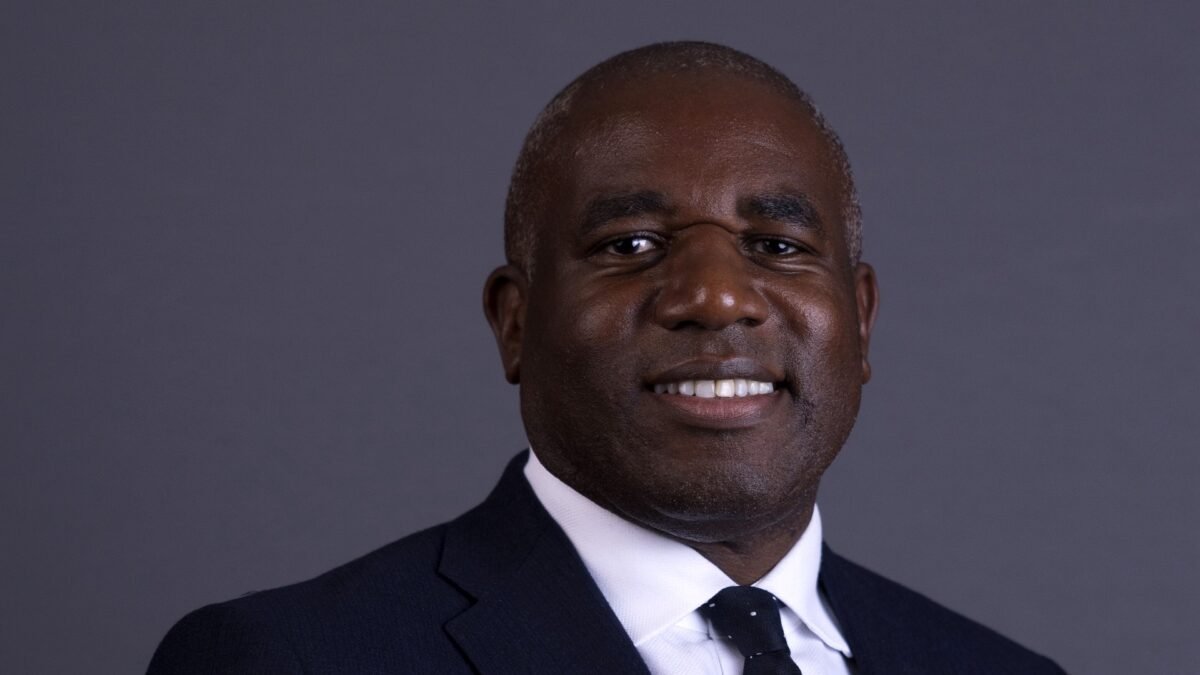
Two men were mistakenly released from HMP Wandsworth in south London within days of each other, triggering urgent police manhunts and a bruising political row that has left Justice Secretary David Lammy fighting to defend his handling of a prison system in crisis. One of the men is a convicted sex offender who walked free almost a week before the police were even told he was missing, according to the BBC.
The Metropolitan Police and Surrey Police are searching for both men, and the government has ordered an independent investigation into how the same prison managed to free two prisoners in error in the space of a single week — only days after Mr Lammy introduced what he described as the strongest release checks ever following a similar blunder at another prison.
The episode dominated Prime Minister’s Questions on Wednesday, where Mr Lammy, standing in for the Prime Minister, was repeatedly pressed on whether any more prisoners had been freed in error and repeatedly declined to give a direct answer. Within hours, the Ministry of Justice admitted that he had not been “accurately informed of key details” when he faced MPs, according to the Guardian.
For a government that came to office promising to restore order to a prison system it describes as being in crisis, the Wandsworth errors are a serious blow — and the figures behind them suggest the problem goes far beyond one jail. Government data shows 262 prisoners were released in error in England and Wales in the year to March 2025, a rise of 128 per cent on the 115 recorded the previous year, according to the Ministry of Justice’s annual prison digest.
The two men police are searching for
The first man to be freed in error was Brahim Kaddour-Cherif, a 24-year-old Algerian national and registered sex offender, the Metropolitan Police said. He was released from HMP Wandsworth on Wednesday 29 October, but the force said it was not told about the mistake until Tuesday 4 November — six days later.
“Officers are carrying out urgent enquiries in an effort to locate him and return him to custody,” a police spokesperson said, according to the BBC.
Mr Kaddour-Cherif was convicted of indecent exposure in November 2024, in relation to an incident in March of that year, the BBC reported. He was sentenced to an 18-month community order and placed on the sex offenders’ register for five years. He had most recently appeared in court in September for breaching the conditions of that order, according to the BBC.
He is not an asylum seeker, the BBC confirmed. He is understood to have entered the UK legally on a visitor’s visa in 2019 but overstayed, and he is in the initial stages of the deportation process. The Guardian reported that he had been in prison for trespass with intent to steal. Police said he is believed to have links to Tower Hamlets and is also known to frequent the Westminster area.
The six-day delay in telling the police has become one of the most damaging details of the case. Detective Chief Superintendent Paul Trevers, who is leading the investigation, said: “Cherif has had a six-day head start but we are working urgently to close the gap and establish his whereabouts.”
The second man, William Smith, who goes by Billy, is 35 and from Woking in Surrey. He was sentenced to 45 months in prison for multiple fraud offences at Croydon Crown Court on Monday 3 November, appearing via a live video link from HMP Wandsworth, and was released in error shortly afterwards, according to the BBC and Surrey Police.
Surrey Police said Mr Smith, who is described as white, bald and clean shaven, was last seen wearing a navy long-sleeve jumper with a white Nike tick across the front, navy blue tracksuit bottoms with a white Nike tick on the left pocket, and black trainers. He has links to Woking but could be anywhere in Surrey, the force said.
According to the BBC, a clerical error at the court level saw his custodial sentence incorrectly entered in the computer system as a suspended sentence, resulting in his release. The Guardian reported that the Prison Service is examining the possibility that officers did not have a warrant to hold the men in custody. Putney.news reported that Mr Smith, described as a rogue trader, had defrauded 19 people, including elderly victims, while posing as a roofing contractor.
Surrey Police has appealed for information about Mr Smith, quoting reference SYP-20251105-0472.
A bruising session at Prime Minister’s Questions
The political damage was done in the House of Commons on Wednesday, where Mr Lammy was standing in for Sir Keir Starmer at Prime Minister’s Questions. The shadow justice secretary, James Cartlidge, repeatedly asked him whether any further asylum-seeking offenders had been accidentally released from prison since the case of Hadush Kebatu, the Epping sex offender freed in error from HMP Chelmsford last month.
Mr Lammy repeatedly refused to answer the question directly, according to the BBC. Towards the end of the session it emerged that a prisoner had been mistakenly released — a reference to Mr Kaddour-Cherif. Mr Cartlidge later told MPs that a second prisoner had also been mistakenly freed, and Mr Lammy declined to respond.
BBC political editor Chris Mason said he had been told that Mr Lammy was aware of the incident going into Prime Minister’s Questions, but not whether the man was an asylum seeker. On Wednesday evening, the Ministry of Justice said Mr Lammy had not been “accurately informed of key details” when he was asked about missing prisoners, the Guardian reported.
Shortly after the session, Mr Lammy said he was “outraged and appalled by the foreign criminal wanted by the police” and promised that an “urgent manhunt” was under way. He later said he was “absolutely outraged” and that his officials had been “working through the night to take [Mr Kaddour-Cherif] back to prison”, according to the BBC.
The reaction from opposition parties was swift and severe. The shadow home secretary, Chris Philp, said it was “shocking that once again the Labour government has mistakenly allowed a foreign criminal to be released from prison”, and described Mr Lammy’s appearance at Prime Minister’s Questions as “nothing short of disgraceful”, accusing him of being “dishonest” with the public and parliament, according to the BBC.
Reform UK leader Nigel Farage called the incident a “farce”. The Liberal Democrats’ justice spokesperson, Jess Brown-Fuller, called for Mr Lammy to return to the House of Commons to explain “why he failed to answer” questions on whether another prisoner had been mistakenly released during Prime Minister’s Questions. Conservative frontbencher Robert Jenrick called the episode a “dereliction of duty”, according to The Justice Gap.
Downing Street said Mr Kaddour-Cherif was “a concerning case”, with Sir Keir Starmer’s official spokesperson adding: “It’s unacceptable, and the circumstances behind it will be forensically looked at … One mistaken release is too many, as we saw in the Kebatu case. That is why we’ve ordered the review led by Lynne Owens.”
Rosena Allin-Khan, the Labour MP for Tooting, whose constituency includes Wandsworth prison, said: “Local residents will quite rightly be deeply concerned. We urgently need answers from the government and Ministry of Justice as to how this was allowed to happen.”
Mr Lammy has told MPs that an independent investigation has been commissioned into both cases. “Victims deserve better and the public deserve answers. That is why I have already brought in the strongest checks ever to clamp down on such failures and ordered an independent investigation, led by Dame Lynne Owens, to uncover what went wrong and address the rise in accidental releases which has persisted for too long,” he told Parliament, according to Putney.news.
The Kebatu case — the warning that was not heeded
The Wandsworth errors came less than two weeks after an almost identical blunder at HMP Chelmsford in Essex, which the government had treated as a wake-up call. Hadush Kebatu, an Ethiopian national who arrived in the UK on a small boat, was mistakenly released from Chelmsford on 24 October, according to the BBC and the Guardian.
Mr Kebatu had been jailed for 12 months in September 2025 for sexually assaulting a woman and a 14-year-old girl. He was supposed to have been sent to an immigration detention centre ahead of deportation, but was instead freed because of what was described as “human error”. He was arrested in north London two days later and was subsequently deported after being given a £500 discretionary payment, according to the Guardian.
Mr Lammy described the Kebatu release as a “national embarrassment” and ordered five pages of new checks for prison governors, designed to ensure that no prisoner could be released without the correct paperwork being verified. The Wandsworth errors happened days after those checks were introduced — a fact that opposition MPs have seized on.
The government has also commissioned a rapid review led by retired senior police officer Dame Lynne Owens, and has brought in digital experts to modernise release procedures and reduce mistakes, according to The Justice Gap. Prison governors in England have been summoned to an urgent meeting with ministers in response to the errors.
262 mistaken releases in a single year
The scale of the problem is set out in the Ministry of Justice’s own figures. According to the HMPPS Annual Digest for 2024/25, 262 prisoners in England and Wales were released in error in the year to March 2025 — a 128 per cent increase on the 115 recorded in the previous 12 months. The figures were published in July.
Mark Fairhurst, national chair of the Prison Officers’ Association, said mistaken releases averaged 22 a month. Speaking on BBC Breakfast, he described the wider system as being “in complete meltdown” and called for a Royal Commission “to discover not just what’s gone wrong, but more importantly, put it right”, according to The Justice Gap.
Mr Fairhurst later told the BBC that untrained prison staff were left to calculate complex release dates by hand, under pressure from the early-release scheme that allows some inmates to leave after serving 40 per cent of their sentence.
At least four other prisoners released by mistake in recent months remain at large, the BBC reported — a detail that underlines how the Wandsworth cases fit into a wider pattern rather than standing alone as an isolated accident.
Justice minister Alex Davies-Jones told BBC Breakfast that she shared the public’s “frustration and fury” but said the problems “won’t be fixed overnight”, according to The Justice Gap.
HMP Wandsworth: a prison with a troubled history
The prison at the centre of the crisis is one of the most troubled in the country. HMP Wandsworth is a Victorian-era facility in south London, built in 1851 and originally constructed to house fewer than 1,000 prisoners, according to the BBC.
An August 2024 report by the prison’s independent monitoring board found that inmate numbers in the “cramped, squalid” prison had grown to 1,513. “Wings were chaotic and staff across most units were unable to confirm where all prisoners were during the working day,” the report said. The board added that it was unable to conduct prisoner roll checks because staff could not provide accurate numbers, and that a third of officers were still not available for operational duty on any given day due to sickness, restricted duties or training.
In April, HM Inspectorate of Prisons noted that the population had been reduced by 150 and that other “limited and fragile” improvements had been made. But the prison remains under intense scrutiny: in 2023 it was in the headlines after former British soldier Daniel Khalife escaped by clinging to the underside of a lorry.
The two mistaken releases now join that record — and they raise a question that goes beyond the management of a single jail: how does a prison that cannot reliably count its own inmates reliably decide who is allowed to walk out of the gate?
How a prisoner gets released by mistake
Very little is yet known about precisely why or how the two men were freed, and the BBC noted that the authorities have not explained why the police were not told about the error in releasing Mr Kaddour-Cherif for almost a week. But the outlines of the failure are becoming clear, and they point to a process that is complex, bureaucratic and still heavily reliant on paper.
Multiple prison sources told the BBC that the process of release is complex and bureaucratic, and that errors are sometimes made, including in calculations over time served. In Mr Smith’s case, the error appears to have happened at the court end of the chain: a clerk wrongly recorded a 45-month custodial sentence as a suspended sentence in the computer system, and the prison, acting on that record, let him go.
In Mr Kaddour-Cherif’s case, the Guardian reported that the Prison Service is examining the possibility that officers did not have a warrant to hold the men in custody. The prison officers’ representatives said a clerical error meant there was no warrant from the court to hold him, so staff released him even though he was still facing charges and should have remained in custody, according to the BBC.
The pattern is familiar to anyone who has followed the prison system in recent years: a chain of paper records, court messages and manual calculations, in which a single wrong entry — a suspended sentence where a custodial one should be, a missing warrant, a miscalculated release date — is enough to open the gate for the wrong person. The government says it is bringing in digital experts to modernise the system, but that work is only just beginning.
Analysis: Why It Matters
A credibility crisis for the Justice Secretary
For David Lammy, this is not a routine bad-news day. It is a credibility crisis. He is both Deputy Prime Minister and Justice Secretary, and he was the minister who stood up after the Kebatu case and promised the toughest release checks the system had ever seen. Within days, the same kind of error happened twice, at the same prison, under those very checks.
That sequence is politically devastating, because it collapses the distance between the government’s promises and the system’s performance. A minister can survive a failure he inherited; it is much harder to survive a failure that happens after he has publicly fixed it. The opposition knows this, which is why the attack has focused less on the prison and more on the man: his evasive answers at Prime Minister’s Questions, the admission that he was not accurately briefed, and the sense that he was managing the politics of the story rather than confronting its substance.
The Prime Minister’s Questions exchange matters because it is where the public first saw the gap between what the government knew and what it was willing to say. Mr Lammy was asked a direct question, several times, and declined to answer it. Whether he was poorly briefed or deliberately evasive, the effect was the same: parliament was not told the truth about a dangerous man at large, and the truth emerged only after the session had ended. That is the kind of episode that lingers in a minister’s record long after the manhunt is over.
The six-day silence is the real scandal
As serious as the releases themselves are, the most alarming fact in this story may be the six days that passed between Mr Kaddour-Cherif walking out of Wandsworth on 29 October and the Metropolitan Police being told on 4 November. A convicted sex offender, in the early stages of deportation proceedings, was free in London for almost a week while the force that needed to find him knew nothing at all.
That delay is not a footnote. It is the difference between a manhunt that starts with a trail and one that starts cold. As Detective Chief Superintendent Trevers acknowledged, the man had a six-day head start. Every day of that delay was a day in which he could move, make contact with people, and disappear into a city where the police say he has links in Tower Hamlets and Westminster.
The public will reasonably ask a simple question: who knew, and when? The prison knew on 29 October that it had released a man it should not have released — or at least it should have known. The chain of notification to the police, to the Ministry of Justice and to the minister appears to have taken days, not hours. Until the Owens review explains that delay, every assurance about “urgent” action will ring hollow, because the urgency plainly did not exist when it mattered most.
A system failure, not a slip
It would be comforting to treat the Wandsworth cases as a one-off — a bad week at a bad prison. The numbers make that impossible. Two hundred and sixty-two mistaken releases in a single year, up 128 per cent, averaging 22 a month, is not a series of slips. It is a system that is failing at one of its most basic functions: knowing who is supposed to be inside and who is supposed to be outside.
The causes described by those who work in the system are strikingly mundane. Untrained staff calculating complex release dates by hand. Paper records in an age of digital case management. Court messages that get mixed up between the courtroom and the jail. A prison estate so overcrowded and understaffed that a third of officers at Wandsworth were unavailable for duty on any given day, and roll checks — the elementary business of counting prisoners — could not be carried out.
None of this is new. The inspectorate, the independent monitoring board and the Prison Officers’ Association have been warning about it for years. What is new is the scale, and the fact that the failures are now producing the most politically toxic outcome of all: convicted sex offenders walking free. A system that cannot count its prisoners cannot be trusted to release them, and the public is now being asked to trust it on the basis of promises rather than evidence.
Migration politics meets prison chaos
The Wandsworth story sits at the intersection of two of the most sensitive subjects in British politics: prisons and immigration. That collision is visible in the way the story has been argued. At Prime Minister’s Questions, the questions were framed around “asylum-seeking offenders”; the man at the centre of the story, Mr Kaddour-Cherif, is not an asylum seeker at all. He entered the country legally on a visitor’s visa, overstayed it, and is in the early stages of deportation proceedings.
That distinction matters, because it determines what the correct policy response is. If the problem were asylum seekers being freed, the answer would lie in the immigration system. The actual problem is different and harder: a prison release process that can free the wrong person regardless of who they are. Mr Smith, the second man freed, is a British fraud convict from Woking — no immigration dimension at all — and he was freed by the same broken process, at the same prison, in the same week.
There is a real debate to be had about why Mr Kaddour-Cherif, who overstayed a visa in 2019 and was placed on the sex offenders’ register in 2024, had not been removed from the UK long before he was ever in a position to be released in error. The Guardian noted that questions will be raised about why he was not removed five years ago. That is a legitimate question for the Home Office. But it should not obscure the central fact: the immediate failure was a prison release error, and the fix for it lies in the prison system, not in the immigration debate that has grown up around it.
What fixing it would actually take
The government’s response so far follows a familiar pattern: an independent review, an urgent meeting of governors, new checks, and a promise to modernise paper-based systems with digital tools. All of it is sensible. None of it is new. Versions of the same promises were made after previous mistaken releases, and the numbers kept rising anyway.
The Owens review will need to answer harder questions than the last one. Why did five pages of new checks, introduced after Chelmsford, not prevent two errors at Wandsworth within days? What exactly happened in the six days before the police were told? Is the problem a lack of staff, a lack of training, a lack of digital systems — or a culture in which release paperwork is treated as administration rather than as a safety-critical function?
There is a useful comparison here with how other safety-critical industries treat the same risk. In aviation and medicine, a process that can free the wrong person — or release the wrong patient, or clear the wrong aircraft — is treated as a system to be engineered with redundancy: two independent checks, a digital record that cannot be overwritten by a single keystroke, and an automatic alert the moment a discrepancy appears. Prisons, by contrast, still rely in places on paper, hand calculation and a single clerk’s entry. The gap between those two standards is the story of this crisis.
The test of the government’s response will not be the review’s terms of reference, or the toughness of its language, but the next set of figures. If the number of mistaken releases is still rising a year from now, no one will remember the promises made this week. They will remember that the system was warned, in the most public way possible, and failed anyway.
What to Watch Next
- The manhunts: The Metropolitan Police is leading the search for Mr Kaddour-Cherif, and Surrey Police is appealing for information about Mr Smith. How quickly both men are returned to custody — and whether either is found to have committed further offences while at large — will shape the political fallout.
- Mr Lammy’s return to the Commons: The Liberal Democrats have demanded that the Justice Secretary come back to the House to explain why he did not answer questions at Prime Minister’s Questions. Whether he does so, and what he says about what he knew and when, will be closely watched.
- The Owens review: Dame Lynne Owens’ independent investigation into both Wandsworth cases, and the wider rise in mistaken releases, is the government’s main answer to the crisis. Its scope, its timetable and, above all, whether its findings are published in full will determine whether it restores confidence or looks like a holding exercise.
- The governors’ meeting and the digital fix: Prison governors have been summoned to an urgent meeting with ministers, and digital experts have been brought in to modernise release procedures. The question is whether the new checks are properly resourced and enforced, or whether they become another layer of paperwork on top of a system that already cannot cope with the paperwork it has.
- The next set of figures: The Ministry of Justice’s next release of mistaken-release data will show whether the 262 figure was a peak or a staging post. With the Budget due on 26 November, the funding available for prison staffing, training and digital systems will also be under scrutiny — because none of the fixes on offer this week is free.
Sources
- BBC News — What we know about two mistakenly released prisoners
- Metropolitan Police — Manhunt underway following release of prisoner from HMP Wandsworth
- Surrey Police — Can you help us find wanted man Billy Smith?
- The Justice Gap — Urgent review ordered after two prisoners wrongly released from HMP Wandsworth
- The Guardian (via Brit Brief summary) — Two more prisoners mistakenly freed amid prison system crisis

About the Author — Abdul Mannan
Related Articles
Andrew Mountbatten-Windsor Summoned to Give Evidence in High Court Fraud Trial in First Royal Witness Order Since 1891
Andrew Mountbatten-Windsor has been served with a witness summons to give evidence in a High Court fraud trial…
Parliament Risks ‘Catastrophic Event’ as MPs Warn Notre Dame-Style Fire Could Destroy Westminster
MPs have warned the Palace of Westminster faces a 'catastrophic event' — a Notre Dame-style fire or the…

MPs Call for Ban on AI Chatbot Toys After Plush Bunny Gives Children Sexual Answers
Forty-four MPs and peers have urged Amazon and eBay to pull AI chatbot toys from sale and asked…