
Hundreds of Thousands March Across France in Nationwide Strike as Macron Faces Biggest Test Before 2027 Election

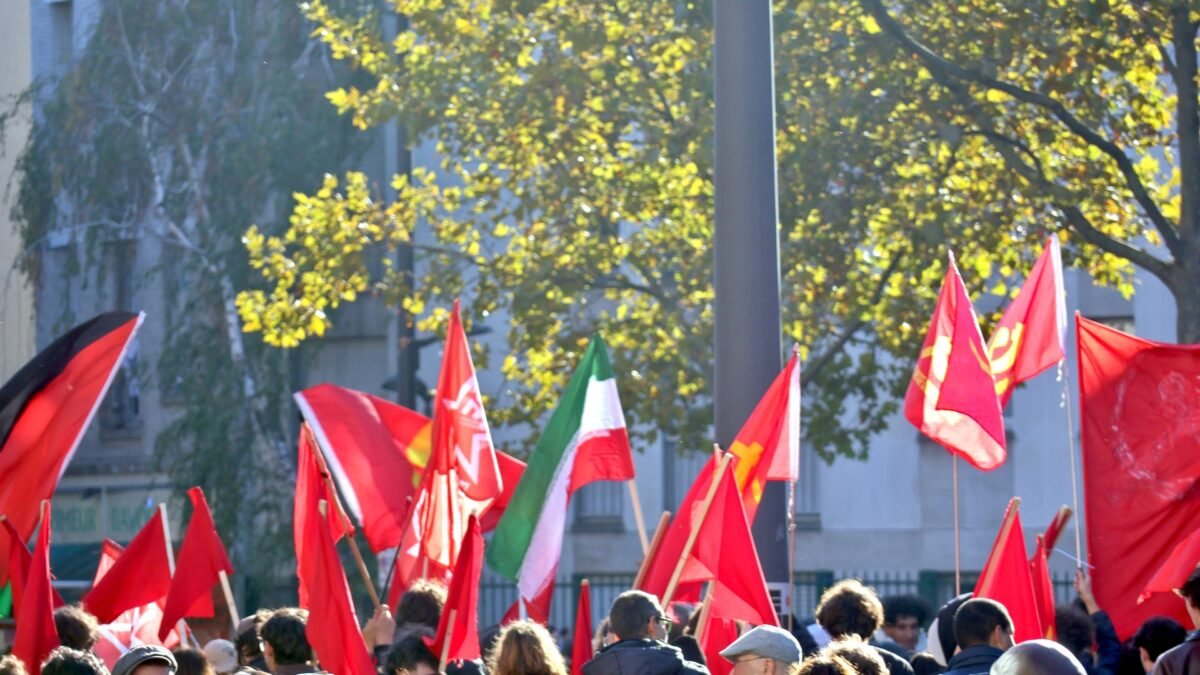
Hundreds of thousands of people marched through cities across France on Thursday, 5 November, as trade unions staged a nationwide day of strikes and demonstrations over the cost of living, public services and the state of the country’s schools, in the most serious test yet for President Emmanuel Macron five months before the presidential election.
The mobilisation, called by the intersyndicale — the grouping of France’s five main union confederations, the CGT, CFDT, FO, Unsa and FSU — and backed by student organisations, brought together hospital staff, teachers, rail workers, air traffic controllers, postal workers and dockers in more than 250 separate actions in towns and cities across the country, according to the unions. It was the first day of action since September to unite private-sector workers, civil servants, pensioners and students in a single movement that began in school corridors and has grown into a broad challenge to the government.
By the end of the day, the scale of the turnout was already the subject of the familiar French argument. The Interior Ministry said 270,000 people had taken part in 180 protests outside Paris in its provisional count, which did not yet include the capital. The government later estimated that at least 600,000 people had taken part nationwide, according to The Guardian, while the left-wing CGT put the figure at almost 1.6 million. Whatever the true number, the marches filled city centres from Marseille and Lyon to Nantes and Toulouse, and the main Paris demonstration, which set off from Place de la République in the early afternoon, drew tens of thousands.
Some 70,000 police officers and gendarmes were deployed across the country, a figure comparable to recent weekends, as the authorities sought to avoid a repeat of the riots and looting of 17 October, which caught the security forces off guard and left shops and public buildings damaged across France. Interior Minister Laurent Nuñez had promised what he called “an extremely firm response” to any outbreaks of violence, and in Lyon and Paris the day did see clashes, tear gas and a car set alight — but most demonstrations passed off peacefully, according to the Interior Ministry.
The day of action underlined how far domestic discontent has come to dominate the closing months of Macron’s presidency. With the government struggling to push a belt-tightening budget through a divided parliament, public debt approaching 120 per cent of economic output, and the far right leading in opinion polls ahead of the April 2027 election to replace him, the protests have become the central fact of French political life — and a warning to every candidate hoping to succeed him.
A Day of Strikes From Schools to Nuclear Plants
The disruption on Thursday spread well beyond the streets. The national rail operator SNCF warned of disturbances to regional train services and to some services in the greater Paris area, while dock workers said there would be disruption at French ports. The education ministry said it expected almost 18 per cent of nursery and primary school teachers to strike, and trade unions said they also expected secondary teachers to take part. The government said 81 high schools were affected on Thursday, while students’ unions put the number far higher, at 1,000. A third of higher-education sites were affected, according to the government.
In Paris, the Eiffel Tower and some exhibition rooms at the Louvre museum had to close because of the strike. Workers were asked to halt production at oil refineries, and France was expected to import more electricity than it produced on Thursday because of disruption at nuclear plants. French power unions joined the strike, and the state-owned utility EDF said the action had already cut France’s nuclear output by 2.4 gigawatts early on Thursday — a reminder of how deeply the labour movement reaches into the infrastructure of daily life.
The mobilisation had been planned for weeks, but it arrived at a moment of acute tension. The domestic intelligence service had expected between 500,000 and 700,000 people to join demonstrations outside Paris, with as many as 80,000 in the capital, according to BFM TV. The Paris march was due to run from Place de la République to Place de la Nation after the police prefecture barred the unions’ proposed route from Place de la Bastille to Place de la Concorde, through the city centre. The CFDT complained that court approval for the replacement route came only on Wednesday evening, making organisation harder.
Demonstrations began in the morning in the southern cities of Marseille and Lyon and in Nantes in the west, before the main Paris march started at 2pm local time. By early afternoon, more than 250,000 people had taken to the streets in almost 70 towns and cities, according to the CGT, which said that was just the start. Sophie Binet, the head of the CGT, told LCI television that protests were planned in 260 towns and cities across France, and urged people to “turn up in big numbers on the streets today”.
Flashpoints in Lyon, Paris and Toulouse
Most of the day’s marches were peaceful, but there were violent incidents in several cities, and the authorities’ handling of them will be closely examined in the days ahead. In Lyon, France’s third-largest city, police counted 30,000 demonstrators, while unions put the figure at 55,000. Riot police fired tear gas and charged a group of protesters, some of whom were seen shouting anti-police slogans and dressed all in black, with face coverings. The Interior Ministry said police in Lyon had been confronted by several hundred hardcore protesters and that the violence had been contained, although tensions remained high. A car was set alight in incidents blamed on hundreds of people belonging to the radical left-wing black bloc, according to The Guardian.
In Paris, police stopped schoolchildren from barricading several schools across the city early on Thursday, and on rue de Rivoli in the Marais district, students barred from blockading schools led impromptu street protests as riot police mobilised. About two hours into the main march, some of the people at the front clashed with police, who fired tear gas, according to Reuters. High school pupils also attempted to block schools in Paris, Strasbourg and Bordeaux, and police used tear gas to disperse students outside two Paris schools, while protesters in Bordeaux placed bins across the entrance to a school.
Near Toulouse, in the south-west, a high school was evacuated on Thursday morning after a fire broke out during the day’s protests. The Interior Ministry said people throwing fireworks had caused the fire, forcing pupils and staff to evacuate the building while firefighters doused the flames. Tensions were also reported in Rennes, Pau and Orléans.
Rights groups protested over what they said was heavy policing and an attempt by Macron’s executive to clamp down on the right to demonstrate. The French Human Rights League said there was an authoritarian shift to stifle any dissenting voice, as authorities issued restrictions on demonstrating in city centres and imposed curfews in certain areas. Binet said the country was living at a very serious time, with what she called a very dangerous authoritarian drift from the government, criticising decisions by authorities in cities such as Rennes, Toulouse and Lyon to push demonstrations out of city centres. Marylise Léon, the head of the moderate CFDT, said the principle of a demonstration was its visibility.
What the Protesters Want
The demands set out by the unions go well beyond a single pay claim. In a seven-point plan, they are seeking higher wages and a fairer distribution of wealth, tax reform, and better public services, alongside improved conditions in schools. The minimum wage currently stands at 12.31 euros an hour, and the head of the CFDT said workers were asking for a net increase of 100 euros a month. The unions are demanding an increase in the minimum wage, which has not received a discretionary boost since 2012, alongside general salary increases and improved learning conditions for young people.
Before Thursday’s strike, France’s four main rail unions said the government’s proposed budget cuts would worsen poverty, slash social security, freeze state workers’ salaries and dry up investment needed for environmental measures. Hospital workers, air traffic controllers, postal workers, teachers and rail employees all joined the action, alongside private school teachers striking with their state-school counterparts — a breadth of participation that the unions presented as evidence that the grievances are shared across the whole of working France.
The students who started the movement remain at its heart. High school students continued to blockade schools over overcrowded classes and dilapidated buildings, saying the government’s proposed measures on capping some class sizes and loaning funds to regional authorities to fix schools were not enough. “We’re trying to keep mobilising as much as possible. Some people aren’t doing so because they’re afraid. A lot of people are afraid of police violence,” 19-year-old Paris student Irma de Banville told Reuters. University students joined in blockading faculties, and the education ministry said a third of higher-education sites were affected.
The government has sought to ease public anger over rising prices by releasing 10 million barrels of diesel from strategic reserves, and ministers have promised school students they will reform the unpopular Parcoursup university admissions platform and eventually replace it by 2028. Neither measure has calmed the movement, and Binet told protesters that “the time has come to take the mobilisation to the next level; the strike must take over.”
How the Government Responded
Macron convened a defence and security meeting on Wednesday ahead of the protests, underlining how a movement that began with student anger over deteriorating school conditions and concerns about opportunities for young people has evolved into a broader challenge to his government. “We are extremely vigilant because it is out of the question to relive October 17,” government spokeswoman Maud Bregeon told a press conference after Wednesday’s cabinet meeting.
An official close to Macron told Reuters that “the goal in the coming weeks is to get the river that overflowed back into its bed and to launch the presidential election in the calmest possible conditions,” pointing to the lower number of high schools blockaded this week compared with earlier in the crisis. The French government has defended police tactics while saying any abuses would be investigated.
The scale of the security operation reflected the government’s anxiety. Around 70,000 police were deployed nationwide, and in Paris the authorities closed more than 40 metro stations on the previous Saturday of protests, imposed a night curfew in two central districts, and placed unaccompanied minors under a 9pm curfew around the Champs-Élysées. Demonstrations were banned from 11pm to 6am in the République and Châtelet-Les Halles districts, where looters ran through shops on 17 October.
Yet the government also knows that policing alone cannot settle the dispute. The movement’s demands are fiscal — higher wages, more spending on schools and public services — and they collide directly with a budget the government says France cannot afford. That collision is the reason Thursday’s marches matter beyond the streets: they are a public test of whether a minority government, in a parliament it cannot control, can hold a line on spending while hundreds of thousands of people demand the opposite.
From School Gates to the Streets: How the Movement Grew
The movement began in September as President Emmanuel Macron’s minority government opened talks on the 2027 budget. High school students, angry about overcrowded classes, dilapidated buildings and a lack of resources, began blockading schools. Their complaints soon merged with broader anger about purchasing power, rising prices and the perceived decline of public services, and the protests spread from schools to workplaces and town squares.
The turning point came on Saturday, 17 October. What began as demonstrations across the country spiralled into the worst civil unrest France has seen in years. Shops were looted, cars were burned, and the historic town hall of Limoges was engulfed in flames. French officials reported 2,400 arrests and nearly 1,000 injured police officers by 18 October, and a demonstrator died after suffering a cardiac arrest. Retailers say the unrest has already cost them more than 1 billion euros. Macron condemned the violence while acknowledging that peaceful protesters had legitimate grievances.
The protests did not stop. On Saturday, 24 October, the Interior Ministry said 410,000 people protested nationwide, including 110,000 in Paris, and police arrested nearly 1,000 people. On Saturday, 31 October, the third straight weekend of nationwide protests, the government again deployed 70,000 police, and the day was described by the Interior Minister as very high risk. That same week, Fitch Ratings affirmed France’s A+ credit rating but cut the outlook to negative, warning that debt would climb to about 124 per cent of output by 2028 and that a fractured parliament could not agree on a plan to stop it.
Thursday’s day of action was the first since September to bring together private-sector employees, civil servants and pensioners alongside the students — the moment the movement became, in the unions’ words, a general mobilisation rather than a student protest. The revived yellow-vest movement, which shook France in 2018 over the cost of living, has also joined the mobilisation, calling for strikes and blockades to continue on Friday, 6 November, followed by further demonstrations on Saturday as part of its fourth weekend of action.
The Fiscal Trap Behind the Anger
Behind the marches lies a fiscal crisis that has been building for years and that no French government has yet managed to resolve. France’s public debt is approaching 119 per cent of GDP, its highest level since the immediate aftermath of the Second World War, and the finance ministry projected in September that it would reach 119.3 per cent in 2026 and 121.7 per cent in 2027. The country has run a budget deficit every year since 1975. The deficit was 5.1 per cent of GDP in 2025, far above the eurozone average of 2.9 per cent, and the finance ministry expected it to reach about 5.4 per cent in 2026.
The cost of servicing that debt has soared. France’s interest bill nearly doubled in four years to 65.7 billion euros, roughly 2.2 per cent of GDP, as interest rates rose while the debt pile grew. Yields on French 10-year government bonds have approached 5 per cent, their highest since 2002, and the premium France pays to borrow relative to Germany exceeded one percentage point in September, a level not seen since the euro-area debt crisis. Government spending is equivalent to about 57 per cent of GDP, second only to Finland among OECD countries. France has been subject to an excessive deficit procedure by the European Commission since 2024.
Prime Minister Sébastien Lecornu announced a proposed 54 billion euro fiscal adjustment drive for 2027, and a subsequent Reuters account described 43 billion euros in new savings in the draft budget — figures that describe differently framed policy packages and should not be added together. The National Assembly began debating the revenue side of the 2027 budget on 20 October, in a political environment that makes reaching agreement on anything a formidable challenge. The government’s proposal would modestly reduce the deficit to 5 per cent of GDP from 5.4 per cent, a reduction so small that it has been described as barely a rounding error in the context of France’s structural fiscal challenge.
The energy shock of 2026, driven by the war in Iran, has made the arithmetic worse. France imports the vast majority of its energy, and rising energy costs have fed directly into the cost of living that protesters are marching about — the same inflation that pushed eurozone inflation to a three-year high of 4 per cent in October. The protesters’ demand for higher wages and the government’s need to cut spending are, in the end, two sides of the same crisis: a state that has promised more than it can pay for, in a country where the cost of living keeps rising.
Analysis: Why It Matters
1. A lame-duck president faces a movement that will outlast him
Macron cannot stand again in April 2027, and the protests are now shaping the election to replace him rather than his own future. The movement has made the cost of living, the state of the schools and the shape of the budget the central questions of the campaign, and every candidate will have to answer them. The far-right, anti-immigration candidate Marine Le Pen is polling high, and one analysis suggests the second round could pit her against the hard-left Jean-Luc Mélenchon — a contest that would have been unthinkable a decade ago and that would present French voters with a choice between two candidates who both promise a break with the economic order Macron has defended. The street movement is, in effect, writing the agenda for the election before the campaign has formally begun.
2. The dispute over numbers is itself the politics
The gap between the government’s estimate of at least 600,000 and the CGT’s figure of almost 1.6 million is not a technical disagreement; it is the oldest ritual in French politics. Turnout is legitimacy, and both sides know it. The government needs the number to look manageable, the unions need it to look overwhelming, and the truth lies somewhere in a range that neither side will ever concede. What matters is not the precise figure but the fact that the argument is taking place at all: a movement whose size has to be argued about is a movement that has already succeeded in making itself impossible to ignore. The provisional Interior Ministry count of 270,000 outside Paris, recorded before the capital’s march had even finished, will be revised, but the images of packed boulevards in Paris, Lyon and Marseille will do more political work than any spreadsheet.
3. The fiscal trap has no painless exit
France’s problem is that the two things the country most wants — higher wages and protected public services on one side, and lower deficits and cheaper borrowing on the other — cannot both be had at once, and no party has yet explained how to square the circle. The government’s proposed savings would barely dent a deficit of more than 5 per cent of GDP. The protesters’ demands would widen it. The bond market, which pushed French 10-year yields to their highest since 2002, is watching the streets as closely as the parliament, and Fitch’s decision to cut the outlook to negative was a warning that the unrest itself makes fiscal consolidation harder. Whoever wins in April will inherit a debt pile of nearly 120 per cent of GDP, a deficit the European Commission is already policing, and a population that has shown it will take to the streets when it feels squeezed. That is a governing problem, not just a campaign problem.
4. The policing question will not go away
The deployment of 70,000 officers, the bans on city-centre demonstrations, the curfews and the tear gas have kept most marches peaceful, but they have also handed the movement a second grievance: the claim, made by the French Human Rights League and by the CGT, that the state is drifting towards authoritarianism in its handling of dissent. Several teenage protesters have been seriously wounded and thousands arrested since the movement began, and internal police investigations have opened into allegations of brutality. The government insists any abuses will be investigated, but the images of riot police charging students and firing tear gas at school gates are politically toxic in a country that regards the right to demonstrate as fundamental. If the policing of the protests becomes the story, Macron’s government loses the argument about order that it is trying to win.
5. Europe is watching France because France is the test case
France is the eurozone’s second-largest economy, and its troubles are Europe’s troubles. The same forces driving the French protests — energy costs pushed up by the war in Iran, stagnant wages, strained public services — are at work across the continent, and the eurozone’s inflation rate has just hit a three-year high. If France, with its history of street politics and its fractured parliament, cannot pass a budget that brings its deficit down, the question for Brussels is what happens when the next country tries. The European Commission’s excessive deficit procedure, the bond market’s verdict on French debt, and the prospect of a Le Pen or Mélenchon presidency all feed into a single European anxiety: that the political centre in one of the union’s founding states is no longer able to govern. Thursday’s marches were a French event, but their audience was continental.
What to Watch Next
- Friday and Saturday: The revived yellow-vest movement has called for blockades and further demonstrations on Friday, 6 November, and Saturday, 7 November. Whether the momentum holds beyond Thursday’s set-piece day — and whether the CGT’s call for the strike to continue is answered — will show whether this is a single day of protest or a sustained campaign.
- The revised turnout figures: The Interior Ministry’s final count, and the unions’ response to it, will set the tone for the next round. A government figure close to the CGT’s would be a concession of the movement’s scale; a wide gap will fuel the usual argument and keep the story alive.
- The budget debate: The National Assembly is debating the revenue side of the 2027 budget, and the government’s savings package will be tested against a parliament that has already shown it cannot agree. Any concession to the protesters would widen the deficit; any refusal will be read on the streets as contempt.
- The policing inquiries: Investigations into allegations of police brutality, and the government’s response to the Human Rights League’s criticisms, will determine whether the debate stays on wages and schools or shifts to the conduct of the security forces.
- The presidential race: With five months to the election, watch how Le Pen, Mélenchon and the centrist candidates position themselves towards the movement. The candidate who captures the anger of the streets without being captured by it will have a decisive advantage in April.
Sources
- Reuters — France braces for fresh protests as Macron seeks to prevent repeat of October unrest
- The Guardian, via World Right Now — Protesters join street demonstrations across France on day of strike action
- BusinessWorld — France faces new protests as Macron seeks to prevent repeat of October unrest
- SRN News — Largely peaceful marches take place across France as workers stage strike
- Chatham House — France’s riots and mounting debt reveal a country in disarray ahead of pivotal presidential election
- Global Economy Charts — What happened in France? Protests, debt and the fiscal problem behind the unrest

About the Author — Abdul Mannan
Related Articles

Bomb Threats Divert Flights Across Europe as Fighter Jets Scramble in Second Wave in a Week
At least a dozen passenger flights across Europe were diverted or searched on Thursday after a fresh wave…

Israel Certifies Election Results and Rejects Netanyahu’s Fraud Claims as Herzog Weighs Giving Eisenkot First Shot at Government
Israel's election commission has certified the 27 October results and rejected Benjamin Netanyahu's fraud claims, leaving President Isaac…

Spain’s Transport Minister Resigns After Two Deadly Train Crashes Kill 115 People
Óscar Puente stepped down six days after the Urda collision killed 69 people, telling lawmakers no transport minister…