
Israel Certifies Election Results and Rejects Netanyahu’s Fraud Claims as Herzog Weighs Giving Eisenkot First Shot at Government

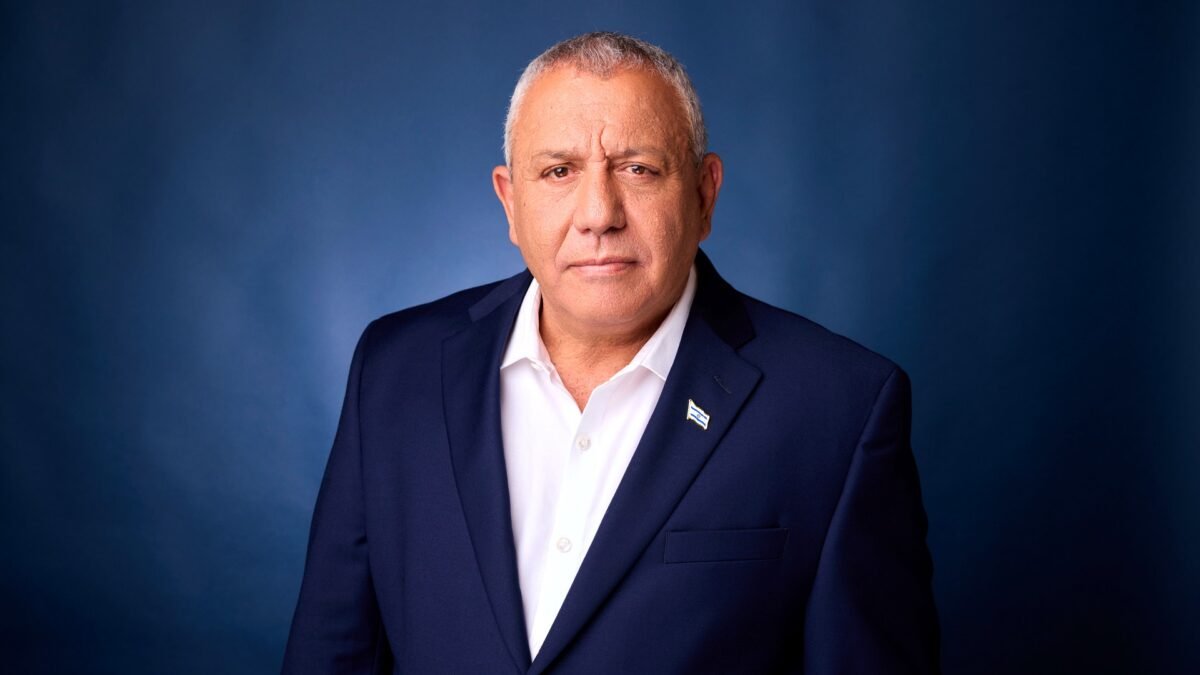
Israel’s Central Elections Committee on Wednesday certified the results of the 27 October parliamentary election, formally rejecting claims by Prime Minister Benjamin Netanyahu and his allies that the vote had been stolen, and handing President Isaac Herzog the task of choosing who gets the first chance to form a government. The decision, announced after a review of 9,069 polling stations, confirms that Mr Netanyahu’s religious-nationalist bloc has lost the parliamentary majority it held for the past four years, and leaves the country facing weeks of coalition negotiations at the height of a regional war.
According to Al Jazeera, the committee found no evidence of irregularities that compromised the integrity of the election or changed its outcome. Its acting director, Dean Livne, said every complaint had been examined individually and thoroughly, and that the results accurately reflected the choices voters made at the ballot box. The committee’s five-member presidium approved the results with three votes in favour, none against and two abstentions, with Likud and Shas abstaining; in the full committee, 15 members voted in favour, two against and 14 abstained. The chairman, Supreme Court Justice Noam Sohlberg, cast the deciding vote.
Speaking at the official ceremony at the president’s residence in Jerusalem, where the certified results were handed to Mr Herzog, Justice Sohlberg warned that attempts to cast doubt on the vote posed “a real danger” to Israel’s democracy. He said some suspicions remained under investigation but that they did not cast doubt on the election as a whole or justify delaying the results.
The certified count matches the final results published on Friday 30 October. Mr Netanyahu’s bloc won 53 seats in the 120-member Knesset, eight short of the 61 needed for a majority. The opposition bloc led by the former military chief Gadi Eisenkot won 48 seats. Arab-led parties — the Joint List and Ra’am — won a record 19 seats between them, and now sit at the centre of the arithmetic that will decide who governs. Turnout was about 77.9 per cent, the highest since 1999, with 5,716,665 votes cast.
Mr Herzog will now hold two days of consultations with the leaders of every party elected to the Knesset before naming the politician he believes is best placed to build a coalition. In a break with custom, he is meeting the smaller parties first: Religious Zionism, Shas and Yisrael Beytenu on Wednesday, followed on Thursday by Ra’am, the Joint List, Mr Eisenkot’s Yashar party and, last, Likud. The president is expected to announce his choice as early as Thursday evening, according to The Guardian, and must do so by 11 November. Whoever receives the mandate will then have about 28 days, extendable by a further 14, to assemble a government. The new Knesset is due to be sworn in on Tuesday 10 November.
Mr Eisenkot is projected to collect 48 recommendations from the four parties of his bloc — Yashar, B’Yachad, the Democrats and Yisrael Beytenu — against 46 for Mr Netanyahu from Likud, Otzma Yehudit, Shas and Religious Zionism. United Torah Judaism, Ra’am and the Joint List had not announced their recommendations when the consultations began. On those numbers, Mr Eisenkot, not the sitting prime minister, would be the first to be asked to try to form a government.
The certification is a public defeat for Mr Netanyahu, who has spent the days since the vote alleging, without presenting evidence, that Arab-led parties “stole” the election, possibly with foreign help. Likud filed 1,200 complaints about voting in Arab communities, according to Haaretz. National Security Minister Itamar Ben-Gvir, whose far-right Otzma Yehudit party said it would vote against certification, wrote on X: “The elections were stolen, the results are fraudulent, foreign countries interfered.” Mr Ben-Gvir also called on the head of the Shin Bet security service to arrest all Arab party leaders and question them in Shin Bet cells, even without the attorney general’s approval, and demanded a freeze on certification and on forming a government.
A Likud legislator, Amit Halevi, resigned from the elections committee in protest, alleging that some lawmakers had “bought their seats with bribe money” and that the vote reflected “the choice of the rulers of Qatar, Iran or Turkey”. Haaretz reported that Likud had weighed refusing to recognise the results altogether — a move that would have been unprecedented in Israel and would almost certainly have been swiftly overturned by the courts. Justice Sohlberg rejected a Likud demand to discuss the results before certifying them, writing that no party, “however distinguished or senior”, could withhold their publication. He has said that even if foreign interference were confirmed, it would not undermine the overall result. Qatar has rejected claims that it funded Arab-led parties, calling them disinformation.
Mr Eisenkot, who was named leader of the opposition at a meeting of opposition leaders in Herzliya on 3 November, accused Mr Netanyahu of launching a “pogrom against democracy” by attempting to hold on to power by discrediting valid votes and weaponising the security services against parties led by Palestinian citizens of Israel. “The employees of the Ministry of Defense, law enforcement and the civil service in Israel are servants of the state, not the king,” he said in a statement. “Woe to anyone who abuses their authority and role for political considerations.”
The row over the results has now spilled into a confrontation between Israel’s security service and its attorney general. Hours before the certification, Attorney General Gali Baharav-Miara said she had blocked a demand from the Shin Bet to interrogate senior politicians from the Palestinian-led parties because she had not been presented with any evidence of wrongdoing. “In a country governed by the rule of law, neither citizens nor elected officials can be interrogated without evidence that justifies doing so,” she said in a statement, after Haaretz reported on the attempt to target four politicians.
According to The Times of Israel, the Shin Bet told the elections committee that intelligence pointed to widespread foreign funding and influence operations involving “thousands of people and possibly more”. Law enforcement sources told Haaretz they were unaware of any operation of that size. The Shin Bet is reportedly seeking to question four Arab politicians, but has not given prosecutors evidence regarding three of them. Its chief, David Zini, who was handpicked for the role by Mr Netanyahu, had ordered the interrogations and sought to classify the investigation as a security file, which would have allowed harsher conditions, including barring the politicians from having legal counsel. Ms Baharav-Miara effectively accused Mr Zini of undermining the rule of law. Mr Herzog, for his part, said he had “full confidence in the work of the Shin Bet, the police and law enforcement authorities”, after the committee asked the Shin Bet to look into the foreign interference suspicions raised before certification.
One of the politicians the Shin Bet reportedly sought to interrogate is Ahmad Tibi, one of the most prominent Palestinian politicians in Israel. He responded to the latest allegations, as news broke of sweeping victories for Democrats in the United States midterm elections, with a swipe at Mr Netanyahu’s fear of democracy. “[The] attorney general is checking suspicion of ties between the Joint List and Democrats in the US,” Mr Tibi wrote in a social media post. “According to the suspicion, in both cases the same sophisticated method was employed: people arrived in droves at the polling stations, cast a slip, and went home.”
When the results were handed over, Mr Herzog denounced racist attacks on Palestinian citizens who had turned out to vote at historic rates. “I condemn the coarseness and racist expressions that we have heard recently,” he said. “I hold Arab society in Israel in great respect. I value its contribution to the country in every area of life, and its desire to integrate.” Palestinian citizens of Israel make up about a fifth of the population. According to The Guardian, Mr Netanyahu presided over a racist campaign targeting them, and on election day began promoting the unfounded accusations of mass fraud now rejected by the election authorities. In Tel Aviv, people have taken to the streets in rallies calling on the opposition to form a government with the Palestinian-led parties.
The numbers that decide the next government
The arithmetic of the 26th Knesset is simple, and it is what makes the coming weeks so difficult. No bloc has a majority, and every route to 61 seats runs through parties that have spent years refusing to sit with one another.
Likud remains the largest single party, with 27 seats, nine fewer than it won in 2022. Mr Eisenkot’s new Yashar party won 21 seats, making it the second-largest party in the Knesset. B’Yachad, the party of the former prime ministers Naftali Bennett and Yair Lapid, won 12 seats, the Joint List 11, the Democrats eight and Ra’am eight. Mr Netanyahu’s bloc, which at its peak controlled 68 seats in the outgoing parliament, has fallen to 53. Mr Eisenkot’s bloc holds 48. The 19 seats of the Arab-led parties are the difference between a government and a deadlock.
Added together, the parties outside Mr Netanyahu’s camp hold 67 seats — but that figure is arithmetic, not a coalition. Mr Eisenkot’s bloc and the Arab-led parties have never governed together, and the obstacles to an alliance are substantial. Mr Eisenkot has set four conditions for any cooperation with Arab parties: recognition of Israel as a Jewish state, acceptance of compulsory national service, whether civil or military, recognition of Hamas as a terrorist organisation, and alignment with the values of the Declaration of Independence. The Joint List, the largest Arab party with 11 seats, has offered potential backing to the opposition without seeking cabinet or ministerial seats, according to reports in the Israeli press. The Arab parties have said their priority is removing Mr Netanyahu, and they are expected to back Mr Eisenkot as the strongest contender to achieve that.
The opposition alliance has already begun to behave like a government-in-waiting. At its 3 November meeting in Herzliya, the leaders of the Jewish-led opposition — including Mr Bennett, Mr Lapid, the Democrats’ Yair Golan and Yisrael Beytenu’s Avigdor Lieberman — agreed on Mr Eisenkot’s name and said their negotiating teams would immediately begin drafting policy guidelines and coalition agreements to replace Mr Netanyahu’s coalition with what they called a “national emergency government”. Yair Lapid, the leader of Yesh Atid, wrote on X: “Israel cannot afford to let him remain prime minister.” Mr Lapid also argued that the Democrats’ victory in the US Congress in the midterm elections had ruled out a unity government led by Mr Netanyahu, a close ally of President Donald Trump.
If no one can form a governing coalition, Israel would hold another election early next year. Under Israeli law, if the first candidate fails, the president may hand the mandate to another lawmaker, and if every attempt fails, a 21-day period follows in which any member of the Knesset may try to assemble a government with the backing of at least 61 lawmakers. The prospect of a fifth election in a few years, in the middle of a war, is one that even Mr Netanyahu’s critics describe as a last resort rather than a strategy.
A wartime prime minister without a majority
The election was held in extraordinary circumstances. Israel has been at war with Iran since late February, when the United States and Israel began a campaign against Iranian nuclear and military targets, and the Strait of Hormuz has been closed for months, choking off about a fifth of the world’s oil and gas supplies. The war in Gaza, which began in October 2023, is under a ceasefire agreed in October 2025, but the fighting has left deep divisions in Israeli society, and Mr Eisenkot himself lost his son fighting in Gaza. He is a former chief of staff of the Israel Defense Forces, and his authority on security matters is one of the reasons the opposition rallied behind him.
Mr Netanyahu is Israel’s longest-serving prime minister, and he has dominated the country’s politics for a generation. The loss of his majority is the most serious political setback of his career, and it comes at a moment when his government’s external support is also under strain. On Tuesday, Mr Trump announced that the United States would end about $4 billion a year in military aid to Israel by the end of 2026, saying he had made a deal with Mr Netanyahu and that Israel no longer needed the money. The announcement caught Israel’s finance and defence ministries by surprise, and neither has confirmed the timetable. In Washington, the Democrats’ sweep of both chambers of Congress in the midterm elections on 3 November has changed the politics of American support for Israel, and senior Democrats have been pressing for conditions on aid and for an end to the war with Iran.
The timing matters. The United States has been pressing for a settlement with Iran, and mediators from Qatar, Turkey and Pakistan have been trying to reopen the Strait of Hormuz, which Tehran has kept closed in response to an American naval blockade of its ports. Iran has set seven conditions for reopening the waterway, including an end to the fighting, the lifting of sanctions and the release of frozen assets, and has called the American response to those conditions unconvincing. A caretaker Israeli government, or a prolonged period without a government at all, would leave Israel without a clear voice in those negotiations at the moment they matter most.
There is also the question of what happens to the war itself. Mr Netanyahu has been the most hawkish voice in the Israeli cabinet, and his government has pressed Washington for renewed strikes on Iran. Mr Eisenkot, by contrast, has presented himself as a figure of national unity, and the opposition’s draft policy guidelines are understood to prioritise ending the war and rebuilding the military’s strength. But Mr Eisenkot would also need the support of parties that disagree profoundly with one another on the war, on the Palestinians and on the future of the occupied territories, and the price of their support may be concessions that his own bloc would find hard to swallow.
Why the fraud claims matter beyond Israel
The certification is significant not only for what it decides, but for how it was reached. It is the first time in Israel’s history that a sitting prime minister has sought to discredit the result of a national election, and the first time the country’s election authorities, its attorney general and its security service have been drawn into open conflict over the legitimacy of a vote.
The pattern will be familiar to anyone who followed the aftermath of the 2020 election in the United States, and Mr Netanyahu’s critics have not been shy about drawing the parallel. The claims were made without evidence, repeated by ministers and amplified on social media, and aimed at a specific group of voters — Palestinian citizens of Israel, whose record turnout delivered the 19 seats that denied Mr Netanyahu his majority. The election committee’s answer was procedural and unsparing: it examined every complaint, reviewed the protocols of 9,069 polling stations, and found nothing that changed the result.
What makes the episode more dangerous than a simple political dispute is the involvement of the Shin Bet. The domestic security service, whose chief was appointed by Mr Netanyahu, presented the elections committee with a summary of suspected foreign funding and influence operations, without supporting evidence, and sought to interrogate elected politicians from the Palestinian-led parties under security-file conditions that would have denied them legal counsel. The attorney general blocked the interrogations, and in doing so accused the Shin Bet chief of undermining the rule of law. The committee, for its part, asked the Shin Bet to investigate the suspicions, while making clear that the investigation would not delay the certification.
Nadav Eyal, an Israeli journalist and commentator, warned that the public should brace for more extreme attempts to dismiss the election results and discredit the leading opposition parties. “The groundwork is steadily being laid for violence,” he wrote on X. “What you’re hearing breaking right now is the foundation of the legal and governmental orders in Israel.” That warning reflects a genuine fear in Israel that the dispute over the election could outlast the election itself, and that the institutions that certified the vote — the courts, the election committee, the attorney general — will be the next targets.
Mr Netanyahu has not said whether he will accept the certified results. His party abstained rather than voting against certification, and Haaretz reported that Likud had weighed refusing to recognise the results altogether before stepping back. The distinction matters: abstention is a protest; refusal would have been a constitutional crisis. For now, Mr Netanyahu remains prime minister, and he will go to Mr Herzog on Thursday as the leader of the largest party, arguing that he, not Mr Eisenkot, is best placed to form a government. But the numbers are against him, and the president’s consultations are expected to show it.
Analysis: Why It Matters
A sitting prime minister challenged the vote — and the institutions held
The most important fact in this story is not the seat count. It is that Israel’s election machinery, its courts and its attorney general all refused to bend when the country’s most powerful politician asked them to. Justice Sohlberg’s warning that doubting the results is “a real danger” to democracy was not rhetoric; it was the deputy president of the Supreme Court telling a prime minister, in public, that the rules apply to him too. The committee examined 1,200 complaints and the protocols of 9,069 polling stations, and published its reasoning. That is how a democracy is supposed to work, and it is worth saying plainly because the alternative — a prime minister who can veto an election he loses — is the end of one. The test now is whether the institutions that held this week can hold for the weeks of coalition talks ahead, when the pressure on them will be greater, not less.
The Arab parties are no longer a protest vote — they are the kingmakers
Nineteen seats is the largest representation Arab-led parties have ever won, and it changes the structure of Israeli politics. For decades, Arab parties were treated as permanently outside the coalition arithmetic, courted for votes but never for power. This election has made that position untenable: neither bloc can govern without them, and both blocs know it. The Joint List’s offer of backing without cabinet seats is a deliberate attempt to make the arrangement palatable to Jewish parties that have spent years saying they would never sit with Arab parties. Mr Eisenkot’s four conditions are the price of that arrangement, and they are deliberately demanding — recognition of Israel as a Jewish state, national service, recognition of Hamas as a terrorist organisation. Whether the Arab parties can accept them, and whether Mr Eisenkot’s own allies can accept him accepting them, is the central negotiation of the next month. What is already clear is that Palestinian citizens of Israel, who turned out in record numbers, have voted themselves into a position no Israeli government can ignore again.
Eisenkot is the opposition’s answer to a wartime question
Mr Eisenkot’s appeal is not ideological; it is biographical. He is a former chief of staff who lost his son in Gaza, and he speaks about security with an authority no other opposition politician possesses. That matters in a country at war, where the argument for change has to be made in the language of security, not only of democracy. The opposition’s choice of a soldier to lead a “national emergency government” is a deliberate signal: that the alternative to Mr Netanyahu is not weakness, but a different kind of strength. The risk for Mr Eisenkot is that the same biography makes him the candidate of the security establishment, and that the Arab parties and the left of his own bloc will demand a price — on the war, on the Palestinians, on the judicial overhaul — that he cannot pay without losing the centre. His four conditions are an attempt to set that price in advance. Whether they hold will be the first test of his leadership.
The American connection cuts both ways
This is not only an Israeli story. Mr Netanyahu’s closest international ally is Mr Trump, and the week of the Israeli election was also the week of the American midterms, in which the Democrats won both chambers of Congress. Mr Lapid’s argument — that the Democratic victory has ruled out a Netanyahu-led unity government — captures a real shift: a Democratic Congress will be less willing to write blank cheques to a prime minister who has just tried to discredit his own country’s election, and more willing to press for an end to the war with Iran. At the same time, Mr Trump’s announcement that American military aid to Israel will end by the close of 2026 removes one of Mr Netanyahu’s strongest cards — the claim that only he can manage the relationship with Washington. A new Israeli government, whoever leads it, will inherit a relationship with the United States that is being renegotiated on both sides at once, and a war that neither Washington nor Tehran seems able to end.
The danger is not the deadlock — it is what the deadlock invites
Israel has been here before: no bloc with a majority, weeks of negotiations, the threat of another election. What is different this time is that the losing side has spent the days since the vote telling its supporters that the election was stolen, and that the security service has been drawn into the dispute. Mr Eyal’s warning about the “groundwork” being laid for violence should be taken seriously, not because violence is inevitable, but because the language of stolen elections has a record of producing it. The certification has settled the result. It has not settled the argument. If the coalition talks fail and Israel goes to another election early next year, the campaign will be fought over the legitimacy of this one, and the institutions that certified it will be on the ballot alongside the parties. That is the real stake of the next 28 days: not only who forms the government, but whether the next election is fought over policies or over whether elections count at all.
What to Watch Next
- Mr Herzog’s announcement, expected as early as Thursday evening. The president’s consultations end on Thursday with Yashar and Likud. If he names Mr Eisenkot, as expected, the 28-day clock starts and the serious negotiations begin. If he surprises the country and names Mr Netanyahu, the opposition will treat it as a political decision, not a procedural one.
- The recommendations of United Torah Judaism, Ra’am and the Joint List. The three parties that have not announced their recommendations hold the balance of the recommendations. Their choices will show whether Mr Eisenkot’s 48 is a floor or a ceiling, and whether Mr Netanyahu has any path at all to 61.
- The Shin Bet investigation. The attorney general blocked the interrogation of four Arab politicians, but the Shin Bet’s inquiry into suspected foreign influence continues. Any evidence it produces — or fails to produce — will shape whether the fraud claims fade or return during the coalition talks.
- The swearing-in of the new Knesset on 10 November. The first session will elect a Speaker and set the tone for the new parliament. The opposition has 67 seats outside Mr Netanyahu’s bloc, and its first moves — including a possible state commission of inquiry into 7 October — will signal how aggressively it intends to use its majority.
- The war and the American aid decision. Mr Trump says military aid ends by the close of 2026, and mediators are still trying to reopen the Strait of Hormuz. A caretaker government, or a government that takes weeks to form, will have to manage both crises without a settled mandate — and Tehran and Washington will be watching the coalition talks as closely as Jerusalem.
Sources
- Al Jazeera — “Israel vote results confirmed as election commission rejects fraud claims”
- The Guardian — “Israel’s election commission rejects Netanyahu claims of voting fraud” (Emma Graham-Harrison and Quique Kierszenbaum, 4 November 2026)
- Swisher Post — “Israel election results certified as fraud claims rejected” (4 November 2026)
- The Brief — “Israel’s Election Commission Confirms Results and Rejects Fraud Claims” (4 November 2026)
- Daily Guardian — “Israel’s election commission says no fraud found in last week’s vote” (5 November 2026)

About the Author — Abdul Mannan
Related Articles

Spain’s Transport Minister Resigns After Two Deadly Train Crashes Kill 115 People
Óscar Puente stepped down six days after the Urda collision killed 69 people, telling lawmakers no transport minister…
Herzog Opens Coalition Talks as Israel’s Election Fraud Claims Collapse and Netanyahu’s Future Hangs in the Balance
Israel's President Isaac Herzog opened coalition consultations on Wednesday after the elections committee certified the 27 October results…
North Korea Fires Multiple Missiles Hours After Kim Yo Jong Rules Out Talks With Washington
North Korea fired multiple missiles toward the Sea of Japan on Wednesday, hours after Kim Yo Jong ruled…