
UN Security Council Adopts Pakistan-Led Statement Urging Diplomacy to Continue Even After Wars Begin

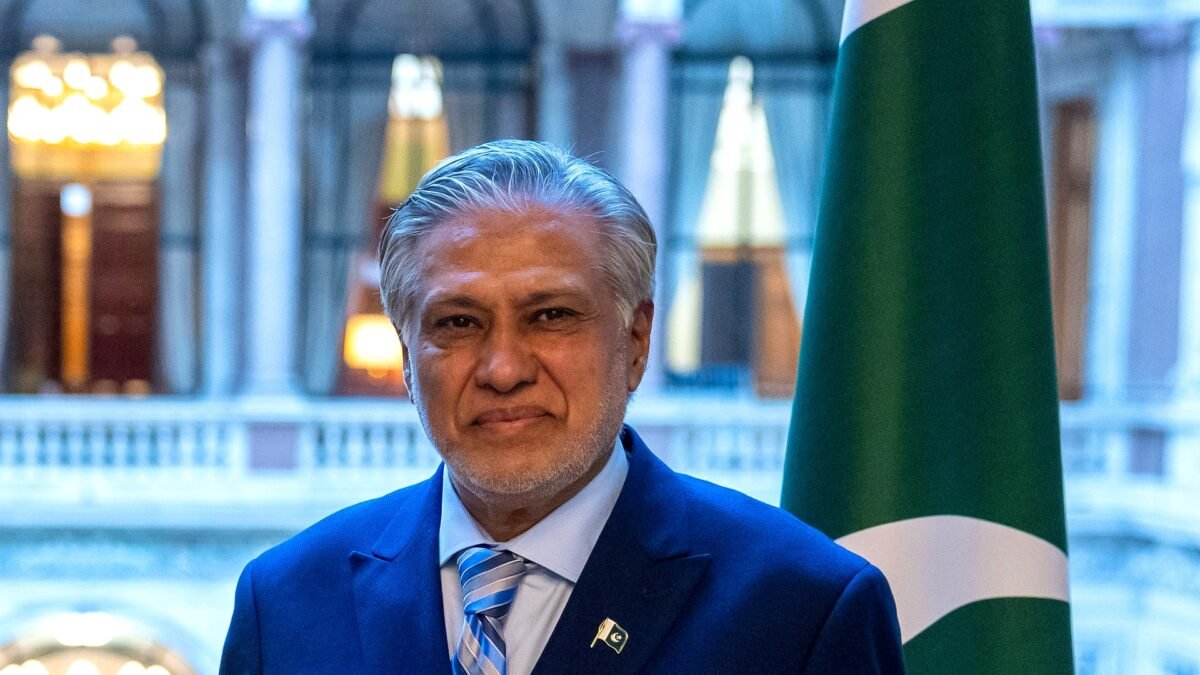
The United Nations Security Council has adopted by consensus a Pakistan-initiated presidential statement urging warring parties to keep diplomacy alive even after fighting has begun, in a rare moment of agreement at a Council deeply divided over the war in the Gulf. The statement, titled “The Role of Diplomacy during Active Hostilities”, was adopted on Thursday, 5 November, and its central argument is simple: when hostilities intensify, diplomacy must not retreat.
Pakistan’s Deputy Prime Minister and Foreign Minister, Mohammad Ishaq Dar, announced the adoption the same day, saying the Council had acted by consensus on an initiative Pakistan had shepherded through weeks of negotiation. “When hostilities intensify, diplomacy must not retreat,” Mr Dar said, according to the Associated Press of Pakistan, adding that diplomacy must become an even more powerful instrument for de-escalation, dialogue and peace.
The timing could hardly have been sharper. On the very day the Council adopted the statement, tankers were burning in the Strait of Hormuz, the waterway through which about a fifth of the world’s oil normally flows, and Pakistan’s foreign minister was on the telephone to his Iranian counterpart discussing how to keep a channel open between Tehran and Washington. The statement does not mention Iran, or any other conflict, by name. It does not need to. Its subject is the principle that talking should continue while shooting goes on — and the war it landed in is the most immediate test of that principle anywhere in the world.
Presidential statements are not resolutions. They create no legal obligation, they are not voted on in the usual way, and they are issued by the Council’s president on the Council’s behalf. Their power is political rather than legal: they put the Council’s collective name to a proposition, and they give governments — and mediators — language they can point to. That is the measure by which this one should be judged. It will not stop a missile, reopen a waterway or change a military calculation. What it can do is give a mediating government a text, agreed by all fifteen members of the Council, that says the talking should not stop.
What the Council adopted
According to the Foreign Office’s account of the text, the statement reaffirms the Security Council’s commitment to the peaceful settlement of disputes under Chapter VI of the United Nations Charter, and underscores the importance of maintaining diplomatic engagement even after the outbreak of armed conflict. The Express Tribune reported that the statement “underscores the imperative of sustained diplomatic engagement even after hostilities have commenced, including through mediation, good offices and the maintenance of channels of communication, with a view to facilitating ceasefires and promoting durable political settlements”.
The Foreign Office described the adoption as an important contribution by Pakistan to the Council’s thematic work on international peace and security, and called the text a collective political reference point for the Council’s future engagement. Mr Dar said Pakistan remained steadfast in its commitment to advancing diplomacy “not merely through words, but through purposeful and concrete action” to foster dialogue and promote lasting peace, The News reported.
The agreed text, as described by the Security Council Report, the independent research body that tracks the Council’s work, emphasises the importance of maintaining direct and indirect channels of communication between parties to armed conflict, in order to reduce the risk of miscalculation and create opportunities for sustained political engagement. It recognises the contribution of member states and of regional and subregional organisations to mediation and de-escalation, as well as the role of the relevant United Nations organs, the Secretary-General and his representatives in promoting the peaceful settlement of disputes. And it requests the Secretary-General to continue promoting and supporting diplomacy, de-escalation and mediation before and during armed conflicts, including through his good offices and the relevant United Nations capacities, and to keep the Council informed of such efforts.
One point of honesty is in order. At the time of writing, the Council had not yet published the statement as a numbered document — its published list of presidential statements for 2026 ran from S/PRST/2026/1, adopted on 2 April, through S/PRST/2026/4, adopted on 15 October on the situation in the Middle East — and the detailed wording set out above rests on the Foreign Office’s summary of its own initiative and on the Security Council Report’s account of the agreed draft, rather than on a published text. A delay of this kind is normal: presidential statements are published after the meeting rather than during it. But readers should treat the summary as a description of the agreed text rather than the text itself, and the full document, when it appears, will be the authoritative record. Pakistan’s Permanent Mission to the United Nations published a press stakeout by Ambassador Syed Haider Shah after the adoption.
A month of negotiation behind one page
The statement that was adopted on 5 November was the product of more than three weeks of drafting, revision and procedural manoeuvre, and the record of those negotiations — set out in detail by the Security Council Report — says a good deal about how the Council works, and about where its limits lie.
Pakistan circulated the initial draft to Council members on 14 October. Following informal consultations, it circulated a first revised draft on 23 October, incorporating a number of proposed amendments. On 29 October, it circulated a second revised draft, which it placed under silence procedure until the following day. Silence procedure is the Council’s way of testing agreement without a meeting: if no member breaks silence by the deadline, the text is considered agreed. On this occasion, the United States broke silence. A third revised draft was circulated on 3 November and placed under silence procedure until the morning of 4 November. This time the draft passed silence, clearing the way for adoption the following day.
The negotiations do not appear to have been particularly contentious, according to the Security Council Report, although Council members expressed differing views on some elements of the text. The points of difference are instructive, because they show which ideas the Council could agree on and which it could not.
One concerned the scope of the statement. The initial draft referred specifically to considering the role of diplomacy in situations of armed conflict on the Council’s agenda. At the proposal of Colombia, supported by other members, that qualifier was removed from the first revised draft and does not appear in the final text. The effect is to widen the statement’s reach: it speaks about diplomacy during armed conflict generally, not only in the conflicts already on the Council’s formal agenda.
Another concerned the principles governing diplomatic engagement during armed conflict. Russia, according to the Security Council Report, emphasised sovereignty and non-intervention; other members sought to underscore the importance of international engagement in facilitating de-escalation and peaceful settlements. References to sovereignty and non-intervention introduced in the first revised draft were subsequently removed, while broader references to the principles of the United Nations Charter as the framework for diplomatic engagement were retained. The compromise, in other words, was to anchor the statement in the Charter itself rather than in any one member’s preferred reading of it.
A third point of divergence concerned language on women, peace and security and on youth, peace and security. European Council members and other like-minded members sought to add language on the full, equal and meaningful participation of women, the meaningful participation of youth, and the contributions of civil society to diplomatic efforts. Such language had appeared in previous Council products on conflict prevention and mediation. These references were ultimately removed from the final text following the United States’ silence break. Their absence is the clearest sign of the price of consensus: to get all fifteen members to agree, Pakistan accepted a text narrower than some members wanted.
Humanitarian considerations, by contrast, survived and even strengthened during the negotiations. While the initial text did not explicitly address the protection of civilians or humanitarian access, the final draft includes language on ensuring the protection of civilians and facilitating safe and unhindered humanitarian access, as well as a reference to international humanitarian law, albeit qualified by the phrase “as applicable”. Some Council members also sought to include language recognising the key role of the International Court of Justice in adjudicating disputes between states; that provision was subsequently qualified by an explicit reference to the consent of states to the Court’s jurisdiction.
None of this is the stuff of headlines. But it matters, because it shows that the statement was not a piece of theatre drafted in an afternoon. It was negotiated line by line, through three drafts and two rounds of silence procedure, with the world’s most powerful country intervening to reshape it. The text that emerged is a compromise — and compromises, in a Council as divided as this one, are themselves a form of news.
The war the statement landed in
The statement was adopted in the middle of a war that has made diplomacy harder to defend, and the events of 5 November itself supplied the evidence. Iran’s Islamic Revolutionary Guard Corps said on Thursday that a tanker had struck a mine and caught fire in the Strait of Hormuz, and the Iranian army said two more tankers had struck naval mines in the same waters that day, while the British military said a tanker had been hit by two projectiles off Qatar’s coast, according to Al Jazeera. The News reported that five oil tankers and a tugboat had caught fire in the strait. Brent crude futures rose 3.88 per cent to settle at 98.29 dollars a barrel, as investors refocused on the uncertainties surrounding the war, The News reported.
Tehran has restricted traffic through a waterway that normally carries about a fifth of global oil consumption since the United States and Israel began their campaign against Iran in late February. The tanker incidents on Thursday were the latest in a pattern of attacks on shipping that has turned the strait into the most dangerous stretch of water in the world, and they underline why a statement about keeping diplomatic channels open during hostilities is not an abstraction.
On the same day as the Council’s vote, Mr Dar spoke by telephone with the Iranian Foreign Minister, Seyed Abbas Araghchi, and the two men stressed sustained dialogue and the need for all parties to remain constructively engaged, the Associated Press of Pakistan reported. Mr Dar also spoke to the Foreign Minister of Oman, Sayyid Badr bin Hamad bin Hamood Al Busaidi. The calls followed Qatar’s push for a draft agreement that Donald Trump said on 3 November was not accompanied by new strikes, and came as a delegation from Tehran arrived in Doha, where Qatari and Pakistani mediators were trying to restart the talks between the United States and Iran.
The diplomacy around the war is moving, even as the fighting continues. Iran has sent the United States a nuclear proposal via Qatar, which is to be discussed only after Washington meets its seven demands, a senior Iranian official told Reuters, according to The News. Washington is reviewing the proposal. The Iranian nuclear file itself has, in Pakistan’s own words to the Council at the end of October, “sharply deteriorated”, and the International Atomic Energy Agency has reported that it still cannot confirm that none of Iran’s safeguarded nuclear material has been diverted.
The ripples from the war spread well beyond the Gulf on Thursday. South Korea’s defence ministry said it would deploy maritime patrol aircraft and an explosive ordnance disposal team to waters near the Strait of Hormuz. Turkiye’s defence ministry said one Turkish soldier had been killed on 31 October due to cross-border fire from Iran. The Saudi-led coalition fighting Yemen’s Houthis said it had intercepted a ballistic missile fired by the group at the Medina region; the Houthis rejected any suggestion they were targeting the city, calling the claim a “blatant and grave falsehood”. The Emirates Group, which operates the region’s biggest airline, announced a 66 per cent plunge in first-half profits, blaming “unprecedented” disruption and high fuel prices caused by the Middle East war. And in Tehran, Iranians set fire to a giant poster featuring the American leader and his allies at a rally, following the drubbing of Mr Trump’s Republican Party in the midterm elections.
Pakistan is one of the few channels still open in this landscape. It has borders, history and grievances with Iran, and it has also spent the year building a reputation at the United Nations as a country that drafts texts rather than merely denouncing them. The statement adopted on Thursday is the latest entry in that record, and the telephone call between Mr Dar and Mr Araghchi on the same day is a reminder that the country’s diplomacy is conducted in parallel — in the Council chamber in New York and on the telephone to Tehran on the same afternoon.
Pakistan’s year at the Council
The statement builds directly on the most significant achievement of Pakistan’s current term on the Security Council. Resolution 2788, adopted unanimously on 22 July 2025 during Pakistan’s presidency of the Council, reaffirmed the Council’s commitment to the peaceful settlement of disputes under Chapter VI of the United Nations Charter. Mr Dar said the new statement builds on that resolution, according to the Associated Press of Pakistan.
Resolution 2788 was adopted during a high-level open debate chaired by Mr Dar, in which more than 80 United Nations member states participated. The resolution, titled “Strengthening Mechanisms for the Peaceful Settlement of Disputes”, urges member states to take effective measures to implement Security Council resolutions for the peaceful settlement of disputes, including long-standing issues such as Jammu and Kashmir and Palestine. Addressing the Council, the United Nations Secretary-General, António Guterres, said: “Peace is a choice. And the world expects the UN Security Council to help countries make this choice.” The resolution also requests the Secretary-General to provide, one year following its adoption, concrete recommendations for further strengthening the mechanisms for the peaceful settlement of disputes. A year later, in July this year, the Council convened an open debate to review the resolution’s implementation and to examine ways of making more effective use of the peaceful dispute settlement tools available under Chapter VI.
Pakistan was elected as a non-permanent member of the Security Council for the 2025 and 2026 term with 182 votes against five, a result Mr Dar has described as a testament to the country’s constructive diplomacy and to the confidence of the global community in its principled stance on issues of peace and security. In a recent address, he said Pakistan had used its platform to raise critical challenges on the Council’s agenda, advocating for the peaceful resolution of conflicts, adherence to international law including the United Nations Charter, and the protection of civilians, and had consistently used the platform to advance shared priorities ranging from counterterrorism to equitable development.
The same address made clear that Pakistan’s diplomacy is not conducted in a vacuum. Mr Dar noted that cross-border terrorism emanating from across the country’s western border had not diminished its commitment to peace, dialogue and diplomacy. The reference was to Afghanistan, where relations have been strained all year. Pakistan has told the Taliban that terrorism is a red line and that the security of its citizens is non-negotiable, and it has reserved the right under international law to take all necessary measures to protect them. The two countries have clashed along the border, including at Angoor Adda in late October, and earlier rounds of talks mediated by Qatar, Turkiye and China have failed to produce a settlement. Pakistan told the United Nations Human Rights Council on 29 October that more than 4,700 Pakistanis had been killed in attacks originating from Afghanistan over three years — a figure attributed to Pakistan’s envoy, not independently verified.
That context matters, because it shows the statement is not only about distant wars. Pakistan is itself a party to a live dispute in which diplomacy has repeatedly broken down, and in which force has repeatedly been used. A country in that position has an obvious interest in a Council text that says the talking should continue even after the shooting starts — and an obvious vulnerability if it is seen to preach a principle it does not practise. The test of the statement, for Pakistan as much as for anyone else, will be whether its own diplomacy lives up to the text it drafted.
What the statement does — and does not do
It is worth being precise about what was achieved on 5 November, because the gap between what a presidential statement is and what it is sometimes presented as is where misunderstanding begins.
The statement creates no legal obligation. It does not impose a ceasefire on any party, it does not authorise or prohibit any military action, and it does not resolve any dispute. It does not mention the war in the Gulf, the war in Ukraine, the war in Sudan or any other specific conflict. It says nothing about the Iranian nuclear file that has deadlocked the Council since September. And its most detailed wording — the parts about channels of communication, mediation, good offices and the Secretary-General’s role — is known to the public, for now, only through the accounts of its sponsor and of the Security Council Report, because the Council has not yet published the text.
What it does do is narrower, but not nothing. It puts the Council’s collective name, by consensus, to the proposition that diplomacy should continue during hostilities, and it does so at a moment when that proposition is under strain. It gives the Secretary-General a fresh mandate, in the Council’s own words, to keep promoting diplomacy, de-escalation and mediation before and during armed conflicts, and to keep the Council informed of his efforts. It gives mediating governments — Qatar, Pakistan, Oman, and others working on the Gulf file — a text they can cite when they are asked why talks should continue while the shooting does. And it creates a record against which future conduct can be measured: the next time a government says there is nothing to talk about while a war is under way, the Council’s own statement will say otherwise.
Whether any of that matters will depend on what happens next. The statement’s value will be tested not in New York but in Doha, in Tehran, in Washington and in the Strait of Hormuz — in whether anyone quotes it while the fighting continues, and whether the channels of communication it praises stay open when the next tanker is hit.
Analysis: Why It Matters
1. Consensus is the news
The most important fact about the statement is not what it says but how it was adopted: by consensus, with no member objecting, in a Council that has spent the year unable to agree on the war that dominates its agenda. The United States broke silence on an earlier draft, forced the removal of language on women and youth participation, and still joined the consensus. Russia pressed its own priorities and still joined the consensus. That is not a small thing. In a body where the five permanent members have spent the year vetoing and abstaining past each other, a text that all fifteen could accept — even a modest one, even a non-binding one — is evidence that agreement is still possible when the subject is framed as a principle rather than as a judgement on a particular war. The statement’s modesty is, in that sense, the point: it was written to be agreeable, and it was agreed.
2. Pakistan is building a doctrine, not just a headline
This is the second time in sixteen months that Pakistan has put its name to a Council text on the peaceful settlement of disputes: first Resolution 2788 in July 2025, now a presidential statement that extends the same logic from preventing conflicts to managing them once they have begun. Taken together, the two texts amount to something more than a pair of diplomatic trophies. They are the outline of a doctrine — that the Council’s business is not only to authorise force or impose sanctions, but to keep the machinery of diplomacy running while force is being used — and Pakistan is now the country most closely associated with it. For a non-permanent member with one year left on its term, that is a deliberate investment: doctrines outlast presidencies, and they give a middle power a form of influence that does not depend on the size of its economy or its arsenal. The risk, of course, is that a doctrine is only as strong as its author’s conduct, and Pakistan’s own record — on its western border, and in its domestic politics — will be held against the text it wrote.
3. The missing words show the limits of consensus
The language that fell out of the text is as revealing as the language that stayed in. The removal of references to the full, equal and meaningful participation of women and to the meaningful participation of youth, following the American silence break, is a reminder that consensus in this Council is bought at a price, and that the price is often paid by the issues with the weakest defenders in the room. The same negotiation removed references to sovereignty and non-intervention that Russia had pressed for, and qualified the role of the International Court of Justice by reference to the consent of states. What survived — the protection of civilians, humanitarian access, international humanitarian law — survived because no member was prepared to be seen opposing it. The statement is therefore best read as a map of what the Council can still agree on in 2026: the protection of civilians, the maintenance of channels of communication, and the role of the Secretary-General. Everything else was negotiable, and much of it was negotiated away.
4. A mediator’s calling card
For Pakistan, the statement is also a practical instrument. The country is one of the few governments that can speak to Tehran, to Doha, to Washington and to the Council in the same week, and the telephone call between Mr Dar and Mr Araghchi on the day of the adoption was not a coincidence of scheduling. It was the other half of the same diplomacy: the public text in New York and the private conversation with Tehran on the same afternoon. A Council statement that says diplomacy should continue during hostilities gives a mediator something to point to when the parties ask why they should keep talking, and it gives Pakistan a credential when it presents itself as a channel. The test will be whether that channel delivers anything — whether the talks in Doha move, whether the nuclear proposal sent via Qatar is answered, whether the tankers stop burning. A calling card is only useful if someone picks up the telephone.
5. The credibility test begins at home
The hardest question the statement raises is not about the Gulf but about Pakistan itself. A government that drafts a Council text on diplomacy during hostilities invites the world to judge its own conduct by the same standard, and Pakistan’s record in 2026 gives its critics ample material. Its western border has seen repeated clashes and airstrikes, its talks with the Afghan Taliban have collapsed more than once, and at home it has governed a province under emergency rule since October while the opposition accuses it of undermining the federal compact. None of that makes the statement worthless — diplomacy is often most needed precisely where it is hardest — but it does mean the statement will be read, in Islamabad as much as in New York, as a promise as well as an achievement. The most interesting audience for the text may turn out to be domestic: the opposition, the courts and the public, who will now have a Council document, drafted by their own government, to cite the next time they are told that there is nothing to talk about.
What to Watch Next
- The published text. The Council has not yet published the statement as a numbered document. When it appears, watch for the precise wording — and for whether anything in the published text differs from the Foreign Office’s summary of it.
- Whether anyone cites it. The statement’s value will be proved the first time a mediator, a government or the Secretary-General invokes it in the Gulf file — or the first time it is conspicuously not invoked when it should have been.
- The Doha talks. Iran has sent the United States a nuclear proposal via Qatar, and a delegation from Tehran is in Doha. Watch for any answer from Washington, and for whether the Qatari and Pakistani mediation produces a meeting, a pause, or another round of recrimination.
- The Strait of Hormuz. Five tankers and a tugboat caught fire on 5 November. Watch for further attacks on shipping, for the oil price, and for whether the naval deployments announced by South Korea and others deter further incidents or become part of the confrontation.
- The Secretary-General’s report. The statement asks the Secretary-General to keep the Council informed of his diplomatic efforts. Watch for what he reports, and when — and for whether the Council acts on it.
Sources
- KhabarWire — UN Security Council adopts Pakistan’s diplomacy statement
- The News — Dar, Araghchi in diplomatic scramble
- EuropeSays (Security Council Report) — UN Security Council Presidential Statement on the Role of Diplomacy during Active Hostilities
- Ministry of Foreign Affairs, Pakistan — Statement by Senator Mohammad Ishaq Dar at the Pakistan Governance Forum 2026
- WE News English — UN Security Council Adopts Pakistan-Sponsored Resolution on Peaceful Settlement of Disputes (Resolution 2788)

About the Author — Abdul Mannan
Related Articles
Pakistan’s Opposition Agrees to Hold All Parties Conference Within 10 Days as Fazl Hosts Unity Talks on KP Emergency Rule
Pakistan's opposition parties have agreed to hold an all parties conference within 10 days, deciding at a meeting…
Pakistan Test-Fires Fa’az, Its First Homegrown Air-to-Air Missile, From a JF-17 Thunder
Pakistan has flight-tested Fa'az, its first indigenously developed air-to-air missile, from a JF-17 Thunder — a milestone the…
Maryam Nawaz Serves Rs5 Billion Defamation Notice on Salik Hussain Over Punjab Corruption Claims
Punjab Chief Minister Maryam Nawaz has served a Rs5 billion defamation notice on federal minister Chaudhry Salik Hussain…