
Pakistan’s Opposition Agrees to Hold All Parties Conference Within 10 Days as Fazl Hosts Unity Talks on KP Emergency Rule

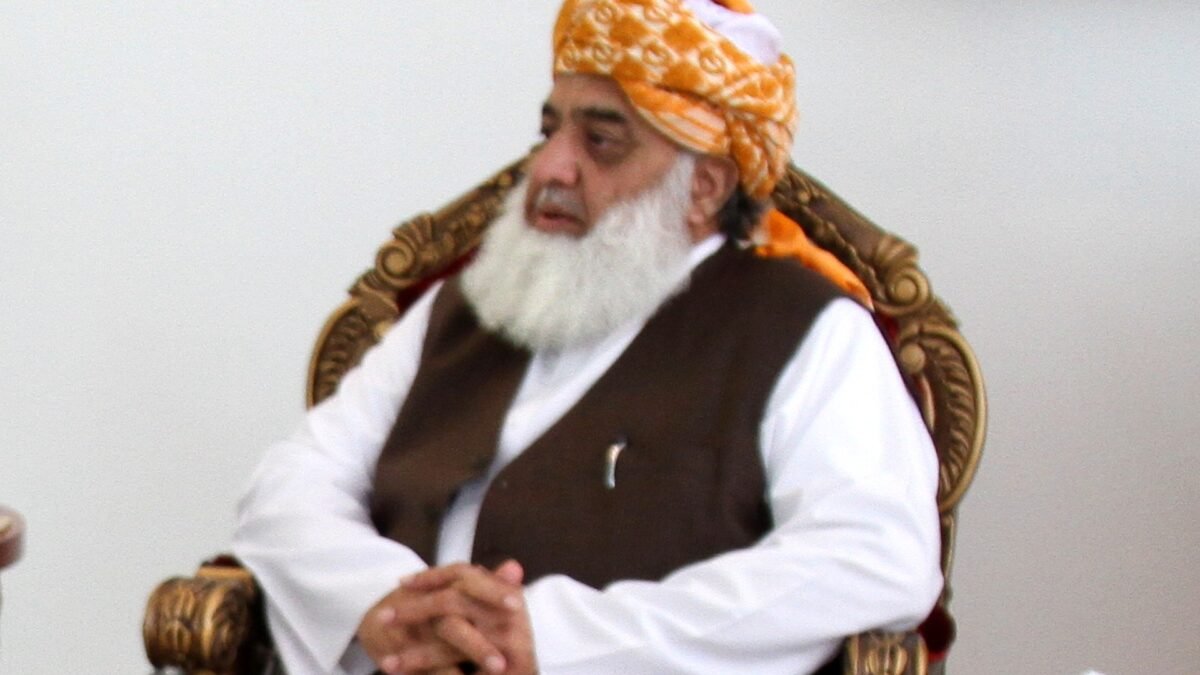
Pakistan’s opposition parties have agreed to hold an all parties conference within the next 10 days, taking the first concrete step towards a united front against the federal government’s imposition of governor’s rule and an emergency in Khyber Pakhtunkhwa. The decision was taken at a meeting on Wednesday at the Islamabad residence of Jamiat Ulema-i-Islam-Fazl (JUI-F) chief Maulana Fazlur Rehman, the first joint gathering of the opposition since the emergency was imposed in the province on 11 October.
Leaders at the meeting also set up two committees: one to organise the conference, consult other parties, fix its agenda and announce its date, and a smaller one to work through the differences between the parties themselves. Senate Opposition Leader Allama Raja Nasir Abbas announced the conference plan at a press conference after the meeting, saying it would be held within a week to 10 days, while National Assembly Opposition Leader Mahmood Khan Achakzai said it was expected this month and that the opposition would also launch a movement across the country against what he called an undemocratic government.
The meeting brought together parties that have spent much of their history disagreeing with each other. Achakzai led the delegation of the Tehreek-i-Tahaffuz-i-Ayeen-i-Pakistan (TTAP), the opposition alliance he chairs, with Abbas beside him. From the Pakistan Tehreek-i-Insaf (PTI) came former National Assembly speaker Asad Qaiser, party secretary general Salman Akram Raja, National Assembly chief whip Aamir Dogar and Noorul Haq Qadri. Fazl hosted the gathering at his home, and the leaders then addressed reporters together, presenting the evening as a show of solidarity as much as a working session.
“We have come here to express our solidarity with him,” Achakzai said of Fazl, according to the Express Tribune, condemning what he called a campaign of character assassination against the JUI-F chief and warning the government against targeting him for speaking out. The objective of the meeting, he said, was “to form an alliance to strengthen parliament and resist the government”.
The meeting at Fazl’s residence
The gathering lasted several hours on Wednesday evening and concluded around midnight, according to reports of the meeting. Before it began, TTAP said the talks would cover unity and solidarity among the opposition parties, the supremacy of the Constitution and the law, and the protection of democratic rights. The JUI-F said the gathering would discuss the imposition of governor’s rule and the emergency in Khyber Pakhtunkhwa, as well as the planned multi-party conference.
Fazl thanked the leaders for coming and said serious talks had taken place on the country’s political situation. He said the opposition had always raised public concerns over governor’s rule and the emergency, and that it was speaking for the public mandate and national interests. Achakzai said the TTAP had called on the JUI-F chief to build an alliance to strengthen Parliament, and that the opposition stood firmly with him.
The practical work was handed to the two committees. The conference committee, which will consult political parties, settle the agenda and announce the date, comprises Salman Akram Raja, Kamran Murtaza, Mustafa Khokhar, Aamir Dogar, Nasir Shirazi and Mohammad Aslam Ghauri. A second, smaller group will work through the differences between the parties, with Sallahuddin Ayubi, Akhunzada Hussain and Khalid Yousaf as its coordinators. The formation of a committee specifically to iron out policy differences between the PTI and the JUI-F was described by those at the meeting as a significant step, because the two parties have historically held divergent views on several national issues.
Abbas, announcing the plan at the press conference, said the conference would be held within a week to 10 days. Achakzai added that it was expected this month. The leaders also agreed to strengthen their parliamentary coordination, so that the opposition benches in both houses act together rather than as separate groups.
Abbas alleged that the sanctity of homes and the privacy of citizens were being violated as authorities detained people from their residences, and said Pakistan was going through one of the worst periods in its history. Fazl said the opposition was representing the people’s concerns regarding the emergency and governor’s rule in Khyber Pakhtunkhwa, adding that it was speaking about the public mandate and national interests.
Khyber Pakhtunkhwa at the centre
Khyber Pakhtunkhwa sat at the centre of the talks. Governor’s rule and an emergency were imposed in the province on 11 October, taking executive power from the PTI-led provincial government and handing it to Governor Faisal Karim Kundi. The move displaced a provincial government led by Imran Khan’s party and has been the opposition’s central grievance ever since.
Achakzai called the move an insult to the mandate of the province’s 40 million people. Abbas said the government had sent a message that the people’s mandate had no value. Fazl has accused the federal government of misusing the Constitution to impose governor’s rule, arguing that the move undermines democracy, constitutional supremacy and the rule of law. He has described the imposition of governor’s rule in some areas and an emergency in others as unprecedented, comparing the situation to the partial martial law imposed in Lahore in 1953, and has criticised the invocation of Articles 232 and 234 of the Constitution.
Fazl has also alleged that the governor’s rule is linked to foreign powers seeking access to mineral reserves in the province’s tribal areas, questioning why the matter is being concealed from the public and parliament. That allegation has not been substantiated by any official document, and this article reports it only as the JUI-F chief’s claim.
The opposition’s objections go beyond the province itself. Fazl warned at the press conference that provincial rights under the 18th Amendment were under threat, pointing to what he described as attempts to bring profitable coastal areas, including Gwadar, and islands in Sindh under federal control, and to the centre’s concern over the National Finance Commission Award and mineral resources. The reference to the 18th Amendment, which devolved powers to the provinces in 2010, was deliberate: it frames the Khyber Pakhtunkhwa emergency not as a local dispute but as a test of the constitutional settlement between the federation and the provinces.
The legal challenge to the emergency is already moving through the courts. The Peshawar High Court has issued notices on PTI petitions against the governor’s rule and the emergency, and the Senate opposition has described the emergency as a federal takeover of the province. The Election Commission has also halted local government elections in Khyber Pakhtunkhwa, while setting 7 February for the first phase of local government elections in Punjab, a decision that underlines how far the province’s normal democratic calendar has been suspended.
Imran Khan’s health raised at the meeting
PTI leaders used the occasion to raise the health of their founder, Imran Khan, who has been in jail since August 2023. Salman Akram Raja said Imran Khan’s blood pressure was not under control, and the party said it had surged to 192 a day before his meeting with his lawyer, Barrister Salman Safdar. The party demanded his immediate transfer to Shifa International Hospital for treatment under his personal physicians, and pointed to a Supreme Court order of 18 August on the matter. These are the party’s claims, as reported by Dawn; no independent medical report was published with them, and this article does not present the blood pressure figure as a verified medical fact.
Raja thanked Fazl for supporting the PTI and alleged that the JUI-F chief was being “punished” for standing with the party. PTI chairman Barrister Gohar Ali Khan had earlier rejected reports that Imran Khan had welcomed the end of the PTI government in Khyber Pakhtunkhwa, calling the claim “completely false”, according to Geo News. Gohar said Safdar had told him Imran Khan was aware of the emergency and governor’s rule, but that little political discussion took place during the meeting, which was the first between Safdar and the former prime minister since 8 April after a long period in which access had been restricted.
Separately, PTI vice chairman Shah Mahmood Qureshi, who is held in Lahore’s Kot Lakhpat jail, fainted during a walk in his barrack and hurt his knee and arm, his counsel said. Blood samples were sent to Shaukat Khanum hospital for examination, according to Dawn. The Islamabad High Court has fixed 10 November for the appeals of Imran Khan and his wife, Bushra Bibi, in the £190 million case, so the coming days will bring the former prime minister’s legal position back into the headlines just as the opposition’s conference committee begins its work.
The road to unity
Wednesday’s meeting was the product of months of slow, careful contact between parties that were rivals for years. On 20 August, Fazl and Achakzai met and announced plans for a united opposition, saying the JUI-F and the TTAP had agreed in principle to form a joint opposition so that their collective parliamentary role could be played more effectively. In September, TTAP and PTI leaders said they intended to consult on a multi-party conference. On 29 October, Fazl invited the government to agree on a Charter of Democracy, warning that the opposition was ready for confrontation if it refused to change course, and endorsed with Abbas the view that all political parties must sit together and move towards a new charter, with the all parties conference identified as an important first step.
The history matters because it explains why this meeting happened at Fazl’s house and not somewhere else. Achakzai, who was formally made Leader of the Opposition in the National Assembly in January, had already sat down with Fazl in February 2025 at his own residence to talk about opposition unity, and had resigned from his National Assembly committee memberships as a form of protest. A day before the August announcement, Achakzai had said plainly that he would back Fazl as interim prime minister if it meant genuinely fair elections. When a journalist asked Fazl in August whether the Pakistan Peoples Party would be part of the united front, he did not give a clean answer, and the party’s role remains undecided: the conference committee will now consult other parties, and whether the PPP joins will be one of the first tests of how broad the front can be.
The PPP is a key coalition partner in the centre, and in August it agreed with the opposition parties to cooperate on legislative matters in parliament. That cooperation has not so far extended to a joint political platform, and the government will be watching closely to see whether the conference committee’s consultations bring the PPP into the room or leave it outside. Fazl’s position as host is itself a measure of how far the ground has shifted: the JUI-F chief, who opposed the merger of the erstwhile tribal areas into Khyber Pakhtunkhwa in 2018, now presents himself as a defender of the province’s mandate, and the PTI, which once treated him as an adversary, now thanks him publicly for standing with it.
Analysis: Why It Matters
The emergency is the glue
Nothing else could have put these parties in the same room. The PTI, the JUI-F and the TTAP disagree on much: on religion and the role of the state, on economic policy, on how to deal with the establishment, and on each other’s recent history. What they share is a single grievance, and it is a powerful one. The imposition of governor’s rule and an emergency in a province where the PTI held the mandate is, for the opposition, not a routine constitutional step but the removal of an elected government by the centre. That is why Achakzai spoke of an insult to the mandate of 40 million people, and why Abbas said the government had told the country that the people’s mandate had no value. The emergency gives the opposition a cause that is simple to explain and hard for the government to defend in the abstract, even if the government believes it had reasons for the move. The question for the conference is whether a shared grievance can become a shared programme. Grievances unite oppositions; programmes divide them. The two committees are an attempt to manage that tension, but committees are not a substitute for agreement, and the next ten days will show whether the parties can agree on what they actually want, beyond the reversal of the emergency.
Fazl, the unlikely broker
The most striking feature of Wednesday’s meeting is who hosted it. Fazlur Rehman has spent decades as one of Pakistan’s most recognisable religious-political figures, and for much of that time the PTI treated him as a political opponent, not an ally. His journey from adversary to broker is the story of the last two years of opposition politics in miniature. He brings two things the PTI cannot supply on its own: a party with deep roots in Khyber Pakhtunkhwa and Balochistan, and a reputation for patience in negotiation. He also brings a risk. His politics are not the PTI’s politics, and any joint platform will have to accommodate a religious party’s priorities alongside a populist party’s demands. The committee formed to work through the differences between the parties is an acknowledgement of that risk, and its coordinators, Sallahuddin Ayubi, Akhunzada Hussain and Khalid Yousaf, have the hardest job in the new structure. If they succeed, the conference will have a genuine agenda. If they fail, the conference will be a photograph, not a plan.
A deadline, not an achievement
An all parties conference is a familiar device in Pakistani politics, and its record is mixed. Conferences can produce joint declarations that change the political weather, and they can also produce long communiques that are forgotten within a week. The difference is usually decided before the conference meets, in the consultations that fix its agenda and its demands. That is why the composition of the organising committee matters more than the announcement itself. It includes senior figures from the PTI, the JUI-F and the wider opposition, and it has been given days, not months, to consult other parties, settle the agenda and announce a date. A conference held within ten days, as promised, would be fast by the standards of opposition politics, and speed is itself a signal: the opposition wants to keep the momentum of Wednesday’s meeting rather than let it dissipate. But speed also carries a cost. A rushed agenda, agreed only to meet a deadline, can paper over disagreements that then surface in public. The test of this meeting will not be whether the conference happens, but whether it produces a set of demands that all the parties in the room are willing to defend together.
Parliament, the courts and the street
The opposition’s strategy, as announced on Wednesday, runs on three tracks at once. The first is parliamentary: the leaders agreed to strengthen their coordination in both houses, so that the opposition benches act as a bloc. The second is legal: the Peshawar High Court has issued notices on the PTI’s petitions against the emergency, and the Islamabad High Court will hear the appeals of Imran Khan and Bushra Bibi on 10 November. The third is the street: Achakzai said the opposition would launch a movement across the country against what he called an undemocratic government. Each track has its limits. In parliament, the opposition does not have the numbers to defeat the government. In the courts, the process is slow and its outcome uncertain. On the street, a movement requires organisation, money and a willingness to sustain protest, none of which can be taken for granted. The three tracks are meant to reinforce each other, and the conference is supposed to be the place where they are knitted into a single strategy. Whether that happens will depend on whether the parties can agree on how far each track should go, and in what order.
What the government hears
From the government’s side, Wednesday’s meeting is a warning rather than a threat. The opposition does not have the votes to bring the government down, and the emergency in Khyber Pakhtunkhwa is, for now, a fact on the ground. But a united opposition changes the political weather in ways that matter. It gives the government’s critics a single platform, it makes the Khyber Pakhtunkhwa emergency a national rather than a provincial issue, and it raises the cost of every further step the government takes in the province. Fazl’s offer of a Charter of Democracy is the other side of the same coin: it is an invitation to negotiate, framed as a warning that confrontation is the alternative. The government has not yet responded publicly to the conference plan, and its response will be instructive. Engagement with the charter offer would suggest it sees the opposition’s unity as a problem to be managed by negotiation. Silence, or a crackdown, would suggest it believes the opposition’s unity will fracture on its own. Either way, the next ten days will tell the government as much about the opposition as they tell the opposition about itself.
What to Watch Next
- The conference date and agenda: the organising committee’s first announcements will show whether the parties can agree on what the conference is for, and whether the Pakistan Peoples Party and other parties are invited to join.
- The differences committee: whether Sallahuddin Ayubi, Akhunzada Hussain and Khalid Yousaf can produce a common PTI–JUI-F position will decide whether the conference has a real agenda or a lowest-common-denominator declaration.
- The courts: the Peshawar High Court’s handling of the PTI petitions against the emergency, and the Islamabad High Court’s hearing on 10 November of the appeals of Imran Khan and Bushra Bibi in the £190 million case.
- Khyber Pakhtunkhwa’s suspended democracy: the Election Commission’s halt to local government elections in the province, against the 7 February date set for the first phase of local polls in Punjab, will keep the emergency in the news.
- The government’s answer: whether it engages with Fazl’s Charter of Democracy offer, answers the opposition’s claims about Imran Khan’s health and access, or lets the conference pass without a response.
Sources
- The Standard: Opposition Leaders Agree to Strengthen Parliamentary Coordination
- Probes Pakistan: Opposition Parties Agree to Forge Anti-Government Alliance
- PakInsight Hub: Opposition to Hold All Parties Conference Within 10 Days After Fazl Meeting
- The News: Fazl invites govt to agree on democracy charter
- The News: Fazl, opposition leaders agree to form ‘united opposition’

About the Author — Abdul Mannan
Related Articles
Pakistan Test-Fires Fa’az, Its First Homegrown Air-to-Air Missile, From a JF-17 Thunder
Pakistan has flight-tested Fa'az, its first indigenously developed air-to-air missile, from a JF-17 Thunder — a milestone the…
Maryam Nawaz Serves Rs5 Billion Defamation Notice on Salik Hussain Over Punjab Corruption Claims
Punjab Chief Minister Maryam Nawaz has served a Rs5 billion defamation notice on federal minister Chaudhry Salik Hussain…
Shehbaz Reviews Rs160 Billion Khyber Pakhtunkhwa Package as Government Widens Intelligence Operations
Prime Minister Shehbaz Sharif chaired a high-level review of Khyber Pakhtunkhwa's security and the Rs160 billion federal development…