
LIV Golf Shuts Down After Five Years as Bankruptcy Court Hears League Will Liquidate Assets

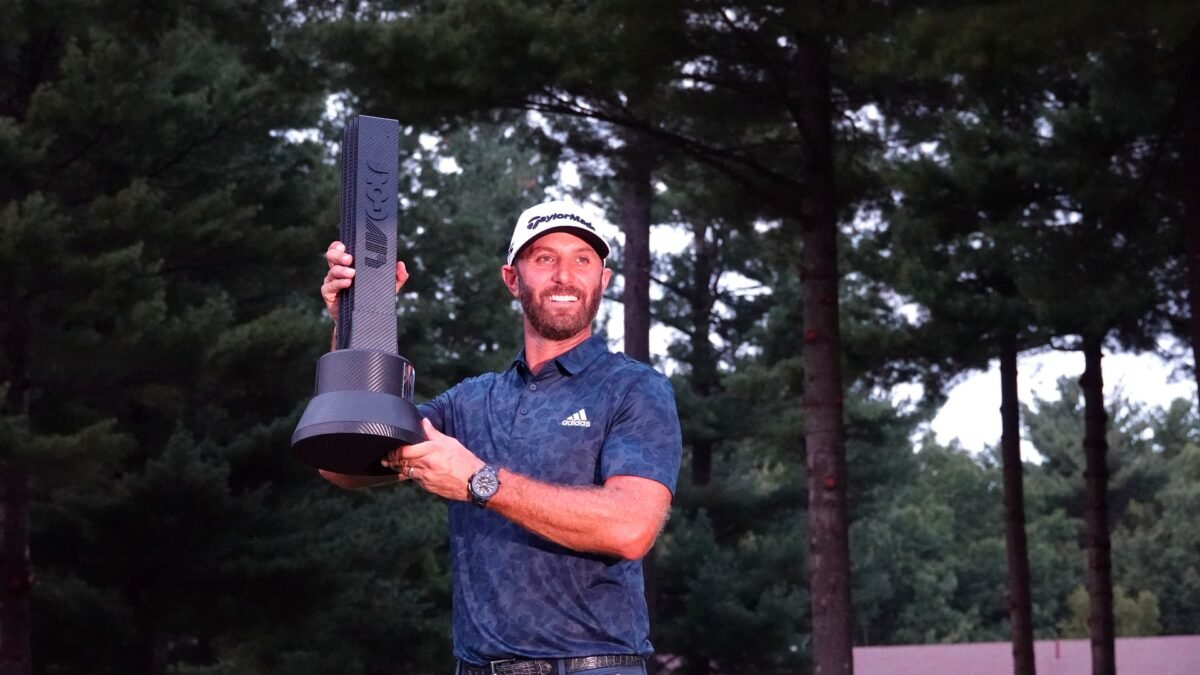
LIV Golf, the Saudi-backed breakaway league that tore professional golf apart for five years, is shutting down. Lawyers for the league told a United States bankruptcy court on Thursday, 5 November, that it will wind down its operations and liquidate its assets, abandoning the planned relaunch known as LIV 2.0 after failing to secure the money and the players needed to keep it alive.
The announcement, delivered in a hearing in Trenton, New Jersey, that lasted just 13 minutes, ends one of the most disruptive experiments in modern sport. According to the Associated Press, attorney Matthew Williams of Gibson Dunn told the court: “The debtors are not currently proceeding with the LIV 2.0 plan. Instead, the debtors are toggling to a value-maximizing wind-down in their business.”
“Ultimately, despite everyone’s best efforts, we just couldn’t get to the level of combined financial and player support necessary for a viable LIV 2.0 within the required timeline,” Williams added, according to USA Today.
The league will now move from the restructuring phase of its Chapter 11 bankruptcy case into liquidation. Its lawyers told the court they intend to file a formal wind-down plan by 9 November, with the official process beginning on Monday, 9 November. A creditors’ committee is due to meet on 20 November, and the next hearing in the case is set for 24 November, according to Golf Digest.
LIV Golf confirmed the decision in a statement on Thursday afternoon. “Since April 2026, the league’s leadership team, with the support of its independent directors and advisors, has run a disciplined and thorough process to identify the best, value-maximising path forward for the company and its stakeholders,” the statement said, according to Sky Sports.
“Despite extensive discussions, the relevant parties were ultimately unable to reach a consensual resolution of certain outstanding terms of the transaction contemplated by the Restructuring Support Agreement. As a result, the Restructuring Support Agreement has been terminated, and the transaction is not expected to move forward at this time.”
The collapse of the relaunch plan was swift. Just a day earlier, the Financial Times reported that BC Partners Credit, the private equity firm that had agreed last month to become the league’s new lead investor, had pulled out of a deal worth more than $300 million. BC Partners confirmed its withdrawal in a statement.
“BC Partners Credit supported a transaction that aligned the interests of players and investors, offering a credible path toward building a sustainable future for LIV Golf,” the firm said, according to the Associated Press. “While there was great support for the league, we are disappointed that mutually acceptable terms could not be reached among the various stakeholders.”
The money ran out first
LIV Golf was built on a single, extraordinary source of money: Saudi Arabia’s Public Investment Fund, the kingdom’s sovereign wealth fund. According to the Associated Press, the fund spent more than $5 billion on the league after its launch in 2022, offering nine-figure signing bonuses to lure some of the biggest names in golf away from the PGA Tour.
That money came to an end in April 2026, when the Public Investment Fund announced it would stop financing the league after the conclusion of its fifth season. The decision followed a change in the fund’s investment strategy, and it left LIV Golf without the financial foundation on which its entire model had been built.
The scale of the spending is still a matter of dispute. Guy Kinnings, the chief executive of the DP World Tour, said in an interview this week that the league had spent more than $7 billion, according to the Associated Press — a figure that, if accurate, would make LIV Golf one of the most expensive failed ventures in sporting history.
With its funding gone, LIV Golf filed for Chapter 11 bankruptcy protection in New Jersey on 8 September 2026. At the time, league officials insisted the move was intended to facilitate the launch of a smaller, player-owned version of the tour for the 2027 season — the project that became known as LIV 2.0.
On 5 October, the league announced a deal worth up to $300 million with BC Partners Credit, including an initial investment of $4 million, as part of a restructuring support agreement filed in court documents. The agreement gave LIV Golf a deadline of 25 October to secure enough player commitments to make the new league viable. BC Partners later extended that deadline, but the commitments never came.
The problem, as the league’s own lawyers acknowledged in court, was that LIV 2.0 needed a “critical mass” of players — and it needed the right players. According to the Associated Press, the plan was always more about names than numbers. But the biggest names were not interested.
Jon Rahm, the three-time LIV champion and the league’s most valuable player, had already walked away. So had Sergio Garcia, Tyrrell Hatton, Louis Oosthuizen, Lee Westwood and Ian Poulter. Only a handful of players, including Brendan Steele and Cameron Tringale, had publicly stated their support for the new format, according to Sky Sports.
Rahm had already agreed to forfeit all claims against LIV Golf — said to be worth some $100 million — to get out of his contract, according to the Associated Press. He is now back playing on the European tour, with hopes that a path back to the PGA Tour will eventually open. The PGA Tour currently imposes a one-year ban dating from a player’s last LIV appearance, which means Rahm and his former colleagues face a long wait before they can return to American golf.
Sports Business Journal reported that Bryson DeChambeau, Dustin Johnson, Cameron Smith and Joaquin Niemann all passed on the deadline to commit to LIV 2.0, according to USA Today. DeChambeau, widely seen as the face of the league, had told a podcast days earlier that the reformatted league “will make full financial sense” — but he did not sign.
What the players are owed
The liquidation will leave a trail of unpaid claims. According to USA Today, court filings show LIV Golf owes between $500 million and $1 billion to at least 1,000 creditors. DeChambeau, Rahm and Johnson hold the biggest unsecured claims, each worth more than $5 million.
DeChambeau alone is owed $5.77 million by the league, according to USA Today. His contract ran through 2026, but a bankruptcy judge has since approved LIV Golf’s rejection of that deal and 18 others — the legal step that frees a bankrupt company from contracts it can no longer afford to honour.
The players’ contracts were effectively cancelled when LIV Golf applied for Chapter 11 bankruptcy after the 2026 season, according to Sky Sports. The final LIV Golf tournament was held on 23 August 2026 at The Club at Chatham Hills in Westfield, Indiana, where Michael La Sasso won the last event in the league’s history.
There are also questions about money paid out before the bankruptcy. According to the Associated Press, LIV Golf paid $15.6 million to retain seven of its executives, including $6.375 million to chief executive Scott O’Neil, in the months between the Public Investment Fund withdrawing its support and the league filing for bankruptcy. Such retention payments are not unusual for a company trying to emerge from bankruptcy, the Associated Press noted — but the question now is whether those payments can be voided, since LIV Golf is not going forward.
O’Neil, who took over from Greg Norman as chief executive at the start of 2025, reflected on the league’s legacy in a statement quoted by the Associated Press. “Building a global platform designed to bring new, younger, and more diverse fans to the sport of golf has been the round of a lifetime for all of us,” he said. “LIV Golf was fun, demanding, inspiring, at times challenging — but always rewarding.”
A five-year experiment that split golf in two
To understand why LIV Golf’s collapse matters, it is worth remembering how dramatically it changed the sport. The league was formally launched in October 2021, with two-time major champion Greg Norman announced as its chief executive. Norman had tried unsuccessfully to start a world tour in 1994, only to have the idea quashed by Arnold Palmer and the PGA Tour. Nearly three decades later, he had Saudi money at his disposal.
LIV Golf held its first tournament on 11 June 2022 at the Centurion Club in Hemel Hempstead, England. Charl Schwartzel won the inaugural event. Within weeks, the PGA Tour had suspended every player who took part, and 11 LIV golfers, including Phil Mickelson and DeChambeau, filed a lawsuit against the PGA Tour challenging those suspensions.
The league promoted itself with the slogan “Golf, but louder” — blaring music, 54-hole shotgun starts in which every player began at the same time on different holes, and $25 million in prize money at each event, split between individual and team competitions. In 2026, the purse money at each event had ballooned to $30 million, according to USA Today.
It was a formula designed to attract a younger audience, and it worked in some places. LIV Golf held 62 tournaments on every continent where golf is played except South America, according to the Associated Press. It had a feel-good moment in Australia this year when Anthony Kim returned from a 12-year absence from the sport — a period marked by addiction — to win again. DeChambeau shot a 58, one of the lowest rounds in professional golf history. Joaquin Niemann won seven times.
But the league struggled from the start with the basics of a sustainable sports business. It had no broadcast deal in its first year, meaning it had to cover its own production costs. It secured a deal with the CW Network in 2023, and eventually signed with Fox Sports in 2025. It also fought a long battle for Official World Golf Ranking points, which determine entry to the major championships, and built player pathways to the majors.
The sporting high point came on 21 May 2023, when Brooks Koepka won the PGA Championship by two strokes over Scottie Scheffler, becoming the first LIV golfer to win a major championship. It was proof, if any were needed, that the players LIV had signed were still among the best in the world.
Two weeks later, on 6 June 2023, the PGA Tour, the DP World Tour and the Saudi Public Investment Fund announced a framework agreement to combine their commercial golf interests — a deal that stunned the sport and appeared to signal that the two sides would eventually merge. That agreement never produced a final deal, and the division in men’s professional golf only deepened.
By 2024, LIV Golf had expanded to 13 teams and 54 players. But the underlying economics never improved. The league was, in effect, a start-up that lost money on every event and survived only because its owner was willing to keep paying. When the owner stopped paying, the experiment had months, not years, left to run.
The doors that closed
The final weeks of LIV Golf were marked by a series of doors closing, one after another. In July, the Asian Tour, which had received financial support from LIV Golf for its International Series, decided to renew its alliance with the PGA Tour and the commercially known DP World Tour in Europe, according to the Associated Press.
In September, the DP World Tour said that any player who signed with LIV 2.0 would be denied membership of its circuit. Its chief executive, Guy Kinnings, said in an interview with The Scotsman newspaper this week that the tour had to protect itself “against an entity who spent, so we are told, over $7 billion, with one of their aims being to ‘destroy the DP World Tour,'” according to the Associated Press.
Rory McIlroy, the most prominent critic of LIV Golf among the players who stayed with the established tours, backed Kinnings’ comments. Speaking at the Bloomberg New Economy Forum in New Delhi, McIlroy described LIV Golf as “half a good idea, executed poorly” and admitted he felt the breakaway series “wasn’t good” for the game, according to Sky Sports.
The DP World Tour’s stance put European players in an impossible position. Signing for LIV 2.0 would have cost them their European tour membership — and with it, any chance of playing in the Ryder Cup, the biennial contest between Europe and the United States that remains the most emotionally charged event in the sport.
It was, in the end, the combination of these pressures — no money, no players, no pathway — that killed the relaunch. As Sky Sports’ Jamie Weir put it, “With BC Partners also no longer proceeding, LIV Golf was left with no other option than to officially wind down the league and liquidate its assets.”
Where the players go now
The end of LIV Golf leaves dozens of professional golfers searching for somewhere to play. The routes back to the top of the sport are narrow, and for many, the journey will be long.
Brooks Koepka was the first to return. The five-time major champion got out of his LIV deal with one year remaining, leaving the league on 9 January 2026, and the PGA Tour created a path — with financial penalties — for him to return. Patrick Reed chose not to extend his deal in January and is now poised to return to the PGA Tour next year through his performances in Europe, according to the Associated Press.
Rahm had said on Tuesday that he would be willing to pay the same price as Koepka to return to the PGA Tour, though it was unlikely the same deal would be offered to him, according to the Associated Press. For now, he is back on the European tour, and the PGA Tour’s one-year ban from a player’s last LIV appearance means the earliest any of the departed stars could return to American golf is late 2027.
For many players, the DP World Tour is the most desirable option — but it comes with a deadline. Players have until mid-November to take up membership, if they are eligible, according to Sky Sports. Rahm, Hatton and Garcia have already said they will play there, while veterans such as Lee Westwood and Paul Casey could rejoin the tour following tournament suspensions, thanks to career money-list exemptions.
DeChambeau’s position is unusual. According to the New York Post, the DP World Tour has offered him full playing privileges for 2027 as the winner of the 2025 US Open, the Telegraph reported on Thursday. He is also scheduled to play in a DP World Tour event later this year, having announced in August that he would take part in the Nedbank Golf Challenge in South Africa from 3 to 6 December. As Sky Sports noted, DeChambeau has one year remaining of his option to take up DP World Tour membership — an option not available to other past major champions such as Cameron Smith or Dustin Johnson.
As for the PGA Tour, it does not currently seem inclined to grant DeChambeau, or other stars such as Rahm or Smith, an immediate pathway back, according to the New York Post. The tour is also going through its own changes, and it remains unclear whether 10 cards will still be on offer through the DP World Tour at the end of 2027, according to Sky Sports.
For many players, as Sky Sports’ Jamie Weir observed, “the pathway back to the top could be a long and tricky one.” Players who add value to events could be given tournament invitations, but even then, those invitations are unlikely to be extended to the sport’s premier events.
There is also the question of the majors. LIV players were able to compete in the four major championships — the Masters, the PGA Championship, the US Open and The Open — through exemptions and world ranking points earned elsewhere. That access will now depend entirely on each player’s standing on the established tours, and on the goodwill of the organisations that run the majors.
Analysis: Why It Matters
The most expensive lesson in sports history
LIV Golf will be remembered as one of the most ambitious — and most expensive — experiments in the history of professional sport. Whether the final bill is $5 billion or $7 billion, the scale of the loss is staggering. It is a reminder that even the deepest pockets in the world cannot buy a sustainable sports league if the underlying product does not generate enough of its own revenue.
The league’s fundamental problem was never a lack of talent. It signed major champions, Ryder Cup players and some of the most recognisable names in golf. It produced genuinely compelling moments — Koepka’s major victory, Kim’s comeback, DeChambeau’s 58. The problem was structural: a league that paid its players far more than it earned, that depended entirely on a single funder, and that never built the broadcast audience or commercial partnerships that would have made it self-sustaining.
That dependence was the fatal flaw. When the Public Investment Fund changed its strategy in April and withdrew its support, LIV Golf had no plan B that could survive contact with reality. The BC Partners deal was, in effect, a last attempt to replace a sovereign wealth fund with private equity — and private equity, unlike a sovereign fund, demands a return. The players were asked to accept less money and more risk, and they declined. The investors were asked to accept the players’ terms, and they declined. The result was a stand-off in which nobody moved, and the league died.
What the PGA Tour and the DP World Tour have won — and what they have not
For the PGA Tour and the DP World Tour, the end of LIV Golf looks like a victory. The breakaway league that threatened to split the sport, poach its stars and devalue its product is gone. The tours have their players back — or, at least, they will have them back once the suspension periods expire. The Ryder Cup, the sport’s great tribal contest, is safe.
But it would be a mistake to treat this as a simple restoration of the old order. LIV Golf forced the established tours to change in ways they would never have chosen for themselves. The PGA Tour increased prize money dramatically, created new “signature events” with limited fields and guaranteed payouts, and restructured its schedule — all in direct response to the competitive threat from LIV. Those changes are now permanent features of the sport, and they have made the top players richer than ever.
The tours have also been changed by the episode in less comfortable ways. The framework agreement of June 2023, in which the PGA Tour agreed to combine its commercial interests with the Saudi fund, damaged the tour’s credibility with many of its own players, who learned of the deal from the news rather than from their leadership. The episode exposed the extent to which professional golf, for all its traditions, is a business in which money talks — and in which the people who run the sport can be caught off guard by the people who fund it.
There is also the question of what happens to the players who left. The PGA Tour has been consistent in saying that returning players must serve a one-year suspension from the date of their last event, and must pay financial penalties. That is a defensible position — the tour cannot simply welcome back players who took hundreds of millions of dollars to leave — but it also means that some of the best golfers in the world will be absent from the PGA Tour for another year, and that the sport’s fields will be weaker than they could be. The tours must decide whether punishment or pragmatism serves the game better, and that debate is far from over.
The Saudi question is not going away
The end of LIV Golf does not mean the end of Saudi Arabia’s involvement in golf — or in sport more generally. The Public Investment Fund remains a major force in global sport, with investments in football, boxing, Formula One and other properties. Its decision to withdraw from LIV Golf appears to have been a commercial judgement about this particular venture, not a retreat from sport as a tool of national strategy.
That raises an uncomfortable question for golf’s governing bodies. The sport spent five years arguing about whether it was acceptable to take Saudi money, with players and officials lining up on both sides of a debate that mixed sporting, moral and geopolitical arguments. Now that the money has gone, the debate has not been resolved — it has simply been postponed. If the Public Investment Fund, or another sovereign fund, returns to golf with a different proposal, the sport will have to answer the same questions again, and it is not clear that it has learned how to answer them.
The framework agreement of 2023 also remains a live issue. The PGA Tour and the Public Investment Fund never completed a final deal, but the commercial relationship between them was never formally unwound either. The tours will need to decide what, if anything, they want from that relationship in the future — and they will need to do so in the open, with their players informed, if they are to avoid repeating the mistakes of 2023.
What to watch next
Several dates now matter. The first is 9 November, when LIV Golf’s lawyers are due to file the formal wind-down plan with the bankruptcy court. That document will show how the league intends to sell its remaining assets and distribute the proceeds to its creditors — and it will reveal how much, if anything, the players and other unsecured creditors can expect to recover from the $500 million to $1 billion they are owed.
The second is 20 November, when the creditors’ committee meets, followed by the next court hearing on 24 November. Those proceedings will determine whether the retention payments to LIV Golf’s executives — including the $6.375 million paid to Scott O’Neil — can be challenged, and whether the league’s remaining assets, which include its team brands, its broadcast archive and its commercial contracts, have any real value to a buyer.
The third is the mid-November deadline for DP World Tour membership. Which former LIV players take up membership, and which do not, will shape the European tour’s fields for 2027 and beyond. It will also determine who is eligible for the 2027 Ryder Cup, which is scheduled to be played in Ireland.
Finally, watch the PGA Tour. Its leadership must now decide how to handle the returning players — whether to offer them a path back on the terms Koepka received, or to hold the line on suspensions and penalties. That decision will shape the quality of the tour’s fields, the strength of its television product, and the mood of its locker room for years to come. The league that was supposed to destroy the PGA Tour is gone. What remains is the harder work of rebuilding a sport that was divided for five years — and that, in some ways, may never be quite the same again.
Sources
- Associated Press via Sportsnet — “LIV Golf winding down operations, lawyer says in bankruptcy hearing”
- Sky Sports — “LIV Golf bankruptcy hearing: League scraps plans to launch ‘LIV 2.0’ and ‘winding down operations’ after losing funding”
- USA Today — “LIV Golf is shutting down after scrapping plans for LIV 2.0”
- USA Today — “LIV Golf turned the golf world upside down. Then it crashed and burned”
- Golf Digest — “LIV Golf to liquidate assets and wind down operations as plans to launch LIV 2.0 fall apart”
- Golfweek — “LIV Golf confirms it will shut down, liquidate assets”

About the Author — Abdul Mannan
Related Articles
Victor Wembanyama Drops Career-High 52 Points With 24 Rebounds and Eight Blocks as Spurs Edge Mavericks 112-111
Victor Wembanyama scored a career-high 52 points with 24 rebounds and eight blocks as the San Antonio Spurs…
Cristiano Ronaldo Retires From International Football After 23 Years as Portugal’s Record-Breaking No. 7
Cristiano Ronaldo has announced his retirement from international football after 234 appearances and a record 146 goals for…
Alan Jones, Australia’s Last Formula 1 World Champion, Dies Aged 80
Alan Jones, the 1980 Formula 1 world champion and the first driver to win the title with Williams,…