
Cristiano Ronaldo Retires From International Football After 23 Years as Portugal’s Record-Breaking No. 7

The announcement
Cristiano Ronaldo has announced his retirement from international football, bringing to an end a 23-year career with Portugal that produced a record 234 appearances, a record 146 goals and the greatest prizes in the country’s history. The 41-year-old broke the news on Thursday in a long video message on social media, reading a letter to his supporters in which he handed back the number 7 shirt he had worn since his debut as an 18-year-old in August 2003.
“To the Portuguese people, the day has come for me to hand back the number seven shirt of our national team,” Ronaldo said, according to the Associated Press. “I never felt it belonged to me alone but for 23 years I had the privilege and the responsibility of wearing it, defending it and carrying it with me into stadiums all around the world.”
“Today the time has come to pass it on to the future. It was not an easy decision because some decisions are not made with the mind alone. They are also made with the heart. A journey that began in August 2003 and changed my life forever has come to an end.”
The announcement, confirmed within the hour by CNN, FIFA, The Times and the Associated Press, closes the international career of the most prolific goalscorer in the history of men’s international football. No man has scored more goals for his country, and no man has played more matches for his country. Ronaldo scored at six World Cups, an unmatched tally, and captained Portugal to the European Championship title in 2016 and to UEFA Nations League titles in 2019 and 2025.
He is not retiring from football altogether. Ronaldo will continue playing club football for Al-Nassr in Saudi Arabia, where he is closing in on 1,000 career goals and currently stands on 985, according to the Associated Press, which reported that he is expected to finish his club career at the end of this season. But the red shirt of Portugal, which he first wore as a teenager from Madeira and last wore on 24 September in a 1-0 Nations League win over Wales, will be worn by someone else from now on.
The Portuguese Football Federation released a statement expressing “deep gratitude and immense admiration” for Ronaldo’s service, according to the Associated Press. “Cristiano Ronaldo has raised Portugal’s profile and inspired generations of young people who dream of following in his footsteps; for many of us, he is the greatest player of all time!” the federation said. It said it intends to organise a tribute to Ronaldo “in which the fans and the country can one more time applaud and celebrate a player who has given us so much.”
The timing, a fortnight before Portugal’s next fixtures, means the farewell comes without a final match. Portugal are due to play Denmark on 14 November and Wales on 17 November in the UEFA Nations League, and Ronaldo will not be in the squad. His final appearance, it turns out, was that September evening against Wales, when he started the game, was taken off in the 67th minute after a frustrating night in front of goal, and never played for his country again.
A farewell in his own words
The video, which Ronaldo titled “Portugal will always be a part of me”, ran for around five minutes and was, by the standards of modern football announcements, strikingly personal. There was no press conference, no staged interview and no club statement. There was a man reading a letter to his phone camera, and a message that was as much about the people who watched him as about the goals he scored.
“When I look back at everything I experienced with the national team, I don’t just see matches, goals, records or trophies. I see people,” Ronaldo said, according to the full text of the speech published by The Sporting News. “I see Portuguese people living abroad who, for ninety minutes, felt a little closer to home. I see millions of Portuguese people I have never met, but who became part of my life. Because, at the end of the day, football is so much bigger than a game. Football is about people.”
“Throughout my career with the national team, I always pushed myself beyond my limits. I wanted to win. I wanted to be better. I wanted to make history. I always demanded the most of myself. I always wanted more. I always believed we could go further. And I gave everything I had for this shirt.”
He did not hide the hard parts. “There were perfect afternoons and nights. There were victories I will never forget. There were defeats that still hurt to remember. I made mistakes. I suffered. There were also moments when I couldn’t give the Portuguese people what they so desperately wanted. But I never gave up. And above all, I never stopped feeling proud. To represent Portugal.”
Then came the line that will be quoted for years, the one that summed up a career spent chasing numbers and discovering, at the end of it, that the numbers were not the point. “Over the years, I learned a few very simple things. Goals fade. Trophies end up in museums. Records are eventually broken. But, there is something time can never erase: the place we hold in people’s hearts. If I ever made you happy, if one of my goals ever made you embrace someone, forget a worry, or feel proud of our country, then it was all worth it.”
He thanked his team-mates — “for every run, for every embrace, for every argument. For every silence before stepping onto the pitch” — and the coaches, directors, doctors, physiotherapists, kit managers and staff members who worked alongside him, many of whom, he said, “never appeared in the photographs. But without you, none of those photographs would have been possible.” He thanked his family for “sharing this dream” and for understanding “the absences, the sacrifices and the moments when the national team had to take up space in my life that also belonged to you.”
And he closed with the image he said he would carry for the rest of his life: the national anthem, the team-mates around him, the stands full of children, mothers, fathers and grandparents, Portuguese people who had travelled far just to be there. “And for a few minutes, all our differences disappear. There are no clubs, there are no colours, there are no classes, there are no professions, there are no opinions. There is only one passion: Portugal.”
“That is the feeling I will carry with me for the rest of my life. Today, my journey on the pitch with the national team comes to an end. I leave with my head held high, proud of the path I have taken and knowing that I gave everything I had for Portugal. But, I will never stop being one of you. I will keep suffering, cheering and celebrating every Portuguese victory with a siuuuuu!”
“I spent my life working to become the best player in the world. Today, I realise my greatest victory was earning the honour of representing the best country in the world. Thank you for these 23 years. Thank you for believing in me. Thank you for allowing me to live a dream that began when I was just a little boy in Madeira running after a football. The number 7 shirt shall remain. The pride of having worn it will be mine forever. Portugal will always be a part of me. Farewell, until we meet again.”
The numbers behind 23 years
The statistics of Ronaldo’s Portugal career are so large that they risk sounding like misprints. He played 234 times for his country and scored 146 goals, according to FIFA and the Associated Press, and both totals are world records in the men’s game. He played at six World Cups — 2006, 2010, 2014, 2018, 2022 and 2026 — and scored at all six, a feat no other player has achieved. He played at six European Championships. He won five Ballon d’Or awards. He is, by the measure of goals and appearances, the most productive international footballer who has ever lived.
But the numbers alone do not explain why this retirement matters so much in Portugal, and the story of the career is best told through its turning points. When Ronaldo made his debut in August 2003, Portugal had never won a major tournament. They were a talented, romantic, perennially disappointed side, the team of the “golden generation” that had promised so much and delivered so little. A year later, on home soil at Euro 2004, they reached the final and lost to Greece, and a 19-year-old Ronaldo wept on the pitch in Lisbon. In 2006 he reached a World Cup semi-final in Germany, losing to France. For the first decade of his career, the pattern repeated: brilliance, expectation, and a trophy cabinet that stayed empty.
Euro 2016 changed everything. Portugal arrived in France unfancied, scraped through the group stage without winning a game, and then ground their way to the final against the hosts. Ronaldo was forced off injured early in the final in Paris, and watched from the touchline as Éder scored the extra-time winner that delivered Portugal’s first major trophy. It was the defining image of his international career in some ways — the captain who could not finish the game but willed his team over the line from the sideline, cajoling, shouting, living every kick. Three years later he captained Portugal to the inaugural Nations League title on home soil, and in 2025, at the age of 40, he did it again, lifting a second Nations League trophy.
The goals kept coming long after the trophies. Under Roberto Martínez, who took charge after the 2022 World Cup, Ronaldo scored 28 goals in 37 appearances, according to a report in the Portuguese press summarised by Opera News — a remarkable return for a player in his late thirties and early forties. But almost none of them came in the biggest matches. He scored no goals at Euro 2024. At the 2026 World Cup, his sixth and last, he scored three times in five appearances: a brace against Uzbekistan in the group stage, and a penalty against Croatia in the round of 32 — his first ever goal in a World Cup knockout match. Portugal then lost 1-0 to Spain in the round of 16, and the dream of a World Cup winners’ medal, the one prize that eluded him, died with that defeat.
That Spain game was, in retrospect, the end of one era and the beginning of another. Martínez left days later, his contract having expired after the defeat, and within a week Portugal had a new coach. What happened next, over the following four months, turned a farewell that Ronaldo had already planned into something far messier — and ultimately brought the ending forward by several months.
The fall-out with Jorge Jesus
The uncomfortable truth about Ronaldo’s final months with Portugal is that the ending was not chosen by him in the way he described it in his farewell video. It was shaped, accelerated and in the end forced by a public falling-out with the man he had helped to appoint as Portugal’s coach.
After the World Cup exit, Ronaldo had already decided that the tournament in North America would be his last act in international football. He said so publicly at the time, telling reporters after the defeat by Spain: “It was my last World Cup, yes, but I’ll now have time to reflect and be with my family. I won’t be making any rash decisions.” He added: “I leave with clear conscience and giving my best to Portugal. Tomorrow will be a new day and then life will go on.” According to a report by Africa Soccer, he had already written a farewell message to the Portuguese people. “After the 2026 World Cup, I wrote a message to the Portuguese people, and I still have it, containing the words I want to address to them when I finally leave our national team,” he said.
But the plan changed on the flight home. “At the end of the tournament, specifically on the flight back from the United States, the president of the Portuguese Football Federation asked me — and insisted — that I reconsider my decision to retire internationally, because the federation wanted me to continue,” Ronaldo said, according to the same report. He agreed to stay on. And when Jorge Jesus was appointed as the new coach in July 2026, on a contract running until 2030, Ronaldo said he was genuinely happy with the choice. “I told the President of the Federation that, in my opinion, it would be the right choice to retire,” he said, meaning the appointment of Jesus. “That is why, on the day the current head coach was presented, I was genuinely happy with the choice. It was the right option, as the results are confirming.”
Jesus, 72, was a familiar figure to Ronaldo. The two had worked together at Al-Nassr, where Jesus guided the club to the Saudi Pro League title in May 2026, ending a seven-year wait and handing Ronaldo his first league title in Saudi Arabia, according to Reuters, which reported that Ronaldo scored 29 goals in 33 appearances under Jesus last season. Jesus had spent most of his coaching career in Portugal, including spells with Benfica and Sporting, and he arrived with a reputation as an uncompromising, demanding coach who had never been afraid of a confrontation with a star player. Within weeks of taking the Portugal job, he had one.
According to Ronaldo’s own account, published in a 1,966-word statement on 6 October and summarised by talkSPORT, Jesus presented him with a plan for his participation when they first met. He told Ronaldo he would play the first match and the last one of each international break, and that for reasons of physical management he would always make three to four changes per match. He also raised the possibility of Ronaldo not travelling with the national team to Norway and Denmark, proposing that he play the first match, stay in Portugal, and rejoin the squad before the match at the Dragão.
The plan unravelled in the September international break. Ronaldo started Portugal’s Nations League opener against Wales on 24 September, a 1-0 win, but after a series of missed chances and another frustrating night in national colours he was taken off in the 67th minute. He did not start again. For the following match, a 2-1 win over Norway on 27 September, he stayed on the bench for the entire game, warming up from half-time after being told, in his account, that he would play 30 minutes. The minutes ticked by and he was never called. “The coach had broken his word to me,” Ronaldo wrote in his statement.
When he learned, late in September, that he would not start against Denmark either, Ronaldo left the camp in Copenhagen, boarded his private jet and left the city. The Portuguese federation responded with a 30-day suspension and a fine of €255, about £213, according to The Times, with the suspension backdated to begin on 9 October. Ronaldo apologised for his conduct. Jesus said Ronaldo would be welcome back and that the decision to return was up to him, and later admitted there had been a “misunderstanding” and said he was open to the player’s return. But the damage was done, and the question of whether Ronaldo would ever play for Portugal again hung over the team for five weeks — until Thursday, when he answered it himself.
Portugal, notably, did not blink. Without Ronaldo, they won all four of their Nations League games and became the first team through to the quarter-finals, according to Opera News. In Denmark, Rafael Leão wore Ronaldo’s iconic number 7 and Bruno Fernandes led the side in a 4-2 win, their first four-goal away win without Ronaldo in 18 years. On the following Sunday, Gonçalo Ramos struck the winner against Norway to seal a last-eight place. The team that had been built around one man for two decades was, suddenly and visibly, functioning without him.
That, more than any single argument or suspension, is what made Thursday’s announcement feel inevitable. The dispute with Jesus exposed a truth that had been building for years: Portugal had outgrown their dependence on Ronaldo, and Ronaldo, at 41, could no longer command the automatic starting place he had held for two decades. The farewell video, gracious and emotional as it was, was also an act of control — a player choosing the manner of his exit rather than waiting for a squad list that might not include his name.
The World Cup that was meant to be the end
It is worth remembering what Ronaldo was supposed to be doing this summer. The 2026 World Cup, staged across the United States, Canada and Mexico, was billed in advance as his final tournament, the last chance to add the one trophy missing from a career that has contained almost everything else. He arrived in North America as a 41-year-old captain of a team many considered among the favourites, and for a few days the old script seemed to be holding. His brace against Uzbekistan in the group stage was, as one report put it, a heroic “I’m back” performance, the kind of night that has defined his career — the great man, written off, answering with goals.
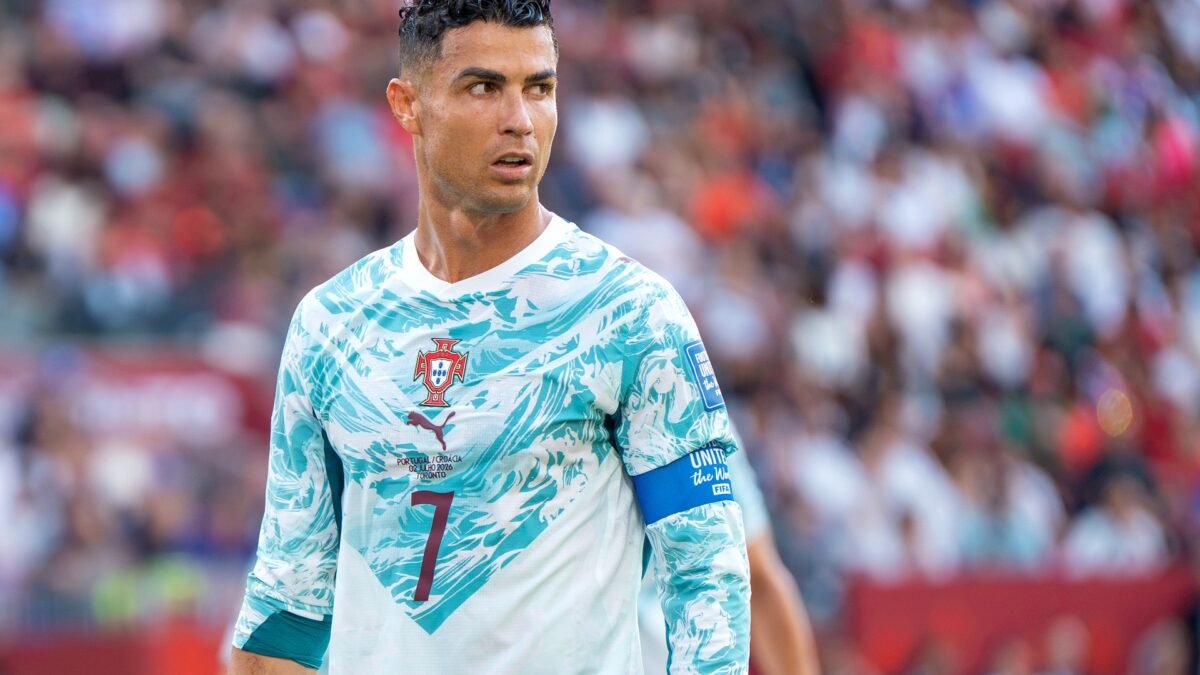
But the tournament told a different story in the end. Portugal’s group-stage performances were uneven, Ronaldo scored only twice in three group games, and in the round of 32 against Croatia he needed a penalty to score his first World Cup knockout goal in six tournaments — a statistic that, for all its trivia value, captured something real about his World Cup career. He had scored at every World Cup he played in, yet he had never scored in a knockout game until that night in Toronto on 2 July, the match in which the photographs of him in Portugal’s white away shirt, number 7 on his back, captain’s armband on his arm, were taken. Portugal won that game 2-1. Four days later, Spain beat them 1-0 in the round of 16, with what Sports Illustrated described as a last-gasp winner, and Ronaldo left the pitch in tears in his final appearance on the world stage.
He did not pretend otherwise afterwards. “I’m sad to be leaving the World Cup like this,” he said, according to OneFootball. “I gave it my all. I did my best and I’m leaving with a clear conscience.” He confirmed it was his last World Cup, but pointedly did not confirm it was the end of his international career — and that ambiguity is what allowed the federation to talk him into staying, and what led, four months later, to the messiest ending imaginable for a player who had always controlled his own narrative so carefully.
The 2022 World Cup had already shown how the story could go. Then-coach Fernando Santos did what had been considered unthinkable and benched Ronaldo for the round-of-16 tie against Switzerland. Portugal won 6-1, with Gonçalo Ramos scoring a hat-trick in his place, and many considered it the dawn of a new era. But they were then dumped out by Morocco in the quarter-finals, Santos left his post after the tournament, and his successor Martínez, according to Opera News, “did not dare to do the same” — restoring Ronaldo to the starting line-up and building the team around him again. The 2026 cycle repeated the pattern, only with a harder edge: a coach who did dare, a player who walked out, and a federation that suspended its greatest ever footballer.
Analysis: Why It Matters
The end of the Ronaldo-Messi era
Ronaldo’s announcement comes shortly after his great rival Lionel Messi also retired from playing international football with Argentina, according to CNN, which reported that Messi finished his career with Argentina after a much-anticipated farewell match last month. The two retirements, weeks apart, close the most extraordinary duopoly in the history of the sport. For nearly two decades, Ronaldo and Messi divided the Ballon d’Or between them, pushed each other to numbers no one had thought possible, and gave football a rivalry that transcended club and country. They are the two highest goalscorers in the history of men’s international football, and now both have stepped away from the international game within weeks of each other.
What made the rivalry so compelling was that it was never just about the goals. It was about two opposite ideas of greatness: Messi, the natural genius, the dribbler who made the impossible look casual; Ronaldo, the constructed phenomenon, the athlete who turned himself through force of will into the most complete goalscorer the game has seen. Portugal against Argentina became, for a generation of fans, a proxy war, and the arguments in schoolyards and bars and social media about which of them was greater will outlive both of their careers. The numbers will be debated forever — 146 international goals for Ronaldo, 13 Ballon d’Or awards shared between them, six World Cups for Ronaldo, one World Cup winners’ medal for Messi — but the deeper truth is that football will not see another rivalry like it, because the conditions that produced it no longer exist. The two of them played in the same era, in the same competitions, at the same clubs in Spain, for almost a decade. That will not happen again.
For Portugal, the significance is different and more immediate. Messi’s retirement was a farewell; Ronaldo’s is a reckoning. Argentina got to say goodbye to their hero in a planned celebration. Portugal got a video message five weeks after their captain walked out of a training camp. The contrast is not an accident. It reflects two different endings — one managed, one not — and it is the unmanaged quality of Ronaldo’s exit that will shape how it is remembered in Portugal, at least in the short term.
Portugal’s gamble has already paid off
The most important fact about the last five weeks is not that Ronaldo left, or that he was suspended, or that he has now retired. It is that Portugal won every game without him. Four wins from four in the Nations League, a place in the quarter-finals secured before the November break, a 4-2 win in Denmark with Leão wearing the number 7 and Fernandes wearing the captain’s armband. The team that was supposed to be unthinkable without Ronaldo turned out to be not just functional but fluent.
This is not a new discovery. The evidence has been accumulating for years. At the 2022 World Cup, Portugal’s best performance of the tournament came in the one game Ronaldo did not start. At Euro 2024, he played every minute and scored no goals. At the 2026 World Cup, the team’s most convincing moments came when Ramos, not Ronaldo, led the line. The numbers under Martínez flattered the player — 28 goals in 37 games — but they concealed the cost: a team shaped around a 40-year-old striker who no longer pressed, no longer ran the channels, and no longer offered the movement that had once made him unplayable.
None of this diminishes what Ronaldo did for Portugal. A country of 10 million people won its first major trophies because of him, and its footballing identity for two decades was inseparable from his. But it does explain why Jesus felt able to make the decision he made, and why the federation backed him rather than the player. Portugal’s next generation — Ramos, Leão, Fernandes, and the young players coming through behind them — are good enough to carry the team now, and the results of the last five weeks have proved it. The gamble was not benching Ronaldo. The gamble would have been not benching him.
There is a lesson here that extends beyond Portugal. International football has always struggled with the problem of the ageing superstar — the player whose past is so great that no coach dares to end his present. Jesus dared, and the results vindicated him. Other federations, and other coaches, will be watching what happens next very closely.
A farewell shaped by a feud, not a final
Great players usually get to choose their endings. They announce a final tournament, they play a farewell match, they wave to the crowd and walk off into applause. Ronaldo did not get that, and the reason is the dispute with Jorge Jesus. His final appearance for Portugal was not a triumphant farewell but a frustrating 67 minutes against Wales in which he missed chances, was substituted, and never played again. His last act as a Portugal player before Thursday was leaving a training camp in Copenhagen and boarding a private jet. His last interaction with the federation before Thursday was a 30-day suspension and a €255 fine.
That is a sad ending to a lauded career, as the Associated Press put it, and it is worth asking whether it had to be this way. The bones of the dispute were, in the end, small: a promise of 30 minutes that was not kept, a plan for rotation that was not explained clearly enough, a player who felt his word had been broken and a coach who believed selection was his alone to make. Jesus himself later admitted there had been a “misunderstanding” and said he was open to Ronaldo’s return. The federation’s president had talked Ronaldo out of retiring in the summer. Everyone involved, it seems, wanted the story to continue — and yet the story ended anyway, because neither man was willing to bend.
There is something characteristically Ronaldo about this. His entire career has been built on an absolute refusal to accept that his time might be passing, on a belief that willpower alone could hold back age. That belief made him the player he was. It also made the ending harder than it needed to be. A player who had accepted a reduced role — the plan Jesus actually offered him, of playing the first and last matches of each break — might have had the farewell he deserved. Instead he chose the walk-out, and then, five weeks later, the video message. The farewell speech was beautiful, and it was also, in its way, an admission: the ending he got was not the ending he wanted, and the video was his way of reclaiming it.
History will be kinder to this ending than the present is. In ten years, no one will remember the €255 fine or the 67 minutes against Wales. They will remember 146 goals, 234 appearances, Euro 2016, and the captain who carried a small country to the top of European football. But the feud will remain part of the story, because it is the part that explains why the greatest player Portugal has ever produced left the international game the way he did — not with a trophy, but with a letter.
The number 7 shirt and the weight of a symbol
Ronaldo’s farewell was built, deliberately and repeatedly, around a single image: the number 7 shirt. “The day has come for me to hand back the number seven shirt,” he said. “I never felt it belonged to me alone.” At the end of the speech he returned to it: “The number 7 shirt shall remain. The pride of having worn it will be mine forever.” It was the right image to choose, because for 23 years that shirt has been more than a number. It has been the symbol of Portuguese football itself.
The number 7 carries a particular weight in the game. It is the number of the winger, the showman, the player who makes the crowd gasp — and in Ronaldo’s case it became something larger, a brand, an identity, a shorthand for the player himself. “CR7” is not just a nickname; it is a global commercial empire, and it is built on the fusion of a man and a number. When Leão wore the number 7 against Denmark in October, it was the first time in nearly two decades that a Portugal number 7 shirt had been worn in a competitive match by someone other than Ronaldo. That, as much as the 4-2 scoreline, was the moment the new era began.
The question now is what happens to the shirt. The federation has not said whether it will be retired, rested, or handed straight to a successor. Retiring it would be a romantic gesture, but it would also be a burden — an admission that no one can follow him. Handing it to Leão, or to Ramos, or to whichever young player earns it, would be the healthier choice, and it is the one Ronaldo himself seemed to endorse when he said “the time has come to pass it on to the future.” The shirt, he was saying, was never his. It belonged to Portugal, and it always will. That is a generous sentiment from a player who has never been accused of generosity with his own legacy, and it is perhaps the most important line in the whole farewell.
The 1,000-goal chase is now the whole story
With the international career over, the remainder of Ronaldo’s playing life has a single, clean narrative: the chase for 1,000 career goals. He stands on 985, according to the Associated Press, and he is expected to finish his club career at the end of this season with Al-Nassr. Fifteen goals in a season is well within his reach, even at 41, and the arithmetic is not the interesting part. The interesting part is what the chase means.
For Ronaldo, 1,000 goals has been the stated target for years, the number that would put him beyond the reach of any rival and beyond the reach of history. No player in the history of the professional game has scored 1,000 official goals. Pelé claimed to have done it, but his total included friendlies and exhibition matches; the official record, the one that counts league games, cup games and internationals, has never been reached. Ronaldo knows this, and he has spoken about it openly. The 146 international goals are now frozen, part of history. The remaining 15 will have to come in Saudi Arabia, in the Pro League and the cup competitions, against defences that are not the equal of the ones he faced in Europe — and his critics will say so, loudly.
But that misses the point. The chase for 1,000 was never really about the quality of the opposition. It was about the refusal to stop, the same refusal that kept him playing for Portugal at 41 and that made him walk out of a training camp rather than accept a place on the bench. The international retirement does not end that story; it concentrates it. From now on there is one number, one target, one season. If he reaches it, he will have done something no one has ever done. If he does not, the 985 will stand as the final tally of a career that was, by any measure, the most prolific in the history of the game. Either way, the story of Cristiano Ronaldo the footballer is now a story about a single number — and it is fitting, somehow, that a career built on numbers should end with one last number still to chase.
What to Watch Next
- The federation’s tribute: The Portuguese Football Federation has said it intends to organise a tribute to Ronaldo “in which the fans and the country can one more time applaud and celebrate a player who has given us so much.” Watch for the date, the venue and the format — and for whether Ronaldo himself attends. A farewell match, a ceremony before the Denmark game on 14 November, or a larger event in Lisbon would each send a different message about how the federation wants this ending to be remembered.
- Portugal without Ronaldo: The November internationals against Denmark on 14 November and Wales on 17 November will be the first Portugal games of the post-Ronaldo era. Watch who wears the number 7, who captains the side, and whether the fluency of the last four games continues. Jesus has a 100 per cent record as Portugal coach; the question is whether the team keeps winning now that the farewell is official rather than merely implied.
- Who inherits the shirt: Rafael Leão wore the number 7 against Denmark in October, and he is the most natural successor. But the shirt could equally go to Gonçalo Ramos, who has made the centre-forward position his own, or be held back for a younger player. The choice will tell us a great deal about how Jesus sees the future of the team.
- The 1,000-goal chase: Ronaldo needs 15 more goals to reach 1,000 in his career, and he is expected to finish his club career at the end of this season with Al-Nassr. Watch the tally week by week — and watch whether the chase changes how he plays, and whether Al-Nassr build their season around delivering it.
- The Jesus question: Jorge Jesus won the power struggle with the greatest player in Portuguese history, and his team have won every game since. But the manner of Ronaldo’s exit — the suspension, the walk-out, the video farewell — will follow him. Watch how he handles the first press conference after the retirement, and whether the federation’s tribute becomes a moment of reconciliation or a reminder of the split.
Sources
- Associated Press, “Portugal great Cristiano Ronaldo announces his retirement from international soccer”, NBC Sports Philadelphia, 5 November 2026
- CNN, “Cristiano Ronaldo retires from international soccer after a record-breaking career with Portugal”, 5 November 2026
- FIFA, “Cristiano Ronaldo calls time on Portugal career”, 5 November 2026
- The Times, “Cristiano Ronaldo announces retirement from international football”, 5 November 2026
- The Sporting News, “Cristiano Ronaldo’s Portugal retirement statement in full”, 5 November 2026
- Reuters, “Jorge Jesus appointed new Portugal coach after World Cup exit”, 10 July 2026

About the Author — Abdul Mannan
Related Articles
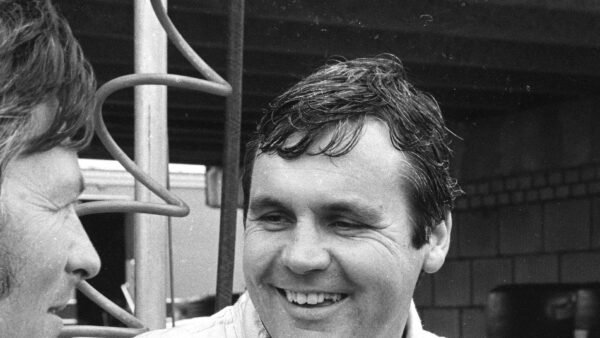
Alan Jones, Australia’s Last Formula 1 World Champion, Dies Aged 80
Alan Jones, the 1980 Formula 1 world champion and the first driver to win the title with Williams,…
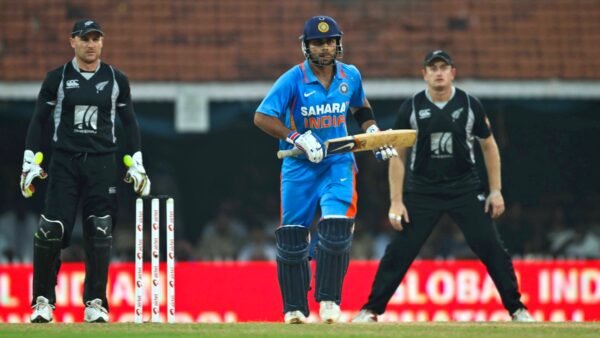
At 38, Virat Kohli Is Still Writing History — and the World Is Still Watching
On the eve of his 38th birthday, Virat Kohli's 74 off 51 balls sealed India's rain-hit ODI win…
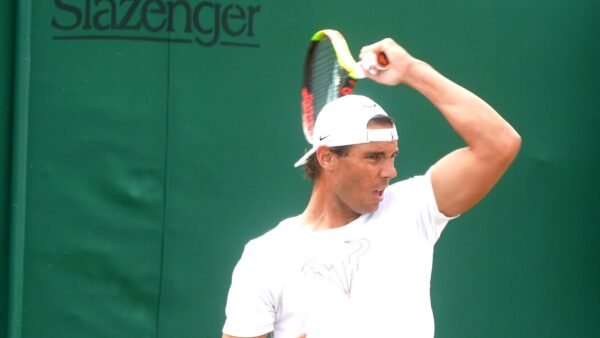
Rafael Nadal Joins Real Madrid Board of Directors as Tennis Legend Takes Seat in the Bernabéu Boardroom
Real Madrid have appointed 22-time Grand Slam champion Rafael Nadal to their board of directors, with the tennis…