
US Measles Cases Pass 5,000 for First Time Since 1991 as Infant Death in Wisconsin Brings Toll to Eight

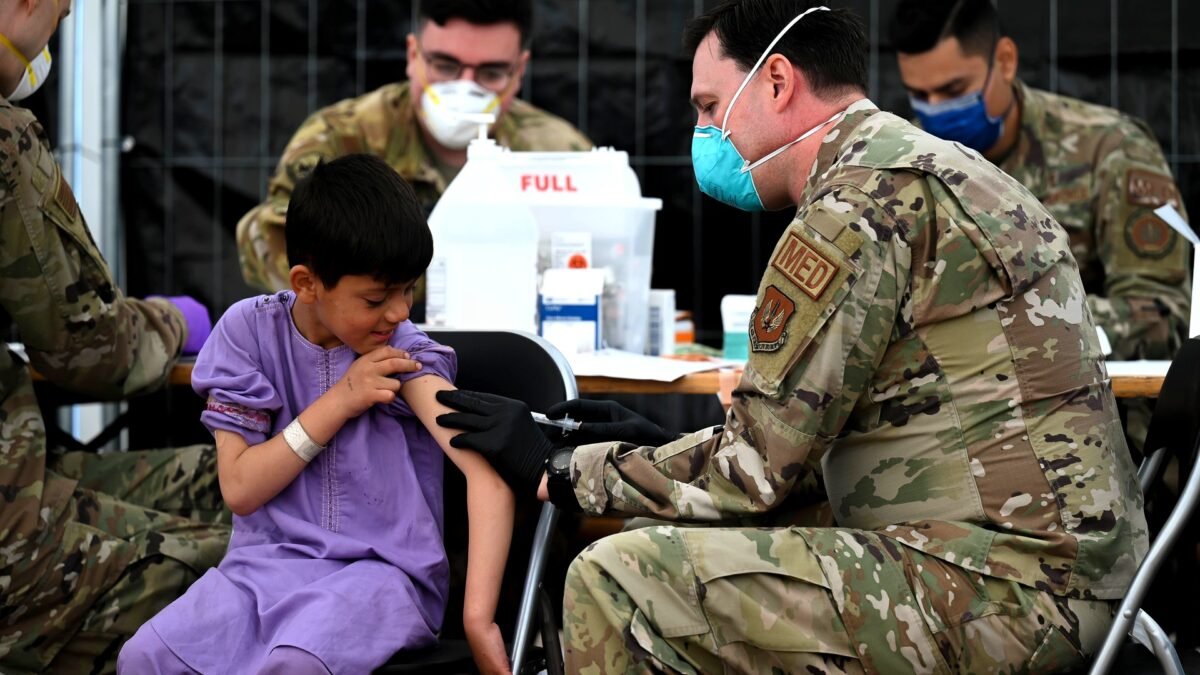
Measles cases in the United States have passed 5,000 in a single year for the first time since 1991, according to the Centers for Disease Control and Prevention (CDC), as a nationwide resurgence of a disease the country declared eliminated a quarter of a century ago claims its youngest victims and pushes the American public health system towards a formal reckoning.
The CDC reported 5,182 confirmed cases as of 5 November 2026, according to data released on 6 November, more than double the 2,289 cases recorded in the whole of 2025 and the highest annual total in 35 years. The infections have spread across 45 states plus Washington, D.C., with 43 separate outbreaks under way in 2026 and 330 new cases recorded in the most recent week alone.
Behind the headline figure lies a grimmer toll. State health departments have reported eight measles-related deaths this year, according to Reuters, including six in Pennsylvania, one in New York and one in Wisconsin. Three of those deaths were reported within a single week, and at least four of the eight involved children or infants. The United States has not recorded more than four measles deaths in a year since 1991, according to USA Today.
The latest death, announced on Thursday, was an infant in Grant County, Wisconsin. The coroner listed measles as the immediate cause of death, according to the Wisconsin Department of Health Services, which said it was the state’s first measles death since 1990.
“It is with a heavy heart we are reporting the first death of an infant connected with a measles outbreak in Wisconsin in many years. My heart is broken for the family,” Wisconsin Department of Health Services Secretary Kirsten Johnson said in a statement. “Any death of a child is a tragedy and even more so when it is related to a vaccine-preventable disease.”
The Wisconsin outbreak has now produced 431 cases across 13 counties, according to state figures cited in reporting on the death, with nine people hospitalised. Health workers in the state have delivered more than 42,000 doses of the measles, mumps and rubella (MMR) vaccine since August in an effort to contain the spread.
The scale of the resurgence has now placed the country’s official measles elimination status — held since 2000 — in jeopardy. The Pan American Health Organization (PAHO) is expected to review the United States’ status on 10 November, according to USA Today, examining whether the virus has now circulated without interruption for 12 months. If it finds that one strain of the virus has been spreading continuously for a year, the designation is lost.
Canada has already crossed that line. It lost its measles-free status in November 2025 after an outbreak that began at a wedding in New Brunswick in October 2024 spread across Ontario, producing 2,377 confirmed cases in that province alone over almost a full year, according to an analysis published in the medical journal The BMJ and reported by the University of Minnesota’s Center for Infectious Disease Research and Policy. The wider Americas region lost its elimination status in November 2025 as well.
Almost every infection in the current American surge has struck people who were not protected by vaccination. The CDC’s data show that 96 per cent of confirmed cases in 2026 were in people who were unvaccinated or whose vaccination status was unknown, and 96 per cent of cases were linked to outbreaks. Of the 5,182 cases, 562 people — about 11 per cent — were hospitalised, according to the CDC.
The disease is striking hardest at the young. Children under five accounted for 908 cases, while children and teenagers aged five to 19 accounted for 2,104 — together, about 59 per cent of all confirmed infections. Adults aged 20 and older accounted for 2,132 cases, a markedly larger share than in previous outbreaks and a sign, according to health officials, that the virus is finding gaps in immunity across the whole population rather than only in school-age children.
Measles is among the most contagious diseases known to medicine. According to the CDC, about 90 per cent of unvaccinated people exposed to the virus contract it, and about one in five of those infected ends up in hospital. Before a vaccine became available in 1963, the disease killed an estimated 400 to 500 Americans every year, according to the CDC.
Two doses of the MMR vaccine are about 97 per cent effective at preventing measles, according to the CDC, and are normally given to children at 12 to 15 months of age and again at four to six years. The vaccine is, in the words of the CDC, “very safe and effective”. The problem is not the vaccine. It is that fewer American children are receiving it.
The numbers behind the surge
The trajectory of measles in the United States over the past four years reads like a warning that was ignored until it became a crisis. In 2023, the CDC recorded just 59 cases. In 2024, that figure rose to 285. In 2025, it jumped to 2,289 — already the highest annual total since the 1990s — and by early November 2026 it had more than doubled again to 5,182.
Before 2025, the largest recent annual total had been 1,274 cases in 2019, driven by outbreaks in New York, California and Washington state. That figure now looks modest. The 2026 total has already exceeded it more than four times over, with weeks of the year still remaining.
The CDC’s own data, published on its measles cases and outbreaks page and updated on 6 November, show that cases have been reported by 47 jurisdictions, including New York City as well as New York State. Of the 5,182 confirmed cases, 4,993 — 96 per cent — were associated with outbreaks, with 3,608 linked to outbreaks that began in 2026 and 1,385 carried over from outbreaks that started in 2025.
The weekly pace of new infections remains high. The latest CDC update added 330 cases in a single week. With cases still being confirmed by doctors and reported to the CDC on a weekly cycle, the true number of infections is almost certainly higher than the official count, since people who fall ill but do not seek a doctor’s diagnosis are not included, according to USA Today.
The geography of the outbreak is uneven, and that unevenness tells its own story. Pennsylvania has become the epicentre, but South Carolina has reported 670 cases and Utah 536, according to Reuters, while outbreaks of more than 100 cases each have been reported in several other states. New York declared a state of emergency on 5 October after the state passed 100 cases, according to USA Today, and later reported its first measles death in more than 30 years on 2 November.
The 2025 outbreak that foreshadowed this year’s surge was centred in West Texas, where more than 750 cases were recorded and two children died, according to reporting by CBS News. Two children and one adult died in outbreaks across the country in 2025, the first paediatric measles deaths in the United States in a decade, according to USA Today, and all three were unvaccinated or had unknown vaccination status. In 2026, the death toll reported by states has already more than doubled that figure.
The federal death count, however, tells a different and smaller story than the states’ own figures — and that discrepancy has itself become part of the crisis. The CDC’s official nationwide count reflects four deaths as of 29 October, according to USA Today, because the agency now relies on mortality records from the National Center for Health Statistics, which lag behind state reporting. State health departments, which count a death as measles-associated when it occurs within 30 days of symptoms unless it is clearly unrelated, have reported eight.
Three deaths in one week
The week that pushed the national case count past 5,000 was also the deadliest week of the outbreak. Three measles-related deaths were reported within days of each other, matching the number of deaths recorded in the whole of 2025, according to Bloomberg.
In the preceding 25 years, the United States typically had no measles deaths at all, according to Bloomberg’s reporting. The country had not seen more than four measles deaths in a year since 1991, according to USA Today. The three deaths in a single week therefore represent not a statistical blip but a return to a mortality pattern the country believed it had left behind a generation ago.
The Wisconsin infant’s death was the most harrowing of the three. The baby lived in Grant County, in the south-west of the state, where the outbreak has been spreading since the summer. The Wisconsin Department of Health Services declined to release further details to protect the family’s privacy, according to Reuters, but confirmed that the coroner had listed measles as the immediate cause of death.
It was the first measles death in Wisconsin in 36 years, according to Bloomberg, and the first death of an infant connected with a measles outbreak in the state in many years, in the words of the state’s health secretary. The state’s outbreak, with more than 400 infections and nine hospitalisations, has prompted an emergency vaccination drive that has delivered more than 42,000 MMR doses since August, according to reporting on the death.
New York’s death, announced on 2 November, was the state’s first measles death in more than 30 years, according to USA Today. The state had declared an emergency a month earlier, on 5 October, after passing 100 cases, and the death came as health officials warned that the outbreak was spreading through communities with low vaccination coverage.
Pennsylvania’s sixth death of the year was confirmed on 4 November, according to USA Today, in a state where the outbreak has grown so large that it now accounts for nearly 30 per cent of all measles cases in the country. The state’s health department has reported six measles-associated deaths in 2026, according to Reuters — more than the entire national death toll of 2025.
Pennsylvania: the epicentre
No state illustrates the scale of the crisis more starkly than Pennsylvania. The state has reported 1,487 cases, according to Reuters, with 287 people hospitalised and six deaths. It passed 1,000 cases in early October, according to USA Today, a dramatic increase from the 106 cases reported statewide last year.
The outbreak has spread across 44 counties, according to reporting from late October, and was still adding dozens of new cases a week as the autumn wore on. Pennsylvania’s cases alone account for close to three in every ten measles infections recorded in the United States this year.
The scale of the Pennsylvania outbreak has also made it the centre of a bitter political dispute over how measles deaths are counted. In social media posts and speeches, U.S. Health Secretary Robert F. Kennedy Jr. accused Pennsylvania Governor Josh Shapiro of “fabricating” the deaths, according to USA Today, while Shapiro said Kennedy was “downplaying the severity of measles”.
The dispute began in August, according to USA Today, and escalated into what the newspaper described as a “terse back-and-forth” between the federal health secretary and the governor. On 13 October, the CDC said it would deploy more support to the state to investigate the outbreak, according to USA Today.
The disagreement turns on methodology. Pennsylvania counts any death within 30 days of measles symptoms as measles-associated unless it is clearly unrelated, according to reporting on the CDC’s figures. The CDC, by contrast, now relies on federal mortality records that take longer to process, which is why its official count of four deaths lags behind the eight reported by state health departments.
The CDC has also changed how it classifies measles-related deaths, according to USA Today, a move the newspaper described as controversial. The change has left the public with two different official death tolls for the same outbreak — four according to the federal agency, eight according to the states — and has fed confusion at precisely the moment when clarity matters most.
The controversy has unfolded against a wider backdrop in which the Trump administration has attempted to change the childhood vaccine schedule and promoted ideas about vaccines that scientists have disproved, according to USA Today. Cases hit their highest level in more than three decades under the administration in 2026, the newspaper reported, after previously reaching a multi-decade high in 2025.
The elimination status at stake
For a quarter of a century, the United States has held a distinction that public health officials once regarded as a permanent achievement: measles elimination. The designation, awarded in 2000, meant that the virus no longer spread continuously within the country for 12 months or more, although infections could still occur when travellers brought the virus in from abroad and sparked outbreaks that were then contained.
The CDC described elimination as a “historic public health achievement”, according to USA Today. It was won through decades of high vaccination coverage, with the MMR vaccine reaching more than 95 per cent of children — the level at which community immunity, or herd immunity, protects even those who cannot be vaccinated.
That achievement is now on the verge of being lost. The Pan American Health Organization is expected to review the United States’ status on 10 November, according to USA Today, following the 2025 Texas outbreak that killed three people. The review will examine whether ongoing outbreaks represent sustained transmission of the virus and whether the country still meets the criteria for elimination, according to reporting on the process.
The test is a precise one. Elimination status is determined by the absence of continuous measles transmission in a geographical area for 12 months or longer, supported by an effective disease surveillance system, according to the CDC. If the review finds that one strain of the virus has circulated without a break for 12 months, the status is lost, according to reporting on the review.
Losing the status would mean that measles is once again circulating continuously within the American population rather than appearing mainly through imported infections that cause outbreaks that are eventually contained. It would mark a major setback for public health efforts that successfully interrupted continuous transmission in 2000, according to reporting on the review — and it would place the United States alongside Canada, which lost its measles-free status in November 2025 after an outbreak that lasted almost a full year.
The Canadian experience is a cautionary tale for the United States, in the words of the University of Minnesota’s Center for Infectious Disease Research and Policy. The outbreak began after several wedding guests from Ontario were exposed to measles by another guest from Thailand at a wedding in New Brunswick in October 2024, according to a recent analysis in The BMJ. The Ontario residents brought the virus home, where it continued to spread, ultimately resulting in a multi-jurisdictional outbreak that lasted almost a full year, with 2,064 confirmed infections and 313 probable cases.
Elimination status can be regained, but only after 12 consecutive months without transmission from the outbreak strain, according to the Center for Infectious Disease Research and Policy. For the United States, with cases still rising in November 2026, that clock has not yet begun to run.
The Americas region as a whole had already lost its measles elimination status in November 2025, according to reporting on the CDC data, after Canada experienced continuous transmission for at least 12 months. The United States is now the next country in the region facing the same verdict.
Why vaccination rates fell
The root cause of the resurgence is not in dispute among public health experts. Vaccination coverage among American kindergarteners has fallen from 95.2 per cent in the 2019-2020 school year to 92.4 per cent in the 2025-2026 school year, according to the CDC — below the 95 per cent threshold the agency sets for herd immunity, and leaving approximately 280,000 kindergartners at risk during the current school year.
The decline has been steady rather than sudden. Coverage slipped from 95.2 per cent before the pandemic to 92.5 per cent in the previous school year and 92.4 per cent in 2025-2026, according to CDC data reported by CBS News. Only 10 states hit the 95 per cent threshold last year, according to the same reporting.
National averages, however, conceal far deeper gaps in particular communities. A report by the Congressional Research Service, published on 29 September 2026, found that some counties affected by the West Texas measles outbreak in 2025 had vaccination rates as low as 77.3 per cent for the two-dose MMR series. In communities where coverage falls that far below the threshold, the virus spreads almost unchecked: about 90 per cent of unvaccinated people exposed to measles contract it, according to the CDC.
The decline began during the COVID-19 pandemic, which disrupted public health programmes and their funding, according to reporting on the trend, and it has continued as scepticism about vaccines has grown. Health experts point to lower vaccination rates as the main cause of the increase in preventable infectious diseases such as measles, according to CBS News reporting.
The consequences of that decline are now visible in the age profile of the outbreak. In past outbreaks, cases were concentrated among children. In 2026, adults aged 20 and older account for 2,132 cases — tied with the five-to-19 age group as the largest share, according to the CDC’s data — a significant increase compared with 29 per cent of cases last year, according to USA Today. The shift suggests that immunity gaps have widened across the adult population as well as among children.
A study published in 2025 in the Journal of the American Medical Association modelled that measles could become endemic again in the United States over the next 25 years at current state-level vaccination rates, according to reporting on the research. That is the long-term trajectory the country is now on: not a single bad year, but a slow slide back towards a disease that was once a routine killer of American children.
The CDC’s own language on its measles page is blunt. “U.S. national MMR coverage among kindergarteners has decreased and is now below the 95% coverage target — with much lower coverage in some communities,” the agency states. The 280,000 kindergartners left unprotected in the current school year are the human face of that statistic.
A dispute over the death count
The argument between the federal health secretary and the governor of Pennsylvania is more than a political spat. It goes to the heart of how the country understands the severity of its own outbreak — and whether the public is being told the truth about how many people measles has killed.
Kennedy, the health secretary, accused Governor Shapiro of “fabricating” the deaths reported in Pennsylvania, according to USA Today, while Shapiro said Kennedy was “downplaying the severity of measles”. The exchange, which began in August, has played out in social media posts and speeches, according to the newspaper.
The CDC’s own count reflects the confusion. The agency’s reported numbers come amid what USA Today described as a controversial move by the agency to change how it classifies measles-related mortalities. The CDC said on 13 October that it would deploy more support to Pennsylvania to investigate the outbreak, according to the newspaper — a step that suggested the federal agency itself recognised the need for a closer look at the state’s figures.
The gap between the federal count of four deaths and the states’ count of eight is not a matter of one side being wrong. It is a matter of different methods and different timelines. State health departments count deaths as measles-associated when they occur within 30 days of symptoms, unless another cause is clearly responsible. The CDC’s national count relies on mortality records from the National Center for Health Statistics, which take longer to process and therefore lag behind state reporting.
But the existence of two official tolls has allowed the severity of the outbreak to be minimised in public debate, at a time when the case count has passed 5,000 and three deaths have been reported in a single week. For the families of the eight people whose deaths state health departments attribute to measles — including an infant in Wisconsin and a child in New York — the distinction between four and eight is not an abstraction.
The dispute also reflects a wider tension in American public health. The Trump administration has attempted to change the childhood vaccine schedule and promoted ideas about vaccines that scientists have disproved, according to USA Today. The CDC’s changing of its death classification, the newspaper reported, came amid that wider shift in federal health policy.
Analysis: Why It Matters
A disease the country had beaten is back — and it is killing children again
The most important fact about the 2026 measles surge is not the number 5,182. It is the number eight — the deaths reported by state health departments — and the fact that at least four of them involved children or infants. For 25 years, the United States typically recorded no measles deaths at all. In a single week this autumn, it recorded three. That is not a statistical fluctuation. It is the return of a disease that the country had consigned to history, and it is killing the youngest and most vulnerable Americans first.
The deaths matter because they are preventable in the most literal sense. Measles is a vaccine-preventable disease, in the words of Wisconsin’s health secretary, and the vaccine that prevents it is about 97 per cent effective after two doses, according to the CDC. Every death in this outbreak represents a failure not of medicine but of delivery — of a system that once reached more than 95 per cent of children and now reaches only 92.4 per cent of kindergarteners, leaving some 280,000 children unprotected in a single school year.
The 5,000-case milestone is a symptom, not the disease
It is tempting to treat the passing of 5,000 cases as the story. It is not. The case count is a symptom of a deeper condition: the slow erosion of the vaccination coverage that made elimination possible in the first place. Coverage among kindergarteners has fallen every year since the pandemic, from 95.2 per cent to 92.4 per cent, and only 10 states now meet the 95 per cent threshold. In some counties hit by the West Texas outbreak, coverage was as low as 77.3 per cent.
Measles is the canary in the coal mine of American public health precisely because it is so contagious. With about 90 per cent of unvaccinated people exposed to the virus contracting it, measles finds every gap in immunity that other diseases miss. A country that cannot keep measles out is a country whose vaccination system is failing at its most basic task. The 5,000 cases are the visible evidence of that failure; the 280,000 unprotected kindergarteners are its cause.
Losing elimination status would be a reputational and practical blow
The PAHO review on 10 November is more than a bureaucratic exercise. Elimination status, held since 2000, is the international community’s recognition that a country has interrupted the continuous transmission of a disease. Losing it would place the United States in the company of countries that have never achieved elimination, and it would signal to the world that the virus is once again circulating continuously among Americans.
The practical consequences matter too. Countries that lose elimination status face greater scrutiny of their surveillance systems, more pressure on their vaccination programmes, and a harder task in persuading other nations that their travellers pose no risk. Canada’s experience shows how long the road back is: status can only be regained after 12 consecutive months without transmission from the outbreak strain, and with cases still rising in November 2026, the American clock has not yet started.
The death-count dispute is itself a public health hazard
When the federal health secretary accuses a governor of fabricating deaths, and the governor accuses the secretary of downplaying the severity of the disease, the public is left not knowing whom to believe about how many people have died. That uncertainty is itself dangerous. Public health depends on trust, and trust depends on clear, consistent numbers.
The gap between the CDC’s count of four deaths and the states’ count of eight is explicable — different methods, different timelines — but it has not been explained clearly enough, and the CDC’s change in how it classifies measles deaths has made the explanation harder rather than easier. In a crisis in which 96 per cent of cases are among the unvaccinated, the most important public message is a simple one: the vaccine works, and the disease kills. A dispute over the death toll muddies that message at the worst possible moment.
The outbreak is a test of whether the country can still do public health
Wisconsin’s response to its outbreak shows what effective public health still looks like: more than 42,000 MMR doses delivered since August, targeted vaccination drives in affected counties, and a health secretary willing to speak plainly about a child’s death. The question is whether that response can be scaled nationally — and whether the federal government, which has spent the year changing vaccine schedules and disputing state death counts, will support it or undermine it.
The JAMA modelling that measles could become endemic again within 25 years at current vaccination rates is the long view. The short view is more urgent: 330 new cases in a week, 43 outbreaks under way, and a PAHO review in three days. The country that eliminated measles in 2000 did so through sustained, boring, competent public health work — high coverage, rapid response, clear communication. The country of 2026 will have to decide whether it still wants to do that work, and whether it still can.
What to Watch Next
- The PAHO review on 10 November. The Pan American Health Organization will examine whether the virus has circulated continuously in the United States for 12 months. If it finds sustained transmission, the country loses the measles elimination status it has held since 2000.
- The next CDC weekly update. The latest update added 330 cases in a single week. Whether the weekly count rises or falls will show whether the outbreak is still accelerating as winter approaches and children spend more time indoors.
- Pennsylvania’s outbreak. With 1,487 cases, 287 hospitalisations and six deaths, Pennsylvania accounts for nearly three in ten American measles cases. Whether the state’s outbreak peaks or keeps growing will shape the national picture.
- The death-count dispute. The gap between the CDC’s official count of four deaths and the eight reported by state health departments remains unresolved. Any reconciliation — or further escalation between the federal health secretary and Pennsylvania’s governor — will affect public trust in the official figures.
- Vaccination drives in affected states. Wisconsin has delivered more than 42,000 MMR doses since August. Whether other states mount similar drives, and whether kindergarten coverage recovers towards the 95 per cent threshold, will determine whether 2026 is a bad year or the start of a new era of endemic measles.
Sources
- USA Today — “A once almost-forgotten disease is spiking in the US. See latest numbers”
- Reuters (via Devdiscourse) — Reuters Health News Summary, 7 November 2026
- Xinhua — “US measles cases top 5,000 in 2026”
- KFF Health News — “Wisconsin Infant Dies Of Measles As US Cases Notch 35-Year High”
- Health and Me — “US Measles Cases Cross 5,000 For First Time Since 1991; Country Risks Losing Elimination Status”
- Congressional Research Service — “U.S. Measles Outbreaks 2025-2026: Overview and Issues for Congress” (29 September 2026)

About the Author — Abdul Mannan
Related Articles
Wisconsin Infant Dies of Measles in State’s First Death From the Disease in 36 Years as US Cases Hit 35-Year High
An infant in southwestern Wisconsin has died of measles — the state's first measles death since 1990 —…
WHO Backs Trials for Two New Ebola Vaccines as Bundibugyo Outbreak Passes 10,000 Cases in DR Congo
The WHO has backed trials for two vaccines designed specifically for the Bundibugyo strain, as the DR Congo…
NHS Launches World-First Trial of Multi-Cancer Blood Tests at 200 GP Surgeries
More than 20,000 patients at 200 GP surgeries in England will be offered a blood test that can…