
Pakistan Unveils New Auto Policy Promising Cheaper Cars, $6 Billion in Exports and a Big Electric-Vehicle Push

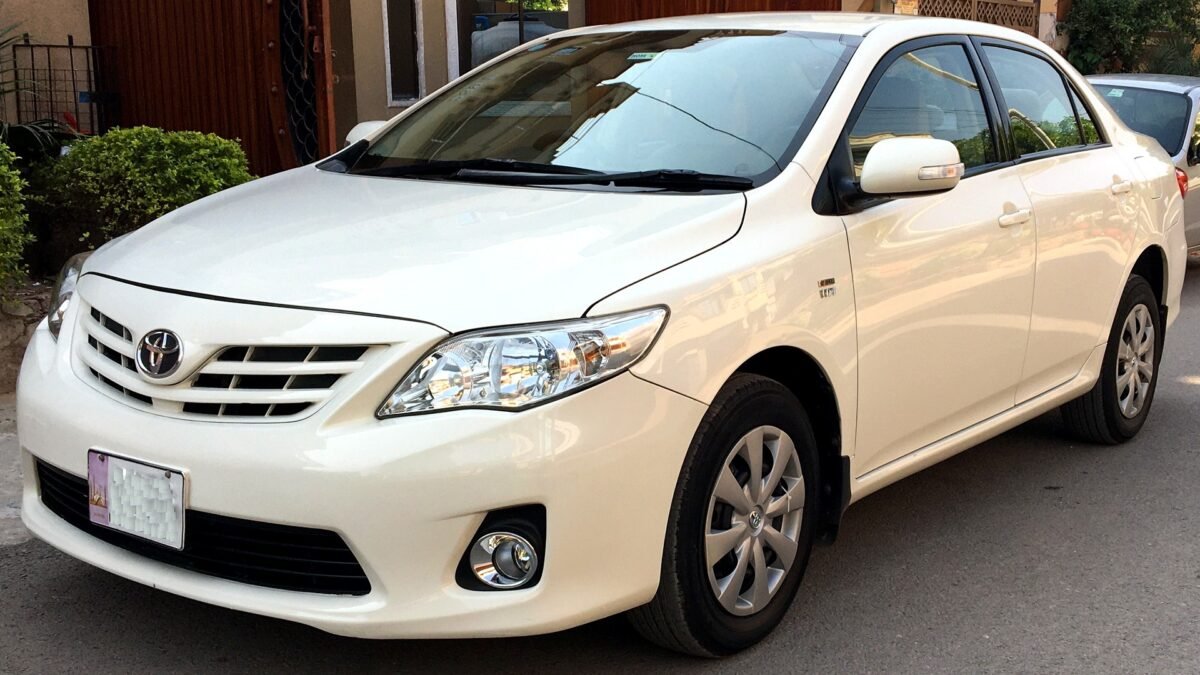
Pakistan’s federal government has announced a new auto policy that promises cheaper cars for buyers, a sharp rise in vehicle exports and a much bigger push towards electric vehicles, in the most significant overhaul of the country’s car industry in five years. The policy was unveiled on Saturday, 7 November, at a press conference in Islamabad by Haroon Akhtar, the prime minister’s adviser on industries and production, alongside Federal Information Minister Attaullah Tarar, according to Dawn.
According to Pakistan Point, which reported the announcement in full, Mr Akhtar said the new policy had been approved after extensive consultations and included measures to gradually reduce vehicle prices, increase auto-sector exports and bring locally produced vehicles closer to international standards. The government aims to raise auto-sector exports from about $200 million at present to $6 billion, while no car manufacturer will be allowed to collect an advance payment of more than 20 per cent of a vehicle’s total price from a buyer.
The policy has six stated priorities, according to Dawn: affordability, exports, local production, vehicle safety, electric-vehicle promotion and transparency. Mr Akhtar said changes to duties on fully built vehicles and assembly plants would be phased in annually, with competitive tariffs intended after five years, and that luxury vehicles would be excluded from the expected price reductions.
“The development of large-scale industries was among the government’s priorities and the auto industry played an important role in the country’s large-scale manufacturing sector,” Mr Akhtar said at the press conference, according to Pakistan Point. He said various policies had been introduced for the auto sector over the past 10 years, but exports had not increased significantly, and special efforts had been made to make the new policy export-oriented, with vehicle exports given priority.
Exports: from $200 million to $6 billion
The centrepiece of the announcement is the export target. Pakistan’s auto-sector exports currently stand at approximately $200 million, Mr Akhtar said, and the new policy sets a target of increasing them to $6 billion. The government would extend all possible cooperation to companies exporting vehicles, while manufacturers failing to meet export targets would face penalties, according to Pakistan Point.
Reporting on the draft policy in October, before Saturday’s announcement, put the figure in more detail. The Express Tribune reported that the policy set a $6.01 billion export target for vehicles and parts by the 2030-31 financial year, while PakWheels, citing the draft presentation, reported that the $6 billion figure represented cumulative exports across the five years of the policy, including about $3.29 billion from parts manufacturers and about $2.72 billion under manufacturers’ mandatory export targets. The final-year sector projection was about $2.19 billion.
Under the draft reported in October, each vehicle manufacturer would be handed a mandatory export target that rises year by year. For cars, sport utility vehicles, jeeps and double-cab vehicles, the proposed targets rise from zero in the 2026-27 financial year to 5 per cent, 10 per cent, 15 per cent and 15 per cent over the following four years, according to reporting on the draft. Eligible exporters would receive a proposed incentive worth 5 per cent of export value, plus another 10 per cent on exports above the previous year’s level, according to Focus Pakistan, which reported on the draft in October.
The penalties for missing those targets are also significant. According to reporting on the draft, assemblers that repeatedly miss their export targets could face fines, and after two missed years could even have their manufacturing certificate cancelled. Mr Akhtar’s confirmation on Saturday that manufacturers failing to meet export targets would face penalties suggests that this enforcement element has survived into the announced policy.
Cheaper cars, and a cap on advance payments
For ordinary buyers, the most immediate promise is lower prices. Mr Akhtar said the implementation of the new policy would gradually reduce vehicle prices, particularly benefiting middle- and upper-income groups, according to Pakistan Point. The policy would also focus on reducing vehicle production costs and increasing local manufacturing of auto parts.
One of the most concrete consumer protections in the policy is the cap on advance payments. Under the new policy, no vehicle manufacturer will be allowed to collect an advance payment exceeding 20 per cent of a vehicle’s total price from a buyer, Mr Akhtar said. For years, Pakistani buyers have complained about paying large sums upfront — often half the price of a car or more — and then waiting months for delivery, sometimes while the manufacturer raised the price in the meantime. The draft reported in October also proposed protection against company price increases after booking, and registration in the purchaser’s name before showroom delivery, although a government tax increase would remain an exception to that price protection, according to Hamariweb.
Mr Tarar said the government had prepared a comprehensive auto policy aimed at reducing the country’s growing import bill and facilitating ordinary citizens. He said protection-based policies had remained in place for several decades, but the local auto industry had not made significant progress in increasing value addition in vehicles, and the government wanted affordable and quality vehicles to become available to ordinary Pakistanis, according to Pakistan Point.
Smaller cars are protected from new taxes under the policy. No additional tax would be imposed on vehicles with engines below 1,000cc, Mr Akhtar said, and Mr Tarar clarified that the new policy did not affect 800cc and 1,000cc vehicles. That matters because the cheapest cars on the road in Pakistan — the Suzuki Alto and similar small hatchbacks — are the entry point to car ownership for middle-income families, and any new tax on them would have hit exactly the buyers the policy claims to help.
Estimates published in October, based on the draft policy and reported by the Express Tribune and summarised by PakWheels, suggested the first-year price reductions could be substantial if manufacturers pass the tax savings on in full. A Suzuki Alto could become cheaper by about Rs355,000, a Suzuki Cultus by about Rs500,000, a Toyota Yaris by about Rs700,000 and a Kia Sportage by about Rs1.1 million, according to those estimates. But the same reporting warned that not every model would become cheaper: the Toyota Fortuner could become more expensive, rising from about Rs20.5 million to about Rs21.7 million, because of a new levy on larger engines. PakWheels cautioned that the estimates assumed manufacturers pass on 100 per cent of the benefit, and that nothing was guaranteed. The government itself has been careful to say prices will fall “gradually”, not overnight, and Dawn reported that luxury vehicles are excluded from the expected price reductions altogether.
Forty-five new safety standards
The policy also addresses a long-standing complaint about Pakistani cars: that they cost more than comparable models abroad while offering fewer safety features. Mr Akhtar said 45 additional standards and safety features had been included to improve the international quality of vehicles manufactured in Pakistan, bringing locally produced vehicles closer to global standards, according to Pakistan Point.
He said 16 car manufacturers were currently operating in the country, adding that the new policy would seek to further strengthen the local industry. The number of manufacturers has grown sharply in recent years as new Chinese and Korean brands have entered the Pakistani market, but the industry remains dominated by three Japanese assemblers — Toyota, Honda and Suzuki — whose models account for the overwhelming majority of locally assembled cars sold in the country.
The electric-vehicle push
Electric vehicles are the second major pillar of the policy. Mr Akhtar said the government was paying special attention to promoting electric vehicles, and that following recent tensions in the region, the importance of electric vehicles had increased further because their use could reduce dependence on imported oil, according to Pakistan Point.
The financing limit for purchasing electric vehicles has been increased to Rs10 million, Mr Akhtar said, while import duties on electric-vehicle charging stations have also been reduced. Electric vehicles have also been exempted from various taxes, he said, although discussions with the International Monetary Fund were continuing regarding a 1 per cent tax on electric vehicles.
Mr Akhtar further said a target had been set to shift 30 per cent of the country’s vehicles to electric power within the next five years, adding that the target was expected to be achieved ahead of schedule, according to Pakistan Point.
The draft reported in October proposed three different sales-tax rates for three types of new-energy vehicles: 1 per cent for battery electric vehicles, 6 per cent for range-extended electric vehicles and 9 per cent for plug-in hybrids, while hybrids and petrol cars would pay 18 per cent, according to reporting on the draft. Dawn reported in October that a 10 per cent federal excise duty was proposed on electric vehicles priced above $75,000. The draft also proposed raising the State Bank of Pakistan’s financing limit for new-energy vehicles from Rs3 million to Rs10 million and stretching the repayment period from three years to five, according to reporting at the time — a change that matches the Rs10 million limit Mr Akhtar announced on Saturday.
Mr Tarar linked the electric-vehicle push directly to Pakistan’s economy. He said Pakistan’s imported oil bill was continuously increasing, and if oil imports were reduced, the savings could be spent on important sectors such as health and education. The use of electric vehicles would also help reduce environmental pollution, he said, according to Pakistan Point. He said the government wanted to provide better transport facilities to the public, including women, through electric vehicles, and described the preparation of the new auto policy as an important initiative of the prime minister.
How the policy got here
Saturday’s announcement is the culmination of a process that has been running for months. Pakistan’s previous auto policy, the Auto Industry Development and Export Policy 2021-26, expired on 30 June 2026, leaving carmakers without a replacement framework for taxes and manufacturing incentives. Prime Minister Shehbaz Sharif approved the final draft of the new policy, the Automotive Industry Development and Export Policy 2026-31, on 20 October, after it was presented to him by Law Minister Azam Nazeer Tarar and Mr Akhtar, according to reporting at the time.
But approval of the draft was not the end of the process. The Express Tribune reported in October that the draft would then go to the International Monetary Fund, Pakistan’s lender, and that after the IMF and the federal cabinet it would go to parliament as a bill, since parliament would need to pass legislation giving effect to the proposed tax changes. As of 5 November, no report of cabinet or Economic Coordination Committee approval, an IMF sign-off, a notification or a bill had emerged, according to a status review published that day.
That history matters for how Saturday’s announcement should be read. The government presented the policy as approved, and Mr Akhtar said it had been approved after extensive consultations. But he also confirmed on Saturday that discussions with the IMF were continuing over the 1 per cent tax on electric vehicles, which means at least one element of the package is still being negotiated with the lender. Until the cabinet formally approves the policy and the tax law is changed, the rates in the draft remain proposals rather than law, and cars are taxed exactly as they were before the announcement. Buyers should therefore treat the promised price reductions as a direction of travel, not an immediate change at the showroom.
The draft also proposed an Automotive Development Levy on petrol and diesel vehicles, local and imported, to fund export support and industry programmes. Cars up to 1,000cc would be exempt, vehicles of 1,001 to 2,000cc would pay 2 per cent, and larger engines up to 10 per cent, according to The News, while Dawn and the Express Tribune put the total raised at about Rs232 billion over five years. Customs duty on petrol cars and sport utility vehicles would fall to 15 per cent by 2031, with no additional or regulatory duty, according to the Express Tribune, and fully built electric four-wheelers would also be charged 15 per cent.
Industry reaction: hope from buyers, worry from parts makers
The policy has already divided the industry it is meant to reshape. On one side, buyers and new entrants welcome lower duties on imported vehicles and parts, cheaper electric vehicles and the prospect of more competition. On the other, the local parts industry has warned that the plan could weaken localisation and future investment.
The Pakistan Association of Automotive Parts and Accessories Manufacturers, known as PAAPAM, has strongly opposed the draft, warning the prime minister that it threatens 1.5 million jobs and $1.8 billion in annual import substitution, according to reporting on the industry’s reaction. The association’s argument is that cutting duties on imported vehicles and parts too quickly would undercut the local vendors who have built up around the assemblers over decades, and that the jobs and foreign-exchange savings those vendors represent should not be sacrificed for cheaper imports.
The draft’s answer to that concern is a rising local-content requirement. The presentation reported in October used minimum domestic value-addition requirements that rise over the life of the policy: for conventional petrol and diesel vehicles, from 20 per cent in the 2026-27 financial year to 25, 30, 35 and 40 per cent over the following four years, and for new-energy vehicles from 10 per cent to 10, 15, 20 and 25 per cent. Duties on localised parts would fall from 46 per cent to 30 per cent in the 2026-27 financial year and then to 15 per cent by 2030-31, according to reporting on the draft.
Whether that balance holds — cheaper cars for buyers without hollowing out the local supply chain — will be the central test of the policy in practice. The government has bet that export targets, backed by fines, will force assemblers to become competitive rather than simply import more, while parts makers have bet that the timetable is too fast for local industry to keep up. Both sides cannot be right, and the first year of export figures will show which one was closer to the mark.
Analysis: Why It Matters
A policy that touches almost every household budget
Few government announcements reach as directly into Pakistani family finances as a car policy. A car is, for most middle-income families, the largest purchase after a home, and in Pakistan it has become steadily harder to afford. Prices have risen far faster than incomes, waiting lists stretch for months, and buyers have routinely been asked to pay most of the price upfront before the car exists. A policy that promises lower prices, a 20 per cent cap on advance payments and protection against price rises after booking is therefore not an abstract industrial document. It is a promise about household budgets, and it will be judged by families at the showroom, not by officials at a press conference. The government’s decision to exempt cars below 1,000cc from any new tax shows it understands that the entry-level buyer is the most politically sensitive customer of all.
The export target is the real revolution — if it is enforced
The most ambitious element of the policy is not the price cut but the export target. Pakistan’s car industry has spent decades behind tariff walls, assembling vehicles for a protected domestic market and exporting almost nothing. Raising exports from about $200 million to $6 billion would require the industry to become something it has never been: internationally competitive. The tools the policy proposes — mandatory export targets, cash incentives worth 5 per cent of export value plus 10 per cent on growth, and fines including the possible loss of a manufacturing certificate — are unusually forceful for Pakistan, where industrial policy has often been announced loudly and enforced quietly. If the targets are enforced, assemblers will have to invest in quality, cost and scale in ways they have avoided for years. If they are quietly waived, as targets have been before, the policy will be remembered as another round of promises. The export figures for the 2026-27 financial year, when the first target takes effect, will be the first honest verdict.
Electric vehicles and the oil bill
The electric-vehicle push is best understood as energy policy as much as transport policy. Pakistan imports nearly all of its oil, and the import bill is one of the largest drains on the country’s foreign exchange. Mr Tarar’s argument — that money saved on oil imports could be spent on health and education — is the strongest case for the policy, and it explains why the government has set a target of shifting 30 per cent of vehicles to electric power within five years. But the target is enormously ambitious in a country where charging infrastructure is thin, electricity supply is unreliable in many areas, and electric vehicles remain far more expensive than petrol equivalents. Raising the financing limit to Rs10 million and cutting duties on charging stations helps at the margin, but the binding constraints are the price of the vehicles themselves and the availability of charging. The policy’s success on this front will be measured not in announcements but in charging stations built and electric cars actually sold.
The IMF question that has not gone away
The most important caveat in Saturday’s announcement is the one Mr Akhtar stated himself: discussions with the International Monetary Fund are continuing over the 1 per cent tax on electric vehicles. Pakistan is operating under an IMF programme, and the Fund has historically been sceptical of tax concessions that narrow the revenue base. The fact that the policy was announced as approved while a key tax element is still under discussion with the lender means the final shape of the package is not yet settled. The same applies to the parliamentary stage: the tax changes in the draft need legislation, and parliament has not yet passed it. None of this makes the announcement meaningless — the direction is clear and the government’s commitment is public — but it does mean that buyers, manufacturers and investors should wait for the formal notification and the tax law before treating any specific rate as final. The history of this policy, from the prime minister’s approval of the draft on 20 October to Saturday’s announcement, is a history of stages, not a single moment of decision.
A test of whether Pakistan can make things the world wants to buy
Underneath the detail, the auto policy is a test of a much larger question: whether Pakistan can build an industry that sells to the world rather than one that survives behind tariff walls. The country runs a large merchandise trade deficit — it widened by 16 per cent to $14.6 billion in the first four months of the current fiscal year, according to Independent Pakistan — and it remains dependent on foreign creditors for longer than the government has planned. Cars and parts are one of the few manufactured goods where Pakistan already has assembly capacity, a supplier base and a domestic market large enough to support scale. If the policy can turn that base into an export industry, it would be a genuine structural achievement, and the $6 billion target would matter far beyond the car market. If it cannot, the policy will join a long list of industrial plans that promised transformation and delivered protection. The difference this time is that the export targets, the fines and the five-year timetable give the public a way to measure success year by year — and the industry nowhere to hide.
What to Watch Next
- The formal notification and the tax law. Watch for the federal cabinet’s formal approval, the official notification of the policy and the bill in parliament that gives effect to the tax changes. Until those appear, the announced rates are not in force.
- The IMF’s position on the 1 per cent electric-vehicle tax. Mr Akhtar confirmed discussions with the Fund are continuing. Any change to that rate would reshape the electric-vehicle economics in the policy.
- The first price lists. Watch whether assemblers actually cut prices when the tax changes take effect, and by how much. The October estimates assumed manufacturers pass on 100 per cent of the benefit; history suggests they may not.
- Export figures for 2026-27. The first mandatory export targets take effect in the current financial year. The export numbers will show whether the enforcement mechanism has teeth.
- Electric-vehicle sales and charging stations. Watch how many electric vehicles are actually sold, how many charging stations are built, and whether the 30 per cent target over five years is credible or aspirational.
Sources
- Pakistan Point — New Auto Policy Approved in Pakistan, Car Prices for Middle and Upper Classes to Gradually Decline (7 November 2026)
- Investify, summarising Dawn — Government Announces Auto Policy with Focus on Cheaper Vehicles, EVs (7 November 2026)
- Hamariweb — Pakistan’s Revised Auto Policy Combines EV Tax Relief With Tougher Assembly Rules (21 October 2026)
- Focus Pakistan — Cheaper EVs, Costlier Engines: What Pakistan’s New Auto Policy Means (21 October 2026)
- PakWheels — Auto Policy Presentation Reportedly Revises NEV Taxes and Local Assembly Rules (October 2026)
- GetEVDost — Auto Policy 2026-31 Pakistan: Status and What Buyers Face (5 November 2026)

About the Author — Abdul Mannan
Related Articles
PTI Urges Supreme Court to Enforce Hospital Order for Imran Khan as Health Fears Mount
PTI chairman Barrister Gohar Ali Khan says reports about Imran Khan's health in Adiala Jail are 'not encouraging'…
Pakistan to End Government Cheque Payments on 15 November as PM Shehbaz Orders Roadmap for a Fully Digital Economy
Cheques under the Asaan Assignment Account stop on 15 November and Raast takes over on 16 November, as…
Pakistan’s New Constitutional Court Bars Peshawar High Court From Hearing Detention Cases in Khyber Pakhtunkhwa
In one of its first major rulings, Pakistan's new Federal Constitutional Court has stopped the Peshawar High Court…