
Pakistan to End Government Cheque Payments on 15 November as PM Shehbaz Orders Roadmap for a Fully Digital Economy

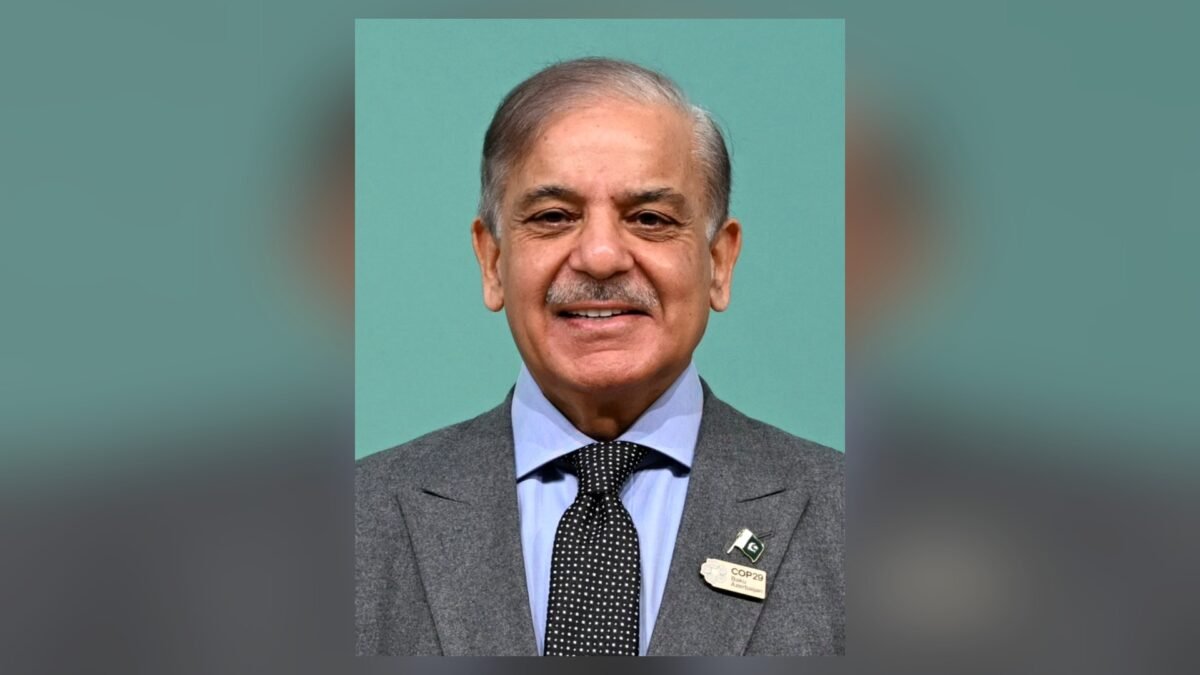
Pakistan will stop making cheque payments through its government assignment accounts on Sunday, 15 November, and move the entire channel onto Raast, the State Bank of Pakistan’s instant payment system, from Monday, 16 November, as Prime Minister Shehbaz Sharif ordered officials to produce a dated roadmap for taking every payment in the country digital.
The decision was taken at a review meeting on the cashless economy chaired by the prime minister in Islamabad on Friday, 6 November, according to Tech Prolonged, which reported the session in full. The Express Tribune also reported the directive, saying the prime minister had instructed the authorities to prepare a clear roadmap, with specific timelines and targets, for establishing a fully digital payment system across the country. Dawn also carried coverage of the meeting.
The change applies to the Asaan Assignment Account, the channel through which federal offices and departments release money. From 16 November, everything that used to move through that channel by cheque will move through Raast instead. The officers who authorise and release money from these accounts have already finished their training, according to the briefing given at the meeting, as reported by Tech Prolonged.
The prime minister also told officials to bring him a plan with firm dates for making all payments in the country digital, and set a target for most federal and provincial institutions to be fully digital by December 2026. No date has been given for the roadmap itself, Tech Prolonged reported, but the 15 and 16 November switch and the December target are the first checkable milestones.
What Changes on 15 and 16 November
The Asaan Assignment Account is not a household bank account. It is the mechanism federal ministries, divisions and departments use to draw and disburse public money, and it is where the paper cheque has survived longest inside the state. Suppliers, contractors and government agencies that are paid through these accounts will feel the change first; an ordinary citizen with a personal bank account will not see their own cheques affected.
From Sunday, 15 November, no cheque will be issued under these accounts. From Monday, 16 November, payments under the accounts will go through Raast. That matters because Raast settles instantly, around the clock, and leaves a digital trail for every rupee. A cheque, by contrast, has to be written, signed, physically carried, deposited, cleared and reconciled, a chain in which money can sit idle for days and paperwork can go missing.
The government has been preparing the ground for some time. The officers who authorise and release money from the assignment accounts have completed their training, the meeting was told. That detail is easy to overlook, but it is the difference between a deadline and a slogan: the people who actually operate the system have already been taught how to use its replacement.
For ordinary bill payers, the meeting produced a different instruction. The prime minister wants a media campaign pointing customers to the QR codes already printed on electricity and gas bills, and wants Raast QR payments at shops to remain government-backed. The QR code on a utility bill is the point where the state’s digital ambitions meet the kitchen table: a household that scans and pays has made a digital payment without ever visiting a bank branch.
Officials also told the meeting that a method is being developed for places without internet access, although no design for it has been given yet. User complaints are to be settled straight away, and internet coverage is to be addressed alongside the rollout, according to Tech Prolonged’s account of the meeting. Radio Pakistan reported that every ministry was told to carry out the plan in full.
The Roadmap Order
The most consequential part of the meeting was not the 15 November deadline but the instruction that came with it. The prime minister asked officials to bring him a dated plan, with timelines and targets, for making every payment in the country digital. The Express Tribune’s report of the directive used almost identical language, describing a roadmap with specific timelines and targets for a fully digital payment system.
That is a deliberately harder assignment than announcing a single date. A roadmap with timelines forces every department to say when it will stop accepting cash, when it will stop issuing cheques, and what it will do about the people and places that cannot yet pay digitally. It also creates a document against which the government can later be judged, which is presumably the point.
The order fits a pattern. The prime minister set up a high-level committee for the cashless economy in June 2025, and in July this year he ordered that money sent home from abroad be fully digitised. In March, he told government institutions to put QR codes on all bills. Each step has been incremental, and each has left the next one easier to take. The November meeting is the first to attach a hard cut-off date to a specific payment channel and to demand a dated plan for the whole economy.
The drive is presented by the government as a transparency measure. Tech Prolonged reported that the push is meant to bring transparency to the economy, alongside tax reforms and a more efficient Federal Board of Revenue. The logic is straightforward: cash leaves no record, and a payment system that leaves no record is a payment system in which tax can be avoided, bribes can be paid and public money can disappear. Digital payments do not end corruption by themselves, but they make it harder to hide.
How Pakistan Got Here
Raast, the system that will absorb the assignment-account payments, is the State Bank of Pakistan’s instant payment system, launched in 2021. It was built to let money move between accounts in seconds, free of charge for individuals, and it has since been extended to bulk payments, merchant payments and QR codes. The government has made it the backbone of its own disbursements: between July 2025 and January 2026, federal and provincial governments sent Rs 1.6 trillion in direct payments through Raast, according to figures given to the prime minister at a meeting in March and reported by Tech Prolonged.
At that same March meeting, the prime minister was told that more than 127 million people in Pakistan were using digital banking. The figure counts users of digital banking channels rather than Raast alone, but it shows how far the habit has spread. A decade ago, digital payments in Pakistan were a niche product for the urban salaried class. Today they are the default for a large share of the population, and the state’s own payment flows are catching up with the public’s.
The Benazir Income Support Programme, the country’s largest cash-transfer scheme, has already moved across. Money under the programme now goes only to digital wallets, according to what the 6 November meeting was told. That is a significant marker, because the programme’s beneficiaries are among the poorest households in the country, and if they can be paid digitally, the argument that digital payments are only for the rich loses much of its force.
The push sits inside a larger economic plan. Netasgard News, reporting the 15 November deadline, noted that the cashless drive aligns with URAAN Pakistan, the five-year economic transformation plan launched by the prime minister in December 2024. The plan covers infrastructure, exports and economic modernisation, and the digitisation of payments is one of its working parts rather than a standalone initiative.
There is also an international dimension. In July this year, the prime minister ordered that remittances, the money sent home by Pakistanis working abroad, be fully digitised. Remittances are one of Pakistan’s largest sources of foreign exchange, and moving them through formal digital channels rather than informal ones brings the money into the documented economy and gives the State Bank a clearer picture of inflows.
A Wider Currency Shake-Up
The cashless announcement came in the same week as a separate decision about physical money. On Wednesday evening, 4 November, the federal cabinet approved the introduction of a Rs10 coin to replace the existing Rs10 banknote, and approved the designs of a new series of currency notes, according to a statement from the Prime Minister’s Office reported by Profit and the Express Tribune and summarised by Khabarwire.
No date has been set for the Rs10 banknote to stop being legal tender, and no exchange deadline has been announced. The new notes are to carry stronger anti-counterfeiting security features and to be printed on modern materials meant to lengthen their working life, Geo News reported. Holders of the Rs10 note therefore face no change for now, but the direction is unmistakable: the state is redesigning its physical currency at the same time as it is trying to reduce the public’s dependence on it.
The two moves belong to the same story. A government that is replacing its smallest banknote with a coin, redesigning its notes and setting a date to stop issuing cheques is a government trying to modernise the entire payment stack at once, from the note in a shopkeeper’s till to the assignment account in a ministry. Whether that is ambition or overreach will depend on execution, and the December 2026 target for most government institutions to go fully digital is the first real test.
Analysis: Why It Matters
The cheque is the last paper choke point
Every government that talks about a cashless economy eventually reaches the same obstacle: its own paperwork. Citizens can be nudged toward apps and QR codes, but as long as the state itself pays by cheque, a whole ecosystem of paper survives around it. Suppliers keep cheque books, accountants keep reconciliation ledgers, and every payment carries a delay built into the clearing cycle. By cutting off cheques in the assignment accounts, the government is removing the last paper choke point inside its own machinery. That is a smaller change than ending cash in the bazaar, but it is the change the government can actually enforce, because it controls both ends of the transaction. If it works, it proves the machinery works, and the case for extending it becomes much easier to make.
A deadline with teeth, or another announcement?
Pakistan has no shortage of digital-economy announcements. Committees have been formed, pilots have been launched and targets have been set before, and the gap between announcement and delivery has often been wide. What distinguishes this one is the specificity of the date and the narrowness of the channel. A deadline of 15 November for a single, well-defined payment mechanism, with trained staff already in place, is a testable promise. Either cheques stop on that date or they do not, and anyone who deals with a federal department will know within days. The broader roadmap, by contrast, has no date at all, and that is where scepticism is justified. The government should be judged on the 15 November switch first; the roadmap will earn its credibility only when it appears with real dates attached.
The inclusion test: connectivity and trust
The hardest part of a cashless transition is not the technology but the people it leaves behind. Officials told the meeting they are developing a method for places without internet, which is an honest admission that the infrastructure is not yet universal. Rural Pakistan, where connectivity is patchy and digital literacy is low, is where a badly managed transition does real harm, and it is also where the BISP’s move to digital wallets is the most useful precedent. If the poorest households can be paid digitally, the system can reach almost anyone, but only if the last mile is built first. The promise to settle user complaints straight away matters here too: a payment system that fails silently, or that leaves a user stranded with a failed transaction and no one to call, will lose the public’s trust faster than any advertising campaign can rebuild it.
Transparency is the real prize
The government frames the cashless drive as a transparency measure, and that framing is correct, but it understates the stakes. A documented payment trail does more than reduce petty corruption. It widens the tax base, because income that passes through a bank account can be assessed; it improves the quality of economic data, because the State Bank can see money moving in real time; and it reduces the space in which informal, undocumented transactions can hide. The Rs1.6 trillion that moved through Raast in seven months is not just a statistic about a payment system. It is Rs1.6 trillion of government spending that now exists in a form the state can audit. The question is whether the same discipline will be applied to the parts of the economy that benefit from opacity, and whether the political will behind the roadmap survives contact with the interests that profit from cash.
The economy-wide signal
Finally, the announcement should be read alongside the week’s other economic decisions, not in isolation. In the same days, the prime minister approved the restructuring of the Trade Development Authority of Pakistan to boost exports, chaired a cabinet meeting that declared an end to the long-standing control of influential groups over the liquefied petroleum gas trade, and was reported to be preparing to announce a new national auto policy. Taken together, these are the moves of a government trying to present itself as a reforming administration in the second half of its term, using administrative decisions that do not need parliament’s approval. The cashless roadmap is the most technically demanding of them, and it is the one whose success or failure will be easiest to measure. That makes it the most interesting to watch, and the most risky to promise.
What to Watch Next
- 15 and 16 November: whether cheque issuance under the Asaan Assignment Accounts actually stops on the Sunday, and whether Raast absorbs the volume from the Monday without delays or failed transactions.
- The roadmap itself: when it is presented, whether it carries firm dates for each department and each payment type, and whether it covers the private sector as well as government payments.
- The December 2026 target: whether most federal and provincial institutions are genuinely fully digital by then, and how the government defines and measures that claim.
- The offline solution: what method officials propose for areas without internet access, and whether it is ready before the next phase of the rollout rather than after it.
- Public uptake: whether the media campaign around QR codes on utility bills and Raast QR payments at shops translates into measurable growth in digital transactions, and how quickly user complaints are resolved.
Sources
- Tech Prolonged — PM wants 100% digital payments plan; government cheques end 15 November
- The Express Tribune — PM seeks roadmap for cashless economy (via mirror)
- Netasgard News — Pakistan accelerates cashless economy with digitization deadline
- Dunya News — PM Shehbaz Sharif Chairs High-Level Meeting on Cashless Economy in Pakistan
- GTV News — Pakistan Moving Towards A Cashless Economy? | PM Takes Major Decision
- Khabarwire — Rs10 banknote to be replaced by coin, cabinet approves

About the Author — Abdul Mannan
Related Articles
Pakistan’s New Constitutional Court Bars Peshawar High Court From Hearing Detention Cases in Khyber Pakhtunkhwa
In one of its first major rulings, Pakistan's new Federal Constitutional Court has stopped the Peshawar High Court…
UN Security Council Adopts Pakistan-Led Statement Urging Diplomacy to Continue Even After Wars Begin
The United Nations Security Council has adopted by consensus a Pakistan-initiated presidential statement urging warring parties to keep…
Pakistan’s Opposition Agrees to Hold All Parties Conference Within 10 Days as Fazl Hosts Unity Talks on KP Emergency Rule
Pakistan's opposition parties have agreed to hold an all parties conference within 10 days, deciding at a meeting…