
Pakistan’s New Constitutional Court Bars Peshawar High Court From Hearing Detention Cases in Khyber Pakhtunkhwa

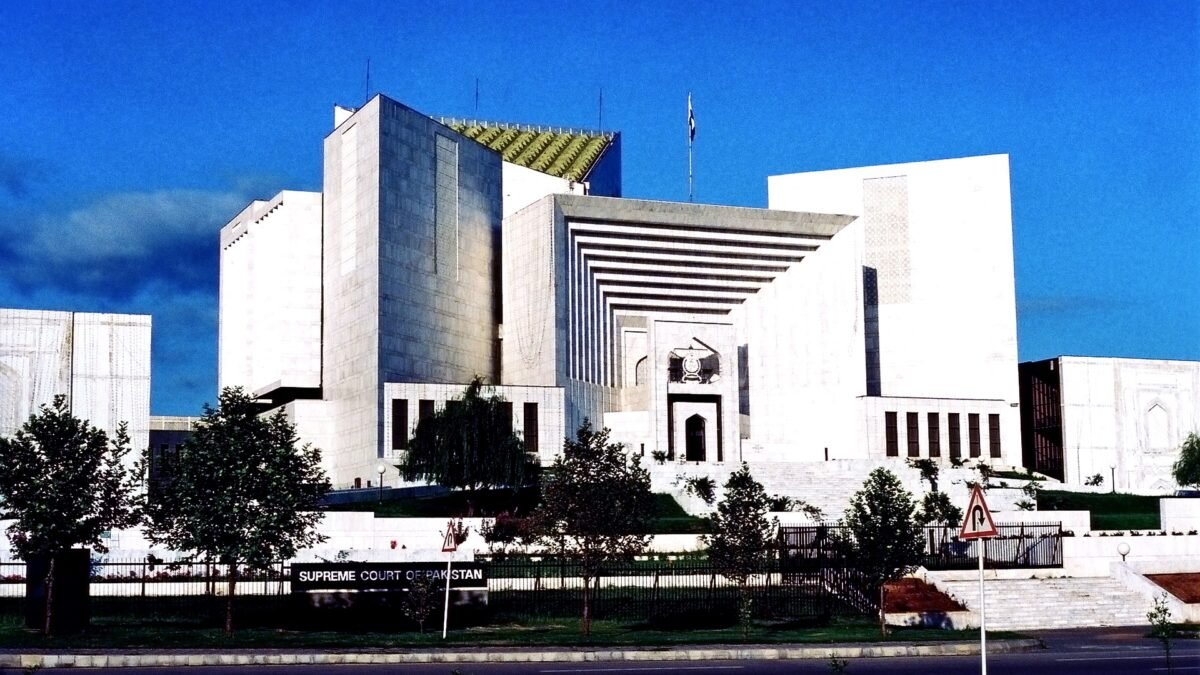
Pakistan’s new Federal Constitutional Court on Thursday barred the Peshawar High Court from hearing challenges to preventive detentions in Khyber Pakhtunkhwa, suspending the high court’s orders and freezing dozens of cases in one of the young court’s first major rulings since it began work.
A two-member bench headed by Chief Justice Aminuddin Khan restrained the Peshawar High Court from hearing cases concerning arrests made under Section 3 of the Maintenance of Public Order Ordinance, known as 3-MPO, in the north-western province, according to multiple Pakistani news outlets reporting on the hearing. The court suspended the orders passed by different benches of the high court, issued notices to the parties, and adjourned the matter, with the case to be re-fixed for hearing.
The ruling is the most consequential intervention yet by a court created only weeks ago under the 27th Amendment to Pakistan’s Constitution, and it lands at the centre of the country’s sharpest constitutional confrontation in years: the federal government’s suspension of an elected provincial government, the detention of hundreds of opposition supporters, and a fight over which court gets to decide whether those detentions are lawful.
The high court had earlier issued orders restraining the authorities from making arrests under 3-MPO and had ordered the release of 28 workers of the Pakistan Tehreek-e-Insaf (PTI), the party of jailed former prime minister Imran Khan, who had been detained in various districts of Khyber Pakhtunkhwa, according to Probes Pakistan and the Islamabad Post. The provincial government, installed after the imposition of governor’s rule, challenged several of those orders before the Federal Constitutional Court, arguing that the high court had no jurisdiction to hear them while the army was deployed in the province.
During Thursday’s hearing, the Khyber Pakhtunkhwa advocate general argued that the high court could not interfere in areas where the military was conducting operations under Article 245 of the Constitution, and could not exercise its jurisdiction under Article 199 in such matters, according to the reports. Justice Aamer Farooq observed that the high court received several cases under Article 199 on a daily basis. “Would the high court not hear cases that come before it on a daily basis?” he asked, according to Probes Pakistan and the Islamabad Post.
Former additional advocate general Shah Faisal Ilyas appeared on behalf of the parties and asked the court to hear the parties before issuing an interim injunction, arguing that the provincial government’s three objections could not be sustained. Chief Justice Khan responded that the parties could file their objections after examining the court’s order, according to the Islamabad Post.
What the court’s written order says
The court released a four-page written order after the hearing, the text of which was reported in full by Voicepk, and it sets out the constitutional reasoning behind the restraint order in unusually direct terms.
According to the order, the detention orders issued under Section 3 of the MPO had been challenged before the Peshawar High Court, which, relying on its earlier judgment in the case of Aftab Alam and another versus the Secretary of the Home and Tribal Affairs Department, Government of Khyber Pakhtunkhwa (PLD 2024 Peshawar 112), had released the detainees at the initial stage of the proceedings, known as the limine stage.
The advocate general submitted that the high court, while hearing petitions filed after the deployment of the army under Article 245 on 12 October 2026, had disregarded the express mandate of Article 245. He contended that under clause (3) of Article 245, a high court cannot exercise jurisdiction under Article 199 in relation to any area where the armed forces are acting in aid of civil power, and that the high court had effectively rendered the MPO, a law that provides for preventive detention to maintain public order, ineffective. He further argued that the high court had granted final relief at an interim stage, which he said was not permissible.
The Constitutional Court’s order recorded that “the points raised require serious consideration” and that the previous judgment of the Peshawar High Court in the Aftab Alam case, on which reliance was placed to issue the impugned orders, “requires careful examination”. It added that the question of whether the high court’s approach to Article 245 was constitutionally correct “requires careful scrutiny and an authoritative determination by this Court”.
The order then quoted the relevant constitutional provisions. Under clause (3) of Article 245, it said, no high court shall exercise any jurisdiction under Article 199 in relation to any area in which the armed forces of Pakistan are for the time being acting in aid of civil power, provided that the clause does not affect the jurisdiction of a high court in respect of any proceeding pending immediately before the day on which the armed forces began to act in aid of civil power, and that any proceeding relating to such an area, instituted on or after the day the clause came into force and pending in any high court, shall remain suspended for the period during which the armed forces are so acting.
In an important qualification, the order said: “Prima facie, clause (3) of Article 245 is not an ouster clause of the nature that appears elsewhere in the Constitution,” citing Article 236(2) as an example of a provision that does oust court jurisdiction. “Under clause (3) of Article 245, a specific situation is referred to which is emergency in nature but temporary. Therefore, the restriction on the exercise of jurisdiction remains operative only for as long as the Armed Forces are acting in aid of civil power.”
On that basis, the court directed that, since the armed forces had been called upon to act in aid of civil power in the entire province of Khyber Pakhtunkhwa under the order issued under Article 245 on 11 October 2026 and the Ministry of Defence’s office memorandum of 12 October 2026, proceedings instituted before the Peshawar High Court under Article 199 on or after 12 October 2026 “shall remain suspended by virtue of clause (4) of Article 245”.
But the order also built in a review mechanism. The advocate general was directed to submit a report to the court within seven days on the areas of the province where the armed forces are no longer required to act in aid of civil power, and the court said it would consider modifying the order under clause (4) of Article 245 after examining that report. Notices were issued to the respondents, and notice was also issued to the Attorney General for Pakistan under Order XXVIIA of the Code of Civil Procedure, 1908, because substantial questions regarding the interpretation of the Constitution were involved.
The case was titled Additional Chief Secretary, Home and Tribal Affairs Department, Government of Khyber Pakhtunkhwa, Peshawar, and others versus Waheed and others, according to Voicepk. Pakistan Point reported that the court was to hear 48 miscellaneous petitions concerning the arrests of PTI workers under 3-MPO, and Lead Pakistan reported on 3 November that the provincial government had challenged the high court’s orders nullifying the detentions and directing the authorities not to make the arrests.
A second front: the Supreme Court questions the new court’s reach
The Constitutional Court’s intervention came a day after Pakistan’s Supreme Court raised its own questions about the new court’s jurisdiction, in a hearing that exposed how unsettled the division of labour between the two apex courts remains.
On Wednesday, a three-member bench of the Supreme Court headed by Justice Shahid Waheed and comprising Justice Naeem Akhtar Afghan and Justice Ishtiaq Ibrahim sought legal assistance from the Attorney General for Pakistan on the Federal Constitutional Court’s jurisdiction to summon records and fix for hearing the case of Imran Khan’s transfer to hospital, according to Pak Souch.
Attorney General Mansoor Usman Awan appeared before the bench and read out the Constitutional Court’s order, under which the court had summoned records of proceedings concerning Khan’s transfer to Shifa International Hospital. The Constitutional Court had sought the records while hearing appeals filed by three inmates of Adiala Jail seeking treatment at a private hospital and facilities similar to those granted to the former prime minister, and had also sought records of similar matters from the high courts.
Justice Waheed pointed to the wording of the Constitutional Court’s order, which stated that the records would be summoned and the cases fixed for hearing. “The word ‘fix cases’ in the Federal Constitutional Court’s order is bothering us,” he observed, according to Pak Souch, wondering how the Constitutional Court could hear the cases and seeking the attorney general’s assistance on the matter.
Awan told the court that the Constitution empowered the Constitutional Court to summon records and cases involving constitutional questions, and that the jurisdictions of the Constitutional Court and the Supreme Court were clearly defined in the Constitution. He said he would assist the bench in determining where the constitutional court could summon records from, and requested three weeks to do so. The Supreme Court accepted the request and adjourned the hearing for three weeks.
Justice Waheed said the court was seeking to understand the intention behind the Constitutional Court’s order and stressed that the questions being raised should not be given a negative interpretation. “We believe in mutual respect between the judiciary,” he observed, according to Pak Souch. He noted that the Constitutional Court’s order stated that it would determine which courts could hear cases involving fundamental rights. “Fundamental rights are involved in every case,” he remarked, citing the right to a fair trial in criminal proceedings as an example. He added that the Constitutional Court could interpret the Constitution, while matters other than constitutional interpretation remained with the Supreme Court.
The bench then questioned whether it should dismiss the petitions before it or refrain from hearing them in view of the Constitutional Court’s order. Awan said it needed to be determined from where the Constitutional Court could summon records and what the consequences would be of its direction to fix cases for hearing.
The hearing also returned to the question of whether the Supreme Court’s own order of 18 August on Khan’s medical treatment had been complied with. On that date, the court had directed the Adiala Jail authorities to transfer Khan, 73, to Shifa International Hospital for medical assessment and treatment, ordered the formation of a medical board of specialists, and permitted his sister Dr Uzma Khan and his former health adviser Dr Faisal Sultan to remain associated with his medical examination and treatment, according to Pak Souch.
The government instead took the former prime minister to the Pakistan Institute of Medical Sciences (PIMS) on 21 August, citing security concerns. Doctors there declared him medically fit and he was returned to Adiala Jail. The development prompted Dr Uzma Khan to file a contempt petition alleging non-compliance with the Supreme Court’s order, and the government has challenged the 18 August directive, arguing in a review petition that treatment could not be provided at a private hospital.
During Wednesday’s hearing, Justice Waheed raised questions over compliance with the remaining directions in the 18 August order, noted that the court had directed government officials to appear before it and asked why none of them had attended the hearing, and said there appeared to be “some misunderstanding” about whether the order was being implemented. The attorney general said the officials should have appeared and asked that they be given another opportunity. Justice Waheed raised the possibility of issuing warrants for the Adiala Jail superintendent, while the attorney general said the officials may have believed the case would not be taken up that day.
Khan’s lawyer Uzair Bhandari told the court that only one of his sisters had been able to meet him. PTI secretary general Salman Akram Raja argued that no constitutional interpretation was required in Khan’s appeal or the contempt petitions, and said the party founder had not been transferred to Shifa hospital despite the Supreme Court’s order. Justice Waheed observed that the 18 August order remained in force, and the court said it would consider the matter after receiving the attorney general’s assistance at the next hearing.
How the province reached this point
The court fight is the legal shadow of a political crisis that began on 11 October, when President Asif Ali Zardari signed a proclamation imposing emergency rule in Khyber Pakhtunkhwa under Articles 232 and 234 of the Constitution, on the advice of Prime Minister Shehbaz Sharif, and the federal government assumed control of the province through the governor.
The proclamation suspended the elected provincial government led by Chief Minister Sohail Afridi of the PTI, the party of Imran Khan, which has governed the province since 2013 and holds it as its last elected stronghold. The same day, the federal government authorised the deployment of the army in the province under Article 245 to act in aid of civil power, the Interior Ministry requisitioned troops through an office memorandum dated 12 October, and the Defence Ministry bound the troops to act in aid of civil power throughout the province, according to the Constitutional Court’s written order.
Hours later, Afridi and several cabinet members were taken into preventive custody. Minister of State for Interior Talal Chaudhry confirmed to Reuters that Afridi and some cabinet members had been detained, and a police official told Dawn that eight people were detained, including Afridi, the PTI’s provincial president Junaid Akbar and the provincial assembly speaker Babar Saleem Swati, according to Zark News. The government said those with pending cases would be charged and others released.
The crackdown widened quickly. Two police officials told AFP that 278 PTI members had been detained across the province since the emergency declaration, in a wave of arrests also reported by Reuters, the Associated Press and Dawn, according to Zark News. Khan’s three sisters and hundreds of supporters, including party leaders, had already been arrested ahead of a planned march on Islamabad to demand his release and medical treatment, according to Reuters.
The government said the emergency was a response to the provincial government’s “deliberate disengagement from the fight against terrorism”, in the words of the prime minister’s office, and to a sharp rise in militant violence in the province. The PTI rejected that account. Its chairman, Barrister Gohar Ali Khan, called the move a grave political mistake, and a party spokesman called it a coup disguised as an emergency, according to Zark News.
On 12 October, the PTI filed an 86-page constitutional petition in the Peshawar High Court challenging the emergency and governor’s rule, asking the court to declare the measures unconstitutional and to reinstate the provincial government, and seeking the release of the detained chief minister and his cabinet. Two days later, on 14 October, the National Assembly and the Senate both approved the emergency proclamation, as the Constitution requires within ten days.
It was against that backdrop that the high court began issuing orders in individual detention cases, restraining arrests under 3-MPO and ordering releases, and that the provincial government under governor’s rule turned to the new Constitutional Court to stop it.
The Constitutional Court itself is barely weeks old. Created under the 27th Amendment, it began hearing cases under Chief Justice Aminuddin Khan, sitting in Courtroom No. 2 of the Islamabad High Court, according to the Independent News Pakistan. Its first decision, reported by the same outlet, was a stay order on an appeal by the Khyber Pakhtunkhwa government in an employer-employee matter, in which a bench headed by Justice Hasan Rizvi suspended a Peshawar High Court ruling. Thursday’s order is the court’s first ruling on a question of national political consequence, and it arrived in the court’s first week of substantive work.
The politics around the courtroom
The legal battle is unfolding against a hardening political standoff. Prime Minister Shehbaz Sharif has accused the PTI of wasting 13 years in power in Khyber Pakhtunkhwa, and told his own party’s lawmakers from the province to shelve long-term projects in favour of quick relief for voters, according to Independent Pakistan.
Pakistan’s opposition parties, meanwhile, agreed on 4 November to strengthen their alliance, coordinate in parliament and hold an all-parties conference within ten days, at a meeting hosted by Jamiat Ulema-i-Islam-Fazl chief Maulana Fazlur Rehman that also raised fresh concern about the health of the jailed former prime minister, according to Dawn. The conference is expected to take up the emergency in Khyber Pakhtunkhwa, the state of parliament and the economy, and Khan’s detention.
Khan, 73, has been in Adiala Jail in Rawalpindi since his arrest in August 2023, following convictions he and his party describe as politically motivated. He and his wife Bushra Bibi were sentenced late last year to 17 years in prison, according to Pak Souch. The Islamabad High Court has fixed 10 November for hearing the appeals of Khan and his wife in the £190 million case, according to Dawn.
The emergency in Khyber Pakhtunkhwa is initially in place for six months. What happens when that period approaches its end, and whether the federal government seeks an extension, will be one of the defining political questions of the coming months.
Analysis: Why It Matters
A new court announces itself
The most striking feature of Thursday’s order is not only what it decided but who decided it. The Federal Constitutional Court has existed for a matter of weeks, created by an amendment that restructured Pakistan’s superior judiciary and transferred constitutional jurisdiction to a new institution. In its first week of substantive work it has now ruled on the most sensitive live question in Pakistani politics: whether a high court may free people detained under an emergency the federal government imposed on an opposition-run province. Whatever view one takes of the merits, the court has chosen to assert its authority early and on the biggest stage available to it, and the manner in which it exercises that authority will shape public confidence in the new institution for years. A court that is seen to decide cases on their legal merits will earn legitimacy quickly; a court that is seen to decide them in the government’s favour will find that legitimacy much harder to build.
Article 245 against Article 199: the fault line
At the heart of the order lies a genuine constitutional tension. Article 199 gives high courts the power to issue writs, including habeas corpus, and is the ordinary route by which a detained person challenges the lawfulness of their detention. Article 245 allows the armed forces to be called in aid of civil power, and its third and fourth clauses suspend the exercise of Article 199 jurisdiction in areas where the forces are so acting. The question is how far that suspension reaches. The Constitutional Court’s own order is more careful than a blunt ruling for the government would have been: it expressly says clause (3) is not an ouster clause of the kind found elsewhere in the Constitution, and that the restriction is temporary, lasting only while the armed forces act in aid of civil power. That reasoning leaves the door open to a different outcome once the deployment ends, and it invites the advocate general’s seven-day report on where the army is still needed. The court has, in effect, accepted the government’s core argument for now while reserving the right to revisit it, and the report it has demanded will be the next test of whether that reservation has real content.
Two apex courts, one open question
The Supreme Court’s hearing on Wednesday exposed a second, deeper uncertainty: the boundary between the new Constitutional Court and the Supreme Court itself. When Justice Shahid Waheed said the words “fix cases” in the Constitutional Court’s order were “bothering us”, he was voicing a concern that goes beyond one hospital-transfer case. If the Constitutional Court can summon records and fix cases that the Supreme Court is already hearing, the two courts could find themselves pulling the same litigation in different directions, with litigants caught between them. The attorney general’s request for three weeks to assist the Supreme Court suggests the answer is not obvious even to the government’s own lawyers. The phrase “mutual respect between the judiciary”, used by Justice Waheed, is the right aspiration, but respect between institutions is built through clear rules, not goodwill alone, and those rules are still being written. The coming weeks will show whether the two courts can settle their jurisdictions by agreement or whether a sharper confrontation is on the way.
What the freeze means for the people detained
Behind the constitutional argument are real people. The high court’s orders that have now been suspended included the release of 28 PTI workers detained in various districts, and the cases of hundreds more detained since the emergency was imposed are now frozen in the high court. For those detainees and their families, Thursday’s order means the most accessible forum for challenging a detention is closed, at least for now, and the only route is a constitutional court in Islamabad whose procedures and timelines are still new. Preventive detention under the Maintenance of Public Order Ordinance is an old instrument, dating from 1960, and it has long been criticised for allowing people to be held without trial on the say-so of an executive officer. The Constitutional Court’s insistence that the restriction is temporary is some comfort, but temporary in constitutional law can still mean months in a person’s life, and the seven-day report will be watched closely by those waiting to know whether the army’s presence, and with it the suspension of their cases, is genuinely time-limited.
The emergency’s political clock
Finally, the ruling cannot be separated from the politics that produced the emergency. The federal government imposed it on a province run by the party of its most popular rival, detained the province’s elected chief minister, and is now defending the detentions in a court it created weeks earlier. The opposition, which has agreed to hold an all-parties conference within ten days, will present Thursday’s order as evidence that the emergency is being shielded from judicial scrutiny. The government will present it as a technical ruling on jurisdiction, not on the merits of the emergency. Both readings will be argued in the coming days, and the truth will emerge from what the Constitutional Court does next: whether it modifies its order when the advocate general’s report arrives, whether it hears the detained workers’ cases itself, and whether the Supreme Court’s parallel inquiry produces a different answer. For now, the emergency stands, the detentions stand, and the courts are deciding, case by case, who gets to judge them.
What to Watch Next
- The advocate general’s seven-day report. The Constitutional Court has asked for a report on the areas of Khyber Pakhtunkhwa where the armed forces are no longer required to act in aid of civil power, and said it will consider modifying its order after examining it. The contents of that report, and the court’s response, will show whether the suspension of high court proceedings is genuinely temporary.
- The Supreme Court’s hearing in three weeks. The attorney general is to assist the Supreme Court on the Constitutional Court’s jurisdiction to summon records and fix cases. The outcome could settle, or sharpen, the boundary between Pakistan’s two apex courts.
- The Islamabad High Court hearing on 10 November. The court is due to hear the appeals of Imran Khan and Bushra Bibi in the £190 million case, a separate but politically connected proceeding that will keep the former prime minister’s legal position in the headlines.
- The opposition’s all-parties conference. Opposition parties have agreed to hold the conference within ten days, with the Khyber Pakhtunkhwa emergency, the state of parliament and Khan’s detention on the agenda. Its conclusions will signal whether the opposition mounts a coordinated legal and political challenge to the emergency.
- Whether the Constitutional Court hears the detention cases itself. Having stopped the high court from hearing them, the Constitutional Court may now have to decide the underlying question: whether the detentions under 3-MPO are lawful. If it declines, the detainees will have no forum at all until the army deployment ends.
Sources
- Voicepk — FCC stays all proceedings under Article 199 filed in PHC from Oct 12 (full text of the court’s four-page written order)
- Probes Pakistan — FCC bars PHC from hearing cases over 3-MPO arrests in KP
- Islamabad Post — FCC bars PHC from hearing cases over 3-MPO arrests in KP
- Pak Souch — SC seeks AGP’s legal assistance on FCC’s jurisdiction to hear Imran’s hospital transfer case
- Lead Pakistan — PHC decision nullifying detention of PTI leaders, workers challenged in FCC
- Zark News — Pakistan’s emergency rule in Khyber Pakhtunkhwa, explained

About the Author — Abdul Mannan
Related Articles
UN Security Council Adopts Pakistan-Led Statement Urging Diplomacy to Continue Even After Wars Begin
The United Nations Security Council has adopted by consensus a Pakistan-initiated presidential statement urging warring parties to keep…
Pakistan’s Opposition Agrees to Hold All Parties Conference Within 10 Days as Fazl Hosts Unity Talks on KP Emergency Rule
Pakistan's opposition parties have agreed to hold an all parties conference within 10 days, deciding at a meeting…

Pakistan Test-Fires Fa’az, Its First Homegrown Air-to-Air Missile, From a JF-17 Thunder
Pakistan has flight-tested Fa'az, its first indigenously developed air-to-air missile, from a JF-17 Thunder — a milestone the…