
Democrats Vow Probes of Musk and Miller as Jeffries Backs Move to Impeach Hegseth After Midterm Rout

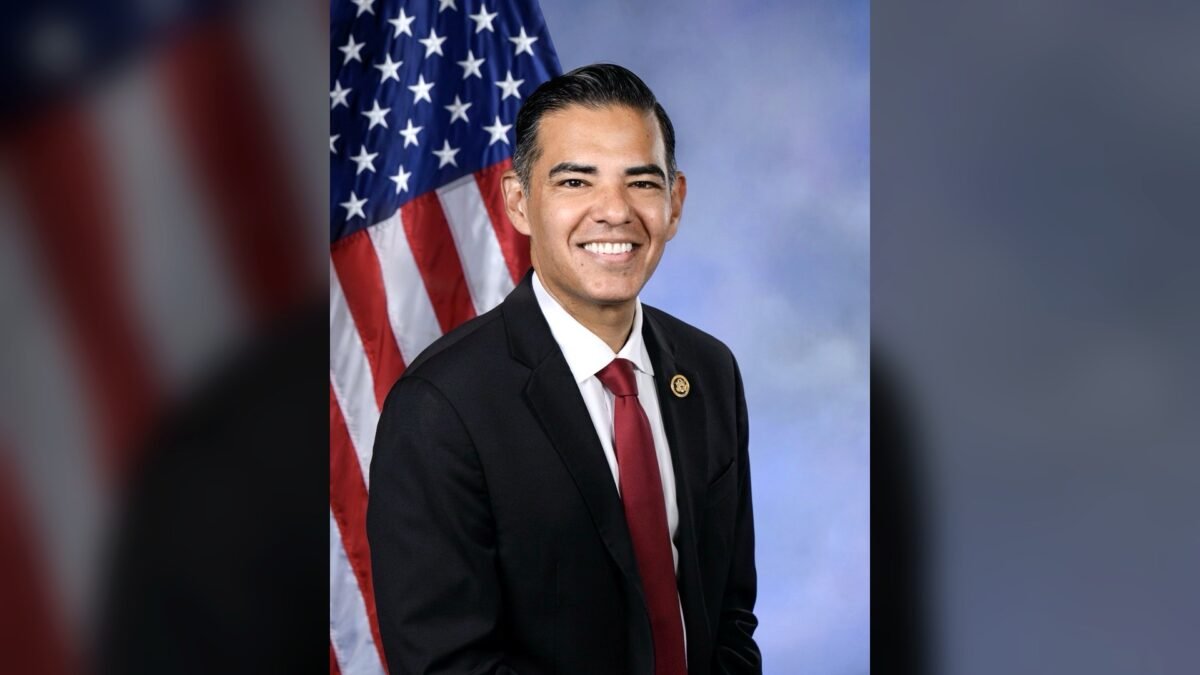
Elon Musk and Stephen Miller will likely face congressional investigations when Democrats take control of Congress in January, a senior Democrat said on Sunday, as the party that swept last week’s midterm elections began to spell out how it intends to use its new majorities. In the same round of Sunday interviews, the incoming Speaker of the House said Democrats would back a move to impeach Defence Secretary Pete Hegseth, setting up a confrontation with an administration that has already promised to fight back in court and in Congress.
Representative Robert Garcia of California, who is in line to chair the powerful House Oversight Committee next year, told CNN’s “State of the Union” that investigations would focus on Musk’s role in the Department of Government Efficiency’s firing of federal workers last year, and on Miller’s role in President Donald Trump’s hardline immigration crackdown, according to Reuters.
“I think there’s a lot of interest, not just from our committee, but from committees across the Congress to speak to Mr. Musk,” Garcia said, according to Reuters. Miller, he said, “is at the center of the major policy decisions that are happening in the administration, and so it does deserve oversight and investigation.”
Garcia called Miller the architect of a “horrific, unjust” immigration policy. Miller was named by Trump on Friday as his new White House chief of staff, replacing Susie Wiles, and takes up the post on Monday. Garcia’s warning was the most specific account yet of the oversight agenda Democrats plan to pursue when the new Congress is seated on 3 January 2027, after their sweeping victories in the midterm elections on Tuesday 3 November.
Separately, Hakeem Jeffries, who will become Speaker of the US House in January, told ABC’s “This Week” on Sunday that Democrats would support a measure to impeach Hegseth. Representative Thomas Massie, a Kentucky Republican, has said he will reintroduce articles of impeachment against the defence secretary soon. Jeffries said he was a “hard yes” on backing that measure.
“Pete Hegseth has got to go… I believe there will be incredibly strong support for that resolution,” Jeffries said, according to Reuters, citing the defence secretary’s oversight of the war in Iran launched by Trump in February, which has led to a spike in petrol prices.
Attorney General Todd Blanche signalled on Sunday that the Trump administration was prepared to battle the Democrats in Congress, calling threats by some Democrats to target administration officials and allies “not something we can tolerate in this country.”
“If that’s what this new incoming leadership wants to do, we are ready,” Blanche said. “If you work in this administration, you have a lawyer. It’s me.”
The exchange, conducted across the Sunday morning talk shows, marked the opening of a new phase in Washington: the first public sketch of the investigations, subpoenas and impeachment efforts that will define the final two years of Trump’s presidency, and the first clear statement from the administration that it intends to resist them.
The probes Garcia outlined
Garcia’s appearance on CNN was his first detailed public account of the Oversight Committee’s plans since Democrats won control of both chambers of Congress. The committee is the House’s principal investigative body, with the power to issue subpoenas, compel testimony and demand documents from the executive branch — powers Democrats have lacked for the past two years, when they sat in the minority.
On Musk, Garcia’s focus is the Department of Government Efficiency, the cost-cutting operation Musk led in the first year of Trump’s second term. According to Reuters, the investigation would examine Musk’s involvement in the department’s firing of federal workers last year. Garcia has said separately that lawmakers have questions about the department’s handling of personal data and its cuts to the federal workforce, and about Musk’s government contracts.
The billionaire’s relationship with the administration has been one of the most consequential — and most scrutinised — of Trump’s second term. Musk’s companies hold billions of dollars in federal contracts, and his role in the government efficiency drive placed him at the centre of decisions affecting hundreds of thousands of federal employees. Democrats have argued for months that the arrangement raised conflicts of interest; Garcia’s comments on Sunday indicated that those arguments will now be tested through formal oversight, with Musk himself potentially called to testify.
On Miller, the target is the immigration crackdown that has become the administration’s signature domestic policy — and, according to polling, one of its most unpopular. Garcia described Miller as the architect of the policy and said the committee would examine his role in it. Asked on CNN whether he believed Miller had done anything criminal, Garcia said the committee believed Miller had been “at the center of actions that are unconstitutional, unjust, and possibly illegal” and that the matter would be investigated. He did not name a particular statute or a specific illegal act.
Garcia also raised the case of Alex Pretti, a Minnesota man who was shot and killed while scuffling with federal immigration agents, and referred to Miller’s description of Pretti as an “assassin”. According to Reuters, the immigration crackdown has included operations in which two people were fatally shot in Minnesota by federal agents.
The crackdown has proved widely unpopular with voters. A Reuters/Ipsos poll in October found that only 37 per cent approved of Trump’s handling of immigration, down from 50 per cent when he took office. Voters delivered a historic rebuke to Republicans in Tuesday’s midterm election, and Democrats have said the immigration enforcement campaign was a central reason for the result.
Miller’s promotion — and what it signals
The timing of Garcia’s warning carries its own message. Trump announced on Friday that Miller would replace Wiles as chief of staff, starting on Monday. Miller, 41, has been the administration’s most powerful policy aide since January 2025, serving as deputy chief of staff for policy and homeland security adviser, and he has been the driving force behind the immigration crackdown, the travel ban and the push to raise daily arrest targets for Immigration and Customs Enforcement.
His promotion to the White House’s top staff job — the position that controls the president’s schedule, the flow of paper to the Oval Office and the coordination of the cabinet — puts the architect of the immigration policy at the centre of the administration just as Democrats prepare to investigate it. Garcia’s comments on Sunday made clear that Democrats see Miller’s new role as a reason for more scrutiny, not less: the man who designed the policy will now also be the man running the White House.
Administration officials and experts who spoke to Reuters said that with Miller as chief of staff, the Trump administration was expected to continue its aggressive approach to immigration enforcement, amplify cultural conflicts and give no ground to a Democratic-controlled Congress. That assessment, if correct, points to two years of open confrontation between the White House and Capitol Hill, with neither side inclined to compromise.
Miller’s elevation also matters because of who he replaces. Wiles was the first woman to serve as White House chief of staff and the longest-serving chief of staff of Trump’s two presidencies, having run his 2024 campaign before taking the job. Trump had said as recently as 16 October that there was “zero chance” he would replace her. Her departure, announced on Friday, was presented as a move to a political role, but it coincided with the most sweeping staff shake-up of the second term: the chief of staff, the press secretary’s office, and senior Justice Department officials have all changed in the space of a few weeks.
Jeffries and the Hegseth impeachment question
Jeffries’ remarks on ABC were the most direct statement yet from Democratic leadership about impeachment. The incoming Speaker said Democrats would support a measure to impeach Hegseth, the defence secretary, and described himself as a “hard yes” on the resolution that Massie, a Republican, has said he will reintroduce.
The significance of a Republican sponsoring the measure should not be overlooked. Impeachment resolutions are normally partisan instruments; when a member of the president’s own party brings one, it signals that the criticism reaches beyond the opposition. Massie has been a persistent critic of the administration’s war policy, and his move gives the effort a cross-party character that Democratic leaders will be keen to emphasise.
Jeffries tied his support for the measure to Hegseth’s oversight of the war in Iran, which Trump launched in February and which has now run for eight months. The war has driven up petrol prices in the United States, disrupted shipping through the Strait of Hormuz and divided the president’s own party. Vice-President JD Vance has blamed the war, in part, for the Republicans’ midterm defeat.
The defence secretary’s position has been under pressure for months. Hegseth has faced questions about the conduct of the war, about the use of military force against drug boats in the Caribbean, and about his handling of the Pentagon. Democrats have said they intend to examine the war’s origins, its costs and the decisions that prolonged it. An impeachment resolution would be the sharpest instrument available to them — and also the most politically charged.
It is worth noting what Jeffries did not say. Democratic leaders have not promised a third impeachment of Trump himself, and Garcia has said that another effort to impeach the president is not on the incoming House leadership’s agenda. The focus, for now, is on the cabinet and on the administration’s officials and allies — a narrower target that is easier to defend in public and harder for the White House to dismiss as partisan revenge.
That restraint may not last. The new Congress will have the power to subpoena, to hold hearings and to compel testimony, and the investigations Garcia and others have outlined — into the Trump family’s business dealings, into cryptocurrency ventures, into agency cuts, into the immigration crackdown, into the Iran war and into the Epstein files — will generate their own momentum. What begins as oversight of Miller and Musk could easily widen.
Blanche and the administration’s response
The administration’s answer came on Sunday from Blanche, the attorney general, who said the government was ready for the fight. His remark — “If you work in this administration, you have a lawyer. It’s me” — was a deliberate message to officials who may be called to testify: the Justice Department will defend them.
Blanche’s own position is part of the story. He became acting attorney general in April 2026 and was confirmed in August, and he has overseen a Justice Department that has been reshaped by the administration’s priorities. On Saturday, Trump ordered the department to investigate Democrats for what he called “extortion at the highest level”, accusing them of threatening administration officials and Republican donors with impeachment and criminal prosecution. The department had not publicly confirmed opening an investigation in response to that directive as of Sunday.
The symmetry is striking: each side now accuses the other of weaponising the law. Trump says Democrats are threatening officials to extort them; Democrats say the administration’s officials broke the law and must be investigated. Both cannot be right, and the voters who delivered the midterm verdict will be watching how the next two years unfold.
Blanche’s promise of legal protection also raises a practical question: how far will the Justice Department go in resisting congressional subpoenas? Previous confrontations between Congress and the executive branch have ended in court, with judges deciding whether officials must testify and whether documents must be produced. If the administration refuses to cooperate, the new Democratic majorities will have to choose between litigation, contempt proceedings and political pressure — each of which takes time and carries risk.
The midterm verdict that made this possible
None of this would be happening without the result of Tuesday’s election. Democrats won control of both the House and the Senate, a sweep that one analysis described as the worst defeat for an incumbent party in more than half a century. According to the Palm Beach Post, Democrats were poised to win at least 254 House seats and 54 Senate posts, as well as 30 governorships and more than a score of state legislatures.
Two Senate races — in Mississippi and Alaska — remained unresolved on Sunday, with Democratic candidates holding narrow leads in both. In Mississippi, Scott Colom led Republican Senator Cindy Hyde-Smith by roughly 49.1 per cent to 48.8 per cent with about 97 per cent of the expected vote reported. In Alaska, former Democratic Representative Mary Peltola led Republican Senator Dan Sullivan by 48.2 per cent to 47.9 per cent in first-choice votes under the state’s ranked-choice system, with tabulation scheduled for 18 November. If both break for Democrats, their Senate majority would grow further.
The new Congress takes its seats on 3 January 2027. Until then, Republicans retain control of both chambers, and the outgoing majority has little incentive to cooperate with investigations it will not conduct. The two-month interval is therefore a period of preparation on both sides: Democrats are drawing up subpoena lists and hiring investigative staff; the administration is preparing its legal defences.
Garcia’s appearance on CNN on Sunday was part of that preparation made public. He had already warned, on MS NOW’s “The Last Word” on 5 November, that members of what he called the “Trump crime family” who were “grifting off the American public” should “lawyer up”. In a separate interview with PBS NewsHour the same day, he said the Trump family’s financial dealings would be his first investigative priority as Oversight chair. Sunday’s comments added Musk and Miller to the list — and gave the public its first concrete picture of the committee’s agenda.
Representative Jamie Raskin, who is expected to chair the House Judiciary Committee, has also outlined his plans. He has already sent more than 200 demands for information to the Trump administration and others, and has said he will target law firms and businesses that “collaborate” with the administration. The Judiciary Committee’s jurisdiction covers the Justice Department, the courts and the Constitution — which means Raskin’s inquiries will run alongside Garcia’s, and together they will cover most of the administration’s activities.
Analysis: Why It Matters
The balance of power in Washington has genuinely shifted
The most important fact about Sunday’s interviews is not any single probe or impeachment threat. It is that the people making the threats will, in eight weeks, hold the gavels. For two years, Democrats have been able to do little more than write letters — Raskin’s 200 demands for information carried no legal force while he sat in the minority. On 3 January, those letters become subpoenas, and a refusal to comply becomes a matter for the courts. That change in the legal position is the real story of the midterm election, and it is why Garcia’s and Jeffries’ words on Sunday carried a weight that similar warnings in opposition never did. The administration understands this, which is why Blanche’s response was framed as a readiness for battle rather than a dismissal.
Musk and Miller are not random targets
The choice of Musk and Miller as the first named targets is deliberate and revealing. Musk represents the intersection of private wealth and public power — a billionaire who ran a government department, fired federal workers and held federal contracts at the same time. Miller represents the administration’s most controversial policy and its most unpopular one. By naming them first, Garcia is telling two stories at once: one about corruption and conflicts of interest, and one about a policy that voters have already rejected. Both stories are designed to be understood without a law degree, and both are designed to keep the public’s attention through two years of hearings. The risk for Democrats is that the public tires of investigations that produce headlines but no consequences; the risk for the administration is that the investigations produce documents it would rather keep private.
The Hegseth move tests whether impeachment still has meaning
Jeffries’ support for impeaching Hegseth is a gamble. Impeachment has been used twice against Trump, and neither effort removed him from office; the public may regard a third round, even against a cabinet secretary, as more political theatre. But Hegseth is a different case. A Republican is sponsoring the resolution, the grounds relate to a war that most Americans opposed, and the defence secretary’s own party is divided over the conflict. If the measure attracts significant Republican support in the House, it becomes something more than a partisan gesture: a genuine vote of no confidence in the conduct of the war. And even if it fails in the Senate, where removal requires a two-thirds majority, the hearings that precede a vote would force the administration to defend the war in public, on the record, for the first time since it began.
The tit-for-tat with the Justice Department is the real danger
The most troubling aspect of Sunday’s exchanges is not the investigations themselves but the pattern they form. On Saturday, Trump ordered the Justice Department to investigate Democrats for “extortion”. On Sunday, Democrats promised to investigate Musk, Miller and Hegseth, and the attorney general promised to defend administration officials. Each side is now using the language of criminal law against the other, and each side’s supporters will expect results. This is how a political disagreement becomes a legal war, and legal wars rarely end cleanly. The institutions that are supposed to referee the contest — the Justice Department, the courts, Congress itself — are now participants in it. The question is not whether there will be investigations; there will be. The question is whether either side can accept an outcome it does not like.
What the next two months will decide
Between now and 3 January, both sides will make decisions that shape the next two years. Democrats must decide how broad their investigations will be, in what order, and whether they will prioritise the Trump family’s finances, Musk’s contracts, Miller’s immigration policy or the Iran war. The administration must decide how far it will go in resisting subpoenas, and whether Blanche’s promise of legal protection extends to refusing to produce documents. The courts will be drawn in early, because the first test of the new majorities will almost certainly be a subpoena that the administration refuses to honour. How that first test is resolved — quickly or slowly, in Congress’s favour or the White House’s — will set the terms for everything that follows. Sunday’s interviews were the opening statements; the real argument begins in January.
What to Watch Next
- The new Congress takes its seats on 3 January 2027. Garcia becomes chair of the House Oversight Committee and Raskin takes the Judiciary Committee. The first subpoenas — and the first refusals to comply — will show how far each side is prepared to go.
- Miller’s first weeks as chief of staff. He starts on Monday 9 November. Watch whether the immigration crackdown intensifies, and whether his new role makes him more or less available to congressional investigators.
- The Massie impeachment resolution on Hegseth. When it is formally reintroduced, count the Republican co-sponsors. A handful would make it a Democratic gesture; a larger number would make it a genuine revolt over the Iran war.
- The Justice Department’s response to Trump’s “extortion” order. If the department opens an investigation into Democrats, the confrontation becomes a two-way legal war. If it does not, Trump may escalate his criticism of his own attorney general.
- The Mississippi and Alaska Senate results. Tabulation in Alaska is scheduled for 18 November. Two more Democratic seats would widen the majority and strengthen the party’s hand in the Senate’s own investigations.
Sources
- Reuters — “Democrats eye Musk, Miller probes after midterm rout” (8 November 2026)
- The Hindu BusinessLine — “Democrats eye Musk, Miller probes after midterm rout” (8 November 2026)
- CNN — “Trump says renewed attacks on Iran ‘highly unlikely’ if talks show progress” (8 November 2026)
- Zeale — “After campaigning on affordability, Democrats outline plans to investigate Trump admin” (8 November 2026)
- Palm Beach Post — “Trump at Mar-a-Lago rails about election outcome in social media posts” (8 November 2026)
- The Dingo Daily — “Democrats Won Big, Promise Not to Impeach, and Have a Stock-Trading Ban Ready” (8 November 2026)

About the Author — Abdul Mannan
Related Articles
Senate Votes 60-40 to Advance Deal to End 40-Day Government Shutdown as Eight Democrats Break Ranks
Eight members of the Democratic caucus broke ranks to advance a funding package that would end the longest…
Trump Orders Justice Department to Investigate Democrats for ‘Extortion’ After Midterm Losses
President Donald Trump has ordered the Justice Department to investigate Democrats he accuses of threatening officials and donors,…

Dana White Declines Trump’s Offer to Become White House Press Secretary, Source Says
President Donald Trump publicly offered the vacant White House press secretary job to UFC chief Dana White on…