
Trump Orders Justice Department to Investigate Democrats for ‘Extortion’ After Midterm Losses

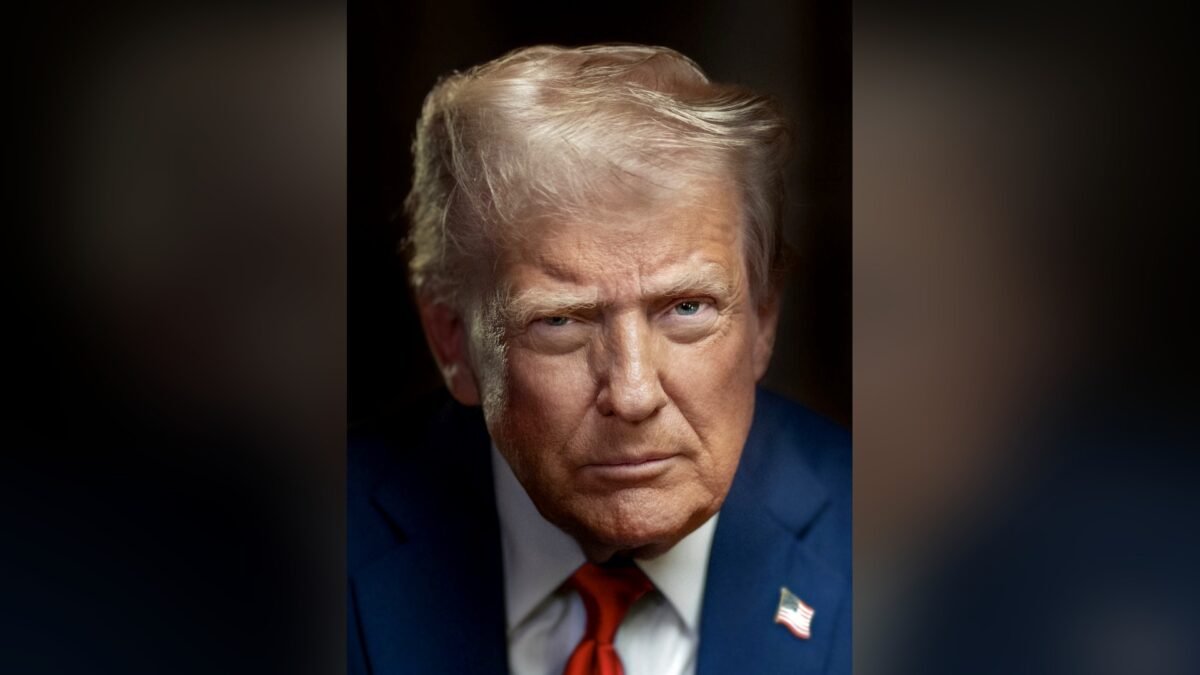
President Donald Trump has ordered the Justice Department to investigate Democrats he accuses of threatening administration officials and Republican donors with impeachment and imprisonment, just four days after his party lost control of both chambers of Congress in the midterm elections.
In a series of posts on his Truth Social platform on Saturday, 7 November, Mr Trump called the Democrats’ conduct “extortion at the highest level” and a “criminal act”, and said those responsible “should be held accountable” — even suggesting that they, rather than the officials they have promised to investigate, belong in prison.
“The Democrats are going around threatening a lot of people, including the Attorney General of the United States, and others, with Impeachment and many other forms of punishment, even though they admit they have no reason to do so,” Mr Trump wrote, according to Reuters. “This is extortion at the highest level, and they should be held accountable for this.”
“The imprisonment should be against these EXTORTIONISTS, and Republicans should get smart, fast!” he added in the same post, before closing with the instruction itself: “By copy of this statement, I am ordering the Department of Justice to look into this criminal act, immediately!”
In a second post, Mr Trump urged Republicans who receive what he described as threats from Democrats to report them to the Justice Department — or directly to him at the White House. He offered no evidence for the allegations, named only one Democrat, and did not identify the “threatening letters” he said had been sent. As of Saturday afternoon, the Justice Department had not announced whether it would open any investigation in response, according to CNBC and Politico.
The order lands at the most combustible moment of Mr Trump’s second presidency. On Tuesday, 3 November, Democrats swept the midterm elections, winning majorities in both the House of Representatives and the Senate — the first time Mr Trump has faced a fully Democratic Congress in either of his terms. The new Congress is seated on 3 January 2027, when Democrats will take control of the committees and the subpoena powers that come with them, and they have spent the week since the election spelling out, in unusually blunt terms, what they intend to investigate.
Mr Trump’s demand that his own Justice Department treat that promised oversight as a crime is, in substance, an attempt to use the machinery of federal prosecution against the opposition that is about to acquire the machinery of congressional investigation. It is the latest and most direct collision yet between a president who has spent a decade accusing his opponents of “weaponisation” and a Democratic Party that has promised to use its new majorities to examine his administration, his businesses and his donors.
What the president actually ordered
The president’s posts, published on Saturday afternoon, were directed at two audiences at once: the Justice Department, which he purported to instruct, and his own party, which he urged to act as his informants.
According to Reuters, which first reported the order, Mr Trump said Democrats were “threatening a lot of people” with impeachment and other forms of punishment, and described their actions as amounting to a “criminal act”, without providing evidence. The news agency reported that the posts accused Democrats of threatening Attorney General Todd Blanche and other administration officials, and of threatening Republican donors with imprisonment because of their political affiliations.
The only Democrat Mr Trump named was Senator Elissa Slotkin of Michigan. He claimed she plans to “go after all young people that believe in Republican Values”, and accused her of threatening young Republicans — an apparent reference to remarks she made on 13 October at the University of Chicago, in which she said she wanted young graduates to weigh whether working for the Trump administration could bring them problems later, and said she wanted “that deterrence message sent”.
Ms Slotkin has defended the remarks, saying she was talking about people who break the law or use taxpayer money to enrich themselves, not about political affiliation. “If you didn’t break the law, then it’s all good,” she wrote on X, according to NBC News. On Saturday she answered the president directly, writing that his threats of legal action had not worked when he tried to criminally indict her before a grand jury last February, or when he threatened it again last month, and suggesting he focus instead on ending the Iran war and on tariffs.
The president did not say which Democrats sent the “threatening letters” he cited, who received them, or what they said. CNBC reported that he offered no evidence of a crime. Politico reported that the Justice Department did not respond to its questions about how, or whether, it planned to act on the president’s directive.
That silence matters. A presidential social media post is not itself a criminal referral, and it was not immediately clear whether the department had opened any investigation in response. The department did not immediately comment, according to multiple reports.
The letters that set it off
Although Mr Trump did not identify the letters he was referring to, the most visible Democratic letters of the past week came from Senator Richard Blumenthal of Connecticut, the Democrat set to take over as chairman of the Senate Permanent Subcommittee on Investigations when the new Congress arrives in January.
On Thursday, 5 November, Mr Blumenthal demanded that the head of the Federal Communications Commission and the technology companies that donated to Mr Trump’s White House ballroom voluntarily turn over documents — or face possible subpoenas in January, according to Reuters.
Mr Blumenthal wrote to Apple, Meta, Google, Nvidia, Amazon and Microsoft, along with a wider list of donors including Comcast, BlackRock, Booz Allen, Caterpillar, Cisco Systems, Salesforce, HP, Lockheed Martin, Micron, Palantir Technologies and Charles Ergen, co-founder and chairman of the telecommunications company Dish Network. He also wrote to FCC Chair Brendan Carr, demanding documents about the agency’s handling of investigations into media companies and its approval of the Paramount Skydance merger last year, and criticising Mr Carr’s decision to order an early licence review of Disney’s eight company-owned ABC stations.
The letters gave the recipients until 4 January 2027 to hand over their records, and warned that failing to comply voluntarily would leave the subcommittee with “no choice but to consider alternative measures to obtain compliance” — the standard language of a subpoena warning. They contained no demand for money, no mention of imprisonment and no threat to impeach anyone.
The sums involved explain why the letters stung. Nvidia and Apple each committed $25 million for the ballroom, out of $333 million in private donations for the project, according to the Washington Post, which first reported the figures in October. The Adelson family, longtime financial supporters of Mr Trump and the Republican Party, committed $25 million as well, as did Mr Ergen, the Post reported. Federal contractors including Lockheed Martin, Microsoft and Palantir each gave $10 million, while Amazon, Meta and Cisco each gave $5 million.
“Many of the donors have deep financial, business, or other personal interests before the Administration,” Mr Blumenthal wrote to the tech firms last year, when he first raised the issue. The donations were routed through a non-profit that kept individual amounts out of public view, and critics have argued that money moving in this way sits outside normal campaign-finance limits and disclosure rules. Some observers have raised bribery-law concerns, although no formal allegations have been made.
Mr Blumenthal also sent letters to crypto firms and the Department of Homeland Security about other inquiries. His demands are an early sign of how Democrats plan to use their power to compel or subpoena documents once they take control in January, as they look into donations from companies with business before the Trump administration. Major companies and the administration have ignored or failed to provide documents in response to investigations over the last two years, according to Reuters.
Mr Carr and the tech companies did not immediately respond to requests for comment. Mr Blumenthal said Mr Carr’s actions “erode and undermine freedom of speech and freedom of the press and bear on the laws governing media consolidation.”
Slotkin in the crosshairs — again
Ms Slotkin’s position at the centre of the president’s order is not accidental, and it is not new. She has been a recurring target of Mr Trump’s since she and five other Democratic military veterans posted a video urging troops to refuse illegal orders.
After that video appeared, Mr Trump called the offence “punishable by death” and the FBI sought interviews with the lawmakers. In February, a Washington grand jury refused to indict them, according to the Associated Press. The Justice Department had launched an investigation into Ms Slotkin and the other lawmakers in January; the case was dropped after the grand jury declined to sign off on an indictment.
The October remarks that drew the president’s latest attack were made at a University of Chicago event on 13 October, where Ms Slotkin said she wanted young graduates to consider whether taking a job in the Trump administration could expose them to legal scrutiny later. A watchdog group has since filed a Senate ethics complaint over the remarks, according to reports.
Ms Slotkin’s response on Saturday was pointed. She wrote on X that Mr Trump’s “hair trigger obsession with the issue of corruption and illegal orders revealed more about him than it did about her”, and suggested that Stephen Miller, the president’s new chief of staff, had helped draft the Truth Social post about her. She also appeared on Saturday at Crooked Con in Washington, where she declined to rule out a run for a Senate leadership position. Senate Minority Leader Chuck Schumer is expected to become majority leader next year and is running uncontested so far; Ms Slotkin left the door open to supporting him, while saying Senate Democrats need a new generation of leadership.
What Democrats have actually promised
Politico reported that Mr Trump’s claim misrepresents what Democratic lawmakers have actually said. Democrats have said they plan to use subpoenas and hearings to investigate misconduct by administration officials — standard congressional oversight. They have not ruled out impeachment, but they have emphasised investigations over moving straight to impeachment proceedings.
What they have promised is extensive. Representative Robert Garcia of California, chairman of the House Oversight and Government Reform Committee, warned individuals who could face congressional scrutiny to “lawyer up” following the election results. Representatives Hank Johnson of Georgia and Deborah Ross of North Carolina have raised the possibility of impeaching Attorney General Todd Blanche. Representative Jamie Raskin of Maryland and Illinois Governor JB Pritzker have called for an investigation into the Department of Government Efficiency, the federal cost-cutting initiative previously led by billionaire Elon Musk.
Democratic lawmakers have outlined plans to examine the Trump family’s business dealings, immigration enforcement and the Justice Department’s handling of files related to the late convicted sex offender Jeffrey Epstein, along with Mr Musk’s government contracts, agency cuts and the Iran war. House Democrats on the Judiciary and Oversight committees have also been studying a dossier drafted by the think tank Groundwork Collective that identifies hundreds of executives and companies for them to investigate after they take control in January, according to the Washington Sun.
Republicans have noticed. House Majority Leader Steve Scalise of Louisiana sent a letter to committee chairs on Thursday, urging them to be ready for “retribution” and “countless witch hunts” from House Oversight next year.
Mr Blanche himself took office as acting attorney general on 2 April 2026, after Pam Bondi left the post, and was confirmed by the Senate on 8 August 2026. He is therefore both the head of the department Mr Trump has ordered to investigate Democrats, and one of the officials Mr Trump says Democrats have threatened with impeachment — a conflict that sits at the heart of the order’s credibility problem.
A department in upheaval
Mr Trump’s order also arrives in the middle of a wider shake-up at the Justice Department. Three Senate-confirmed Trump administration officials have resigned from the department in the days since the midterm elections.
Jason Reding Quiñones, the US Attorney for the Southern District of Florida, resigned on Friday, 6 November. Mr Quiñones had overseen the department’s so-called “grand conspiracy” investigation into whether former government and intelligence officials conspired against Mr Trump — a probe begun in August 2025 that, more than a year in, has not charged anyone with the conspiracy it set out to prove. Attorney General Blanche announced the departure on X, saying the department was “grateful for Jason’s leadership” in combating violent crime, drug trafficking, sex trafficking and transnational crime, including the indictment of former Cuban President Raúl Castro in May on charges related to the 1996 downing of civilian planes flown by Miami-based exiles.
John Eisenberg, the assistant attorney general who led the department’s National Security Division, also resigned on Friday. Mr Eisenberg had overseen prosecutions of terrorism, espionage and leaks of classified information, and his division secured a guilty plea in June from John Bolton, the former national security adviser turned Trump critic, over his handling of classified information. Harmeet Dhillon, who led the Civil Rights Division, had announced her departure the day before.
According to the Wall Street Journal, department leadership had grown frustrated with what it saw as mismanagement by Mr Quiñones of the conspiracy probe, and the investigation has been abandoned in favour of what officials describe as a narrower but related set of politically charged cases run out of Washington. Joseph diGenova, a former US attorney brought in to lead the probe, quit in September, telling the New York Post: “If you want indictments where there’s no evidence, you have an ethical problem.” The department plans for the probe to continue under Yara Klukas, the office’s first assistant US attorney, who will take over as acting US attorney, according to Bloomberg Law.
The resignations follow other extraordinary steps. According to reports, the Justice Department sent criminal target letters to Democrats on Election Day itself. And Judge Ana Reyes plans to appoint a former Trump-appointed prosecutor to investigate whether administration lawyers misled her in court.
The picture is of a department whose most politically charged work is simultaneously losing its leaders, losing its cases and being asked by the president to open a new one against the opposition.
The other half of the weekend
Mr Trump’s Saturday was not only about the Justice Department. In the same hours, he offered the UFC chief Dana White the job of White House press secretary — an offer Mr White declined, according to a source familiar with the matter — and he gave his first sit-down interview since the midterms to the CBS programme 60 Minutes, which is set to air on Sunday.
In that interview, conducted by Ross Douthat, Mr Trump said he could “very easily” go six months without insulting Democrats if that was what it took to strike deals with the new Congress — even as he lobbed another jab at them during the same conversation. He was asked about conciliatory comments from Senator-elect James Talarico of Texas, who defeated Trump-backed state Attorney General Ken Paxton in a major Senate pickup, and who said after his win that he would “absolutely” work with Mr Trump on immigration reform. Mr Trump said Mr Talarico had said “very nice things”.
The two faces of the weekend — the president offering to negotiate with Democrats in one breath and ordering their investigation in the next — capture the fork he faces in the final two years of his presidency. The Washington Examiner has described the choice as negotiating with a combined Democratic Congress or further testing the constitutional limits of executive power. The Atlantic, meanwhile, has cast the period as an open question: what Mr Trump may do in the remaining two years, and how Democrats in Congress will respond.
Mr Trump has not governed opposite a fully Democratic House and Senate during his time in office. He was impeached twice during his first term, in 2019 and 2021, and a third impeachment is possible in the new Congress — although Democratic leaders have not promised one, and removal would require a two-thirds majority in the Senate.
On Friday, Mr Trump also announced that Stephen Miller will replace Susie Wiles as White House chief of staff, effective Monday, 9 November — a move widely seen as a consolidation of power ahead of the legal and legislative challenges to come. Mr Miller has pledged “total devotion” to the president’s agenda.
Analysis: Why It Matters
Strip away the capital letters and the exclamation marks, and Mr Trump’s order is a test of a single question: can a president use the Justice Department as a weapon against the opposition that has just won the power to investigate him? The answer will shape not only the next two years, but the way every future president and every future Congress understand the boundary between prosecution and politics.
1. Oversight is not extortion — and the distinction is the whole ball game
The most important fact about Saturday’s order is also the simplest: nothing Democrats have promised to do is, on its face, a crime. Subpoenas, hearings, document requests and even impeachment resolutions are powers the Constitution gives Congress, and they have been used by both parties for as long as the republic has existed. Mr Blumenthal’s letters asked companies to hand over records voluntarily and warned of subpoenas if they refused — the standard language of congressional oversight, used by Republican chairmen in the last Congress exactly as Democratic chairmen are using it now.
Mr Trump’s characterisation of those letters as “threatening letters” and “extortion at the highest level” therefore rests on a redefinition: that telling a company it may be subpoenaed, or telling an official he may be impeached, is itself a criminal threat. No statute says that, and no court has held it. Extortion, as a legal concept, involves obtaining something of value through a threat — and the “something” Democrats are seeking is information and accountability, delivered through public, lawful process, not money or silence delivered in private.
That is why Politico’s reporting matters: the president’s claim, according to the outlet, misrepresents what Democratic lawmakers have said. The gap between what was said and what was claimed is not a matter of spin; it is the difference between a lawful investigation and a criminal one. If the Justice Department were to accept the president’s framing, it would be accepting a theory under which any congressional oversight of the executive branch could be investigated as a crime — a theory that would, applied consistently, have criminalised the Republican investigations of the Biden administration that Mr Trump’s own allies led only a year ago.
2. The ballroom is the story, not a sideshow
It is no coincidence that the flashpoint is a ballroom. The $333 million in private donations for the White House ballroom — routed through a non-profit that kept individual amounts out of public view, led by $25 million pledges from Apple and Nvidia, and including $10 million each from federal contractors with business before the administration — is precisely the kind of arrangement that oversight exists to examine. The donors are not random philanthropists; they are companies whose regulatory and contracting fortunes depend on decisions made inside the building they helped pay to extend.
That does not make the donations corrupt. It makes them a legitimate subject of inquiry, and the timing of Mr Trump’s response — two days after Mr Blumenthal’s letters, and one day after the midterm results made subpoenas a near-certainty — suggests the president understands exactly that. His order attempts to convert the inquiry into the crime, so that the investigators become the investigated before they can ask their first question.
The irony is that the attempt may achieve the opposite of its aim. By ordering an investigation of the very letters that asked for the ballroom records, Mr Trump has drawn far more attention to the donations than the letters themselves ever would have. The $333 million figure, the $25 million pledges and the non-profit structure are now part of a national story about presidential power, rather than a committee letter that might have passed unnoticed.
3. A department that cannot do the job it is being asked to do
Consider the institution Mr Trump has ordered to act. In the space of three days, the Justice Department has lost the head of its National Security Division, the head of its Civil Rights Division, and the US attorney running its most politically charged investigation — a probe that, after more than a year, has produced no indictments for the conspiracy it was created to prove, and whose own former leader quit saying there was an “ethical problem” in seeking indictments “where there’s no evidence”.
That record is the best guide to what happens next. The department’s grand conspiracy probe failed not because its targets were innocent in some abstract sense, but because the evidence did not support the charges — and because prosecutors, including a former US attorney brought in specifically to deliver them, refused to cross the line from suspicion to indictment without proof. The same evidentiary problem confronts Saturday’s order: there is, as CNBC reported, no evidence of a crime in the letters and statements Mr Trump cited.
There is also a structural problem. The Attorney General, Todd Blanche, is himself one of the officials Mr Trump says Democrats have threatened with impeachment. A department led by the supposed victim of the alleged crime, investigating the people who allegedly threatened him, at the instruction of the president who appointed him, cannot plausibly present itself as neutral. That does not mean nothing will happen — target letters were sent to Democrats on Election Day, and the department has shown itself willing to pursue politically charged cases — but it does mean that anything it does will be read, fairly or not, as the president’s will rather than the law’s.
4. The negotiation and the prosecution cannot both be the strategy
The most revealing detail of the weekend is not in the Truth Social posts at all. It is in the 60 Minutes interview, where Mr Trump said he could “very easily” go six months without insulting Democrats to get a deal done — and then insulted them anyway. The contradiction is the strategy, or the absence of one.
A president who needs Democratic votes for legislation, and who faces two years of Democratic subpoenas, has two coherent options: negotiate, or fight. Negotiation means restraint, deal-making and accepting that the other side now holds cards. Fighting means escalation, counter-investigation and the use of every available lever, including the Justice Department, to make oversight too costly to pursue.
Mr Trump appears to be trying both at once — praising Senator-elect Talarico’s willingness to work together on immigration while ordering an investigation of the party Mr Talarico has just joined, and while his new chief of staff, Stephen Miller, pledges “total devotion” to an agenda the voters have just rejected. The risk is that the two halves cancel each other out: the prosecution threat makes the negotiation incredible, and the negotiation talk makes the prosecution threat look like theatre. Democrats, for their part, have little reason to believe a president who offers a deal with one hand and a criminal investigation with the other — and every reason to conclude that the only safe course is to investigate harder, not softer.
5. The precedent will outlive the presidency
Whatever happens in the next two months, the precedent set on Saturday will outlive this presidency. If a president can order the investigation of opposition lawmakers for promising oversight, then every future president will have that tool — and every future opposition will have reason to fear using the powers the Constitution gives it.
That is the deeper stake, and it is why the response of the Justice Department itself matters more than the response of any Democrat. The department has, so far, not announced an investigation. Its silence is not indecision; it is the institutional answer to a question the president has posed in public. If the department opens a case on the basis of a social media post and no evidence, it will have crossed a line that no future attorney general will be able to uncross. If it declines, quietly or otherwise, it will have affirmed that the boundary between politics and prosecution still holds — and that a president’s order, however loudly given, is not a substitute for a crime.
The irony is that Mr Trump himself has spent a decade warning about the weaponisation of the Justice Department. His order, if carried out, would be the most direct instance of it in modern American history — a president using the department he leads to investigate the opposition that has just beaten him at the ballot box. The voters, having just given Democrats the power of oversight, will now watch whether the president gives himself the power to punish them for using it.
What to Watch Next
- Whether the Justice Department acts. The decisive question is whether the department opens a formal investigation, issues subpoenas or sends target letters — or stays silent. Any public step will be scrutinised for its legal basis, and any silence will be read as an institutional refusal.
- Senator Slotkin’s next move. Ms Slotkin has already answered the president on X and left open a leadership bid. Watch whether she becomes the face of Democratic resistance to the order, and whether the ethics complaint against her advances.
- The 4 January deadline. Mr Blumenthal’s letters set 4 January 2027 — the day after the new Congress is seated — as the deadline for voluntary compliance. Watch whether Apple, Nvidia, Google, Meta, Microsoft and the other donors hand over records, or wait for subpoenas.
- The FCC and the media probes. Mr Blumenthal’s letters to Brendan Carr, over the Paramount Skydance merger and the ABC licence review, open a second front on media regulation. Watch for Mr Carr’s response and for any further Democratic letters to regulators.
- The 60 Minutes interview and the Miller era. The full interview airs on Sunday, and Stephen Miller takes over as chief of staff on Monday. Watch whether the president’s tone toward Democrats softens in public while the department’s actions harden in private — or whether the two tracks converge.
Sources
- Reuters — “Trump orders DOJ to look into Democrats for ‘threatening’ people” (7 November 2026)
- Reuters via SRN News — “Democratic senator demands tech firms, FCC chair turn over documents” (5 November 2026)
- Workers’ Rights News — “Trump orders his DOJ to investigate Democrats for ‘extortion.’ He named one senator and offered no evidence.” (7 November 2026)
- The Washington Sun — “Trump Orders the DOJ to Investigate Democrats’ Oversight Plans” (7 November 2026)
- QNC News — “Trump Orders Justice Department to Investigate Democrats Over Extortion Claims and Names Slotkin” (8 November 2026)
- New York Post — “Trump insists he could go six months without insulting Democrats to secure a deal: ‘Very easily'” (7 November 2026)

About the Author — Abdul Mannan
Related Articles

Dana White Declines Trump’s Offer to Become White House Press Secretary, Source Says
President Donald Trump publicly offered the vacant White House press secretary job to UFC chief Dana White on…
Armed Man Arrested Near White House After Telling Secret Service He Came to Kill Trump
Secret Service officers arrested Ronny Yordrix Guanipa Chrinos near the White House on Thursday after finding three firearms…

US Treasury Cuts Crypto Exchange MEXC Off From the American Financial System Over $16 Billion in Alleged Illicit Flows
FinCEN has ordered American banks to stop moving money for MEXC Global, accusing the exchange of channelling at…