
Senate Votes 60-40 to Advance Deal to End 40-Day Government Shutdown as Eight Democrats Break Ranks

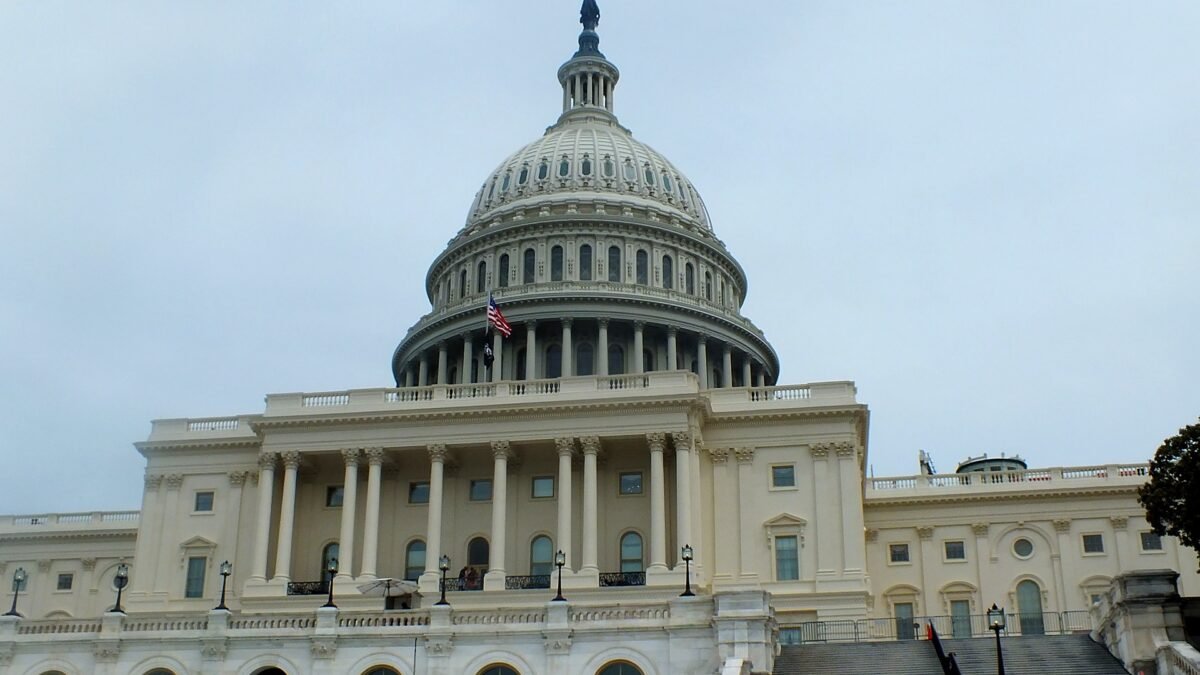
The United States Senate voted 60-40 late on Sunday to advance a bipartisan funding package that would end the longest government shutdown in American history, after eight members of the Democratic caucus broke with their party leadership and joined Republicans to move the legislation forward.
The vote, taken during a rare Sunday session, was the first step in a series of procedural manoeuvres needed to reopen the federal government, which has been partially shut down since 1 October. According to the Associated Press, the final tally was exactly the 60 votes required to overcome a filibuster, with Senate Democratic leader Chuck Schumer of New York voting against the package along with all but eight of his colleagues.
Senate Majority Leader John Thune, a Republican from South Dakota, said he hoped final passage would take “hours not days”, according to the Associated Press. But the government will not reopen until the Senate completes its work, the House of Representatives approves the measure, and President Donald Trump signs it into law.
“The American people have suffered for long enough. Let’s not pointlessly drag this bill out,” Thune said on the Senate floor, according to reports of the proceedings.
President Donald Trump, speaking to reporters at the White House on Sunday evening, said it “looks like we’re getting close to the shutdown ending”, according to the Associated Press.
The breakthrough came after 40 days of deadlock that had left tens of thousands of federal workers furloughed or working without pay, disrupted food assistance for low-income families, and thrown the nation’s airports into chaos, with more than 1,000 flights cancelled on Saturday alone and thousands more cancelled on Sunday, according to the BBC World Service.
What the Deal Contains
The compromise package combines three full-year spending bills, negotiated on a bipartisan basis by the Senate Appropriations Committee, with a short-term continuing resolution that funds the rest of the government through 30 January, according to the Associated Press and The Hill.
The three bills cover agriculture and food aid programmes, veterans’ affairs, military construction and the legislative branch, and would fund those parts of the government through the end of the fiscal year. The remaining federal agencies would be funded by the continuing resolution until late January, giving lawmakers more time to complete the full set of annual spending bills.
Central to the agreement is a reversal of the mass firings of federal workers carried out by the Trump administration since the shutdown began, according to the Associated Press. The package also protects federal employees against further layoffs through reductions in force for the duration of the continuing resolution, until 30 January, and guarantees that furloughed workers will receive back pay once the shutdown ends.
The deal also guarantees funding for food assistance through September next year, according to a summary of the package, and restores full benefits under the Supplemental Nutrition Assistance Program, known as SNAP, which had been disrupted during the shutdown.
What the package does not contain is the concession Democrats had demanded for six weeks: an extension of the enhanced Affordable Care Act tax credits, which are due to expire on 1 January. Instead, Thune promised a Senate vote on the subsidies no later than the second week of December, though there is no guarantee the measure would pass, according to the Associated Press.
The Eight Who Broke Ranks
The eight members of the Democratic caucus who voted to advance the package were Senators Jeanne Shaheen and Maggie Hassan of New Hampshire, Tim Kaine of Virginia, Dick Durbin of Illinois, John Fetterman of Pennsylvania, Catherine Cortez Masto and Jacky Rosen of Nevada, and Angus King, the independent from Maine who caucuses with the Democrats, according to the Associated Press and The Hill.
The deal was negotiated over several days by three former governors in the group — Shaheen, Hassan and King — working with Thune and the White House, according to the Associated Press. Kaine, whose home state of Virginia is home to more than 144,000 federal employees, also voted in favour of moving forward, according to The Hill.
Five of the eight switched their votes on Sunday. King, Cortez Masto and Fetterman had already been voting to reopen the government since the shutdown began on 1 October, according to the Associated Press. The moderates had expected a larger number of Democrats to join them, with 10 to 12 Democratic senators involved in the negotiations, but in the end only five switched — the exact number Republicans needed to reach 60 votes.
Durbin, the number two Democrat in the Senate, was among those who broke ranks. His decision carried particular weight because of his seniority in the party’s leadership, and it signalled that the blockade, which had held for 40 days, was no longer sustainable.
Senate Democrats had blocked the same House-passed funding bill on 14 previous occasions, according to The Hill, before Sunday’s vote finally allowed it to proceed.
The Health Care Fight That Split Democrats
The shutdown began because Democrats refused to fund the government without action on health care. Their central demand was a one-year extension of the enhanced Affordable Care Act subsidies, first introduced during the COVID-19 pandemic, which are set to expire at the end of the year. According to reports, around 24 million Americans rely on the credits to afford health insurance, and premiums could rise sharply for millions of people if they lapse.
For six weeks, Schumer and his caucus held the line, insisting they would only vote to reopen the government in exchange for what they described as an ironclad deal on the subsidies. The agreement reached on Sunday contains no such guarantee — only Thune’s promise of a vote in December.
Schumer, who met his caucus for more than two hours on Sunday before the vote, said he could not “in good faith” support the package, according to the Associated Press. “We will not give up the fight,” he said, adding that Democrats had now “sounded the alarm” on health care.
The reaction from the left of the party was swift and furious. Independent Senator Bernie Sanders of Vermont, who caucuses with the Democrats, called giving up the fight a “horrific mistake”, according to the Associated Press. Senator Chris Murphy of Connecticut agreed, saying voters who had overwhelmingly supported Democrats in last week’s elections were urging them to “hold firm”.
House Democrats also criticised the Senate deal. Greg Casar of Texas, chairman of the Congressional Progressive Caucus, said a deal that does not reduce health care costs is a “betrayal” of millions of Americans who are counting on Democrats to fight, according to the Associated Press.
The anger reflects a deeper tension inside the party. Democrats won both chambers of Congress in the midterm elections on 3 November and are due to take control in January, when the new Congress is seated. Many in the party believed the election result strengthened their hand and that they should have used the shutdown to force Republicans to negotiate. The eight defectors, by contrast, concluded that the political and human costs of prolonging the shutdown had become too great, and that the health care fight could be resumed in December — even without a guaranteed outcome.
A Record-Breaking Standoff
At 40 days, the shutdown has already surpassed the previous record of 35 days, set during the 2018-19 funding lapse in President Trump’s first term, according to reports. It is the longest government shutdown in United States history.
The human and economic costs mounted steadily over six weeks. Hundreds of thousands of federal employees were furloughed or required to work without pay. Food assistance was disrupted. Air travel was thrown into disarray as shortages of air traffic controllers forced the Federal Aviation Administration to reduce operations at 40 major airports, according to reports, with cancellations running into the thousands over the weekend.
The shutdown also became entangled with the aftermath of the midterm elections. Democrats’ victories on 3 November gave them control of both the House and the Senate from January, and party leaders had promised sweeping investigations of the Trump administration once they take power. That prospect added an edge to the shutdown fight: Republicans accused Democrats of using the funding lapse as leverage, while Democrats accused the administration of using the shutdown to punish federal workers and hollow out agencies.
The deal reached on Sunday does not resolve those underlying conflicts. It buys time — until 30 January for most of the government — and it restores pay and protections for federal workers. But it leaves the health care question, which caused the shutdown in the first place, to a promised vote in December that Republicans are under no obligation to pass.
What Happens Next
The Senate must still complete its work on the package. Thune was still working through concerns within his own Republican conference about individual provisions in the underlying spending bills, according to the Associated Press, and any senator could object and slow the process. One Republican, Senator Rand Paul of Kentucky, had threatened to object to a provision championed by his home-state colleague, former Republican leader Mitch McConnell, to prevent the sale of some hemp-based products, and said he was seeking an amendment to strip the language before a final vote.
Once the Senate passes the legislation, it moves to the House. Speaker Mike Johnson, a Republican from Louisiana, has kept the House out of session since mid-September, when it passed the original funding bill. According to the Associated Press, Johnson urged lawmakers to start returning to Washington “right now” given travel delays, but said he would issue an official notice for the House’s return once the Senate passes the legislation. “We have to do this as quickly as possible,” Johnson said at a news conference.
Fox News reported that Johnson plans a House vote by Wednesday, and that the bill has the support needed to pass if Republicans unify. The House will not need Democratic votes if all Republican members back the measure.
Only after the House approves the package can President Trump sign it and the government fully reopen. Until then, federal workers remain unpaid, food assistance remains disrupted, and the airports remain under strain — even though the end is now, for the first time in 40 days, in sight.
Analysis: Why It Matters
A record standoff ends in a climbdown, not a deal
The most striking feature of Sunday’s vote is what it did not achieve. After 40 days — the longest shutdown in American history — the party that triggered the standoff walked away without the concession it had defined as non-negotiable. Democrats demanded a guaranteed extension of health care subsidies. They received a promise of a vote. In legislative terms, that is not a compromise; it is a surrender dressed up as a timetable.
That does not mean the eight Democrats who broke ranks were wrong. A shutdown is a weapon that wounds its wielder as much as its target, and the damage was becoming impossible to defend: unpaid workers, cancelled flights, families losing food assistance. There is a point at which the moral case for holding out collapses under the weight of the suffering it causes, and reasonable people can disagree about exactly where that point lies. But it is worth being clear about what happened: the shutdown ended, or is ending, on Republican terms.
The price of the break
The split inside the Democratic Party is now open and bitter, and it will not heal quickly. The language used by the party’s own members — “horrific mistake”, “betrayal” — is the language of a rupture, not a disagreement. Schumer, who voted against the deal, now leads a caucus in which his own deputy defied him on the most consequential vote of the year. That is a leadership crisis, whatever the official statements say.
Yet the defectors have a serious argument, and it deserves to be heard rather than dismissed as capitulation. Their case is that the shutdown had become a punishment inflicted mainly on the people Democrats claim to defend — federal workers, low-income families, travellers — while the health care subsidies it was meant to protect were no closer to being extended. A promise of a December vote at least keeps the issue alive in the Senate; another fortnight of shutdown would have kept it alive nowhere except in press releases. The test of their judgement will come in December, when Thune’s promised vote takes place. If the subsidies are extended, the climbdown will look like a tactical retreat. If they are not, it will look like exactly what its critics called it.
What the midterms changed — and what they did not
The timing of the break, days after Democrats won both chambers of Congress, is the great irony of this episode. Conventional wisdom holds that an election victory strengthens a party’s hand. In this case, it may have done the opposite. Once Democrats knew they would control Congress from January, the shutdown lost its strategic purpose: the investigations and legislation they plan can be pursued from a position of power, without holding the government hostage. The eight defectors understood that before their colleagues did.
But the election result also explains the fury of the party’s left. Voters who had just rewarded Democrats with control of Congress watched their senators accept a deal that gave away their central demand within days of the victory. The message that sends — that Democratic victories do not translate into Democratic outcomes — is corrosive, and it will haunt the party’s new majority in January. The incoming chairs of the oversight and judiciary committees have promised aggressive investigations of the administration; they will now face the question of whether their party has the stomach for confrontation at all.
The December reckoning
Everything now turns on the vote Thune has promised for the second week of December. The enhanced tax credits expire on 1 January, and if they lapse, premiums for around 24 million Americans will rise sharply in the new year. Republicans have said they are open to some form of extension, but they also want new limits on who can receive the subsidies and have argued that the money should be routed through individuals rather than insurers. Some, including the president, have used the debate to renew their longstanding criticism of the Affordable Care Act itself and called for it to be scrapped or overhauled.
House Speaker Mike Johnson has said he will not commit to bringing a subsidies vote to his chamber. That means even a successful Senate vote in December could die in the House — which is precisely why Democrats demanded a guarantee in the first place. The December vote may therefore prove to be theatre: a vote that allows senators to say they tried, while the subsidies expire anyway.
If that happens, the lesson of the 40-day shutdown will be bleak. A party used the most disruptive weapon in American politics, held it for a record length of time, and gained nothing. The next time a funding deadline approaches, both parties will remember that — and the temptation to reach for the same weapon will be weaker, or the demands attached to it will be smaller. That may be the most lasting consequence of this standoff: not the deal itself, but the demonstration that a shutdown, however long, does not force the other side to yield.
The workers come first — at last
One part of the deal deserves unqualified praise. The reversal of the mass firings of federal workers, the protection against further layoffs through January, and the guarantee of back pay matter enormously to the hundreds of thousands of people whose livelihoods were used as leverage in this fight. Federal workers did not choose the shutdown, and they should never have been its victims. The restoration of full food assistance matters equally. Whatever the political judgements about the deal, the human provisions in it are real, and they will make a tangible difference to real families this week.
What to Watch Next
- Final Senate passage: whether any senator, including Rand Paul over the hemp provision, objects and delays the bill, and whether Thune can hold the 60-vote coalition together through the remaining procedural steps.
- The House vote: whether Speaker Johnson brings the package to a vote by Wednesday as planned, and whether any House Republicans defect.
- The president’s signature: whether President Trump signs the package promptly once it reaches his desk, and what he says about the terms.
- The December subsidies vote: whether Thune honours his promise to schedule a vote on extending the Affordable Care Act tax credits by the second week of December, and whether it passes.
- The Democratic fallout: how the split between the eight defectors and the rest of the caucus plays out, and what it means for Chuck Schumer’s leadership and for the party’s plans when it takes control of Congress in January.
Sources
- Associated Press — “Senate inches closer to vote on government shutdown deal” (via 2822 News)
- The Hill — “Senate votes to advance proposal to end 40-day government shutdown” (via Louisiana First News)
- The New York Times — “Senate moves toward ending shutdown after Democratic defectors relent” (via PageSuite)
- BBC World Service — Global News Podcast: “US Senate vote could end government shutdown” (transcript)
- KIMKJ Economy Watch — “Global Economy Top 10, 2026-11-09” (shutdown deal summary)
- Fox News — “Senate ends 41-day government shutdown stalemate, sends bipartisan deal to House” (via Ryan’s District mirror)

About the Author — Abdul Mannan
Related Articles
Democrats Vow Probes of Musk and Miller as Jeffries Backs Move to Impeach Hegseth After Midterm Rout
Incoming Oversight chair Robert Garcia says Elon Musk and Stephen Miller will face congressional probes in January, while…
Trump Orders Justice Department to Investigate Democrats for ‘Extortion’ After Midterm Losses
President Donald Trump has ordered the Justice Department to investigate Democrats he accuses of threatening officials and donors,…

Dana White Declines Trump’s Offer to Become White House Press Secretary, Source Says
President Donald Trump publicly offered the vacant White House press secretary job to UFC chief Dana White on…