
Trump Says Fresh Strikes on Iran ‘Highly Unlikely’ if Talks Progress — But Warns Three Carriers Are ‘Locked and Loaded’

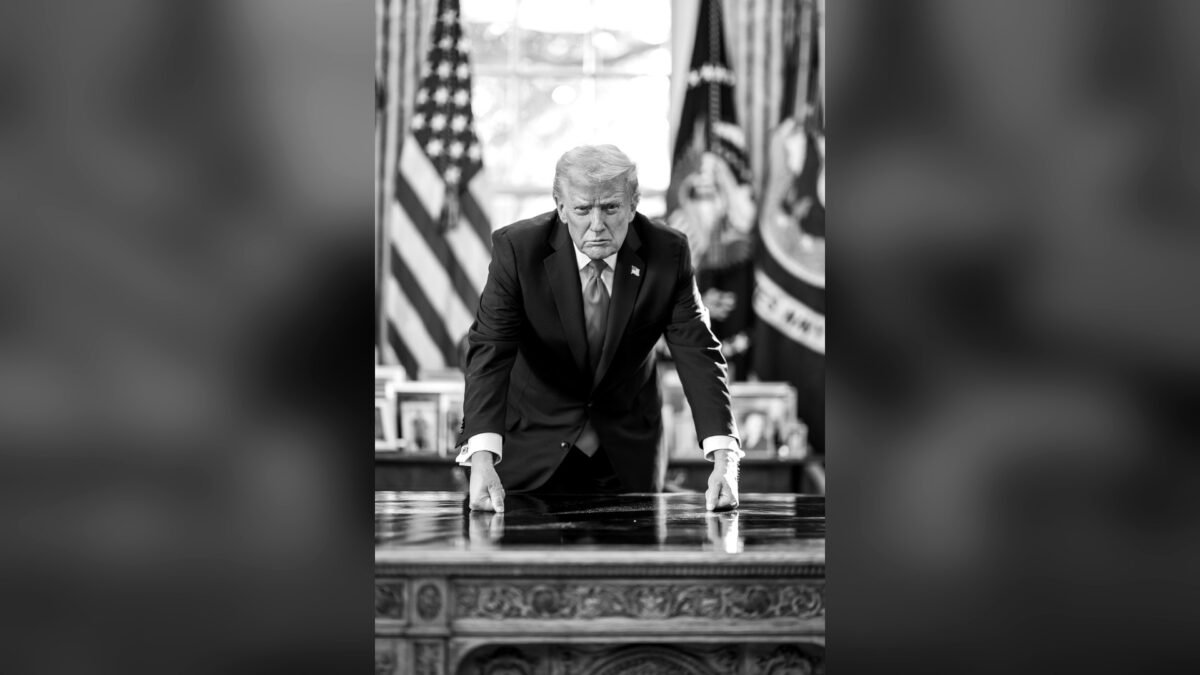
US President Donald Trump has said it is “highly unlikely” he will order fresh attacks on Iran as long as negotiations to end the eight-month war keep moving, a marked softening of tone just days after he hinted that major new strikes could follow the midterm elections. The signal, delivered in a 20-minute telephone interview with CNN on Sunday, came on the same weekend that explosions rattled southern Iran, both sides reported shipping hit in and around the Strait of Hormuz, and the United States announced a new task force to choke off Tehran’s overland supply routes.
“It depends on whether or not they sign a very strong agreement,” Trump told CNN’s Jim Sciutto, according to the network. “The answer is highly unlikely it’s going to be necessary. They’re a failing nation. It just came out, you saw this year, 301% inflation. Highly unlikely it will be necessary. I would if necessary, but we hit them really hard. I hit them so hard. You don’t know how hard I hit them.”
According to CNN, Trump repeated the phrase “highly unlikely” five times during the conversation, while making clear that the threat of force remains firmly on the table. “So it’s highly unlikely I’ll have to,” he continued. “They’re withering away financially. We’ve hit them militarily. We could finish them off.”
The interview was reported by Reuters on Sunday, which noted that Trump tied any decision directly to the progress of talks over Iran’s nuclear programme and the reopening of the Strait of Hormuz, the narrow waterway through which a large share of the world’s seaborne oil has historically moved. The reporting by two independent outlets means the substance of the president’s remarks is now confirmed, although the precise wording rests on CNN’s account of the call.
Trump also used the interview to describe, in unusually specific terms, the targets the United States has already identified inside Iran should diplomacy fail. The list, he said, includes power plants and 38 bridges. “We have 38 bridges in our site that we can knock down in literally one hour,” he said. “They’ll all be down.” He added that he would prefer not to destroy such infrastructure. “I don’t want to do that because essentially, it’ll take 10 years to rebuild them,” he said. “I don’t like ripping down bridges. And the hardest thing to build is a bridge. It takes years, and I’m a good builder.”
On the military balance, Trump said American forces in the region were ready to act at his word. “We’re ready for it. I’ve got three aircraft carriers here. The other one just arrived. We have three. They’re fully locked and loaded,” he said, according to CNN. He also claimed that Iran’s air defences had been destroyed and that Tehran now retains only about 10 per cent of its missile capacity and 15 per cent of its drone capability, because, in his words, much of its factory capacity is gone. Those figures are the president’s own assertions and have not been independently verified.
The comments represent the clearest public signal yet that the White House sees a negotiated exit from a war that has dragged on for eight months with little military movement and even less diplomatic progress. Yet the weekend’s events in the Gulf showed how fragile that opening is. Within hours of the interview, the region produced fresh evidence of how quickly a misunderstanding at sea or on the ground could pull both sides back toward escalation.
A confusing Saturday night in the Gulf
On Saturday evening, explosions were heard in several areas of southern Iran, including on Qeshm Island in the Strait of Hormuz, according to Reuters. Iranian state television said officials had not confirmed any missile strikes on Iranian territory and suggested the blasts might be related to Iranian military activity in the waterway. The semi-official Tasnim news agency reported that two missiles had struck Qeshm Island, but said there was no official information on possible damage. Neither Iran nor the United States has commented on that report, according to Reuters, and the news agency said it was not able to confirm any of the reported strikes.
The uncertainty matters because Qeshm Island has already been struck twice in the past week. Washington said on 2 November that it had hit the island in a limited defensive measure against Iranians using surface-to-air missiles against American assets, and Trump confirmed on Friday that US forces had again knocked out a newly built Iranian anti-aircraft device there, saying the operation took about 15 minutes. Iranian media reported two explosions in the Suza area of the island on that occasion as well. Against that background, any new blast on Qeshm is bound to be read first as an American attack, even when Tehran itself says otherwise.
The shipping picture on Saturday was equally confused, with both sides reporting that vessels had been hit. The US military said on Saturday evening that its air force had fired at the stern of a commercial vessel in the Gulf of Oman, disabling it as it tried to get through the American blockade. Central Command said the St. Kitts-flagged cargo vessel had tried to depart regional waters after visiting an Iranian port, and that a US aircraft fired precision munitions at its stern after American forces directed the crew to abandon the targeted spaces.
Iran’s Revolutionary Guards Navy, meanwhile, said two oil tankers had caught fire after hitting mines while attempting to pass through what it called an unauthorised route in the Strait of Hormuz. A third tanker had also suffered an explosion and caught fire, the semi-official Fars news agency reported later. Monitors from the United Kingdom Maritime Trade Operations said a bulk carrier and military forces were involved in an incident in the Gulf of Oman, approximately 18 nautical miles east of the United Arab Emirates’ city of Khor Fakkan, with damage unknown. It was unclear whether that incident was related to the reported American attack, according to Reuters.
Both sides have continued striking vessels in the strait, restricting exports of energy and other commodities vital to the world economy, Reuters reported. Since the United States and Israel began attacks on Iran in February, Tehran has sought the upper hand by hitting vessels in the strait to block Gulf energy exports, while American forces began blockading movements to and from Iranian ports in April. According to a Western military intelligence assessment cited in earlier reporting, at least 11 ships were attacked in or around Hormuz in the week ending 6 November, three of them sank, and 88 projectile strikes have been recorded since hostilities resumed in early July. The International Maritime Organization said 129 incidents had been recorded as of 6 November, with 25 seafarer fatalities since the conflict began.
The fog around Saturday’s events is itself part of the story. With both sides striking ships, planting or blaming mines, and issuing competing accounts within hours, the risk of a misread incident is high. That is precisely the kind of accident that diplomacy is meant to prevent, and precisely the kind that has repeatedly derailed it.
The blockade tightens on land as well as sea
On Saturday, the US military also announced that it is launching a task force to crack down on the movement of advanced weapons and other sanctioned material to Iran via its land borders and the Caspian Sea, part of a broader set of economic measures intended to pressure Tehran. Central Command estimated that its naval blockade has already prevented Iran from exporting more than 25 billion dollars’ worth of crude oil.
Iran’s Revolutionary Guards dismissed the plan as “wordplay”, saying it would not work because Tehran had made preparations and communicated closely with its neighbours. The dismissal may be bravado, but it points to a real limit on the blockade strategy. Iran shares long land borders with Iraq, Turkey, Afghanistan, Pakistan, Turkmenistan, Armenia and Azerbaijan, and the Caspian Sea offers a further route that no naval task force can seal. Smuggling networks that have operated for decades under sanctions are unlikely to be dismantled by a single announcement.
At the same time, Washington has begun offering a reward of up to 20 million dollars for information on Iran’s nuclear programme, a move reported by CNN as a further sign that the United States is intensifying pressure rather than easing it. The reward, combined with the new task force, suggests that the administration’s approach is not simply a choice between bombing and talking. It is a squeeze applied on several fronts at once, designed to make the cost of holding out higher than the cost of a deal, while keeping the military option visibly ready.
That dual-track approach was also visible in the markets. Most Gulf stock markets started Sunday on the back foot as investors awaited indications of whether Trump would order fresh attacks on Iran, according to Reuters, a reminder that the region’s economies are hostage to the same uncertainty as its shipping lanes.
Qatar keeps the talks alive
Qatar, which has been mediating in talks to try to end the conflict, on Saturday denied reports that the United States and Iran had failed to reach a deal. The Qatari prime minister had affirmed that both sides were continuing to work toward an agreement, Doha said. On Friday, Qatar said Trump had called Qatari Emir Sheikh Tamim bin Hamad Al Thani to discuss de-escalation, and a day earlier Iran’s Foreign Minister Abbas Araghchi spoke with his counterparts from Saudi Arabia, the United Arab Emirates, Oman, Pakistan, Kuwait, Jordan, Turkey, Cyprus and Qatar.
Iran has submitted a nuclear proposal to Washington through Qatar, a senior Iranian official told Reuters on Thursday, saying the United States was reviewing it but that discussions would depend on Washington first meeting Tehran’s seven demands. Those demands include sanctions relief, access to frozen assets and war reparations, while Washington insists that nuclear issues must feature in the initial talks. The gap between those positions is the central obstacle to any agreement, and it was underlined on Sunday by Secretary of State Marco Rubio, who was leaving for a meeting of G7 foreign ministers in Paris.
“I wouldn’t say we’re on the verge of a breakthrough,” Rubio told reporters in Florida before departing, according to CNN. “Right now, it hasn’t been very productive because the Iranian demands are simply not just unacceptable, but in some cases outrageous and ridiculous and really not realistic.” The two countries and officials from Qatar have kept quiet about the status of their negotiations, CNN reported, and Iranian hardliners have seized on the results of last week’s midterm elections, in which Democrats won control of both chambers of Congress, as a sign of a weakened Trump presidency that would be more willing to give in to Tehran’s demands.
The political calendar is therefore working on both sides. In Washington, the administration knows that a new Democratic Congress, seated on 3 January, has promised investigations into the war and into the conduct of senior officials. In Tehran, hardliners who have long argued that Washington cannot be trusted are using the same election result to argue that time is on Iran’s side. Both readings may be wrong, but both shape the negotiating room.
Iran’s own position hardened over the weekend in a different way. On Saturday, a spokesman for the Revolutionary Guards said Tehran had lifted its self-imposed limit of about 2,000 kilometres on the range of its ballistic missiles, a restriction that dated to 2017 and had covered Israel and American bases in the region, though not Europe. The announcement, made at a press conference in Tehran, was paired with a warning that Iran would demonstrate its capabilities in practice, not merely in statements, and that another underground “missile city” would soon be unveiled. The timing, a day before Trump’s interview, looked like a deliberate message: Tehran will negotiate, but it will not do so from a position of visible weakness.
The war spreads: Aramco hit and the Houthi front
The conflict’s widening geography was underlined on Sunday, when Saudi Arabia’s energy ministry said an administrative building belonging to the state oil company Saudi Aramco in Riyadh had been damaged by falling debris after an attempted attack, with no injuries or fatalities reported. The Saudi-led coalition fighting the Houthis in Yemen said it had downed two ballistic missiles aimed at Riyadh. A conflict between Iran-aligned Houthis in Yemen and Saudi Arabia has escalated this month, enlarging the wider Middle East war, Reuters reported.
The Houthi front matters for the Iran talks because it is one of the levers Tehran’s allies can pull to raise the price of continued confrontation, and one of the places where a miscalculation could most easily widen the war beyond the Gulf. The Houthis have also begun policing Red Sea transit, according to earlier reporting, requiring vessels to seek permission by email and replying within 24 hours. That is a further squeeze on a shipping system already disrupted by the fighting around Hormuz.
Meanwhile, the humanitarian cost of the wider conflict continues to mount in Gaza, where torrential rain has inundated thousands of forcibly displaced families and left tens of thousands without shelter, according to Al Jazeera. The flooding is a reminder that the ceasefire agreed in October 2025 has frayed badly, and that winter weather is now compounding a crisis that diplomacy has so far failed to resolve.
Trump presses Netanyahu on the Gaza plan
In a parallel development, Trump told Israeli Prime Minister Benjamin Netanyahu in a call on Thursday that he wants Israel to start taking steps to put the Gaza peace plan into action, according to Axios, citing two people familiar with the conversation. The appeal lands at a sensitive moment for the postwar framework Trump has been promoting for months, which envisages Hamas giving up its weapons, Gaza being demilitarised and the territory eventually being handed to a new Palestinian technocratic government.
Implementation has been stalled for months, in part because of Israel’s 27 October election, according to Axios. Trump’s team had held back while the campaign was under way, wary of turning the Gaza framework into a political fight inside Israel, and the president had backed Netanyahu shortly before the vote. The Thursday call was described as constructive by a source familiar with the conversation. Netanyahu initiated it, and it also touched on the war in Iran. Secretary of State Marco Rubio, Trump adviser Jared Kushner and Trump envoy Steve Witkoff joined the discussion, the same person said.
The call came after a year of stop-and-start diplomacy around Trump’s broader 20-point Gaza formula. Israel and Hamas agreed to the first phase last year, which produced a ceasefire and secured the release of the last 20 living hostages taken in the 7 October 2023 attacks. Since then, the Board of Peace set up under the agreement has been working on the next phase, including plans for a Palestinian technocratic administration and an International Stabilization Force. Last July, the board reached an understanding with Hamas on a 15-point arrangement meant to move armed groups out of Gaza and shift civilian and security authority to the new Palestinian body, and in August Kushner travelled to Israel and told Netanyahu that Hamas had, for the first time, agreed to disarm. In September, the board unveiled a six-month, 2.45-billion-dollar initial recovery plan for Gaza during the United Nations General Assembly.
One day after the call, former British Prime Minister Tony Blair, who serves on the Board of Peace, was in Israel meeting with Netanyahu and Gadi Eisenkot, the politician tasked with trying to assemble a new government after President Isaac Herzog gave him the mandate on Saturday. Eisenkot secured the recommendations of 67 of the 120 Knesset members, against 46 for Netanyahu, and has 28 days, with a possible 14-day extension, to form a government.
Whether the Gaza plan moves forward may now depend less on Washington than on who governs in Jerusalem. Netanyahu remains prime minister until a successor forms a government, and his government has so far resisted implementing parts of the agreement. Israeli Defence Minister Israel Katz reiterated on Sunday that Israel would not withdraw from Gaza, Lebanon or Syria. The sources speaking with Axios did not detail what steps Trump asked Netanyahu to take, and explained that the process will be difficult and that Israel will only have to take steps once Hamas begins to disarm.
The two stories, Iran and Gaza, are linked by more than Trump’s telephone. Both turn on the same question: whether an American president who has spent eight months waging a war he now says he would prefer to end can convert military pressure into a durable settlement, and whether the governments on the other side of the table believe him when he says he would rather not strike again.
Analysis: Why It Matters
1. The leverage of saying no
Trump’s interview is best understood as a negotiating move, not a change of heart. By saying publicly that renewed attacks are “highly unlikely”, he gives Tehran a reason to keep talking and gives Qatar’s mediators something to work with. By repeating the phrase five times, he makes the signal unmistakable. And by pairing it in the same breath with three aircraft carriers, 38 bridges and a claim that Iran’s missile stockpile is down to a tenth of its former size, he makes clear that the restraint is conditional and revocable. This is the classic structure of coercive diplomacy: offer the off-ramp, and describe the cliff in detail.
The approach has an obvious logic. A war that has produced a blockade, a closed strait, attacks on shipping and a deepening economic crisis has not produced a settlement. Bombing has not ended the nuclear programme, and sanctions have not forced Tehran to accept Washington’s terms. A public statement that strikes are unlikely if talks progress is the cheapest concession Trump can offer, and it costs him nothing if Tehran refuses, because he has already reserved the right to strike anyway. The risk is that Tehran reads the statement not as an opening but as evidence that Washington has lost its appetite for war, and raises its price accordingly.
2. The credibility problem
That risk is sharpened by Trump’s record of mixed messages. He has, in CNN’s own words, offered mixed messages in the past about his willingness to end the war. He hinted after the midterms that major attacks might resume, then confirmed a “minor” strike on Qeshm on Friday, then said on Sunday that further strikes are highly unlikely. He says Iran wants a deal “so badly”, while his own secretary of state says the talks have not been very productive and the Iranian demands are “outrageous and ridiculous”. A negotiator who changes his public position three times in a week is hard to read, and hard to trust.
The same problem exists on the Iranian side. Tehran says it wants negotiations, submits a proposal through Qatar, and then lifts its missile-range limit and announces a new “missile city”. It denies that Saturday’s blasts were American strikes, while its own news agency reports missiles hitting Qeshm. Both governments are speaking to multiple audiences at once: their own hardliners, their regional allies, their domestic publics and each other. The result is a fog in which every statement has to be discounted for its intended audience, and in which the space for a genuine bargain narrows.
3. The fog on Qeshm
Saturday night’s confusion deserves attention in its own right, because it illustrates the most dangerous feature of this war: neither side can reliably tell what the other has done. Explosions on Qeshm, tankers on fire, a disabled cargo vessel, a bulk carrier incident off Khor Fakkan, all within hours, with Reuters unable to confirm any of the reported strikes. In a conflict where both sides are striking ships and neither side has a monopoly on the facts, the chances of an incident being misread as a deliberate escalation are high.
The history of the Gulf is full of such moments, from the tanker war of the 1980s to the attacks of 2019, and the lesson is consistent: the sea does not forgive ambiguity. A mine, a missile or a disabled vessel can be an accident, a provocation or a warning, and the difference is often decided in the hours after the event by people under political pressure. Trump’s statement that strikes are unlikely may be intended, in part, as a firebreak against exactly that kind of accident. Whether it works depends on whether both sides’ commanders, not just their presidents, hear it.
4. The economic squeeze as the real battlefield
Look past the rhetoric about bridges and carriers, and the war’s centre of gravity is economic. Iran has struggled to sell crude oil under American sanctions, while billions of dollars in assets held in foreign banks have been frozen, CNN reported. Central Command says its blockade has prevented more than 25 billion dollars of crude exports. Trump’s own figures, 301 per cent inflation and a nation “withering away financially”, are his claims, not verified statistics, but they point to a real and deepening crisis in the Iranian economy.
The new land task force extends that squeeze from the sea to the land, targeting the routes through which advanced weapons and sanctioned material move into Iran. The Revolutionary Guards’ dismissal of the plan as “wordplay” may be overconfident, but it is not baseless. Iran’s neighbours have their own interests in keeping trade flowing, and a land blockade is far harder to enforce than a naval one. The question is whether the cumulative pressure, naval blockade, land task force, frozen assets, reward for nuclear information, is enough to force Tehran to accept terms it has so far called unacceptable, or whether it merely hardens the regime’s determination to hold out until the political winds change in Washington.
5. What the Gulf is watching
For the Gulf states, the weekend’s events are a reminder that they are caught between two fires. Saudi Arabia’s Aramco building was damaged by falling debris after an attempted attack, and two ballistic missiles aimed at Riyadh were intercepted. Qatar is mediating while hosting American forces. The United Arab Emirates watches incidents off its own coast. These states want the war to end, but they also want to be sure that any deal does not leave Iran free to rebuild the missile and drone capacity that Trump says has been destroyed, or to resume the shipping attacks that have choked their exports.
Their anxiety is a constraint on both sides. Washington cannot strike Iran without considering the retaliation that would fall on its Gulf partners, and Tehran cannot escalate without considering the same. That mutual vulnerability is, paradoxically, one of the strongest forces holding the war in its current stalemate. Trump’s interview may reflect that reality as much as any negotiating tactic: a president who has three carriers in the region and says he would prefer not to use them is describing a situation in which the costs of war are now visible to everyone, including the man who ordered it.
What to Watch Next
- The Qatari channel. Whether Tehran’s nuclear proposal, submitted through Doha on Thursday, produces a written American response, and whether the seven Iranian demands, sanctions relief, frozen assets and war reparations, move at all in the coming days.
- Rubio in Paris. What the secretary of state tells G7 foreign ministers about the state of the talks, and whether his blunt language about Iranian demands softens once he is speaking to allies rather than reporters.
- The next incident at sea. Whether the pattern of strikes on shipping in and around Hormuz pauses after Trump’s statement, or whether either side tests the other with another disabled vessel or a mine strike.
- The Gaza clock. Whether Netanyahu takes any visible step toward the Gaza plan after Trump’s Thursday call, and how the Eisenkot government-formation talks affect Israel’s room to move.
- The Houthi front. Whether the missile attacks aimed at Riyadh continue, and whether the Saudi-led coalition’s interceptions hold, as the wider war’s most unpredictable front.
Sources
- CNN — Trump says renewed attacks on Iran ‘highly unlikely’ if talks show progress
- Reuters — Trump says he is unlikely to order Iran attack if talks progress, CNN reports
- Reuters — Iran suggests blasts are not US attacks as both sides report ships hit
- Reuters — US military says it disabled cargo vessel in Gulf of Oman
- Reuters — Gulf markets retreat as traders await Trump’s next move on Iran
- Axios, via ENM News — Trump pushes Netanyahu to finally move on Gaza plan

About the Author — Abdul Mannan
Related Articles
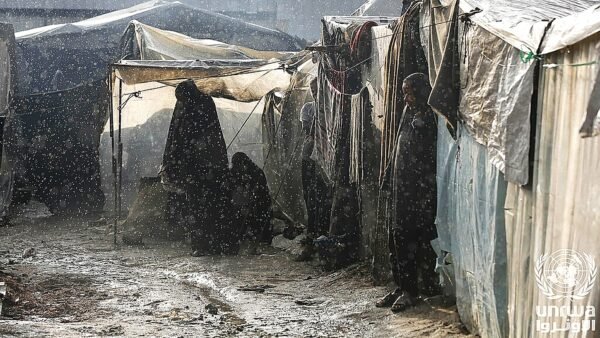
First Winter Storm Floods 70,000 Tents in Gaza as Displaced Families Face a Harsh Winter Without Shelter
Heavy rain has flooded at least 70,000 tents sheltering displaced Palestinians across Gaza in the first winter storm…
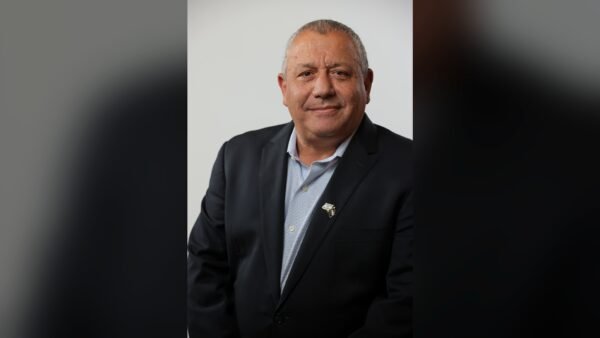
Herzog Hands Eisenkot the Mandate to Form Israel’s Next Government in Setback for Netanyahu
President Isaac Herzog has chosen opposition leader Gadi Eisenkot to make the first attempt at forming Israel's next…
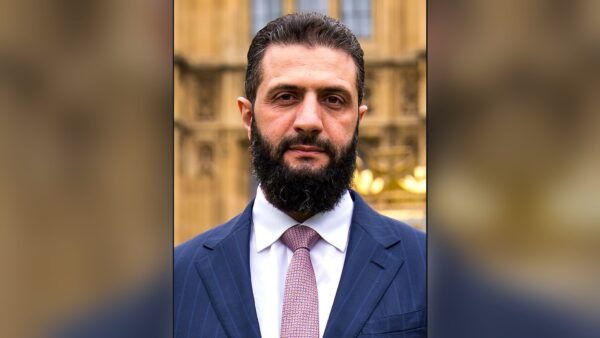
Syria Sends Military Advisers to Saudi Arabia Under New Defence Pact as Houthi War Escalates
Damascus has sent military advisers to Saudi Arabia under a defence cooperation deal signed in Riyadh, as the…