
Syria Sends Military Advisers to Saudi Arabia Under New Defence Pact as Houthi War Escalates

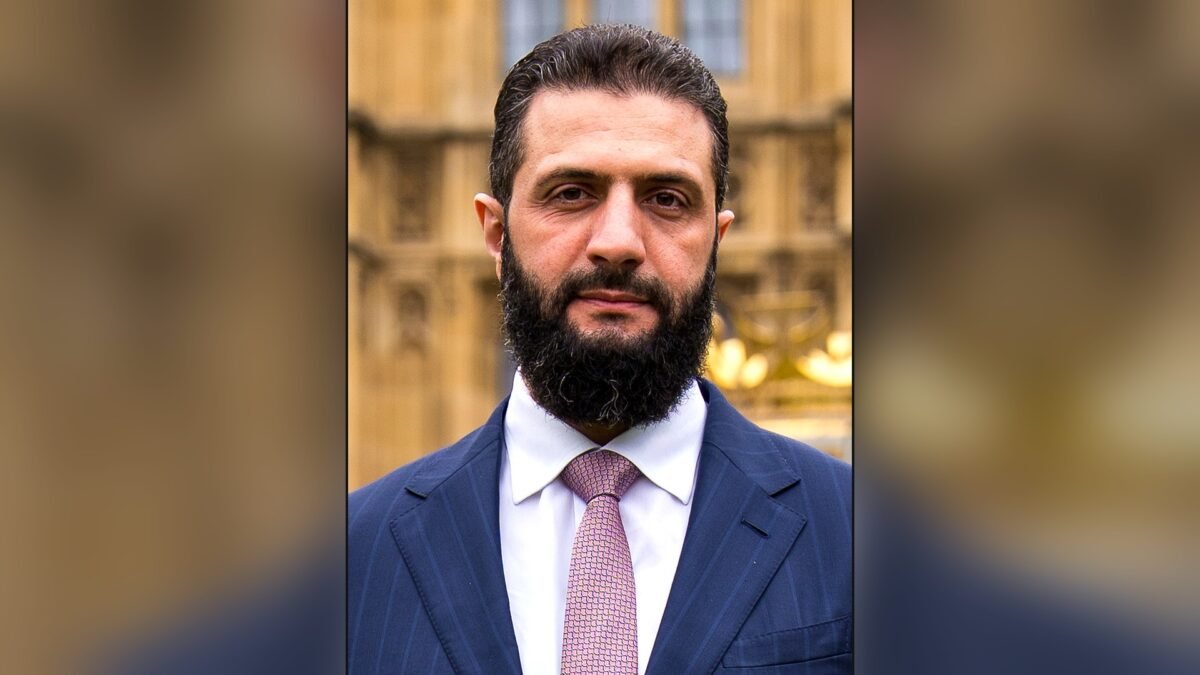
Syria has begun sending military advisers and training teams to Saudi Arabia under a new defence cooperation agreement signed in Riyadh, according to Reuters, in the clearest sign yet that Damascus has switched sides in the region’s wars and is now helping the Gulf kingdom fight the Houthi movement in Yemen.
The deployment, reported by Reuters on Friday, involves what two Syrian military sources described as scores of personnel who have travelled to the kingdom in recent weeks. A senior United States official told the news agency that Syrian advisers and training teams were helping to train Saudi and Yemeni units inside Saudi Arabia to improve their combat effectiveness. The report marks the first time Syrian forces have been deployed to support a Gulf Arab state since President Ahmed al-Sharaa’s rebels toppled Bashar al-Assad in December 2024.
The defence pact itself was signed on Wednesday during al-Sharaa’s visit to Riyadh, his second meeting with Saudi Crown Prince Mohammed bin Salman in less than a month, according to Reuters and Al Jazeera. Neither government published the terms of the agreement. Alongside the defence deal, the Saudi Fund for Development signed six concessional loan agreements worth more than $403 million with Syria’s Finance Ministry to support the country’s energy, housing, health and infrastructure sectors, the official Saudi Press Agency reported.
Syria’s Foreign Ministry called the defence cooperation agreement the “most notable” of the deals signed during the visit, according to Al Jazeera, but it did not disclose what the agreement obliges either side to do. The secrecy around the text, combined with the first reports of Syrian boots on Saudi ground, has left the region guessing at how far the new partnership will go — and whether Damascus is about to be drawn into a war it has so far managed to avoid.
What Syria Is Sending — and What Damascus Will Not Say
According to Reuters, the Syrian personnel now in Saudi Arabia are engaged in advisory and training work, but the two Syrian military sources who spoke to the agency said their mandate could be broader. The senior US official said the teams were travelling to the kingdom to help train Saudi and Yemeni units, drawing on the combat experience of fighters who spent years at war before al-Sharaa’s coalition seized power.
Damascus, however, has been careful not to confirm a deployment in those terms. Asked by Reuters for comment, a senior Syrian diplomat said that “any suggestion of military deployments at this stage is premature”, and that Syria’s focus remained on internal security, protecting its borders and reconstruction. The same diplomat said the defence cooperation deal signed on Wednesday “specifically includes advisory support, training and exchange of expertise” — a formulation that confirms military cooperation while stopping well short of acknowledging troops on the ground.
A senior Saudi official gave Reuters a similarly two-sided account. The official said ongoing expertise sharing with Syria was “mainly to restructure the Syrian forces”, but added that this did not mean “our Syrian partners don’t help us in their combat experience regarding fighting militias”. Joint training exercises were already under way, the official said, and more were planned in both security and defence.
The Saudi government did not respond to Reuters’ request for comment, nor did the Syrian Defence Ministry, the US State Department, Yemen’s Saudi-backed government or the Houthis. The gap between what sources describe and what officials will confirm is itself part of the story: both governments appear to want the partnership known, but neither wants to be the one to announce Syrian soldiers operating in Saudi Arabia.
What is not in doubt is that Syria’s reconstituted military is made up of former rebels who fought for years against Assad and the Iran-backed groups that went to help him, as Reuters noted. That experience is precisely what Riyadh is buying. Saudi Arabia has spent heavily on advanced weapons for decades, but its armed forces have limited recent experience of the kind of grinding ground war the Houthis have fought in Yemen — while Syria’s new army is composed almost entirely of men who have done little else for a decade.
A Pact Signed in Riyadh, Terms Kept Secret
The defence agreement was signed on Wednesday during talks between al-Sharaa and Prince Mohammed in the Saudi capital, according to the Saudi Press Agency, which was cited by Reuters and Al Jazeera. The visit was al-Sharaa’s second to Riyadh in under a month; the two leaders last met there on 6 October, when they discussed plans for Syria’s reconstruction, including rebuilding damaged infrastructure and essential facilities, according to the Syrian presidency.
Al Jazeera reported that the two governments also signed a memorandum of understanding on industrial cooperation and two more on agriculture and environmental protection. In a statement published on X, the Syrian Foreign Ministry said al-Sharaa and Prince Mohammed had discussed the “current regional and international situation” during their talks, including the effects of military escalation on regional security, the safety of international shipping, the reliability of energy supplies and the stability of the global economy.
The two men called for de-escalation and the peaceful resolution of disputes, the statement added, and urged an “immediate cessation of all actions that threaten the security of maritime navigation” in the Red Sea, the Bab al-Mandeb strait and the Strait of Hormuz — the three chokepoints at the centre of the region’s overlapping wars.
The fact that the defence agreement’s terms were not published is significant. A cooperation agreement between defence ministries can mean almost anything, from officer exchanges and joint exercises to intelligence sharing, air defence cooperation or a mutual defence commitment. A detailed dossier published by the International Affairs Research Institute, which reviewed the Saudi Press Agency communiqué, noted that the public text describes no arms transfers, training programmes, military bases, intelligence sharing, missile defence, joint command structures or mutual defence obligations — and that the Yemen dimension of the deal is therefore an issue to monitor, not a verified clause of the agreement. Until either government publishes the text, the reporting of Reuters’ sources is the best available guide to what the pact means in practice.
Ahmed Qassem, a Syrian political researcher, told Al Jazeera that al-Sharaa’s second visit to Riyadh in such a short time “indicates the magnitude of the security challenges in the region” as well as inside Syria. He argued that Syria should join the wider Mecca alliance, saying the country needs a “deterrence force” to protect its sovereignty and to deter what he described as increasing Israeli encroachment on its territory.
The $403 Million Lifeline
The defence deal did not travel alone. The Saudi Fund for Development agreed to provide more than $403 million in concessional loans under six agreements with Syria’s Finance Ministry, according to the Saudi Press Agency. The money is earmarked for rebuilding and equipping damaged healthcare facilities ($100 million), repairing damaged housing ($60 million), strengthening civil defence ($105 million), rehabilitating the Aleppo thermal power plant ($90 million) and developing drinking water systems in Damascus and Idlib ($30 million), the agency said.
For Syria, the loans are a critical lifeline. Reuters noted that the country has struggled to revive its economy and faces a reconstruction bill running into the hundreds of billions of dollars after more than a decade of civil war. Saudi Arabia has been a key backer of al-Sharaa’s government since he came to power, and the loans — modest against the scale of the damage, but the largest single package of their kind so far — signal that Riyadh intends its support to be both military and economic.
The pairing of the two sets of agreements is unlikely to be accidental. Syria needs Saudi money to rebuild; Saudi Arabia needs Syrian military experience to fight the Houthis. The defence pact and the loans were signed on the same day, in the same room, by the same two leaders. Whatever the unpublished text of the defence agreement says, the structure of the visit tells its own story: this is a transaction, and both sides are getting something they cannot easily get elsewhere.
The War Behind the Deal
The immediate reason for the pact is the war in Yemen, which reignited in July, according to Reuters, when the wider conflict in the Middle East spilled back into the country. Since then, the Houthis have seized territory from Yemeni government control in some areas while the government has made small gains in others, and the Houthis have fired missiles at Saudi airports and oil facilities while Saudi Arabia has launched airstrikes in support of its Yemeni allies.
The attacks on the kingdom have been escalating for months. Deadly strikes hit King Khalid International Airport in Riyadh, Saudi Arabia intercepted a drone in the Medina region, and a drone aimed at the Mecca region and a cruise missile were intercepted in a single day. Yemen’s internationally recognised government launched Operation Dawn of Yemen on 5 October to take control of territories held by Houthi fighters, and fighting has been particularly intense in Taiz governorate, where the Houthis have maintained a month-long siege.
On Friday, an attack on a crowded market in Taiz killed at least 30 people, according to Houthi health officials, in the latest civilian bloodshed of the campaign. The Houthis blamed Saudi airstrikes; Yemen’s government blamed a Houthi ballistic missile. Neither side’s account could be independently verified, and the dispute over who killed the shoppers is itself a measure of how bitter and opaque the fighting has become.
Riyadh has been seeking help from a widening circle of allies. Reuters reported in October that Syria was considering providing military assistance to Saudi Arabia, and that the options under discussion included defensive aid to protect the kingdom from attacks, or the deployment of forces in an offensive capacity to help Saudi-backed Yemeni troops fight the Houthis. The November agreement appears to be the first step down that road — advisory and training for now, with the question of a larger role left open.
The Houthis, for their part, have shown no sign of backing down. The group has rejected Riyadh’s accusations that it targets the holy cities of Mecca and Medina, and its leadership has continued to frame the war as a defence of Yemen against foreign aggression. The Wall Street Journal has reported that the Houthis sought $51 billion and recognition as Yemen’s rulers after Saudi Arabia approached them about a negotiated end to the war — a price Riyadh has evidently not been willing to pay.
The Mecca Pact Connection
The Saudi-Syrian deal sits inside a larger project. On 7 August, Saudi Arabia, Türkiye and Pakistan signed the Mecca Joint Defence Agreement, a mutual defence pact whose first article commits the signatories to use “all necessary means” to eliminate threats to one another’s territorial integrity, and whose second article promises immediate assistance if any party faces armed attack. The pact mirrors NATO’s Article Five, carries a ten-year lock-in period, and is administered by a secretariat in Saudi Arabia headed by retired Pakistani General Nauman Mahmood.
On Thursday, Türkiye’s parliament ratified the pact by 279 votes to 119, clearing the way for Ankara to send military support to Riyadh. Pakistan and Saudi Arabia had already ratified it. Syria’s Foreign Minister, Asaad al-Shaibani, said at the Manama Dialogue security conference in Bahrain on 31 October that discussions were under way to study Syria’s entry into the pact, telling delegates that “Syria considers the security of the Arab Gulf part of regional security” and that “Syria stands by the people and the governments of the Gulf in the face of challenges and militias operating across borders”.
The senior Syrian diplomat who spoke to Reuters said the new bilateral agreement “may evolve to include broader defence cooperation in the future, such as” the Mecca pact — the clearest official hint yet that Damascus sees the Saudi deal as a stepping stone to full membership of the alliance. Al Jazeera reported that al-Shaibani had told the Manama Dialogue that “discussions are currently under way to evaluate Syria’s entry into the Mecca alliance”.
Not everyone in the region is comfortable with the direction of travel. Türkiye’s Defence Minister, Yaşar Güler, said in October that the scope of Turkish support would be determined after ratification, adding: “We absolutely do not foresee entering into any conflict with the Houthis” and that support “would be to strengthen deterrence”. The chairman of the Turkish parliament’s foreign affairs committee, Fuat Oktay, said Türkiye would “not be drawn into an uncontrolled process against its will”, and that any troop deployment would need future parliamentary approval. Opposition lawmakers in Ankara warned that the pact could send Turkish soldiers to “the deserts of Yemen”. The same caution is likely to apply, with greater force, to Syria — a country whose army is still being rebuilt and whose government has every reason to fear being dragged into a war it did not start.
Washington’s Warning
The United States, which has backed al-Sharaa’s government since the fall of Assad and has worked closely with Riyadh on the Yemen file, is watching the new partnership with evident unease. The senior US official who spoke to Reuters said Washington had urged Damascus to move cautiously, adding that any Syrian deployment to help in the Yemen war risked embroiling the country in the wider war in the region — “something it has avoided”.
The warning carries weight because Syria has, until now, stayed out of the region’s wars despite intense pressure. Since the US-Israeli war with Iran began in late February, and the Strait of Hormuz was closed to much of the world’s oil and gas, Damascus has avoided taking sides in the fighting between its neighbours. Its new government has been focused on consolidating power at home, rebuilding a shattered state and securing international recognition — not on expeditionary warfare.
That restraint is now being tested. The same week Syria signed its defence deal with Riyadh, Iran warned the United States that its armed forces could target American military bases “without geographical limitations” if Washington launched fresh attacks, and Qatar’s prime minister said mediation efforts between the US and Iran were continuing to prevent the situation from spiralling out of control. President Donald Trump, who held off on further strikes on Iran during the run-up to Tuesday’s midterm elections, is still weighing whether to resume them. If he does, Syria’s new military partnership with Saudi Arabia — and its possible entry into the Mecca pact — would place Damascus squarely on one side of a regional war it has spent a year trying to stay out of.
Analysis: Why It Matters
A remarkable reversal for Syria
Less than two years ago, Syria was Iran’s closest Arab ally and the land bridge through which Tehran supplied Hezbollah in Lebanon. Assad’s survival depended on Iranian money, Iranian officers and Iran-backed militias. Today, the government that overthrew him is sending its own soldiers to help Saudi Arabia fight the Houthis — Iran’s closest allies in the Arabian Peninsula. It is hard to overstate the scale of that reversal. The men now training Saudi troops are the same men who spent years fighting the Iran-backed forces that propped up Assad. Their expertise is valuable to Riyadh precisely because they learned their trade fighting the other side. Syria has not merely changed governments; it has changed camps, and the defence pact with Riyadh is the formal seal on that change.
Riyadh is buying experience, not just manpower
Saudi Arabia does not lack soldiers or weapons. What it has lacked, through a decade of war in Yemen, is the kind of hard-won infantry experience that cannot be bought off a production line. The Houthis have fought a guerrilla war against a far richer enemy for years and have repeatedly humiliated better-equipped forces. Syria’s new army, by contrast, is made up of men who fought a guerrilla war themselves — and won one. The advisory mission is small, numbering in the scores rather than the thousands, but its significance is not in its size. It is in what it represents: Riyadh has concluded that the expertise it needs is not available in Washington, London or Paris, but in Damascus, among men who until recently were Washington’s enemies. That is a striking judgement on the limits of Western military assistance, and on the new map of the Middle East.
The Mecca pact is becoming a real alliance
When Saudi Arabia, Türkiye and Pakistan signed the Mecca pact in August, sceptics asked whether it was anything more than a piece of paper. Three months later, Türkiye has ratified it, its parliament has cleared the way for military support to Riyadh, and Syria — a fourth country, and one that was not at the signing ceremony — is now in formal discussions about joining. The pact’s secretariat is staffed, its secretary-general appointed, and its members have already held ministerial meetings in Istanbul and Riyadh to agree on rapid deployment arrangements. The Saudi-Syrian deal is not part of the Mecca pact, but it points in the same direction: a Sunni-majority security bloc, anchored in Riyadh, that is steadily acquiring members, institutions and — now — deployed personnel. Whether it can deter the Houthis, or Iran, is untested. That it exists at all, and is growing, is already a fact of regional politics.
The limits are the story
For all the significance of the deal, what has not happened matters as much as what has. No combat deployment has been announced. The Syrian diplomat’s insistence that talk of deployments is “premature” may be diplomatic evasiveness, but it may also be true: Damascus has enormous reasons to keep its involvement limited. Its army is still being rebuilt, its economy is in ruins, and its government needs Saudi money far more than Saudi Arabia needs Syrian soldiers. A combat role in Yemen would also expose al-Sharaa to the charge, at home and abroad, that he has traded one foreign war for another — that the man who promised to rebuild Syria is instead exporting its soldiers. The careful, hedged language from both capitals suggests both sides understand the risk. The question is whether the logic of the partnership — money for experience, experience for money — will push them further than either intends.
The region’s wars are merging
The Saudi-Syrian deal cannot be understood in isolation. It comes in the same week that the United States is weighing renewed strikes on Iran, that the Strait of Hormuz remains the most dangerous waterway in the world, that Gaza’s ceasefire is fraying, and that a market in Taiz has become the latest scene of civilian slaughter. Each of these conflicts has its own causes, but they are increasingly fought by the same actors, with the same weapons, across the same map. Syria’s entry into the Saudi camp links the war in Yemen to the war over Iran’s nuclear programme and to the struggle for Syria’s own future. That linkage is precisely what Washington fears when it urges Damascus to move cautiously: a local advisory mission today can become a regional commitment tomorrow, and a regional commitment can become very hard to walk away from.
What to Watch Next
- Syria and the Mecca pact: Watch for a formal announcement that Damascus is joining the Saudi-Turkish-Pakistani alliance, or for the issue to be settled at the pact’s next ministerial meeting. Membership would convert a bilateral deal into a collective defence commitment — a much bigger step.
- The scale of the Syrian deployment: Scores of advisers is a beginning, not an end. Any sign that the mission is growing, or that Syrian personnel are operating near the Yemeni border, would show the partnership is deepening.
- The Houthi response: The group has attacked Saudi airports and oil facilities before. A retaliatory strike aimed at embarrassing the new alliance — or at the Syrian presence itself — would test whether the pact deters or provokes.
- Washington’s position: The United States has urged caution, but it has also backed both Riyadh and Damascus. If President Trump resumes strikes on Iran, Syria’s place in the Saudi camp will be tested in ways a training mission was never designed for.
- The unpublished text: The defence agreement’s terms remain secret. If either government publishes them — or if they leak — the world will finally know whether this is a training arrangement, a mutual defence commitment, or something in between.
Sources
- Reuters — “Syria aids Saudi Arabia with military advice and training amid Houthi attacks, sources say” (6 November 2026)
- Al Jazeera — “Syria, Saudi Arabia sign defence cooperation deal, agree $403m in loans” (5 November 2026)
- The Media Line via SRN News — “Syria, Saudi Arabia Sign Defense Agreement as Regional Military Alliance Expands” (6 November 2026)
- Reuters via KTWB — “Saudi, Syrian defence ministries sign cooperation agreement, SPA reports” (4 November 2026)
- International Affairs Research Institute — “Syria and Saudi Arabia: Defence Cooperation, Reconstruction and the Reshaping of the Levantine Balance”
- Middle East Forum, Middle East Insider Issue 075 — “Ten Points from the Rest of the Region” (5 November 2026)

About the Author — Abdul Mannan
Related Articles
Tankers Hit Again in the Strait of Hormuz as Iran Claims Fresh Mine Strikes and Trump Turns to Qatar’s Emir
Iran claimed two more oil tankers struck mines in the Strait of Hormuz on Friday as shipping attacks…
Türkiye Ratifies Mecca Defence Pact With Saudi Arabia and Pakistan, Binding Three Nations to Mutual Defence
Türkiye's parliament has ratified the Mecca Joint Defence Agreement with Saudi Arabia and Pakistan by 279 votes to…
Yemen Government Forces Seize Strategic Heights in Al-Jawf as Taiz Siege Deepens and UN Warns 260,000 Displaced
Yemeni government forces say they have seized strategic mountain heights in al-Jawf as the month-long siege of Taiz…