
Qantas to Cut 850 Australian Jobs and Send Back-Office Work to India in Accenture AI Deal

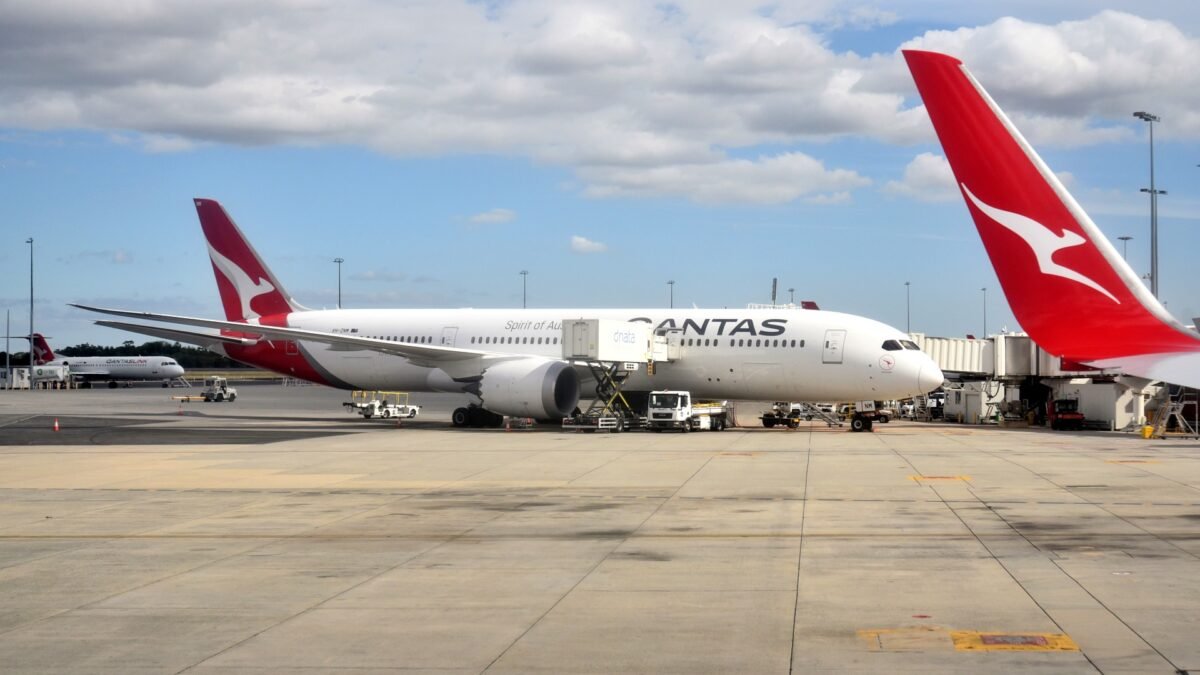
Qantas will cut 850 jobs in Australia and hand large parts of its corporate back office to consulting giant Accenture, the airline announced on Tuesday, in a move it blames squarely on the speed at which artificial intelligence is reshaping its industry. The first phase will hit finance, procurement, human resources and marketing, with most of the work to be done by Accenture teams in India, and the first redundancies are expected by the middle of 2027.
The decision, announced to staff in an email from chief executive Vanessa Hudson on Tuesday morning, affects about three per cent of the airline’s 28,000-strong Australian workforce, according to Reuters. It is the latest and most high-profile example of a major Australian company using AI as the stated reason to move white-collar work offshore, and it lands at a moment when Qantas is still paying for the last time it outsourced at scale.
“Today we’re announcing a new multi-year partnership with Accenture and changes that will affect parts of our corporate functions,” Hudson wrote to staff, according to Reuters. “I know this is hard news for some, and I’m sorry for the uncertainty it brings.”
Qantas said the jobs would go “over the coming years”, with the first round to happen by mid-2027. Some roles will be shifted to Accenture and performed by teams that would be “mostly” based in India, the airline said, while some of the work will remain in Australia. The airline has not yet said how many of the 850 positions will be redundancies and how many will be filled by redeploying staff into other roles, telling workers that individual outcomes had not yet been determined and that it would consult affected employees and their unions over the coming months.
The announcement was made on the same day Qantas shares rose about four per cent in morning trade, a reaction that underlined the gap between how investors and employees read the same news. For shareholders, the deal promises lower costs and faster technology change. For the 850 people whose jobs are in scope, it promises months of uncertainty.
What Qantas announced
The deal is a multi-year partnership under which Accenture will take over parts of Qantas’s corporate functions and redesign how they work. According to Reuters, the first phase covers finance, procurement, human resources and marketing. News.com.au reported that the Accenture agreement will run for seven years, according to Human Resources Director magazine.
Hudson framed the move as a technology decision rather than a simple cost-cutting exercise. “The scale and speed of change in technology and AI is something none of us has seen in our lifetime,” she wrote, according to Reuters. “Standing still is not an option for us.”
In her email to staff, Hudson said the partnership would help Qantas “redesign and simplify parts of how our corporate functions work and reduce duplication”. She also pointed to the airline’s ageing technology base. “Like every airline, we run on technology built up over decades for a different era, including more than 1,000 legacy applications that were never designed to work together,” she wrote, according to Human Resources Director. “It will allow us to unlock innovation faster and accelerate our use of AI, with lasting benefits.”
The airline says it spends more than one billion Australian dollars a year on technology, including through a new Product Innovation Centre in Adelaide that it expects to grow to more than 400 roles. That detail matters to the argument Qantas is making: the company says it is not abandoning Australian jobs wholesale, but shifting them from back-office processing towards technology and customer-facing work.
According to AAP, Hudson told staff the changes were “about modernising the technology behind our business and becoming more efficient, so we can keep investing in our customers, our people and our future”. She added that the decision “is not a reflection of their contribution or commitment”, according to Human Resources Director.
Qantas says it will redeploy as many people as possible through retraining, reskilling and new roles in Australia, and points to more than 4,400 operational roles it has created since 2023. But as Human Resources Director noted, a procurement analyst or an HR business partner cannot easily move into a pilot or engineering role, so the operational growth Qantas cites may not translate into suitable redeployment options for corporate staff.
A profitable airline cutting jobs
The timing of the announcement has drawn attention because Qantas is not in financial distress. In August, the airline reported a 2025/26 net profit of 1.3 billion Australian dollars, down 19.8 per cent on the previous year, according to AAP. Its underlying pre-tax profit fell by 13.8 per cent to 2.1 billion dollars despite a 7.1 per cent rise in revenue to 25.5 billion dollars.
The squeeze came largely from fuel. High jet fuel costs took about 420 million dollars off the annual result after the bill came in 610 million dollars over budget, according to AAP. Qantas had warned that airfares could rise again in 2027 after it was forced to find another 200 million dollars to cover a 3.8 billion dollar fuel bill for the first half of the new financial year.
The airline has already cancelled a planned 150 million dollar share buyback, according to AAP. The combination of falling profit, rising fuel costs and a cancelled buyback helps explain why management is looking for savings, even as the company remains solidly profitable.
That is precisely what makes the announcement politically sensitive. Qantas is cutting Australian jobs and sending work to India shortly after posting a billion-dollar profit, and unions have been quick to make that connection. The Australian Services Union, which represents many of the affected staff, met members on site on Tuesday, the same day the announcement was made.
The market, by contrast, welcomed the news. Qantas shares rose about four per cent in morning trade, according to Human Resources Director, and by 3.4 per cent to 9.63 dollars, according to Market Index. Investors appeared to read the deal as a credible plan to cut costs and modernise systems at a time when fuel prices are eating into margins.
The August warning nobody forgot
For the unions, Tuesday’s announcement was not a surprise. It was the confirmation of something they had feared since August, when the Australian Financial Review reported that a plan known internally as Project iQ could move up to 1,000 back-office roles, including HR, to India.
At the time, Qantas said it was only in early talks and that “no formal agreement is in place and no decisions have been made”, according to Human Resources Director. The Australian Services Union said back then that Qantas had told it there was no plan to offshore Australian jobs. On Tuesday, the union’s assistant national secretary Scott Cowen said the airline must “stay true to these commitments”. Earlier on Tuesday, Cowen said sending more jobs overseas was “not in the spirit of Australia”, and that the union’s priority was keeping as many roles onshore as possible.
The Australian Services Union’s NSW secretary Angus McFarland said the union believed most of the affected jobs would be at Qantas’s headquarters in Mascot, Sydney, according to Devdiscourse. The union’s concern is not only the number of jobs but where they are going: most of Accenture’s services under the deal will be delivered in India, although some roles will remain in Australia.
The Transport Workers Union went further. Its national secretary Michael Kaine linked the announcement directly to the airline’s earlier illegal outsourcing of ground crew, according to Human Resources Director. That link is the shadow hanging over everything Qantas does on outsourcing, and it is why the airline’s handling of consultation and redeployment will be watched so closely.
The 2020 shadow
Any Qantas outsourcing move is now judged against what happened the last time. In November 2020, as international borders remained shut and air travel ground to a halt during the pandemic, Qantas announced it would outsource baggage handling, aircraft cleaning and other ground operations at ten airports across the country. The decision affected around 1,683 Qantas employees and more than 370 at Jetstar, according to Travel Weekly.
The Transport Workers Union challenged the decision, and in 2021 the Federal Court found that Qantas had acted unlawfully. Justice Michael Lee ruled that the airline had breached the Fair Work Act by outsourcing the jobs partly to eliminate the risk of strikes and collective bargaining in the future. Qantas appealed, but the Full Federal Court upheld the decision in 2022, and in September 2023 Australia’s High Court unanimously dismissed the airline’s final appeal.
The financial consequences were severe. Qantas agreed in December 2024 to pay 120 million dollars into a compensation fund for the 1,820 affected workers, and in August 2025 the Federal Court fined the airline a further 90 million dollars. Justice Lee described the breach as the “largest and most significant contravention” of the relevant labour laws in their 120-year history, according to Human Resources Director. The court ordered 50 million dollars of the penalty to be paid to the Transport Workers Union, with the destination of the remaining 40 million dollars to be decided later.
Hudson took over as chief executive in September 2023, replacing Alan Joyce, who led the airline at the time of the mass redundancies. After the penalty was handed down, she said in a statement: “We sincerely apologise to each and every one of the 1,820 ground handling employees and to their families who suffered as a result”, according to YourLifeChoices. Justice Lee, however, characterised the apology as the “wrong kind of sorry”, suggesting Qantas showed no real contrition, according to Travel Weekly UK.
The 2020 case turned on specific facts. The courts found Qantas had taken adverse action to stop workers exercising future workplace rights such as bargaining. Nothing made public so far suggests the Accenture deal raises the same issue, as Human Resources Director noted. But the history means the union, regulators and the media will watch this process closely, and any suggestion that consultation is a formality will be tested hard.
There is also a practical legal difference that may matter. Under the Fair Work Act, a dismissal is only a genuine redundancy if the employer has met its consultation obligations and redeployment within the business or an associated entity was not reasonable. In August 2025, in Helensburgh Coal v Bartley, the High Court held that the Fair Work Commission can ask whether it would have been reasonable to redeploy employees into work being done by contractors. The court did not decide whether that redeployment was reasonable in that case, leaving the question to the Commission, according to Human Resources Director. For Qantas, that raises a question the earlier outsourcing case did not test: some of the Accenture work will be done in Australia, and it is unclear how the ruling would apply where a contractor takes over the same work an employee used to do. That remains untested, but it is likely to come up in consultation.
Part of a bigger shift
Qantas is far from alone. According to Reuters, the airline is the latest in a growing number of big Australian companies to offshore workers in a bid to cut costs and improve efficiency. Woolworths, Officeworks, Telstra and National Australia Bank have all announced similar moves this year.
Telstra flagged that up to 650 Australian jobs could go, with some roles moving to a hub in India, according to Human Resources Director. In June, Woolworths began consulting on offshoring HR, finance and IT roles. Coles extended its Accenture arrangement in August, and NAB told the ASX last month that it expects to cut up to 2,500 internal roles in the 2027 financial year.
The common thread is that corporate support functions, HR included, are the ones being redesigned. The pattern is consistent across the companies: a technology or AI justification, a consulting partner, a multi-year timetable, and a promise of redeployment and reskilling. The pattern is also consistent in the reaction: unions argue the work could stay in Australia, investors reward the cost savings, and governments face questions about what, if anything, they can do about it.
That national context is important because it changes how Tuesday’s announcement will be read in Canberra. This is no longer a single airline’s restructuring. It is part of a wave of white-collar offshoring by some of Australia’s largest employers, and it is happening at the same time as a national debate about AI and jobs. The Qantas announcement gives that debate a concrete example: a household-name company, a billion-dollar profit, and 850 jobs moving offshore explicitly because of AI.
Analysis: Why It Matters
AI is the new justification for offshoring
The most significant thing about Tuesday’s announcement may not be the number of jobs or even the destination. It is the reason Qantas gave. The airline did not say it was cutting costs because it was losing money. It said AI was changing the industry at unprecedented speed and that standing still was not an option. That framing matters because it is becoming the standard justification for white-collar job cuts across corporate Australia, and it is much harder for unions and politicians to argue against than a simple cost-cutting story.
When a company says it must cut costs, the argument is about numbers and can be challenged on the numbers. When a company says AI is transforming its industry, the argument becomes about inevitability, and inevitability is a much harder thing to negotiate with. Qantas’s email to staff leaned heavily on that language: the scale and speed of change, the legacy systems built for a different era, the need to unlock innovation faster. All of it may be true. But it is also worth asking what, exactly, AI is doing in this deal that requires 850 Australian jobs to move to India. Accenture will be doing the work with people, not only with software. The AI argument explains why the work should change; it does not by itself explain why the people doing it should be in a different country.
That distinction is likely to be at the centre of the union campaign and the political debate that follows. If AI is genuinely replacing the work, the policy question is about retraining and the safety net. If AI is being used as a reason to move the same work to cheaper labour markets, the policy question is about offshoring and corporate responsibility. The two are different problems with different answers, and Tuesday’s announcement does not clearly separate them.
The profit paradox will define the politics
Qantas posted a 1.3 billion dollar profit and then announced 850 job cuts. That sequence will be repeated by every critic of the deal, and it is powerful because it is simple. The airline’s answer is that profit fell by almost a fifth, fuel costs are surging, and it needs to modernise. That answer is also true. Both things can be true at once: a company can be profitable and still face real cost pressure. But in political terms, the profit figure will matter more than the margin figure, because the public debate about outsourcing is not really about accounting. It is about fairness.
The fairness question is sharpened by the fact that the jobs are going to India while Qantas remains Australia’s flag carrier, a company whose brand is built on Australian identity. The kangaroo on the tail is a national symbol, and the airline trades on it heavily. When the company that carries that symbol sends Australian jobs overseas, the contradiction is visible in a way it would not be for a less iconic employer. That is why the union language on Tuesday was about the “spirit of Australia” rather than about the fine print of the deal.
It is also worth noting that the market rewarded the announcement. Shares rose about four per cent. That is not a coincidence; it is the mechanism. Investors believe the deal will make Qantas more efficient, and they priced that in immediately. The tension between shareholder value and worker security is not new, but AI has given it a new form: the efficiency gains are now attributed to technology, which makes them sound inevitable rather than chosen.
The 2020 case still shapes everything
The most important background to Tuesday’s announcement is not in the press release. It is in the courtroom history. Qantas has already been found to have acted unlawfully in an outsourcing, fined 90 million dollars, and ordered to pay 120 million dollars in compensation. That history does not make this deal unlawful; the facts are different, and the airline will have taken legal advice. But it does change the scrutiny.
Every step Qantas takes from here, consultation, redeployment, the treatment of individual employees, will be examined by unions and lawyers who know the 2020 playbook in detail. The airline’s promise to consult and redeploy as many people as possible is not just a public relations line; it is a legal obligation, and the Helensburgh Coal ruling in August 2025 may have raised the bar by allowing the Fair Work Commission to ask whether redeployment into contractor-held work would have been reasonable.
There is a reputational dimension too. Hudson became chief executive after the 2020 decision, and she has spent her tenure trying to rebuild trust after the Joyce era. An outsourcing announcement that is handled badly would undo much of that work. An announcement handled well, with genuine consultation and real redeployment, could demonstrate that the company has learned. The test will not be the press release. It will be what happens to the 850 people over the next eighteen months.
The redeployment promise will be tested in detail
Qantas says it will redeploy as many people as possible through retraining, reskilling and new roles in Australia, and it points to more than 4,400 operational roles created since 2023. That sounds reassuring, but the detail matters. A finance analyst, a procurement specialist, an HR business partner and a marketing manager have skills that do not transfer easily to operational roles in aviation. The airline has not said how many of the 850 will be redeployed, how many will be made redundant, or what the retraining will actually involve.
The timetable adds to the pressure. The first changes are due by mid-2027, which gives the airline and the unions about eighteen months to work through consultation and redeployment. That is a long time for the affected employees to live with uncertainty, and the psychosocial cost of a long restructure is real. The Fair Work Ombudsman says consultation on major workplace change means telling staff about the proposal, explaining its effects, discussing ways to reduce harm and genuinely considering their ideas. If Qantas treats consultation as a box to tick after the decision is already made, the unions will say so loudly.
The other test is whether the Adelaide Product Innovation Centre, which Qantas expects to grow to more than 400 roles, becomes a genuine destination for displaced staff or remains a separate technology hub. If the new roles are filled by external hires while existing staff are made redundant, the redeployment promise will look hollow.
Australia’s corporate offshoring wave is now a national question
Finally, Tuesday’s announcement should be read as part of a national pattern rather than a single company’s decision. Telstra, Woolworths, Coles, NAB and now Qantas have all moved in the same direction in the same year, and the common thread is the redesign of corporate support functions through consulting partnerships and AI. That is a structural shift in the Australian labour market, not a series of isolated restructurings.
The policy question it raises is whether Australia wants its largest companies to keep back-office work onshore, and if so, what it is prepared to do about it. The government has limited direct power over private companies’ staffing decisions, but it has influence through procurement, through the tax system, and through the public debate. The Qantas announcement will add pressure for a response, particularly because the airline is the flag carrier and because the jobs are going to India at a time when the government is also talking about AI and the future of work.
There is a genuine debate to be had about whether offshoring back-office work is a reasonable response to AI or a misuse of the technology narrative. What is clear is that the debate will not be settled by one company’s press release. It will be settled, if at all, by what happens to the workers, by whether redeployment works, and by whether the efficiency gains Qantas promises actually materialise. The next eighteen months will provide the evidence.
What to Watch Next
- Consultation and the union response: The Australian Services Union and the Transport Workers Union will meet members and push for the maximum number of roles to stay onshore. Watch for any formal dispute or Fair Work Commission involvement.
- The first redundancies by mid-2027: Qantas says the first round of changes will happen by mid-2027. The number of redundancies versus redeployments in that first wave will show whether the promise to retrain staff is real.
- The seven-year Accenture deal: News.com.au reported the partnership will run for seven years. Watch for further phases beyond finance, procurement, HR and marketing.
- Qantas’s next results: The airline’s next financial update will show whether fuel costs keep squeezing margins and whether the Accenture savings begin to appear.
- The Adelaide Product Innovation Centre: Qantas expects it to grow to more than 400 roles. Watch whether displaced corporate staff are moved into it.
- Other Australian corporates: Telstra, NAB, Woolworths and Coles are all moving in the same direction. Watch for further announcements, and for any government response to the offshoring wave.
- Airfares in 2027: Qantas has warned fares could rise again in 2027 because of fuel costs. Watch whether the savings from the Accenture deal are passed to customers or kept as margin.
Sources
- Reuters: Australia’s Qantas to axe 850 jobs in offshoring deal with Accenture
- AAP: Qantas to slash hundreds of jobs, send roles overseas
- Human Resources Director: Qantas puts its own HR team on the outsourcing list
- Finimize: Qantas Taps Accenture As AI Push Triggers Job Cuts
- Travel Weekly: Explainer — The Qantas unlawful sackings case
- Devdiscourse: Qantas Airways to outsource 850 head-office jobs to Accenture

About the Author — Abdul Mannan
Related Articles

FDA Orders Vision-Loss Warning on Ozempic, Wegovy, Mounjaro and Zepbound Over Rare Eye Condition
The FDA has ordered a class-wide warning about a rare eye condition that can cause sudden, permanent vision…

Markets Steady After $3 Trillion AI Rout as Strong US Jobs Data Pushes Fed Hike Odds Towards 80%
Wall Street steadied on Monday after a $3 trillion AI sell-off, as Asian markets rebounded and a stronger-than-expected…
China’s Factory Inflation Hits Four-and-a-Half-Year High as Consumer Prices Cool, Exposing a Split-Screen Economy
China's producer prices rose 5.7% in October — the fastest in nearly four and a half years —…