
When Fame Stops Protecting Its Own: The Week Britain’s Curtain Fell

Two Days, Two Men, One Question
Have you ever wondered what fame really is? Not the applause, not the money, not the red carpet. I mean the invisible wall it builds around a man. The wall that makes people laugh at jokes that are not funny, excuse behaviour that is not excusable, and look away from things they would never tolerate in their own street. For years, that wall stood tall in Britain. And then, in the space of two days, it cracked twice.
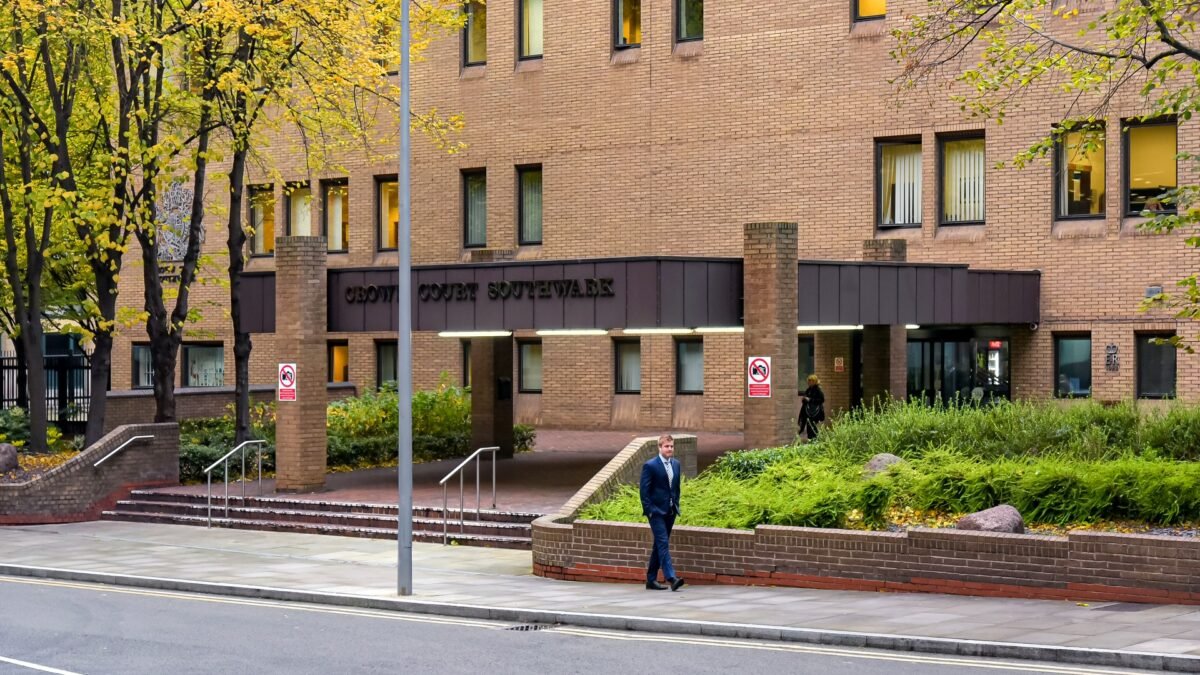
On Monday, 9 November 2026, Russell Brand stood in the dock at Southwark Crown Court in London and heard a judge sentence him to ten years and six months in prison. On Tuesday, 10 November, David Walliams was named as the celebrity at the centre of a three-year investigation by the Guardian and ITV News into allegations of sexual misconduct and grooming. Two famous men. Two different kinds of reckoning. One question hanging over both: how long can applause protect a man from the truth?
Monday: The Sentence
Let us begin with what a court has established, because facts matter more than feelings. A jury at Southwark Crown Court convicted Russell Brand, 51, of one count of rape and three counts of sexual assault against four women, in offences committed between 2004 and 2009. The verdicts came on Thursday, 5 November, after a trial lasting around four weeks. Brand had faced seven charges in total; he was acquitted of two further counts of rape and one count of attempted indecent assault. The jury’s verdicts, guilty and not guilty alike, deserve the same respect, because a jury that can acquit is a jury that can be trusted when it convicts.
The sentencing, handed down by Mr Justice Joel Bennathan on Monday, was nine years for the rape and nine, eighteen and eight months for the three sexual assaults, served consecutively to make ten years and six months in total. Under British sentencing rules, Brand will serve two-thirds of that term, around seven years, before being released on licence. He must also sign the sex offenders register. The judge’s words will follow him longer than the sentence itself. He called Brand a “sexual predator” who had acted with “staggering arrogance”, and he told the courtroom something so simple that it should never have needed saying: women “retain the right to say no”.
The offences were committed between 2004 and 2009, at the very height of Brand’s rise, when he was one of the most recognisable faces on British television and radio. The women came forward only after a joint investigation by The Times, The Sunday Times and Channel 4’s Dispatches was published in September 2023. That is a gap of nearly twenty years between the acts and the accounting. Twenty years in which a man could build a career, reinvent himself, gather millions of followers, and present himself as a truth-teller, while four women carried what had been done to them in silence. The Metropolitan Police have also said Brand is under investigation over two further rape allegations. Those are allegations only, and he has not been convicted of them, but they remind us that the story may not yet be finished.
Tuesday: The Naming
Twenty-four hours later, the second crack appeared. David Walliams, 55, the comedian and children’s author who sold millions of books to the very children whose trust he was supposed to honour, was named as the celebrity behind a High Court injunction battle. He had gone to court to stop the Guardian and ITV News from publishing their investigation. A High Court judge rejected his application last week, on 3 November, and Walliams did not appeal before the deadline. On Tuesday, 10 November, the investigation was published, and the BBC began removing programmes featuring Walliams, including Little Britain, from iPlayer while it reviews its material. His literary agent, Independent Talent Group, dropped him. His publisher, HarperCollins, announced it would cease publishing his work.
What does the investigation allege? Several women, who do not know each other, say Walliams pursued them sexually when they were teenagers or young women, in incidents dating back to 2003. Two say they first met him when they were fifteen. One woman, given the pseudonym Alex, says she met him at a fan event in 2004, aged fifteen, and that they first had sex when she was seventeen. “I think I was groomed. 100%,” she said. Another woman, Jade, says she met him in a Soho cafe in 2007, also aged fifteen, and alleges that at his home he kissed her and committed an act she now describes as sexual assault. The investigation, which began in 2023, drew on accounts from more than a hundred people, including around thirty with first-hand accounts. ITV News broadcast a documentary, David Walliams: Power and Silence, on the evening of 10 November.
Now listen carefully, because this is where honesty demands precision. These are allegations. Walliams denies all of them. “I am not a sexual predator. I have not broken the law,” he wrote in a letter to the journalists. He says he believed Alex was eighteen, denies grooming her, and strongly denies any sexual contact with Jade. He has not been charged with any crime, and no police investigation has been reported; the Metropolitan Police have said only that they contacted the Guardian and ITV News to ensure potential victims know how to report any criminal allegations. In the same statement, Walliams acknowledged that he had at times “behaved thoughtlessly” and had not always taken people’s feelings properly into account, something he said he regretted. A denial is not a conviction, and an allegation is not a verdict. Anyone who confuses the two is not seeking justice. They are seeking a spectacle.
The Mirror of History: Savile and the Price of Applause
And here is where history holds up its mirror, because Britain has stood in this exact place before, and it chose, for decades, not to see.
Jimmy Savile died in October 2011 as a national treasure, a BBC star knighted for charity, a man whose eccentricities were treated as charming. A year later, in October 2012, an ITV Exposure documentary broadcast the accounts of five women who said Savile had sexually abused them as teenagers. The Metropolitan Police launched Operation Yewtree, and the floodgates opened. The joint report by the police and the NSPCC, Giving Victims a Voice, published in January 2013, recorded 450 alleged victims, 328 of them minors at the time, and 214 formally recorded offences across 28 police forces. Four hundred and fifty people. And the most damning fact of all: it took his death for a single one of them to be believed in public.
Savile is the ghost that haunts this week’s news. He is the proof that fame does not merely protect a predator. It recruits an entire nation into his defence. Institutions protected him because he raised money for them. Broadcasters protected him because he brought them audiences. Audiences protected him because they loved the character on the screen. The same machinery was at work in Hollywood when Harvey Weinstein was convicted in New York in 2020 and sentenced to 23 years in prison, after decades in which the most powerful people in film knew the rumours and called them the price of doing business.
Do you see the pattern? It is never one man. It is always a system. A star, a circle of people paid to keep him happy, institutions afraid of losing a money-maker, and an audience trained to laugh on cue. The predator is the centre of the circle, but the circle is what makes him untouchable. Break the circle, and the man falls. That is what happened this week, twice, in two different ways: a jury broke it in a courtroom, and journalists broke it in a newsroom.
Fame Is a Shield Until It Is a Cage
But fame is also a cage, and this week showed us the bars. Brand built a second career as a self-styled truth-teller, a man who claimed to see through the lies of the powerful. Now a court has found that the most important lies were his own. Walliams built a career writing books for children, and now the very institutions that published him have walked away.
And what of us, the audience? We are not innocent bystanders in this story. We are the ones who made these men famous. We bought the books, watched the shows, shared the clips, and defended our favourites whenever a rumour surfaced. Every time we said “but he’s so funny”, we added another brick to the wall. Celebrity culture trains us to treat an accusation against a famous man as an attack on our own taste, as if believing a victim means admitting we were fooled. And so we choose the star over the stranger, again and again, until a jury or a newsroom forces us to look.
Two Different Kinds of Truth
I want to be very clear about something, because a column that preaches justice must practise it. Russell Brand and David Walliams are not in the same position, and pretending otherwise would be dishonest.
Brand has been tried, convicted by a jury, and sentenced by a judge. The law has spoken, and the law’s word is final unless an appeal changes it. Walliams has been accused by journalists’ sources, and he denies the accusations. No court has tested them. No charge has been brought. The consequences he has already faced, the loss of his agent, his publisher, his programmes, are the decisions of private companies protecting their own names, not findings of guilt. They may be understandable. They are not justice.
This distinction is not a technicality. It is the whole foundation of a civilised society. If we treat an allegation as a conviction, we destroy the presumption of innocence, and the next innocent person accused will have no defence. If we treat a conviction as a mere allegation, we destroy the victims’ hard-won justice, and the next guilty man will hide behind our doubt. Both errors serve the same master: the idea that the truth is whatever the loudest crowd believes. The law exists precisely because crowds cannot be trusted with the truth.
What This Week Asks of Us
So what does this week ask of us? It asks us to stop worshipping fame and start protecting people. It asks institutions, broadcasters, publishers, talent agencies, to stop waiting for a jury or a headline before they act on what their own staff already know. HarperCollins reportedly stopped publishing Walliams’s books after concerns about his behaviour towards junior female staff. Ask yourself: how long did they know? How many warnings were filed away? The BBC removed Little Britain within hours of the investigation’s publication. Ask yourself: what would have happened if the investigation had never been published? Institutions do not reform themselves. They are reformed by exposure, and exposure only happens when victims speak and journalists listen.
And it asks every young person watching this story to hear the words the judge spoke in that courtroom: women retain the right to say no. Not a qualified no. Not a no that can be negotiated away by charm, by fame, by money, by persistence. A no is a complete sentence. A society that forgets that sentence will keep producing men who believe a smile is consent, and keep producing victims who wait twenty years to be believed.
I began this column with a question: how long can applause protect a man from the truth? This week gave us the answer. Not forever. The wall cracks. Sometimes it takes a jury. Sometimes it takes three years of journalism. Sometimes, as with Savile, it takes a death. But it cracks, because the truth has one advantage that fame does not: it does not need an audience. It only needs one person brave enough to speak, and one institution honest enough to listen.
Sources & References
- BBC News, “Russell Brand sentenced to 10-and-a-half years in prison for rape and sexual assault”, 9 November 2026 (via US Brief summary citing BBC and the Crown Prosecution Service).
- Reuters, “UK’s Russell Brand sentenced to 10-and-a-half years in jail for rape, sexual assault”, 9 November 2026, via WNCY.
- The Times, “Russell Brand jailed for ten years and six months”, 9 November 2026, via The Times.
- PEOPLE, “Russell Brand Sentenced to 10-and-a-Half Years After Being Found Guilty of Rape and Sexual Assault in London Trial”, 9 November 2026, via PEOPLE.
- Mediaweek, “David Walliams accused in ITV News and Guardian probe”, 10 November 2026, via Mediaweek.
- Radio Times, “ITV confirms new documentary David Walliams: Power & Silence to air tonight”, 10 November 2026, via Radio Times.
- LADbible, “BBC removes Little Britain from iPlayer after David Walliams named in sexual misconduct allegations”, 10 November 2026, via LADbible.
- Metropolitan Police Service and NSPCC, “Giving Victims a Voice”, January 2013, via Giving Victims a Voice.
- Featured image: Southwark Crown Court, London. Photo: Jorge Franganillo / Wikimedia Commons (CC BY 2.0).

About the Author — Abdul Mannan
Related Articles

Wuzhen 2026: Who Will Own the Future of Our Shared Digital Life?
In a thousand-year-old water town, the world gathers to decide who owns our digital future — and 2.2…

Greece Has Voted to Be a Parent: The Under-15 Social Media Ban and the Oldest Argument on Earth
On October 23, Greece became the latest country to ban social media for children under 15. But every…

Paris Under Curfew: What France’s Worst Riots in Years Are Really Telling the World
As Paris imposes its first curfews in years, this column reads France's worst riots in a generation through…