
Hot October Inflation Puts the Fed on Course for a December Rate Hike — and a Half-Point Move Is Now on the Table

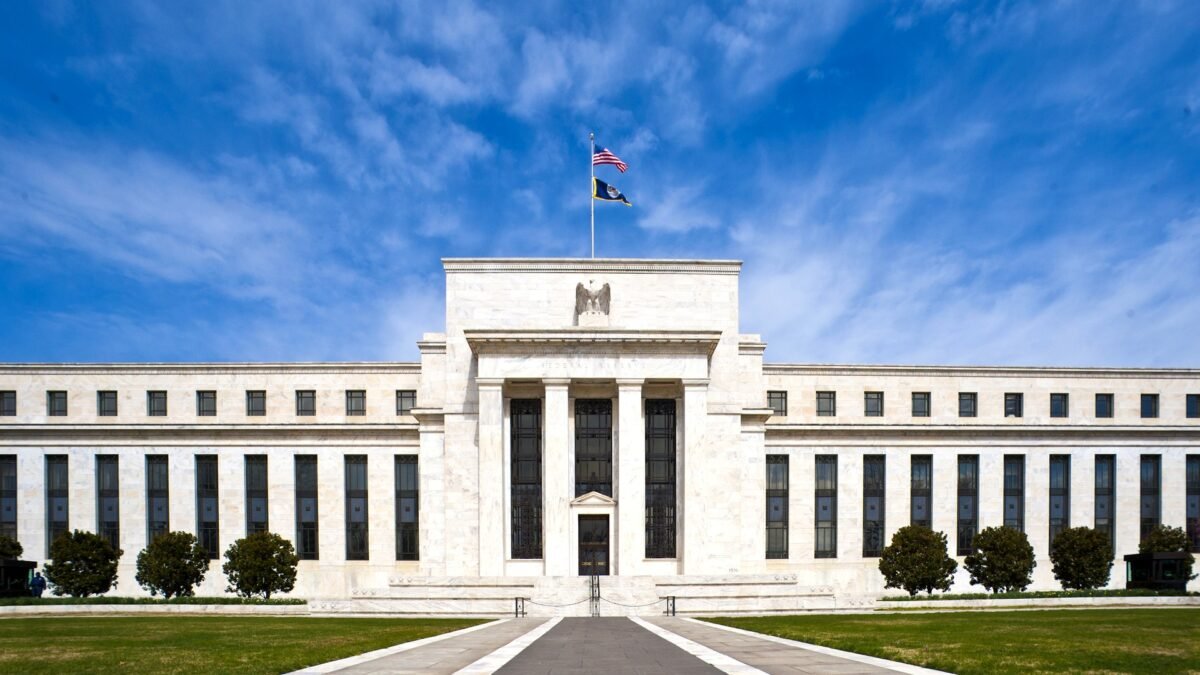
US inflation came in hotter than expected in October, and the Federal Reserve now looks all but certain to raise interest rates again in December. The only question left open by the numbers is how big the move will be.
Consumer prices rose 0.4 per cent in October on a seasonally adjusted basis, the Bureau of Labor Statistics said on Tuesday, after a 0.6 per cent rise in September. The increase was smaller than the month before, but it was larger than the 0.3 per cent rise economists polled by Reuters had forecast. Core inflation, which strips out volatile food and energy prices and is the measure Federal Reserve officials watch most closely, rose 0.3 per cent for the third month in a row, again above the 0.2 per cent forecast.
That core reading matters more than the headline figure, because of a line drawn by a Federal Reserve governor hours before the data was published. Speaking in London on Tuesday, Fed Governor Christopher Waller said he would support a quarter-point rate rise at the Fed’s December meeting even if October’s inflation had cooled. But if core prices rose 0.3 per cent or more, he said, “a stronger policy move may be needed” and “a 50 basis point hike in the policy rate should be considered at the December meeting”. October’s core reading landed exactly on that trigger.
The report is the last inflation data the Fed will see before its final meeting of the year on December 8 and 9. “This is the last look at CPI inflation the Fed will get before its December meeting, and it most likely seals the deal on a rate hike to close the year,” James McCann, senior economist of investment strategy at Edward Jones, said in a note quoted by USA Today. “On balance we think it is most likely that the Fed will deliver a 25 basis points move, especially with oil prices moving lower in recent days and financial conditions increasingly volatile.”
Traders agreed. According to CME FedWatch, markets were pricing in a more than 90 per cent chance of a quarter-point rise on December 9, which would lift the Fed’s benchmark rate to a range of 4 per cent to 4.25 per cent. The odds of a larger half-point move, which had been close to zero before Waller’s speech, jumped to around 10 to 15 per cent by mid-morning on Tuesday, according to Reuters.
What the October report showed
The Bureau of Labor Statistics released the October consumer price index at 8:30 a.m. Eastern time on Tuesday, November 10. The all-items index for all urban consumers rose to 337.511 on the 1982-84 base, the bureau said. Shelter prices rose 0.3 per cent in October and accounted for more than 30 per cent of the month’s overall increase, according to the bureau’s release.
One figure was missing from the report, and the absence itself tells a story about American government. The bureau published no annual inflation rate for October, because the federal government shutdown last autumn suspended data collection in October 2025, leaving no base for a year-on-year comparison. The Federal Reserve Bank of Cleveland estimated after the release that consumer prices had risen 3.8 per cent over the year in October, a slight uptick from 3.7 per cent in September, according to USA Today. Its nowcast put core inflation at 2.6 per cent over the year, in line with September.
The monthly numbers, rather than the annual rate, are therefore what officials and markets are reading. On that basis, October was the third consecutive month in which underlying price pressures built steadily. Core inflation rose 0.3 per cent in August, 0.3 per cent in September and 0.3 per cent again in October, an annualised pace of about 3.7 per cent over three months, according to an analysis of the data. The Wall Street Journal calculated that prices over the past three months have risen at a roughly 5.7 per cent annualised pace, far above the Fed’s 2 per cent inflation goal, the New York Post reported.
Behind the core increase were price rises for recreation goods, medical care and public transport, according to USA Today. Airline fares rose 0.4 per cent in October and are up about 27.8 per cent over the year, the New York Post reported. Shelter, the largest single component of the index, rose 0.3 per cent, and apparel ticked up 0.1 per cent. Appliances rose 0.5 per cent.
There was some relief in the details. Health insurance costs fell 1.8 per cent in October, just as Americans entered open enrolment season. Used cars and trucks, one of the few categories with a genuine annual comparison because their prices are based on real transactions rather than surveys, fell 1.2 per cent over the month and 3.3 per cent over the past year, according to the New York Post.
Energy and food keep pushing prices up
Energy and food were among the largest drivers of October’s inflation, and both are tied to the war that has shaped the American economy for most of this year. Geopolitical conflict abroad and the war with Iran have been major drivers of US inflation this year as they limit the global oil supply, according to USA Today.
Petrol prices rose 1 per cent in October, a much slower pace than the 9.1 per cent jump in September, but still an increase. Over the past year, petrol prices have risen 37.4 per cent, the New York Post reported. According to AAA data cited by USA Today, regular petrol prices are up 34 per cent and diesel costs are up 64 per cent since the United States attacked Iran on February 28. The national average for a gallon of regular petrol stood at $3.98 on November 10, down from $4.37 a month earlier but up from $3.07 a year ago, according to AAA.
Electricity costs rose 0.9 per cent in October, while natural gas prices fell 0.8 per cent. Fuel oil, used to heat homes in the north-east, recorded one of the largest increases of the month, the New York Post reported, setting off alarms just ahead of the winter season.
Food prices were also a major driver. The food-at-home index rose 0.4 per cent over the month, and the overall food index rose 0.5 per cent, according to the New York Post. Beef prices, which have surged in recent years because cattle herds have shrunk, rose 0.9 per cent in October. Uncooked poultry, including turkey, rose 1.9 per cent, a painful figure with Thanksgiving approaching. Fruit and vegetable costs rose 0.6 per cent, dairy prices rose 0.6 per cent and bakery items rose 0.2 per cent, according to USA Today. Eating out also got dearer, with the food-away-from-home index up 0.5 per cent.
The squeeze is already changing how Americans plan the holiday. A LendingTree survey of 2,000 US adults found that 51 per cent plan to host Thanksgiving dinner this year, down from 59 per cent in 2025, according to USA Today. Among those preparing to celebrate, 53 per cent said inflation is affecting their plans, with 25 per cent changing their menu, 22 per cent using coupons more and 14 per cent shortening their guest list.
Toys, a heavily tariff-sensitive category, rose about 1 per cent over the month, the New York Post reported, which could be an especially painful point for shoppers heading into the holiday season. Computer prices have risen roughly 11.8 per cent over the past 12 months, while software has soared nearly 26 per cent as shortages have sent prices surging amid the nationwide data-centre buildout.
Waller’s line in the sand
The most consequential part of Tuesday was not the data alone but the way a senior Fed official had framed it in advance. Waller, speaking overnight in London at a conference hosted by King’s Business School and the Money Macro and Finance Society, set out his position before the numbers were released.
“While I am hoping for an improvement over September, even if this occurs, I would still support a 25 basis point increase in the FOMC’s policy rate at our December meeting,” Waller said in remarks prepared for delivery in London, according to Reuters. “If core consumer prices rise 0.3 per cent or more from September, a stronger policy move may be needed. In that case, I believe a 50 basis point hike in the policy rate should be considered at the December meeting.”
Waller added that sticking with only a quarter-point rise, when inflation was too high and appeared to be broadening, would put the Fed’s credibility at risk. “Hiking only 25 basis points would put our credibility at risk, a risk I am not eager to take,” he said, according to USA Today.
Waller is only one voice on the Federal Open Market Committee, and his view does not decide the outcome. But his intervention was striking for two reasons. First, he committed himself to a hike in advance, whatever the data showed, which removed any doubt about the direction of travel. Second, he attached a precise numerical trigger to the bigger move, and the data then met it exactly.
He was not the only official pushing in the same direction. Dallas Fed President Lorie Logan said after the report that officials may need to pick up the pace of increases “this winter [more rapidly] than the FOMC has moved so far this fall”, according to the New York Post. The Fed raised rates by a quarter point in September, taking its target range to 3.75 per cent to 4 per cent, and then held steady at its October meeting. Two officials wanted a hike even then, according to market analysis cited after the report.
The Fed’s own preferred inflation gauge, the personal consumption expenditures index, was 3.7 per cent in September, with core PCE inflation at 3.1 per cent, according to Reuters. Both are well above the Fed’s 2 per cent target. The October CPI report is the last consumer price data the committee will have before December, although the producer price index arrives on November 13 and the November jobs report on December 4.
Markets react: stocks fall, yields climb, gold slides
Financial markets reacted swiftly to the hotter-than-expected numbers. By about 3:35 p.m. Eastern time on Tuesday, the Dow Jones Industrial Average had fallen 180 points, or 0.3 per cent, while the S&P 500 slid 0.5 per cent and the Nasdaq fell 0.9 per cent, according to the New York Post.
Bond markets sold off as traders repriced the path of interest rates. The yield on the US 30-year Treasury ticked higher to 5.351 per cent, while the 10-year yield hit 4.988 per cent, nearing 5 per cent again, the New York Post reported. The dollar extended its gains against major currencies. Gold fell more than 2 per cent on Tuesday, according to market reports, as higher-for-longer rates reduced the appeal of an asset that pays no interest.
Chris Zaccarelli, chief investment officer for Northlight Asset Management, said the question is no longer whether the Fed will raise rates in December, but whether it will immediately follow that with another hike in January, “which would have been unexpected before today”, according to the New York Post. “Alternatively, the Fed might ‘take their time and raise rates slowly next year,'” he said in a note. “All of this matters for markets, because a more patient Fed would be easier for stock bulls to navigate, while a more aggressive Fed could prove to be too big of a headwind for the market to overcome next year.”
Joseph Brusuelas, chief economist at RSM, said the inflation report could keep a “supersize hike on the table at the December Fed meeting”, according to market coverage of the release. “In my estimation this requires rate hikes by the Fed and we think that a December rate hike is baked in the cake given that this is the final CPI report that the Fed will get to observe,” he said.
Economists polled by Reuters had expected the core monthly reading to drop to 0.2 per cent in October. The fact that it held at 0.3 per cent for a third month, and that the Cleveland Fed’s nowcast had projected only a 0.21 per cent core rise, made the miss larger than the headline suggests. “The 0.4 per cent rise in prices over the month is higher than forecasters expected,” USA Today noted, adding that the Cleveland Fed’s nowcast had projected a 0.24 per cent headline increase.
Wages are not keeping up
For American households, the report’s most painful message was not about interest rates but about pay. Average hourly earnings for employees on private nonfarm payrolls rose 0.4 per cent in October, the Labor Department estimated on November 6, according to USA Today. That matched the month’s price increase, which meant that in the last month alone, worker pay growth kept pace with inflation.
Over a longer stretch, it has not. Average weekly earnings for workers in October were flat over the month when adjusted for inflation, according to a New York Times estimate cited by the New York Post. It was the seventh straight month in which price increases outpaced wage gains, a stretch that could help explain why consumer sentiment has remained low and why Democrats swept congressional midterm elections across the country, the newspaper reported.
Despite stubborn inflation, consumer spending has remained strong. But Americans have increasingly been falling into debt, according to data the New York Fed released on Tuesday. Credit card balances hit a record $1.29 trillion in the third quarter, and total household debt, including mortgages, auto loans and student loans, reached a record $19.1 trillion, the New York Post reported.
That combination, rising prices, flat real pay and record borrowing, is the backdrop against which the Fed must decide. Higher interest rates are meant to cool demand and bring inflation down. But they also make carrying a credit card balance or taking out a loan more expensive, which is precisely the burden households already carry.
The White House response was muted. National Economic Council Director Kevin Hassett called the inflation report “disappointing” during a brief appearance on Fox Business on Tuesday morning, according to the New York Post. As of publication, President Donald Trump had not yet reacted to the data.
Why the Fed is hiking into a war economy
The October inflation report cannot be understood without the war that has driven energy prices for most of 2026. The United States attacked Iran on February 28, and the conflict has disrupted oil supplies through the Strait of Hormuz, the narrow waterway through which a large share of the world’s seaborne oil passes. Iran declared the strait closed on October 26, and mine attacks on tankers have continued through November, with three more tankers exploding after striking mines on Tuesday, November 10, the same day the inflation data was released.
Michael Pearce, chief US economist at Oxford Economics, captured the Fed’s dilemma in a briefing on November 5, before the CPI release. The Federal Reserve is “obviously in a tricky place,” he said, according to USA Today. “They can’t do anything to reopen the Strait of Hormuz, and a few rate hikes, I think, is unlikely to derail or slow down the AI buildout much,” he said, adding that higher interest rates may prevent inflation from broadening but that “the parts of the economy that those rate hikes work on are already relatively weak and are unlikely to deliver much more in terms of disinflation.”
That is the core tension. The inflation the Fed is fighting is partly imported, driven by war, energy and tariffs, and therefore only partly responsive to interest rates. Raising borrowing costs does nothing to clear a mine from the Strait of Hormuz or to reopen an oil route. What it can do is stop price rises in one part of the economy from spreading into wages and into the prices of services, where domestic demand still matters.
At the same time, the labour market has given the Fed room to act. Recent jobs data showed hiring was surprisingly strong in October and the unemployment rate fell, according to the New York Post, adding to the case for a rate hike because the Fed can remain squarely focused on inflation while meeting its other goal of keeping unemployment low. A central bank that raises rates into a weak jobs market risks a recession. A central bank that raises rates when hiring is strong can argue it is acting from a position of strength.
The political backdrop matters too. The Democrats’ sweeping victory in the midterm elections last week, taking control of Congress from January, has changed the politics around the Fed. The White House has been pressing for lower rates, but the Fed’s mandate is price stability, and the October data gave the hawks on the committee exactly the evidence they needed. The Fed’s chair, Kevin Warsh, has resisted giving any guidance on the future path of rates, according to Reuters, which makes Waller’s unusually explicit intervention all the more significant.
Analysis: Why It Matters
The October inflation report is important not because any single number was dramatic, but because of what it confirmed, what it removed and what it now forces. A 0.4 per cent monthly rise is not a crisis on its own. Three months of core inflation stuck at 0.3 per cent, a governor’s public trigger met to the decimal, and a December decision that can no longer be postponed, taken together, amount to a turning point in the Federal Reserve’s year.
The trigger that was met to the decimal
Christopher Waller’s speech in London was unusual in a central banking world that prizes studied ambiguity. Fed officials normally avoid tying themselves to a single data point, because a single data point can always surprise. Waller did the opposite. He named the number, 0.3 per cent core inflation, named the consequence, consideration of a half-point hike, and named the meeting, December 8 and 9.
That kind of precision is a gamble, and it paid off in the sense that the data landed exactly where he said it would have to land for the bigger move to enter the debate. It also boxed the committee in. If core inflation had come in at 0.2 per cent, Waller could have supported a quarter point and moved on. At 0.3 per cent, he has publicly committed himself to arguing that a half-point move should at least be considered, and to warning that a smaller move risks the Fed’s credibility. The December meeting will now be argued on his terms, even if the final vote is for a quarter point.
There is a risk in this for Waller himself. A governor who sets a public test and then votes for the smaller move anyway invites the question of what his warning was worth. A governor who pushes for the half point and loses the vote has spent credibility of his own. Either way, the October report has turned a routine December meeting into a test of the Fed’s nerve.
Inflation that will not broaden, and will not fade
The most worrying feature of the October report is not the level of inflation but its shape. Core inflation has now risen 0.3 per cent in three consecutive months, and the increases are spreading. Recreation goods, medical care, public transport, shelter, airfares and food are all rising at the same time. That breadth is what Waller meant when he said inflation appeared to be broadening, and broadening inflation is harder to stop than a spike in a single category.
At the same time, the report contains genuine signs of cooling. Petrol prices rose only 1 per cent after a 9.1 per cent jump in September. Health insurance fell 1.8 per cent. Used cars fell. The Cleveland Fed’s estimate of annual inflation, 3.8 per cent, is only a tenth higher than September’s 3.7 per cent. None of this looks like inflation spiralling out of control.
The honest reading is that American inflation is stuck, not surging. It is stuck at a level roughly double the Fed’s target, and it is stuck there because the forces pushing prices up, war-driven energy costs, tariffs, a data-centre building boom that has sent computer and software prices soaring, and a tight housing market, are not the forces that interest rates reach most easily. A rate hike can cool demand. It cannot build more houses, end a war or print more graphics processors.
A hike that punishes the people it is meant to protect
The cruellest part of the October report is the wages section. Pay rose 0.4 per cent in October, exactly matching prices, which sounds like a draw. Over seven months, prices have outpaced pay every single month. Real weekly earnings were flat in October. For households, that means the cost of living is rising while the pay packet, in real terms, is standing still.
Into that squeeze comes the Fed’s response. A December rate hike will make credit card balances, car loans and mortgages more expensive. Credit card balances are already at a record $1.29 trillion, and total household debt at a record $19.1 trillion. The tool the Fed uses to fight inflation falls hardest on the households already borrowing to keep up with it.
This is not an argument against raising rates. Inflation that becomes embedded in expectations is worse for the same households over time, because it erodes pay year after year. But it is a reminder that monetary policy is a blunt instrument, and that the people who will feel December’s decision most directly are not the traders repricing bond yields but the families deciding whether to host Thanksgiving dinner. The LendingTree survey, 51 per cent hosting this year against 59 per cent last year, is a small, human measure of what a 0.4 per cent monthly rise actually means.
The war premium in every price
No honest account of October’s inflation can ignore where much of it came from. Petrol is up 37.4 per cent over the year. Diesel is up 64 per cent since February 28. Fuel oil, airfares and food prices all carry the same fingerprint: an energy shock that began with the American attack on Iran and has been sustained by the mine campaign in the Strait of Hormuz.
President Trump said on Monday that the war with Iran had “effectively ended”, even as the maritime blockade continues and tankers were still exploding on Tuesday. The markets, for their part, have stopped listening to declarations of an end to the war and started pricing the reality instead. Brent crude fell to two-month lows on Tuesday as American officials downplayed further military action, which is one reason the Fed’s economists expect the December hike to be a quarter point rather than a half.
But the war premium is not only in oil. It is in the Strait of Hormuz shipping routes, in insurance costs, in the tariffs that have pushed toy prices up ahead of Christmas, and in the data-centre buildout that has sent software prices up 26 per cent in a year. The October report is, in that sense, a war report as much as an economic one. The Fed is being asked to solve with interest rates a problem that began with missiles and mines, and the limits of that approach are visible in every line of the data.
What December will actually decide
The December meeting will decide a number, 25 or 50 basis points, but the number is the least important part of it. What matters is the signal the Fed sends about 2027. If it hikes by a quarter point and signals patience, markets will read it as a central bank that believes inflation is contained. If it hikes by a half point, or hikes by a quarter and signals another move in January, markets will read it as a central bank that believes inflation is still winning.
The January question is already live. Chris Zaccarelli of Northlight Asset Management said the debate has moved from whether the Fed hikes in December to whether it follows up in January, “which would have been unexpected before today”. Joseph Brusuelas of RSM warned of a rising risk of a January hike rather than one in March. Futures markets now expect another increase in March at the latest.
There is also a credibility question that goes beyond Waller. The Fed raised rates in September, held in October, and now faces a December decision with inflation higher than it was when it last moved. A central bank that pauses while inflation rises invites the charge that it has lost its nerve. A central bank that hikes aggressively into a war economy invites the charge that it is fighting the wrong war. December’s decision will be judged not on the day but over the following year, by whether inflation falls, whether jobs hold, and whether the households now borrowing at record levels can keep paying.
What to Watch Next
- The Fed’s December 8-9 meeting: the decision itself, the size of the move, and above all the statement and the chair’s press conference, which will signal whether January brings another hike.
- The producer price index on November 13: wholesale prices will show whether the cost pressures in October’s CPI are still building upstream or starting to ease.
- The November jobs report on December 4: the last major data before the Fed meets. Strong hiring would remove the last argument against a hike; a weak report would complicate the decision.
- The November CPI report on December 10: published the day after the Fed’s decision, it will restore the annual inflation rate and show whether October’s 0.3 per cent core reading was a plateau or a step on the way up.
- Oil and the Strait of Hormuz: Brent crude fell to two-month lows on Tuesday, but three tankers were mined the same day. Any escalation in the strait would feed straight back into petrol and diesel prices.
- President Trump’s reaction: the White House called the report “disappointing” through Kevin Hassett, but the president himself had not reacted as of publication. His response will shape the political pressure on the Fed heading into December.
Sources
- US Bureau of Labor Statistics — Consumer Price Index News Release, October 2026
- USA Today — October inflation data sets stage for December interest rate hike
- New York Post — Inflation hotter than expected in October as energy, food prices surge
- Reuters — US consumer prices rise briskly for third straight month
- Business Day (Reuters) — Fed may consider half-point hike after core CPI rises
- Reuters — Hot October inflation report rattles markets

About the Author — Abdul Mannan
Related Articles
Vodafone Lifts Full-Year Guidance as Business Division Hits Record Growth Despite €3.6 Billion Loss on German Writedown
Vodafone raised its full-year profit and cash flow guidance after a strong first half driven by record business…
Qantas to Cut 850 Australian Jobs and Send Back-Office Work to India in Accenture AI Deal
Qantas will cut 850 Australian jobs and move corporate back-office work to Accenture teams mostly based in India,…

FDA Orders Vision-Loss Warning on Ozempic, Wegovy, Mounjaro and Zepbound Over Rare Eye Condition
The FDA has ordered a class-wide warning about a rare eye condition that can cause sudden, permanent vision…