
Vodafone Lifts Full-Year Guidance as Business Division Hits Record Growth Despite €3.6 Billion Loss on German Writedown

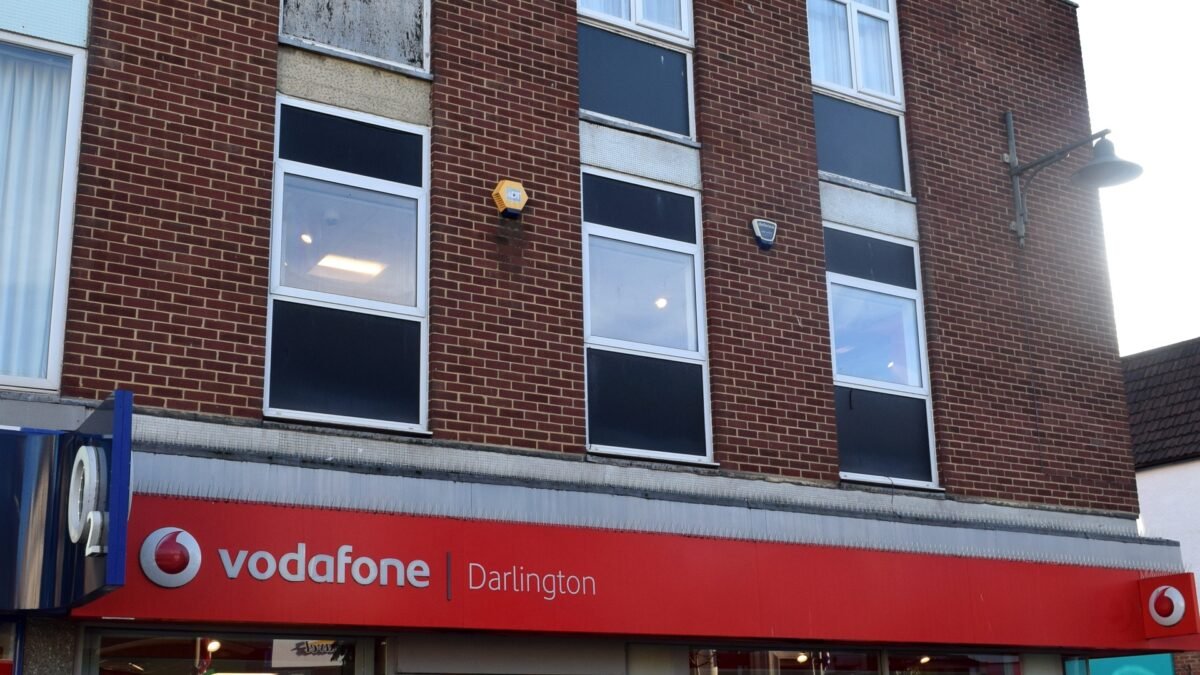
Vodafone raised its full-year profit and cash flow guidance on Tuesday after a strong first half in which its business division delivered record growth and its African operations expanded at a double-digit pace, even as the telecoms group swung to a statutory loss of 3.6 billion euros on a huge writedown in Germany.
The London-listed group now expects adjusted earnings before interest, tax, depreciation and amortisation after leases, known as adjusted EBITDAaL, of between 13.2 billion and 13.4 billion euros for the year ending in March 2027, up from its previous forecast of 13.0 billion to 13.3 billion euros, according to Reuters. Adjusted free cash flow is now forecast at between 2.8 billion and 3.0 billion euros, raised from 2.6 billion to 2.9 billion euros. Reuters reported that at the top end of the new range, the cash flow forecast would represent a jump of more than 20 per cent in organic free cash flow.
For the six months to 30 September, Vodafone reported total revenue of 21.85 billion euros, an increase of 11 per cent on the same period a year earlier, according to AJ Bell. Service revenue rose 13 per cent to 18.4 billion euros, and grew 5.8 per cent on an organic basis, which strips out the effects of acquisitions, disposals and currency movements. Adjusted EBITDAaL increased 13 per cent to 6.45 billion euros, up 6.4 per cent organically, Reuters reported.
The headline numbers, however, told a very different story. Vodafone swung to a pre-tax loss of 373 million euros, from a profit of 2.11 billion euros a year earlier, after taking a 4.85 billion euro non-cash impairment charge in Germany, according to AJ Bell. The statutory loss after tax was 3.60 billion euros, compared with a profit of 1.05 billion euros in the previous year, while operating profit fell to 517 million euros from 2.16 billion euros, according to ADVFN.
Chief Executive Margherita Della Valle struck an upbeat note on the underlying trading, while conceding that the group’s largest market still had far to go. “I am very happy about our overall group performance, but Germany is not yet where it needs to be,” she said, according to AJ Bell. “We have a clear action plan in progress, which is structurally simplifying our German operations and improving customer satisfaction across all of our services.”
Shares in Vodafone were marginally lower at 116.90 pence each in London in early trading on Tuesday morning, while the wider FTSE 100 index was up 0.4 per cent, according to AJ Bell, a muted reaction that suggested investors had already priced in much of the improvement.
Germany remains the weak spot
Germany, Vodafone’s biggest market, once again held back the group. Organic service revenue in the country edged up just 0.4 per cent in the first half, slowing from 1.2 per cent in the first quarter, Reuters reported, as continued pressure on mobile offset growth in wholesale and fixed-line services. Adjusted EBITDAaL in Germany fell 2.4 per cent to 2.14 billion euros, with an organic decline of 3.2 per cent, according to ADVFN, while total revenue in the country rose 1.0 per cent to 6.05 billion euros.
The customer numbers underline the scale of the challenge. Vodafone’s German broadband customer base fell by 198,000 during the first half, and its mobile contract customer base shrank by 75,000, according to ADVFN. The group said higher wholesale revenue and good broadband growth in its consumer business, together with strong digital services growth in its business division, had offset an ongoing decline in television and continued mobile pressure, according to AJ Bell.
The 4.85 billion euro impairment charge was the financial consequence of those difficulties. ADVFN reported that the charge was primarily a reflection of changes in interest rates, and that it was a non-cash accounting entry rather than money leaving the business. Vodafone also recorded a 2.2 billion euro write-down of deferred tax assets in the United Kingdom following its acquisition of the remaining stake in VodafoneThree, its merged British mobile business, according to ADVFN.
Germany’s problems have deep roots. In July 2024, a change in German law ended the long-standing rule that allowed landlords to pass television costs on to tenants through their rental charges, forcing Vodafone to win back millions of customers one household at a time. The company lost 2.2 million television customers in the summer quarter of 2024 alone, and its German service revenue fell 6.2 per cent in that quarter. The damage was so severe that Vodafone reported an operating loss of 411 million euros in Germany in the year to March 2025, after writedowns of 4.5 billion euros in Germany and Romania.
There are signs that the worst of that shock has passed. Vodafone reported its first increase in German television customers since 2015 in the first quarter of the current financial year, adding 28,000 subscribers to take the total to about 8.8 million. But the latest half-year figures show the recovery is fragile, and the chief executive’s own words make clear that the German operation is still not performing where the group needs it to be.
On Monday, the day before the results, Vodafone announced a further 2,300 job cuts in Germany, according to the Wall Street Journal, on top of reductions already included in a broader European restructuring plan launched in May. The Glasgow Times reported that the group had already cut 3,000 roles across Europe and its shared operations in the first half, and that the German cuts form part of a drive to reduce annual costs across Europe and shared operations by more than 2 billion euros by 2030.
Business division delivers a record quarter
If Germany was the drag, the business division was the engine. Business service revenue grew 5.8 per cent organically in the first half, and by a record 6.6 per cent in the second quarter, driven by double-digit growth in digital services in Europe and an improvement in core connectivity, according to AJ Bell. Reuters said the acceleration in service revenue growth in the first half was driven by the group’s business-to-business offers and its operations in Africa.
The shift matters because business customers buy more than phone lines. Digital services, cloud connectivity, the internet of things and cybersecurity carry higher margins and longer contracts than consumer mobile deals, and they tie customers into Vodafone’s network for years. The record quarterly growth suggests the group’s pitch to corporate customers is landing at a moment when European companies are spending heavily on digital infrastructure, artificial intelligence tools and the connectivity that underpins them.
Africa provided the second growth engine. Organic service revenue accelerated to 13.4 per cent in the region, with growth in all of Vodacom’s markets across both connectivity and financial services, according to Reuters. The continent now accounts for about a fifth of group income, and Vodafone has lifted its effective stake in Safaricom, the Kenyan operator behind the M-Pesa mobile money service, to 55 per cent. The growth in financial services, where millions of customers use their phones as bank accounts, gives Vodafone an income stream that its European rivals simply do not have.
In Britain, Vodafone’s home market, organic service revenue grew 0.9 per cent, driven by strong fixed-line growth and higher mobile wholesale revenue, according to Reuters. The figure is modest, but it comes in a market transformed by the merger of Vodafone’s British business with Three UK, which closed in May 2025 after approval from the Competition and Markets Authority in December 2024. The combined company, VodafoneThree, is the United Kingdom’s largest mobile operator, with an estimated 29 million customers, and the two companies have committed to invest 11 billion pounds in upgrading the merged network.
In July 2026, Vodafone took full control of that business, buying out partner CK Hutchison’s 49 per cent stake for 4.3 billion pounds. The deal, funded from cash, lifts Vodafone’s leverage and leaves integration costs in technology and workforce still pressing on short-term earnings, but it gives the group complete control of its largest British asset and the full benefit of the 700 million pounds in annual cost and capital expenditure synergies targeted by the end of the decade.
The revenue growth reported on Tuesday was also flattered by consolidation. AJ Bell reported that the 11 per cent rise in total revenue was driven by strong service revenue growth and the consolidation of Safaricom, VodafoneThree and Telekom Romania, partly offset by adverse foreign exchange movements.
Cost cutting and cash returns
Alongside the guidance upgrade, Vodafone set out the progress of its cost-cutting programme. The group said more than 200 million euros of gross savings had already been delivered in the first half through a range of initiatives, including 50 million euros of synergies in the United Kingdom and the 3,000 role reductions across Europe and shared operations, according to AJ Bell.
In the 2027 financial year, Vodafone expects to see a net reduction in European operating expenditure of more than 200 million euros, described as a good first step towards an overall net target of more than 1 billion euros, according to AJ Bell. The Glasgow Times reported that the wider programme aims to cut more than 2 billion euros in annual costs across Europe and shared operations by 2030.
Shareholders are also being rewarded. Vodafone raised its interim dividend by 2.5 per cent to 2.31 euro cents per share, up from 2.25 cents a year earlier, according to AJ Bell. The increase is small, but it signals that the board is confident enough in the cash flow outlook to keep raising the payout even while the group is absorbing a multi-billion-euro writedown and funding a major network investment programme.
The Wall Street Journal reported that for the quarter ended 30 September, adjusted EBITDAaL came to 3.52 billion euros, up 6.5 per cent organically on the year-earlier period, a figure that suggests the momentum built through the first half rather than fading.
A London morning of upgrades
Vodafone was not the only British blue chip with good news on Tuesday. Marks & Spencer used its capital markets day to set out the next phase of its transformation, targeting annual sales growth in the mid-to-high single digits over the medium term, with profit growth outpacing sales, and announcing plans to double its full-year dividend for 2026/27 to 8.4 pence per share from 4.2 pence, according to Morningstar.
The retailer reaffirmed its ambition to double food sales over time, having already grown annual food sales by more than 50 per cent since 2021/22, and said it remained on track to deliver 600 million pounds in structural cost savings by the 2028 financial year. Food sales rose 13.9 per cent to 5.2 billion pounds in the six months to 26 September, with volumes up 11.9 per cent.
The two announcements, landing on the same morning, painted a picture of a London market in which large, mature companies are choosing to return cash to shareholders and raise their ambitions after years of restructuring. The FTSE 100 was called up 0.7 per cent at 10,857 in early trading, according to Morningstar, extending a rally that had carried global markets higher on Monday, when the Nasdaq Composite surged 2.7 per cent and the S&P 500 rose 2.3 per cent as investors bought back into technology shares after a dramatic sell-off the previous week.
Attention now turns to the United States, where the Bureau of Labor Statistics is due to release the consumer price index for October later on Tuesday. Economists forecast a 0.3 per cent month-on-month increase, following a 0.6 per cent jump in September, and the reading could make or break the market rally, with weaker inflation data likely to stave off a rate rise from the Federal Reserve while a hot print would solidify the case for a hike at next month’s meeting, according to Barron’s.
Analysis: Why It Matters
The loss that is not a loss
The most important number in Vodafone’s results is not the 3.6 billion euro statutory loss. It is the guidance upgrade. A 4.85 billion euro impairment is an accounting entry, a recognition that the value of the German business on the balance sheet no longer matches what the market will pay for it. It does not consume cash, it does not stop Vodafone paying its dividend, and it does not change the fact that the underlying business generated 6.45 billion euros of adjusted core earnings in six months. Investors understand this, which is why the shares barely moved. The real story is that the operating business is improving while the accounting catches up with the past. That distinction matters, because it is the difference between a company in trouble and a company cleaning up after trouble. Vodafone is doing the second.
Germany is the whole turnaround
Every Vodafone story for the past two years has really been a Germany story, and this one is no exception. The country is the group’s largest market, about 30 per cent of total revenue, and it is the one place where growth has stalled. The television law change of 2024 was a genuine external shock, one that no management team could have prevented, but the slow recovery since then is a management problem. Broadband customers are still leaving, mobile contract customers are still leaving, and service revenue growth has slowed from 1.2 per cent in the first quarter to 0.4 per cent for the half. The 2,300 job cuts announced on Monday, on top of the 3,000 already made, show the group is now attacking the cost base in earnest. But cost cutting is not a growth strategy. Until Vodafone can show German customers choosing to stay, rather than simply being retained more cheaply, the turnaround story will remain half told.
Business customers are the new growth story
The record 6.6 per cent organic growth in the business division in the second quarter is the most encouraging figure in the whole announcement, and it points to where Vodafone’s future lies. Consumer mobile markets in Europe are saturated and fiercely competitive, with price wars and regulation squeezing margins. Business customers, by contrast, are buying digital services, cloud connectivity and security, products that carry better margins and longer contracts. If Vodafone can become the network that European companies build their digital operations on, rather than simply the company that sells them phone contracts, it escapes the low-growth trap that has held its shares down for a decade. The risk is that this market is also fiercely contested, by the cloud giants, by specialist providers and by Vodafone’s own telecoms rivals, and that winning it requires investment and expertise that the group is still building.
Africa changes the shape of the company
The 13.4 per cent organic growth in Africa is not a footnote. It is the fastest-growing part of the group, and it is built on something European telecoms cannot replicate: financial services. When a farmer in Kenya uses M-Pesa to pay for seed, or a shopkeeper in South Africa takes a mobile payment, Vodafone earns money from a service that has nothing to do with selling data. That diversification matters more with every passing year, because it gives the group a growth engine that is not tied to the mature, slow-growing European market. The decision to lift the Safaricom stake to 55 per cent was a bet on that future. The bet is paying off, but it also concentrates risk in markets where currencies can fall, regulation can change quickly, and political instability is never far away.
The cost of the clean-up is jobs
Behind the guidance upgrade and the dividend increase sits a harder human story. Three thousand roles cut in the first half, 2,300 more announced in Germany on Monday, and a programme aimed at more than 2 billion euros of annual savings by 2030. For shareholders, these are the numbers that make the guidance upgrade possible. For the people affected, they are livelihoods. Vodafone is not alone in this; across Europe, telecoms groups are cutting staff as they automate networks and shift work to cheaper locations. But the scale of the cuts, and the fact that they are being made while the company raises its profit forecast, will invite the same questions that other large employers have faced: whether the savings are a one-off restructuring or a permanent reduction in the workforce, and whether the remaining staff can deliver the better customer service the chief executive has promised while their colleagues are leaving.
What to Watch Next
- Germany’s third quarter: whether organic service revenue growth recovers from 0.4 per cent, and whether broadband and mobile contract customer losses slow, will show if the German action plan is working or merely containing the decline.
- The 2,300 German job cuts: how the restructuring is implemented, and whether unions and German regulators push back, will shape both the cost savings and the political cost of the programme.
- Business division momentum: whether the record 6.6 per cent quarterly growth in business services can be sustained into the second half, and whether digital services keep growing at a double-digit pace.
- African growth and currency: whether Vodacom’s 13.4 per cent organic growth holds, and how currency movements in African markets affect the reported figures when they are translated back into euros.
- VodafoneThree integration: whether the merged British business delivers the promised synergies, and how the 11 billion pound network investment programme progresses after full control was taken in July.
- US inflation data: Tuesday’s October consumer price index reading will set the tone for global markets and for the Federal Reserve’s December meeting, and will shape how Vodafone’s shares trade in the coming days.
- The dividend path: whether the board can keep raising the payout while funding network investment and absorbing restructuring costs, and whether free cash flow reaches the top of the new 2.8 billion to 3.0 billion euro range.
Sources
- Reuters — Vodafone raises free cash flow forecast after strong first half
- AJ Bell — Vodafone raises outlook as Business unit supports first-half growth
- ADVFN — Vodafone Raises FY2027 Profit and Cash Flow Guidance as First-Half Revenue Climbs 11.4%
- Glasgow Times — Vodafone axed another 3,000 jobs in first half amid cost-cutting overhaul
- The Wall Street Journal — Vodafone Dials Up Guidance But Says German Unit Needs Improvement
- Morningstar — London Briefing: Vodafone lifts outlook; M&S seeks to double dividend

About the Author — Abdul Mannan
Related Articles
Qantas to Cut 850 Australian Jobs and Send Back-Office Work to India in Accenture AI Deal
Qantas will cut 850 Australian jobs and move corporate back-office work to Accenture teams mostly based in India,…

FDA Orders Vision-Loss Warning on Ozempic, Wegovy, Mounjaro and Zepbound Over Rare Eye Condition
The FDA has ordered a class-wide warning about a rare eye condition that can cause sudden, permanent vision…

Markets Steady After $3 Trillion AI Rout as Strong US Jobs Data Pushes Fed Hike Odds Towards 80%
Wall Street steadied on Monday after a $3 trillion AI sell-off, as Asian markets rebounded and a stronger-than-expected…