
House Blocks Hegseth Impeachment Bid in 211-204 Vote as Republicans Send Articles to Committee

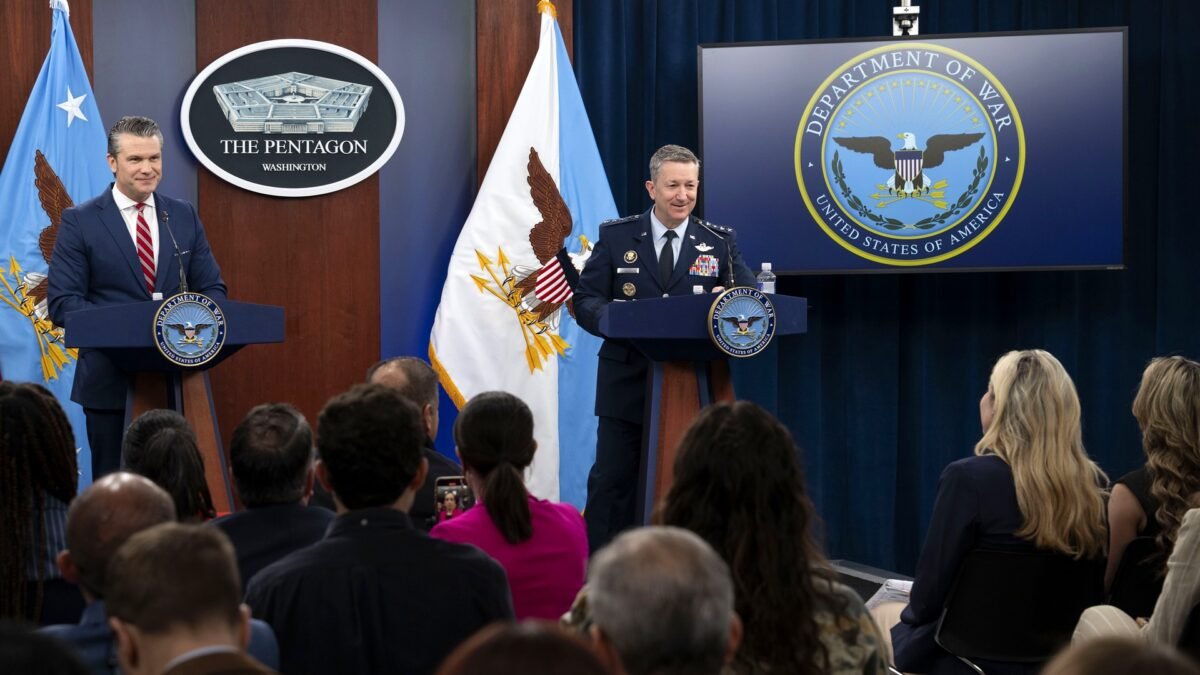
The United States House of Representatives voted on Tuesday evening to block an attempt to impeach Defence Secretary Pete Hegseth, sending the eight articles of impeachment against him to the House Judiciary Committee in a narrow 211-204 vote that effectively ends the effort for the remainder of this Congress.
The vote, taken shortly after 6pm in Washington, was procedural rather than a judgement on the charges themselves. The House did not vote on whether Mr Hegseth should be impeached. It voted on where the resolution should go, and by referring it to a committee controlled by allies of President Donald Trump, the chamber ensured that no vote on the articles themselves will take place before the current Congress ends on 3 January, according to Reuters.
The outcome was a victory for Mr Hegseth and for the White House, which had stood by the defence secretary throughout a 48-hour political storm. It was also a demonstration of how tightly Republican discipline held in the House, even as the party’s senators grew openly critical of the Pentagon chief. Representative Thomas Massie of Kentucky, the Republican who forced the vote, was the only member of his party to oppose sending the resolution to committee.
“The Democrats’ attempt to impeach Secretary of War Pete Hegseth has miserably FAILED!” Mr Trump wrote on Truth Social after the vote. “Every single Republican, except Thomas Massie, a major LOSER, voted in favor of Pete.” The president added that the result amounted to the “EXONERATION of a Great American Patriot.”
Mr Massie, who introduced the articles on Monday and read the 34-page resolution from the House floor, said he was disappointed but not surprised. He told reporters that he had no plan to reintroduce the articles himself, but added that he was “quite certain” Democrats would pursue the matter when they take control of the House in January. In the meantime, he said, he would try to force another vote on war powers before leaving office.
The vote, in numbers
The motion to refer the resolution to the Judiciary Committee was offered by Representative Darrell Issa of California, and the House agreed to it by 211 votes to 204, according to the Clerk of the House. The roll call, recorded as Roll Call 317, was the only recorded vote of the evening on the impeachment question.
According to Reuters, 210 Republicans voted in favour of the referral, joined by the chamber’s sole independent member, Kevin Kiley of California. Mr Massie was the only Republican to vote against it, siding with 203 Democrats who wanted the resolution to remain on the House floor for a direct vote.
Eighteen members did not vote at all: 11 Democrats and seven Republicans. Among the absentees was former Speaker Nancy Pelosi. The Washington Sun noted that the 11 missing Democrats were potentially enough to have changed the outcome: had all 11 voted against the referral, and the absent Republicans not voted, the motion would have failed by four votes.
The figures matter because they show how close the effort came to forcing an open debate. Under the Constitution, a simple majority of the House is required to impeach. Had the referral failed, the House would have been obliged to take up the articles themselves, and members would have had to vote, one by one, on whether Mr Hegseth had committed high crimes and misdemeanours. Instead, the articles now sit with the Republican-led Judiciary Committee, which is under no obligation to take them up, and which is expected simply not to schedule them before the Congress expires.
The Times of London reported that the articles would then formally expire, and that Democrats would need to produce a new version if they wished to launch their own impeachment effort in the new year. The BBC reported that the referral “effectively kills the effort” because so little time remains in the current session.
What the eight articles alleged
Mr Massie’s resolution, formally titled “Impeaching Peter Brian Hegseth, Secretary of Defense, for high crimes and misdemeanors”, contained eight articles. They accused the defence secretary of waging war on Iran without a formal declaration of war or congressional authorisation, in violation of the War Powers Resolution of 1973, and of dismantling the system intended to minimise civilian casualties.
One article focused on a February air strike on a school in Iran that killed more than 150 people, including dozens of children, according to the Wall Street Journal. The Pentagon’s own investigation into that strike has still not been published, and Mr Massie argued on the House floor that the secretary had been “very effective at killing school children in Iran”.
The articles further alleged that Mr Hegseth had ordered extrajudicial killings in strikes on boats said to be carrying drugs in the Caribbean and the eastern Pacific, that he had conducted an unlawful war in Yemen, and that he had acted without congressional authority in the capture of the Venezuelan leader Nicolás Maduro, which Mr Massie described as an act of war against a sovereign country.
Another article accused Mr Hegseth of abusing the Pentagon’s powers by trying to punish Senator Mark Kelly of Arizona, a retired Navy captain, after Mr Kelly and five other Democrats released a video urging troops to refuse unlawful orders. Mr Hegseth sought to prosecute Mr Kelly, accusing him of sedition, after Mr Trump said the senators’ conduct was “punishable by DEATH!”, according to Reuters.
The resolution concluded that Mr Hegseth “has demonstrated that he will remain a threat to civilians, the lawful conduct of United States military operations, the integrity and credibility of the United States Armed Forces, and the Constitution if allowed to remain in office”. Mr Massie had told the House on Monday: “We’re not indicting him for being bad at his job… He was very effective at killing school children in Iran. He was very effective at extrajudicial killings.”
Hegseth’s defiant morning at the Pentagon
Hours before the vote, Mr Hegseth mounted a vigorous defence of his record at a rare news conference at the Pentagon, his first in six months. He called Mr Massie a “disgruntled and defeated congressman” and said the impeachment articles were framed as policy disagreements and nothing more.
“That’s what it is: policy disagreements, not high crimes, not misdemeanors, not treason, not bribery, not the kinds of offenses the founders intended when they wrote impeachment laws,” Mr Hegseth said, according to the Wall Street Journal.
He described the effort as “a farce, and it’s a stunt, and everybody knows it”, and as “a political spectacle, a personal manifesto driven by ego and resentment”. He called Mr Massie “a single rogue legislator loaded with personal animus against the president”, and accused him of handing America’s enemies “a propaganda victory”. The impeachment attempt, he said, “puts a target on the backs of American warriors by signalling that Congress will undermine their missions in real time. This is not patriotism. This is sabotage.”
Mr Hegseth insisted that “everything has been lawful from day one” in Iran, Yemen and the Caribbean operations. His chief Pentagon spokesman, Sean Parnell, later described the vote as “TOTAL VICTORY” for Mr Hegseth and the troops.
The press conference was notable in itself. Mr Hegseth had not held one for six months, and the decision to face reporters on the morning of the vote was a deliberate show of confidence. It also put him on the record, in his own words, on each of the charges before the House acted. The Times reported that he thanked Vice President JD Vance for his role in “every aspect” of the Iran war.
Trump claims ‘exoneration’; Massie looks to January
Mr Trump, who has stood by Mr Hegseth throughout, celebrated the result on Truth Social, writing: “Again, Victories in Venezuela and Iran, the Best Recruitment Numbers in the History of the Military (Long waiting lists to get in!), and Spirit like rarely seen before, led to the EXONERATION of a Great American Patriot.” In a separate post, quoted by the Wall Street Journal, he said the vote exonerated Mr Hegseth and added: “The Democrats continue to weaponize and abuse the United States of America. They must be stopped!”
Asked about the proceedings before the vote, Mr Trump had said: “What has Hegseth done?” and argued that it would be hypocritical not to have impeached those responsible for the wars in Iraq and Afghanistan, according to The Times. Both of those wars, the newspaper noted, received congressional authorisation under the War Powers Act, although others, including Barack Obama’s war against Libya in 2011, controversially did not.
Mr Trump has so far stood by his war secretary, instead replacing his chief of staff, Susie Wiles, with her deputy, Stephen Miller, after the Republicans’ heavy losses in the midterm elections on 3 November, The Times reported.
Mr Massie, for his part, said the effort had not been wasted. “I think we got the conversation started with this, and that was useful. A lot of senators came out speaking about their disappointment with Hegseth,” he said, according to the Wall Street Journal. He added that he would try to force another war-powers vote before leaving office, and warned Mr Hegseth that the Democrats who take over in January would be less forgiving than he had been. “They are not going to be as polite as I am,” he told CNN on Monday. “They’re going to have hearings in the House. They’re going to bring in people who’ve served under Hegseth, people who’ve seen some things and know some things that aren’t even public yet. They’ll be sworn in. They’ll have to testify against Pete Hegseth, and then it’ll go to a trial in the Senate.”
He also predicted that Mr Hegseth would not survive in the job until the end of the year. “They stand by them until the day they don’t,” he said when asked about Mr Trump’s backing. “I still put it at a high probability that Pete Hegseth won’t make it until December 31.”
Mr Massie, who lost his primary in May to a Trump-backed challenger, leaves office in January. His impeachment resolution was the last major act of a congressman who has spent his final months in open revolt against his party’s leadership over the war.
Democrats promise to return in January
Democrats united behind the impeachment effort. House Minority Leader Hakeem Jeffries had already given it a “hard yes” on ABC’s This Week on Sunday, and on Tuesday the party’s members voted almost unanimously against sending the resolution to committee.
“From the beginning, I’ve said that Secretary Hegseth was unfit to lead our men and women in uniform,” said Representative Betty McCollum of Minnesota, the highest-ranking Democrat on the House Appropriations Defense Subcommittee, after the vote. “When Democrats take the majority in the 120th Congress, we will hold Secretary Hegseth accountable for his illegal actions,” she added, according to the Wall Street Journal.
Representative Ro Khanna of California was blunter. “We need to impeach Hegseth. If there is one message in this entire election, it’s that people didn’t want the war in Iran,” he said. “He needs to go.”
The Democrats’ position is strengthened by the result of the midterm elections on 3 November, in which they won both chambers of Congress. The new Congress will be seated on 3 January 2027, and the party has made clear that Mr Hegseth will be among its first targets. Mr Massie himself told reporters that impeachment would be “much gentler” than what awaits the secretary once Democrats take control, when they will hold hearings and, in his words, trials.
Speaker Mike Johnson, who opposed the impeachment, had argued that proceeding “in the middle of hostilities abroad” would be “a terrible thing for our allies and our enemies to see”. The Speaker’s allies moved quickly on Tuesday evening to dispose of the resolution before it could reach a floor vote, and the referral motion was offered within hours of the House convening.
Republican senators break ranks
While House Republicans held together, the picture in the Senate was strikingly different. Retiring Republicans there have become increasingly vocal in their criticism of Mr Hegseth, and several said openly during the week that they would support his removal.
Senator Thom Tillis of North Carolina has said that Mr Hegseth has to go and that he would support impeachment, calling it a vote of no confidence. Senator Bill Cassidy of Louisiana, who lost his Republican primary earlier this year, said he would be open to a trial. Senator Joni Ernst of Iowa, a member of the Senate Armed Services Committee, said she was worried about Mr Hegseth’s leadership of the Pentagon.
“I have concerns about the way the department has been run, and I question whether the information that is coming through the secretary out of the Pentagon has been accurate in the way he is portraying the war to the president,” Ms Ernst said, according to the Wall Street Journal. “If there is deception coming from our Pentagon and being transmitted to the president, I would want to know that.”
Other Republican senators said they would prefer to avoid a trial altogether. “Surely, to God above, we don’t need that right now, and that’s all there is to it,” said Senator Jim Justice of West Virginia.
The split matters because, had the House impeached Mr Hegseth, the matter would have gone to the Senate for trial, where a two-thirds majority would have been required to convict and remove him. Mr Massie had argued that the votes might have been there. “I think there are enough Republicans who want him gone,” Representative Adam Smith, the senior Democrat on the Armed Services Committee, had said. Fox News reported that House Republicans had privately warned the resolution could pass, and Reuters, citing congressional sources, reported that it may have had a simple majority. Those warnings were part of the reason the leadership moved so fast to refer it to committee rather than risk a floor vote.
How the impeachment bid got here
Mr Massie first filed articles of impeachment against Mr Hegseth on 15 September. The Speaker at the time sent the House home early to avoid a vote. He reintroduced them on Monday 9 November, reading the 34-page resolution on the House floor in the afternoon. Because he filed it as a privileged resolution, the House was obliged to act within two legislative days, and a vote had been expected by Wednesday.
The articles grew out of the war with Iran, which began on 28 February 2026 and has dominated American politics ever since. The United States struck Iran that day, killing the country’s supreme leader, and the conflict has since widened into a blockade, a campaign of strikes on shipping in the Strait of Hormuz, and a diplomatic effort that has so far failed to produce a settlement. American, Russian and Ukrainian officials were in Abu Dhabi on Tuesday and Wednesday for a new round of trilateral talks, while the war continued around them.
Mr Hegseth has been at the centre of the war’s controversies. He has faced questions over the February school strike, over the campaign of lethal strikes on boats accused of carrying drugs, over the capture of Mr Maduro in Venezuela, and over his handling of the Pentagon itself. The Wall Street Journal noted that he has also faced criticism for using a commercial messaging app for military operations, for pushing to livestream an execution by firing squad, and for his fixation on troops’ testosterone levels.
The political context changed on 3 November, when voters delivered a landslide defeat to the Republicans in the midterm elections, handing the Democrats both chambers of Congress. Mr Trump and Vice President Vance have attributed the losses in part to the Iran war and to rising petrol prices. Mr Massie argued that the election result showed the public had turned against the war, and that Mr Hegseth should be held responsible for it.
Only two cabinet secretaries have ever been impeached in American history: William Belknap, the secretary of war under President Ulysses S. Grant, in 1876, and Alejandro Mayorkas, the homeland security secretary under President Joe Biden, in 2024. Neither was convicted when the vote reached the Senate. Had Mr Hegseth been impeached, he would have been only the third.
The Democrats twice impeached Mr Trump during his first term, and he was acquitted in the Senate on both occasions. The Republican-led House impeached Mr Mayorkas in 2024, and the Democratic-led Senate rejected the charges. The history suggests that impeachment, even when it succeeds in the House, rarely ends in removal, and that it is as much a political weapon as a legal one.
Analysis: Why It Matters
A procedural kill, not an acquittal
The most important thing to understand about Tuesday’s vote is what it was not. The House did not find Mr Hegseth innocent. It did not vote on a single one of the eight articles. It did not hear evidence, call witnesses, or debate whether the war in Iran was lawful. It voted, by seven votes, to send a piece of paper to a committee where it will almost certainly never be read again.
That distinction matters, because both sides will now claim the result as a verdict. Mr Trump has already called it an “exoneration”. It is nothing of the sort. An exoneration follows a trial. This was a decision not to hold one. Equally, Mr Massie’s supporters should not claim that the vote proves the charges were true. It proves only that 211 members of the House preferred not to vote on them, and that 204 preferred to vote on them. The merits of the articles remain untested, and they will remain untested until a Congress with the appetite to test them takes them up.
The referral device is one of the oldest tricks in the congressional playbook. It allows members to dispose of an uncomfortable question without ever having to answer it. Those who voted yes can tell their constituents they did not vote to impeach a wartime defence secretary. Those who voted no can tell theirs they stood up for the Constitution. Nobody had to take a position on whether the school strike was a war crime, or whether the boat strikes were extrajudicial killings, or whether the war itself was lawful. That is precisely why the leadership chose it, and precisely why Mr Massie called it, in advance, a “procedural motion to kill the resolution”.
Massie the lone Republican, and what that reveals
The roll call is a portrait of a party that has chosen discipline over dissent. Mr Massie was the only Republican in the entire House to vote against the referral. Two hundred and ten of his colleagues voted with the leadership, and the chamber’s independent member joined them. For a party that lost both chambers of Congress a week earlier, in an election widely read as a rebuke of the war, that is a remarkable display of unity, and it raises an obvious question: if the war is as unpopular as the election suggested, why did only one Republican vote to hold its chief architect to account?
Part of the answer is timing. The vote was procedural, and many Republicans who dislike Mr Hegseth could vote to refer the resolution without voting to protect him. Representative Don Bacon of Nebraska, who is retiring, captured the ambiguity precisely: “I personally am not a fan” of Mr Hegseth, he said, “but also when you read Massie’s impeachment, I don’t agree with it.” Representative Warren Davidson of Ohio went further, arguing that making Mr Hegseth “the scapegoat really blame shifts and avoids responsibility for Congress and, frankly, President Trump”. Both men could oppose the impeachment while opposing the secretary, and the referral motion let them do both at once.
But the deeper answer is that the House Republican conference is still, for now, Mr Trump’s party, and Mr Trump has made his position unambiguous. The president called Mr Massie “a major LOSER” within minutes of the vote, and the congressman who challenged the president’s war secretary lost his primary to a Trump-backed challenger in May. The lesson for any Republican contemplating a similar rebellion is written into the roll call: you will stand alone, and you will lose. That lesson will hold until the day it does not, and the day it does not will probably be the day a Republican senator, rather than a House backbencher, leads the revolt.
The war-powers question survives the vote
The vote killed the impeachment resolution. It did not kill the question at the heart of it, which is whether a president may wage a war that Congress never authorised. That question has haunted American politics since the War Powers Resolution was passed in 1973, and the Iran war has made it acute again. The United States has been at war with Iran for more than eight months, with no declaration of war, no authorisation for the use of military force, and no imminent threat that the administration has publicly identified. Congress has never voted on the war. It has voted, instead, on whether to vote on whether the man running it should be impeached.
Mr Massie understood this, which is why he has already said he will try to force a war-powers vote before leaving office. A war-powers resolution is a different instrument from an impeachment article. It does not accuse anyone of a crime. It asks Congress to assert its own constitutional authority over war and peace. It is harder for the leadership to dispose of procedurally, and harder for members to vote against without appearing to surrender their own power. If Mr Massie succeeds in forcing such a vote, the House will finally have to answer the question it dodged on Tuesday, and the answer will be recorded by name.
The irony is that the war-powers question may now be answered by events rather than by Congress. The trilateral talks in Abu Dhabi, which opened on Tuesday, are the fourth round of negotiations since the war began, and the previous three ended without a breakthrough. If the talks fail, and the war continues into the new year, the question of who authorised it will be asked again, by a Democratic Congress with subpoena power and a majority. If the talks succeed, the question may fade, and with it the appetite for accountability. Either way, the vote on Tuesday did not settle it. It postponed it.
The January clock
Everything about this story is governed by a date: 3 January 2027, when the new Congress is seated and the Democrats take control of both chambers. The referral motion worked because the current Congress has less than two months left to run. The Judiciary Committee does not need to bury the articles. It needs only to ignore them until the session expires, and the articles will die with it.
But the Democrats have been explicit about what happens next. Ms McCollum said they would “hold Secretary Hegseth accountable for his illegal actions” when they take the majority. Mr Khanna said, simply, “We need to impeach Hegseth.” Mr Massie, who has no reason to flatter his opponents, said he was “quite certain” they would pursue the effort, and warned that their hearings would be less polite than his own. The Democrats will have the power to compel testimony from the people who served under Mr Hegseth, including, in Mr Massie’s words, “people who’ve seen some things and know some things that aren’t even public yet”.
That prospect is the real threat to Mr Hegseth, and it explains why he and the president celebrated a procedural vote as if it were a verdict. They know that the vote bought them seven weeks, not absolution. Mr Massie put a number on it: he gives it a high probability that Mr Hegseth will not make it to 31 December. Whether or not that prediction proves right, the logic behind it is sound. A secretary who survives by seven votes in a lame-duck House, with his own party’s senators calling for his removal, is not a secretary with a future. He is a secretary with a reprieve.
Hegseth survives, but the Pentagon’s problems do not
There is a final point that the politics of the vote should not obscure. Mr Hegseth survived the impeachment effort, but the problems that produced it have not gone away. The war in Iran continues. The investigation into the February school strike remains unpublished. The boat strikes continue. The Pentagon’s own inspector general, the military’s lawyers, and the Senate Armed Services Committee are all, in different ways, asking the same questions Mr Massie asked, and they are not going to stop asking them because the House referred a resolution to a committee.
Senator Ernst’s concern is the most telling of all. She did not say Mr Hegseth should be impeached. She said she questioned “whether the information that is coming through the secretary out of the Pentagon has been accurate in the way he is portraying the war to the president”. That is a charge of a different order from Mr Massie’s. It is not a charge that the secretary broke the law. It is a charge that he misled the commander-in-chief about a war. If that charge is true, it matters more than any of the eight articles, because it goes to the integrity of the chain of command itself. And it is a charge that only a Senate investigation, with witnesses under oath, can properly test.
Mr Hegseth called the impeachment effort “sabotage”. His critics will say the sabotage is the war itself, and the secrecy around it. Tuesday’s vote settled neither claim. It settled only that the House, for now, would rather not decide between them.
What to Watch Next
- Mr Massie’s war-powers vote. The Kentucky congressman says he will try to force a vote on war powers before leaving office in January. Watch whether the Speaker allows it to reach the floor, and whether Republicans who voted to refer the impeachment articles are willing to vote on the war itself.
- The Judiciary Committee’s silence. The articles now sit with the Republican-led committee, which is under no obligation to act. Watch for any sign that the committee schedules a hearing, and for any statement from its chairman explaining why it will not.
- The Abu Dhabi talks. The trilateral negotiations between the United States, Russia and Ukraine, which opened on Tuesday, continue on Wednesday. Any breakthrough, or any collapse, will change the political context for the war, and for Mr Hegseth, overnight.
- The school strike investigation. The Pentagon’s investigation into the February strike on a school in Iran, which killed more than 150 people, remains unpublished. Watch for its release, and for whether it is published in full or in summary.
- The Senate’s voice. Senators Tillis, Cassidy and Ernst have all broken publicly with Mr Hegseth. Watch for further Republican senators to follow, and for whether the Armed Services Committee opens a formal inquiry into the Pentagon’s conduct of the war.
- 3 January 2027. The new Democratic Congress takes control on that date. Watch for the first hearings, the first subpoenas, and whether the Democrats reintroduce the impeachment articles as their first act, or choose a slower path of investigation first.
Sources
- Reuters — “US House votes to derail impeachment of Defense Secretary Hegseth”
- The Wall Street Journal — “Hegseth Survives Impeachment Effort in House”
- The Times — “Pete Hegseth impeachment effort derailed by House Republicans”
- Breaking Defense — “House opts to stall Hegseth impeachment vote, sending resolution to Judiciary Committee”
- The Washington Sun — “House Republicans Block Hegseth’s Impeachment”
- Madhyamam — “US House blocks immediate vote on Hegseth impeachment, sends articles to committee”

About the Author — Abdul Mannan
Related Articles

Kennedy Family Joins Lawsuit to Block Trump’s 250-Foot Triumphal Arch Near JFK’s Grave at Arlington
Nine members of the Kennedy family have moved to join the lawsuit challenging President Donald Trump's proposed 250-foot…

Supreme Court Clears Trump to Resume Border Wall Construction in Big Bend National Park
The US Supreme Court has cleared the Trump administration to resume border wall construction in Texas's remote Big…
House Oversight Report Finds Federal Failures Let Jeffrey Epstein Keep Abusing Victims After 2005
A 15-month House investigation concludes the crimes Jeffrey Epstein committed after 2005 could have been prevented — and…