
House Oversight Report Finds Federal Failures Let Jeffrey Epstein Keep Abusing Victims After 2005

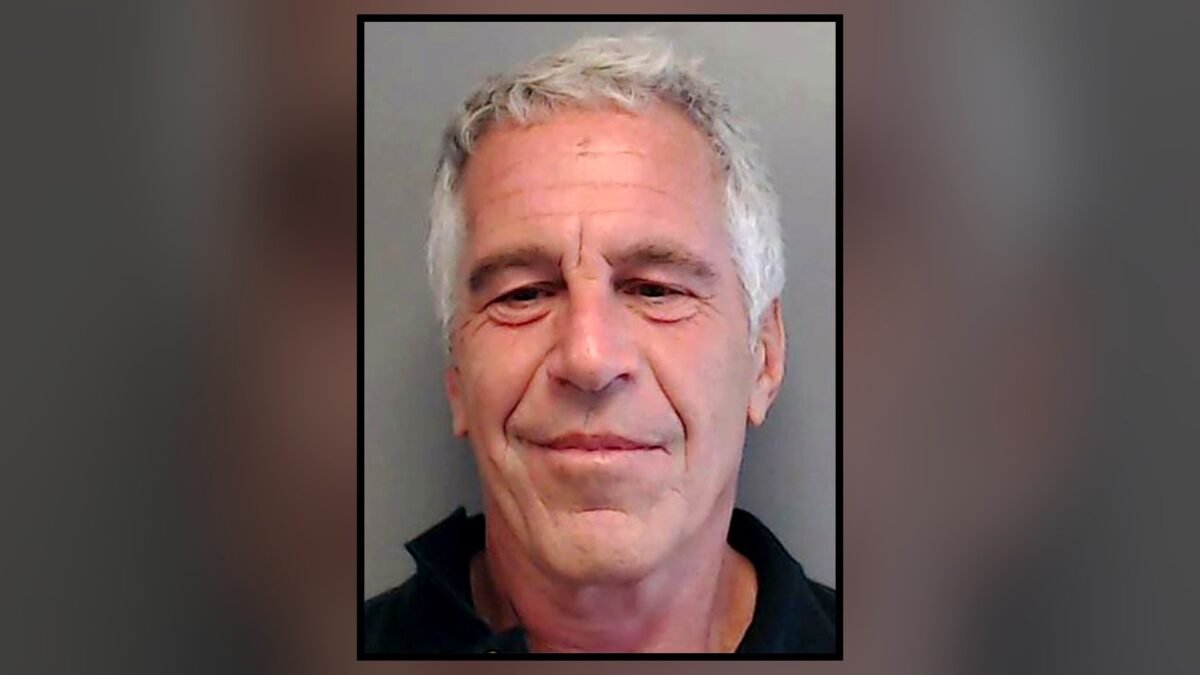
The crimes Jeffrey Epstein committed after 2005 could have been prevented. That is the central conclusion of a House Oversight Committee report released on Tuesday, 10 November 2026, after a 15-month investigation into the federal government’s handling of the Epstein and Ghislaine Maxwell criminal cases. According to the committee, failures by federal investigators and prosecutors in South Florida and Washington allowed one of the most notorious sex offenders in American history to keep abusing young women and girls for years after he was first arrested.
The report, titled “A Review of the Federal Government’s Mishandling of the Jeffrey Epstein and Ghislaine Maxwell Criminal Investigations,” is a majority staff report from the Republican-led committee. It rests on 19 transcribed interviews and depositions with key witnesses, documents released by the Department of Justice and the Epstein estate, and an extensive review of financial records, according to the committee’s own account of its work.
Its most politically charged finding sits alongside its most damning one. The committee said its investigators uncovered no documents linking President Donald Trump to criminal activity involving Epstein or Maxwell, and that every witness examined by the committee said that, to their knowledge, Trump had not participated in Epstein’s crimes. Democrats on the committee rejected the report as partisan and incomplete, and its ranking member, Representative Robert Garcia of California, said the Justice Department was still withholding more than 2.5 million pages of records. The report’s conclusions about the government’s failures, however, draw on a record that has been building for years, and much of it is not in dispute.
“The federal government has failed the survivors of Jeffrey Epstein and Ghislaine Maxwell’s horrific crimes for decades,” the committee’s chairman, James Comer, said in a statement accompanying the report. “Epstein operated with impunity, shielded and enabled by powerful connections and a justice system that repeatedly failed his victims.”
The 2007 deal that let Epstein walk away
The story the report tells begins in Florida. Epstein was first arrested in 2005, after police in Palm Beach began investigating reports that he was abusing underage girls. Federal prosecutors in the Southern District of Florida opened their own investigation, and career prosecutors prepared a 53-page draft federal indictment outlining Epstein’s crimes, according to the Justice Department’s inspector general, whose earlier review of the case the new report builds upon.
That indictment was never filed. Instead, according to the committee, the U.S. Attorney’s Office for the Southern District of Florida entered into a non-prosecution agreement with Epstein in 2007, allowing him to avoid federal prosecution in exchange for pleading guilty to lesser state charges. Epstein pleaded guilty in a Florida state court in 2008 to two charges, solicitation of prostitution and procurement of minors for prostitution, and was sentenced to 18 months in jail. He served 13 months, much of it on work release, and was released early, according to the New York Post’s account of the report.
The committee found that federal prosecutors also failed to inform survivors of the agreement, undermining their ability to pursue civil claims or publicly expose Epstein’s crimes. A federal judge later ruled that prosecutors in the U.S. attorney’s office had violated the law by failing to notify victims of the planned deal, a finding cited by senators who pressed for an investigation into the agreement in 2019.
According to the report, the agreement shielded Epstein from a federal indictment and from a full investigation into allegations in other states, and it immunised unnamed potential co-conspirators. The Justice Department’s inspector general, in its 2020 review of the deal, found that prosecutors had shown poor judgment and a stunning lack of urgency, and that then-U.S. Attorney Alexander Acosta had given too much deference to Epstein’s high-powered legal team. The inspector general found no evidence of criminal misconduct or corruption by the prosecutors, a distinction the new House report does not overturn.
Acosta, who went on to serve as Secretary of Labor in President Trump’s first administration, was faulted by the House committee for a “lack of oversight” of the Epstein case. According to the report, Acosta testified that his office had received multiple assurances that Epstein would not receive work release at all, and he expressed extreme regret over his decision to entrust Epstein’s imprisonment to the state, which he described as an “unreliable partner.” The report quotes Acosta as saying that had federal prosecutors known the outcomes of their state-based plea deal, they would never have resolved the case in the manner they did. Acosta resigned as Labor Secretary in July 2019, days after Epstein’s second arrest brought the 2008 deal back into public view.
The report also points to the conduct of a second prosecutor. It concludes that Matthew Menchel, then an assistant U.S. attorney in the Southern District of Florida and a top decision-maker on the case, “had a connection to Epstein” while the deal was being negotiated. According to the New York Post, Menchel allegedly went on a ski trip in Aspen with Epstein in the early 2000s, a claim he has denied despite the apparent existence of photographs of the pair. The committee said that while some of the failures in the case reflected poor judgment by the U.S. attorney’s office, others “appeared to be the result of Epstein’s pervasive and wide-reaching influence,” potentially including two attorneys employed by the office.
Perhaps the most consequential fact in the report is the simplest. According to the committee, Epstein continued to abuse women during his work-release hours, leaving the jail during the day and returning at night. The sentence that was supposed to punish him became, in practice, a daytime pass. “The Committee finds that the crimes Epstein committed after 2005 could have been prevented — and justice served — if not for failures by federal investigators and prosecutors in South Florida and Washington, D.C.,” the report concluded.
The night Epstein died in custody
The report does not stop in 2008. It also examines Epstein’s death in federal custody in 2019, after he was arrested again and charged with sex trafficking. Epstein died in his cell at the Metropolitan Correctional Center in New York while awaiting trial. His death was ruled a suicide.
According to the committee, understaffing and systemic dysfunction contributed to correctional officers on both shifts missing at least 12 rounds and three inmate counts on the night of his death, resulting in nearly eight hours without adequate supervision of Epstein and other inmates. The finding echoes the Justice Department inspector general’s own review of Epstein’s custody, which documented the same pattern of missed checks and falsified records.
Epstein’s death, before he could stand trial, remains one of the most consequential failures in the entire case. It ended any prospect of a full public accounting in a courtroom, and it has fuelled years of speculation about what he knew and who else might have been charged. The committee’s report treats it as a failure of the Bureau of Prisons, not as evidence of a wider plot, and it does not advance any alternative account of how Epstein died.
Banks, flights and the money trail
A third strand of the report concerns the financial system that surrounded Epstein. According to the committee, U.S. and foreign government authorities failed to identify indicators of human trafficking and immigration fraud, and financial institutions that possessed substantial information about Epstein’s criminal history repeatedly identified transactions presenting heightened compliance risks, yet failed to act on them, in some cases reporting them only years later, after his 2019 arrest.
The report singles out American Express, saying company agents allowed Epstein to use fraudulent decoy flights and refundable or dummy itineraries to transport foreign women across borders directly to his residences. It recommends that the Treasury Department and the Financial Crimes Enforcement Network review whether financial institutions are meeting their reporting obligations designed to detect and prevent suspicious activities, including money laundering and human trafficking.
The finding matters because it widens the circle of responsibility beyond prosecutors and jailers. Epstein’s operation depended on money moving across borders, on private jets, and on institutions that processed his payments. The committee’s account suggests that the warning signs were visible to banks and payment companies for years, and that wealth and personal connections helped Epstein’s transactions pass without the scrutiny that the law requires.
The files fight: transparency that exposed survivors
The report also delivers a verdict on the government’s handling of the Epstein files themselves, the vast archive of investigative records that Congress ordered released under the Epstein Files Transparency Act, passed in November 2025. The House passed the Act by 427 votes to one on 18 November 2025, the Senate agreed unanimously, and President Trump signed it the following day. The law gave the Justice Department 30 days to publish all unclassified records in a searchable format.
According to the committee, the department failed to adequately communicate about its document releases and failed to sufficiently protect survivors. Deficient redactions exposed survivors’ sensitive personal information, the report found. That conclusion matches reporting by the Wall Street Journal, which found that at least 43 victims’ names or identifying information remained visible in the files released in January 2026, despite the department’s stated privacy protections. Survivors’ lawyers described the exposure as among the worst single-day violations of victim privacy in American history, and the department later withdrew tens of thousands of documents for re-review.
The department missed its statutory deadline of 19 December 2025, saying hundreds of lawyers were still reviewing records. Its largest release, on 30 January 2026, contained roughly three million pages, along with thousands of videos and images, according to the department. Critics, including Representatives Thomas Massie and Ro Khanna, the authors of the disclosure law, say more than three million files are still being withheld, and they are pressing a second bill, the Epstein Files Transparency Act II, to force further disclosure and give survivors access to their own records. In October 2026, a coalition of 17 state attorneys general urged Congress to pass that second law.
The committee’s report recommends that the Justice Department establish a proper process for survivors and their representatives to access their personal files and records in unredacted form, and it calls on Congress to pass Chairman Comer’s Survivor’s Voice Protection Act, which would ensure that survivors can speak freely about sexual abuse even if they previously signed confidentiality agreements. The bill would also define grooming behaviour for the first time in federal law and require trusted individuals to report suspected grooming to law enforcement.
The Justice Department, for its part, said the committee’s recommendations had already been addressed, according to The Guardian. The department’s inspector general opened a formal investigation into the files release process in April 2026.
New allegations, and the limits of the report
The report also asks the Justice Department to do more. It recommends that investigators interview or re-interview key witnesses, including Epstein’s longtime assistant Lesley Groff, about her potential knowledge of and role in facilitating Epstein’s criminal activity. And it says the department should further investigate sexual assault allegations that Sarah Kellen, a longtime Epstein assistant and survivor, made during her transcribed interview with the committee against two powerful men: Philip Levine, the former Mayor of Miami Beach from 2013 to 2017, and Frédéric Fekkai, a French celebrity hairstylist.
Both men have denied wrongdoing, according to The Guardian, and the Justice Department has not acted on the allegations as of the report’s release, according to reporting on the committee’s findings. The allegations, as described in the report, rest on Kellen’s testimony, and they have not been tested in court. They should be read as claims the committee says investigators should examine, not as established facts.
That distinction matters, because the report itself is a partisan document in important respects. It is a majority staff report, written by the Republican majority of the committee. Its final section is headed “Democrats must put survivors — not politics — first,” and it accuses committee Democrats of being “obsessed with trying to implicate President Trump” in Epstein’s crimes. Democrats did not endorse the report’s conclusions. Garcia, the committee’s top Democrat, called the investigation incomplete, noted that no public hearings were held, and said Democrats intended to continue investigating Epstein’s connections to powerful individuals, including Trump, when they assume control of the House in January.
The report’s finding on Trump is, however, specific and worth stating precisely. According to the committee, its review of documents from the Epstein estate, the U.S. Virgin Islands, JPMorgan, Deutsche Bank and the Justice Department did not identify any documents that would implicate President Trump in any criminal activity related to Epstein and Maxwell. The committee said the consensus of every witness examined before the committee was that Trump, to their knowledge, was not involved in any crimes committed by Epstein and Maxwell. ABC News and CBS News, reporting on the document, carried the same account.
The witnesses the committee heard from were not marginal figures. Its published list of interviews and depositions includes former Attorney General William Barr, Acosta, Maxwell herself, the businessman Leslie Wexner, Bill and Hillary Clinton, the Microsoft co-founder Bill Gates, the financier Leon Black, the Commerce Secretary Howard Lutnick, and Attorney General Pam Bondi. Black, according to the committee’s list, failed to appear for a deposition scheduled for 3 September 2026.
What the report does not do is equally important. It does not claim to have identified every person who facilitated Epstein’s crimes. It does not resolve the many unverified claims contained in the millions of pages of files the Justice Department has released, which the department itself has said include material that is fake or falsely submitted. And it does not end the political fight over the files, which is now set to continue into a new Congress, with a new House majority, and with a second transparency bill pending.
Analysis: Why It Matters
The 2008 deal is the original sin of the Epstein case
Every failure the report documents after 2008 flows, in one way or another, from the decision made in 2007. A federal prosecution, with a 53-page draft indictment already prepared, was traded for a state plea that treated a man accused of abusing dozens of underage girls as a routine offender. The sentence was short, the work release was generous, the victims were not told, and unnamed co-conspirators were shielded from prosecution. The Justice Department’s own inspector general had already reached many of these conclusions in 2020. What the House report adds is a congressional judgment, after 15 months of its own investigation, that the crimes Epstein committed after 2005 could have been prevented. That is not a new fact. It is a formal, institutional statement of a fact that survivors and their lawyers have asserted for nearly two decades, and it carries weight precisely because it comes from the institution that spent 15 months examining the record.
A justice system that failed twice, in opposite ways
The report describes two different kinds of failure, and the contrast between them is instructive. In 2007 and 2008, the system was too lenient: it negotiated with a wealthy defendant, deferred to his lawyers, kept victims in the dark, and produced a punishment that barely interrupted his life. In 2019, the system was too negligent: it left a high-profile defendant awaiting trial on sex trafficking charges effectively unsupervised for nearly eight hours, with officers missing rounds and counts. Leniency and neglect are not the same failure, but they share a root. In both cases, the institutions responsible treated Epstein’s case as something other than what it was: a prosecution of a man accused of systematically abusing young women, whose victims deserved protection and whose trial the public deserved to see. The report’s value is that it holds both failures in the same frame, rather than treating the plea deal and the death in custody as unrelated episodes.
Transparency that harmed the people it was meant to help
The most troubling section of the report may be the one about the files. Congress passed the Epstein Files Transparency Act to give the public the record and to give survivors the truth. Instead, according to the committee and to survivors’ lawyers, the Justice Department’s releases exposed survivors’ names and personal information while shielding details about powerful associates. The department blamed technical or human error, withdrew tens of thousands of documents, and promised to do better. But as survivors have pointed out, once a name is public, correcting the file does not undo the harm. The episode is a warning about what happens when transparency is treated as a volume exercise, measured in millions of pages released, rather than as a duty of care owed to the people whose lives are in the files. The committee’s recommendation, that survivors be given access to their own records in unredacted form, is the right response, and it is striking that it still needs to be made.
What the report settles, and what it does not
The report settles the question of whether the federal government failed Epstein’s victims. On the evidence it assembles, and on the Justice Department’s own earlier findings, the answer is yes, repeatedly, over two decades. It also settles, as far as this investigation could, the question of whether the documents and witnesses it examined implicate President Trump in Epstein’s crimes. Its answer is no, and it states that answer plainly. What it does not settle is the larger question that has driven public interest in the Epstein files from the start: who else knew, who else helped, and who else should face consequences. The report points to further interviews and investigations, including of Epstein’s associates and of the two men named by Sarah Kellen, but it does not deliver verdicts on them. And because it is a majority report, written without Democratic endorsement and without public hearings, its conclusions will be contested, and the Democratic majority that takes the House in January has already said it will keep investigating. The report is a milestone in the Epstein story, not its conclusion.
The politics will not go away, and that is the problem
There is a passage in the report that deserves more attention than it is likely to receive. The committee accuses its Democratic colleagues of caring more about implicating the president than about survivors, and the Democrats accuse the Republican majority of writing an incomplete, partisan report. Both sides claim to speak for the survivors. The survivors, meanwhile, have spent the last year asking for something simpler: their own records, proper redactions, and investigations of the people accused of abusing them. The Epstein case has been a political weapon for so long that it is easy to forget how it began, with girls in Palm Beach telling police what had been done to them, and how it continued, with those same girls growing into women who had to fight for years to be believed. The test of this report is not whether it helps one party or the other. It is whether anything in it changes what happens next for the survivors still waiting for answers, and for the associates the committee says should still be investigated.
What to Watch Next
- The Justice Department’s response. The department has said the report’s recommendations have already been addressed. Watch for whether it interviews or re-interviews the witnesses the committee named, including Lesley Groff, and whether it opens investigations into the allegations against Philip Levine and Frédéric Fekkai.
- The Kellen allegations. Sarah Kellen’s claims against two powerful men are now part of the congressional record. Whether the Justice Department acts on them, and what either man says next, will be closely watched. Both have denied wrongdoing.
- The Democratic investigation. When Democrats take control of the House in January, Representative Garcia has said they intend to hold public hearings and continue investigating Epstein’s connections to powerful individuals. The tone and scope of that inquiry will shape the next phase of the story.
- The second transparency bill. The Epstein Files Transparency Act II, backed by Massie and Khanna and by 17 state attorneys general, would let survivors access their own records and let states and survivors sue the Justice Department over withheld files. Its progress in Congress is the clearest measure of whether the files fight is ending or entering a new round.
- The inspector general’s review of the releases. The Justice Department’s inspector general opened a formal investigation into the files release process in April 2026. Its findings, when published, will test the department’s account of the redaction failures.
- The survivors’ records. The committee’s call for survivors to receive their own files in unredacted form is now a concrete demand. Whether the department creates that process, and how quickly, will matter more to the people at the centre of this story than any report.
Sources
- House Committee on Oversight and Government Reform — “House Oversight Committee Releases Report on the Federal Government’s Mishandling of Epstein and Maxwell Criminal Investigations” (10 November 2026)
- New York Post — “Government ‘failures’ allowed Jeffrey Epstein to commit sex crimes after 2005 Florida arrest, House report finds” (10 November 2026)
- Newsmax — “GOP-Led House Panel Finds Major Epstein Probe Flaws, No Trump Wrongdoing” (10 November 2026)
- News-Mash — “House Republicans find federal failures in Epstein investigations” (10 November 2026)
- OK! Magazine — “Epstein Abused Girls Due to ‘Prosecutorial Failures'” (10 November 2026)
- Film Daily — “What does the Republicans’ Epstein report actually say?” (10 November 2026)

About the Author — Abdul Mannan
Related Articles

Supreme Court Clears Trump to Resume Border Wall Construction in Big Bend National Park
The US Supreme Court has cleared the Trump administration to resume border wall construction in Texas's remote Big…
Senate Passes Bill to End Longest US Government Shutdown as House Prepares Wednesday Vote
The Senate has voted 60-40 to pass a funding package that would end the longest government shutdown in…

Trump Says FBI Is Probing Nvidia Chief Jensen Huang Over Suspected Chinese Spy Affair as Shares Slide and Investors Sue
President Donald Trump has confirmed that the FBI is investigating Nvidia chief Jensen Huang's relationship with a woman…