
Supreme Court Clears Trump to Resume Border Wall Construction in Big Bend National Park

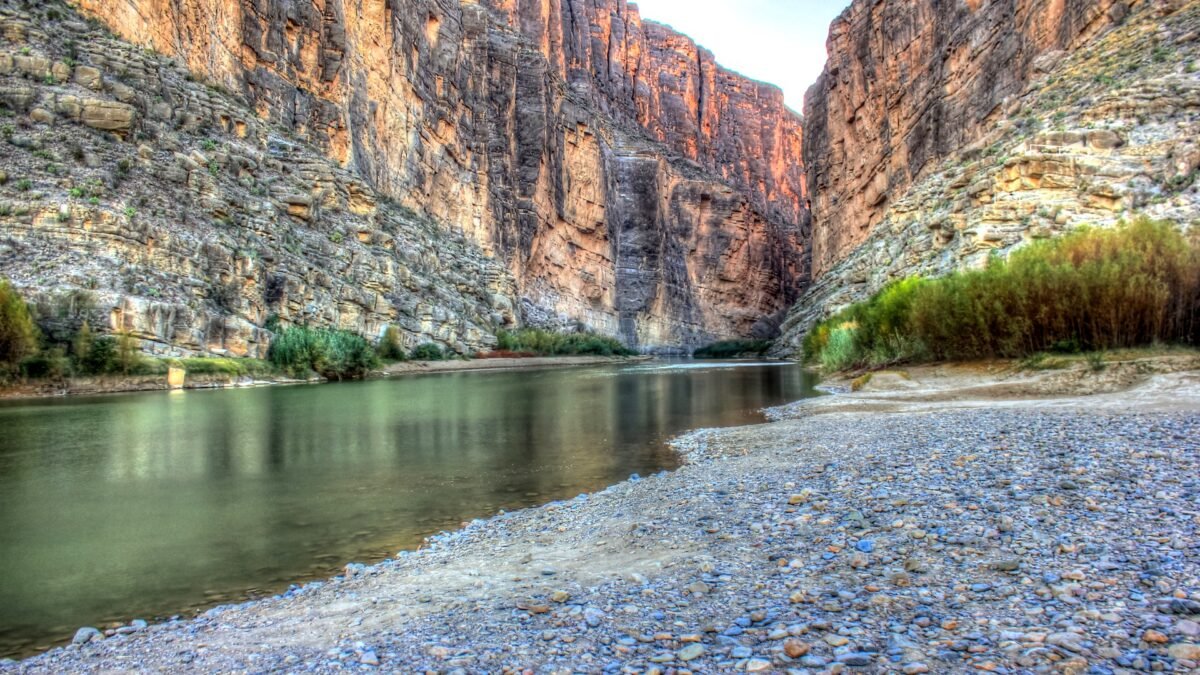
The United States Supreme Court has cleared President Donald Trump’s administration to resume building border barriers in the remote Big Bend region of Texas, including inside Big Bend National Park, pausing a federal judge’s order that had brought the work to a halt. The decision, handed down on Monday, 9 November, is the first major policy victory for the president at the Supreme Court since last week’s midterm elections, and it revives one of the most contested construction projects in the country: a border wall through some of the wildest protected land in the United States.
In a brief unsigned opinion, the justices granted the government’s emergency request to lift a preliminary injunction issued on 2 October by US District Judge Kathleen Cardone in El Paso. The injunction had frozen all barrier and road construction across the Big Bend Sector while a lawsuit challenging the project moved through the courts. Justice Ketanji Brown Jackson was the only member of the court to note publicly that she would have denied the government’s request, according to CNN and Reuters. She did not write an opinion explaining her position.
The ruling does not end the lawsuit. It lifts the judge’s order while the case continues, and the administration must still persuade the Supreme Court to take up the case in full. But for now, construction crews can return to a stretch of the border where work began in August, was paused amid bipartisan outrage, and was then blocked by a federal court. The practical effect, as the Center for Biological Diversity put it in a statement after the ruling, is that bulldozers can move before the courts have decided whether the work is lawful at all.
The border wall is President Trump’s signature project, a promise he has carried since his first campaign: a barrier running from the Pacific Ocean to the Gulf of Mexico. Republicans in Congress funded the effort with $46 billion last summer, according to the Associated Press, and Customs and Border Protection has been erecting about 12 miles of barriers a week across the entire border, with the stated goal of eventually covering the full 2,000-mile frontier with a mixture of 30-foot steel walls, vehicle barriers and surveillance technology. The Big Bend decision removes the largest legal obstacle standing in the way of that programme in Texas.
What the Court Decided
The case is formally titled Mullin v. Friends of the Ruidosa Church, and it reached the Supreme Court as an emergency application, numbered 26A560. The government asked the justices for two things: to pause Judge Cardone’s injunction while it seeks full review, and to treat the application itself as a petition for review and summarily reverse the judge’s ruling outright. The court granted the first request and declined the second, according to SCOTUSblog and the Texas Gazette.
The justices’ reasoning turned on two points. First, they said the administration was “exceedingly likely” to succeed on its argument that Judge Cardone lacked jurisdiction to hear the case at all, the El Paso Times reported. The 1996 law at the heart of the dispute sharply limits judicial review of the Homeland Security secretary’s waiver decisions, and the government argued that the challengers’ claims could be reviewed only if they raised a constitutional question, which, in the administration’s view, they did not. The court agreed that the law “sharply limits judges’ powers to intervene when the federal government decides speedy border barrier construction is necessary,” as the Associated Press summarised the ruling.
Second, the court weighed the competing harms and came down firmly on the government’s side. The challengers argued that construction in the Big Bend Sector would diminish their ability to use and enjoy the area, a landscape of desert, canyons and river that has been protected for more than eighty years. The court acknowledged that claim but held that Congress had written the law in a way that “reflects a clear preference for expeditious border construction over the very harms respondents assert,” according to CNN’s account of the opinion. In the court’s reading, the statute itself had already made the choice between speed and preservation, and the judge’s role was not to remake it.
The government had also pressed the court with the cost of delay, arguing that every month of halted construction wasted money and left a gap in the border that smugglers and cartels could exploit. The court accepted that account of the costs, according to the Workers’ Rights News analysis of the opinion, while declining to decide the underlying question of whether the waivers themselves are lawful. That question remains open.
One feature of the order matters greatly for what happens next. The stay remains in place only while the government pursues a full appeal, and it ends automatically if the justices decline to take up the case, according to Fox 26 Houston and the Texas Gazette. The administration must therefore file a petition for review in time, and the court must agree to hear it, or Judge Cardone’s injunction springs back into force. The ruling is a green light, not a final judgment.
The Case Behind the Order
The lawsuit was brought in April 2026 by three plaintiffs: the Center for Biological Diversity, a national environmental group; Friends of the Ruidosa Church, an organisation working to preserve a historic adobe church in the small border community of Ruidosa, Texas; and Danny William Miller Jr., a river guide who works on the Rio Grande in the Big Bend area, according to Reuters and the district court’s own memorandum opinion.
Their target was a series of three waivers issued by the Department of Homeland Security between February and July 2026. The waivers were signed by Homeland Security Secretary Markwayne Mullin and his predecessor, Kristi Noem, both Trump appointees. Invoking Section 102 of the Illegal Immigration Reform and Immigrant Responsibility Act of 1996, a law Congress passed to speed up barrier construction in areas of high illegal entry, the secretaries waived the application of dozens of federal laws across a 517-mile stretch of the border, according to the district court’s opinion.
Absent the waivers, the project would have had to comply with the Endangered Species Act, the National Environmental Policy Act, the National Historic Preservation Act and a host of other conservation and cultural protection laws before a single road could be graded or a single barrier post set in the ground, according to Reuters. The challengers argued that the waivers were unlawful on several grounds, including that the secretaries had exceeded the authority Congress granted them and had run afoul of the so-called major questions doctrine, the principle the Supreme Court has used to strike down executive actions of vast economic and political significance unless Congress clearly authorised them.
The administration’s answer, set out in its filing to the Supreme Court, was blunt. “The secretary’s waiver authority reflects a crystal-clear, indisputably valid express delegation from Congress that the executive has used for decades to expedite border-wall construction,” the Justice Department told the court, according to Reuters. The district court’s ruling, the government said, was baseless.
The scale of the project explains why both sides have fought so hard. The Big Bend Sector covers nearly a quarter of the entire US-Mexico border, according to the government’s filing. The administration plans more than 300 miles of barriers and patrol roads across the sector, most of it on privately owned land, according to Reuters. Inside Big Bend National Park itself, the plan calls for a 17-mile noncontiguous vehicle barrier system, but not the 30-foot pedestrian wall slated for other areas, according to the administration’s own account reported by Reuters. The government has repeatedly said no steel walls are planned for the national park, although it has also acknowledged in court filings that it has not yet produced a finalised plan for what it intends to build there, according to the Associated Press.
A Judge Who Said No
Judge Cardone heard the case in El Paso and, on 2 October, granted the plaintiffs’ request for a preliminary injunction, ordering an immediate stop to all construction-related activity in the Big Bend Sector until the government complied with all applicable laws. Her full memorandum opinion followed on 14 October. It was, by any measure, a sweeping rebuke of the administration’s position.
The judge found that the waivers lacked clear congressional authorisation and violated the major questions doctrine. The central problem, in her analysis, was the government’s own designation of the region. The secretaries had found that the Big Bend Sector was an “area of high illegal entry” requiring additional barriers. Yet, as the judge noted, the Big Bend region has by far the lowest rate of migrant apprehensions along the entire border, a fact reported by Reuters and the El Paso Times. The sector spans 517 miles of rugged desert and canyon country, more than a quarter of the whole frontier, but its terrain is so harsh and remote that few people attempt to cross there.
“Therefore, if the Big Bend Sector is an area of high illegal entry, so is every other sector, and the waiver authority would apply to the entire US-Mexico border,” Judge Cardone wrote, according to Reuters. The logic was simple: if the lowest-crossing sector in the country qualifies as high entry, then the statutory limit means nothing, and the secretary could waive environmental law anywhere along the border at will. Congress, she concluded, had likely not authorised anything so broad.
The ruling also carried an unusually direct message about who could challenge the waivers. The challengers, she found, would be personally and irreparably harmed by the construction, and they were entitled to ask a court to stop it. The Supreme Court has now cast serious doubt on that conclusion, holding that the government is exceedingly likely to win its argument that no constitutional dispute exists and therefore that the lower court had no power to intervene at all. That jurisdictional question, dry as it sounds, may prove more important than the environmental arguments, because if the courts cannot review the waivers, the waivers are effectively unchallengeable.
The Place at the Centre of the Fight
To understand why this case has drawn such passion, it helps to understand the place. Big Bend National Park, the first national park in Texas, covers 801,163 acres of Chihuahuan Desert in the great bend of the Rio Grande, about 250 miles southeast of El Paso, according to the National Park Service and Reuters. Congress authorised the park in 1935, and it was formally established on 12 June 1944, when Texas deeded the land to the federal government. It has been, for more than eighty years, one of the most remote and least visited national parks in the country, and that remoteness is precisely what its defenders treasure.
The park administers about a quarter of the entire Rio Grande boundary with Mexico. The river runs for 118 miles along the park’s southern edge, cutting through three great canyons, Santa Elena, Mariscal and Boquillas, whose limestone walls rise as much as 1,500 feet above the water. In 1978, Congress designated a 191-mile section of the river a Wild and Scenic River, and in 1976 the park was named an International Biosphere Reserve. It holds more than 1,200 species of plants, more than 450 species of birds, more than any other national park in the United States, along with 75 species of mammals, including black bears and mountain lions, and endangered species such as the black-capped vireo and the Mexican long-nosed bat, according to the National Park Service.
The human history of the place runs just as deep. The park’s cultural resources stretch from the Paleo-Indian period more than 10,000 years ago through the Chisos, Mescalero Apache and Comanche peoples, and on to the ranching and mining communities of the nineteenth and twentieth centuries. The little adobe church at Ruidosa, whose preservation society is one of the plaintiffs, is part of that story: a fragile structure, built by hand from the earth of the borderlands, which the challengers say is threatened by the vibration and ground disturbance of heavy construction nearby.
It was here, in August, that the dispute turned from a legal abstraction into a visible fact. Construction crews began clearing land near Santa Elena Canyon on 6 August, according to the Digital Free Press, and bulldozers were spotted breaking ground inside the national park itself. The images and reports prompted protests and lawsuits, and the administration paused the work on 17 August after criticism from members of both parties, according to Reuters. The pause lasted less than two months before the court fight took over.
A Summer of Bulldozers, Then a Pause
The timeline of the summer tells its own story about how fast this project has moved. The first waiver was published in February 2026, and two more followed in July. By August, crews were already at work in the park. The Associated Press reported that the agency had started building an initial section of border wall in one area of the roughly 500-mile stretch that makes up the Big Bend region, and that the work was stopped only when Judge Cardone issued her order.
The August pause was itself revealing. The administration halted construction inside the national park after the project drew bipartisan criticism over its potential impact on the park’s landscape and wildlife, according to Reuters. But the pause was never presented as a change of policy. It was a tactical retreat while the legal and political pressure was at its height, and the government’s emergency appeal to the Supreme Court made clear that it intended to return as soon as the courts allowed.
The speed of the wider programme is striking. With $46 billion in funding from Congress, Customs and Border Protection has been erecting about 12 miles of barriers a week across the entire southern border, according to the Associated Press, and the administration’s goal is to cover the whole 2,000-mile frontier. That pace is possible only because of the waiver power: by setting aside environmental review, historic preservation and other legal requirements, the government can move from decision to construction in weeks rather than years. The Big Bend case is the first serious legal test of whether that shortcut can be used inside a national park, and the Supreme Court’s answer, at least for now, is that it can proceed while the courts sort out the question.
Customs and Border Protection did not immediately respond to questions from the Associated Press about how swiftly construction could restart. The agency has said in court filings that it will come forward with a finalised plan for what it intends to build inside the national park, but it has not done so while the case was before the Supreme Court, according to the Associated Press. That means the first construction to resume may take place before the public, or the court, knows exactly what is planned for the park itself.
Bipartisan Opposition in Texas
One of the most unusual features of the Big Bend fight is who opposes the wall. This is not a dispute that divides neatly along party lines. Landowners and business owners in the Big Bend region, environmentalists and others who have opposed the project span both parties, according to the Associated Press, and they have argued from the start that the barriers are a waste of money that threaten the local economy and way of life in an area of historically low illegal immigration. Their preferred alternative, repeated throughout the dispute, is surveillance technology such as drones, which they say could secure the border without industrialising the landscape.
The most prominent Republican voice against the project has been Senator John Cornyn of Texas, who is leaving office. On Monday, hours before the court’s decision was handed down, the San Antonio Express-News published an opinion piece by Cornyn arguing against the project, according to the Associated Press. “A combination of modern technology, adequate staffing, and meaningful cooperation with local officials and landowners offers a more sensible and effective path forward than indiscriminate construction of unnecessary barriers,” Cornyn wrote.
Local opposition has also been practical as well as principled. The Associated Press reported that the agency has encountered intense opposition from landowners up and down the region when it comes to getting permission to enter their land to survey and build. David Keller, who lives in the Big Bend region and sits on the board of the group Conserve Big Bend, is a plaintiff in a separate lawsuit brought by landowners opposing the wall projects. After the Supreme Court’s ruling, he called the decision devastating. “Everything is on the line again,” he said, according to the Associated Press. He described the border infrastructure projects as the “industrialisation of one of the last best open undeveloped wild places in the lower 48 states,” adding: “We can’t afford to lose any more. Not an ounce. Not an acre. We need wild country to be who we are, to be fully human, to be American I would say.”
The administration’s supporters in the region and in Washington make a different argument, and it is one the Supreme Court plainly found persuasive. Customs and Border Protection chief Rodney Scott told the Associated Press in an interview that if the Big Bend area were left without a wall or other border infrastructure while other areas along the border received those fortifications, he was convinced it would be swiftly overrun by cartels. Federal attorneys argued in court that more traffic could be funnelled into the region if a gap were left in the wall, and that there were already illegal border crossings and drug seizures in Big Bend. The government also pointed to the sheer scale of the drug trade, telling the court that border officials had seized massive quantities of drugs in the region and that cartels operate on the Mexican side of the river, according to Reuters.
The disagreement, in the end, is about what the border needs in a place where almost nobody crosses. The administration says a gap anywhere is a vulnerability everywhere. Its critics say a wall in the emptiest sector of the border is a solution in search of a problem, and an expensive one at that. The Supreme Court has not resolved that disagreement. It has decided, for now, that the courts should not stand in the way while it is argued.
Reactions
The reaction from the environmental groups that brought the case was swift and bitter. Laiken Jordahl, the national public lands advocate at the Center for Biological Diversity, said in a statement reported by the Associated Press and the El Paso Times: “This horrific decision clears the way for contractors to bulldoze pristine desert and dynamite canyon walls before the courts have even decided whether this destruction is legal. They’re signing off on the permanent destruction of the wildest place in Texas, and the theft of a great American river from all of us.” The centre noted that the ruling addressed only the injunction, not the merits of the lawsuit, and Jordahl added that it was the first time the government had waived a broad set of environmental laws inside a national park.
The administration has not yet said publicly when construction will restart, and Customs and Border Protection did not immediately answer questions about its timetable. But the direction of travel is clear. The government sought emergency relief precisely because it wanted to build now, not after years of litigation, and the Supreme Court has given it that permission. The bulldozers that left Santa Elena Canyon in August can return, and the initial section of wall that was stopped by Judge Cardone’s order can be finished.
The political significance of the timing should not be missed either. The decision marks the first major policy victory for President Trump at the Supreme Court following last week’s midterm elections, according to the Trek’s analysis of the ruling, and it comes as the administration is pressing ahead with the most ambitious border construction programme in American history. For a president who has made the wall the defining symbol of his approach to immigration, a Supreme Court order clearing the way through a national park is a powerful vindication, even if it is only a temporary one.
Analysis: Why It Matters
The emergency docket decides first and explains later
The most important thing to understand about this ruling is how it was made. It came not after months of briefing, oral argument and deliberation, but on the court’s emergency docket, through a short unsigned opinion issued on a Monday, with a single noted dissent and no written explanation from the justice who disagreed. This is how the modern Supreme Court increasingly decides the most consequential questions in American public life: quickly, quietly, and with minimal reasoning.
That is not a criticism of the outcome so much as an observation about the process. Emergency orders of this kind are meant to preserve the status quo while a case is decided. Here, the order does the opposite in practical terms: it allows construction to proceed, and construction, once done, cannot easily be undone. A wall built through desert and canyon cannot be unbuilt by a later court ruling, and a road graded through a national park cannot be ungraded. The challengers’ complaint, that the courts are being asked to decide the legality of destruction after the destruction has happened, is not rhetoric. It is a description of how the emergency docket works when the government is the party asking for speed.
The court was aware of this, and its answer was that Congress had already weighed the harms and chosen speed. Whether that reading of the statute is right is precisely what the full case will decide, if the court agrees to hear it. But by the time it does, the landscape may already have changed. That asymmetry, between a legal question that can wait and a physical landscape that cannot, is the real story of this ruling, and it will recur in every emergency case the administration brings.
The major questions doctrine cuts both ways
There is a striking irony at the centre of this case, and it concerns a legal doctrine that has shaped American politics for the past several years. The major questions doctrine holds that when an executive agency claims the power to decide a question of vast economic and political significance, the courts should demand clear authorisation from Congress. The Supreme Court has used it to strike down some of former President Joe Biden’s most important initiatives, and, as Reuters noted, it used the same doctrine in February to strike down President Trump’s global tariffs, a major loss for him.
Judge Cardone used the doctrine against the Trump administration in this case, holding that the waiver of dozens of laws across 517 miles of border was exactly the kind of vast and consequential action that requires clear congressional approval. The Supreme Court has now, in effect, set that argument aside, at least for the moment, by ruling on jurisdictional grounds instead. The court did not say the doctrine does not apply. It said the lower court probably had no power to hear the claim in the first place.
That distinction matters, because it leaves the doctrine intact while denying its use in this particular fight. If the court ultimately declines to hear the case, the jurisdictional ruling will stand, and the doctrine will never be tested against the border wall waivers. The administration will have won not by defeating the legal argument, but by persuading the court that the argument could not be heard. It is a reminder that in American law, the question of who gets to decide can matter more than the question of what the right answer is.
A national park as a legal test case
Big Bend matters not only for what it is, but for what it represents. As Laiken Jordahl noted, this is the first time the government has waived a broad set of environmental laws inside a national park. National parks occupy a special place in American law and culture. They are, by statute, to be preserved unimpaired for the enjoyment of future generations, and the idea that a construction crew could be sent into one under a waiver designed for border barriers would once have seemed unthinkable.
That it is now thinkable, and that the Supreme Court has allowed it to proceed, sets a precedent that extends far beyond Texas. There are other parks along the border, and other public lands where the government might wish to build quickly. If the waiver power can be used in Big Bend, it can be used anywhere the secretary designates an area of high illegal entry, and, as Judge Cardone observed, if Big Bend qualifies, then everywhere qualifies. The case is therefore not only about one park. It is about whether the legal protections that apply to America’s most treasured landscapes can be set aside by executive order whenever the government invokes the border.
The administration’s answer is that the park will not in fact receive a steel wall, only vehicle barriers and roads, and that most construction will take place on private land outside the park. That may be true, and it may limit the physical damage. But the legal principle the case establishes does not depend on how much concrete is poured in this particular park. It depends on whether the courts can review the decision at all, and on that question the Supreme Court has, for now, sided with the government.
A wall where crossings are lowest
The factual paradox of the Big Bend project deserves to be stated plainly, because it is the heart of the opposition’s case. The sector where the government is building some of its most ambitious infrastructure is the sector with the lowest number of migrant apprehensions anywhere on the southern border. The terrain is brutal: desert, canyon and river, hundreds of miles from the nearest city, with summer temperatures that kill the unprepared. Few people cross there, because few people can.
The government’s response is that this is precisely the point. A border is only as strong as its weakest stretch, and if every other sector is fortified while Big Bend is left open, smugglers and cartels will simply move their operations there. Customs and Border Protection chief Rodney Scott made that argument explicitly, and it is a serious one. Border enforcement is, in part, a matter of displacement: close one route and another opens, and the job of the enforcement agency is to anticipate where the next route will be.
But the displacement argument, taken to its logical conclusion, justifies a wall everywhere, including in places where no one has ever crossed and no one is likely to. That is exactly what Judge Cardone warned about, and it is why the statutory phrase “areas of high illegal entry” exists in the first place. Congress wrote a limit into the law, and the question is whether that limit means anything. The Supreme Court has not answered that question. It has decided that the lower court probably cannot ask it. The distinction is important, and it should not be lost in the political celebration or the environmental lament that followed the ruling.
What the ruling does not decide
It is worth being precise about what Monday’s order does and does not do, because the coverage of emergency rulings often blurs the line. The order does not hold that the waivers are lawful. It does not hold that the major questions doctrine is inapplicable. It does not hold that Big Bend is, in fact, an area of high illegal entry. It holds that the government is exceedingly likely to win its argument that the lower court lacked jurisdiction, and that the balance of harms favours letting construction proceed while the case is litigated.
The lawsuit continues. The government must file a petition asking the Supreme Court to hear the case in full, and if the court declines, the stay ends automatically and Judge Cardone’s injunction returns. The case will also continue in the lower courts, where the challengers can press their arguments about the waivers and the statute. And Customs and Border Protection still owes the court, and the public, a finalised plan for what it intends to build inside the national park, a plan it has so far declined to produce.
None of that changes the immediate reality. Construction can resume now, and the landscape will begin to change before any court has finally decided whether the change is legal. That is the practical meaning of the ruling, and it is why both sides have reacted as if a great deal has been decided, even though, in strict legal terms, very little has.
What to Watch Next
- The government’s petition for review. The stay lasts only while the administration seeks full Supreme Court review. Watch for the filing, and for whether the court agrees to hear the case. If it declines, the injunction returns automatically.
- How fast construction restarts. Customs and Border Protection has not said when crews will return to the Big Bend Sector. The first bulldozers back at Santa Elena Canyon will be the clearest sign of how the administration reads its victory.
- The finalised plan for the national park. The government has told the courts it will produce a detailed plan for what it intends to build inside Big Bend National Park. Until that plan appears, nobody outside the government knows exactly what is coming to the park.
- The landowners’ lawsuits. Separate cases brought by Big Bend landowners, including David Keller, continue independently of the environmental challenge. Landowners who refuse access to surveyors and builders remain a practical obstacle to the project.
- The lower court proceedings. Judge Cardone’s case continues, and the challengers can still press their argument that the waivers exceed the authority Congress granted. The Fifth Circuit may also weigh in before the Supreme Court decides whether to take the case.
- The wider programme. With $46 billion in funding and a pace of about 12 miles of barriers a week, the administration’s border construction effort is the largest in American history. Big Bend is the test of whether the waiver shortcut survives legal challenge, and its outcome will shape every mile that follows.
Sources
- Reuters: Supreme Court allows Trump border wall at Big Bend National Park in Texas
- CNN: Supreme Court allows Trump to continue border wall construction in Big Bend region of Texas
- Associated Press: Supreme Court clears the way for border wall construction in Texas’s Big Bend to resume
- El Paso Times: Supreme Court lifts El Paso judge’s halt on Big Bend border wall
- Supreme Court of the United States: Per curiam opinion in Mullin v. Friends of the Ruidosa Church, No. 26A560
- National Park Service: Park Statistics, Big Bend National Park

About the Author — Abdul Mannan
Related Articles
House Oversight Report Finds Federal Failures Let Jeffrey Epstein Keep Abusing Victims After 2005
A 15-month House investigation concludes the crimes Jeffrey Epstein committed after 2005 could have been prevented — and…
Senate Passes Bill to End Longest US Government Shutdown as House Prepares Wednesday Vote
The Senate has voted 60-40 to pass a funding package that would end the longest government shutdown in…

Trump Says FBI Is Probing Nvidia Chief Jensen Huang Over Suspected Chinese Spy Affair as Shares Slide and Investors Sue
President Donald Trump has confirmed that the FBI is investigating Nvidia chief Jensen Huang's relationship with a woman…