
Abu Dhabi Peace Talks End With Prisoner Swap Deal but No Breakthrough as US Envoys Head to Moscow to See Putin

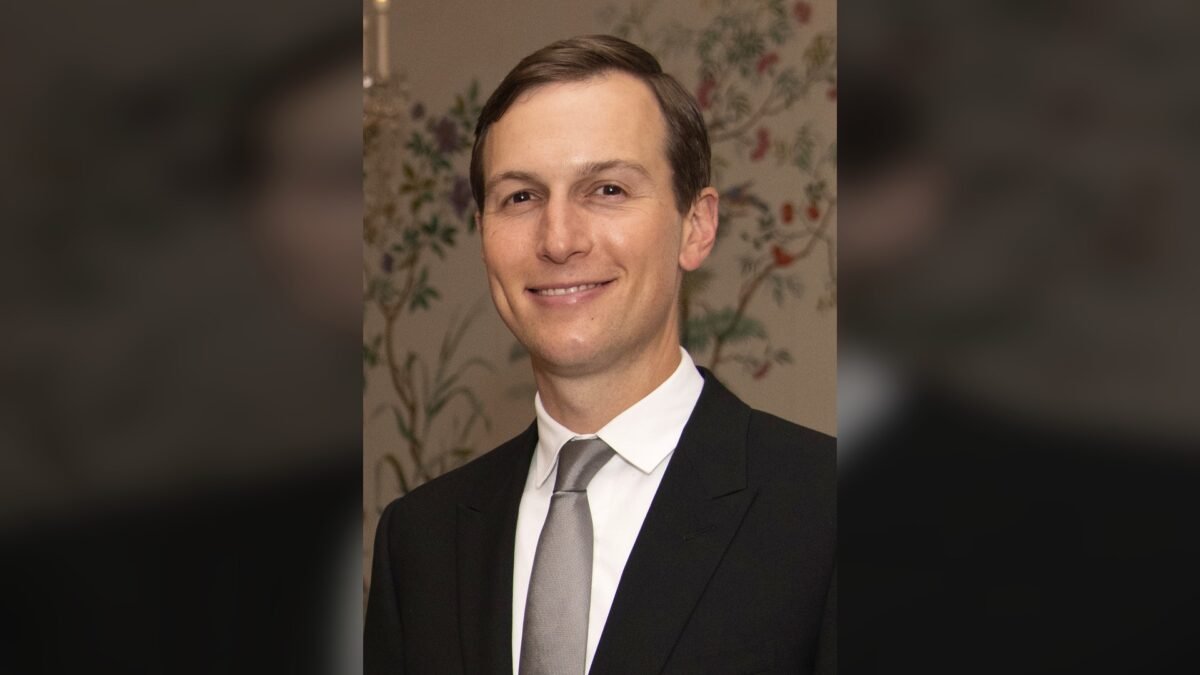
Two days of United States-mediated peace talks between Russia and Ukraine ended in Abu Dhabi on Wednesday without a breakthrough on ending the war, but with an agreement on what the American envoys described as the largest prisoner exchange of the conflict so far — and with the negotiations immediately moving on to a new phase, as President Donald Trump’s envoys fly to Moscow to meet Vladimir Putin and then to Dublin to brief Volodymyr Zelenskyy.
Jared Kushner, Mr Trump’s son-in-law and one of the two American negotiators, announced the prisoner deal at a news conference in the Emirati capital after the second day of talks, which lasted less than two hours, according to CNN. “One of the positives is we agreed that we’re going to have the biggest humanitarian release of prisoners, which we’re going to finalise the numbers tomorrow,” Mr Kushner said, according to the Associated Press.
The head of the Russian delegation, Vladimir Medinsky, and the head of the Ukrainian delegation, Rustem Umerov, both confirmed that a large-scale exchange had been agreed, the Associated Press reported. No figure and no date for the release were announced, and the precise parameters of the exchange are to be settled in follow-on technical discussions. Ukrainian media reported that the exchange would be carried out with facilitation from the International Committee of the Red Cross.
Mr Kushner said he and the other American envoy, Steve Witkoff, would travel to Moscow on Thursday to meet Mr Putin, and would then fly to Dublin to meet Mr Zelenskyy. “Steve and I are going to travel to Moscow tomorrow to meet with (Russian) President Putin to go over what was discussed today and to try to make more progress on some of the issues that we discussed because we see some openings and some opportunities there,” Mr Kushner said at the news conference, according to CNN.
“We’re going to be with President Zelensky to debrief with him and further explore some of the ideas that we came up with here today,” Mr Kushner added, according to CNN. The 9th European Political Community summit convenes in Dublin on Thursday, the morning after the Abu Dhabi round concluded.
The talks were the first face-to-face meeting between Russian and Ukrainian officials in nine months, and the first in the trilateral format with the United States since talks in Geneva in February, according to the Associated Press. The two-day session in Abu Dhabi opened on Tuesday with a session lasting more than four hours; Wednesday’s session ended after less than two hours, with no joint statement and no date announced for a third round.
Speaking after Wednesday’s session, Mr Medinsky gave little indication that Moscow’s demands had changed. “In some areas, we reached a mutual understanding. In others, we did not. This conversation will, without a doubt, continue,” he said, according to CNN. He added that the conflict had exposed shortcomings in Europe’s security system and called for a “fair security framework” that accounted for the interests of all countries, including Russia.
Mr Umerov, Ukraine’s foreign intelligence chief and its top negotiator, thanked the American envoys for their efforts and said progress had been made on certain issues, including security matters, according to CNN. Another member of the Ukrainian delegation, Davyd Arakhamia, was blunter about how hard the room had been. He said Russia had clearly come to the talks with “very strict directives”, and added: “I’m in this process since 2022 and I can fairly say that this was one of the toughest ones,” according to CNN. Mr Arakhamia said the prisoner exchange would be one of the largest yet.
Mr Zelenskyy, who was not in Abu Dhabi, had described Tuesday’s session as “constructive and quite substantive”, and said the delegations had discussed the need and possible parameters for humanitarian steps. Before the second day of talks, he accused Mr Putin of “living in a different reality”, saying Russian military officers and intelligence personnel had vastly exaggerated the extent of Moscow’s control over the Donbas region in eastern Ukraine on the first day of the talks, according to The Times. He also announced a joint position between Ukraine, the European Union and the United States.
United States Secretary of State Marco Rubio had called Tuesday’s session “very productive”, but cautioned that an end to the war was not close and that a breakthrough would take time, according to the Associated Press.
The deal that was struck
The prisoner exchange was the one concrete outcome of the two days, and both sides presented it as such. Russia and Ukraine have swapped prisoners from time to time during their nearly five-year war, but the scale promised in Abu Dhabi — described by Mr Kushner as the biggest humanitarian release since the war began, and by Mr Arakhamia as one of the largest exchanges yet — would make it different in kind, if it is delivered.
The talks were largely about humanitarian issues, including possible prisoner exchanges and the return of Ukrainian civilians held in captivity, as well as children taken from the country, Mr Kushner said, according to the Associated Press. That humanitarian focus was deliberate. For Kyiv, the release of prisoners was the priority going into the round: Mr Zelenskyy said on Tuesday that the release of prisoners was Kyiv’s priority, and the head of his office, Kyrylo Budanov, had said before the talks that the humanitarian track would be a major focus and that prisoner exchanges needed to be intensified.
There are reasons to treat the announcement with both hope and caution. On the hopeful side, the deal was confirmed by all three parties in the room — the American envoys, Mr Medinsky for Russia and Mr Umerov for Ukraine — which is more than a one-sided claim. On the cautious side, no number was given, no date was given, and the numbers are only to be finalised on Thursday, according to a member of the American negotiating team. Prisoner exchanges in this war have a history of being agreed and then delayed, reduced or disputed, and the test of the Abu Dhabi understanding will be whether the numbers are published on Thursday and whether the exchange then happens on a timetable anyone can verify.
The exchange also matters for a reason that goes beyond the individuals involved. It is the only mechanism the two sides have that still works. Previous rounds of talks — in Abu Dhabi in January and February, and in Geneva — produced only humanitarian agreements, and the last prisoner exchange of any scale came in February. The United Arab Emirates, which hosted this round, has become the most reliable mediator in the war on this front, and its foreign ministry said in October that it had enabled the exchange of 540 prisoners that month. A confirmed exchange, even a modest one, would be the first concrete outcome of the resumed trilateral format, and it would give both sides a reason to keep talking.
It is also, in human terms, the part of the war where agreement is cheapest. Prisoners are returned because both sides want their own people back. That is a transaction, not a settlement. Nothing in the Abu Dhabi announcement suggests the two sides moved any closer on the questions that actually end wars.
The shuttle begins
The more important development may be what happens next. The American envoys are not going home. They are going to Moscow, and then to Dublin, in a piece of shuttle diplomacy that Washington is now openly piloting as its model for this process.
Mr Kushner said he and Mr Witkoff would try to finalise humanitarian relief and prisoner releases in Moscow, and would push to bring European countries into the talks — a wider format that Moscow has so far resisted, according to CNN. The Reuters news agency reported, citing Russia’s state-run TASS news agency, that the two envoys could visit Russia in the coming days, although TASS gave no details on the timing or purpose of the possible trip.
The Moscow visit, if it goes ahead as announced, would be the highest-level direct American engagement with the Kremlin since the war began, and it would put Mr Kushner and Mr Witkoff in front of the one person whose decisions determine whether any of this moves. Mr Kushner has said Washington believes Mr Putin is ready for peace, although he stressed that this would depend on the conditions. “From what Steve and I have heard from him, we can say very strongly we believe so, under the right conditions,” he said in a video published before the talks.
The Dublin leg is equally significant. Mr Zelenskyy will be in Dublin for the European Political Community summit, and the American envoys will debrief him there and explore the ideas that came out of the Abu Dhabi sessions. That sequencing — Moscow first, then the Ukrainian president in a European capital, surrounded by European leaders — is a deliberate piece of stagecraft. It tells Kyiv that it will be consulted, and it tells Europe that it is part of the conversation, even though Russia kept European representatives out of the main negotiating room in Abu Dhabi.
Whether the shuttle produces anything depends on what Mr Kushner meant by “some openings and some opportunities”. He did not say what those openings were. Mr Medinsky’s remark — mutual understanding in some areas, none in others — suggests the openings are narrow. The most likely reading is that the two sides found common ground on humanitarian steps and on the shape of a security discussion, while remaining far apart on territory. That is the pattern of every round so far.
What the two days actually produced
Strip away the choreography and the Abu Dhabi round produced three things: a process confirmation, a humanitarian commitment and a rhetorical formulation.
The process confirmation is the most significant. The talks did not collapse. The two sides sat in the same room for two days, the first time they had done so in nine months, and they left saying the conversation would continue. In a war where direct contact had effectively stopped, that is not nothing. It is also, on its own, not peace.
The humanitarian commitment is the prisoner exchange. It is real, it is confirmed by all three parties, and it is the kind of result that can be verified quickly — the numbers are to be finalised on Thursday, and the exchange itself will either happen or it will not. That verifiability is its strength. It is also its limit: a prisoner exchange does not stop a single shell.
The rhetorical formulation is Mr Zelenskyy’s announcement of a joint position between Ukraine, the European Union and the United States. That is a political statement, not a negotiating text, but it matters because it answers one of the oldest questions in this process: who speaks for the West. For months, the fear in European capitals has been that Washington would cut a deal with Moscow over Europe’s head. A joint position, if it holds, makes that harder.
What the round did not produce is equally clear. No ceasefire was agreed. No date was set for a third session. No territory was conceded by either side. No security guarantee was signed. The central questions — territory, security guarantees, NATO membership, and accountability — remain exactly where they were when the delegations arrived.
Mr Kushner himself acknowledged the limits. He said on Tuesday that the talks had “narrowed the gaps” between the two countries, according to The Times, but the second day’s brevity — less than two hours, against more than four on the first day — tells its own story. When negotiators have something to agree on, they stay in the room. When they do not, they leave early.
Europe’s seat at the table
One of the sharpest disputes of the Abu Dhabi round was not between Russia and Ukraine at all. It was about who else gets to sit in the room.
Germany, France and Britain — the so-called E3 — were in Abu Dhabi, alongside Italy, NATO and the European Union, according to the Associated Press. But their consultations with American representatives were separate from the trilateral negotiations with Russia. The Kremlin said the Russian delegates did not plan to meet any of the European representatives. Its spokesman, Dmitry Peskov, said Mr Putin was being provided with regular updates about the progress of the talks.
That arrangement is the product of a Russian insistence that the talks be strictly trilateral. Russia’s foreign minister, Sergei Lavrov, has been blunt about the point: when asked about European involvement, he said, “As for the Europeans’ involvement — well, they flew to Abu Dhabi. Let them sit in a hotel there.” According to CBS News, Mr Lavrov also explicitly rejected European demands for a ceasefire framework.
The Europeans see it very differently. The European Union’s foreign policy chief, Kaja Kallas, has said there is little sign Russia is negotiating in good faith. Mr Rubio, speaking in Paris at a meeting of G7 foreign ministers, said the goal was to expand the talks so that Europeans were “represented at that table directly”, adding that “our goals are the same”. The French presidency has said peace in Ukraine and security in Europe are “inextricably linked”. Germany’s foreign minister, Johann Wadephul, has said Europe needs a “restoration of the existing security architecture”, not a new one. Ms Kallas has cited the 1994 Budapest Memorandum, under which Ukraine gave up its nuclear weapons in exchange for security assurances, as a reminder of what happens when those assurances fail.
Mr Zelenskyy has been equally clear. “We don’t want a second Yalta,” he has said, invoking the 1945 conference at which the great powers redrew Europe’s map over the heads of smaller states. The reference is deliberate, and it is aimed as much at Washington as at Moscow.
The Abu Dhabi format, as it stands, is a compromise that satisfies nobody on this point. Europe is present in the city but absent from the room. The Americans are talking to the Europeans separately, and then talking to the Russians separately, and the two conversations are not the same conversation. Mr Kushner’s promise to push for a wider format in Moscow is an acknowledgement of that problem. Whether Mr Putin accepts it is another matter.
The Dublin summit on Thursday will be the first test. European leaders will be in the same city as Mr Zelenskyy and, shortly afterwards, as the American envoys. If the Europeans leave Dublin feeling they have been briefed rather than consulted, the joint position Mr Zelenskyy announced will be harder to sustain.
The war that went on anyway
While the delegations talked, the war did not pause. The Associated Press reported that Russia struck the southern Zaporizhzhia region and the city of Kharkiv overnight, wounding seven civilians and damaging property, and that both countries were still hitting each other with long-range missiles and drones. Russia’s defence ministry said on Wednesday that its air defences had intercepted and destroyed 627 Ukrainian drones overnight.
That dissonance — talks in a Gulf capital, strikes on Ukrainian cities on the same night — is the defining feature of this process. It was the same on the first day. While the delegations sat in Abu Dhabi on Tuesday, Russia struck ten regions overnight, hitting five major electricity substations and killing two people in the Vinnytsia region, according to Ukraine’s energy operator. Homes were left without power in six regions, including Kyiv, Kharkiv and Dnipropetrovsk, and more than 600,000 people in the Dnipropetrovsk region were without electricity overnight into Sunday, according to Mr Zelenskyy.
The human cost continues to rise. Civilian deaths from Russian strikes are at their highest since the war began, with more than 2,700 people killed in Russian strikes this year, according to data from the Armed Conflict Location and Event Data Project cited by CNN. A Russian strike on a school shelter in the village of Komyshuvakha last Monday killed 55 people.
The energy war is now a central part of the conflict. Ukraine’s air defences are running short of Patriot interceptors, according to the country’s foreign minister, Andrii Sybiha, and temperatures are falling towards minus 20 degrees Celsius. Ukraine now produces about half of its own military equipment and is seeking to raise that to 90 per cent, but no country, as Mr Sybiha put it, can be self-sufficient in air defence.
This is the context in which the prisoner exchange must be judged. It is a genuine humanitarian achievement, and it will matter enormously to the families of the prisoners involved. But it does not change the trajectory of the war. The front line is about 1,200 kilometres long, and little territory has changed hands this year, according to the Associated Press. The war is in its fifth year. A prisoner exchange does not alter any of that.
The gap that will not close
The reason no breakthrough was expected in Abu Dhabi, and none came, is that the two sides’ positions on the central questions remain fundamentally opposed.
Mr Putin wants Ukraine to pull its troops back from four regions — Donetsk, Luhansk, Zaporizhzhia and Kherson — that Moscow annexed in September 2022 but has never fully captured. He wants Kyiv to abandon its bid to join NATO, to accept strict limits on its armed forces, and to drop restrictions on the Russian language and on the Moscow-affiliated Orthodox Church. He has also made clear that he wants no immediate ceasefire without knowing what comes next, arguing that a pause would only allow Ukrainian troops to rest and replenish their stocks.
Mr Zelenskyy rejects all of it. He refuses to cede territory voluntarily, refuses limits on Ukraine’s armed forces or its arrangements with Western partners, which Kyiv regards as essential security guarantees, and insists that an immediate ceasefire is the necessary first step towards negotiating a wider settlement. He has said a direct meeting between himself and Mr Putin is the only way the territorial questions can be settled. Mr Putin has spurned that suggestion, preferring a comprehensive peace deal on his own conditions.
Between those two positions sits a 28-point plan, drawn up by the Russian envoy Kirill Dmitriev and Mr Witkoff last year, under which Ukraine would cede land, renounce NATO membership and accept American mediation of NATO-Russia talks. That plan is the unspoken text behind the Abu Dhabi discussions, and it is the reason European capitals are nervous. Mr Trump said last week that a “big, beautiful agreement” might “involve more than Ukraine” and “might involve all of Europe”. In recent weeks, according to CNN, Mr Trump has announced significant concessions to Moscow, causing consternation in European capitals.
Mr Trump has also been candid about the direction he expects the map to move. Speaking on the CBS programme 60 Minutes on Monday, he said Ukraine would “end up with a little bit different shape”, and accused Mr Zelenskyy of “disrespect” towards Mr Putin. He refused to say whether he trusted Mr Zelenskyy or Mr Putin more.
That is the political reality the American envoys carry with them to Moscow. They are not neutral mediators. They represent a president who has made clear he wants a deal, who has shown a willingness to concede ground to Moscow, and who is, by his own account, impatient with the Ukrainian side. The question in Moscow will be whether Mr Putin sees that impatience as an opportunity to press for more, or as a reason to take what is on offer.
There is also a clock running. The American midterm elections on 3 November delivered a landslide defeat for the Republicans, and the Democrats will take control of Congress in January. Mr Zelenskyy has said he hopes that shift bolsters American support for Ukraine. The Kremlin, by contrast, may be hoping to capitalise on Mr Trump’s desire for a foreign policy success before the new Congress sits. The former American ambassador to Ukraine, John Herbst, has said expectations for Abu Dhabi were “very modest”, adding: “They are only taking place because Putin wants to give Trump a reason to continue to distance himself from Ukraine.” The Times has reported that there was almost no chance of a deal in Abu Dhabi.
Analysis: Why It Matters
A prisoner exchange is a result, not a peace
The most important thing to understand about the Abu Dhabi outcome is what it is and what it is not. It is a real result, agreed by all three parties, and it will bring people home. That matters, and it should not be minimised. But it is not a step towards peace in any structural sense. Prisoner exchanges are the easiest agreement in war because both sides want the same thing: their own people back. They require no concession on territory, no compromise on security, no admission of anything. They are, in the language of diplomacy, a low-cost confidence-building measure. The danger is that they are mistaken for momentum. They are not momentum. They are a transaction that leaves the war exactly where it was.
The shuttle is the story now
The more consequential development is the shuttle itself. Mr Kushner and Mr Witkoff are not returning to Washington to report. They are going to Moscow, and then to Dublin, carrying the Abu Dhabi discussions with them. That is a deliberate choice, and it tells us how the Trump administration intends to run this process: not as a conference, with everyone in one room, but as a series of bilateral conversations in which Washington is the hub. The advantage of that model is speed and control. The disadvantage is that it excludes precisely the parties whose interests are most directly at stake — Ukraine, which is not in the Moscow meeting, and Europe, which is not in any of the meetings. A process run this way can produce a deal. Whether it can produce a deal that lasts is a different question, and the history of deals made over the heads of the people who have to live with them is not encouraging.
Europe’s absence is becoming the central problem
The Abu Dhabi round made the European problem impossible to ignore. The Europeans were in the city, holding their own meetings, and they were not in the room. Mr Lavrov’s dismissal of them — let them sit in a hotel — was rude, but it was also honest about the Russian position. Moscow does not want Europe at the table because Europe is the party most committed to the principle that borders cannot be changed by force, and that principle is the main obstacle to the settlement Moscow wants. Washington, meanwhile, is caught between its European allies and its desire for a deal. Mr Kushner’s promise to push for a wider format in Moscow is an attempt to square that circle. But if Mr Putin refuses, Washington will have to choose, and the choice it makes will define the next phase of the war.
The second day’s brevity is the most honest signal
Diplomats rarely say what they mean in public. They say it in the length of their meetings. The first day in Abu Dhabi lasted more than four hours. The second day lasted less than two. That is the signature of a negotiation that ran out of things to agree on. The prisoner exchange was settled, or close to settled, on the first day. The second day was spent discovering that there was nothing else to settle. Mr Medinsky’s formulation — mutual understanding in some areas, none in others — is the polite version of the same message. When the next round is announced, the length of its sessions will tell us more than any statement.
What to watch is whether the exchange actually happens
The prisoner exchange is the one part of the Abu Dhabi outcome that can be checked, and it should be checked rigorously. The numbers are to be finalised on Thursday. If they are published, and if the exchange takes place on a verifiable timetable, then Abu Dhabi produced something real, and the process has a foundation to build on. If the numbers slip, or the exchange is delayed, or the two sides dispute the figures, then the round will have produced nothing at all — and the shuttle to Moscow will be carrying an empty briefcase. The exchange is also a test of the American envoys’ credibility. They announced it. They own it now. What happens on Thursday will tell us whether their word in this process can be trusted.
What to Watch Next
- The prisoner exchange numbers, due to be finalised on Thursday — whether a figure is published, how large it is, and whether a date is set.
- The Kushner-Witkoff meeting with Mr Putin in Moscow on Thursday, and whether Mr Putin accepts the push for a wider format that includes European countries.
- The debrief with Mr Zelenskyy in Dublin, and what European leaders say at the European Political Community summit about their role in the process.
- Whether a date is announced for a third round of trilateral talks, and whether it is held in Abu Dhabi or elsewhere.
- Whether the fighting eases at all in the coming days, or whether the strikes on Ukrainian energy infrastructure continue through the winter.
- What Mr Trump says next about the shape of a settlement, and whether the 28-point plan reappears in public discussion.
Sources
- CNN — Trump envoys to meet Putin in Moscow after latest Ukraine talks end with no breakthrough
- Associated Press (via Glasgow Times) — Russia and Ukraine agree to large exchange of prisoners of war
- The Times — Putin lives ‘in a different reality’, Zelensky says during peace talks
- Reuters — US envoys Witkoff and Kushner may visit Russia in coming days, TASS reports
- EuropeSays — Ukraine-Russia Talks End In Abu Dhabi After Night Of Air Attacks
- Associated Press (via Virginia Times) — Prisoner Exchange in Abu Dhabi: Russia, Ukraine Agree Deal

About the Author — Abdul Mannan
Related Articles
US Warns Madagascar Against Deepening Military Ties With Russia, Citing the Sahel’s Failed Security Model
Lieutenant General John Brennan, deputy head of US Africa Command, warned Madagascar on 11 November that Russia's "Sahel…
US Treasury Secretary Scott Bessent Moved to a Military Base After Iranian Threats to His Life
US Treasury Secretary Scott Bessent has moved from his Washington home to a military base after Iranian threats…
US Charges Three Iran-Backed Operatives Over RAF Fairford Terror Plot and Nearly 20 Attacks Across Europe and America
An eight-count US indictment unsealed on Tuesday accuses three Iran-backed operatives of plotting a fuel-van attack on RAF…