
US Treasury Secretary Scott Bessent Moved to a Military Base After Iranian Threats to His Life

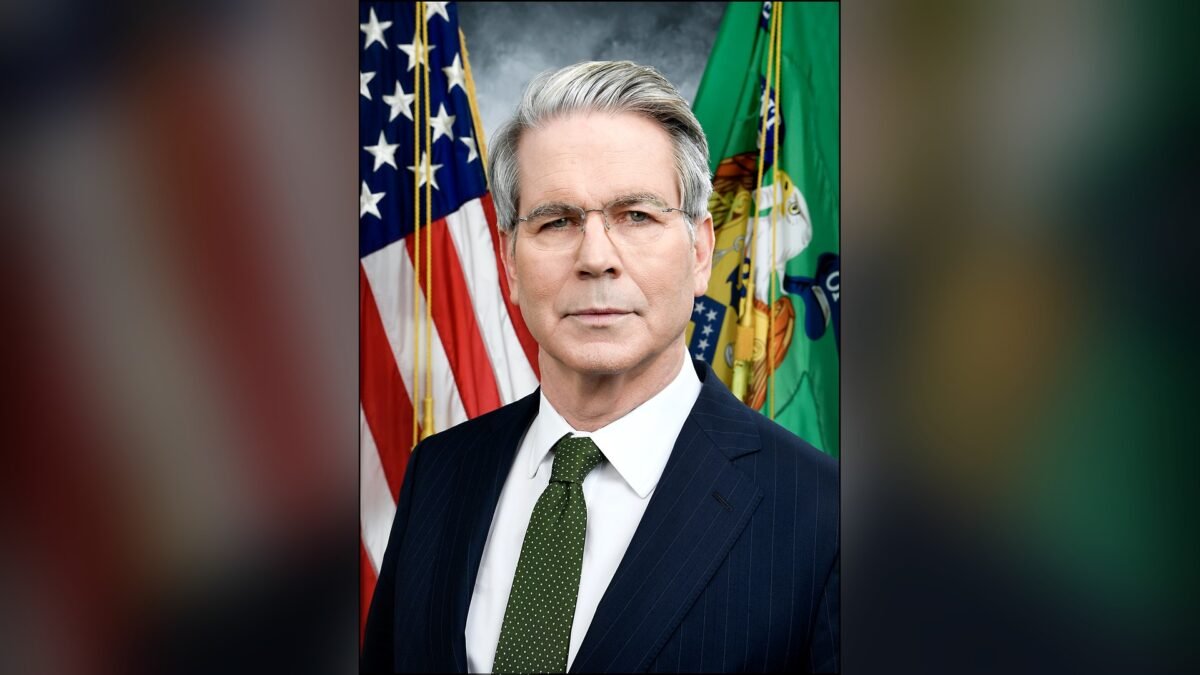
United States Treasury Secretary Scott Bessent has moved out of his home in Washington and onto a military base after Iranian threats against his life, according to reports confirmed by two people familiar with the matter. The disclosure, first made by The New York Times on Tuesday, turns a war that has so far been fought with airstrikes, a naval blockade and sanctions into something far more personal: the safety of one of the most senior members of the American cabinet, inside the United States capital itself.
Bessent, who was confirmed as Treasury secretary in January 2025, has become the public face of Washington’s economic war against Tehran. Since August he has run Operation Economic Outcast, the sanctions campaign designed to cut Iran off from the world’s financial system and force it to reopen the Strait of Hormuz. According to Reuters, which confirmed the move independently, two people familiar with the matter said on Tuesday that Bessent had recently left his Washington residence for a military base. The New York Times first reported the relocation, citing sources with knowledge of the matter, and The Times of London also reported the move.
What has not been disclosed is almost as striking as what has. Neither the reports nor the Treasury Department have said which base Bessent is now living on, or exactly when he moved. The severity of the threats against him was not immediately clear, according to The New York Times, and that uncertainty was repeated by Reuters. A senior administration official separately confirmed that Bessent had moved out of his home and onto a military base, but did not confirm when the move took place. The Treasury Department did not immediately respond to a request for comment from Reuters, but later issued a statement through a spokesperson that left no doubt about the administration’s reading of the situation.
“The secretary will not be deterred by the Iranian regime’s threats and remains committed to executing Operation Economic Outcast and maintaining the blockade, which together are collapsing Iran’s economy,” the Treasury spokesperson said in an emailed statement, according to Reuters.
Iran has previously denied plotting to attack officials and people on American soil. The New York Times reported that American officials have noted that Iran’s ability to carry out large-scale attacks in the United States and other territories overseas is limited. That qualification matters. Nothing in the public record describes a specific plot against Bessent, names a would-be attacker, or sets a date for any attack. What the reporting establishes is that the United States government believes the threat against one of its most senior economic officials is serious enough to move him behind the wire of a military installation, and that it believes the threat comes from Tehran.
A photograph that changed the security calculation
One detail in the Reuters reporting points to how a cabinet secretary’s private life became a security problem. According to a source familiar with the matter, security concerns around Bessent increased when The Wall Street Journal published an aerial view of the Georgetown mansion that Bessent bought for 12.5 million dollars shortly after his confirmation as Treasury secretary in January 2025. The photograph allowed Bessent’s home to be located precisely, the source said.
“The news media has an obligation to act responsibly amid growing threats against public officials,” the source told Reuters.
The remark is a reminder of how the work of protecting a public figure has changed. A Treasury secretary is not a covert operative. His home address, his movements and his routines are, in ordinary times, matters of public record and press coverage. But the combination of a named target, a published aerial photograph and an adversary with a demonstrated interest in killing American officials turned an ordinary piece of reporting into a security failure in the eyes of the people responsible for keeping him alive. The Times of London reported that Bessent is the latest senior figure in the Trump administration to move to military housing, which suggests the problem is not confined to one man or one address.
Bessent’s move is not the first time the threat picture has forced a visible change in how senior American officials live and work. It is, however, the first time in this war that it has reached a sitting cabinet secretary whose job is economic rather than military. The Secretary of the Treasury does not command troops. He commands the financial weapons the United States has aimed at Iran, and that, in Tehran’s calculation, may be reason enough.
The memo that warned everyone
The move did not come out of nowhere. Nearly three weeks earlier, the United States’ top intelligence official put the threat in writing. On Friday, 23 October, Director of National Intelligence Jay Clayton sent a one-page, unclassified memorandum to Secretary of State Marco Rubio warning that Iran had stepped up its efforts to target American personnel.
“Through various channels, we have received intelligence that Iran has substantially increased efforts to target U.S. personnel,” Clayton wrote. “The lethal plotting efforts by the Iranians against U.S. citizens have reached advanced stages in both the Middle East and certain other countries.”
The memo, first reported by Axios and seen by Reuters, was copied to CIA Director John Ratcliffe. A United States official confirmed its authenticity to The New York Times, and CNN obtained its own copy. Clayton offered to downgrade as much of the intelligence as possible so that it could be shared more widely inside the State Department, a sign that the warning was meant to reach the people who might be in danger rather than sit in a classified file.
The memo was careful about what it did not say. It named no targets, identified no specific plots, and did not name the countries outside the Middle East where Americans could be at risk. It did not say whether an attack was imminent. What it did say, in plain language, was that the plotting had moved beyond the talking stage, and that the government’s own assessment was that American lives were at greater risk than they had been.
The warning was followed by action. The State Department reduced staffing at American embassies in Jordan, Lebanon, Qatar and the United Arab Emirates, and missions in Saudi Arabia had already been scaled back earlier that week in response to intensified attacks by Iran-allied Houthi forces. On the same day the memo was written, the United States military deployed ground-based air defence systems in and around Mar-a-Lago, President Donald Trump’s home in Palm Beach, Florida, at the request of the Secret Service, according to officials who confirmed the deployment to local television station WPTV. The memo does not mention Mar-a-Lago, and officials have not publicly tied the air defence deployment to any specific threat, but the timing left little doubt about the atmosphere inside the administration that week.
Against that background, Bessent’s relocation looks less like a sudden decision and more like the latest step in a security posture that has been tightening for weeks. The difference is that this time the person being protected is not a diplomat in the Gulf or a former official with a security detail. It is the sitting Treasury secretary, in Washington, in the ninth month of a war.
Why the sanctions chief is the target
To understand why Iran would want Bessent, it is necessary to understand what he has been doing since August. On 24 August 2026, Bessent announced Operation Economic Outcast, a sharp escalation of the sanctions campaign against Iran. In a single day, the Treasury Department’s Office of Foreign Assets Control designated nearly 60 entities, individuals and vessels, suspended five general licences that had allowed limited categories of transactions with Iran, and added five new sectors, digital assets, technology, gold, aviation and shipping, to the list of industries that can face secondary sanctions under Executive Order 13902.
The message Bessent delivered that day was blunt. Countries still doing business with Tehran had a choice to make, and any entity that facilitated money laundering on Iran’s behalf would be removed from the United States dollar system. The administration’s aim, as Bessent described it, was to increase pressure on Iran to reopen the Strait of Hormuz and reach a durable peace agreement with the United States.
The campaign has not stopped since. According to Reuters, it has included sanctions on Middle Eastern bank branches and other financial services firms that facilitate transactions with Iran. On 4 November, the Treasury Department targeted a maritime network accused of supplying fraudulent vessel registrations and documentation to ships carrying Iranian petroleum. On 6 November, it sanctioned eight Canadian money services businesses, alleging that they had facilitated transactions involving sanctioned Iranian entities and networks, in an action coordinated with Canada’s financial intelligence agency, FINTRAC. Bessent has also said the United States is working with Pakistan and Türkiye to close overland trade routes into Iran.
The sanctions sit alongside a naval blockade of Iranian ports, and together they form the economic half of a war that began on 28 February 2026, when the United States and Israel attacked Iran. The military campaign, which the Pentagon calls Operation Epic Fury, has killed thousands of people and displaced millions, according to Reuters, and American and Israeli attacks have killed senior Iranian officials, including the late Supreme Leader Ayatollah Ali Khamenei.
The Strait of Hormuz, the narrow waterway through which roughly a fifth of the world’s oil used to pass, has been largely closed since the war began. Before the war about 130 vessels a day passed through it. By early August, ship-tracking data showed as few as eight. Iran has attacked tankers along the coast of Oman, most recently on Tuesday, when three oil tankers were hit in the strait, and the United States has answered with airstrikes and a blockade. A June memorandum meant to reopen the strait to commercial traffic collapsed within weeks over disputes about which routes ships could actually use.
Bessent is the official who has put his name to the economic side of that siege, and he has described it in the starkest terms. He called the August announcement an economic D-Day, and he has warned that Iran’s economy may collapse in the coming weeks. For Tehran, which has watched its oil revenues shrink, its currency weaken and its shipping strangled, the Treasury secretary is not a bystander to the war. He is one of the people waging it.
A war Trump says is over, and a threat that says it is not
The timing of the disclosure is awkward for the administration’s public account of the war. On Monday, 9 November, President Trump said the war with Iran had “effectively ended” after meeting the Prime Minister of Qatar, Mohammed bin Abdulrahman Al Thani. The same day, Trump announced that he would hold off on additional major strikes against Iran after appeals from several Middle Eastern governments. On Tuesday, at a meeting of foreign ministers from the Group of Seven in Paris, Secretary of State Marco Rubio told allies, including Canada, that the administration intends to maintain severe economic pressure on Iran rather than accept Iranian demands it considers unacceptable, even as it steps back from another round of military strikes.
Canada moved the same day, announcing the reimposition of sanctions against 11 Iranian entities during the G7 gathering. The message from Paris was that the war may be pausing on the battlefield, but the economic campaign, Bessent’s campaign, is not.
That distinction is precisely what makes the threat against Bessent so difficult to read. If the war is effectively over, as the President said, why would Iran be escalating its plotting against American officials? One answer is that Tehran does not accept the President’s framing. Iran has continued to insist that the Strait of Hormuz stays closed to normal shipping until the United States lifts its naval blockade entirely, a precondition Washington has shown no sign of accepting. Iran and Oman are negotiating a narrower bilateral shipping arrangement, but that is a workaround, not a resolution.
Another answer is that the plotting predates the President’s remark and has its own logic. The Clayton memo was written on 23 October, more than two weeks before Trump declared the war effectively over. The embassy drawdowns, the Mar-a-Lago air defences and the intelligence warnings all came first. Bessent’s move may simply be the moment the public caught up with a threat picture the government has been living with for weeks.
There is also the question of what Iran hopes to gain. Killing or threatening a cabinet secretary would not reopen the Strait of Hormuz or lift the blockade. It would, however, demonstrate that no American official is out of reach, and it would force the administration to spend time, money and attention on protecting its own people rather than pressing its campaign. That is the logic of the plots the Justice Department has charged in the past, and it is the logic that appears to be at work again now.
The Fairford connection
The disclosure about Bessent came on the same day that the Justice Department unsealed an eight-count superseding indictment charging three Iran-backed operatives with terrorism offences, including a plot to attack the Royal Air Force base at Fairford in England with fuel-laden vans in September. The three men, Mohammad Baqer Saad Dawood al-Saadi, Mohsen Mohajeri and Mohammad Ali al-Hassani, are accused of acting in support of Kata’ib Hizballah and the Islamic Revolutionary Guard Corps, and of involvement in nearly 20 attacks and attempted attacks across Europe and the United States.
According to the indictment, al-Saadi coordinated parts of the Fairford plot from a jail cell in New York, using coded messages in family telephone calls. The plot, which involved three white vans, fuel barrels, chemical accelerants and metal objects intended as shrapnel, was stopped when police recovered the vans and arrested the occupants in the early hours of 27 September. No explosives were found, and the vans contained petrol. Eight people were arrested in Britain in connection with the plot, and two men were later charged under the National Security Act 2023.
The indictment does not mention Bessent, and there is no public evidence linking the Fairford plot to any threat against him. But the two stories belong to the same picture. On the same Tuesday, the Justice Department said Iran-backed operatives had tried to bomb an American airbase in Britain, and the Treasury secretary was reported to have moved onto a military base because of Iranian threats. The threat, in other words, is not a single plot. It is a campaign, waged in different countries, against different targets, by different means, and the American government is now treating it as such.
A long record of plots
Iran’s targeting of American officials did not begin with this war. It has a record that stretches back years, and the Justice Department has built a series of cases that show how it works.
In November 2024, the Justice Department charged Farhad Shakeri, an asset of the Islamic Revolutionary Guard Corps, in a murder-for-hire case. According to the charges, Shakeri told the Federal Bureau of Investigation that an IRGC official had tasked him with drawing up a plan to assassinate then-President-elect Donald Trump within seven days, and had assured him that “money’s not an issue.” The plan was to be paused if Trump lost the 2024 election, a detail that showed how closely the plotting tracked American politics. Shakeri remains at large in Iran.
In March 2026, Asif Merchant, a Pakistani national recruited by the IRGC, was convicted of participating in a murder-for-hire conspiracy targeting President Trump and other American officials, including then-candidate Joe Biden and former United Nations ambassador Nikki Haley. According to FBI testimony, Merchant met undercover agents he believed to be hitmen and discussed the targets during the 2024 election cycle.
Earlier cases follow the same pattern. In 2022, the Justice Department charged Shahram Poursafi, a member of the IRGC, with plotting to murder John Bolton, who served as national security adviser to President Trump, in apparent retaliation for the American airstrike that killed Quds Force commander Qassem Soleimani in January 2020. Prosecutors said Poursafi tried to pay 300,000 dollars in hitman fees. Former Secretary of State Mike Pompeo was also a target of Iranian plotting, according to American officials. In 2021, prosecutors charged four Iranians, believed to be intelligence agents, with plotting to kidnap Masih Alinejad, an Iranian-American journalist and activist, from her home in Brooklyn. In a later case, federal prosecutors in New York charged three members of an Eastern European crime group with plotting to murder a United States citizen whom Iran had targeted for speaking out about its human rights abuses. Two men were convicted in 2025 of plotting to kill Alinejad.
The thread that runs through these cases is the use of intermediaries. Iran, according to the charges, rarely sends its own officers to do the work. It hires criminals, cultivates assets and uses cut-outs, which makes the plots harder to detect and harder to attribute until the Justice Department brings charges. It is also what makes them so difficult to stop. A plot that can be hired can be hired again.
Iran has denied plotting to attack officials and people on American soil, and it is important to say so plainly. The denials do not settle the question. The Justice Department’s cases, the intelligence memo and the security measures taken around Bessent all point in the same direction, and they point there independently of one another.
Analysis: Why It Matters
The war’s front line now runs through Washington
For most of its nine months, the war with Iran has been fought somewhere else. The airstrikes were over Iran. The tankers were burning in the Strait of Hormuz. The blockade was enforced at sea. The embassies being thinned were in the Gulf. Americans at home could follow the war on television and feel, reasonably, that it was happening to other people in other places. Bessent’s move ends that distance. When the Treasury secretary has to sleep on a military base because a foreign government wants him dead, the war is no longer something that happens over there. It is something that has arrived in Washington, in the life of a man whose job is to sign sanctions orders.
That is a change with consequences that go beyond one official’s safety. A government that has to guard its own cabinet at home is a government whose freedom of action is constrained. Every security measure costs time and attention. Every threat has to be assessed, every movement planned, every public appearance weighed. The point of targeting officials is not only to kill them. It is to make the business of governing harder, slower and more fearful. Tehran understands that, and it has been practising it for years.
The sanctions chief is the target because the sanctions are working
There is a second way to read the threat against Bessent, and it is the one the Treasury Department itself is offering. The spokesperson’s statement did not merely say Bessent would not be deterred. It tied his safety directly to the campaign he runs, saying he remains committed to executing Operation Economic Outcast and maintaining the blockade, “which together are collapsing Iran’s economy.”
Whether Iran’s economy is collapsing is a claim that deserves scrutiny, and the Treasury Department has an interest in saying so. But the direction of travel is not in serious doubt. Oil revenues have shrunk, the currency has weakened, shipping has been strangled, and the country’s trading partners are being told, one by one, to choose between Tehran and the dollar system. The sanctions announced on 24 August were described by Davis Polk, the law firm, as significant, and the steady drumbeat of designations since then, against banks, shipping networks, money services businesses and maritime registries, shows a campaign that is still expanding.
If Iran is threatening the man running that campaign, it is, in a sense, a backhanded acknowledgement that the campaign matters. A sanctions programme nobody feared would not produce death threats against the official in charge of it. That does not make the threats acceptable, and it does not make them a sign of success on their own. But it does explain why Bessent, rather than a general or a diplomat, is the one who had to move. In this war, the Treasury is a combatant, and its secretary is a target of the same order as a military commander.
A photograph that changed a security calculation
The detail about The Wall Street Journal’s aerial photograph deserves more attention than it has received. A newspaper published a picture of a public official’s house. The picture allowed the house to be located precisely. The official then had to leave it. The source who spoke to Reuters put the point bluntly: the news media has an obligation to act responsibly amid growing threats against public officials.
That is a difficult argument, and it should not be accepted uncritically. The press has a legitimate interest in the homes, wealth and lifestyles of public officials, and a 12.5 million dollar mansion bought by a cabinet secretary shortly after his confirmation is, on any ordinary measure, a story. But the context has changed. The government’s own intelligence assessment says Iranian plotting against Americans has reached advanced stages. The Justice Department has charged Iranian assets with planning assassinations on American soil. In that context, a photograph that makes a named target’s home locatable is not merely a piece of reporting. It is information that can be used by the people doing the plotting.
The question is not whether the press should stop covering public officials. It is whether there are some kinds of information, aerial photographs of a threatened official’s home among them, that should be withheld when the threat is specific and the danger is real. The source’s complaint suggests the administration believes the answer is yes. The press will have to decide for itself, but the fact that Bessent is now living on a military base is, at least in part, the price of that decision.
The memo that warned everyone, and what it did not say
The Clayton memo of 23 October is one of the most important documents of this war, and it is worth reading for what it leaves out as much as for what it says. It is one page long. It is unclassified. It names no targets, describes no plots, and identifies no countries outside the Middle East. It does not say an attack is imminent. A document that thin could easily be dismissed as a bureaucratic gesture, a piece of paper written to show that somebody was paying attention.
That would be a mistake. The memo’s thinness is the point. Clayton wrote it to be shared, and he offered to downgrade the intelligence behind it so that more people could see it. He was not writing a finished assessment. He was sounding an alarm, and he wanted the alarm to reach the people who run America’s embassies, its missions and its government before something happened, not after. The embassy drawdowns that followed, the air defences at Mar-a-Lago, and now Bessent’s move, are the sound of that alarm being answered, one measure at a time.
But the memo’s limits matter too. It does not tell us who is being targeted, where, or how. It does not tell us whether Bessent was named in the intelligence behind it. It does not tell us whether the threat against him is a specific plot or a general assessment that he, like other senior officials, is on a list. The public record, for all its detail, still leaves the most important questions unanswered, and that uncertainty is itself part of the story. The government is asking the public to accept that the threat is real without showing the evidence, and the public has no way to test the claim except by watching what the government does. What the government has done is move its Treasury secretary onto a military base.
What the move does and does not prove
It is important to be precise about what Bessent’s relocation proves and what it does not. It proves that the United States government believes the threat against him is serious enough to justify a major disruption to his life. It proves that the threat is attributed to Iran by the officials and the reporting that have described it. It proves that the threat picture described in the Clayton memo is not an abstraction, but something that has changed how a cabinet secretary lives.
It does not prove that a specific plot against Bessent exists, or that an attack is imminent, or that Iran has the capability to carry one out on American soil. The New York Times itself reported that the severity of the threats was not immediately clear, and that American officials have noted the limits of Iran’s ability to carry out large-scale attacks in the United States and overseas. Iran denies plotting attacks on American soil, and its denials, whatever their credibility, are part of the record.
None of that makes the move unimportant. Precautionary measures are still measures, and they are taken for a reason. The history of Iranian plotting, from the Shakeri case to the Merchant conviction to the Bolton plot to the Fairford indictment, gives the government good reason to take the threat seriously, even if no single plot against Bessent has been described in public. The question is not whether the threat is real. The question is how far it reaches, and how long the United States will have to live with it.
What to Watch Next
- Whether the Treasury Department or the White House says more about where Bessent is living, when he moved, or what the specific threat against him is, and whether any further official comment narrows the uncertainty about the severity of the danger.
- Whether the Justice Department or the Federal Bureau of Investigation brings charges, makes arrests or issues any public warning connected to threats against Bessent or other current officials, as it has done in the Shakeri, Merchant and Bolton cases.
- Whether other senior administration figures are moved to military housing, as The Times reported Bessent is the latest to be, and what that reveals about the breadth of the threat picture inside the government.
- Whether the intelligence behind the Clayton memo is downgraded and shared more widely, as the Director of National Intelligence offered, and whether embassy staffing in the Gulf and the Levant is cut further or begins to return to normal.
- Whether Operation Economic Outcast produces another round of designations, and whether the G7 line set out by Secretary of State Marco Rubio in Paris, that economic pressure will continue even as military strikes pause, holds through the coming weeks.
- Whether the second day of the Abu Dhabi talks between the United States, Russia and Ukraine produces any result that changes the wider diplomatic picture, and whether the tanker attacks in the Strait of Hormuz continue despite President Trump’s statement that the war with Iran is effectively over.
Sources
Reuters: US Treasury chief Bessent moved to military base after Iranian threats, NYT reports
The Times: US Treasury chief moved to military base over Iran threats
Reuters: Iran has ramped up efforts to target US personnel, intelligence memo warns
The Florida Press: Mar-a-Lago air defenses deployed amid Iran plot warning

About the Author — Abdul Mannan
Related Articles
US Charges Three Iran-Backed Operatives Over RAF Fairford Terror Plot and Nearly 20 Attacks Across Europe and America
An eight-count US indictment unsealed on Tuesday accuses three Iran-backed operatives of plotting a fuel-van attack on RAF…

Senior US Soldier Arrested in UK on Suspicion of Spying for Russia
British counter-terrorism police have arrested a 41-year-old senior US soldier near Gloucester on suspicion of espionage offences relating…

US, Russia and Ukraine Resume Peace Talks in Abu Dhabi as First Day Ends With No Breakthrough but a ‘Constructive’ Tone
The first trilateral talks in nine months opened in Abu Dhabi on Tuesday, with Washington calling the session…