
Manchester United Reach Agreement in Principle with Mauricio Pochettino as Michael Carrick’s Sacking Nears

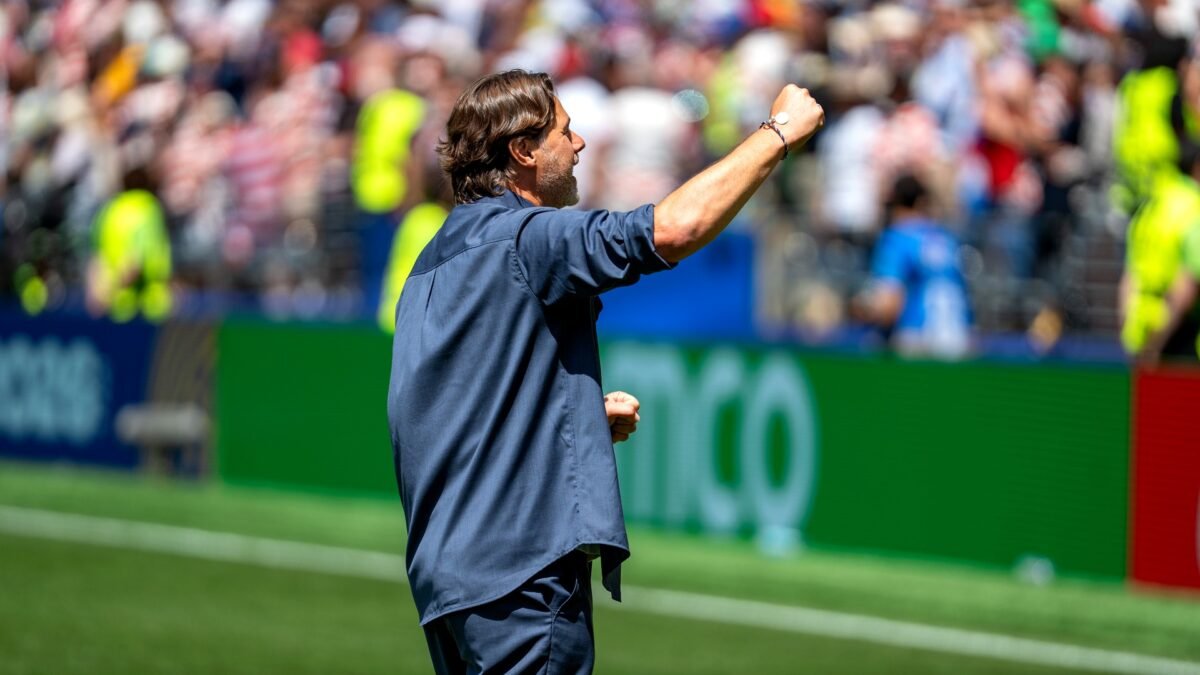
Manchester United have reached a verbal agreement in principle with Mauricio Pochettino to become their next head coach, according to Sky Sports, as Michael Carrick’s turbulent reign at Old Trafford moves towards its end. The agreement, reported on Wednesday, is conditional on United deciding to dismiss Carrick, but the direction of travel at the club now appears unmistakable: a change in the dugout is expected within days, and Pochettino, the head coach of the United States national team, is the man chosen to make it.
Carrick, 45, took training at Carrington on Wednesday and officially remains United’s head coach. Yet Sky Sports reported that he is likely to be relieved of his duties before the end of the week, once chief executive Omar Berrada and director of football Jason Wilcox have returned from a meeting with co-owner Sir Jim Ratcliffe in Monaco. Journalist Ben Jacobs reported that Carrick is expected to be formally informed of the decision on Thursday. Pochettino would then be confirmed as his replacement, although Sky Sports understands that the Argentine is still expected to take charge of the United States’ two matches against Haiti during the international break before moving to Old Trafford.
If the change goes through as reported, it will be the latest and most dramatic turn in a season that has already become one of the worst in Manchester United’s modern history. United sit 18th in the Premier League after ten matches, inside the relegation zone, with one win from their opening ten league games and no victory since August. The club’s worst start to a season in 40 years has turned a managerial question into a managerial crisis, and the international break has given the board a two-week window in which to act. According to BBC Sport, Berrada and Wilcox were expected to recommend Carrick’s dismissal at the Monaco meeting, and the Glazer family, the club’s majority owners, would need to sign off any decision. No official announcement had been made by either United or Pochettino by Wednesday evening.
Wednesday’s developments: agreement in principle and the Monaco summit
The decisive movement came on Wednesday, when Sky Sports reported at midday that United had reached a verbal agreement in principle with Pochettino. The report, which was quickly picked up by outlets around the world, said that personal terms had been discussed with the 54-year-old’s representatives and that no problems were expected. The Sports Business Journal, summarising the Sky Sports report, said United were “pretty confident” that the remaining details would not cause difficulty, and that the club wanted to move quickly if the decision to part with Carrick was taken.
The agreement is not, by itself, an appointment. As Sky Sports made clear, it is conditional on United first deciding to remove Carrick, and that decision had not been taken when the report was published. What the agreement does show is how far the club’s planning has advanced. According to The Athletic, whose reporting on Monday first set the week in motion, United had spent Tuesday discussing personal terms with Pochettino, and work on a replacement was already under way before the Monaco meeting. BBC Sport reported separately that United had opened talks with Pochettino and that the Argentine was ready to accept the job if it were formally offered, while insisting that he wanted to remain respectful to the United States Soccer Federation and was waiting for an official approach.
The meeting in Monaco brought together the three men who will decide Carrick’s fate. Ratcliffe, the club’s minority owner and the driving force behind its football operations, was joined by Berrada and Wilcox, who had flown out to present their assessment of the season. According to BBC Sport, the meeting had already been in the diary as a regular discussion of the club’s strategy, rather than being called specifically to discuss Carrick, but its timing, in the middle of the international break and days after the 4-4 draw with Aston Villa, gave it an obvious significance. The Athletic reported that Berrada and Wilcox were expected to recommend a change, and that a final call would require approval from Ratcliffe and the Glazer family. Sky Sports reported that Carrick was likely to be relieved of his duties once the two executives had returned from Monaco, with Pochettino’s confirmation to follow.
Carrick’s own day told the story of a manager in limbo. He was pictured arriving at Carrington on Wednesday morning and took training with the players not away on international duty, carrying on as normal while his employers met hundreds of miles away to discuss his future. The image recalled the previous fortnight, when he had been granted what Sky Sports described as a stay of execution after the 3-0 home defeat by Bournemouth in late October, only for results to keep deteriorating. On Wednesday, the professional routine continued; the political reality around it had plainly moved on.
There was also a note of dissent about the way the process has been handled. Peter Schmeichel, the former United goalkeeper, described the club’s treatment of Carrick as “very disrespectful”, according to DAZN, a view that reflected a wider unease among some former players about a manager learning of his likely fate through the media while still taking training. Harry Kane, the England captain, who played under Pochettino at Tottenham, offered a different emphasis, telling reporters that he could not speak highly enough of the Argentine and that United would be getting a fantastic manager, according to the Evening Standard. The two reactions captured the split in the debate: sympathy for the man leaving, and enthusiasm for the man arriving.
The deal on the table: the release clause and the Haiti problem
The financial side of the move appears straightforward. Pochettino signed a contract extension with the United States in August that runs until the 2030 World Cup, but according to the BBC it contains a release clause worth 10 million dollars, roughly £7.5 million. Sky Sports put the figure at £7 million and reported that the clause was not thought to be an issue for United. The Sports Business Journal reported a compensation figure of 9.9 million dollars. The small differences between the reported figures do not change the substance: for a club that has spent far larger sums on managerial changes since 2013, the cost of releasing Pochettino from his United States contract is a minor obstacle.
The complication is not money but timing. Pochettino is the head coach of the United States, and the Americans are in the middle of a competitive international break. They face Haiti in a two-legged Concacaf Nations League quarter-final, with matches on Saturday and the following Wednesday, and Pochettino is due to hold a press conference on Friday ahead of the first leg. Sky Sports reported that United’s hierarchy were happy for him to take those two games before taking the role at Old Trafford, and that the club, while keen to get him in as soon as possible, was mindful of his commitments to the United States and their Nations League campaign. A media event with United States players scheduled for Wednesday was cancelled in observance of Veterans Day, a decision that spared members of Pochettino’s squad being asked about his possible exit, according to Fox Sports.
United have not yet spoken to US Soccer about triggering the release clause, according to The Athletic, and no contact had been made with the federation as of Wednesday morning. That is a significant detail. An agreement in principle with a manager is one thing; an agreement with his current employer is another, and US Soccer would need to be satisfied about the timing and the terms of any release. Pochettino’s position, as reported by BBC Sport, is that he wants to handle the move respectfully and is waiting for United to make an official approach. The expectation in the reporting is that he will lead the United States against Haiti and then move, which would put his first match in charge of United at Liverpool on Sunday 22 November, the first fixture after the international break.
That fixture list gives the incoming manager no gentle introduction. After Liverpool away, United travel to Sporting in the Champions League on Wednesday 25 November, host Brentford on Saturday 28 November, visit Newcastle on Wednesday 2 December, host Coventry on Saturday 5 December and welcome RB Leipzig in the Champions League on Tuesday 8 December. Whoever takes the job will have two weeks of preparation, most of it without the international players, and then a run of fixtures that includes the club’s fiercest rivalry, a European away trip and a run of league games that will define whether the season can be salvaged.
How Carrick’s reign unravelled
Carrick’s appointment was supposed to be the steadying choice. He had taken over as interim head coach in January after Ruben Amorim’s volatile reign ended in the sack, and he had won praise for steadying the club and guiding it to a third-place finish in the Premier League. That run earned him the job on a permanent basis in May, on a two-year deal, and the summer was presented as a chance to build on a platform of calm. Instead, the season collapsed almost immediately.
The numbers tell the story with a bluntness that no spin can soften. United have won one of their first ten league matches, have eight points, and have not won since August, according to multiple reports. They sit 18th, one point above bottom club Crystal Palace, and according to theScore this is their lowest position ten games into a top-flight season since 1986-87, when they were 20th. The club has not been relegated since the 1973-74 season, but the table now places it inside the relegation zone, and the run of eight consecutive matches without a win is the worst start to a season in 40 years.
The sequence of results reads like a catalogue of different kinds of failure. The 3-0 home defeat by Bournemouth on 25 October was the result that first made the sack a live question; the board backed Carrick then and planned to reassess him during the international break, according to BBC Sport, but the reprieve did not produce a recovery. United were beaten 2-0 at Chelsea, then scrambled a last-gasp 3-2 win against Roma in the Champions League after falling two goals down, a victory that owed more to late drama than to control. On Sunday, they twice trailed Aston Villa by two goals at home and twice fought back, scoring twice in stoppage time through Joshua Zirkzee and Patrick Dorgu to rescue a 4-4 draw. The comeback was interpreted by some as evidence that the players were still fighting for their manager; by Monday evening, The Athletic was reporting that the club was expected to sack him anyway. United are also out of the Carabao Cup after a 3-2 home defeat to Brighton in September, a result that removed the one competition in which a struggling side might have built momentum.
Discipline became a running theme of the season. Carrick dropped captain Bruno Fernandes after the midfielder criticised his manager’s tactics during a 4-1 thrashing at Champions League debutants Como, describing the decision as a footballing one. He also removed Lisandro Martinez from the side after the defender criticised the club’s hierarchy for a lack of top-quality signings. According to theScore, Carrick was hampered by an underwhelming transfer window: despite a clear need for new forwards, United signed only midfielders Youri Tielemans, Carlos Baleba and Andrey Santos in the summer. The squad that has been asked to climb out of the relegation zone is, on that account, the squad the recruitment operation built, and the manager has paid the price for its limitations.
Yet the support for Carrick has not disappeared. United fans have remained largely supportive of the former midfielder, focusing their anger on the majority owners, the Glazer family, on Ratcliffe and on the under-achieving players, according to theScore. That sympathy is understandable. Carrick is a club figure of long standing, a player who won five Premier League titles and the Champions League with United, and a coach who stepped in during a crisis and delivered a third-place finish. The manner of his likely departure, with the decision debated in Monaco while he took training at Carrington, has reinforced the sense among some supporters that the manager is not the main problem at Old Trafford.
Why Pochettino, and why now
Pochettino and Manchester United have a history that stretches back a decade. According to theScore, United have spoken to the former Argentina defender about their managerial position on three previous occasions: when Jose Mourinho was sacked in 2018, in 2022 before the club appointed Erik ten Hag, and again when Ten Hag was sacked in 2024. Sky Sports reported that the club had held talks over appointing him on three separate occasions and had come close a few times, including in 2022 when they hired Ten Hag instead. Each time the paths failed to converge; each time the name returned. As Sky Sports put it, the Old Trafford hierarchy have always admired Pochettino from afar, and the question now is whether the fourth attempt is finally the right place at the right time.
Sir Alex Ferguson has long admired Pochettino, according to Sky Sports, and the two men often had long conversations after matches between United and Tottenham. The pair were pictured at a Mayfair restaurant in May 2016, amid speculation that Pochettino, then the Spurs head coach, might take over from Louis van Gaal at Old Trafford; United subsequently chose to appoint Mourinho. A decade later, the admiration has not faded, and Ferguson’s regard for the Argentine has been cited repeatedly in the coverage as one of the reasons the board has kept returning to his name.
Pochettino is not the only candidate who has been mentioned. According to theScore, former Newcastle manager Eddie Howe, the former Chelsea head coach Antonio Conte and the former Germany coach Julian Nagelsmann have also been linked with the job, and The Athletic reported that Howe and Nagelsmann had admirers at the club. BBC Sport also reported that strengthening Carrick’s coaching team remained an option under consideration, rather than replacing him, a possibility that would have given the manager additional support instead of a successor. On the evidence of Wednesday’s reporting, however, the Pochettino option has moved beyond the stage of a name on a list. The agreement in principle, the discussion of personal terms and the expectation that he will be confirmed after Carrick’s departure all point to a decision that has effectively been made, awaiting only the formal process in Monaco.
Why now is easier to answer than why Pochettino. The international break is the natural moment for a managerial change: two weeks without a league fixture, time for a new coach to meet his squad, and a clear first game at Anfield on 22 November. United’s position in the table makes delay dangerous; every week without a win deepens the relegation conversation, and the club’s next fixtures offer no easy points. The board had already considered sacking Carrick after the Bournemouth defeat and chose to wait; the intervening results, culminating in the Villa draw, appear to have exhausted that patience. As Sky Sports reported, momentum is now gathering behind a change in the dugout, and the Monaco meeting is the forum in which that momentum becomes a decision.
Pochettino’s record
Pochettino, 54, arrives with one of the most recognisable records in European football. He made his name in the Premier League with Southampton, then spent five years at Tottenham Hotspur, from 2014 to 2019, where he built a young, high-pressing side that finished as Premier League runners-up and reached the Champions League final in 2019, losing to Liverpool. He won Ligue 1 with Paris Saint-Germain, returned to England with Chelsea, and has been in charge of the United States since September 2024.
His time with the United States has been substantial rather than spectacular. He led the Americans to the round of 16 at the 2026 World Cup, which was hosted in Canada, Mexico and the United States, and in August he signed a four-year contract extension running to the 2030 World Cup, a deal that was presented at the time as a long-term commitment. The extension is what makes the release clause necessary, and it is also what makes the move a statement of intent on both sides: Pochettino is leaving a job he had committed to for four more years, and United are paying to take a manager out of international football months after he signed that commitment. According to Sky Sports, Pochettino loves his job with the United States but feels he cannot say no to United.
His Chelsea spell, which ended in 2024, is the part of his record that divides opinion. He took the club to sixth place in the Premier League and a cup final, but the fit was never quite right, and he left by mutual consent after one season. Sky Sports reported that Pochettino considers his time at Stamford Bridge successful but ultimately feels it was not the right fit. His supporters point to the development of young players at Tottenham and the sustained competitiveness of a side built on a limited budget; his critics point to the absence of a major trophy in England and a tendency for his teams to start slowly at new clubs. Both readings will be tested at Old Trafford, where neither patience nor money has been in short supply, and where neither has yet produced a title since Ferguson retired in 2013.
If he is appointed, Pochettino will become United’s eighth permanent manager since Ferguson’s retirement 13 years ago, following David Moyes, Louis van Gaal, Mourinho, Ole Gunnar Solskjaer, Ten Hag, Amorim and Carrick. None of the seven has won the Premier League or the Champions League. That statistic is the backdrop to every decision the club makes, and it is the measure against which Pochettino will be judged.
Analysis: Why It Matters
The international break is the execution window
The timing of this move is not accidental, and it is worth understanding why. A managerial change in the middle of a season is usually a gamble; a change during an international break is the closest thing football has to a planned one. United have two weeks without a league match, which gives a new head coach time to meet the squad, assess the training ground and prepare for Liverpool without the pressure of a game every three days. The board’s decision to wait until the break, after considering a change following the Bournemouth defeat, suggests that the club has been managing the calendar as much as the crisis. The risk is that the break also gives the story time to grow: two weeks of speculation, two matches for the United States against Haiti, and a Friday press conference at which Pochettino will be asked about a job he has not yet officially taken. The execution window is real, but it is also a window in which the club’s handling of the transition will be watched closely, and the treatment of Carrick has already drawn criticism.
A ten-year courtship reaches its conclusion
There is something unusual about a club pursuing the same manager four times over a decade, and it raises a question that United’s supporters will ask in the coming weeks: if Pochettino was the answer in 2018, 2022 and 2024, why did the club choose someone else each time, and what has changed now? The honest answer is that the circumstances changed more than the candidate. In 2018 the club chose Mourinho’s successor from a different generation; in 2022 it chose Ten Hag’s reputation for structure; in 2024 it chose continuity. Each time, the Pochettino option was available and was passed over, and each time the appointment that was made eventually failed. The pattern does not prove that Pochettino will succeed, but it does explain why the board has returned to him: he is the candidate the club has always wanted but never quite chosen, and the cost of that hesitation is now measured in a relegation battle. The danger is that a decade of admiration becomes a substitute for analysis, and that the club mistakes familiarity for suitability.
The United States problem is a test of the new regime’s judgement
How United handle Pochettino’s departure from the United States will say a great deal about the club’s new leadership. The Americans are in the middle of a Nations League quarter-final, and their head coach is about to leave them for a club job. United’s reported willingness to let him take the two Haiti matches before moving is a sensible piece of diplomacy, and Pochettino’s insistence on respecting his commitments is to his credit. But the arrangement also creates a fortnight in which the manager of one team is publicly known to be leaving for another, and in which his players will be asked about it at every turn. The club has not yet spoken to US Soccer about the release clause, according to The Athletic, which means the most delicate part of the negotiation has not begun. If it is handled well, United will arrive at Anfield with a manager who has left his previous job with dignity; if it is handled badly, the first story of the Pochettino era will be a dispute with a national federation.
The manager is not the model
The hardest question for United is the one that no managerial appointment can answer on its own. Since Ferguson retired, the club has changed managers seven times, spent vast sums on players and managers, and still sits 18th in the Premier League. Carrick’s season has been dreadful, but the problems that produced it, an underwhelming transfer window, a squad short of forwards, a structure in which the manager answers to a director of football and a chief executive who themselves answer to a co-owner and a majority-owning family, will still be there on the morning Pochettino arrives. The former Liverpool defender Dejan Lovren, speaking to Hajper, made the point bluntly: he could not see Pochettino working at United because the problems at Old Trafford went beyond the dugout. He may be wrong, and former players are not neutral observers, but the underlying point is one that United’s own history supports. The club has tried changing the manager repeatedly; it has not yet shown that it can change the model around the manager. Pochettino’s appointment will be judged on results, but its significance will depend on whether the structure that produced this season changes with him.
What success looks like, and how quickly it must come
The immediate task is survival, not glory. United are 18th, one point above the bottom of the table, and their next league fixture is away at Liverpool, the club’s fiercest rival. A new manager bounce is a real phenomenon, but it is not a plan, and the fixtures after Anfield offer no respite. The realistic measure of Pochettino’s first months is not a title challenge, which is beyond any side in United’s position, but a climb out of the relegation zone, a stabilisation of the defence and a return to the habit of winning games that the club has lost since August. The longer-term measure is whether he can do what none of his seven predecessors managed: build a side that competes for the Premier League and the Champions League. That will take more than one transfer window and more than one season, and it will require the club to give him the time that it did not give Carrick, who was appointed permanently in May and may be dismissed before the end of November. The irony is not lost on anyone: the manager who is being replaced was himself appointed as the steadying choice only six months ago.
What to Watch Next
- The Monaco meeting’s outcome: whether Ratcliffe, Berrada and Wilcox formally recommend Carrick’s dismissal, and whether the Glazer family sign off the decision.
- Thursday’s formal notification: journalist Ben Jacobs reported that Carrick is expected to be told of his sacking on Thursday, and the club’s official statement will confirm the timing and the terms of his departure.
- Contact with US Soccer: United have not yet approached the federation about triggering Pochettino’s release clause, according to The Athletic, and the timing of any release will determine when he can start.
- Pochettino’s Friday press conference: the United States head coach is due to speak to reporters before the Haiti match, and his words will be examined for any signal about his future.
- The two Haiti matches: the United States face Haiti on Saturday and the following Wednesday in the Concacaf Nations League quarter-final, and Pochettino is expected to take charge of both before moving to Old Trafford.
- The official confirmation: neither United nor Pochettino had confirmed the move by Wednesday evening, and the club’s announcement, when it comes, will settle the questions that the reporting has left open.
- Liverpool away on 22 November: the first match after the international break, and the fixture at which the new manager, if appointed, is expected to take charge for the first time.
Sources
- Sky Sports – Mauricio Pochettino: Man Utd strike agreement with Michael Carrick’s potential successor
- theScore – Report: Man United nearing deal to hire Pochettino as Carrick’s replacement
- Sports Business Journal – Manchester United reaches verbal deal to hire Pochettino
- Fox Sports – USA coach Mauricio Pochettino a ‘leading candidate’ to replace Michael Carrick at Man United
- Yardbarker / Evening Standard – Harry Kane says Manchester United would be getting a fantastic manager in Mauricio Pochettino
- CaughtOffside – Manchester United decide to sack Michael Carrick as Mauricio Pochettino agrees terms

About the Author — Abdul Mannan
Related Articles

Kirk Cousins Returns to the Minnesota Vikings as NFL Trade Deadline Delivers a Quarterback Homecoming
Kirk Cousins is a Minnesota Viking again. The Las Vegas Raiders sent the 38-year-old quarterback back to Minnesota…
Messi Earns Record 18th FIFPRO World 11 Selection as Ballon d’Or Winner Harry Kane Is Left Out
Lionel Messi has returned to the FIFPRO World 11 for a record 18th selection, but Ballon d'Or winner…

Manchester United Set to Sack Michael Carrick as Pochettino Emerges as Front-Runner to Take Over
Manchester United intend to sack Michael Carrick, according to The Athletic, with a change expected before the Liverpool…