
Pat Cummins Calls Friday Press Conference as Khawaja’s Sandpapergate Claims Split Australian Cricket

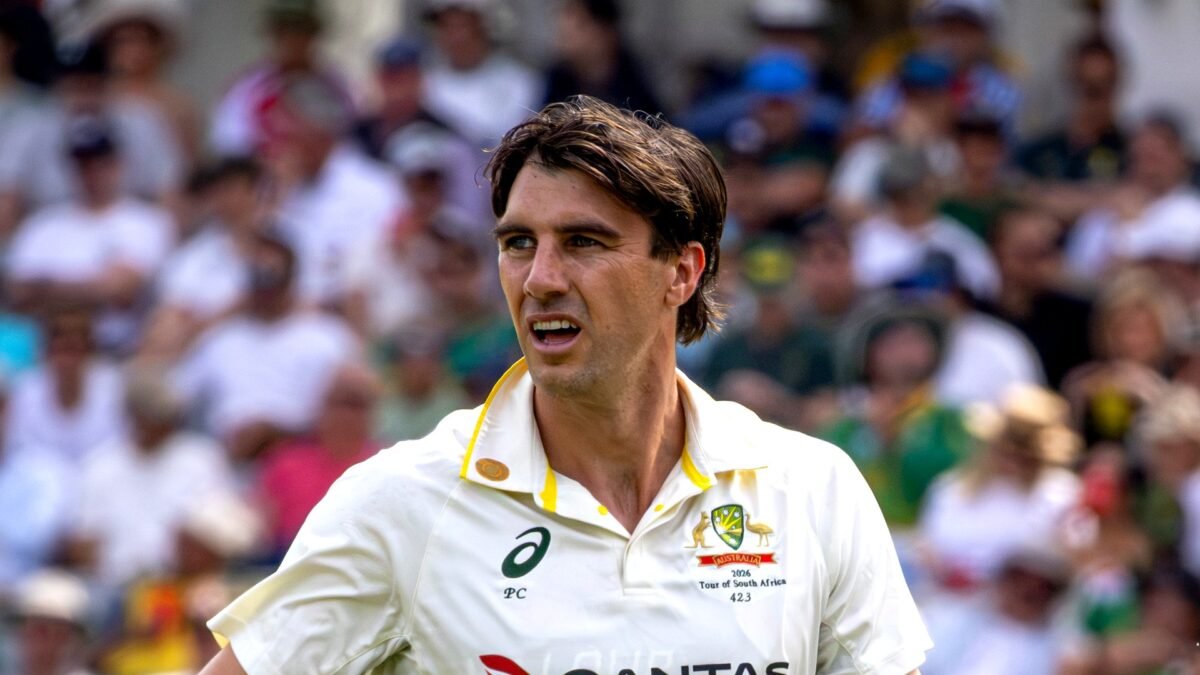
Pat Cummins will face the media on Friday morning to answer, in his own words, the “long list” of allegations Usman Khawaja has levelled at the Australian team over the 2018 ball-tampering scandal, after a week in which the most damaging episode in modern Australian cricket has been dragged back into the open and the men at the centre of it have split into openly warring camps.
The Australia Test captain announced the press conference himself, in a post on X on Thursday morning in Australia, saying he would speak to “any and all media” at 9.30am on Friday at Cricket Central in Sydney, where he will be training with New South Wales before the third day of their Sheffield Shield match against South Australia. “I’ve taken some time to try and better understand the long list and full extent of Uzzy’s allegations so I can respond properly,” Cummins wrote, according to Fox Sports. Cricket Australia confirmed the press conference in a brief statement hours later, according to the same report.
It will be the first time Cummins has spoken at length about the scandal since Khawaja’s autobiography, Sabr, reopened it. In the book, and in interviews to promote it, the former opener claims that knowledge of the sandpaper plot in South Africa in 2018 was not confined to the three players who were punished for it, but was shared by the whole team. “It was all of us. Not the batters, not the bowlers, not the staff. All of us,” Khawaja told the Sydney Morning Herald, according to Cricbuzz. He also claims sandpaper was used in the Test before Cape Town, at Port Elizabeth, now Gqeberha, and that a member of the coaching staff encouraged Cameron Bancroft to use it.
Those claims strike directly at the version of events on which Australian cricket has stood for eight years. After Bancroft was caught on television cameras rubbing the ball with a small piece of sandpaper during the third Test at Newlands in Cape Town in March 2018, and then hiding it down his trousers, the then captain, Steve Smith, admitted that the team’s “leadership group” had plotted to alter the condition of the ball. Cricket Australia’s investigation ended with bans for three men only: Smith and his deputy, David Warner, were suspended for twelve months, and Bancroft for nine. Smith was barred from holding any leadership position for a further year, and Warner was given a lifetime leadership ban, which was only lifted in 2024, after which he captained Sydney Thunder. The four bowlers in that Cape Town Test, Cummins, Mitchell Starc, Josh Hazlewood and Nathan Lyon, issued a joint statement in 2021 saying they did not know a foreign substance had been taken onto the field until they saw the images on the big screen at Newlands. The umpires in that Test, Nigel Llong and Richard Illingworth, inspected the ball after the pictures surfaced and did not change it, because there was no sign of damage, according to the bowlers’ statement.
Khawaja’s account contradicts that statement in almost every particular, and he has spent the week insisting that he is not guessing. He was in the Cape Town side, he sat next to Bancroft in the change room for the whole Test, and he says he argued inside the dressing room at the time that the team should take responsibility together rather than let three men carry it alone. “In an ideal world, I don’t want to do this,” he was quoted as saying by the Sydney Morning Herald, according to Cricbuzz. “I don’t want to be the one who comes out and talks about the truth. The issue is that I genuinely thought after eight years the truth would have been out by now. Maybe I thought Davey would have exposed it, or someone else would have talked about it more. I just didn’t think it was going to come down to this. But the longer it’s gone on for, and right from the very start, I’ve been on the train of collectively taking it. Even in the change rooms when I was talking to them after the game. I said, ‘Take this as a team’. We did this as a team. We knew what was going on, and we have to take it as a team, and so I was always of that stance. Obviously, it didn’t work that way, and those three guys got crucified.”
Khawaja, who retired from international cricket at the start of this year after the Ashes, according to Cricbuzz, says he was never interviewed by Cricket Australia’s investigators, despite sitting beside the man at the centre of the scandal. “I was sitting next to Cam Bancroft that whole Test match, and I didn’t get interviewed,” he said. “I thoroughly feel that I didn’t get interviewed because of that, because they knew that I wanted to take it as a team, because they knew I was ready to tell the truth if I was interviewed. And I was waiting for my phone to ring. It just never rang, and then the penalties were given, and I couldn’t believe it.” According to CODE Sports, Khawaja and Shaun Marsh were the only two members of the playing eleven in Cape Town who were not interviewed, a detail that has become one of the most damaging parts of the story for Cricket Australia.
He also told the Sydney Morning Herald that he had warned Cummins in advance. He spoke to the captain before Australia’s recent tour of South Africa, the side’s first Test series in the country since the scandal, which Australia lost 2-1, and told him the book would open up the ball-tampering chapter. Cummins, speaking to reporters before that tour, said he had no problem with it. “Uz gave me a buzz a few weeks back that he is releasing a book a few weeks ago. He didn’t go into too much detail, just basically gave me the heads-up that he is doing a book and, as always, no worries,” Cummins said at the time, according to Nine. “Tell your story. It’s fine. It’s obviously a long time ago and all the investigations, everything was done back then, and we answered every question a million times. It was dealt with then and all I can say is that as a group, we have moved on.”
That confidence has not survived the week. What began as a book serialisation has become a rolling public argument, with a new voice joining it almost every day, and Friday’s press conference is the moment Cummins has chosen to answer it in full.
The week the scandal came back
The first public backing for Khawaja came from the man who had most to gain from it. Warner, who was characterised as the ringleader of the plot and banned alongside Smith and Bancroft, said on Monday that Khawaja’s version of events was “100 per cent accurate”, according to Sky Sports. It was the first time any of the three banned players had publicly endorsed the claim that knowledge of the plot went wider than them, and it changed the argument overnight. Until then, Khawaja’s account could be dismissed as one man’s memory. With Warner behind it, it became two men against the bowlers’ joint statement, and the question of who was telling the truth became impossible to avoid.
Warner then widened the fight himself. On Wednesday night he took to X to attack Graeme Hick, the former England batsman who worked as Australia’s batting coach from 2016 to 2020, after Hick told the Sydney Morning Herald that Khawaja’s claims were false. Hick, who was inside the dressing room in Cape Town, said he had not heard or known anything about ball tampering in Port Elizabeth or Cape Town. “Khawaja puts it simply: ‘It was all of us. Not the batters, not the bowlers, not the staff. All of us.’ To me what Khawaja is implying here is absolutely false,” Hick said, according to Fox Sports. “In regard to any discussions around the ball tampering in Port Elizabeth or Cape Town that took place, I will say in true honesty that I did not hear or know anything!! My first knowledge of all this was, like many, when it appeared on the big screen in Cape Town as I was sat on the outside balcony at the time.”
Warner responded by questioning why Hick had the job at all. “Let’s get the facts straight. Graeme Hick was only appointed because Cricket Australia was unwilling to pay Michael Di Venuto what he deserved,” Warner wrote, according to Fox Sports. “As players, we valued Michael so highly that we even offered to contribute from our own salaries to retain him. These discussions were taking place during the New Zealand tour. That alone speaks volumes about how highly we regarded him and how determined we were to keep him involved. Adds to why Graeme has spoken!!”
The head coach at the time, Darren Lehmann, has also denied any knowledge of the plot and questioned Khawaja’s version of events, according to Fox Sports. Lehmann resigned within days of the scandal in 2018, although Cricket Australia’s investigation cleared him of wrongdoing, and his denial now sits alongside Hick’s as the coaching staff’s account of what happened.
Khawaja’s book also revives an old grievance about Hazlewood. According to Fox Sports, Khawaja writes that Warner was furious with a teammate for an interview on Fox Sports’ The Back Page a little more than two months after Cape Town, in which one of the bowlers was asked directly whether he had known anything about the ball tampering and denied it. “One of the bowlers went on The Back Page TV show and was asked point blank if he’d known anything about the ball tampering,” Khawaja wrote. “He flat out denied it. David was seething, and understandably so. I remember him texting me and sending the clip. I didn’t mind the guys staying quiet. Hell, I was doing the same thing. But to come out and say that on live TV really pissed me off. If you aren’t willing to tell the whole story, just stay quiet.” The bowler was Hazlewood, who said “No, no” when asked in June 2018 whether he had any knowledge of the plot, and who has remained silent since the claims resurfaced this week, according to Fox Sports.
Starc, by contrast, has spoken, and he has not moved an inch. Speaking to reporters on Tuesday at the launch of Fox Cricket and Kayo Sports’ summer coverage, after Cricket Australia chief executive Todd Greenberg had insisted there would be no reopening of the investigation, Starc said his recollection had not changed since the bowlers’ 2021 statement. “I haven’t really paid much attention to it to be fair,” he said, according to Sky Sports. “There are differing opinions of eight years ago. We were heavily grilled through the process, at the time and since. I won’t speak on behalf of the bowlers but from where I stand my opinion hasn’t changed, my recollection hasn’t changed from what we said in 2021. As far as our statement said, we weren’t aware of things being taken on the field. That’s where I’ll leave it. I will be sticking to what I said five years ago, what I said at the time eight years ago, so clearly there is differing versions from different people. We weren’t aware of anything taken on the field to be tampered with. We saw it on the big screen in Cape Town. As far as the book is concerned, I haven’t read it. I probably won’t read it, so that’s for Usman to elaborate on.” On Khawaja’s claim that the ball was also tampered with in the Test before Cape Town, Starc added: “That’s the first I was aware of any of that.”
The dispute has also reached into Starc’s own household. His wife, former Australia women’s captain Alyssa Healy, addressed the fallout on the Keepin’ it Cricket podcast, calling the timing of Khawaja’s comments “a little bit sticky” and describing herself as caught between her media work and her marriage to one of the players who was there. “Been scraping off bits of Mitch off the bitumen after the bus had just hit him over the last two days,” she said, according to Sky Sports. “I’m obviously in quite a unique predicament: I’m working in the media, I have to comment on these things [and] I’m also married to one of the players who is still playing who was there in that series and experienced all of that eight years ago. It’s a hard one for me to comment on. I’m kind of going to sit back and watch it unfold I think, first and foremost, but what I will say is that the timing of it is just a little bit sticky for me. I don’t like that.”
Khawaja himself has gone quiet at the awkward moment. He refused to answer direct questions from ABC 7.30 host Sarah Ferguson on Tuesday night about whether Cummins knew about the sandpaper, and the next day he cancelled all the media interviews set up to promote the book, according to CODE Sports. The cancellation has been read in different ways: as a man who has said what he wanted to say and wants the book to speak for itself, or as a man who knows the questions are about to get harder. Either way, it leaves Cummins walking into Friday’s press conference as the first of the bowlers to face a full, open-ended grilling on the claims.
Cricket Australia refuses to reopen the case
The governing body has spent the week holding a line it drew in 2018. Greenberg, who was not part of Cricket Australia at the time of the scandal, told Australian radio station SEN that there was no compelling reason to open the investigation again. “We don’t see any compelling reason to open the investigation or revisit this again. I don’t think there’s anything that can be gained from that,” he said, according to Sky Sports. “We have said we’re comfortable with the outcome of the investigation based on the information we’ve received. That includes what we’ve seen from Usman. Our position hasn’t changed on that. There’s absolutely no benefit in going back, that’s the clear position of the CA board. I think it’s fine, we’ve got to look ahead, and the matter was dealt with under a previous leadership back in 2018. Trying to second-guess decisions from a previous time or making an assessment through the prism of hindsight is not something we want to do.”
Greenberg also pushed back on Khawaja’s version directly. “When you cut to the core of the challenge that we face here, Usman’s version of events is inconsistent with what others have had to say,” he said, according to Sky Sports. “I can assure you there are lots of other players who have a very, very different version of events and they have made that very public from the very start of 2018. They have been very consistent in their position right through until today. From my conversations with many over the weekend, I don’t think that will change either. I think we end up at the same intersection point, which is eight years ago people have a version of events which differ from each other. No one would like to get this chapter of Australian cricket closed more than me, but it is unlikely.”
The board’s position was reinforced on Wednesday by its newly appointed interim chairman, David Boon, who rallied behind Cummins and assured him his job was not in danger. “We absolutely support Pat,” Boon said, according to CODE Sports. “He’s been an exemplary captain, he’s led the team with integrity and, you know, very successfully over the period of time that he’s been captain, so there’s no question of our confidence in him continuing on in that fact.” Boon also addressed the gap in the original investigation, insisting that an open invitation had existed for Khawaja and others to come forward with information at the time. “The people investigating at the time did ask, apparently all players, if they had anything that they could contribute to the investigation [to speak up] and no one said anything,” he said. “So … there we go back to what he said, she said, which serves no purpose [in regards to] whether players were asked that [at the time] or whether they weren’t. That was the decision that was made at the time and the three players [Steve Smith, David Warner and Cameron Bancroft] that were sanctioned accepted those sanctions. They served their time and they all came back to play. Two of them played cricket for Australia again and succeeded and represented proudly, and young Cameron played in England [on the 2019 Ashes]. We can’t change what happened, but I suppose what we can do is we can learn from the past and I think the guys have. With team culture, the way they behave, the way they represent the baggy green has been exemplary since … personally, I see that it wouldn’t serve any purpose to reopen an investigation.”
That stance has not been shaken by the most uncomfortable intervention of the week, from the man Cricket Australia itself commissioned to examine its culture after the scandal. Simon Longstaff, who wrote the ethics review that followed Sandpapergate, wrote in a column for the Australian Financial Review that if what Khawaja is saying is true, then he was lied to by players when conducting his review, according to CODE Sports. Longstaff now suggests it is possible that Cricket Australia’s preceding investigation into the scandal was a cover-up. The governing body responded with a statement thanking him for his work, but it has not prompted any rethink on reopening the case. “We are extremely grateful for the significant work of Simon Longstaff and others in helping restore and review cultural aspects of Australian Cricket,” a Cricket Australia spokesperson said, according to CODE Sports. “Many of the findings of the Longstaff Review with practical application have been adopted and have helped make a significant difference to the culture of Australian cricket. While the events of the 2018 tour of South Africa were deeply regrettable, we are extremely proud of the way our teams have carried themselves on and off the field in recent years.”
Sport Integrity Australia, the body that would in theory have a role in any fresh inquiry, has also poured cold water on the idea. Its chief executive, Sarah Benson, said the sandpaper issue was not something her organisation would typically handle, and that the only reason for any organisation to reinvestigate a case would be if new information had come forward. “I don’t see that Sport Integrity Australia will be adjudicating. It’s not an area where we’d have jurisdiction unless there was an element of match fixing or competition manipulation that may then have a touchpoint with us,” she said, according to CODE Sports. “When people reconsider whether or not we can open or reopen the investigation, we very much, and I think this is across many sectors, only can do so with consideration of whether any new information that hasn’t been previously considered has come to light.”
The Australian Cricketers’ Association, meanwhile, has tried to lower the temperature. In a statement it called the 2018 scandal a “low point for Australian cricket” for which Smith, Warner and Bancroft paid an “enormous” and “disproportionate” price, according to Sky Sports. “There are no winners in this issue, and nothing can undo what happened. There are humans in the centre of this and we will be calling for the ongoing vitriol directed at those involved to come to an end,” the statement said.
Clarke: “I want the truth to come out”
Not everyone in Australian cricket is content to let the matter rest, and the most pointed challenge to Cummins has come from a former captain. Michael Clarke, who led Australia before Smith, told radio station 2DayFM on Tuesday that he wanted the investigation reopened, saying the chance to establish the truth had been missed in 2018 and again three years later, when Bancroft told The Guardian in 2021 that it was “probably self-explanatory” that the bowlers had known about the sandpaper. “[Australia fans] can’t trust what’s real. They don’t know the truth until this gets reopened and the truth comes out. I would just like to see whatever the truth is for it all to come out, allow people to move on,” Clarke said, according to Sky Sports. “For me, right now, there’s more questions than answers. I want to know, firstly, did everyone know? Because certain players have come out and said they didn’t. That’s important information so we can get the truth.”
Clarke also drew the direct line between the scandal and Cummins’ own career, in terms that explain why Friday’s press conference matters so much. “I can’t believe we haven’t heard from Cummins yet. Steve Smith lost his job. If this doesn’t happen, Tim Paine never captains Australia. And neither does Cummins,” Clarke said, according to Sky Sports. “Cummins would not have captained a game at this stage if ‘Sandpapergate’ didn’t happen because Smith would still be captain.”
That is the heart of the problem for Cummins. He did not merely inherit the captaincy in the aftermath of the scandal; his entire leadership, and the reputation for integrity on which it rests, was built on the idea that he represented a break from the team that cheated in Cape Town. He was the bowler who, according to the official account, knew nothing. He was the clean skin around whom Cricket Australia rebuilt its culture, the captain who led Australia to a World Test Championship, a World Cup and an Ashes series in England, and who was held up as proof that the team had changed. If Khawaja is right, that story is incomplete, and the captain’s authority rests on a version of events that was never fully tested.
It is also why the questions on Friday will not stop at what Cummins knew in March 2018. They will be about what he was told by Khawaja before the South Africa tour, what he understood by the book’s claims, why he was relaxed about them then and feels the need to answer them at length now, and whether he believes the investigation that cleared him and his fellow bowlers was thorough enough. He has had days to prepare, and he has signalled that he has used them. The phrase he chose on X, that he has taken time “to try and better understand the long list and full extent of Uzzy’s allegations”, reads as a deliberate warning that he will not be ducking the detail, and it sets up a press conference that could either close the argument down or open it up further.
Marsh faces the media first
Before Cummins speaks, another member of the Cape Town side will be put on the spot. Mitchell Marsh, the white-ball captain, is due to hold a press conference on Thursday in Perth ahead of the first one-day international against England on Friday at Optus Stadium, according to Sky Sports. Marsh played in the Cape Town Test, and he was the bowler delivering when Bancroft was caught with the sandpaper at Newlands. Cummins, Starc, Lyon and Hazlewood are all rested from the white-ball series, so Marsh, who will captain Australia in three one-day internationals and five Twenty20 matches against England, is the only member of the 2018 side in the squad, and the questions will find him whether he wants them or not.
The timing could hardly be worse for the series itself. England arrive in Australia for a white-ball tour that was supposed to be a straightforward contest between two strong sides, and it has been overtaken before a ball has been bowled by a scandal that happened before some of the players involved were established internationals. Joe Root, the former England Test captain, was asked about it this week and chose his words carefully, saying he did not feel ball tampering was rife in world cricket at the time of the scandal, according to Sky Sports. It was a measured answer, and it was also a reminder that the story is no longer an Australian domestic argument. It is being followed in England, where the Ashes will be played next summer, and where the question of whether the Australian captain can be trusted will be asked loudly if Friday’s press conference leaves anything unanswered.
Peter Handscomb, who was the twelfth man in Cape Town and came onto the field to relay a message to Bancroft after speaking to the dressing room through a walkie-talkie, was asked about Khawaja’s claims on Wednesday after scoring an unbeaten 131 for Victoria against Western Australia on the first day of their Sheffield Shield match at the Melbourne Cricket Ground, according to Fox Sports. He declined to be drawn in. “I appreciate you have to ask these questions,” he said. “I’ve had a nice day today. It’s not really something that I want to comment on right now. I’ll sort of just let the powers of be do their thing.” It was the answer of a man who knows there is nothing to gain from speaking before Cummins does.
Analysis: Why It Matters
The captain is the story now
For most of the week, the argument has been about what happened in Cape Town eight years ago. From Friday, it will be about Pat Cummins. That is a shift Khawaja’s book has forced on him, and it is the reason the press conference matters more than anything else that has been said so far. Starc could hold his line in a few sentences at a sponsorship launch. Clarke could demand a reopening on breakfast radio. Greenberg and Boon could close the file from head office. None of them is the man whose name is on the captaincy. Cummins is, and when a captain’s integrity is questioned, silence stops being an option. By calling the press conference himself, on his own ground and at a time of his choosing, he has taken control of the moment, but he has also accepted that his answers will be judged as a verdict on the whole affair. If he is convincing, the story may finally begin to close. If he is evasive, or if his account contradicts what others have said on the record, the pressure for an independent inquiry will become very difficult for Cricket Australia to resist.
Eight years is not a long time when the truth is disputed
Cricket Australia’s argument for moving on is that the matter was dealt with, the punishments were served, and the people involved have changed. That is a reasonable argument when everyone agrees on what happened. It is a weak one when a member of the team says the investigation never asked him the questions that mattered, and when the man who wrote the ethics review says he may have been lied to. The gap Khawaja has identified, that he and Shaun Marsh were the only two members of the Cape Town side who were not interviewed, is not a technicality. It goes to the heart of whether the investigation was designed to find the truth or to contain the damage. An inquiry that does not speak to the man sitting next to the offender, in the change room, for the whole Test, is an inquiry that invites the suspicion it was never meant to find anything more than it found. That suspicion is what has kept this story alive for eight years, through Bancroft’s “self-explanatory” remark in 2021, through the bowlers’ joint statement the same year, and now through Khawaja’s book. Time does not settle a disputed fact. It only buries it until someone digs it up.
The three banned men, and the price they paid
Whatever the truth about who knew, the imbalance of the original punishment is now impossible to ignore, and Khawaja’s intervention has put it back at the centre of the debate. Smith lost the captaincy and a year of his career. Warner lost a year, was branded the ringleader, and carried a lifetime leadership ban until 2024. Bancroft, the youngest and least powerful of the three, lost nine months and, for years afterwards, the sense that his career would ever fully recover. The Australian Cricketers’ Association calls that price “enormous” and “disproportionate”, and it is hard to disagree when set against the alternative Khawaja describes: a team-wide understanding in which the blame was shared by no one because it was carried, in public at least, by three men. If the whole team knew, then the punishment was not merely harsh. It was unjust, because it punished a few for what many had done, and it allowed the rest to rebuild their reputations on the back of the three men’s disgrace. That is why Khawaja’s language matters. “Those three guys got crucified,” he said. It is the language of a man who believes an injustice was done, and who believes he was complicit in it by staying silent. Whether he is right about the facts is a question for the evidence. That he believes it is a fact about the culture of that team, and it is one Cricket Australia has not yet answered.
Australia’s reputation is on the line, again
There is a reason this scandal has never really gone away, and it is not only about the men involved. Australian cricket has always sold itself on a particular idea of how the game should be played: hard, but fair, with the baggy green as a symbol of something more than winning. The ball-tampering scandal broke that story in a way no defeat ever could, because it suggested the team had decided that winning mattered more than the way it was won. The years since have been spent rebuilding that reputation, through the Longstaff review, through cultural change programmes, through the leadership of Cummins himself, and through results that gave the team something to be proud of again. Khawaja’s book threatens that rebuilding, not because it proves the culture never changed, but because it suggests the change was built on an incomplete reckoning. If the men who led the rebuild were themselves part of the original offence, then the story Australian cricket has told about itself since 2018 needs to be rewritten, and that is a much larger problem than one captain’s press conference.
What Friday will, and will not, settle
It is worth being clear about the limits of what a press conference can do. Cummins can give his account, and he can be believed or not, but he cannot produce the evidence that would settle the dispute, because the evidence, if it exists, is in other people’s memories and in an investigation file that Cricket Australia has never published in full. What Friday can do is show whether the captain is willing to be held to account in public, and whether his answers are consistent with what his teammates have already said. The danger for him is not a single awkward question. It is the accumulation of small contradictions: a date that does not match, a conversation remembered differently, a claim that sits uneasily beside something Starc or Hazlewood has said before. The danger for Cricket Australia is the opposite. If Cummins is convincing, the governing body will treat it as the end of the matter, and it will be wrong, because a press conference is not an investigation, and a captain’s word, however honest, is not a substitute for one. The calls for a reopening will not disappear because the captain gave a good press conference. They will disappear only when the questions Khawaja has raised are answered by someone with the power to ask them of everyone, including the men who were never interviewed the first time.
What to Watch Next
- Friday, 9.30am Sydney time: Cummins’ press conference at Cricket Central, where he has promised to address the full extent of Khawaja’s allegations. The tone and the detail will set the course of the story.
- Thursday in Perth: Mitchell Marsh’s press conference before the first ODI against England, the first member of the Cape Town side to face questions since the book’s claims broke.
- The first ODI, Friday at Optus Stadium: whether the scandal overshadows the start of the white-ball series against England, and how the Australian side handles the scrutiny.
- Cricket Australia’s next move: whether the board holds its refusal to reopen the investigation if Cummins’ answers raise fresh questions, or if pressure from former players and the media forces a rethink.
- Khawaja’s next step: whether the former opener resumes promoting Sabr and answers the questions he declined on ABC 7.30, including whether Cummins knew about the sandpaper.
- The Ashes shadow: how the story plays in England, where Australia will defend the Ashes next summer, and whether the questions follow Cummins and his team through the home summer against New Zealand.
- Simon Longstaff and the ethics review: whether the author of Cricket Australia’s own culture review presses his claim that he was lied to, and what that means for the governing body’s account of its investigation.
Sources
- Sky Sports: ‘Sandpapergate’: Mitchell Starc denies knowledge after Usman Khawaja claims as Cricket Australia says investigation will not be re-opened
- Fox Sports: Cummins breaks silence over Uzzie claims, full reply in bombshell presser confirmed
- Cricbuzz: ‘All of us’ knew of the use of sandpaper, claims Usman Khawaja
- CODE Sports: Khawaja’s Sandpapergate claims no threat to Cummins, says Boon
- Glasgow Times (PA): Pat Cummins to address media on sandpaper scandal
- Sky Sports: Joe Root does not feel ball-tampering was rife in world cricket at time of ‘Sandpapergate’ scandal

About the Author — Abdul Mannan
Related Articles
Manchester United Reach Agreement in Principle with Mauricio Pochettino as Michael Carrick’s Sacking Nears
Manchester United have reached a verbal agreement in principle with Mauricio Pochettino to become their next head coach,…
Kirk Cousins Returns to the Minnesota Vikings as NFL Trade Deadline Delivers a Quarterback Homecoming
Kirk Cousins is a Minnesota Viking again. The Las Vegas Raiders sent the 38-year-old quarterback back to Minnesota…

Messi Earns Record 18th FIFPRO World 11 Selection as Ballon d’Or Winner Harry Kane Is Left Out
Lionel Messi has returned to the FIFPRO World 11 for a record 18th selection, but Ballon d'Or winner…