
US Envoys Head to Moscow for Putin Talks as Russia and Ukraine Trade Strikes on Each Other’s Capitals

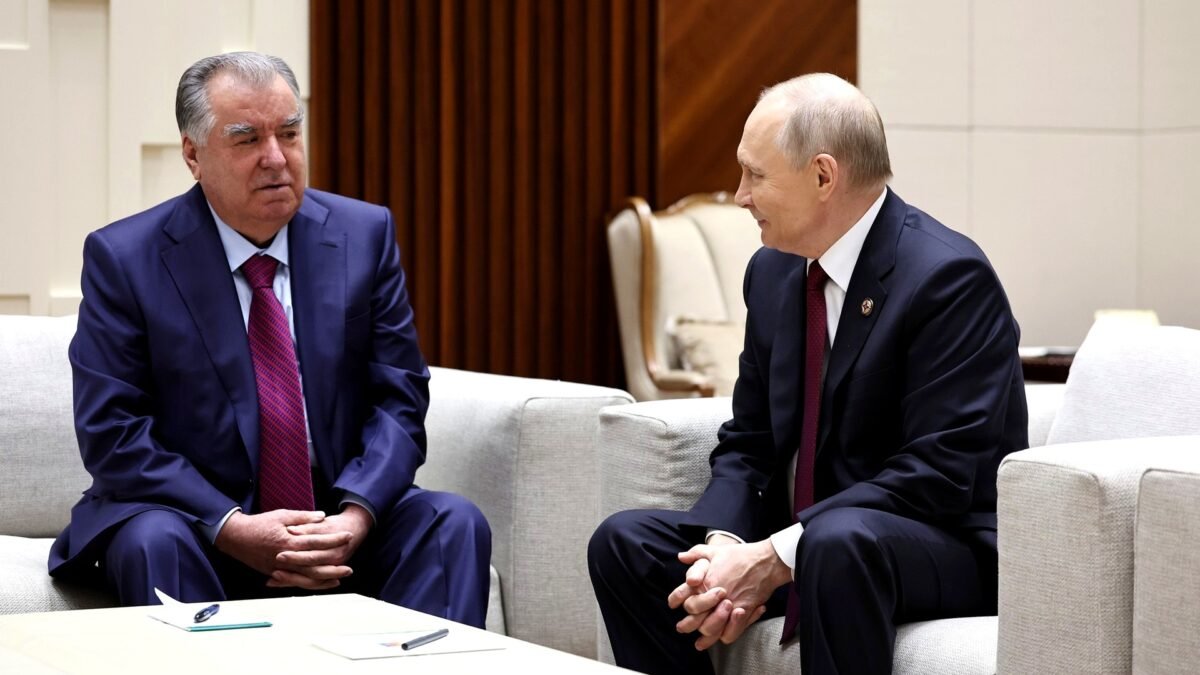
Explosions shook Kyiv in the early hours of Thursday, and Moscow said its air defences had shot down five drones heading for the Russian capital, hours before two of President Donald Trump’s most trusted envoys were due to sit down with President Vladimir Putin. The exchange of fire across both capitals opened the most consequential day of American diplomacy on Ukraine in months, with Jared Kushner and Steve Witkoff carrying to the Kremlin a prisoner-exchange deal, a demand that Europe be given a seat at the negotiating table, and a request that Russia write down, for the first time in this war, what a new European security settlement would actually look like.
The envoys’ visit to Moscow follows two days of talks in Abu Dhabi that ended on Wednesday with the first direct meeting between Russian and Ukrainian delegations in nine months — and with almost nothing agreed except the release of prisoners. According to Reuters, the two days produced an agreement in principle on a large prisoner exchange, but no ceasefire, no agreement on territory, and no settlement on the role Europe should play in any eventual peace. The numbers for the exchange are to be finalised in Thursday’s meeting with Putin, and the envoys will then fly to Dublin to brief President Volodymyr Zelenskyy, who is attending a meeting of European leaders there.
The choreography is deliberate, and it is also a gamble. Washington is trying to do two things at once that have never been done together in this war: end the fighting in Ukraine, and redesign the security architecture of Europe. According to Axios, citing people familiar with the discussions, the Trump administration has asked Moscow to produce a new draft security agreement with European states — a document that would set out not only Russia’s demands but also the concrete steps Moscow would take to reduce tensions with Europe. The proposal, the news outlet reported, was put to the Russian delegation by Kushner and Witkoff in Abu Dhabi, and it will be pressed again in the Kremlin on Thursday.
What happened overnight, though, was a reminder of how far the battlefield is from the negotiating table. A Reuters witness heard explosions across Kyiv in the early hours of Thursday, although there were no immediate reports of damage, according to Reuters. In Moscow, Mayor Sergei Sobyanin said on Telegram that Russian air defences had downed five drones heading towards the capital, without giving further details. The Independent, in its live coverage, reported the same sequence: explosions across Kyiv, five drones intercepted over Moscow, and the American envoys on their way to the Kremlin.
There is no suggestion that either side timed its strikes to the diplomacy. Both capitals have been targeted repeatedly throughout the war, and the attacks fit a pattern of nightly long-range drone exchanges. But the symbolism is hard to ignore: on the day the United States tries to move the war from the battlefield to a negotiating room, the war answered with explosions in both capitals.
The Moscow meeting: what the envoys carry to Putin
The Kremlin confirmed on Thursday that Putin would meet Kushner and Witkoff, with the meeting expected in the first half of the day, according to the Kremlin spokesman Dmitry Peskov, as reported by the Russian state news agency TASS. Foreign Minister Sergey Lavrov said Putin would first receive a briefing from the Russian delegation that attended the Abu Dhabi talks, and then hear the American envoys’ assessment, before deciding Russia’s approach to a settlement.
The envoys arrive with three items on their agenda, and each of them is contested. The first is the prisoner exchange, which both sides have already accepted in principle and which Kushner described as the “biggest humanitarian release of prisoners” of the war. The second is Europe’s place in the talks: Kushner has said European partners “must be at the table”, and the Americans intend to press Putin to allow European representatives into the next round. The third, and the most ambitious, is the new European security framework — the idea that a Ukraine settlement should be accompanied by a broader arrangement between Russia and Europe.
None of the three is straightforward. On the prisoner exchange, the numbers are still not settled: Zelenskyy said the sides had discussed exchanging 1,000 or 1,500 prisoners of war each, while a Russian lieutenant general, Alexander Sorin, said more than 1,000 prisoners on each side were to be exchanged, with the swap to take place within two to three weeks. Medinsky, the head of the Russian delegation, said the sides had reached a “fundamental agreement” on the exchange, with details to follow. Kushner said the numbers would be finalised on Thursday.
On Europe’s role, Moscow’s resistance is public and blunt. Russia has insisted throughout that the talks should remain strictly trilateral — the United States, Russia and Ukraine — and Medinsky has expressed opposition to European involvement. Lavrov was dismissive when European officials flew to Abu Dhabi for separate meetings on the margins of the talks, saying they could “sit in a hotel there”. The European Commission president, Ursula von der Leyen, has taken the opposite view, saying any formal discussion of a new security architecture involving Russia should only come once the war has ended. The White House, according to Axios, has told allies that any agreement would require European and Ukrainian support, and that Russia would not be given a veto over European security.
On the security framework itself, the American ask is carefully constructed. According to Axios, Washington wants Moscow to present a document that includes not only Russian security demands but also reciprocal commitments to de-escalation — what Russia itself would do to reduce tensions. The administration intends to negotiate the Ukraine peace deal and the broader European security arrangement simultaneously, but any new security arrangement would only take effect after an agreement to end the war. The Russian negotiators, according to the same report, argued that Putin launched the full-scale invasion because the then US president, Joe Biden, had not responded to a 2021 letter setting out Moscow’s security concerns. Kushner and Witkoff are reported to have replied that the international situation had changed significantly since 2021, and urged Moscow to formulate a new proposal.
Witkoff is making his tenth visit to Russia in the past two years, a measure of how central he has become to Trump’s diplomacy. Kushner, the president’s son-in-law, holds no official government role but has emerged as a central figure in the negotiations, opening the Abu Dhabi talks with a call for “a new framework and a new understanding” to secure “decades, if not centuries, of peace”.
A night of strikes on both capitals
The overnight attacks were part of a much wider exchange of long-range strikes that has intensified in recent weeks. Russia has been hitting Ukraine’s power network as winter approaches, and Ukraine has been hitting Russia’s oil industry, with effects that are now visible in the statistics.
On the night the Abu Dhabi talks were under way, Russia struck ten regions of Ukraine overnight, hitting five major electricity substations, according to Reuters. Two people were killed in the Vinnytsia region, and the state grid operator Ukrenergo said eight regions had been struck, leaving homes without power in six, including Kyiv, Kharkiv and Dnipropetrovsk. More than 600,000 people in the Dnipropetrovsk region were left without power overnight into Sunday, according to Zelenskyy. Ukraine’s foreign minister has said the country has run out of Patriot air-defence interceptors, and has warned of temperatures falling to minus 20 degrees Celsius.
Ukraine, meanwhile, has turned its drones on the infrastructure that funds Russia’s war. A Ukrainian drone struck the Kirishi oil refinery, Russia’s second-largest, on Monday, setting the plant on fire and killing a woman in the surrounding area, according to local authorities cited by Reuters. On Wednesday, a fire broke out in the port area of Ust-Luga on the Baltic Sea after a drone attack, and the regional governor, Aleksandr Drozdenko, said Russia had shot down 92 drones early on Wednesday over the Leningrad region, which is home to the ports of Ust-Luga, Primorsk and Vysotsk, key outlets for Russia’s oil and grain exports. Ukrainian attacks on refineries since October have cut about 30 per cent of Russia’s primary oil refining capacity, according to two industry sources cited by Reuters, and in the last week alone the strikes disrupted operations at nine of the country’s 35 major refineries.
The civilian cost of the Russian campaign is the highest of the war. More than 2,700 people have been killed in Russian strikes on Ukraine this year, according to the Armed Conflict Location and Event Data Project, cited by CNN. A Russian strike on a school shelter in the village of Komyshuvakha last week killed 55 people. On the Russian side, a Moscow official statistics publication cited by The Times, and obtained by the Ukrainian cyber group Silent Crow, put the number of Russians killed in the war at more than 450,000, although the true figure is thought to be higher. That figure comes from a single source and has not been independently verified.
The prisoner exchange: the one concrete result
Against that background, the prisoner exchange agreed in Abu Dhabi matters more than its modesty suggests. It is the only concrete outcome of two days of talks that Kushner himself described as “pretty tough”, and it is the one area where the two sides’ interests align: both have thousands of prisoners held by the other, and both face domestic pressure to bring them home.
Ukrainian negotiators described the exchange as the “main result” of the talks. The head of the Ukrainian delegation, Rustem Umerov, who leads Ukraine’s foreign intelligence service, confirmed the deal, and Medinsky confirmed it from the Russian side. Zelenskyy said the sides had discussed a format of 1,000 for 1,000, or possibly 1,500 for 1,500. The Atlantic Council’s assessment of the talks called the agreement “a success” and “certainly good news for Ukraine given the abuse their prisoners endure in Russian hands”, while noting that it was the only tangible result of the round.
The talks also touched on other humanitarian questions, including the return of Ukrainian civilians held in captivity and children taken out of the country, according to Zelenskyy. Those issues were discussed, but no agreement on them was announced.
The exchange, if it happens at the scale discussed, would be the largest of the war. Previous swaps have typically involved hundreds of prisoners on each side. A swap of 1,000 or more would be a different order of magnitude, and it would require the kind of detailed coordination — lists, medical checks, transport, neutral ground — that can only be arranged if the two militaries are talking to each other. That, in itself, is a channel that has value beyond the prisoners themselves.
The bigger gamble: a new security map for Europe
The prisoner exchange is the easy part. The hard part is what the Americans are trying to build around it, and the Abu Dhabi talks exposed just how far apart the two sides remain on the questions that actually decide whether the war ends.
The first is territory. Putin wants Ukraine to pull its troops out of the four regions Russia annexed in September 2022 — Donetsk, Luhansk, Zaporizhzhia and Kherson — even though Russian forces have never fully captured any of them. He also wants Ukraine to abandon its bid to join NATO, accept limits on its military, and drop restrictions on the Russian language and the Moscow-affiliated Orthodox Church. Zelenskyy rejects ceding territory and accepting military limits, and insists on an immediate ceasefire first, with a direct meeting between himself and Putin as the only way to settle the territorial question. Medinsky said on Wednesday that Russia saw no possibility of exchanging territory with Ukraine as part of any peace deal, and added that Russia’s buffer zone along its border with Ukraine was already substantial and would keep expanding, according to the Interfax news agency.
The second is trust, or rather the absence of it. Kushner told reporters after the talks that there was “no trust” between the sides, and the US secretary of state, Marco Rubio, said after the first day in Paris that there was “a lot of work to be done”. A Ukrainian delegation source told the news agency AFP that the two sides disagreed on whether fighting must stop before a European security framework could even be discussed.
The third is Europe itself. The Europeans were in Abu Dhabi — the so-called E4 of Britain, France, Germany and Italy, along with NATO and the European Commission — but only for separate meetings on the margins, not at the table. Kaja Kallas, the European Union’s foreign policy chief, has said there is little sign that Russia is negotiating in good faith. Rubio, speaking in Paris at a meeting of G7 foreign ministers, said the goal was to expand the talks so that Europeans were “represented at that table directly”, and that “our goals are the same”. The French presidency has said peace in Ukraine and security in Europe are “inextricably linked”. Germany’s foreign minister has said Europe needs a “restoration of the existing security architecture”, not a new one, and Kallas has cited the 1994 Budapest Memorandum, under which Ukraine gave up its nuclear weapons in exchange for security assurances that Russia later broke.
That history is why the European question is so sensitive. For Kyiv and for Europe’s capitals, a deal negotiated over their heads would be a second Yalta — the 1945 conference at which the great powers divided Europe without consulting the countries concerned. Zelenskyy has said explicitly: “We don’t want a second Yalta.” For Moscow, by contrast, European participation is a problem, not a solution: Medinsky said that if a fair security system for Europe could be created, it would help ensure peace on the continent for decades, and possibly centuries, but he also made clear that Russia wants the security conversation on its own terms.
The American proposal tries to square this circle by making the security framework a two-track process: negotiate it alongside the peace deal, but implement it only after the war ends. That gives Moscow a reason to engage — its security concerns would be addressed in writing — while denying it a veto over Europe’s future, since no arrangement could take effect without European and Ukrainian support. Whether Putin accepts that logic is the question Kushner and Witkoff are taking to the Kremlin.
There is also a clock running. Trump told the CBS programme 60 Minutes on Monday that Ukraine would “end up with a little bit different shape”, and accused Zelenskyy of “disrespect” towards Putin, while refusing to say whether he trusted Zelenskyy or Putin more. The US midterms delivered a heavy defeat for the Republicans, and the Democrats will take control of Congress in January, which the Kremlin is hoping to exploit by giving Trump a foreign-policy success to point to. A senior member of Zelenskyy’s party, David Arakhamia, who was part of the Ukrainian delegation, said the talks had produced “good momentum to reach a solution before the new year”. Zelenskyy himself, speaking at a news conference in Dublin on Wednesday, said Kyiv hoped to achieve concrete results this year, but added that much depended on “the will of American side to pressure on Russia or not, it depends on format of their dialogue with Russians”.
Drones over the Baltic: the war spills sideways
While the diplomats talked in Abu Dhabi, the war was spilling into the airspace of NATO’s Baltic members. At least four drones entered Baltic airspace during the wave of Ukrainian long-range strikes on Russian targets in the Leningrad region, and NATO fighter jets were scrambled in response.
In Lithuania, an unidentified drone entered the country’s airspace, and two attempts to shoot it down failed, according to the chief of the Lithuanian armed forces’ defence staff, Giedrius Premeneckas, who said there was no confirmed information about the type of drone. Crisis officials issued warnings covering Kaunas, the country’s second-largest city, home to about 300,000 people. In Latvia, the military said three drones had entered its airspace overnight: two briefly crossed the eastern border, while a third entered from Lithuania, flew north across Latvia and continued towards Estonia. Latvian air defence units and NATO fighter jets were activated. Estonia issued air threat alerts across eight counties, telling residents in southern Estonia to “seek shelter if you spot a drone”. Finland temporarily restricted air and sea traffic in the eastern Gulf of Finland after an unidentified drone was suspected of entering Finnish airspace for about five minutes, according to the Finnish defence ministry. The alerts were lifted several hours later, and there were no reports of injuries.
It is not clear where the drones came from. The Ukrainian strikes were aimed at Russian targets in the Leningrad region, and drones that missed or were diverted may have strayed into Baltic airspace. But the episode underlines a risk that has grown with every month of the war: a conflict fought with long-range drones over a crowded corner of Europe can put NATO airspace, and NATO citizens, in the line of fire by accident as easily as by design. The Baltic states, which have lived with that risk since the war began, issued shelter warnings to hundreds of thousands of people.
The episode also came on a day of other warnings. Romania’s intelligence agency said a hacking group linked to Russia’s FSB security service had staged a cyberattack on a Romanian government organisation in December 2025, adding that no sensitive data had been taken and the affected email service had been fixed. France warned Germany that its missile programme could accidentally provoke a nuclear war with Russia if Berlin did not define how it would use its newly acquired long-range missiles. And Ukraine said it had captured its first Indonesian prisoner of war, a 49-year-old man from the island of Java, as Ukrainian officials reported a sharp rise in Russian recruitment from Indonesia: 283 Indonesians were recruited in the first nine months of this year to fight for Russia, against no more than 10 in the previous three years, according to Ukraine’s state-run I Want to Live project, which helps enemy soldiers surrender. That figure comes from Ukrainian officials and has not been independently verified.
Analysis: Why It Matters
The table is moving faster than the battlefield
The most striking thing about this week is the speed of the diplomacy compared with the stalemate on the ground. In the space of three days, the war has gone from a nine-month diplomatic freeze to trilateral talks, a prisoner-exchange deal, a request for a new European security architecture, and a face-to-face meeting between Trump’s envoys and Putin. The front line, by contrast, has barely moved in months, and the fighting is if anything more intense: power grids are being hit, refineries are burning, and drones are crossing into NATO airspace. Diplomacy is accelerating precisely because the war is not being won by either side, and because both sides can see that the costs — in lives, in infrastructure, in money — are rising faster than any plausible military gain. That is usually the moment when wars end, or when they get worse. The next few days will show which one this is.
The prisoner swap is the proof of life
It is tempting to dismiss a prisoner exchange as a humanitarian footnote to a failed negotiation, but that would miss its function. In wars that end through negotiation, prisoner exchanges are often the first agreement because they are the only one both sides can make without giving up anything they care about. They test whether the other side keeps its word, whether the logistics work, and whether the political cost of cooperating is survivable at home. A swap of 1,000 or 1,500 prisoners on each side would be the largest of this war, and it would create a precedent and a channel that a ceasefire could later use. If the numbers are finalised in Moscow on Thursday, as Kushner expects, it will be the first concrete proof that this round of diplomacy is producing something real. If the numbers slip, or the swap is delayed, it will be the first sign that the talks are stalling.
Europe’s seat is the real negotiation
The argument about whether Europeans should sit at the table looks procedural, but it is the most important argument in the room. A settlement negotiated only by Washington, Moscow and Kyiv would be a deal about Europe made without Europe, and the Europeans know it: that is why they flew to Abu Dhabi even though they were not invited to the table, and why they will be in Dublin when the envoys brief Zelenskyy. The American position — that Europeans must be at the table, and that Russia will not get a veto over European security — is a significant commitment, because it limits what Washington can promise Moscow on its own. Putin’s answer in the Kremlin on Thursday will tell us whether he sees European participation as a concession he can live with, or as a reason to walk away. The fact that the Americans are pressing the point in Moscow, rather than conceding it in advance, suggests they understand that a deal without Europe would not hold.
The strikes are the other negotiation
Both sides are negotiating with drones as well as with words. Russia’s strikes on Ukraine’s power grid are designed to make the coming winter unbearable and to force Kyiv to accept terms it would otherwise reject. Ukraine’s strikes on Russia’s refineries are designed to cut the revenue that funds the war and to bring the cost of the conflict home to ordinary Russians. Neither campaign has yet forced the other side to change its position, but both are escalating: refinery strikes have cut nearly a third of Russia’s refining capacity, and Russian strikes have left hundreds of thousands of Ukrainians without power. The danger is that the military logic and the diplomatic logic pull in opposite directions. Every strike makes the other side angrier and less willing to compromise, while every diplomatic step makes the strikes look like sabotage. The overnight attacks on both capitals, hours before the Moscow meeting, are a reminder that the two logics are running in parallel, and that the diplomats do not control the timetable.
What “before the new year” really means
Arakhamia’s claim of “good momentum to reach a solution before the new year” should be read carefully. It is a statement of hope, not a prediction, and it comes from a negotiator whose job is to keep the talks alive. But the deadline is real even if the optimism is not: the Democrats take Congress in January, the winter will deepen, and the prisoner exchange has a two-to-three-week window that will expire if the politics stalls. Zelenskyy’s comment that progress depends on whether the Americans are willing to pressure Russia is the most honest sentence spoken this week, because it identifies the one variable that matters. Trump has leverage over both sides — military aid to Ukraine, sanctions relief for Russia — but he has so far been reluctant to use it against Moscow. The Moscow meeting will show whether that reluctance is a tactic or a limit. If Putin leaves the meeting with a prisoner-exchange deal and a European security proposal to work on, the talks have a future. If he leaves with neither, the “good momentum” will have been an illusion, and the war will go on into its sixth year.
What to Watch Next
- The Moscow readout: whether Putin agrees to finalise the prisoner-exchange numbers on Thursday, and what, if anything, he says about the European security proposal and European participation in the next round.
- The Dublin briefing: what Kushner and Witkoff tell Zelenskyy on Thursday night, and whether the Ukrainian president’s tone changes from his warning that progress depends on American pressure on Russia.
- The prisoner-exchange timetable: whether the swap is confirmed at 1,000 or 1,500 prisoners on each side, and whether it takes place within the two-to-three weeks Russian officials have suggested.
- The European summit in Dublin: whether European leaders present a united position on the security framework, and whether von der Leyen’s insistence that architecture talks wait until after the war holds.
- The next round of talks: whether a date and a format are announced, and crucially whether European representatives are invited to sit at the table rather than in the margins.
- The energy war: whether Russia’s strikes on Ukraine’s power grid intensify as temperatures fall, and whether Ukraine’s refinery campaign continues to cut Russian oil output.
- The Baltic airspace question: whether NATO issues a formal response to the drone incursions, and whether further stray drones force a change in the alliance’s air-defence posture.
Sources
- Reuters — Russia, Ukraine exchange attacks on capitals as US envoys head for Moscow
- The Independent — Ukraine-Russia war latest: Explosions rock Kyiv and Moscow after peace talks end without breakthrough
- ANI via New Kerala — Kushner, Witkoff to meet Putin in Moscow on Ukraine peace deal
- Atlantic Council — Where the Russia-Ukraine peace talks stand after Abu Dhabi
- The Boston Report — Ukraine Prisoner Exchange Agreed
- Reuters via WNCY — Russia shoots down 92 drones over Leningrad region

About the Author — Abdul Mannan
Related Articles
Indonesia’s Vice-President Gibran Rakabuming Raka Resigns as Diploma Ruling and Impeachment Push Rock Prabowo’s Government
Indonesia's Vice-President Gibran Rakabuming Raka has resigned after court rulings annulled his education certificate and 120 lawmakers moved…
US Warns Madagascar Against Deepening Military Ties With Russia, Citing the Sahel’s Failed Security Model
Lieutenant General John Brennan, deputy head of US Africa Command, warned Madagascar on 11 November that Russia's "Sahel…
Abu Dhabi Peace Talks End With Prisoner Swap Deal but No Breakthrough as US Envoys Head to Moscow to See Putin
Two days of US-mediated talks in Abu Dhabi ended with a deal on the largest prisoner exchange of…