
Indonesia’s Vice-President Gibran Rakabuming Raka Resigns as Diploma Ruling and Impeachment Push Rock Prabowo’s Government

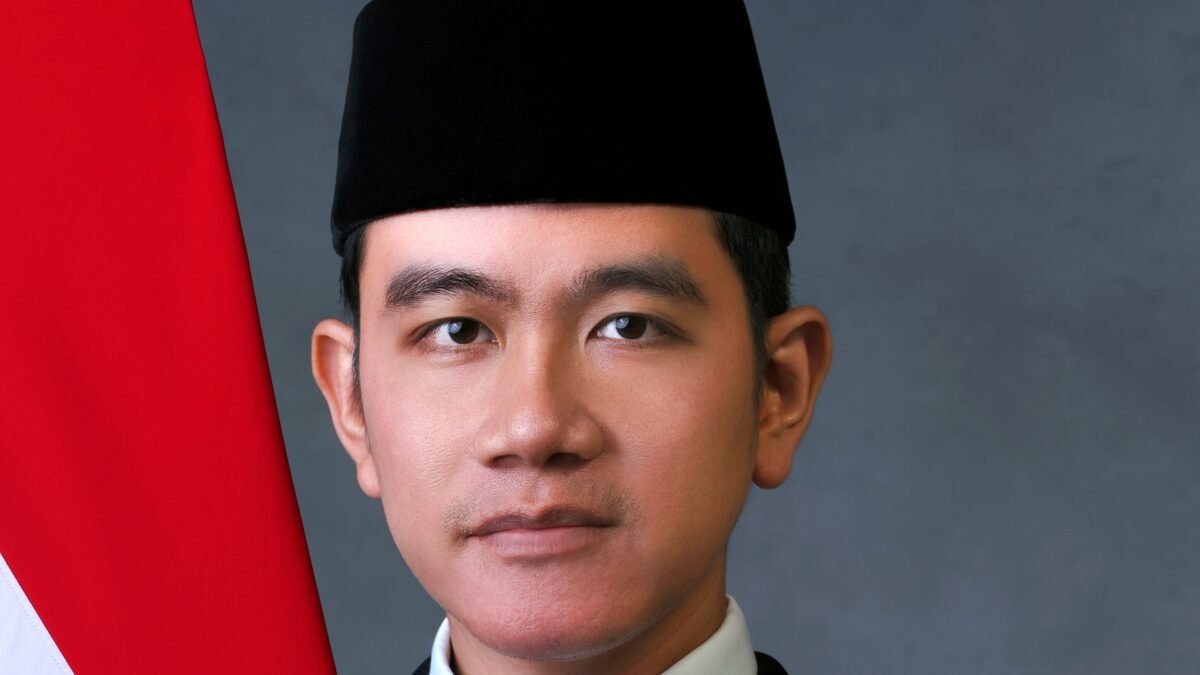
Indonesia’s Vice-President Gibran Rakabuming Raka has resigned, his aide has confirmed, in a move that plunges Southeast Asia’s largest democracy into its deepest political crisis in years and threatens to split the alliance that carried President Prabowo Subianto to power.
According to Reuters, Gibran tendered his resignation to Prabowo earlier on Wednesday, 11 November 2026. The news agency said two political sources at the parliamentary upper house and Gibran’s political aide, Budi Arie Setiadi, had confirmed the resignation. The BBC separately reported that Budi Arie had told it Gibran’s resignation letter had been submitted directly to the president on Wednesday.
Gibran, 39, is the eldest son of former President Joko Widodo, known as Jokowi. His departure, if accepted, would end one of the most controversial partnerships in modern Indonesian politics barely two years after it won a landslide election victory — and it would leave Prabowo without the vice-president whose family name helped deliver him the presidency.
It remains unclear whether Prabowo has accepted the resignation. The presidential palace had not formally confirmed it at the time of writing, and Gibran’s office did not immediately respond to requests for comment, according to Reuters. Two sources at the upper house, the People’s Consultative Assembly, told Reuters that Gibran would submit his resignation letter to the assembly on Thursday morning.
The resignation comes after a dramatic fortnight in which Indonesia’s two highest courts dismantled the legal basis of Gibran’s vice-presidency, and parliament moved to impeach him. On Wednesday, 120 lawmakers from across the political spectrum submitted a petition demanding his impeachment, according to Reuters, a step that would have forced a formal parliamentary inquiry into whether he was ever eligible to hold the office.
A resignation forced by the courts
The immediate cause of Gibran’s fall is a dispute over his education — a question that has dogged him since he first entered national politics, but which only became fatal in the past month.
Indonesian law requires a vice-president to have completed senior secondary school or its equivalent. Gibran, who studied in Singapore and Australia, had used an Indonesian equivalence certificate to demonstrate that his overseas schooling met that requirement when he registered as a candidate in the 2024 presidential election.
Last month, that certificate collapsed under judicial scrutiny. First, the Constitutional Court found that there was insufficient documentary evidence to establish that Gibran’s foreign schooling met the relevant qualification requirements. Then, on 30 October, the Supreme Court annulled his overseas high-school education equivalency certificate altogether. On Tuesday, the Supreme Court instructed the education ministry to withdraw the certificate, according to Reuters.
The Supreme Court’s ruling was blunt. “No evidence was found to show Gibran had a foreign diploma or certificate that could serve as the basis for equivalency with a senior high school or equivalent qualification,” the court said, according to the BBC.
Gibran had argued that the fact he went on to university education was sufficient proof that he had completed senior high school. The courts disagreed. Yusril Ihza Mahendra, the senior law minister, said there was no longer any legal path available on the diploma question, because rulings from the Constitutional Court and the Supreme Court are final, according to Indonesian media reports.
On Tuesday, Gibran met Prabowo for two and a half hours at the presidential palace. According to presidential spokesperson Prasetyo Hadi, Gibran used the meeting to express his intention to resign. Prabowo, Hadi said, advised him to keep fighting his case over his educational records, including by seeking a judicial review of the Supreme Court ruling. Gibran left his office later on Tuesday without directly addressing reporters’ questions about the resignation offer.
By Wednesday afternoon, the decision was made. According to the Indonesian news outlet BeritaSatu, Gibran handed the resignation letter to Prabowo at Halim Perdanakusuma Air Force Base in Jakarta. Budi Arie, who chairs the Projo political volunteer group aligned with the Widodo family, confirmed the resignation. “It is definitely true,” he said, according to Indonesian media.
The impeachment clock was already running
Gibran’s resignation arrived just as parliament was moving against him. On Wednesday, 120 lawmakers from all eight party factions in the House of Representatives proposed exercising the house’s right of inquiry, a formal step towards impeachment proceedings, according to Reuters and Indonesian media. The signatories included 28 members of the Prosperous Justice Party, 19 from NasDem, 18 each from the National Awakening Party and the Democratic Party, 14 from the Indonesian Democratic Party of Struggle, 11 each from Golkar and Prabowo’s own Gerindra party, and one from the National Mandate Party.
The breadth of that coalition is itself a measure of how far Gibran’s position had crumbled. Impeachment motions in Indonesia rarely attract support across every faction. That lawmakers from Gerindra — the president’s own party — were among the signatories suggested that even inside Prabowo’s camp, patience with the vice-president had run out.
The BBC reported that more than 100 lawmakers had backed a parliamentary initiative that could have paved the way for impeachment proceedings. The difference between the two figures reflects different counts at different moments of a fast-moving day; what is not in doubt is that the push to remove Gibran had become a cross-party effort.
Resigning before impeachment proceedings began allows Gibran to leave on his own terms rather than be removed by parliament. It also spares Prabowo the spectacle of his own vice-president being put on trial by the legislature — a process that would have dominated Indonesian politics for months and forced every party, including Gerindra, to take a public position on the Widodo family’s fitness for office.
How the vacancy will be filled
Under Indonesia’s constitution, the process for replacing a vice-president is clear, even if the politics of it are not. Once Gibran’s resignation letter reaches the People’s Consultative Assembly, the upper house, it will have to convene a session to declare a vacancy, according to Yusril Ihza Mahendra, the senior law minister.
The assembly will then write to the president requesting that he submit two names for the replacement. The assembly chooses between the two nominees. Two sources at the upper house told Reuters that Gibran would submit his resignation letter to the assembly on Thursday morning, which would start that process.
Who Prabowo nominates will be one of the most consequential decisions of his presidency. The choice will signal whether he intends to repair the alliance with Jokowi’s family, reward a loyalist from his own Gerindra party, or reach for a figure who can bridge the factions now circling the vacancy. For now, no names have been formally put forward, and speculation in Jakarta is running ahead of any official word.
An alliance built on a bargain — and a court ruling
To understand why this resignation matters so much, it is necessary to understand the bargain that put Gibran in the vice-presidency in the first place.
Gibran’s rise was inseparable from his father’s. Jokowi, one of Indonesia’s most popular leaders, was barred by term limits from seeking a third term in 2024. Prabowo, a former general who had twice lost presidential elections to Jokowi, needed Jokowi’s vast popular support to win. Jokowi, in turn, wanted a guarantee that his legacy — and his family’s political future — would be protected after he left office.
The deal they struck was that Gibran, then the 36-year-old mayor of Solo, would run as Prabowo’s vice-presidential candidate. The problem was the law: candidates for vice-president must be at least 40 years old. Gibran was four years short.
The obstacle was removed by the Constitutional Court, which ruled that the minimum-age requirement did not apply to candidates who had previously held elected office. Gibran, as an elected mayor, qualified. The ruling was immediately controversial — not least because the court was then headed by Anwar Usman, Jokowi’s brother-in-law — and it has shadowed Gibran’s legitimacy ever since.
The Prabowo-Gibran ticket went on to win the February 2024 election decisively and took office on 20 October 2024. But the controversy over Gibran’s eligibility never went away. It simply waited for a court willing to examine the other half of his candidacy: not his age, but his schooling.
That is what makes the past month so damaging for the Widodo family. The age question was settled by a court ruling that many Indonesians regarded as political. The education question has now been settled by two courts ruling against Gibran on the evidence. The first decision looked like the system bending for a dynasty; the second looks like the system pushing back.
A rift that has been widening for months
Gibran’s resignation does not come out of nowhere. It is the latest and most dramatic sign of a rift between Prabowo and Jokowi that has been widening since Prabowo took office.
Since becoming president, Prabowo has shown little interest in pushing ahead with Jokowi’s legacy project: the construction of Nusantara, a new capital city carved out of the jungle in East Kalimantan. Instead, he has focused the state’s resources on his own flagship programme, providing free school meals across the country — a programme that, according to the BBC, is now struggling for funding.
In a series of personnel reshuffles over the past year, Prabowo has also shifted many Jokowi loyalists into new roles, including the long-serving finance minister Sri Mulyani Indrawati, whose removal rattled investors and was widely read as a declaration of independence from his predecessor’s team.
The rift burst into the open this month in extraordinary fashion. On 30 October, a police officer filed a report alleging illegal wiretapping, the deletion of electronic data and unauthorised access to electronic systems. On 3 November, police confirmed that the former national police chief, Listyo Sigit Prabowo — who is not related to the president — and two other senior officers had been arrested on suspicion of tapping the president’s communications and those of other officials.
Listyo, who is widely considered a long-time ally of Jokowi, had been named Prabowo’s chief of staff in October. Prabowo sacked him a day after the arrests, in what many pointed to as a sign of a crumbling alliance.
On Monday, three members of Prabowo’s cabinet collectively resigned from the party led by Kaesang Pangarep, Jokowi’s youngest son, citing their desire to focus on their duties in Prabowo’s administration. The move was read in Jakarta as another public loosening of the ties between the two camps.
All of this is unfolding at a particularly turbulent moment in Prabowo’s presidency. The free school meals programme is struggling for funding, parts of Indonesia have recently battled the country’s worst wildfires in a decade, and the national stock market faces a crisis amid allegations of widespread market manipulation, according to the BBC. On Tuesday, students across the country staged demonstrations to protest against the government’s handling of a range of issues, including the environmental crisis and corruption.
Investor sentiment has weakened towards Indonesia this year amid heightened scrutiny of the government’s fiscal plans and its broader policy directions, according to Reuters, as well as lingering downgrade risks for its stock market by the global index provider MSCI.
Analysis: Why It Matters
A resignation that was a verdict, not a choice
The first thing to understand about Gibran’s resignation is that it was not really a free decision. By Wednesday morning, every exit from the vice-presidency except resignation had been closed to him. The Supreme Court had annulled the certificate on which his candidacy rested. The Constitutional Court had found the underlying evidence wanting. The law minister had said there was no legal path left. And 120 lawmakers from every faction in parliament were preparing to impeach him.
Resignation was the only door still open, and Gibran walked through it. That matters because it changes how the event should be read. This is not a politician graciously stepping aside. It is a politician leaving because the institutions of the state — the courts and the legislature — had made his position untenable. In a country where democratic norms have been under strain, that is a significant fact in itself.
It also matters for what it says about timing. Gibran did not resign when the Constitutional Court ruled against him, or when the Supreme Court annulled his certificate on 30 October. He resigned only when impeachment became a live and imminent threat. The lesson for Indonesian politicians is a familiar one: courts can wound you, but parliament is what finishes you.
The dynasty question
The second, larger question is what this means for the Widodo family — and for dynastic politics in Indonesia more broadly.
Jokowi built his career as an outsider, a furniture businessman from Solo who rose through local government on a reputation for modesty and competence. His presidency was popular precisely because he seemed to stand apart from the dynastic politics that have long dominated Indonesia. The decision to manoeuvre his son into the vice-presidency sat awkwardly with that image, and it has now ended in the worst possible way: not with a triumphant handover, but with a resignation forced by the courts.
Gibran’s fall does not end the Widodo family’s political ambitions. His younger brother Kaesang leads a political party, and the family retains a formidable popular base. But the resignation removes the family’s most powerful institutional perch — the vice-presidency — and it does so on grounds that will be hard to shake: that the family’s scion did not meet the basic qualifications for the office he held.
For Indonesia’s democracy, there is a paradox here. The same Constitutional Court ruling that allowed Gibran to run in 2024 was widely condemned as evidence that the courts had been captured by politics. The rulings that have now brought him down suggest the opposite — that the judiciary can still act as a check on power. Both things can be true at once: institutions can be bent in one case and assert themselves in another. The real test is whether the assertiveness lasts.
Prabowo’s dilemma
For Prabowo, the resignation solves one problem and creates several others. The immediate problem it solves is the impeachment threat. A prolonged impeachment battle would have paralysed his government, forced his own party to choose sides, and kept the Widodo question at the centre of Indonesian politics for months. Gibran’s resignation removes that prospect at a stroke.
But the dilemma that replaces it is harder. If Prabowo accepts the resignation quickly and graciously, he will be seen to have abandoned the man whose family delivered him the presidency — and to have accepted the collapse of the alliance that won him the election. Jokowi’s supporters, who remain a powerful force in Indonesian politics, will not forget that easily.
If, on the other hand, Prabowo hesitates or tries to keep Gibran in place, he will be defying two court rulings and a cross-party parliamentary majority. That is not a fight a president in his second year, with a struggling economy and a restive public, can afford to pick.
The choice of a replacement vice-president will be read as Prabowo’s answer to that dilemma. A nominee from Jokowi’s orbit would signal an attempt to keep the alliance alive. A Gerindra loyalist would signal that Prabowo is consolidating power in his own hands. A neutral, technocratic figure would signal that he wants the whole question to go away. None of those options is cost-free, and the decision will be watched closely in Jakarta, in the markets, and in foreign capitals.
What it means for Indonesia’s democracy
There is a temptation, in covering a story like this, to treat it as a palace drama — a tale of two powerful men and a family feud. That would miss the deeper significance.
Indonesia is the world’s fourth most populous country and its third largest democracy. Its democratic institutions have been tested repeatedly since the fall of Suharto in 1998, and the verdicts have been mixed. Elections are genuinely competitive. The press is free. But the courts, the electoral system and the political parties have all, at different moments, been bent to serve powerful interests.
The events of the past month cut both ways. The Constitutional Court’s 2023 age ruling was a low point for judicial independence. The Supreme Court’s annulment of Gibran’s certificate, and the Constitutional Court’s own finding on the evidence, are a reminder that the judiciary can still function as a check on power — even on power as entrenched as a former president’s family.
Similarly, the fact that 120 lawmakers from all eight factions were willing to move against the vice-president suggests that parliament, so often dismissed as a rubber stamp, can still act when the political winds shift. Whether it would have acted without the courts’ rulings is another question. Institutions rarely move alone; they move together, or not at all.
The real test now is what happens next. If the replacement process is conducted cleanly, if Prabowo nominates a qualified candidate, and if the assembly chooses on merit, this crisis could end up strengthening Indonesian democracy — proof that no one, not even a former president’s son, is above the basic requirements of the law. If instead the vacancy becomes a bargaining chip in a new round of deal-making, the lesson will be the opposite: that in Indonesia, every rule has a price.
Markets, stability and the region
Beyond the politics, there are practical stakes. Indonesia is Southeast Asia’s largest economy, a member of the G20, and a country whose stability matters far beyond its borders. Political uncertainty of this kind tends to show up quickly in the markets, and Indonesia’s markets were already fragile.
Investor sentiment has weakened this year amid scrutiny of the government’s fiscal plans, and the stock market faces downgrade risks from the index provider MSCI, according to Reuters. A vice-presidential resignation, a fraying ruling alliance and a wiretapping scandal at the top of government are not the ingredients of market confidence.
There is also a regional dimension. Indonesia is the anchor state of ASEAN, and its political stability is a precondition for the bloc’s coherence. A prolonged crisis in Jakarta would be felt in capitals across Southeast Asia, and watched closely in Beijing, Washington and Canberra, all of which compete for influence in the region. For now, the crisis is constitutional and political rather than violent or disorderly — but the speed with which it has escalated, from court rulings to impeachment to resignation in less than a fortnight, is a reminder of how quickly things can move.
What to Watch Next
- Thursday’s letter to the assembly: Gibran is expected to submit his resignation letter to the People’s Consultative Assembly on Thursday morning, according to sources who spoke to Reuters. That will formally start the process of declaring a vacancy. Watch for whether the letter arrives on schedule — and for the assembly’s response.
- Whether Prabowo accepts: The palace has not yet formally confirmed the resignation, and it remains unclear whether Prabowo has accepted it. His public response — its timing, its tone and its wording — will be the first clear signal of how he intends to handle the fallout.
- The two names: Once a vacancy is declared, Prabowo must submit two names for the assembly to choose between. The identities of those two people will reveal more about Prabowo’s intentions than any statement. Watch for whether either name comes from Jokowi’s orbit.
- Jokowi’s response: The former president has said nothing publicly about his son’s resignation. When he speaks — and he will have to — his words will matter enormously. A gracious acceptance would calm the waters; a bitter one could split the ruling coalition openly.
- The impeachment motion: The 120-lawmaker petition was overtaken by the resignation, but it has not formally disappeared. Watch for whether parliament withdraws it, or keeps it alive as leverage over the replacement process.
- The markets: Indonesia’s stock market and the rupiah will give an early verdict on how investors read the crisis. A calm market would suggest the resignation is seen as a resolution; a sharp fall would suggest it is seen as the start of something worse.
Sources
- Reuters — Indonesia’s vice president has resigned, three political sources say
- Reuters via Devdiscourse — Indonesia’s vice president has resigned, aide says, stoking political uncertainty
- BBC via VidiaNews — Indonesia’s vice president resigns amid signs ruling alliance is fraying
- TokoKata — Indonesia Vice President Gibran reportedly resigns as impeachment bid gathers steam
- SRN News — Indonesia’s vice president has resigned, three political sources say (Reuters)
- Jawawa — Indonesia Vice-President Gibran resigns, aide says (Reuters)

About the Author — Abdul Mannan
Related Articles
US Warns Madagascar Against Deepening Military Ties With Russia, Citing the Sahel’s Failed Security Model
Lieutenant General John Brennan, deputy head of US Africa Command, warned Madagascar on 11 November that Russia's "Sahel…

Abu Dhabi Peace Talks End With Prisoner Swap Deal but No Breakthrough as US Envoys Head to Moscow to See Putin
Two days of US-mediated talks in Abu Dhabi ended with a deal on the largest prisoner exchange of…

US Treasury Secretary Scott Bessent Moved to a Military Base After Iranian Threats to His Life
US Treasury Secretary Scott Bessent has moved from his Washington home to a military base after Iranian threats…