
Houthis Deny Targeting Mecca as Saudi Arabia Intercepts Missiles Aimed at Riyadh and the Holy City

Saudi air defences intercepted Houthi cruise missiles and drones aimed at Riyadh, Mecca and other parts of the kingdom on Wednesday, in the sharpest single day of the renewed war between the Iran-aligned Yemeni movement and Saudi Arabia — and within hours, the argument over what had actually been targeted had become as important as the interceptions themselves.
According to Reuters, the Saudi-led military coalition fighting the Houthis said it had intercepted and destroyed three cruise missiles headed for the Riyadh region, two drones aimed at Mecca and southern areas, and two missiles pointed towards the west of the country. The Houthis, through their military spokesperson Yahya Saree, later denied that they had targeted Mecca at all, insisting that their operations were aimed at oil facilities and military bases — and claiming instead that a drone had struck a pumping station at Yanbu, the Red Sea oil hub that has become Saudi Arabia’s lifeline while the Strait of Hormuz is blocked.
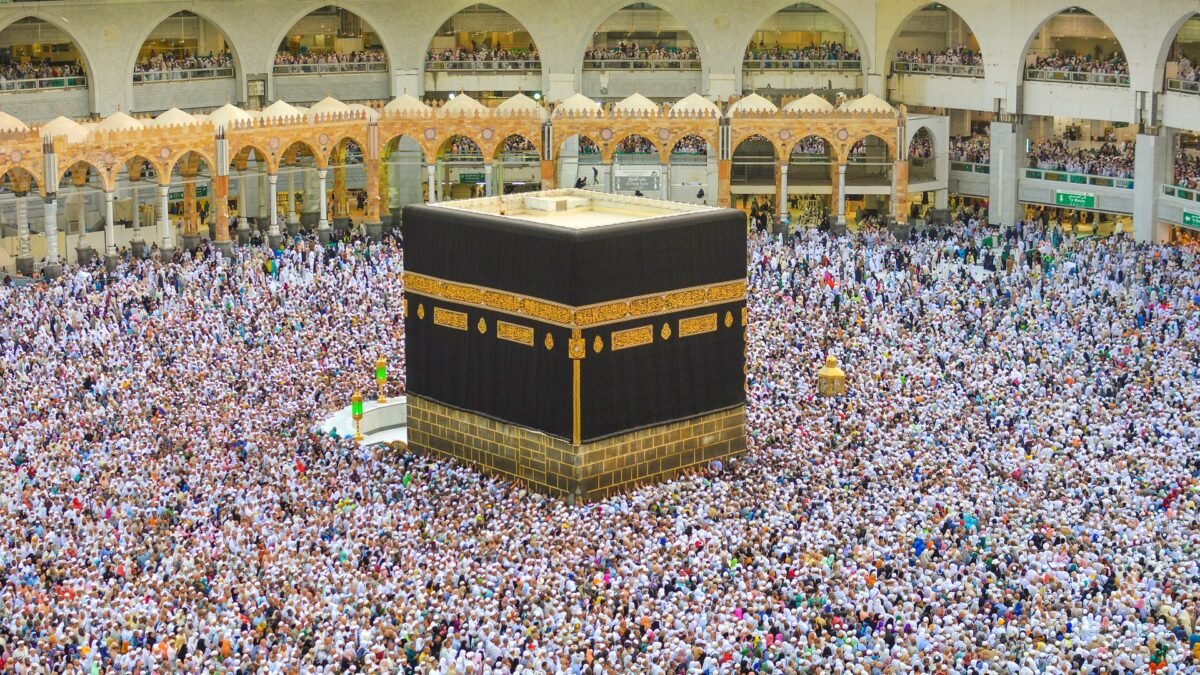
The clash of claims matters because of what Mecca is. The city is home to the Grand Mosque and the Kaaba, the holiest site in Islam and the destination of the annual hajj pilgrimage, which millions of Muslims undertake each year. A drone aimed at Mecca would be a different kind of event from a missile aimed at an airport or an oil terminal, and both sides know it. The Saudi account says one was. The Houthi account says there never was one. Neither claim can be settled from the public evidence so far, and the gap between them is now part of the war itself.
Wednesday was the second consecutive day on which Saudi defences had intercepted Houthi missiles aimed at Riyadh, according to the coalition. On Tuesday, the coalition said it had brought down a ballistic missile and a cruise missile. The tempo has been rising for weeks. On Sunday, a Houthi attack damaged an administrative building belonging to Aramco, the state oil company, in Riyadh’s financial district. Last month, a Houthi attack on the capital’s King Khalid International Airport killed 13 people and wounded more than 300, according to Reuters. The fighting, which flared again in the summer after four years of ceasefire, has now reached the point where the Saudi capital is being attacked almost daily and the war’s oldest front line — the ground war inside Yemen — is moving fast in both directions.
What Happened on Wednesday
The coalition’s account of Wednesday, as reported by Reuters, was specific about numbers and directions. Three cruise missiles were intercepted on their way to the Riyadh region. Two drones were aimed at Mecca and southern areas. Two more missiles were pointed towards the west of the country. The coalition did not say whether any of the weapons had got through, and no casualties were reported in Saudi Arabia from Wednesday’s attacks.
Saudi civil defence issued alerts later on Wednesday warning of potential danger in the cities of Taif, Yanbu and Khamis Mushait, according to state television, and then announced that the danger had passed. The alerts covered a wide sweep of the kingdom, from the mountains near Mecca to the Red Sea coast and the south-west, which suggests the authorities were tracking more than one incoming threat at once.
There was one piece of physical evidence that something had fallen out of the sky in Mecca province. Saudi civil defence said debris from the interception of two ballistic missiles had fallen in the village of Sabuhah and in Wadi al-Maghmas, both in Mecca province, according to Al Jazeera. No casualties were reported there either. Debris from an interception is not the same thing as a weapon striking its target, and the civil defence statement did not say what the intercepted missiles had been aimed at. But the fact that missile debris came down in the province that holds Islam’s holiest city is, on its own, enough to explain why the day’s events have been argued over so fiercely.
The Houthi account of the same day was different in almost every particular. Saree said his forces had fired three cruise missiles at King Khalid International Airport in Riyadh and had struck a pumping station in Yanbu with a drone. He denied what he called Saudi “lies” about a drone aimed at Mecca, and said the group’s operations target oil facilities and military bases. There was no Saudi confirmation of the Yanbu claim, according to Reuters. The Institute for the Study of War, which tracks the conflict daily, recorded the same exchange: the Houthis claimed the airport and the Yanbu pumping station, the Saudi-led coalition announced interceptions near Riyadh, over Mecca province and over southern Saudi Arabia, and the Houthis denied the Mecca drone.
The two accounts cannot both be complete. The coalition says it destroyed the weapons before they reached their targets; the Houthis say they hit theirs. The airport and the pumping station are both large, fixed installations, and neither side has produced public evidence — photographs, damage assessments, satellite imagery — that would settle the question. What is not in dispute is that weapons were fired, that Saudi defences engaged them, and that the exchange was the second day running in which the capital had come under attack.
The Mecca Question
Mecca has been the most sensitive question in the Yemen war since the fighting began, and the sensitivity is the reason the denial came so quickly and so forcefully. The city holds the Kaaba, the cube-shaped shrine at the centre of the Grand Mosque towards which Muslims around the world turn in prayer, and the annual hajj brings millions of pilgrims to it from every country on earth. An attack on Mecca, or even a credible claim that one had been attempted, would carry a political and religious charge that no airport or oil terminal could match.
The Houthis have been accused of targeting Mecca before, and they have denied it before. In the earlier phase of the war, Saudi Arabia said Houthi missiles had been aimed at the city, and the Houthis said their targets were military. The pattern has repeated because the stakes are so high: for Riyadh, a missile aimed at Mecca is evidence that the Houthis are a threat to the whole Muslim world, not just to Saudi Arabia; for the Houthis, the accusation is a Saudi invention designed to turn Muslim opinion against them and to justify the bombing campaign in Yemen.
Wednesday’s exchange followed that pattern exactly. The coalition announced a drone aimed at Mecca and southern areas. Saree called the claim a lie within hours. The civil defence report of debris in Mecca province does not resolve the argument, because debris from an intercepted missile can fall a long way from the missile’s intended target, and the statement did not describe what the two ballistic missiles had been aimed at. What it does show is that missiles were flying over or near the province, which is a serious matter in its own right, whatever their targets were.
There is a second reason the Mecca question matters, and it has nothing to do with religion. Saudi Arabia’s case for international support — and specifically for the backing it received this week from the Group of Seven — rests partly on the claim that the Houthis are striking civilian targets and holy sites. If the Mecca claim is accepted, the war looks like an attack on Islam’s holiest city. If it is doubted, the war looks more like what it also is: a grinding contest over territory, oil and ports, in which both sides strike civilian infrastructure and both sides deny it. The truth of Wednesday’s events will shape how the next phase of that argument goes, and at the moment the public record does not settle it.
Yanbu and the Oil Lifeline
The Houthi claim about Yanbu points at the part of the war that is easiest to measure and hardest to defend. Yanbu, on Saudi Arabia’s Red Sea coast, is the terminal of the East-West pipeline, the route through which Saudi crude reaches the sea without passing through the Strait of Hormuz. That matters more than it ever has, because the strait has been effectively blocked since the war between the United States and Iran began in late February, and Iran has spent the autumn mining its waters and attacking the shipping that uses them. Reuters reported that about four million barrels a day of crude had been diverted to Yanbu, roughly 4 per cent of global supply, as exporters routed around the blocked strait.
Saree said on Wednesday night that a Houthi drone had struck Pumping Station Number 11 in the Yanbu area, and that three cruise missiles had been fired at King Khalid International Airport. The pumping station is part of the infrastructure that moves crude across the Arabian peninsula to the Red Sea, and a successful strike on it would be a direct hit on the bypass route that the whole region now depends on. There was no Saudi confirmation of the claim, according to Reuters, and no independent evidence had been published by the time this article was written. The claim should therefore be treated as what it is: a Houthi assertion, not a verified fact.
But the assertion itself is revealing, because it shows where the Houthis are aiming. The Institute for the Study of War noted that the group has repeatedly targeted Saudi critical infrastructure as part of a campaign to force Riyadh to end its military operations in Yemen and to accept Houthi demands, which include lifting Saudi controls on Houthi-held ports and airports and handing the Houthis control of Yemen’s oil and gas resources. Yanbu is the most valuable single target in that campaign, because it is the one piece of infrastructure whose loss would be felt in every oil-importing country within days. The Houthis do not need to destroy it to make their point; they need only to show that they can reach it.
The pattern of the last month supports that reading. The attack on King Khalid International Airport in October killed 13 people and wounded more than 300, according to Reuters — the deadliest Houthi strike on Saudi soil in the renewed war. The attack on the Aramco building in Riyadh’s financial district on Sunday hit the state oil company in the capital’s commercial heart. Wednesday’s claims, whether or not they succeeded, continued the same logic: airports, oil, and the financial district, the three things whose disruption costs Riyadh the most.
Aden and the Ground War
While the missiles were flying towards Saudi Arabia, the ground war inside Yemen was moving too. Two Yemeni security sources told Agence France-Presse that two missiles had targeted a camp of the Saudi-led coalition in the west of Aden on Wednesday, and that a third projectile, later identified as a drone, had targeted another camp belonging to Yemeni government forces in the centre of the city and had been intercepted. The sources did not say whether the missiles had hit the camp, and gave no tally of damage or casualties.
The Houthis gave a bolder account. Saree said his forces had “successfully targeted” a Saudi coalition military command and control centre in Aden’s al-Buraiqa district with several ballistic missiles, and had also struck Saudi-backed forces in the provinces of Lahij, al-Jawf and Ma’rib. Aden is the seat of Yemen’s internationally recognised government, the Presidential Leadership Council, and it is the city the Houthis would need to take to win the war outright. It has been attacked several times in the last month, according to Agence France-Presse, including on 15 October, when a missile strike on the presidential palace killed four people, according to government military sources.
The fighting around Aden is the sharp end of a ground offensive that has been building since the summer. According to the Soufan Center, a research group that tracks the conflict, the Houthis advanced towards the Bab el-Mandeb Strait in September and captured the Red Sea port of Mocha, putting them within direct fire range of the strait’s shipping lanes. They have also advanced on Taiz, the last major city in northern Yemen still held by the government side, and some reports put Houthi forces within 50 miles of Aden — closer than at any time since 2015, when they seized parts of the city before being pushed back by the Saudi and Emirati-led coalition.
The government side is not standing still. The Soufan Center reported that forces of the Presidential Leadership Council have been advancing towards Sanaa, the Houthi-held capital, and said last week that they had pushed into the al-Dahida mountain range in eastern al-Jawf province, a day after claiming control of the range’s commanding heights. If that advance holds, it would put government forces in a position to move on the capital. Saree, for his part, claimed on Wednesday that Saudi warplanes had carried out 93 airstrikes on Taiz and five other Yemeni provinces in the previous 24 hours. That figure comes from the Houthi side and could not be independently verified, but it is consistent with the scale of the air campaign that has accompanied the ground fighting.
The result is a war being fought on two levels at once. On the ground, two armies are manoeuvring for cities — Taiz, Aden, Sanaa — in a contest that could decide who governs Yemen. In the air, missiles and drones are flying in both directions across the border, aimed at airports, oil terminals and military camps. The two levels feed each other: Houthi gains on the ground strengthen their hand in the missile campaign, and the missile campaign is designed to force Riyadh to accept a settlement that ratifies those gains.
The Human Cost
The human cost of the renewed fighting is rising fast, and it is rising on both sides of the border. The United Nations said the fighting in Yemen had killed more than 1,600 people and displaced more than 300,000 since it resumed, according to Agence France-Presse. The World Health Organization reported 11,755 casualties in Yemen as of 8 November, including 2,098 killed and 9,657 wounded, according to Al Jazeera. The two figures measure different things — the United Nations count covers deaths since the fighting resumed, while the WHO figure counts killed and wounded together — but both point in the same direction, and both are likely to be undercounts, because large parts of the front line are inaccessible to aid workers and journalists.
Twenty-six people have been killed in Houthi strikes on Saudi Arabia since hostilities resumed, according to Agence France-Presse. The October attack on King Khalid International Airport accounts for half of that toll. The rest were killed in scattered strikes on cities and infrastructure across the kingdom.
The deadliest single incident reported in the last few days was not a missile strike on Saudi Arabia but an airstrike in Yemen. Houthi-run health authorities said 44 people, including 21 children, had been killed on Saturday in a strike on the village of al-Shariya, outside Sanaa, and that 40 others had been wounded, according to Agence France-Presse. An earlier report from the same authorities had put the toll at 33 killed and 39 wounded. Saudi Arabia said it was investigating the reports, and Reuters said it could not independently verify the Houthi account. The casualties have not been confirmed by any independent source, and the circumstances of the strike remain disputed. What is not disputed is that civilians are being killed in large numbers in a war in which both sides say they are striking military targets, and in which the distinction between a military target and a village is often impossible to draw from the air.
The displacement figures tell their own story. More than 320,000 people have been forced from their homes since 1 August, according to the World Health Organization, on top of the millions already displaced by a decade of war. Yemen was already one of the world’s worst humanitarian crises before the fighting resumed; the renewed war is making it worse, and the coming winter will make it worse still.
What the G7 Said
The diplomatic backdrop to Wednesday’s attacks was set the day before, when the foreign ministers of the Group of Seven — Canada, France, Germany, Italy, Japan, the United Kingdom and the United States, along with the European Union’s High Representative — published a joint declaration after meeting in Paris on 9 and 10 November. The statement, published on 11 November, condemned the Houthi strikes on Saudi Arabia “in the strongest terms”, including strikes on civilians and civilian infrastructure, and called on the Houthis to stop all military actions and threats immediately so that an inclusive political process could resume.
The ministers expressed solidarity with Saudi Arabia and Yemen’s internationally recognised government, and affirmed their right to defend their security under international law. They called on all actors, particularly Iran, to stop supplying weapons and other support to the Houthis, saying such activities violated several United Nations Security Council resolutions. The declaration also condemned Iranian attacks on civilian vessels in the Strait of Hormuz, rejected any tolls or fees on passage through the strait, and backed the mine-clearing and escort operations run by United States Central Command.
The statement went further than previous G7 language in two respects. First, it linked the Yemen war explicitly to the wider regional war, condemning Iranian attacks on shipping and on neighbouring countries in the same document as the Houthi strikes. Second, it demanded a humanitarian corridor for Taiz, the besieged city, and the release of 70 detained United Nations staff, according to Eurasia Review. The ministers also pledged full enforcement of the United Nations sanctions reimposed on Iran in September 2025 through the snapback mechanism under Security Council Resolution 2231, and recognised the United Kingdom’s attribution of Iranian involvement in the incident at RAF Fairford on 27 September, in which three members of an Iranian-supported group were indicted by the United States Department of Justice for involvement in nearly 20 attacks or plots in Europe and the United States.
Yemen’s internationally recognised government welcomed the declaration. The Houthis, who were not party to it, have given no sign of heeding it: Wednesday’s attacks came the day after it was published. That is the limit of what a declaration can do. It gives Saudi Arabia and the Yemeni government political cover for escalation, and it puts Iran’s arming of the Houthis on the record as an allied enforcement priority. It does not add a single interceptor to Saudi air defences, and it does not change the Houthis’ calculation that missiles and drones are their most effective weapon.
How the War Restarted
The war that is now being fought is not a new war. It is the old Yemen war, restarted. The Houthis, a movement from Yemen’s north-west that calls itself Ansar Allah, seized the capital, Sanaa, in 2014. A Saudi-led coalition intervened in March 2015 in support of the internationally recognised government, and the war that followed killed hundreds of thousands of people, directly and through famine and disease, and left Yemen divided between a Houthi-held north and a government-held south.
A United Nations-brokered truce agreed in 2022 largely held for four years. Direct attacks between Saudi Arabia and the Houthis stopped, the front lines froze, and a fragile calm settled over the country. That truce collapsed in July 2026, according to Agence France-Presse, and the fighting that followed has been worse than the war that preceded it, because both sides have spent the intervening years rearming. The Houthis announced a maritime blockade against Saudi Arabia on 20 July, and by September they were advancing on the Bab el-Mandeb Strait, the narrow passage at the southern end of the Red Sea through which a large share of the world’s oil and container shipping passes.
The Yemen war is also now part of a bigger war. The United States and Iran have been fighting since late February, when Iran closed the Strait of Hormuz and the United States imposed a blockade on Iranian ports. Iran has attacked navigation systems on Oman’s Didamar Island in the strait, mined its waters, and unveiled an underground “missile city”. The United States has struck Iranian targets including Qeshm Island. President Donald Trump declared the war “effectively over” on Tuesday, after meeting Qatar’s prime minister, but the fighting has continued, and on Wednesday Iran’s security chief, Mohsen Rezaei, warned that Iran would target American military bases from West Asia to Europe if the United States renewed its attacks.
The Houthis are Iran’s most active ally in that wider war, and the Saudi campaign against them is now openly linked to it. The G7 declaration treated the two conflicts as one problem. The Houthis’ demands, as recorded by the Institute for the Study of War — an end to Saudi military operations in Yemen, the lifting of Saudi controls on Houthi-held ports and airports, and Houthi control of Yemen’s oil and gas resources — are demands for a settlement that would leave them as the dominant power in Yemen, with the resources to sustain themselves without Saudi permission. Riyadh has no reason to accept those terms while it believes it can still win, and the Houthis have no reason to stop firing while they believe the missiles are working.
Analysis: Why It Matters
Mecca changes the politics of the war
Every war has a line that, once crossed, changes the argument about it. In the Yemen war, that line runs through Mecca. A missile aimed at an airport is an attack on a country. A missile aimed at the city that holds the Kaaba is, in the eyes of more than a billion Muslims, an attack on their faith. That is why the coalition announced the Mecca drone so prominently, and why the Houthis denied it so quickly. Both sides understand that the claim, true or false, is a weapon in its own right. The danger is that the argument over Mecca becomes a substitute for the argument over the war itself — that the world spends its energy debating what was aimed at the holy city, while the war that produced the missiles goes on killing people in Taiz, Sanaa and Aden, where there are no cameras and no pilgrims to bear witness.
Interception is not the same as safety
Saudi Arabia’s air defences have now intercepted Houthi weapons on two consecutive days, and the kingdom has every reason to be proud of that record. But interception is a defensive achievement, not a solution. Every missile that is shot down still has to be detected, tracked and engaged, and every engagement costs money, depletes interceptors and puts debris over populated areas — as the wreckage that fell in Mecca province on Wednesday showed. The October attack on King Khalid International Airport, which killed 13 people, proved that some weapons get through. The Sunday attack on the Aramco building proved that the Houthis can hit the financial heart of the capital. A defence that works 95 per cent of the time still fails one time in twenty, and the Houthis only need one failure to produce a disaster. The strategic question is not whether Saudi defences work, but how long they can keep working at this tempo, and what happens when they are stretched across too many targets at once.
Yanbu is the new front line
The most important target in this war may not be a city at all. Yanbu is where Saudi Arabia’s answer to the Hormuz blockade lives: the pipeline that carries crude across the peninsula to the Red Sea, and the terminal that loads it onto tankers that never come near Iranian waters. About four million barrels a day now flow that way, and the Houthis know it. Their claim to have struck a pumping station at Yanbu is unverified, but the fact that they are claiming it — and that they have already hit an airport and an Aramco building in the capital — shows that they understand the economics of the war better than many of its observers. If Yanbu can be threatened, the Hormuz bypass stops being a safe alternative and becomes another front. If it can be hit, the price of oil moves everywhere, and the war stops being a regional conflict and becomes a global economic event. That is the leverage the Houthis are reaching for, and it is why the next claim about Yanbu will be watched more closely than the last one.
The G7’s words, and their limits
The G7 declaration was the strongest statement of support for Saudi Arabia that the group has issued in this war, and it matters. It put the world’s richest democracies on record condemning the Houthi strikes, backing Saudi self-defence, demanding that Iran stop arming the Houthis, and pledging to enforce the sanctions reimposed on Tehran. It gave Riyadh a legal and political framework for escalation, and it gave the Yemeni government something it has rarely had: explicit, unanimous, international backing. But declarations do not intercept missiles. The day after the G7 spoke, the Houthis fired again. The declaration sets no deadline, names no penalty and creates no interdiction mandate. Its value is real but limited: it changes the diplomacy around the war, not the war itself. The test of the G7’s words will come when a member state is asked to do something concrete — to supply interceptors, to share intelligence, to enforce sanctions on the ships and networks that move weapons to Yemen — and that test has not yet been passed.
A war with two clocks
The Yemen war is now running on two clocks, and they are ticking at different speeds. The first is the ground war, where the Houthis are advancing on Taiz and Aden while government forces advance on Sanaa. That clock is measured in weeks and months, and it will decide who governs Yemen. The second is the missile war, where the tempo is measured in days and the targets are airports, oil terminals and cities. That clock is measured in hours, and it will decide how much damage is done before the ground war is settled. The two clocks are connected: every Houthi gain on the ground makes the missile campaign more credible, and every missile that gets through makes a negotiated settlement harder to reach, because it hardens opinion in Riyadh and deepens the Houthis’ belief that force works. The danger is that the fast clock overtakes the slow one — that a missile hits something that cannot be ignored, a holy site, a crowded terminal, an oil facility whose loss moves world prices — and the war escalates beyond the control of either side before the ground war has had time to produce a result. Wednesday showed both clocks running at once. That is what makes this moment dangerous.
What to Watch Next
- Saudi confirmation on Yanbu: whether Riyadh confirms or denies damage to Pumping Station Number 11, and whether satellite imagery or company statements show any disruption to Red Sea exports. A confirmed hit would mark a new phase in the campaign against Saudi energy infrastructure.
- The Mecca evidence: whether either side produces verifiable evidence — radar tracks, wreckage, imagery — showing what was aimed at Mecca province on Wednesday, and whether the dispute escalates into a wider diplomatic row involving Muslim-majority states.
- The next night over Riyadh: whether Houthi attacks on the capital continue for a third and fourth consecutive day, and whether Saudi defences report any weapon getting through. The tempo of the last week suggests further attacks are likely.
- Aden and Taiz: whether Houthi forces close further on Aden, whether the siege of Taiz tightens, and whether the government counteroffensive towards Sanaa makes further progress in al-Jawf province.
- The G7 follow-through: whether any G7 member announces concrete steps — interceptor supplies, intelligence sharing, sanctions enforcement — to back up the Paris declaration, or whether the statement stands alone.
- The Iran connection: whether the United States and Iran move towards the talks that Vice President JD Vance is reported to be pursuing, and whether any de-escalation in the wider war eases the pressure on the Yemen front.
- The humanitarian toll: whether aid agencies gain access to the front lines around Taiz and Sanaa, and whether the next United Nations or World Health Organization update shows the casualty and displacement figures still climbing.
Sources
- Reuters — “Saudi Arabia intercepts Houthi missiles, drones; group denies targeting Mecca”, 11 November 2026
- Al Jazeera — “Fighting intensifies in Yemen as Houthis deny targeting Mecca”, 12 November 2026
- Institute for the Study of War — “Iran Update, November 11, 2026”
- Government of Canada — “Joint statement following the G7 Foreign Ministers’ Meeting in Paris”, 11 November 2026
- The Soufan Center — “Renewed Ground War in Yemen Reprises Humanitarian Disaster”, 12 November 2026
- The Diplomatic Insight — “G7 Backs Saudi Arabia’s Right to Self-Defense, Urges Iran to Halt ‘Support’ for Houthis”, 12 November 2026

About the Author — Abdul Mannan
Related Articles
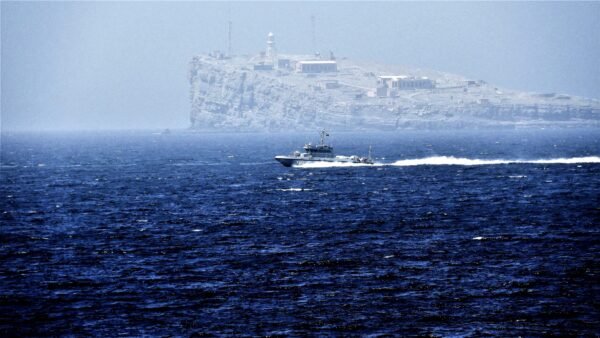
Iran Attacks Navigation Systems on Oman’s Didamar Island in the Strait of Hormuz as Oman Disputes the Damage
Iran says it destroyed navigation systems on Oman's Didamar Island in the Strait of Hormuz, but Oman disputes…
Israel’s New Parliament Sworn In as Eisenkot Moves to End Netanyahu’s Rule and Cancels Unity Talks With Likud
Israel's 26th Knesset was sworn in without a new government on Tuesday, as Gadi Eisenkot — tasked with…
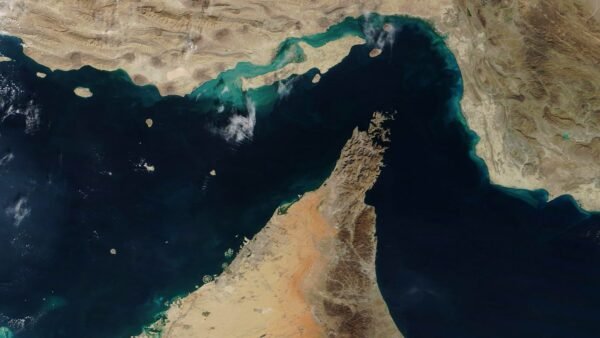
Three More Oil Tankers Explode in the Strait of Hormuz as Iran’s Mine Campaign Defies Talk of De-escalation
Three oil tankers exploded after striking naval mines in the Strait of Hormuz on Tuesday, Iran's Revolutionary Guards…