
Iran Attacks Navigation Systems on Oman’s Didamar Island in the Strait of Hormuz as Oman Disputes the Damage

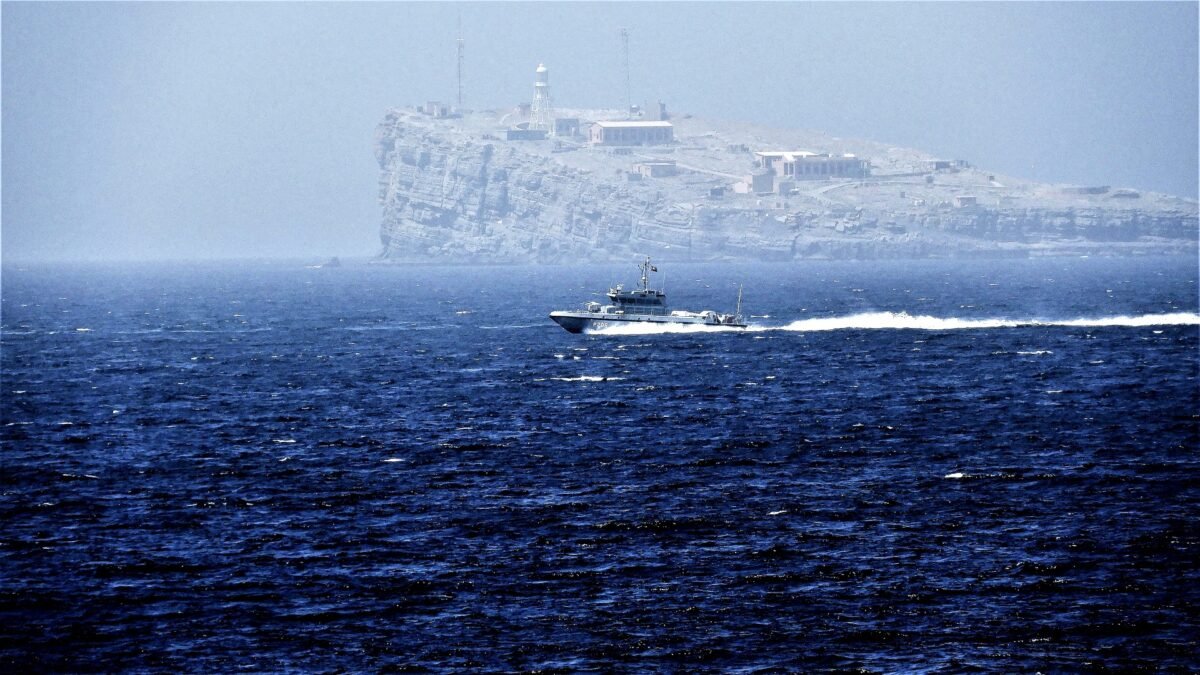
Iran has attacked ship navigation systems on Didamar, a small island belonging to Oman in the Strait of Hormuz, three sources with knowledge of the matter told Reuters on Wednesday, in the latest strike in a nine-month war over the world’s most important oil waterway. But what exactly was hit, and how badly it was damaged, is now the subject of a public dispute between Tehran and Muscat, and the conflicting accounts leave the safety of one of the busiest shipping lanes on earth genuinely uncertain.
Iranian state media said on Tuesday that the Islamic Revolutionary Guard Corps had carried out strikes that destroyed what it called “enemy navigation systems” on the island. Three sources confirmed to Reuters on Wednesday that navigation and communications equipment on Didamar had been attacked, although none of them provided a damage assessment, and Reuters said it could not determine independently whether any navigation systems had actually been destroyed.
Video verified by Reuters showed smoke rising from the island, although it was not clear what was burning. An image from the European Union’s Copernicus satellite programme also showed thermal activity on the island. The United States military’s Central Command and Oman’s media ministry did not immediately respond to requests for comment, according to Reuters.
The attack, if it happened as Iran describes it, would be a significant escalation. Didamar is not Iranian territory. It belongs to Oman, a country that has spent the whole of this war trying to stay neutral, and it sits in the middle of the southern shipping channel through which Gulf oil now reaches the world. Striking it means striking the infrastructure of a third country that has served as a mediator between Washington and Tehran for years.
What happened on Didamar
The sequence of events is still being pieced together, and the dates matter. According to the Institute for the Study of War, which tracks the conflict daily, the attack appears to have taken place on Sunday 8 November, two days before Iranian state media claimed responsibility for it. Satellite imagery from the European Union’s Copernicus Sentinel-2 programme, dated 8 November, showed apparent scorch marks near the radar and radio equipment on the island, according to Reuters.
On Tuesday 10 November, Iran’s semiofficial Fars News Agency reported that the Revolutionary Guard’s navy had targeted the island, saying the systems there were being used to help vessels pass through the strait without Tehran’s authorisation. Iranian state television went further, claiming that personnel and equipment on the island “were helping the flow of oil smuggling by the enemy”. An unnamed Revolutionary Guard navy official told Iranian state media that the navigational aid systems in the south of the Strait of Hormuz had been destroyed, and added that no vessel Iran considers unauthorised had passed through the route overnight.
Then came the contradiction. A senior Omani official told the specialist publication The Maritime Executive that the navigational aids on Didamar Island had not been struck. Satellite imagery taken on the morning of 10 November showed no obvious damage to the lighthouse or to the radio and radar masts, although the publication noted that damage to the masts might be difficult to detect at the resolution available. The Maritime Executive also pointed out that the smoke visible in the social media video could have been rising not from the island itself but from a stricken tanker behind it and in its lee.
An Omani coast guard official confirmed that an explosion had struck the island, according to The Wall Street Journal, although the official did not elaborate. Oman’s Maritime Security Centre, which oversees security incidents in Omani waters, declined to comment.
The result is a genuine fog. Three sources confirmed an attack to Reuters. Iran claims the systems were destroyed. Oman says they were not struck. The satellite pictures show scorching on 8 November and no obvious damage on the morning of 10 November. The Institute for the Study of War, in its assessment, said the extent of the damage “remains unclear at the time of this writing” and noted that commercial vessels continued using the southern route after the attack, which would be unlikely if the navigation systems that guide them had really been knocked out.
What is not in doubt is that something happened on or around Didamar on 8 November. The smoke, the thermal activity picked up by satellite, the scorch marks and the confirmation from three sources that an attack took place all point in the same direction. What remains unresolved is whether the island’s equipment was destroyed, damaged or left working. That distinction matters enormously, because it decides whether this was a successful strike on the strait’s navigation network or a largely symbolic attack whose main effect was political.
Why a tiny island matters so much
Didamar, also known as Little Quoin Island, is a small, uninhabited rocky outcrop about ten nautical miles north of the tip of Oman’s Musandam Peninsula, at the midpoint of the Strait of Hormuz. It is one of three islands sitting in mid-channel between the Omani mainland and the median line of the strait with Iran. For more than a century it has served as a navigational landmark for vessels passing through the waterway: its lighthouse was established in 1914.
In peacetime the island hosts the Hormuz Control Centre, manned by the Royal Navy of Oman, which marshals marine traffic moving through the channels of the strait’s Traffic Separation Scheme. Its infrastructure includes a radar system mounted on a roughly 25-metre tower and radio communications equipment used to assist vessels navigating the narrow passage. The navigational aids themselves are maintained by Arabian Maritime and Navigation Aids Services, known as AMMAS, which provides maritime lights, buoys and other equipment across the region.
That role has become far more important since the war began. When Iran closed the Strait of Hormuz in February, commercial and allied shipping was advised to use a southern route running through Omani territorial waters, outside Tehran’s direct military control and overseen by the United States military’s Central Command. The southern route depends on the navigation systems on Didamar and on the other Omani islands to keep tankers moving safely through a channel that is only a few miles wide at its narrowest point.
Gulf exporters have also built workarounds around the strait. Very large crude carriers now shuttle oil from Gulf ports to ship-to-ship transfer locations near Oman’s Sohar and the United Arab Emirates’ Fujairah, where cargoes are moved onto other vessels. According to Reuters, Gulf oil exports recovered to more than 80 percent of their pre-war levels in September and October, helped by the American military-assisted flows through the strait and by higher Saudi exports through the Red Sea port of Yanbu.
That recovery is precisely what makes Didamar a target. Iran has spent months trying to close off the escape routes that Gulf exporters built after it shut the strait. The Revolutionary Guard has repeatedly targeted ships in Omani territorial waters and attacked port facilities at Duqm and Salalah. Two shipping sources and a maritime security source told Reuters that the Didamar attack would probably have only a limited impact on commercial shipping, because other navigation systems were in place elsewhere. But the message of the attack does not depend on its physical effect. Tehran has shown that it can reach the infrastructure on which the southern route depends, and that it is willing to strike the territory of a neutral neighbour to do so.
A war that has not stopped
The Didamar incident is the latest in a war that began in late February, when the United States and Israel launched a war on Iran, and that has been fought largely at sea ever since. Iran closed the Strait of Hormuz, through which about a fifth of the world’s oil and liquefied natural gas passed before the war, and the United States imposed a blockade of Iranian ports in April. The blockade was lifted in June after a temporary ceasefire agreement, then reinstated in July.
The fighting has followed a pattern of strikes, counter-strikes and claims that are often impossible to verify independently. American forces struck targets on Iran’s Qeshm Island on 2 November, in what officials described as defensive action against Iranian surface-to-air missile threats. President Donald Trump acknowledged on 6 November that American forces continued to carry out limited strikes against Iranian targets. On 8 November, the Revolutionary Guard’s navy said two oil tankers had caught fire after hitting mines on what it called an unauthorised route through the strait, and on Wednesday it said a third tanker had exploded after striking a naval mine. A projectile also struck a tanker about 19 nautical miles north-east of Lima in Oman, according to the United Kingdom Maritime Trade Operations service.
At the same time, the diplomacy has not stopped either. Mr Trump met the Prime Minister of Qatar, Sheikh Mohammed bin Abdulrahman Al-Thani, in Washington on Monday 9 November. Qatar has been pressing both sides to reach an agreement, and Iran has put forward a proposal under which it would end its blockade of the strait in return for an end to the American blockade, the lifting of some sanctions and a halt to the bombing. The United States Secretary of State, Marco Rubio, called Tehran’s conditions “outrageous and ridiculous”, according to Reuters. On Tuesday, Mr Trump declared that the war with Iran was “effectively over” militarily, according to The Telegraph, claiming that Middle East allies were protected and that the Strait of Hormuz was effectively open.
The foreign ministers of the G7 group of leading economies, meeting in Paris on 9 and 10 November, published a joint statement on 11 November expressing concern about instability involving Iran, Yemen, Lebanon, Gaza and Syria, and about the disruption of trade and energy security caused by restrictions affecting the Strait of Hormuz, the Red Sea and the Bab al-Mandab Strait. They backed diplomatic efforts intended to reduce tensions, although they announced no immediate changes to commercial shipping or flight operations.
Iran, for its part, has been signalling that it is preparing for a long war rather than a settlement. On Tuesday 10 November, the same day it claimed the Didamar strike, the Revolutionary Guard’s Aerospace Force unveiled a new underground “missile city”, displaying ballistic and cruise missiles and their launch systems in a cavernous tunnel complex. The armed forces chief of staff, Major General Ali Abdollahi, and the Aerospace Force commander, Brigadier General Seyyed Majid Mousavi, toured the site during the force’s Aerospace Week. The location was not disclosed, and neither the number nor the types of weapons stored there were revealed, so the claims about the facility cannot be independently verified. The Guard’s spokesman, Brigadier General Hossein Mohebbi, had announced on 7 November that the force had shifted its missile and drone production from surface plants into underground “missile production cities”, so that manufacturing could continue even under heavy bombardment.
Analysis: Why It Matters
1. A strike on a third country changes the war’s shape
The most important fact about Didamar is not what was hit but whose territory it is. Oman is not a party to this war. It is a neutral state that has spent decades mediating between Iran and the West, and it is the country through whose waters the world’s oil now has to pass. An Iranian attack on Omani soil, even on an uninhabited rock, is a breach of the sovereignty of a state that has done more than almost any other to keep a channel open to Tehran. The Maritime Executive put it plainly: an Iranian attack on Didamar would be “a further grave breach of Omani sovereignty”.
That matters because Oman’s neutrality has been one of the few assets the region still has. Muscat hosts the talks, carries the messages and provides the waters through which the southern route runs. If Tehran is willing to strike Omani infrastructure when it suits its military purposes, the logic of the southern route starts to unravel. Shipowners, insurers and the governments that guarantee the route will have to ask whether Omani waters are still the safe alternative they were assumed to be, and Oman itself will have to decide how much risk it is willing to carry for a war it did not start.
2. The credibility gap is the story
The second thing Didamar reveals is how little can be taken at face value in this war. Iran says the navigation systems were destroyed. Oman says they were not struck. The satellite pictures support both sides, depending on which day you look at them: scorch marks on 8 November, no obvious damage on the morning of 10 November. Reuters, with three sources, confirms an attack but cannot confirm destruction. The Institute for the Study of War, looking at the same evidence, concludes that the extent of the damage is unclear and points out that ships kept using the southern route afterwards.
This is not a minor detail. In a war fought largely through claims about tankers, mines, missiles and strikes, the gap between what is claimed and what can be shown has become a weapon in itself. Tehran has an interest in exaggerating the damage, because a successful strike on the strait’s navigation network demonstrates that the southern route is not safe and that the blockade of Iranian ports can be answered. Oman has an interest in minimising it, because admitting that its navigation systems were destroyed would advertise the vulnerability of the route it guarantees. Neither side’s account can be accepted on its own, and the truth will probably only emerge when independent surveyors or the next satellite pass settle the question.
For readers, the lesson is to treat every claim in this war as provisional until it is corroborated. The Didamar episode is a useful case study in why: the attack itself is well supported, the destruction is not, and the difference between the two is the difference between a tactical success and a propaganda exercise.
3. The southern route is more fragile than it looks
The recovery of Gulf oil exports to more than 80 percent of pre-war levels is a genuine achievement, and it is the reason the world’s oil markets have stayed relatively calm. But Didamar shows how much of that recovery rests on a small number of vulnerable points. A lighthouse built in 1914, a radar tower, a radio mast and a control centre on an uninhabited rock are what keep the southern channel open. They are, by design, exposed: they have to be, because they have to be visible to ships. That makes them easy targets, and it makes the whole system dependent on the willingness of the country that owns them to keep them running under fire.
The shipping sources who told Reuters that the attack would have limited impact are probably right about the immediate effect, because there are other navigation systems elsewhere. But the longer-term question is different. If Iran can strike Didamar once, it can strike it again, and it can strike the other islands and the port facilities at Duqm and Salalah that it has already attacked. Each strike raises the insurance premium on the route, narrows the margin for error and tests the political will of the Gulf states and the United States to keep the route open. The strait’s geography has not changed: there is no alternative to the southern channel, and there is no way to move that channel somewhere safer.
4. Signalling is doing as much work as the weapons
Look at the timing. In the space of two days, Iran claimed a strike on Omani navigation infrastructure, unveiled a new underground missile city, and was told by its own president’s counterpart in Washington that the war was “effectively over”. None of these things is an accident. The missile city, with its tunnels full of ballistic and cruise missiles, is a message to Washington and Jerusalem that bombing Iran’s surface facilities has not destroyed its missile programme. The Didamar strike is a message to the Gulf states and to the shipping industry that the southern route is not a sanctuary. And Mr Trump’s declaration that the war is over is a message to his own public and to Tehran that the United States is not looking for a wider war.
All three messages can be true at the same time, and all three can be partly bluff. The missile city’s capabilities cannot be verified from the footage. The Didamar strike’s damage cannot be verified from the satellite pictures. And Mr Trump’s declaration sits uneasily with the fact that American forces were still carrying out limited strikes on 6 November and that his own Secretary of State had just called Iran’s negotiating conditions outrageous. What the messages have in common is that they are all aimed at shaping what happens next, rather than describing what has already happened. The war is being fought as much in the space between the claims as in the strait itself.
5. The oil market is watching a different war
For the rest of the world, the question is simpler: will the oil keep flowing, and at what price? Brent crude, the international benchmark, has been trading above 90 dollars a barrel, and the Didamar incident is a reminder of why. Every attack on the strait’s infrastructure, however small, is a reminder that a fifth of the world’s oil and gas used to pass through a channel barely wider than a river, and that the workarounds built since February are improvised, expensive and vulnerable.
The recovery to more than 80 percent of pre-war export levels is real, but it is not the same as security. It depends on ship-to-ship transfers off Oman and the United Arab Emirates, on Saudi exports rerouted through the Red Sea, and on American military escorts. All of those are costly, and all of them depend on political decisions that can change. The Didamar strike does not close the strait. It does something quieter and in some ways more corrosive: it raises the cost of keeping it open, one small attack at a time.
What to Watch Next
- Oman’s formal response. Muscat has so far spoken through an unnamed senior official and a coast guard confirmation of an explosion. A formal statement from the Omani government, or from its Maritime Security Centre, would settle whether Oman treats this as an attack on its sovereignty and what, if anything, it intends to do about it.
- Independent damage assessment. The next clear satellite imagery of Didamar, or any survey by the Royal Navy of Oman or by AMMAS, will establish whether the radar and radio equipment is still working. Until then, the competing claims cannot be resolved.
- Shipping through the southern route. Whether very large crude carriers continue to use the southern channel at the same rate, and whether insurers raise premiums for Hormuz transits, will show how seriously the industry takes the attack.
- The American response. Central Command has not commented on Didamar. Any American statement, or any change in the escort operation in the strait, will indicate whether Washington treats an attack on Omani infrastructure as a red line.
- The Qatar mediation. The talks that Qatar is pressing, and the Iranian proposal linking an end to the Hormuz blockade with an end to the American blockade and the lifting of some sanctions, remain the only visible diplomatic track. Any movement there would change the context of every strike in the strait.
- Iran’s next unveiling. The Revolutionary Guard’s spokesman said more underground facilities and military achievements would be revealed during Aerospace Week. Further unveilings would confirm that Tehran is preparing for a long war rather than a settlement.
- Oil prices and export flows. Whether Gulf exports hold above 80 percent of pre-war levels in November, and whether Brent crude stays above 90 dollars a barrel, will show whether the market believes the southern route is still viable.
Sources
- Reuters — “Iran attacks shipping navigation systems on Oman’s Didamar island, sources say”, 11 November 2026
- Fox News — “Iran escalates in Hormuz, claims strike on Omani island it says ‘enemy’ uses for US military ops”, 11 November 2026
- The Maritime Executive — “Uncertainty Surrounds Possible Attack on Oman’s Strait of Hormuz Lighthouse”, 10 November 2026
- Institute for the Study of War — “Iran Update, November 10, 2026”
- The Telegraph — “Iran unveils new ‘missile city'”, 10 November 2026
- The Business Standard — “Iran’s IRGC unveils ‘new’ underground missile city amid war tensions”, 11 November 2026

About the Author — Abdul Mannan
Related Articles

Israel’s New Parliament Sworn In as Eisenkot Moves to End Netanyahu’s Rule and Cancels Unity Talks With Likud
Israel's 26th Knesset was sworn in without a new government on Tuesday, as Gadi Eisenkot — tasked with…
Three More Oil Tankers Explode in the Strait of Hormuz as Iran’s Mine Campaign Defies Talk of De-escalation
Three oil tankers exploded after striking naval mines in the Strait of Hormuz on Tuesday, Iran's Revolutionary Guards…

Gaza Floods Kill Four as Winter Storm Swamps Tens of Thousands of Tents and Trump’s Board of Peace Calls Israel’s Response ‘Insufficient’
Four people, three of them children, were killed when a rain-soaked sandbank collapsed onto tents in Deir al-Balah…