
Five Shot, One Killed at Washington Gym as Gunman Barricades Himself in Logan Circle Building

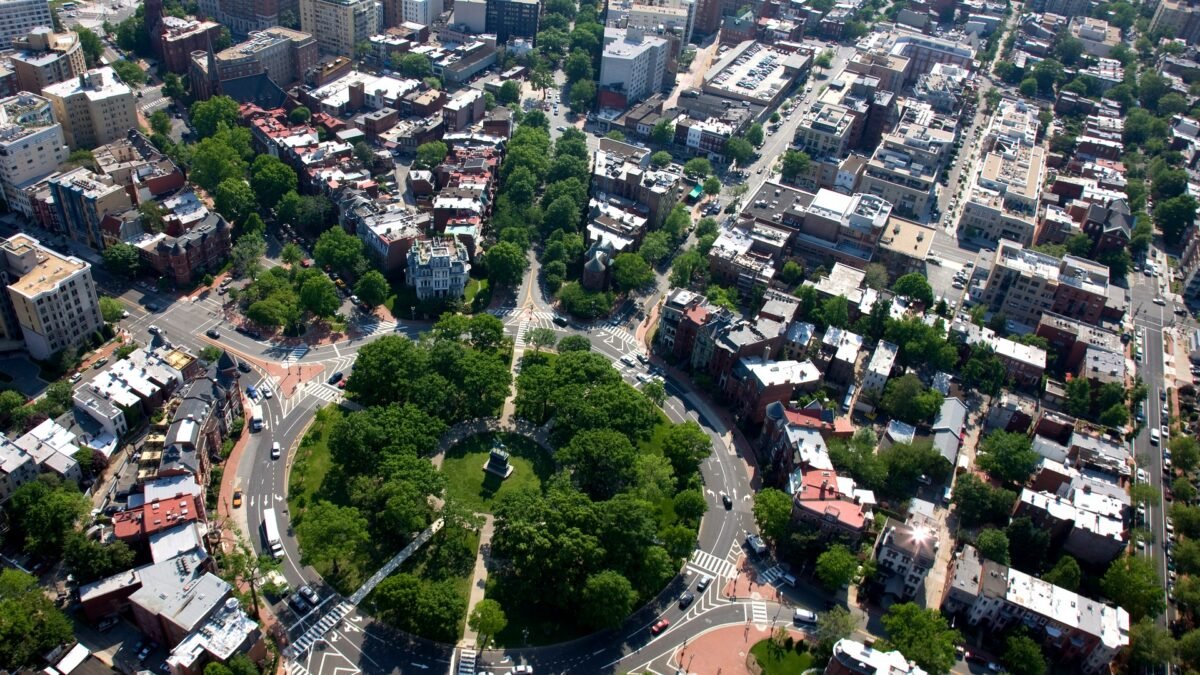
Five people were shot, one of them fatally, at and outside a gym in Washington’s Logan Circle neighbourhood on Thursday morning, and the gunman barricaded himself inside an apartment in the same building as police, federal agents and National Guard troops sealed off the area less than a mile from the White House.
The shooting began shortly after 8am local time at VIDA Fitness, near the corner of 15th and P Streets Northwest, according to the Metropolitan Police Department. One victim died inside the gym. Another was critically injured, and three more were taken to hospital. By late morning the suspect had not been taken into custody, and the standoff was still active.
Metropolitan Police Chief Jeffery Carroll told reporters at a morning news conference that the suspect, who police believe was a member of the gym, had been contained in an apartment in the same building, according to the Washington Sun. The police department’s Emergency Response Team was on the scene, and officers had barricaded the 1500 block of 15th Street Northwest. Residents were told to avoid the area, and a shelter-in-place order was issued for the immediate neighbourhood just before 9am.
The shooting unfolded during the morning rush, in one of the capital’s busiest residential districts, at a time when the gym was full. James Spellman, who was inside VIDA a little after 8am, told the Associated Press that there were about 50 people in the facility when the shots were fired. He said he heard about two shots inside the gym and about five or six more outside, and that a man who fell to the floor inside the gym had been shot in the neck. Another gym member rushed to help him, Spellman said, but he was already dead.
Michael Carney, a regular at the gym, told the Washington Sun that he was on a treadmill when the shooting started. He heard what he first took for an exercise ball popping, then got off the machine and saw a victim on the gym floor who had been shot in the head. People began to evacuate, he said, hiding behind planters as they tried to get out. “Everyone was kind of just hiding behind planters and stuff,” he said.
Suzanne Garwood, who was also inside VIDA, told the Sun that she heard an enormous, loud noise from the ladies’ locker room, followed by more shots outside after she was evacuated. She said she had heard that one man was shot inside the gym and a woman inside an elevator.
Dozens of witnesses were evacuated from the gym at around 9.20am and moved in Metro buses to a community centre, according to the Washington Sun. People fled the gym and into a neighbouring apartment building when a fire alarm was pulled, Carney said, and once outside he heard five or ten more shots that seemed to be coming from an alley. Kevin Schweer, president of the condominium building above the gym, told the Sun that there was a fire on the seventh floor of the building, and that he had seen another person who had been shot in a parking garage elevator. The cause of the fire was not immediately clear, and police had not said whether it was connected to the shooting.
A neighbourhood locked down
The Metropolitan Police Department posted its first alert at 8.23am, warning of an active shooting in the area of 15th and P Street Northwest and saying its Emergency Response Team was responding, according to reports carried by Fox News and USA Today. Just under an hour later, police said the incident had “resulted in a barricade situation in the 1500 block of 15th Street, Northwest”, with the Emergency Response Team on the scene, and asked the public to stay away while officers worked to resolve it.
Ward 2 Councilmember Brooke Pinto, who represents the area, posted on social media at 8.24am that there were shootings “at and around” the fitness centre, with multiple people shot, and that police were still looking for the suspect. In a brief statement on X, she said the shooting took place “at and outside” a VIDA fitness centre near 15th and P Streets Northwest in Logan Circle, about seven-tenths of a mile from the White House, according to the New York Post.
Police issued an alert describing the possible suspect as a white man, heavily built, wearing grey shorts and carrying a grey and black gun, according to the Wall Street Journal. Local station 7News reported that the suspect was described as a white, heavy-set male possibly wearing a grey shirt. NBC News reported, citing law enforcement sources, that authorities had identified the shooter, who had barricaded himself in an apartment on a high floor of the building that housed the gym. The name of the suspect had not been publicly released by late morning, and police had not announced a motive.
The response drew in agencies across the city and the federal government. The FBI’s Washington Field Office said it was responding to reports of an active shooter in the 1500 block of 15th Street Northwest and assisting District police and Metro Transit Police, according to Energy Radio. The Bureau of Alcohol, Tobacco, Firearms and Explosives said it had sent agents to the scene, the New York Post reported. The US Secret Service was also on the scene helping law enforcement, according to The Times. National Guard members assigned to the city as part of the Trump administration’s crackdown on crime were ordered to the neighbourhood to give assistance, the Post reported.
Nearby public schools were placed on “alert” status, meaning no one could come in or out while normal activities continued inside, a DC Public Schools spokesperson told the Washington Sun. The schools affected were Marie Reed, Ross, Thomson, Brent, John Lewis, Garrison, Seaton, Cleveland and Bancroft elementary schools, Cardozo Education Campus, Garnet-Patterson STAY High School, Banneker Academic High School and the Adams Campus of Oyster-Adams Bilingual School.
The shooting also disrupted the morning of the first family. The Times reported that Melania Trump, who was leaving Washington for Alabama on Thursday morning, was delayed because of the shooting near the White House, according to a spokesman quoted by CNN. Mrs Trump and the second lady, Usha Vance, were travelling to Fort Rucker to visit military families before Thanksgiving, and President Donald Trump’s motorcade was seen moving from the White House at about 8.20am en route to Joint Base Andrews in Maryland. As of late morning, there had been no public statement from the White House or from President Trump about the shooting, according to Energy Radio.
The place where it happened
Logan Circle is a busy residential neighbourhood of Victorian townhouses, bars and restaurants in north-west Washington, about a mile north of the White House. VIDA Fitness is a popular gym chain in the city, and the Logan Circle branch sits at the corner of 15th and P Streets, in a mixed-use building that also holds apartments above the gym. The 1500 block of 15th Street Northwest is also home to St Luke’s Episcopal Church and is around the corner from a Whole Foods supermarket, according to the New York Post.
The gym is gay-owned and caters to the LGBT community, according to The Times. That fact was noted in early coverage, but police had not said anything about a motive by late morning, and no official has suggested that the gym’s identity played any part in the attack. What is known is that the gunman opened fire inside the gym, striking at least one person, before going outside and continuing to shoot, according to law enforcement sources quoted by CNN and carried by The Sun.
One of the victims was located inside VIDA Fitness, Metropolitan Police spokesman Officer Nathan Clarke said, but not all five victims were inside the gym, according to the Wall Street Journal. Police said they were responding to multiple locations, department spokesperson Nicole Deaner told the Associated Press. The Associated Press first reported four people shot, then updated its reporting to five, and police confirmed at least five shot to 7News, according to a summary of the coverage.
A capital under a federal crime crackdown
The shooting landed in the middle of the most sustained federal intervention in Washington’s policing in living memory. President Donald Trump deployed the National Guard to Washington in August 2025, declaring a crime emergency and placing the Metropolitan Police Department under federal control under section 740 of the District of Columbia Home Rule Act, which allows the president to take emergency control of the police force for 30 days. At the peak of the deployment during the summer, about 5,000 troops were stationed in the city, according to Military.com.
The mission, called Make D.C. Safe and Beautiful, has continued through 2026. About 3,100 National Guard members are currently deployed in Washington, drawn from the District of Columbia and several states, according to the Associated Press. The deployment is expected to continue until January 2029, and the Department of Defense forecast in August that extending it that far would cost taxpayers about 1.4 billion dollars. A February 2026 Senate report estimated the deployment costs 1.65 million dollars a day, according to Status Quo Defense.
Only two weeks ago, the Guard’s role was expanded again. Defence Secretary Pete Hegseth signed two memorandums on 29 October 2026 authorising troops to use up to 60 marked patrol cars, military tactical vehicles such as Humvees, two patrol boats and 20 portable light towers in support of federal and local law enforcement, according to the Associated Press and Military.com. Certain Guard personnel supporting anti-gang and drug-trafficking operations are now permitted to carry rifles in addition to their service pistols. The maximum authorised strength remains 3,500 troops.
The expansion was confirmed by the Pentagon, which said the Secretary of War had authorised “the continued use of National Guard personnel and capabilities in support of the Make D.C. Safe and Beautiful mission”. The boats will carry out “perimeter security” against alleged gang leaders and drug traffickers, according to Military.com, and the new assets will support police operations targeting drug traffickers and gangs, including water perimeter security in the Anacostia, according to Profilo Politics.
The Guard’s limits have not changed. Its members still cannot make arrests or conduct high-speed vehicle pursuits, and the expansion runs through the end of 2026. The broader deployment is expected to continue until January 2029.
The deployment has been fought in court from the start. The District of Columbia sued the federal government in September 2025, arguing that the use of National Guard troops for the city’s crime-fighting mission amounts to unlawful military involvement in domestic law enforcement and violates the Posse Comitatus Act and other statutes. A federal district court previously sided with the city, but an appeals court has allowed the deployment to continue while the case proceeds, and a federal appeals court panel heard arguments on 14 October, according to the Associated Press.
The administration points to falling crime figures as proof that the intervention is working. Mayor Muriel Bowser has noted that violent crime in the capital is at its lowest level in 30 years, although city records also show that violent crime, including robberies and homicides, rose sharply after the pandemic. A May 2026 study by the Niskanen Center found no measurable impact on violent crime from the Guard deployment, though it noted a 24 percent decrease in property crimes in specific patrol zones, according to Status Quo Defense. The two readings of the same city have been argued over ever since, and Thursday’s shooting will now be argued over in the same terms.
What police have not said
Much about Thursday morning remains unconfirmed, and the picture changed repeatedly in the first hours. The number of victims moved from four to five as the morning went on. The condition of the four survivors was not released by police in the first hours, beyond the Washington Sun’s report that one was critically injured. The identity of the gunman had been established by investigators, according to NBC News, but had not been made public. No motive had been announced, and no charges had been filed while the standoff continued.
That uncertainty is normal in the first hours of a barricade situation, and it is also the reason the casualty figures and the sequence of events in this article should be read as the position at late morning on Thursday, not as a final account. Police said the barricade was still active at 10am Eastern, and the shelter-in-place order for the 1500 block of 15th Street Northwest remained in effect. The Metropolitan Police Department said it would give further updates as the situation developed.
Analysis: Why It Matters
A shooting the crackdown was built to prevent
The most uncomfortable fact about Thursday morning is the simplest one. This shooting happened in the middle of the largest federal crime operation Washington has ever seen, in a neighbourhood patrolled by National Guard troops, less than a mile from the White House, in a city where the president had declared a crime emergency and taken control of the police. And it happened anyway.
That does not prove the crackdown has failed. A single incident, however terrible, cannot settle a question about citywide crime rates, and the administration will point out, fairly, that no deployment of troops can be everywhere at once, and that a gunman opening fire inside a gym at 8am is not the kind of crime a patrol car on a street corner is designed to stop. The Guard’s own rules underline the point: its members cannot make arrests, cannot pursue suspects, and are there to support police, not to replace them. They were ordered to Logan Circle on Thursday to assist, and they did. But the shooting itself was over before they arrived.
What the shooting does show is the limit of what a visible, militarised presence can deliver. Troops, Humvees, patrol boats and light towers are a statement about a city’s streets. They can deter street crime, they can reassure residents, and they can, the Niskanen Center’s study suggests, cut property crime in the areas they patrol. They cannot reach inside a gym, or inside a man’s head, or into the argument or grievance that turned a morning workout into a killing. The administration’s critics will say Thursday proves the point they have made all along: that the crackdown was always better at being seen than at stopping the violence that frightens people most. The administration’s supporters will say the opposite: that the swift, overwhelming response, with federal agencies on the scene within minutes, is exactly what the deployment was for. Both arguments will be made, loudly, and neither will be settled by this one morning.
A gym is a third place, and that is why it hurts
There is a reason shootings in gyms, schools, churches and workplaces land differently from shootings on a street corner. A gym is a third place, somewhere between home and work, where people go at the same hour every day, recognise the same faces, and let their guard down. James Spellman said there were about 50 people in VIDA when the shooting started. Michael Carney was on a treadmill. Suzanne Garwood was in the locker room. These are the most ordinary details imaginable, and that is precisely what makes them frightening: the victims were doing the most routine thing a city offers, in a room full of people who had done it a hundred times before.
VIDA is also a gay-owned gym that caters to the LGBT community, a fact that will inevitably shape how the shooting is read. It would be wrong, on the evidence available on Thursday morning, to draw any conclusion about motive from that fact. Police had said nothing about why the gunman opened fire, and the man police believe carried out the attack was, according to the police chief, a member of the gym himself. But it would also be wrong to pretend the fact does not matter to the people who use the gym. A place that exists as a safe, welcoming space for a community that has often had to fight for one does not stop being that place because the violence may have had nothing to do with it. The shock in Logan Circle on Thursday was not only about what happened, but about where it happened, and to whom it could have happened.
The barricade and the information vacuum
For hours on Thursday, the central fact of the story was not what had happened but what had not happened yet. The gunman was contained, in an apartment in the same building, and he had not been taken into custody. The police knew who he was, according to NBC News, and they had not said so publicly. A fire had been reported on the seventh floor, and nobody had said whether it was connected to the shooting. One victim was dead, one was critically injured, and the conditions of the others were unknown.
That is the shape of almost every barricade standoff in its first hours: a small number of confirmed facts surrounded by a much larger space of rumour, speculation and fear, filled in real time by witnesses on social media and by neighbours looking out of windows. The Metropolitan Police Department’s alerts were measured and regular, and the council member for the area posted early and often. But the gap between what officials know and what they can say, while a suspect is still armed and still inside a building, is where misinformation breeds. The early casualty count moved from four to five. The description of the suspect came in pieces. The fire on the seventh floor was reported by a resident, not confirmed by police. None of that is anyone’s fault. It is the nature of a developing incident. But it is worth remembering, when the fuller account emerges, that the first version of this story was written while the building was still surrounded.
The politics will not wait for the facts
The shooting arrived at a politically charged moment for the Washington deployment. The midterm elections, held just last week, saw Democrats take control of Congress, and the new majorities will arrive in January with the Guard deployment high on their list of grievances. District officials are already calling on newly elected Democratic governors to withdraw their states’ troops. The federal appeals court is weighing whether the deployment is lawful at all. And only two weeks ago, the Defence Secretary expanded the Guard’s powers, handing troops patrol cars, boats and rifles in the middle of that legal and political fight.
Into that argument, Thursday’s shooting drops like a stone. The administration’s opponents will ask what 3,100 troops, billions of dollars and a federalised police force are for, if a gunman can still kill a man in a gym a mile from the White House. The administration’s supporters will answer that the response, not the prevention, is the measure of the mission, and that the city is safer than it was. Both sides will be speaking before the victims have been named, before the gunman has been charged, and before anyone knows why he did it. That is the pattern of American gun violence now: the politics begin before the facts are finished, and the facts, when they arrive, rarely change anyone’s mind.
What Thursday changes, and what it does not
It is worth being precise about what one shooting can and cannot tell us. It cannot tell us whether Washington is safer than it was a year ago, or whether the National Guard deployment has worked. Those are questions for crime statistics over months, not for a single morning. It cannot tell us whether gun laws, or policing, or mental health services, or any of the other causes usually invoked after a shooting, would have prevented this one, because we do not yet know who the gunman was, where he got his weapon, or why he fired it.
What it can tell us is narrower, and more certain. It can tell us that a man died in a gym on a Thursday morning, in front of people he may have known, in a neighbourhood that had every reason to think itself protected. It can tell us that five people were shot, that a building full of residents spent its morning sheltering in place, and that a dozen schools locked their doors. And it can tell us that the questions Washington has been arguing about for fifteen months — who polices the capital, with what powers, at what cost, and to what end — are not abstract questions. They are questions about whether a man can go to the gym at 8am and come home. Thursday’s answer, for one man, was no.
What to Watch Next
- The standoff: whether the gunman is taken into custody, surrenders, or is killed, and how long the barricade in the 1500 block of 15th Street lasts.
- The suspect’s identity and motive: police have identified the gunman, according to NBC News, but have not named him publicly. His name, his background, his connection to VIDA Fitness and any motive will be the first questions answered once the standoff ends.
- The victims: the names and conditions of the four survivors, and the identity of the man killed inside the gym, once families have been notified.
- The seventh-floor fire: whether the fire reported in the building above the gym was connected to the shooting, and what caused it.
- The White House response: whether President Trump comments on the shooting, and whether the administration uses it to argue for keeping or expanding the National Guard deployment.
- The legal fight over the deployment: whether the shooting changes the politics of the District’s lawsuit against the Guard deployment, or the calls from District officials for Democratic governors to withdraw their troops.
- The charges: what offences the gunman faces once he is in custody, and whether federal charges follow, given the involvement of the FBI and the ATF.
Sources
- The Washington Sun — Suspect Is Barricaded After Shooting at Least Five People in Logan Circle
- New York Post — 5 people shot in trendy DC neighborhood, suspect under siege inside apartment
- The Wall Street Journal — Multiple People Shot in Washington, D.C.
- The Times — Washington DC shooting latest: active shooter at large in Logan Circle
- Military.com — National Guard to Use Boats, Police Cars And Other Vehicles After Hegseth Expands DC Presence
- Energy Radio — Washington DC shooting: 5 shot at Logan Circle gym near White House

About the Author — Abdul Mannan
Related Articles
Trump Signs Bill Ending Longest Government Shutdown in US History as House Passes Funding Deal 222-209
President Donald Trump signed the funding bill on Wednesday night, ending the longest government shutdown in American history…
Democrat Scott Colom Wins Mississippi Senate Seat in Historic Upset, First Black Senator from the State Since Reconstruction
Democrat Scott Colom has defeated Republican Senator Cindy Hyde-Smith in Mississippi, becoming the state's first Black senator since…
Trump Administration Moves to Cut Food Stamps for 6.3 Million Americans in Biggest SNAP Crackdown in Years
The USDA's proposed rule would end broad-based categorical eligibility, stripping about 6.3 million people of food stamps and…