
Jensen Huang Resigns as Nvidia Chief Executive After 33 Years as Affair Scandal Engulfs the AI Giant

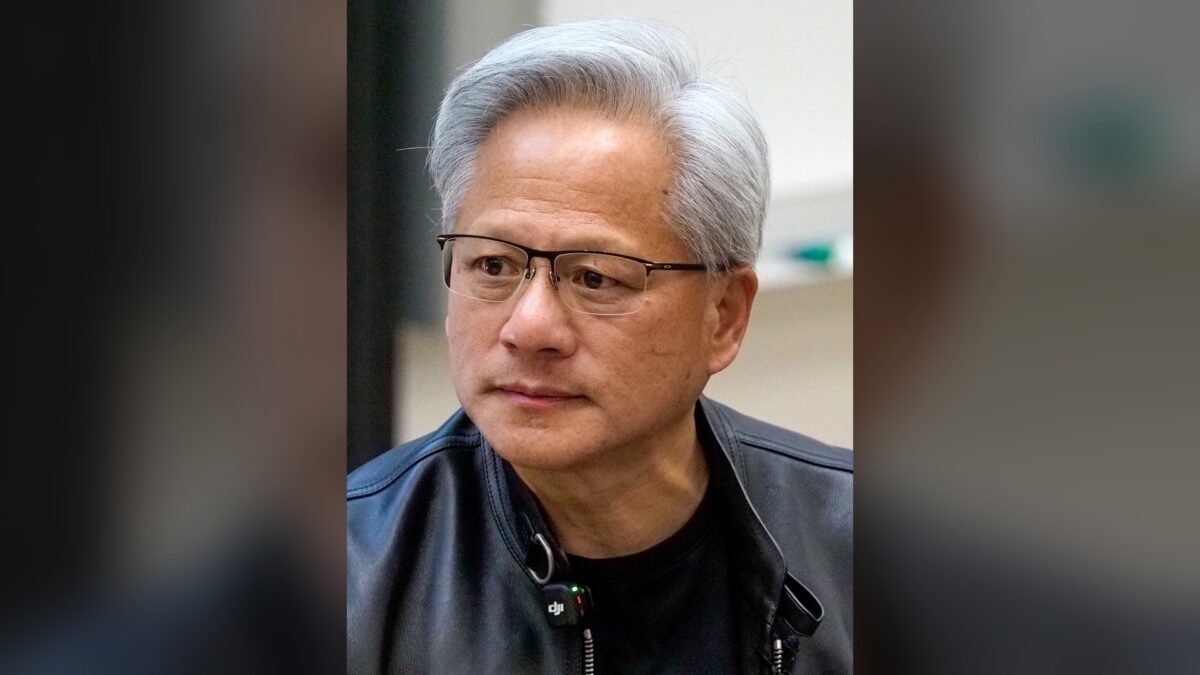
Jensen Huang, the founder who built Nvidia from a small graphics-chip maker into the most valuable company on earth and the undisputed engine of the artificial-intelligence boom, resigned as its chief executive on Thursday, ending a 33-year reign in one of the most dramatic corporate falls in modern business history. Nvidia said its chief financial officer, Colette Kress, would take over as interim chief executive while the board searches for a permanent successor, and named longtime director Harvey Jones as the company’s first-ever board chair.
The announcement, issued by Nvidia in a news release on Thursday, came four days after the board opened an independent investigation into reports that Huang had been the target of a foreign intelligence operation, and one day after the board met to weigh whether to remove him. Huang resigned as president, chief executive and a member of the board, effective immediately, according to the company. The release thanked him for his “immeasurable contributions to the company and the industry” but gave no reason for his departure and carried no comment from Huang himself, according to Barron’s.
The market verdict was swift and brutal. Nvidia shares fell more than 10 per cent in premarket trading on Thursday, according to Reuters, and by more than 13 per cent at one point after the news broke, according to USA Today. The stock opened about 10 per cent lower, according to The Times, before paring some of the loss in regular trading; Barron’s reported the shares down 4.2 per cent at $166.28 in Thursday trading. Including the week’s earlier losses, the roughly $4 trillion chipmaker has shed about $600 billion in stock-market value since the board announced its investigation on Sunday, according to Reuters and USA Today — a collapse that Reuters described as one of the most expensive corporate crises in history.
Huang, 63, co-founded Nvidia in 1993 with Curtis Priem and Chris Malachowsky and had led it ever since. Under his leadership the company evolved from a maker of graphics chips for computer games into the dominant supplier of the processors used to train and run advanced artificial-intelligence systems, becoming the world’s first company to reach a $4 trillion market value. He owns about 3.6 per cent of Nvidia’s stock, making him its fourth-largest investor and its largest individual shareholder, according to Reuters. There has never been an Nvidia without Huang; he told Bloomberg in 2023 that the company “was built so that I know how to run it,” according to CNN.
What Nvidia announced
Nvidia’s board said on Thursday that Kress, who has served as chief financial officer since September 2013, had agreed to serve as interim chief executive and would continue in her finance role until a permanent chief executive is found. The board has begun a search for a permanent successor and will consider internal and external candidates, according to the company.
“Colette has helped lead NVIDIA through a period of extraordinary growth and has a deep understanding of our business, customers, operations and financial position,” said Harvey Jones, who was also named Nvidia’s first-ever board chair in the Thursday announcement, according to CNN. Jones added that the board expects “the company’s operations, customer commitments and product roadmap to continue without interruption.”
Kress is the most visible executive at Nvidia after Huang and has appeared alongside him on the company’s quarterly earnings calls for more than a decade, according to Reuters. Nvidia’s revenue was $4.13 billion in the fiscal year she joined and $215.9 billion in fiscal 2026, according to Reuters, and Forbes ranks her 32nd on its 2026 list of America’s richest self-made women, with shares in the chipmaker valued at roughly $750 million at Wednesday’s close.
The scale of the task facing her is hard to overstate. Huang had about 60 direct reports and had said publicly that he did not believe in succession planning, arguing that leaders should pass on knowledge continuously rather than grooming a single heir. Nvidia has no public succession plan, and the board’s search begins with the company’s third-quarter results due on Tuesday, 17 November — an earnings report that was already the most anticipated date on the technology calendar before this week, and that now arrives with the company in the middle of a leadership crisis.
A week that ended a 33-year reign
The crisis began with revelations about Huang’s relationship with Alice Huang, a former executive at the Singapore-based data-centre company Megaspeed International, which is a major Nvidia customer. The New York Times first reported the business connection between Jensen Huang and Alice Huang in October 2025, according to the Wall Street Journal, and US officials believe Alice Huang was working for China’s intelligence services, according to the Financial Times, which reported that US officials believed the relationship was romantic in nature.
US authorities have scrutinised Megaspeed, which buys chips from Nvidia, and concluded that the company was a Chinese intelligence asset, according to USA Today. The company is suspected of diverting some Nvidia products to China, and the Justice Department is now leading multiple investigations involving Alice Huang, according to people familiar with the matter cited by the Wall Street Journal. Alice Huang has since returned to China and is living in Beijing with the knowledge of Chinese security officials, Bloomberg News reported on 11 November, citing people familiar with the matter, according to USA Today. Singapore’s authorities said on Thursday that they had banned Alice Huang from returning to the country after opening an investigation into Megaspeed over suspected false declarations about server purchases, according to the Associated Press, and Megaspeed pledged on Thursday to cooperate with investigations into potential risks to US national security.
On Sunday, 8 November, Huang acknowledged in a memo to employees that he had been unfaithful to his wife, apologised to his family and colleagues, said he took “full responsibility” for his actions and pledged to cooperate with the board’s review, according to USA Today. His statement came in tandem with an announcement by the board that independent directors, assisted by outside legal counsel, would oversee an investigation into whether Huang had been the target of a foreign intelligence operation. At the time, the board said it had no reason to believe US national security interests or Nvidia secrets had been compromised and expressed confidence in Huang, according to USA Today. CNN described the board’s reversal since then as a quick one.
The decisive turn came on Wednesday, 11 November, when the New York Times reported that Huang had also had an extramarital relationship with Kimberly Powell, Nvidia’s vice president of healthcare, who reports directly to him. The newspaper cited five people who worked at the company, according to USA Today. When the Times asked Huang about Powell, he responded, “I don’t think you should be talking to me directly,” before ending the phone call, according to USA Today. The Associated Press could not independently confirm the report, according to the Associated Press. Later on Wednesday, the Wall Street Journal reported that the board was preparing to oust Huang, and Reuters reported that the board met on Wednesday night to consider his removal, citing a person familiar with the matter.
By Thursday morning, the resignation was announced. The Wall Street Journal, which had reported the board’s preparations on Wednesday, described the outcome plainly: Nvidia’s chief executive had resigned after two extramarital affairs, including one with a suspected Chinese spy and another with an employee.
The market verdict
Investors had already been punishing Nvidia all week. After the Wall Street Journal reported on 11 November that directors were preparing to remove the longtime chief executive, the company’s shares fell about 8 per cent in after-hours trading, according to USA Today. Thursday’s resignation sent the stock down more than 10 per cent in premarket trading, according to Reuters, and weighed on the broader market, with the S&P 500 and the Nasdaq falling as Nvidia’s exit rattled AI stocks, according to Reuters.
The damage spread beyond Nvidia itself. Shares of Nvidia customers including CoreWeave and Naver were also hit, according to Reuters, and the episode landed in the middle of an already shaky period for AI stocks, with soaring cash burn and rising debt at traditionally cash-rich technology giants fuelling doubts over whether the AI boom will pay off, according to Reuters. Daniela Hathorn, a senior market analyst at Capital.com, told Reuters that Huang had been seen as the front man of artificial intelligence, “not just at Nvidia, but in general,” and that his stepping down “adds a little bit of jitters to the market ahead of the earnings next week and obviously in the middle of this AI rout that we’re going through.”
The timing could hardly be worse for investors. Nvidia is due to publish its third-quarter results on Tuesday, 17 November, according to Barron’s, and the report was already expected to be a referendum on the AI trade after a week in which the company lost roughly $600 billion of market value. A class-action lawsuit was also filed against Huang and the company on 9 November, accusing them of misleading investors by concealing the relationship, according to reports cited in earlier coverage.
Washington reacts
The political reaction was immediate and, in the case of President Donald Trump, characteristically unconventional. Trump, who had defended Huang earlier in the week, calling him an “honorable guy” and saying on 9 November that he was “amazed” by the allegations and expected Huang would ultimately be “in good shape,” took to Truth Social on Thursday to suggest a successor. “NOW THAT Nvidia CEO JENSEN HUANG, who has done a fantastic job, has resigned, there is only one man to take his place — TIM COOK of Apple,” Trump wrote, according to Reuters. “A Legend replaces a Legend!” Cook stepped down as Apple’s chief executive in August and now holds the position of executive chair of its board, according to reports. Trump, who is due in China next week, had confirmed earlier that the FBI was investigating the matter, according to USA Today.
Democrats in Congress made clear that the resignation would not end the scrutiny. Senator Elizabeth Warren said on Thursday that Huang’s resignation “does not absolve him” or the company “for putting our national security at risk or for any potential violations of our law,” according to the Wall Street Journal. Warren, who is set to chair the Senate Banking Committee when Democrats take control of Congress on 3 January, said Trump officials must “explain why they have not closed export control loopholes,” according to The Times. She and Senator Chris Coons, who is set to chair the Senate Foreign Relations Committee, issued a joint letter to Commerce Secretary Howard Lutnick, Secretary of State Marco Rubio and White House Chief of Staff Stephen Miller, saying that the sale of $4.8 billion of Nvidia chips to Alice Huang’s company, Megaspeed, “raises significant concerns about the federal government’s ability to effectively enforce our export controls and protect our national security,” according to The Times. Warren also called on Congress to pass the AI Overwatch Act, which would give Congress oversight over advanced AI chip exports, according to reports.
House Minority Leader Hakeem Jeffries said Democrats were investigating the Huang affair as they prepare to take over majority control of the House and Senate, and told CNBC that the resignation “was the right thing to do,” adding: “Now we have to get to the bottom of whether America’s national security has been compromised,” according to reports. US lawmakers say they still want a briefing from Jensen Huang despite his resignation, and Representative Brian Mast, chairman of the House Committee on Foreign Affairs, said the committee was in contact with Huang’s team as recently as Wednesday night about the interview, according to the Associated Press. Huang also faces a potential congressional subpoena if he does not comply with a request to provide a closed-door briefing regarding the allegations related to the Chinese businesswoman, according to USA Today. US Trade Representative Jamieson Greer called Nvidia a structurally important company in a CNBC interview on Thursday and said Washington remains concerned about keeping the industry’s most advanced technology in US or allied hands, according to reports.
China pushed back sharply. The Chinese government has expressed outrage at the allegation that Alice Huang is a spy recruited by Beijing’s state security, according to The Times, and China’s Foreign Ministry spokesperson Guo Jiakun said: “The so-called Chinese spy allegation is unsubstantiated. It is nothing but smears against China,” according to reports. Senior Democrats have also formally asked the Trump administration to “preserve all records” related to dealings with Nvidia, signalling that there could be a political reckoning over the affair, according to The Times.
Analysis: Why It Matters
The founder’s dilemma, resolved the hard way
Nvidia was, in a literal sense, Jensen Huang’s company. He co-founded it, led it for every one of its 33 years, owned the largest individual stake in it, and told the world in 2023 that it “was built so that I know how to run it.” That concentration of identity was Nvidia’s greatest strength for three decades: one man’s conviction carried the company from gaming graphics into the bet on graphics processing units for artificial intelligence, a wager that made Nvidia the centre of the AI buildout and Huang himself an icon, clad in his signature leather jacket, drawing rockstar crowds at company conferences. It was also, as this week has shown, a single point of failure. A company built to be run by one man has no obvious answer to the question of who runs it when that man has to go. The board’s own account of events underlines the point: within four days it moved from expressing confidence in Huang to accepting his resignation, and it now begins a search for a permanent successor with no public plan and no anointed heir. The lesson for every founder-led giant is the same one Nvidia has just learned in public — that a succession plan is not a vote of no confidence in the founder, but insurance against the day the founder becomes the risk.
The second report changed the calculus
It is worth being precise about what actually ended Huang’s tenure, because the distinction matters for how this story will be judged. The first affair, with a woman US officials believe to be a Chinese intelligence operative, was already a national-security crisis: it raised questions about whether the chief executive of America’s most strategically important company had been compromised, and it drew in the FBI, the Justice Department, Congress and the White House. Yet on Sunday the board still expressed confidence in him. What changed the calculus was the second report — the New York Times account of an affair with a subordinate executive who reported directly to him. A relationship with an alleged foreign agent is a security problem; a relationship with a direct report is a governance problem, and boards understand governance problems in a way they do not always understand security ones. The second report also destroyed the defence that the first affair was a private matter with public consequences, because it established a pattern of conduct rather than a single lapse. None of this proves the second affair happened — the Associated Press could not independently confirm it, and it should be treated as reported, not established — but its effect on the board is a matter of record: the board met on Wednesday night, and by Thursday morning Huang was gone.
The AI trade has lost its front man
The market reaction tells its own story about what Huang meant to investors. Nvidia is not merely a large company; it is the company whose chips power the world’s most advanced supercomputers and AI data centres, and whose cash pile has bankrolled the cloud providers, suppliers and laboratories building the AI economy. Reuters put it bluntly: Huang’s exit “plunges the $4 trillion company into uncertainty and threatens to disrupt an AI ecosystem that he helped bankroll.” That is why the stock fell more than 10 per cent before the market even opened, and why the damage spread to customers like CoreWeave. The deeper worry is not really about who runs Nvidia next week — Kress knows the business intimately and the product roadmap is set — but about what the episode reveals about the AI boom itself. Investor sentiment toward AI stocks was already shaky, with soaring cash burn and rising debt at cash-rich technology giants fuelling doubts about whether the boom will pay off. A leadership crisis at the boom’s central company, arriving days before its earnings report, is the kind of shock that turns doubt into a rout. The $600 billion lost this week is not a verdict on Nvidia’s chips, which remain unmatched; it is a verdict on how much of Nvidia’s value was, in investors’ minds, Jensen Huang himself.
Washington now owns the story
Whatever Nvidia’s board intended by accepting a resignation rather than announcing a dismissal, the political class has already taken ownership of this affair. The resignation has not closed the questions; it has opened them wider. Senators Warren and Coons want to know why $4.8 billion of advanced chips reached a company US authorities regard as a Chinese intelligence asset, and why export-control loopholes have not been closed. House Democrats want a classified briefing and a closed-door interview with Huang himself, with a subpoena as the fallback. The administration is being asked to preserve all of its records on Nvidia. And the President has weighed in with a public suggestion — Tim Cook — that is less a serious succession proposal than a statement of how personally he takes the vacancy: Cook is a fellow member of Trump’s circle of technology chief executives, and the suggestion tells us that the White House sees the Nvidia job as a political appointment as much as a corporate one. The uncomfortable truth for Nvidia is that the company is now a national-security story, and national-security stories are not resolved by board announcements. They are resolved by investigations, hearings and, potentially, legislation — and the AI Overwatch Act that Warren is promoting would give Congress a permanent say over the export of the very chips that made Nvidia valuable.
What the resignation does not settle
For all its drama, Thursday’s announcement leaves the central questions unanswered, and it is important not to mistake a resignation for a resolution. The board’s investigation into whether Huang was the target of a foreign intelligence operation was still under way when he resigned, and Nvidia has said nothing to suggest it will be abandoned. The Justice Department’s investigations involving Alice Huang continue. Whether any Nvidia secrets or US national-security interests were actually compromised remains, on the board’s own Sunday statement, a matter on which it had “no reason to believe” there had been harm — which is not the same as proof that there was none. The export-control questions — how $4.8 billion of chips reached Megaspeed, and whether the affair facilitated shipments to Chinese firms, as The Information has alleged — are now matters for Congress and the Commerce Department, not for Nvidia’s board. And the question of who permanently leads the world’s most valuable company, and whether that person can command the same authority with customers, governments and investors that Huang did, will hang over the company for months. A resignation ends a career; it does not end an inquiry.
What to Watch Next
- Tuesday’s earnings: Nvidia publishes third-quarter results on 17 November. Kress will present them as interim chief executive, and the guidance she gives — and the questions she is asked about the leadership crisis — will set the tone for the weeks ahead.
- The permanent successor: The board says it will consider internal and external candidates. Watch for whether it turns to a veteran chip executive, a sitting chief executive from another technology giant, or an insider such as a senior Nvidia engineering leader — and whether any candidate is willing to take a job that comes with a congressional investigation attached.
- The board investigation: Whether the independent directors’ inquiry into the foreign-intelligence question continues, and whether its findings are ever published, will determine how much of this story the public eventually learns.
- Congress: Whether Huang agrees to the closed-door briefing lawmakers have requested, whether a subpoena follows, and whether the AI Overwatch Act gains momentum in the new Congress that takes office on 3 January.
- The Justice Department and export controls: The multiple investigations involving Alice Huang, and the Warren-Coons demand for answers from the Commerce Department about the $4.8 billion of chip sales to Megaspeed, will test whether the export-control system is tightened or merely debated.
- China’s response: Beijing has already called the spy allegation a smear. With President Trump due in China next week, watch for whether the affair becomes a point of friction in the talks, and for any further Chinese statements about Alice Huang.
- The AI trade: Whether Nvidia’s shares stabilise once the shock passes, or whether the leadership crisis accelerates the wider reassessment of AI stocks that was already under way before this week.
Sources
- Reuters — “Nvidia CEO Jensen Huang to step down in big blow to AI boom”
- CNN — “CFO Colette Kress to serve as interim leader after Nvidia CEO Jensen Huang resignation”
- USA Today — “Jensen Huang resigns as Nvidia CEO amid affair probe”
- The Wall Street Journal — “Jensen Huang Has Been Ousted as Nvidia CEO”
- Reuters — “Trump says ex Apple CEO Cook is ‘a legend’, should replace Huang at Nvidia”
- Reuters — “Who is Nvidia interim CEO Colette Kress?”

About the Author — Abdul Mannan
Related Articles
Nvidia Plunges to a 52-Week Low as Huang’s Exit Shakes Wall Street While Oil Surges on Trump’s Iran Remarks
Nvidia shares plunged to a 52-week low on Thursday after Jensen Huang's resignation, while Brent crude jumped 3.3…

Japan’s Wholesale Inflation Jumps to 7.1% as Weak Yen and Costly Oil Keep a December Bank of Japan Rate Hike in Play
Japan's wholesale prices rose 7.1% in October, beating forecasts and strengthening the case for the Bank of Japan…
Nvidia Board Prepares to Oust Jensen Huang After Second Affair Report as Shares Plunge
Nvidia's board is preparing to remove Jensen Huang as chief executive after reports of a second extramarital affair,…