
Burnham Says EU Reset Talks Will ‘Go Down to the Wire’ as Tuition Fees Threaten Next Week’s Summit Deal

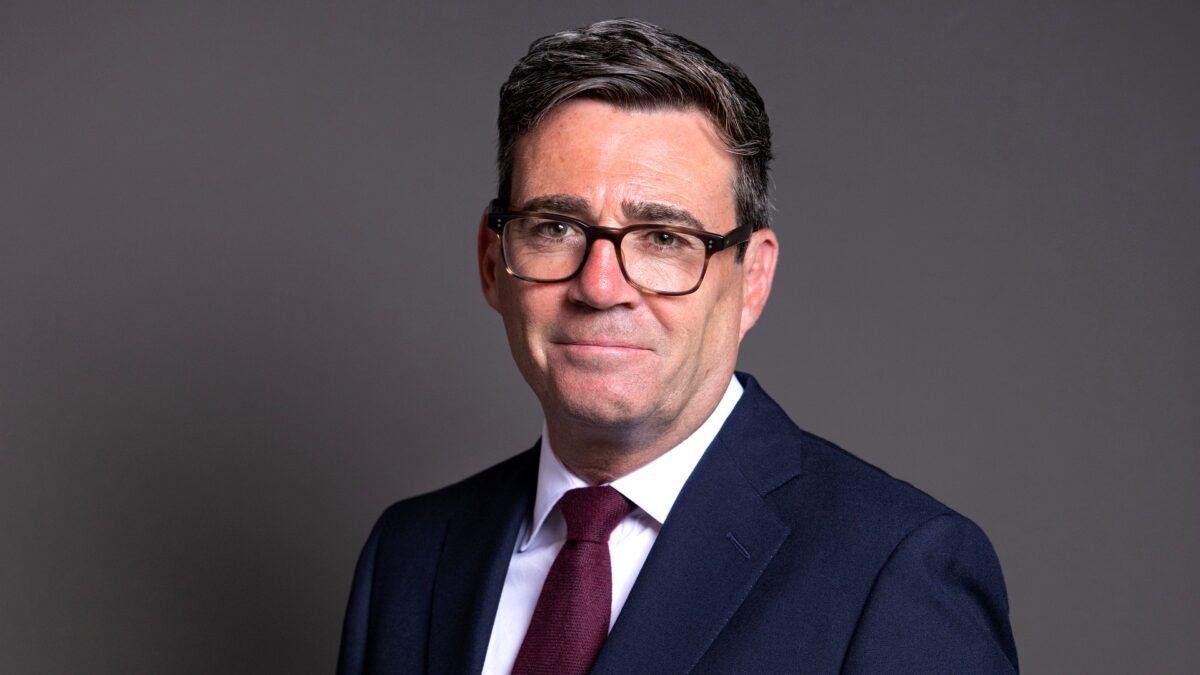
Prime Minister Andy Burnham has warned that negotiations to finalise Britain’s post-Brexit reset deal with the European Union will “go down to the wire”, after a day of talks with European leaders in Dublin left the biggest obstacle to next week’s summit unresolved: the price European students will pay to study at British universities.
Speaking after the European Political Community summit in the Irish capital on Thursday, Burnham said he would spend the coming week fighting to get the package of agreements over the line before he meets the EU’s two most senior officials in Brussels on 20 November. “I will fight now over the days to come to make sure we get this deal over the line,” he said, according to the AFP news agency. “I suspect it will go down to the wire as these things probably will get hard, but we won’t turn our back on these negotiations.”
The Brussels summit is shaping up to be the first real test of Burnham’s promise to cement closer ties with Europe more than a decade after Britain voted to leave the bloc in the 2016 referendum. Three agreements are on the table: a deal to cut red tape for food exports, a second linking the British and EU emissions-trading systems, and a third creating a youth experience scheme that would let young Britons and Europeans live, work and study in each other’s territory. But officials on both sides warn that the package could still unravel, most notably over the EU’s demand that European students be allowed to attend British universities at the same cost as domestic students.
“The deal is not done, and there’ll be some long nights ahead in the next seven days,” Burnham said, according to The Guardian. “I believe there is a good deal to be done that could be a win-win for Britain and Europe. I think it actually could be more like the Brexit that people thought they were voting for in 2016.”
The prime minister framed the reset as an economic mission as much as a diplomatic one. He has previously said the food and drink deal alone, by easing the border checks and paperwork that have burdened exporters since Brexit, would add 0.4 per cent to British GDP. The government has separately estimated that the agrifood agreement could be worth up to £5.1 billion a year to the UK economy by 2040, according to a briefing by the House of Lords Library. “I’m going to be fighting hard for these benefits for Britain in the next seven days,” Burnham said. “They will make a real difference. If I can do anything to address the cost of living crisis, I should be doing it.”
A first meeting with the leaders who matter
Thursday’s gathering in Dublin was Burnham’s first chance to meet, face to face, the European leaders whose support he needs. The European Political Community, a forum of dozens of European leaders established by French President Emmanuel Macron in 2022, brought together heads of government from across the continent for a meeting dominated by the war in Ukraine, with President Volodymyr Zelenskyy in attendance. But for Burnham, the summit doubled as the launchpad for a week of intensive diplomacy before Brussels.
His most important meeting of the day was a bilateral session with European Commission President Ursula von der Leyen. After it, von der Leyen posted on X: “Let’s make it a summit of ambition and concrete results… More opportunities for young people. Easier agrifood trade. And a stronger cooperation on economic security.” Burnham is also due to meet European Council President Antonio Costa in Brussels next week.
Diplomats in Brussels remain broadly upbeat about the prospects for a successful summit, even as the haggling over detail shows both sides are still willing to fight their corner, according to AFP. A senior EU diplomat told the news agency that the three deals appeared to have largely been wrapped up, but that there was still debate over the “choreography” of how the different agreements fit together. That word, choreography, matters: the EU has made clear that the prized food and drink deal and the emissions-trading agreement may not enter into force without a deal on tuition fees, in which European students would pay domestic rates. Burnham described the package as a whole, but would not be drawn on whether he accepted the link.
“The requests are coming from the European side, we are putting our requests on the table too,” he said. It was a careful formulation, one that acknowledged the trade-offs without conceding them in public. The prime minister has broken through taboos in Britain’s highly divisive domestic debate over the EU by going so far as to float the possibility that Britain could one day apply to rejoin the bloc, according to AFP. For now, though, the first steps are more modest, and the negotiation is about practical economics rather than constitutional destiny.
The three deals on the table
The first agreement, on food and drink, is the one with the clearest economic prize. Since the end of the Brexit transition period on 31 December 2020, the EU has applied its full sanitary and phytosanitary regime to imports from Great Britain, requiring export health or phytosanitary certificates and border checks for many agrifood products. The proposed agreement would establish a common sanitary and phytosanitary area and remove most certificates and routine controls on agrifood movements between Great Britain and the EU, according to the House of Lords Library. Press reporting suggests a draft text has already been agreed, and the government has estimated the deal could add up to £5.1 billion a year to the UK economy by 2040.
The stakes for exporters are visible in the trade figures. EU agrifood exports have fallen by an estimated 21 per cent between 2018 and 2024, according to the Greater Birmingham Chambers of Commerce, as the new border regime made it harder and more expensive for smaller producers in particular to sell into their largest market. Removing most of the checks would not restore the frictionless trade of EU membership, but it would take a large part of the cost and delay out of the system. It is the part of the package that Burnham most wants to sell to the British public as a cost-of-living measure, because cheaper and simpler food trade should, in time, feed through to prices on supermarket shelves.
The second agreement would link the British and EU emissions-trading systems, the carbon markets through which heavy industry and power generators pay for their pollution. Linking the two schemes would align carbon prices, remove the risk of carbon border taxes being applied to British exports, and give British firms a larger, more liquid market in which to trade allowances. It is the most technical of the three deals, and the least likely to feature in a newspaper headline, but for energy-intensive industries it is arguably the most valuable. The EU has, however, tied its entry into force to the tuition-fees question, which is what makes the linkage a bargaining chip rather than a standalone achievement.
The third agreement, the youth experience scheme, is the most politically sensitive of all. It would allow young people, typically aged 18 to 30, to live, work, study and travel in each other’s territory for a fixed period. An earlier draft of the summit statement would allow young people to reside for up to three years for work, study or travel, according to AFP. The scheme is intended to restore some of the opportunities lost when free movement ended, and to ease labour shortages in sectors such as hospitality and retail that rely on younger, mobile workers. The UK government has stressed that any scheme would be time limited, with a cap on the number of people coming to Britain, and that participants would have no right to access benefits or bring dependents, according to a briefing by the House of Commons Library.
The tuition-fees stumbling block
The obstacle that could still derail the package is university tuition fees. Since Brexit, EU students in the UK have been charged higher international fees, while British students in the EU have faced the same treatment in reverse. Brussels is determined that EU students should pay the same rate as British students while they study in the UK, and has made that a condition of the wider deal. The Guardian reported that the EU has said the food and drink deal and the emissions-trading agreement may not enter into force without an agreement on tuition fees.
The issue has been circling the negotiations for more than a year. In its April 2024 proposal, the European Commission suggested a youth mobility scheme for 18- to 30-year-olds lasting up to four years, with broad access to work and study and no quotas. The Labour government initially avoided endorsing the idea after taking office in July 2024 and continued to insist there would be no return to free movement. In early 2025 it indicated it might support a more limited scheme, and the May 2025 summit produced a commitment to a “balanced youth experience scheme on terms to be mutually agreed”. But the fees question has never gone away. The Guardian reported in October that EU ambassadors in Brussels had heard that the UK was still insisting on international tuition fees, quotas and a health surcharge for EU students, fuelling fears that the summit could fail.
Burnham did not reject the possibility that he could offer discounted tuition fees to young Europeans as part of the talks, according to The Guardian. “There’s a lot of issues on the table as part of a deal and I’m certainly one that supports greater youth exchange between the UK and Europe,” he said. That formulation keeps his options open. It also leaves him exposed to the argument, already being made by his critics, that the price of the deal is too high. The tension is sharpened by the fact that the UK has modelled its preferred scheme on its existing youth mobility arrangements with Australia and New Zealand, which cap numbers annually and limit stays, possibly to two years. Brussels, by contrast, wants a scheme that is closer to the freedoms young Europeans enjoyed before Brexit, and it has the leverage of the food and emissions deals to press its case.
There is also a second, quieter trade-off in play. Press reporting suggests the UK may be willing to agree to cheaper fees in exchange for inclusion in the EU’s “Made in Europe” industrial policies, which seek to promote EU manufacturing and could otherwise lock British firms out of continental supply chains and public contracts. The Guardian reported, however, that the EU has long said there cannot be a deal on Made in Europe at the summit, because it has yet to finalise its own position. That leaves the concession, if it is made at all, as a promise for a later negotiation rather than a prize to be banked next week.
The politics at home
Burnham’s push for closer relations with the EU is causing divisions within his own party and drawing reactions from the Conservatives, Liberal Democrats and Reform UK, according to the BBC. The prime minister told his Cabinet earlier in the week that there was a significant prize on offer. “We will take opportunities that make people in this country better off. There is a significant prize,” he said, according to the BBC. The message to ministers was unmistakable: the reset is not a side project, it is central to his government’s economic strategy, and he expects the party to get behind it.
The opposition is not persuaded. Conservative leader Kemi Badenoch said the package agreed at the UK-EU summit in May 2025 broke all five tests the Conservatives had set for a reset to be acceptable, according to the House of Lords Library. Reform UK leader Nigel Farage said the reset plans would push the UK “back into the orbit of Brussels, giving away vast amounts of our sovereignty for very little in return”. The language matters because it frames the debate in the terms that have dominated British politics for a decade: sovereignty against economics, control against access. Burnham’s answer, delivered in Dublin, was to reframe the choice. “We ended up with a far harder Brexit, I think, than people thought they were getting when they went to the polls,” he said. “The reset would be about whether we can take a step back to closer working relationships with Europe.”
The prime minister is expected to make the EU reset the centrepiece of his white-tie speech at the lord mayor’s banquet on Monday night, according to The Guardian, though the speech will range widely across foreign policy challenges. Sources in Downing Street said the speech would be focused on the upcoming Brussels summit, and would look ahead to the next stage of the reset in 2027, rather than outline what a more permanent close relationship might look like. That sequencing is deliberate: Burnham wants to bank the three practical agreements first, and only then open the bigger argument about where Britain’s relationship with Europe should end up. He has pledged to lay out different options for Britain’s future relationship with the EU around the time of the Brussels summit, a promise that keeps the rejoining question alive without making next week’s negotiation about it.
How the reset got here
The story of the reset begins long before Burnham entered Downing Street in July 2026. Britain voted to leave the EU in the referendum of June 2016, formally left on 31 January 2020, and saw free movement end when the transition period expired on 31 December 2020. The UK-EU Trade and Cooperation Agreement, implemented from 1 January 2021, covered trade in goods but contained no provisions on youth mobility, and the border regime for food and animal products became one of the most visible daily costs of the new relationship.
The first EU-UK summit was held in London in May 2025, under Burnham’s predecessor Keir Starmer, when the two sides established a post-Brexit Strategic Partnership. The main agreement covered security and defence, and a “common understanding” committed both sides to work together on fisheries, energy and climate, and youth mobility. Leaders committed to annual summits thereafter. The principal commitments included a balanced youth experience scheme, an agreement establishing a common sanitary and phytosanitary area covering food and animal product standards, and an agreement on linking emissions-trading schemes, according to the House of Commons Library. In December 2025 the UK and EU announced an agreement on UK association to Erasmus+, with Britain rejoining the student exchange scheme for the 2027/28 academic year, and stated that they aimed to conclude negotiations on the youth experience scheme and on the food and emissions agreements by the next UK-EU summit planned for 2026.
That next summit was announced on 22 July 2026, shortly after Starmer announced his resignation as prime minister in June 2026, which led to the summit being postponed until the autumn. Burnham, who became prime minister in July 2026, said he wanted to “make further progress quickly” in the reset discussions, according to the House of Commons Library. The second annual EU-UK summit, now set for 20 November, is the moment when that ambition is tested. In a statement to MPs, Burnham said the summit could offer progress on boosting UK growth and controlling illegal immigration, and described it as an opportunity for “every family and business to feel the benefits of a closer relationship with Europe”.
The reset has always been presented as incremental rather than transformative. A Rabobank analysis of the process noted that progress since the 2024 general election had been gradual, technical and largely invisible to voters, and that the gains from the new agreements were likely to be incremental rather than transformative, useful as a signal of competence but not a game-changer. That assessment captures the tension at the heart of Burnham’s strategy: the deals on the table are real and economically meaningful, but they are not the kind of thing that changes a country’s fortunes overnight. Their value lies partly in what they unlock next.
What comes after the summit
Officials at the Brussels summit will also discuss the agenda for the next round of the reset, which is expected to focus on a joint migration pact, according to The Guardian. The joint communique for 2027 is expected to call for strengthening efforts between the UK and the most exposed member states on the small-boats crisis in the Channel. That will centre on the EU’s Channel action plan, already in place since June this year, and a possible framework for a wider bespoke EU-UK migration plan.
Britain is believed to be pushing for access to the Eurodac database, which carries the fingerprints of asylum seekers, as well as to the Schengen Information System, which records details on fugitives, missing people and stolen goods. The UK was the third biggest user of the Schengen Information System before it lost access through Brexit. Access to those databases would be a significant practical gain for British law enforcement, and it is the kind of cooperation that becomes possible only once the political relationship is in better shape.
Ministry of Justice officials are also trying to water down an EU ultimatum on halting the deportation of foreign national offenders, according to The Guardian. “This is the classic wheeze that the EU always pulls at the last minute of negotiations,” one Whitehall source told the newspaper. The remark captures the mood in Whitehall as the summit approaches: confidence that a deal is within reach, combined with wariness about last-minute demands. It is also a reminder that the negotiation is not only about trade. The reset touches law enforcement, migration, defence and the daily lives of young people, which is why it has become the defining project of Burnham’s young premiership.
The Dublin summit also served as a reminder of the wider context in which the reset is taking place. The European Political Community meeting was held under Ireland’s largest security operation ever, amid growing concerns about hybrid attacks, and its main focus was Ukraine. Burnham’s appearance there, meeting European leaders for the first time since he entered Downing Street, was a statement in itself: Britain, whatever its formal relationship with the EU, intends to be present at the table where Europe’s future is discussed. The question now is whether, by next Friday, that presence will have produced a signed deal.
Analysis: Why It Matters
1. A deadline concentrates minds, but it also creates hostages
Burnham’s decision to frame the Brussels summit as a deadline, and then to warn publicly that the talks will go down to the wire, is a calculated gamble. Deadlines concentrate minds, and a prime minister who says in public that he will “fight” for a deal makes it harder for his own officials to come home empty-handed. But the same rhetoric hands leverage to the other side. Brussels knows that Burnham needs a deal more than it does: the summit is his first test, the centrepiece of his lord mayor’s banquet speech, and the proof that his promise of closer ties was more than words. The EU’s linkage of the food and emissions deals to tuition fees is the clearest expression of that leverage. It is not an accident that the most sensitive British concession is the condition for the two agreements Britain wants most. The next seven days will show whether Burnham’s public fighting talk strengthens his hand or simply advertises how much he has to lose.
2. Tuition fees are not a detail; they are the argument about who Brexit was for
It is tempting to treat the tuition-fees dispute as a technicality, a line item to be horse-traded in the final hours. That would be a mistake. The fees question is where the abstract argument about Brexit becomes concrete. Before Brexit, a young European could study in Britain at the same price as a British student, and a young Briton could do the same in Europe. That freedom was one of the most tangible benefits of membership for ordinary families, and its loss was one of the most keenly felt costs. Restoring it, even partially, is a visible, human gain. Refusing to restore it, while signing deals that help exporters and energy companies, would send a message about whose interests the reset serves. Burnham’s insistence that he supports “greater youth exchange” suggests he understands this. The risk is that the arithmetic of the negotiation pushes him towards a deal that is good for business and thin for young people, which would leave the most politically resonant part of the package looking like an afterthought.
3. The 0.4 per cent that is really about credibility
Burnham has said the food and drink deal would add 0.4 per cent to British GDP, and the government estimates the agrifood agreement could be worth up to £5.1 billion a year by 2040. Those are serious numbers, but they are not the real prize. The real prize is credibility. Britain’s economy grew by 0.7 per cent in the third quarter of 2026, its fastest pace in more than two years, yet the government’s own forecasters and the Bank of England expect growth to weaken. Burnham needs to show that his government has a plan for growth that goes beyond the next quarter’s figures, and a signed deal with the EU is the most legible proof available. It would demonstrate that Britain can negotiate, that it can deliver, and that the reset is a programme rather than a slogan. A failed summit would do the opposite: it would suggest that the structural problems of the post-Brexit relationship are harder to fix than the prime minister admitted, and that the “significant prize” he promised his Cabinet is still out of reach.
4. The rejoin question is the elephant in every room
Burnham has gone further than any prime minister since the referendum in floating the possibility that Britain could one day apply to rejoin the EU. That single sentence has changed the politics of the reset, because it means every practical agreement is now read as a step towards a destination he has not yet named. His critics, from Badenoch to Farage, argue that the reset is rejoining by stealth. His supporters argue that he is simply being honest about the direction of travel. Both readings miss the point of what he is actually doing, which is to separate the practical from the constitutional: sign the deals that make people better off now, and leave the argument about membership for later. The strategy is sensible, but it is fragile. If the summit succeeds, the question of what comes next becomes unavoidable, and Burnham will have to say what he means by “different options”. If it fails, the rejoin question will be used against him as evidence that he was reaching for something the country did not want. Either way, the summit does not settle the argument; it moves it to a new stage.
5. Europe is watching Britain as much as Britain is watching Europe
It is easy to write about the reset as if it were a negotiation between Britain and a single European bloc, but the EU is not a monolith, and its member states have their own interests. The senior EU diplomat who told AFP that the three deals appeared largely wrapped up was speaking for a consensus that is real but not unanimous. Some member states care most about the food deal, others about youth mobility, others about migration cooperation. Von der Leyen’s public message, emphasising young people, agrifood trade and economic security, was an attempt to hold that coalition together. For Britain, the lesson is that the reset is not a bilateral negotiation with Brussels but a multilateral one with 27 capitals, each of which can slow the process down. The “choreography” the diplomat mentioned is not a euphemism for delay; it is the practical problem of getting 27 governments and the European Parliament to agree on a package whose parts matter differently to each of them. Burnham’s week of fighting will be fought on that terrain as much as in the negotiating room.
What to Watch Next
- The lord mayor’s banquet speech on Monday: Burnham is expected to make the EU reset the centrepiece of his address. Watch whether he names the tuition-fees concession, signals flexibility on a cap for the youth scheme, or sets out the “different options” for Britain’s future relationship that he has promised.
- Negotiations in the seven days before the summit: Burnham said there would be “some long nights ahead”. Watch for signs of movement on fees, on the youth scheme cap, and on the “choreography” of how the three deals are sequenced and brought into force.
- The Brussels summit on 20 November: The test is whether all three agreements are signed, and on what terms. A partial deal, with one element deferred, would be a very different outcome from a clean sweep, and the language of the joint statement will matter as much as the signatures.
- The tuition-fees decision: If Burnham agrees to domestic-rate fees for EU students, watch for the domestic reaction, including from universities, which rely on international fee income, and from the Conservative and Reform opposition, which will frame it as a concession too far.
- The youth experience scheme’s final shape: The age range, the length of stay, the annual cap and the fee rules will determine whether the scheme feels like a genuine restoration of opportunity or a tightly rationed gesture. The draft summit statement’s three-year figure is the one to watch.
- The next stage in 2027: Officials will discuss the agenda for the next round of the reset at the summit, with a joint migration pact expected to lead. Watch for any commitment on Eurodac and Schengen Information System access, and for the communique’s language on the Channel.
- The domestic political fallout: Burnham’s push is already dividing his party and drawing fire from the opposition. Watch whether a successful summit steadies his leadership or whether the concessions required to get it become a new line of attack.
Sources
- AFP via Rapporteur — Burnham predicts EU reset talks will ‘go down to wire’
- The Guardian via EuropeSays — ‘Win-win’ deal with EU could be done, Andy Burnham says
- House of Commons Library — UK-EU reset negotiations: Youth mobility and opportunities
- House of Lords Library — Removing sanitary and phytosanitary checks at EU borders
- BBC via Zot News — Burnham’s push for closer EU ties stirs unease within Labour and across parties
- The Lead — The EU-UK Summit

About the Author — Abdul Mannan
Related Articles
Two Iranian Men Convicted of Spying for Tehran in London in Landmark National Security Trial
Two Iranian men have been convicted at Woolwich Crown Court of spying for Tehran after surveilling journalists and…

UK Economy Grows 0.7% in Third Quarter, Its Fastest Pace in More Than Two Years, as AI Spending Powers Services
Britain's economy grew 0.7% between July and September — its fastest quarterly pace since early 2024 — as…
Hoax Bomb Threats Hit Thousands of Schools Across the UK, Ireland and Italy as Police Say There Is No Credible Danger
Around 1,000 schools in Scotland and more than 300 in Northern Ireland received hoax bomb threats on Wednesday,…