
Two Iranian Men Convicted of Spying for Tehran in London in Landmark National Security Trial

Two Iranian men have been convicted in London of spying for Tehran after carrying out months of surveillance on journalists and a lawyer in Britain, in what police described as a calculated operation by Iranian intelligence to target critics of the regime on British soil. The verdicts, delivered at Woolwich Crown Court on Thursday 12 November 2026, mark the first time Iranian nationals have been convicted under Britain’s National Security Act 2023, according to police, and they land at a moment when the confrontation between London and Tehran has already spilled from courtrooms and cyberspace into open military conflict.
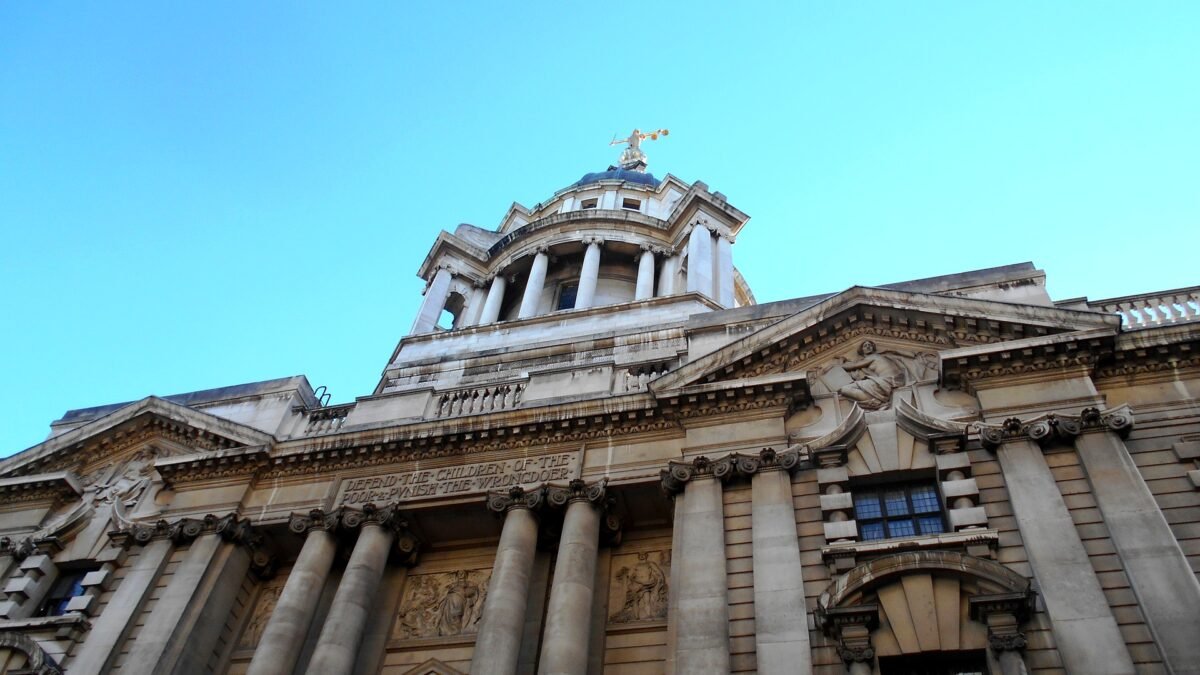
Mostafa Sepahvand, 41, and Farhad Javadi Manesh, 46, were found guilty of engaging in conduct likely to assist a foreign intelligence service, after a six-week trial. Sepahvand was additionally convicted of preparatory conduct, meaning the jury found he had been preparing to commit serious violence against one or more of his targets. A third defendant, Shapoor Qalehali Khani Noori, 57, was acquitted of all charges. The two convicted men will be sentenced at the Central Criminal Court, the Old Bailey, on 17 December 2026.
The case, as presented by prosecutors, was not about stolen documents or intercepted communications in the traditional sense. It was about watching people: photographing their homes, noting the cars they drove, recording the names of their pets, and following them through the streets of London so that others could act on the information. The targets were two journalists working for Iran International, the Persian-language broadcaster that is banned in Iran, a founder member of the organisation UK Lawyers for Israel, and a media production professional. According to the Crown Prosecution Service, Sepahvand was promised tens of thousands of pounds for his work and was himself willing to go further than surveillance, asking his handlers in Iran for £150,000 to “finish [the target] off” once that person had been found.
The Metropolitan Police said the arrests of the two men had prevented serious violence from being inflicted on one or more people in Britain. “It is clear the arrests of these two men by Counter Terrorism Policing officers prevented serious violence from being inflicted on one or more individuals in the UK,” Deputy Assistant Commissioner Vicki Evans, the senior national coordinator for Counter Terrorism Policing, said in a statement after the verdicts.
What the Jury Heard
The surveillance at the heart of the case took place between August 2024 and March 2025, according to the Metropolitan Police. Over those eight months, Sepahvand led the operation on the ground in London while Manesh fed him information, photographs and video, prosecutors told the court. The work was methodical. Videos, images and text messages recovered from the men’s devices showed Sepahvand carrying out surveillance on the targets’ homes and work addresses in order to locate other journalists associated with the television channel, the Crown Prosecution Service said. Cell-site location data later placed him in a particular part of London in late 2024 while he was conducting surveillance on a separate target.
Officers who searched the three men’s phones found briefing documents that laid out the surveillance in striking detail. According to the Metropolitan Police, the documents included pictures of the individuals, the addresses where they worked, the make and colour of the car they drove, and even the names of their pets. Sepahvand and his associates also used online tools, including the chatbot ChatGPT, to research their targets, prosecutors said. A number of photographs, internet searches and addresses found on Sepahvand’s phone indicated that he had been searching for information on a specific target who had already left home because of security concerns and had temporarily moved into a hotel in west London, according to the Crown Prosecution Service.
The scale of the investigation was considerable. Counter Terrorism Policing officers sifted through 534 gigabytes of data to find the messages, videos, images and voice notes that revealed the criminal activity, the Metropolitan Police said, and the work was complicated by the fact that the messages and audio had to be translated from Farsi. In one voice note to an Iranian contact, Sepahvand said he had been promised that his conviction in Iran for theft would be “sorted out” and that he would be paid £150,000. He also referred to “finishing off” someone and said that “if they put money in his hands” he would “do it”, according to the police account of the evidence.
All three men were arrested at their home addresses on 3 May 2025. Sepahvand, of St John’s Wood, admitted that he had carried out the surveillance on behalf of the Islamic Revolutionary Guard Corps, but claimed he had acted under duress, the Metropolitan Police said. The Crown Prosecution Service said he admitted both the spying and that his actions were capable of helping a foreign intelligence service, but argued that he had been forced into it through fear of the consequences of refusing. Prosecutors had to prove that his actions were intentional and that he knew, or ought reasonably to have known, that the reconnaissance was likely to be useful information for foreign spies who would then carry out hostile activity in the UK. The jury rejected his account.
Manesh, of Kensal Rise, claimed the surveillance images had been taken because he was looking for somewhere new to live, according to the Metropolitan Police. The jury convicted him of assisting a foreign intelligence service but acquitted him of the second charge, of preparatory conduct with the intention that acts of serious violence would be committed by others. Noori, of Ealing, was cleared of both charges he faced. The jury deliberated for 19 hours and nine minutes before reaching its verdicts, according to the Press Association.
Frank Ferguson, head of the Crown Prosecution Service’s Special Crime and Counter Terrorism Division, described the operation in stark terms. “This was a calculated operation to spy on those critical of the Iranian regime,” he said. “Sepahvand and Manesh were promised rewards to send intelligence back to contacts in Iran and Sepahvand himself was willing to go beyond surveillance to commit serious violence against their targets. Thankfully, the defendants were stopped before any attack could take place.” He added that cases like this showed “Iranian intelligence’s willingness to use proxies to target the regime’s critics abroad”.
The Targets
The people at the centre of the case were chosen for what they do and what they represent. Two of them, Mojtaba Pourmohsen and Kambiz Hosseini, are journalists working for Iran International, the London-based Persian-language television station that is sharply critical of the government in Tehran and is banned by the Iranian regime. A third was Jonathan Turner, the chief executive of UK Lawyers for Israel and a founder member of the organisation. The fourth was a media production professional whose identity has not been publicly detailed in the reporting of the case.
Iran International occupies a particular place in Tehran’s hostility towards the exiled Persian-language media. The channel broadcasts into Iran from London, and its journalists have lived for years under the knowledge that the Iranian state regards them as enemies. That is not a theoretical fear. In March 2024, Pouria Zeraati, a presenter with the channel, was stabbed outside his home in Wimbledon, south-west London, in an attack that British authorities linked to the Iranian state. Two Romanian men were jailed in July for the stabbing, according to Reuters. The Metropolitan Police said on Thursday that the convictions in the Sepahvand case marked the fourth case in recent years involving a direct threat to Iran International journalists.
A spokesperson for Volant Media, Iran International’s parent company, said in a statement reported by Reuters that the verdicts “don’t make the lives of our journalists any safer so long as the Islamic Republic of Iran continues its campaign of death threats and violence against them”. The statement captures a bleak reality that runs through the whole case: a conviction in a London courtroom punishes the people who did the watching, but it does not, by itself, switch off the apparatus that ordered the watching in the first place.
Turner, for his part, said after the verdicts that the trial details were a reminder that “Iran is a really serious threat to many people in the Middle East – not just Israelis but Arabs as well – and also to people in Britain, including on the streets of our capital”, according to the Press Association. His inclusion among the targets is itself significant. The surveillance was not confined to Iranian dissidents or Persian-language journalists; it extended to a British lawyer whose work involves Israel, suggesting that the operation’s definition of an enemy of Tehran was broad, and that its reach was aimed at British public life as much as at the Iranian diaspora.
The Money and the Method
One of the most revealing features of the case is how ordinary, almost transactional, the recruitment appears to have been. Sepahvand was not, on the evidence presented, a trained intelligence officer. He was, according to the prosecution, a man who had been offered money – tens of thousands of pounds, and in one message £150,000 for a killing – and who expected his handlers to fix a theft conviction hanging over him in Iran. Manesh, prosecutors said, helped with the surveillance. The handlers, according to the police, were contacts in Iran linked to the Islamic Revolutionary Guard Corps, and Sepahvand frequently messaged Iranian phone numbers of individuals linked to the IRGC.
That pattern – a foreign intelligence service reaching into another country and hiring local people, often online, to do its work for cash – is one that British police and intelligence services say they are seeing with growing frequency. Deputy Assistant Commissioner Evans said the case reflected a wider shift. “The threat from hostile states to the UK is increasing and Iran continues to adapt its approach to using ‘proxies’,” she said. “We have seen examples of people who fly into the country to carry out criminal activity and then leave shortly afterwards, to using British nationals or, in this case, Iranian nationals with temporary leave to remain. People are often tasked via social media with the promise of large amounts of money, as seen in this case. However, the proxy takes on all the risk and will often only receive a fraction, if any, of the promised financial reward.”
Her warning was directed as much at potential recruits as at the public. “Our message to anyone being asked to carry out activity by foreign states, or even unknown entities online, is to think again,” she said. The economics of the arrangement are part of the point. For the intelligence service doing the hiring, a proxy is cheap, deniable and disposable. For the person hired, the promised reward is usually a fiction: the money is rarely paid in full, and the risk – arrest, a long prison sentence, exposure – falls entirely on them. Sepahvand’s own case illustrates the asymmetry. He was, on the prosecution’s account, promised £150,000 to kill someone. He will instead be sentenced in December, and the handlers who made the promise are beyond the reach of a British court.
The methods were equally unglamorous. The surveillance relied on mobile phones, Google searches, a chatbot, photographs taken on the street, and notes about cars and pets. There was nothing in the evidence, as reported, to suggest sophisticated tradecraft. What made the operation dangerous was not its sophistication but its persistence: eight months of watching, address by address, target by target, until the watchers had enough detail for someone else to act on. The briefing documents found on the phones were, in that sense, the product itself – a dossier, assembled piece by piece, that could be handed to whoever came next.
A First Under the National Security Act
The convictions are the first of Iranian nationals under the National Security Act 2023, the law Parliament passed to counter threats from foreign states, according to police. The Act created a set of offences aimed at hostile state activity, including assisting a foreign intelligence service, which carries a maximum sentence of 14 years in prison, and preparatory conduct with the intention of committing serious violence. Sepahvand was convicted under both provisions; Manesh under the first.
The significance of that first is not merely symbolic. For years, British prosecutors relied on the Official Secrets Acts, laws written for a different era of espionage, to deal with state-backed wrongdoing. The 2023 Act was designed to close the gaps those older laws left open, particularly around the activities of hostile states that fall short of classic spying – sabotage, intimidation, surveillance of dissidents – and to give the police powers to act earlier, before an attack takes place. The Sepahvand case is the first time the new law has been tested against Iranian nationals, and the convictions will be read in Whitehall as proof that the legislation works as intended.
The legal landscape around Iran hardened further in 2026. In July, the Government designated the Islamic Revolutionary Guard Corps as a body engaged in foreign state threat activity under the National Security (State Threats) Act 2026, with draft regulations laid in Parliament on 13 July and the designation taking effect on 17 July, according to the House of Commons Library. The designation makes it a criminal offence to support or assist the IRGC, with penalties of up to 14 years in prison. It is a different legal mechanism from proscription under terrorism legislation, as the Commons Library briefing notes: it does not outlaw membership of the IRGC, but it criminalises inviting support for it or providing it with material assistance. The Government also placed Iran on the enhanced tier of the Foreign Influence Registration Scheme, which requires registration of any activity carried out at the direction of Iranian state bodies, including the Supreme Leader’s Office and the IRGC.
Tehran answered the designation with one of its own. On 1 November 2026, Iran’s Foreign Ministry designated Britain’s Royal Navy and Royal Air Force as “terrorist organisations” under Iranian law and classified MI6, Britain’s foreign intelligence service, as a “hostile group”, describing the measures as reciprocal. The British Ministry of Defence said it “utterly” rejected the designation. The exchange was, in practical terms, symbolic – Iranian designations do not become British law – but it captured the temperature of a relationship that has deteriorated sharply through 2026.
A Pattern of Threats Against Iran International
The Sepahvand convictions do not stand alone. They are the latest in a sequence of cases that British authorities say reveal a sustained Iranian campaign against Persian-language journalists in Britain, and against Iran International in particular. The Metropolitan Police said this was the fourth case in recent years involving a direct threat to the channel’s journalists.
The most serious of the earlier cases was the stabbing of Pouria Zeraati in March 2024, when the presenter was attacked outside his home in Wimbledon. Two Romanian men were jailed in July for the attack, according to Reuters. In December 2023, a plot was exposed in which members of the IRGC planned to assassinate two journalists working for Iran International on British soil, according to a parliamentary debate cited in Commons Library research. Since January 2022, there have been about 15 such incidents in Britain, the same research records.
The numbers behind the threat have grown steadily. Ken McCallum, the director-general of MI5, said last month that Iran-linked operations had led to more than 50 arrests in the last year and that state threats had quadrupled in the last decade, according to Reuters. In October 2026, McCallum warned of a “shift” in Iranian ambitions towards harder targets, including military sites. Parliament’s Intelligence and Security Committee published a report on Iranian state threats to UK interests in July 2025, setting out the scale of the problem for the first time in a single official document.
What has changed, according to the police and the intelligence services, is not only the volume of the threat but its character. The old model of state espionage – trained officers operating under diplomatic cover – has been supplemented, and in some cases replaced, by a model built on proxies: criminals, chancers and people recruited online, paid in cash or promises, and given tasks through encrypted messages and social media. Reuters reported that British police and intelligence services say Iran and Russia are increasingly using such hybrid tactics, turning to criminal proxies recruited online and motivated more by money than by ideology. The Sepahvand case fits that description precisely: a man with a theft conviction in Iran, living in London, offered money and a clean slate in exchange for watching journalists.
The Wider Confrontation With Tehran
The convictions arrived in the middle of a far wider confrontation between Britain, its allies and Iran – one that has moved well beyond the courtroom. The war between the United States, Israel and Iran that began in late February 2026 has reshaped the region and pulled Britain directly into its orbit. British bases and British airspace have become part of the conflict’s geography, and Iranian operations against British interests have, according to the authorities, escalated accordingly.
In September, Britain accused Iran of being behind a suspected plot targeting RAF Fairford, the Gloucestershire airbase used by the United States for strikes on Iran, after which President Donald Trump withdrew American B-1 bombers from the base, according to Reuters. Three men were indicted in the United States over the plot this week, with two other men facing charges in Britain. The parallel with the Sepahvand case is instructive: in both instances, the alleged Iranian activity was directed at targets on British soil – in one case journalists and a lawyer, in the other a military airbase – and in both, the people accused of doing the work were not Iranian intelligence officers but men recruited to act on Tehran’s behalf.
The pressure has not been confined to Britain. France summoned Iran’s ambassador this week after accusing the IRGC of carrying out cyberattacks, including an attack on a supermarket chain in October, according to reporting by Fox News. A cyberattack has also disabled supermarket freezers across seven European countries, and European officials have linked a wave of hoax bomb threats against schools and disruption to flights across the continent to the same pattern of hybrid pressure. Iran has denied involvement in spying or any such activity, and its foreign minister, Abbas Araqchi, said he was “disturbed” by the arrests of Sepahvand and the other men in May 2025, according to Reuters. Iran’s embassy in London did not immediately respond to a request for comment on Thursday’s convictions.
The denials have become a familiar part of the pattern. Tehran denies; London prosecutes; the evidence is laid out in a courtroom; and the wider campaign, whatever its authorship, continues. The question that hangs over the Sepahvand verdicts is not whether the two men were guilty – a jury has answered that – but whether convictions of this kind can do anything to change the calculations of the state that hired them.
Analysis: Why It Matters
The gig economy of espionage
The most important lesson of the Sepahvand case is not about Iran. It is about how espionage now works. The popular image of a spy is a trained professional with a cover story and a handler in an embassy. The reality on display at Woolwich Crown Court was a man with a criminal record, a phone, and a promise of money. That is not an exception. It is, according to the police, the model.
The shift matters because it changes who can be recruited and how quickly. A professional intelligence officer takes years to train and place. A proxy can be found in days, tasked through a messaging app, and discarded the moment the job is done – or the moment the police arrive. The barriers to entry have collapsed, and with them the old assumption that hostile state activity is the preserve of a small, identifiable group of people. Anyone with a grievance, a debt, or a price can be, in the police’s phrase, tasked. The Sepahvand case shows the model working exactly as designed: the surveillance was done, the dossier was built, and the only reason no one was hurt is that the police found the phones first.
For the security services, this creates a problem of scale. It is one thing to watch a handful of known intelligence officers; it is another to detect a network of freelancers who may not know each other, may not know who they are really working for, and may be motivated by nothing more than cash. The 534 gigabytes of data in this case, and the thousands of Farsi messages that had to be translated, give a sense of the labour involved in a single prosecution. Multiply that across the dozens of cases the police say they are handling, and the scale of the challenge becomes clear.
Journalism as a target
The second lesson concerns the people who were watched. Iran International’s journalists are not politicians, soldiers or spies. They are broadcasters, working for a news channel that is banned in the country it reports on. That they should need police protection in London, and that one of them should have been stabbed outside his own home, is a measure of how far Tehran’s reach extends – and of how little protection exile now offers.
There is a temptation to treat attacks on exiled journalists as a foreign problem, a quarrel imported from elsewhere. That would be a mistake. The freedom of the press is not a courtesy extended to journalists; it is a condition of a free society. When a foreign state can send people to photograph a journalist’s home, note the car they drive and the names of their pets, and then offer £150,000 to have them killed, the threat is not to one newsroom. It is to the idea that people in Britain can say unpopular things about powerful governments without fearing for their lives. The verdicts in this case defend that idea in the only way a court can: by punishing the people who did the watching.
But the Volant Media statement is a reminder of the limits of that defence. A conviction does not make a journalist safe. It does not stop the next recruitment, the next dossier, the next promise of money. The journalists will go on working under protection, and the channel will go on broadcasting. The question is whether Britain is prepared to treat the protection of exiled journalists as a permanent commitment rather than a series of individual prosecutions.
The law finally bites
The third lesson is about the law itself. The National Security Act 2023 was passed because the old espionage laws were not built for the world the Sepahvand case describes. The Official Secrets Acts were written for an era of stolen blueprints and diplomatic pouches. They were ill-suited to a case about a man photographing a journalist’s house and sending the pictures to a phone number in Tehran. The 2023 Act was meant to close that gap, and the convictions at Woolwich are the first proof, in an Iranian case, that it can.
That matters beyond this trial. The Act gives prosecutors a tool they did not have before: the ability to charge people not for stealing secrets, but for doing the preparatory work – the watching, the photographing, the dossier-building – that makes an attack possible. Sepahvand’s conviction for preparatory conduct is the sharp end of that tool. It means the police do not have to wait for a knife to be drawn before they can act. They can act when the surveillance begins.
The July 2026 designation of the IRGC adds a further layer. By making it a crime to assist a designated body, the Government has given prosecutors a second route to the same result. The two regimes – the 2023 Act and the 2026 designations – now work together, and the Sepahvand case, which began before the designation took effect, will be followed by cases in which the designation itself is the basis of the charge. The direction of travel is clear: the legal net around Iranian state activity in Britain is tightening, and it is tightening deliberately.
Deterrence, and its limits
The fourth lesson is the hardest one. Convictions are supposed to deter. They deter the person convicted, who goes to prison, and they are meant to deter others who might be tempted to do the same. But do they deter the state that did the hiring? The evidence of this case suggests they do not, or at least not yet.
Tehran’s campaign against its critics abroad has survived arrests, prosecutions, sanctions and public exposure. It survived the jailing of the men who stabbed Pouria Zeraati. It survived the exposure of the December 2023 assassination plot. It survived the designation of the IRGC. And it survived, apparently, the arrest of Sepahvand and his co-defendants in May 2025 – because the verdicts in their case were delivered in the same week that France was summoning Iran’s ambassador over cyberattacks and the United States was indicting men over a plot against an RAF base.
There are reasons for this persistence. For Tehran, the exiled media are not a nuisance; they are a threat to the regime’s control of information inside Iran, and therefore to the regime itself. The cost of running a proxy operation is low, the cost of being caught is borne by the proxy, and the political cost of stopping is, from Tehran’s point of view, higher than the cost of continuing. A conviction in London does not change that calculation. It changes the price of one operation, not the logic of the campaign.
That does not make the convictions pointless. Deterrence is not the only purpose of a prosecution. There is also the simpler purpose of stopping the people in front of the court from doing what they were doing, and of showing the people they were watching that the state will act on their behalf. Both of those purposes were served on Thursday. But anyone who expects the verdicts to mark the end of the campaign will be disappointed. The campaign will adapt, as it has adapted before.
The state-threats era
The final lesson is the broadest. The Sepahvand case, the RAF Fairford plot, the cyberattacks on European supermarkets, the hoax bomb threats against schools, the designation of the Royal Navy and the RAF as terrorist organisations by Tehran – these are not separate stories. They are facets of a single development: the arrival of what the security services call the state-threats era, in which hostile states pursue their aims not only through armies and diplomats but through proxies, criminals, hackers and saboteurs operating inside other countries.
Britain’s response has been, piece by piece, to build the legal and institutional machinery to meet that threat: the 2023 Act, the 2025 Intelligence and Security Committee report, the 2026 designations, the Foreign Influence Registration Scheme, and the steady drumbeat of prosecutions. The Sepahvand verdicts are the latest piece of that machinery to be tested, and they passed the test. But machinery is not strategy, and the deeper question – how a country defends itself against a campaign that is cheap, deniable and persistent – has not yet been answered. It will not be answered in a courtroom. It will be answered in the years of policy, diplomacy and deterrence that follow.
What to Watch Next
- The sentencing on 17 December. Sepahvand and Manesh will be sentenced at the Old Bailey, and the length of their sentences will show how seriously the courts regard the new National Security Act offences. Assisting a foreign intelligence service carries a maximum of 14 years; the preparatory conduct charge carries a heavy sentence of its own.
- The RAF Fairford cases. Two men face charges in Britain over the suspected plot against the airbase, and three men have been indicted in the United States. The progress of those cases will show whether the Fairford plot and the Sepahvand operation were separate ventures or part of a single campaign.
- The Government’s next steps on the IRGC. The July designation was described by ministers as the first use of the new powers. Whether further organisations are designated, and whether the Government moves towards full proscription under terrorism legislation, will signal how far it is prepared to go.
- Iran’s response. Tehran denied involvement in the spying and called the May 2025 arrests disturbing. Its response to the convictions – diplomatic, rhetorical or operational – will be watched closely, particularly after its 1 November designations of the Royal Navy and the RAF.
- The safety of Iran International’s journalists. The channel’s parent company has said the verdicts do not make its journalists safer. The level of police protection around the channel, and any further threats or incidents, will be the real test of whether the convictions changed anything on the ground.
- Enforcement of the Foreign Influence Registration Scheme. Iran’s placement on the scheme’s enhanced tier requires registration of activity carried out at Tehran’s direction. The first prosecutions under the scheme, if they come, will show whether it is a working tool or a paper one.
- Further arrests and trials. With more than 50 Iran-linked arrests in the last year, according to MI5, further cases are likely already in the pipeline. The next verdicts will show whether the Sepahvand case was a one-off or the beginning of a sustained run of prosecutions.
Sources
- Crown Prosecution Service – “Two men who spied on journalists and lawyer guilty of spying on behalf of Iran”
- Metropolitan Police – “Two Iranian men convicted of spying for the Islamic Revolutionary Guard Corps”
- Reuters – “Two Iranian men found guilty in UK of assisting Iranian intelligence”
- Press Association via Glasgow Times – “Pair’s spying conviction shows Iranian intelligence willing to use proxies”
- House of Commons Library – “Iranian state threat activities in the UK”
- Fox News – “Iran’s shadow operations stretch across Europe as chilling spy convictions expose Tehran’s reach”

About the Author — Abdul Mannan
Related Articles
Burnham Says EU Reset Talks Will ‘Go Down to the Wire’ as Tuition Fees Threaten Next Week’s Summit Deal
Prime Minister Andy Burnham has warned that talks to finalise Britain's post-Brexit reset deal with the EU will…

UK Economy Grows 0.7% in Third Quarter, Its Fastest Pace in More Than Two Years, as AI Spending Powers Services
Britain's economy grew 0.7% between July and September — its fastest quarterly pace since early 2024 — as…

Hoax Bomb Threats Hit Thousands of Schools Across the UK, Ireland and Italy as Police Say There Is No Credible Danger
Around 1,000 schools in Scotland and more than 300 in Northern Ireland received hoax bomb threats on Wednesday,…