
UK Economy Grows 0.7% in Third Quarter, Its Fastest Pace in More Than Two Years, as AI Spending Powers Services

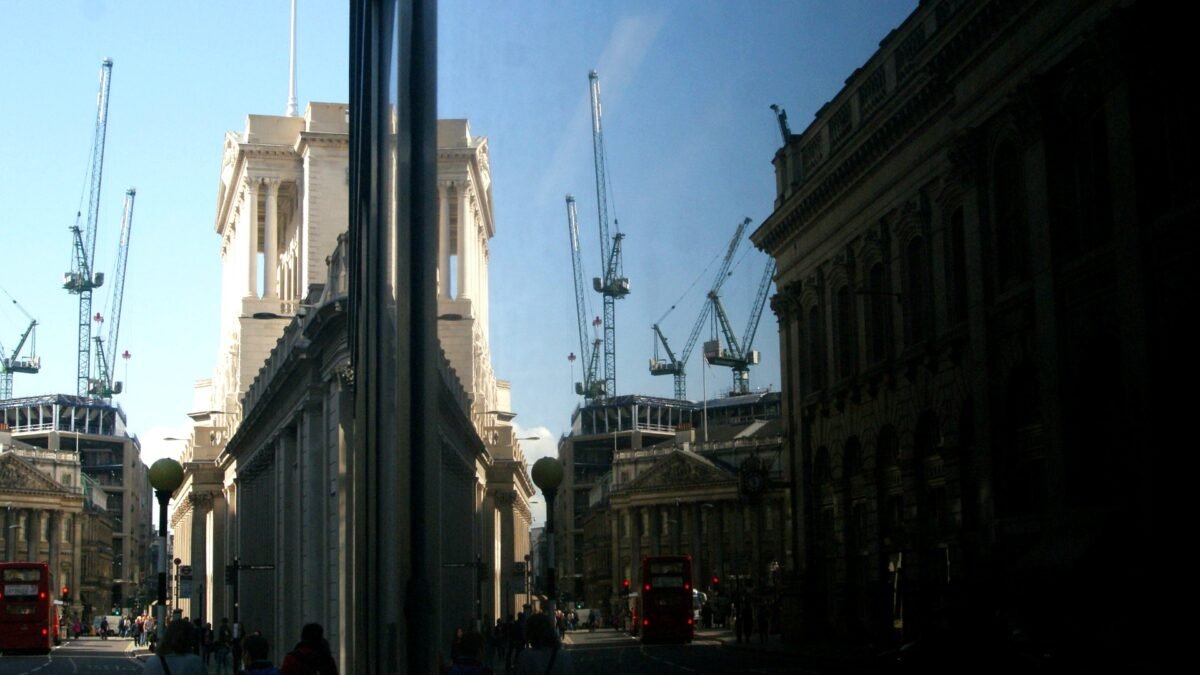
Britain’s economy grew by 0.7% between July and September, its fastest quarterly pace in more than two years, as a surge in artificial intelligence spending powered the country’s vast services sector, official figures published on Thursday showed.
The Office for National Statistics (ONS) said gross domestic product (GDP) rose 0.7% in the third quarter of 2026, up from 0.5% in the second quarter and 0.6% in the first, in the strongest calendar-quarter performance since the first three months of 2024. Compared with the same quarter a year earlier, the economy was 1.9% larger, the strongest annual reading since the final quarter of 2024. Both figures matched the median forecasts of economists polled by Reuters.
The result gives Prime Minister Andy Burnham’s government its best economic news since he took office three months ago, and it arrived on the same morning that separate figures confirmed the economy had kept growing in September, when output rose 0.2% in a month some economists had expected to show no growth at all.
“Despite a year where events around the world have pushed up costs here at home, our economy is growing, bringing hope for the future,” Burnham said, according to the Press Association. Chancellor John Healey said: “The Middle East conflict has hit growth worldwide, yet Britain is showing standout resilience.”
But the figures also carry a warning. The growth was, in the ONS’s own words, “almost entirely” driven by services, and within services by one industry above all: computer programming and consultancy, where businesses linked to artificial intelligence and cloud computing reported the largest increases in turnover. Construction shrank, consumer-facing businesses struggled, retail sales fell in September, and consumer confidence suffered its sharpest monthly fall since April 2020, before Chancellor Healey delivered his first Budget on 28 October.
Economists cautioned that the momentum may not last. “While the UK economy has been relatively resilient since the conflict started, that strength will be tested in the months ahead,” Scott Gardner, an investment strategist at JP Morgan Personal Investing, told the Press Association. “Nervousness in the lead up to the autumn Budget and continued uncertainty from the Middle East war is expected to weigh on confidence and activity over the coming GDP readings.”
The numbers in detail
The ONS’s first quarterly estimate, published at 7am on Thursday, put real GDP 0.7% higher in the third quarter than in the second. Output per person, the measure that strips out population growth, also rose 0.7% in the quarter and stood 1.7% higher than a year earlier, according to the ONS.
The monthly path through the quarter was uneven. GDP grew 0.4% in July, showed no growth in August — revised down from the 0.1% increase first reported — and then rose 0.2% in September. The September figure surprised forecasters: the Press Association reported that some economists had been expecting zero growth for the month.
The ONS stressed that the figures are an early estimate and remain open to revision as more detailed information arrives. The Bank of England’s own forecast for the quarter had also pointed to 0.7%, although the central bank’s survey-based measures of business activity had suggested momentum of only around 0.2%, according to the BBC.
Growth was broad within the economy’s largest sector but narrow in its source. Output rose in 13 of the 20 subsectors of GDP, the ONS said. Services output increased by 0.9% in the quarter, after 0.6% in the second quarter, and stood 2.3% higher than a year earlier. Eleven of the 14 services subsectors contributed positively. The production sector grew by just 0.1%, after falling 0.1% in the previous quarter, while construction output fell by 0.7% and is now 1.7% lower than a year ago.
On the spending side of the economy, the ONS said growth was mainly driven by household consumption and investment. Real household spending rose 0.6% in the quarter and is 1.8% higher than a year ago, with transport and housing accounting for the increase. Government consumption also rose 0.6%, mainly reflecting growth in public administration and defence, and health. Gross fixed capital formation — spending on buildings, machinery and equipment — rose 1.7% and is 4.1% higher than a year ago, driven by other machinery and equipment and transport equipment. Business investment rose 0.4% in the quarter and is 3.0% higher than a year ago.
Trade added little to the headline. Export volumes rose 1.6% in the quarter, led by a 2.2% rise in goods exports and a 1.1% rise in services exports, while import volumes rose 1.8%. The trade deficit for goods and services stood at 1.3% of nominal GDP. In cash terms, nominal GDP grew 1.4% in the quarter and is 4.3% higher than a year ago, while compensation of employees — pay and employers’ social contributions — rose 1.3%, with wages and salaries up 1.1%.
Artificial intelligence did the heavy lifting
The single most important fact in Thursday’s release is where the growth came from. Information and communication output rose 2.1% in the quarter, and within it computer programming, consultancy and related activities surged 4.4% — the fastest rate in three years. The ONS said that industry “has been the largest driver of GDP growth across 2026”, adding that many of the businesses reporting the largest increases in turnover are involved in activities related to artificial intelligence and cloud computing.
The statistics agency was careful about how far that conclusion can be pushed. “Because of the nature of our data collection, it is difficult for us to quantify the exact impact of these types of activities on turnover,” the ONS said in its bulletin. But the pattern is unmistakable: the businesses growing fastest in Britain this year are the ones selling, building or installing AI systems, while the businesses serving consumers directly are barely growing at all.
Administrative and support services rose 4.1%, driven by rental and leasing activities, up 6.6%. Professional, scientific and technical activities also contributed positively. By contrast, education output fell 0.5% and accommodation and food services fell 0.5%, driven by a 1.9% drop in food and beverage services. Business-facing services grew 1.0% in the quarter; consumer-facing services grew by only half that, 0.5%.
Manufacturing told a similar story. It was the only positive contributor within production, up 0.9%, with eight of its 13 subsectors growing. The largest contribution came from the manufacture of computer, electronic and optical products, up 4.6% — the hardware that the AI boom consumes. Mining and quarrying fell 2.2%, electricity, gas, steam and air conditioning supply fell 2.1%, and water supply, sewerage and waste management fell 1.5%.
The Bank of England has reached the same conclusion. Reuters reported that the central bank attributed some of the economy’s strength to spending on artificial intelligence, alongside a small, temporary boost from the Chancellor’s fiscal plan. The Bank last week upgraded its projection for growth in 2026 to 1.6%, alongside raising interest rates — a much stronger forecast than the 1.2% predicted by the government’s Office for Budget Responsibility (OBR) after Mr Healey’s Budget on 28 October, which did not factor in some of the recent stronger GDP data and upward revisions to past numbers.
“The rapid increase in AI adoption has supercharged growth in the IT services sector,” Matt Swannell, chief economic adviser to the EY Item Club, told the Press Association. The same global boom has been visible in financial markets: shares in AI infrastructure companies have swung sharply this autumn, with CoreWeave, the AI data-centre group, rebounding by a fifth in a single session this week after strong earnings revived the AI trade worldwide.
The weak spots: building, shops and confidence
For all the strength in technology services, three parts of the economy moved in the opposite direction, and each of them matters more to most people’s daily lives than computer programming does.
Construction extended its slump. Output fell 0.7% in the third quarter, with new work down 1.6%. The largest drag came from private housing, where new work fell 4.7%. Repair and maintenance grew 0.5%, with private housing repair and maintenance up 1.5%, but that was not enough to offset the collapse in new building. High borrowing costs and weak demand for new homes have weighed on the sector all year, and the figures suggest the housing market has yet to turn.
Consumer-facing services were the second weak spot. While business-facing services grew 1.0%, services that sell directly to households — shops, restaurants, hotels, leisure — grew only 0.5%, and food and beverage services fell 1.9%. Official measures showed retail sales volumes fell in September, according to Reuters, a sign that households were already pulling back before the Budget.
The third is confidence. Consumer confidence suffered its sharpest month-on-month fall since April 2020, the month the first coronavirus lockdown began, in the run-up to the Budget, Reuters reported. That collapse in sentiment is the clearest evidence that the economy’s headline strength is not being felt at kitchen tables, where energy bills have soared because of the war in the Middle East and the closure of the Strait of Hormuz to shipping.
“A combination of cooling pay growth and rising inflation will squeeze consumer spending and intensify pressure on consumer-facing parts of the services sector,” Mr Swannell said. Sanjay Raja of Deutsche Bank warned there “may be some hiccups to come in the runup to year-end” as energy prices bite, and Mr Swannell added that “some pullback looks inevitable”.
The trade unions made the same point from the other side of the argument. Paul Nowak, general secretary of the Trades Union Congress, said it was “great that our economy strengthened further over the summer”, but added that working people “are still up against it today” as they face spiralling energy bills driven by the war in the Middle East.
What the government and economists said
Mr Burnham welcomed the figures and used them to frame his government’s message on the cost of living. “Our job now is to keep focused on what matters to people: bringing down bills, creating good jobs, helping high streets thrive and backing businesses to grow,” he said. “There is more to do, but we have a clear direction. Giving people breathing space now while making the long-term changes needed to deliver good growth in every part of Britain.”
Mr Healey went further, claiming the economy is now “growing at the fastest rate in almost 10 years, outside the pandemic”, and adding: “We are backing UK investment, innovation and fast growth firms. I want to bring back confidence in Britain.” The Chancellor’s claim rests on the quarterly figure; on an annual basis, growth of 1.9% is strong by recent standards but not exceptional by the standards of the decade before the pandemic.
Grant Fitzner, the ONS’s chief economist, summarised the release in a single sentence: “The economy grew robustly in the third quarter almost entirely due to strong and widespread growth in the services sector.”
Simon Pittaway, a senior economist at the Resolution Foundation think tank, said: “The UK’s strong economic performance has continued into the second half of the year, which is all the more impressive given the ongoing disruption caused by conflict in the Middle East. But with inflation and interest rates both forecast to rise towards 5%, this resilience will be severely tested in the coming months.”
No opposition reaction to the figures had appeared in the coverage verified for this article at the time of publication. The Conservatives had previously argued, after the August figures, that headline growth “concealed worrying trends in key sectors”, pointing to the construction slump — an argument Thursday’s figures, with construction down again and private housebuilding down 4.7%, do little to answer.
A year of headwinds: the Budget, energy and war
To understand why 0.7% matters politically, it helps to remember what the economy has been up against this year. The war in the Middle East, in which the United States and Israel are fighting Iran, has pushed global oil and gas prices sharply higher and closed the Strait of Hormuz, the waterway through which about a fifth of the world’s oil and liquefied natural gas would normally pass. Mr Healey told Parliament in his Budget speech that the conflict had driven up oil and gas prices, with gas costs tripling, and had added £14 billion to the government’s debt interest payments this year alone.
Inflation, which had been falling, rose back to 3.5% in September, and the Centre for Economics and Business Research expects it to peak at 4.1% in the first quarter of 2027. Gilt yields — the interest rate the government pays to borrow — are at or near multi-decade highs. The Bank of England raised interest rates last week even as it upgraded its growth forecast, a combination that captures the central bank’s dilemma: the economy is growing faster than expected, but so are prices.
Against that background, Mr Healey’s first Budget on 28 October was, by his own Prime Minister’s admission, not the Budget either man wanted. Mr Burnham told ITV afterwards that it was “not ideal”, citing less room for manoeuvre than he had hoped for. The Budget’s headline measure was a one-off £100 payment to around 20 million households in council tax bands A to D in England to help with energy bills this winter, at a cost of £2.6 billion, paid directly into bank accounts. Gas standing charges, about £108 a year for a typical household, are to be abolished, the VAT cut on household electricity was extended to July 2027, and fuel duty was frozen for a 16th consecutive year, with the 5p-a-litre cut introduced in 2022 extended.
The money was raised in part from banks: the surcharge on bank profits rises from 3% to 6% from January for 15 months, a smaller increase than lenders had feared, and bank shares rose after the announcement. Tax rates on income from property and savings will rise by two percentage points from April 2027, and the freeze on income tax thresholds, in place since 2021, will continue until April 2031 — a measure that quietly drags millions of workers into higher tax bands as their pay rises. The national minimum wage and national living wage will rise by 3.9% for 2.3 million workers from April.
On defence, the Chancellor committed to spending 3% of GDP by 2030 and to fully funding the £15 billion Defence Investment Plan, plugging a £4.7 billion gap by reprioritising capital budgets in other departments. He also announced £10 billion of additional economic and military support for Ukraine, including £500 million in urgent military funding this winter. Decisions on welfare were deferred to a White Paper and legislation next year, and the OBR said it expected no growth in real earnings next year — a forecast that, if right, means the living-standards squeeze continues even as GDP grows.
The International Monetary Fund, in its October forecasts, upgraded its estimate for UK growth this year to 1.3%, up from the 1% it predicted in July, but said growth would slow to 1.2% in 2027 as higher energy prices and interest rates weigh on household spending and business investment. It expects inflation to average 3.3% this year and to remain above the Bank of England’s 2% target in 2027, at 2.8%.
Thursday’s figures do not change any of that. What they change is the starting point: the economy enters the final quarter of the year growing faster than either the OBR or the Bank of England had assumed, with a services sector powered by a technology boom that neither forecaster fully anticipated.
Analysis: Why It Matters
On its face, 0.7% is a good number for a government that has spent its first three months being told it has no room to move. It is the fastest quarterly growth in more than two years, it beat the Bank of England’s own survey-based reading of the economy by a wide margin, and it was driven by the most dynamic part of the modern economy. But a single quarter of GDP data never tells the whole story, and this one tells at least three different stories at once. They point in different directions, and which one proves true will shape British politics into next year.
1. The growth is real, but it is narrow
The first story is concentration. Nearly all of Thursday’s growth came from services, and within services from one industry: computer programming and consultancy, growing at 4.4% in a quarter and the largest single driver of GDP growth across the whole of 2026. Administrative services and professional services helped, but manufacturing contributed only modestly, construction shrank, and the parts of the economy that employ the most people in the most places — shops, restaurants, hotels — barely grew or shrank outright.
That matters because narrow growth is fragile growth. An economy that grows because businesses are buying AI systems is an economy exposed to a single investment cycle. If that cycle slows — if companies decide they have bought enough software, or if the global AI trade that has lifted markets this year cools — the growth goes with it, and there is little underneath to take its place. The ONS’s own caution is worth repeating: it cannot precisely quantify how much of the turnover growth is really AI, as opposed to the ordinary relabelling of technology spending. The boom is visible; its exact size is not.
There is also a geographical question the headline figure cannot answer. Computer programming is concentrated in London and the South East. Construction, which fell 0.7% with private housebuilding down 4.7%, is spread across the country. Mr Burnham has promised “good growth in every postcode”, but Thursday’s figures describe growth in some postcodes a great deal more than others.
2. The AI question: investment boom or bubble?
The second story is the one the Bank of England has already noticed. The central bank attributed part of the economy’s strength to AI spending, and the ONS found the businesses reporting the largest turnover increases are the ones involved in AI and cloud computing. That is consistent with what is happening globally: companies are spending enormous sums on computing capacity, data centres and software, and the firms that supply them are growing fast.
The question nobody can yet answer is whether this spending is building something durable or inflating something that will deflate. The history of technology booms is that both things happen at once: real infrastructure gets built, and real money gets wasted, and the two are hard to tell apart until afterwards. Britain’s exposure is particular. The country does not manufacture the chips or own the largest cloud platforms; it sells the services around them — programming, consultancy, integration. That is profitable work, and it is genuinely productive, but it is also the kind of spending companies cut first when budgets tighten, because it is discretionary in a way that keeping the lights on is not.
For now, the boom is doing real work for the British economy: it is the reason growth beat forecasts, the reason the Bank of England upgraded its outlook, and the reason the OBR’s 1.2% forecast for the year already looks too low. The risk is that the government, and the market, start to treat a technology investment cycle as if it were a permanent improvement in the economy’s speed limit. It may be. It may not. The honest answer, which the ONS effectively gave, is that the data cannot yet say.
3. The living-standards gap is the real political test
The third story is the one voters will actually feel, and it is the least encouraging. GDP per head rose 0.7% in the quarter, which sounds like progress, but consumer confidence fell by the most in a month since April 2020, retail sales fell in September, and the OBR expects no growth in real earnings next year. Inflation is 3.5% and heading, on one respected forecast, to 4.1% early next year. Interest rates have just been raised again.
This is the gap that has defined British politics for years: the economy, measured in the aggregate, grows, while the typical household feels poorer. Thursday’s figures do not close it. They widen the puzzle, because they show an economy growing at its fastest pace in more than two years at the same time as the people living in it report the sharpest collapse in confidence since the pandemic began.
The explanation is not mysterious. The growth is coming from business investment in technology, not from household spending. Households are spending more in cash terms — consumption rose 0.6% in real terms — but they are spending it on transport and housing, the unavoidable costs, while cutting back on eating out and leisure. Energy bills, pushed up by a war on the other side of the world, are doing the damage. Mr Healey’s £100 payment will help 20 million households this winter, but the Times’s analysis of the Budget estimated that recipients could still be worse off overall, with average bills potentially rising by as much as £460 a year.
That is why Mr Burnham’s language matters. He did not claim the figures solve the cost of living; he said his job is “bringing down bills, creating good jobs, helping high streets thrive”. He knows, as the figures show, that GDP growth and living standards have come apart, and that his government will be judged on the second, not the first.
4. The Bank of England’s dilemma is getting sharper
The Bank of England raised interest rates last week and upgraded its growth forecast at the same time — an unusual combination that tells its own story. Normally a central bank raises rates to slow an economy down. Here it raised rates because prices are rising, while acknowledging that the economy is growing faster than it expected. The Bank now expects 1.6% growth this year, against the OBR’s 1.2%, and its own survey measures had suggested the quarter would be far weaker than it turned out to be.
That leaves the Bank in an uncomfortable position. If growth stays strong and inflation keeps rising towards 4% or 5%, it will face pressure to raise rates further, which would squeeze the households and housebuilders already struggling. If it holds rates and inflation proves sticky, it risks losing credibility on its 2% target. The Resolution Foundation’s Simon Pittaway warned that with “inflation and interest rates both forecast to rise towards 5%, this resilience will be severely tested in the coming months”.
The December decision will be the first test of how the Bank reads Thursday’s figures. A strong quarter driven by AI investment does not obviously call for higher rates in the way that a consumer spending boom would, because it is not the kind of demand that pushes up prices in shops. But the Bank cannot ignore that wages are rising 1.1% a quarter and employers’ social contributions 2.4%, and that energy prices are feeding through to everything else.
5. Burnham’s window is open, but the hard decisions are still ahead
Politically, the figures give Mr Burnham something he has lacked since taking office: a piece of good news that is not about somebody else’s crisis. His first Budget was, by his own admission, not what he wanted. The big decisions — how to pay for defence spending of 3% of GDP by 2030, what to do about a welfare bill the government says it will bring down “in a Labour way”, and how to fund departments facing real-terms cuts of around 2.6% outside the protected areas of defence, health and education — were all deferred to next year’s spending review.
Stronger growth makes those decisions slightly easier, because a bigger economy means more tax revenue without raising rates, and it may force the OBR to revise its forecasts upwards. But it does not make them go away. The £4.7 billion gap in the Defence Investment Plan is being plugged by cutting other departments’ capital budgets by 1% a year and drawing on a Treasury contingency — a fix, not a funding plan. A welfare review led by Alan Milburn is expected to recommend moving under-25s off the main sickness benefit and personal independence payment and onto an allowance instead, according to reports on Thursday, a proposal that will test Labour’s internal politics. And a UK-EU summit in Brussels on 20 November, preceded by Mr Burnham’s meetings with European leaders in Dublin, has already drawn a warning from former prime minister David Cameron, who said reopening the question of EU membership would be “very long and painful”.
The growth figures buy the government time and credibility. Whether they buy it enough depends on what happens in the final quarter of the year, when higher energy prices and higher borrowing costs are expected to weigh on activity. If the fourth quarter disappoints, Thursday’s 0.7% will be remembered as a bright spot in a difficult year. If the momentum holds, it will be remembered as the quarter when Britain’s economy turned a corner.
What to Watch Next
- The fourth quarter. The next GDP release, covering October to December, will show whether the third quarter’s momentum survived the winter energy shock. Economists including Sanjay Raja of Deutsche Bank and Matt Swannell of the EY Item Club expect some pullback as energy prices bite.
- The Bank of England’s December decision. The Bank raised rates last week while upgrading its growth forecast. Its next move will signal whether it reads the AI-driven growth as inflationary demand or as supply-side investment that does not need to be restrained.
- The OBR’s revised forecasts. The OBR’s 1.2% forecast for 2026 was made before the stronger data and revisions were known. Its next forecast will show whether the official view of the economy’s speed limit has changed.
- Energy prices and the Middle East. The war in the region and the closure of the Strait of Hormuz are the largest single threat to the outlook. Gas costs have already tripled, inflation is forecast to peak at 4.1% early next year, and any further disruption would feed straight into British bills.
- Next year’s spending review. The government must set out how it will reach defence spending of 3% of GDP by 2030 and how departments outside defence, health and education will absorb real-terms cuts of around 2.6%, according to the OBR’s chairman. The review is where the Budget’s deferred decisions land.
- The welfare review. Reports say Alan Milburn’s review will recommend moving under-25s off the main sickness benefit and personal independence payment. Publication, and the government’s response, will be a major domestic political moment.
- The UK-EU summit on 20 November. Mr Burnham meets European leaders in Dublin before the Brussels summit, with closer ties on the agenda and David Cameron warning against reopening the membership question. The outcome will shape the government’s trade and regulatory strategy.
Sources
- Office for National Statistics — GDP first quarterly estimate, UK: July to September 2026
- Reuters — UK economy grows 0.7% in Q3, ONS data shows
- Press Association via The Oldham Times — UK economy grows at fastest quarterly rate in more than two years
- BBC News, via World Right Now — Britain’s economy beats forecasts with strongest quarter in two years
- Parliament News — Healey delivers first budget with £100 energy payments and bank tax rise
- Centre for Economics and Business Research — Autumn Budget Briefing, October 2026

About the Author — Abdul Mannan
Related Articles
Hoax Bomb Threats Hit Thousands of Schools Across the UK, Ireland and Italy as Police Say There Is No Credible Danger
Around 1,000 schools in Scotland and more than 300 in Northern Ireland received hoax bomb threats on Wednesday,…

Judge Allows Trump’s $10 Billion Defamation Case Against the BBC to Proceed
A Florida judge has refused to dismiss Donald Trump's $10 billion defamation lawsuit against the BBC over a…

French Police Raid the Ritz Paris and Detain Five in Mohamed Al Fayed Abuse Inquiry
French police searched the Ritz Paris and two other properties linked to Mohamed Al Fayed in October, detaining…